Cloudsplitter, by Russell Banks *****

 cloudsplitterThis book is a novel based on what truth is available. The story centers on Owen Brown, the youngest and last living son of John Brown. What I was looking for, of course, was information about John Brown himself. However, because he understood the need for secrecy in his movements, considered himself (and usually really was) a hunted man, he did not leave copious journals. In fact, writing was not one of his talents. What he did care about were the 3 million men, women and children shackled to the plantation system, sometimes literally. He was the only white man recorded in history to have been friends (real friends) with Black people, who understandably were deeply suspicious.

Telling it all through Owen’s eyes is a strong device. Banks is a really good writer, and I think this is my favorite among his published works.

The question that hangs in the air for historians interested in this time period, and in Brown in particular, has always been whether he was sane or a madman (and as a history teacher, I have to say that at least one text mentions him only briefly, and comes down strongly on the side of his being a crazy man).

There is one undeniable fact, whichever side one takes: he was the first white man to kill and die for Black men. At that time, and for a long time after, his name carried great respect among Black men and women in the U.S. I am inclined to agree with them.

In these modern times, we know that it is possible to be mentally ill, and yet not be unable to function. I’m willing to bet that most families, if you trace the lines hard and long enough, will have at least one such person. And reading this novel convinced me that this was the case with John Brown.

Owen’s life was not an attractive one. At times, it appeared that their father had deserted the family; he would go away on one religious/political (for Brown, they were inseparable) mission or another, and not come back for years. There were times that the children of the family nearly starved to death, and their lives were not only desperately poor, but beset by constant danger. The stress alone might be enough to unhinge almost anyone.

I think I should leave the story as Banks tells it to the reader. His prose is brilliant and compelling. This is a very long book, but I finished it pretty quickly, because I couldn’t leave this family in danger until I had seen the very end. Banks brings characters alive in a way few writers do. I was a member of the Brown family until the book was over; their struggle became mine, and each poor decision made me flinch and my stomach felt leaden. Doom!

It also left me with the question we can never answer: what if Brown had waited another (roughly) ten years to lead the revolt? Might he have met with greater success?

If you like seeing characters developed well and also like historical fiction when it is done well, this book is terrific. (It is also very large, and heavy. If you have a nook or Kindle and it is available, consider reading it that way).

A Blaze of Glory, by Jeff Shaara *****

ablazeofgloryI am a longstanding fan of Jeff Shaara’s. I see occasional criticism of his work that sometimes approaches hysteria, and frankly, I don’t get it. Like his Pulitzer-winning father before him, Shaara uses a combination of extensive knowledge of the war; a fertile imagination; and considerable writing skill to turn America’s most pivotal war into stories. Story, in turn, is a tremendously effective vehicle for teaching about history.

At this point, I should mention that I got my copy courtesy of the Goodreads First Reads program; my thanks go to the publisher. This copy will hold a place of pride in my personal library, alongside the other books of Shaara’s that were given me as gifts or purchased outright for full jacket price. Is it worth full price? I say yes, with this qualification. It’s worth it if you have a serious interest in the American Civil War, and if you are open to reading historical fiction. It’s so named because any time one takes the known facts and adds dialogue, or inner dialogue, presuming to know the thoughts of historical characters, then of course part of it is made up. If you can’t live with that, either stick to nonfiction or go away.

Interest in the Civil War is key here because nobody can turn the battle of Shiloh into a fun read. It isn’t a fun subject. It was tragic. So if you want a fluffy beach read, this book isn’t that.

I was somewhat surprised to note that my own Goodreads shelves had listed this book as read by me, and the rating as 4 stars. I think it may have been an error, because I usually write a review, even if the book wasn’t free to me. However, another possibility exists: if I read it on the e-reader I owned when this book was first published in 2012, a reader now moribund so I can’t go in and check, it might have negatively influenced my perspective. Don’t read this book on your e-reader! You need to be able to see the maps, which are pivotal to understanding the action as Shaara describes it. If you didn’t need it, the author and publishers would not have devoted the space to it. I flipped back a few times to give those maps a second and third glance as I was reading. I do love my (new) e-reader and I use it a lot, but when possible, I read military history and historical fiction on paper. It’s more effective.

When I taught American history, I always kept some of Shaara’s other work on my classroom shelves. Fiction is often more accessible to students who have come to believe that history is a meaningless list of names, places, and dates. When story is used, the reader comes to understand that what took place involved real human beings and sometimes, they even recognize that their lives today might be different from what they are if things had unfolded differently back then. And had I not read Michael Shaara’s The Killer Angels, I might not have decided to read The Battle Cry of Freedom, the Pulitzer winning nonfiction tome by McPherson. I found this was also true of my students, that fiction was often a necessary conduit that made them more willing to read nonfiction on the same topic. And once that bridge is crossed, it doesn’t matter that there was no actual soldier named Bauer who did the things Jeff Shaara’s foot soldier did.

This brings me to the last thing I want to say about this well researched, carefully crafted book. Is a writer of strong historical fiction bound to include only real players in the story he reels out before us? Of course not. It’s fiction; he can write anything he wants to.

Well then, if he invents a character and gives him as much breath and life as the others, who were real, is his writing unworthy of our time and attention? I stand by the writer in this case. There were so many fresh-faced young soldiers out there who won no permanent place in our nation’s history. The working class, the lowest on the totem pole, are often disenfranchised by the fact that their history goes unwritten. For Shaara to create a single character to show that these men are not forgotten is gutsy and laudable. While leadership was critical to winning the war, it’s very important not to forget all those unknown boys and men who marched, slept in the rain and the mud, and sometimes died of dysentery before the next day’s march began. Others can say what they wish, but I really appreciate what Shaara has done in helping us remember the common soldier.

The more good historical fiction I read, the more I am inspired to read more of McPherson, Sears, and Catton. The Shaaras inspired me to read the memoirs of Grant and Sherman; I have a biography of Stonewall Jackson as my next-in-line galley. But the more I read of these masters of nonfiction, the more credible Shaara’s work looks to me.

Again, is this worth your bookstore dollars, or is it something only to be read free or cheap? If you have a strong interest in both historical fiction and the battle of Shiloh, there’s nothing better. Buy the book and read it; if you have to pay the full cover price, do it. It’s a worthwhile investment, and maybe some young person in your life will be inspired to borrow it. What could be more important?

The Promise, by Ann Weisgarber *****

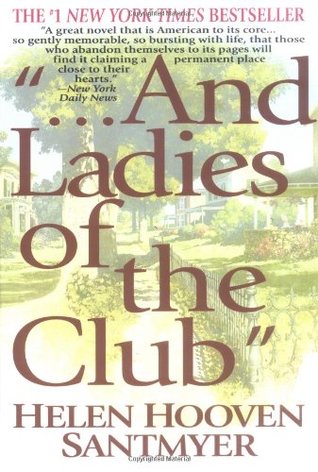
thepromise  Romance is not my genre, generally speaking. But for every generalization, there is an exception, and Ann Weisgarber’s The Promise is an exceptional novel. Set primarily in Galveston, Texas in 1900, it’s beautifully voiced. Other reviewers mentioned Willa Cather, and I could see some of that. My first thought was the similarity in tone to Helen Hooven Santmeyer’s epic And Ladies of the Club, one of my favorites.

Right about now I am required to tell you that I received this luscious hardcover novel absolutely free via the Goodreads.com first reads program. I hate doing that, because it implies that this is the source of my high rating and compliments. But if you check my first reads record (and I recently changed my privacy settings so that anyone can do that), you will see that I don’t routinely give high ratings or praise. If the cover letter asks me to write a review “if you like what you read here”, then I only review the book if my review will be a good one. If I am asked to review it no matter what, then that’s what I do. One of my ratings (over which the local newspaper here raved) was two stars, and another was so badly edited that I left the stars blank and documented the fact that the book needed extensive editing before it should be sold.

This touching story of a woman who is “ruined” and forced to leave town and marry down (an old expression and my own, not the writer’s) touched me in a way I can’t entirely understand. I generally carry a strong working class bias, and yet the first person story of this formerly pampered musician, a member of the intelligentsia during a time when such a thing was a rare luxury for women, really grabbed me from the start. Maybe it’s because it was so easy to imagine being that person. A different time period, a different set of rules, and hey…who knows?

The characters were all so tangible, so vivid, that I felt I could step into the pages and have a conversation with them. This is really strong writing.

So even if you aren’t one for romances generally, you might give this a try. The awards mentioned in the author’s blurb were what led me to take the chance. It’s what, back in the day, would have been called a three-hanky–story, because by the time you were finished sobbing, you’d have gone through three handkerchiefs. For you? Keep a box of facial tissues at the ready, and settle down by the fire, because once you’re more than halfway in, you’ll be there for the duration.(

Lucky Us, by Amy Bloom *****

This story is a winner. I defy anyone to read it and not love it! I was fortunate enough to read my copy free of charge from Net Galley, but sooner or later I will have to pony up and pay for Bloom’s work, because having read this little gem, I will follow her anywhere.

The setting is the Depression Era through the end of the second world war; the story takes place all over the United States, from the midwest to California to New York. The protagonist, Eve, and her sister, Iris are girls (and then women) who are what social workers euphemistically call people who have fallen through the safety net–not that much of one existed back then. Their father and Evie’s mother are almost more liabilities than assets, and from almost the get go, they are on their own.

A large cast of secondary but engaging characters weaves its way through the sisters’ adventures, but each is so believable, so palpable that there is never the slightest danger that the reader will mix one up with another, anymore than you might inadvertently mix up your own family and friends. These flawed but fascinating characters often do things that startle us, leave one’s jaw hanging (“Oh no, you DIDN’T just do that!) yet their behaviors are always consistent with what they have said and done before. Just as with a ne’er-do-well relative, I found myself sometimes grimly nodding and saying, “You know, it doesn’t surprise me a bit.”

Eve and Iris see others betray them and commit every possible venial sin and perhaps a few mortal ones into the bargain, and indeed, they themselves become charlatans, thieves, snake oil salesmen (of a sort) in order to survive. All of this is depicted with such a winning narrative, changing perspectives and yet never the overall truth.

In most circumstances, Eve is set apart in her effort, when possible, to do the right thing, and by her loyalty to those she loves best.

Ultimately of course, it is not the storyline or the setting that sets this story apart from whatever other fiction has recently been released. It is the voice, Bloom’s sassy, ironic, and sometimes devilishly understated narrative that hooks the reader, leaves us unable to let go till the last page is turned.

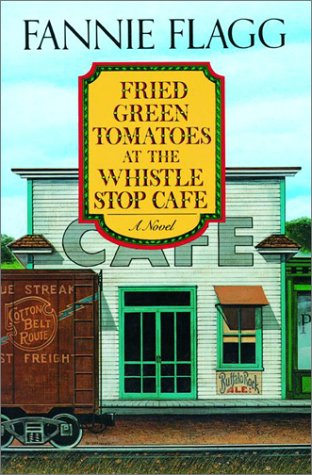
Bloom is an award winner for other work, and it wouldn’t surprise me at all if she receives another for this. If I were to compare her work with anyone’s, it would be Fannie Flagg, because of the character development and the whimsy.

In the end,I realized she does not mean the title to be entirely ironic. We are indeed lucky to have even flawed and difficult people in our lives. Loneliness is the ultimate cause of sorrow. Bloom convinced me that I am lucky too. What a wonderful message, and from a truly gifted writer! I can’t wait to read the rest of her work.