Far As the Eye Can See: A Novel, by Robert Bausch ****

farastheeyeSharply evocative of time and place, Bausch’s novel Far As the Eye Can See is a treat and in some ways an education as well. Bausch’s fictional tale, set during the Grant Administration in the USA around the time of Custer’s last stand, draws on considerable research with regard to the Crow, Cheyenne, Nez Perce and other American Indian tribes. He uses story to drive home his message, which is that neither Caucasian nor indigenous people were either entirely good or entirely in the right, and that the conflict between the two was inevitable.

I only agree with part of that last bit, but I really enjoyed his story. Thank you to Net Galley and Bloomsbury Publishing for allowing me an advance glimpse via an ARC.

Bobby Hale is a deserter from the US army some seven times over. During the latter part of the American Civil War, he took the cash bounty for signing on, went to fight, and left the first chance he got. By using a wide variety of names he was able to do so repeatedly, but he was nevertheless roped into participating in some terrible battle. Were he real, and were he alive today, we’d say he has PTSD.

And there you have it! I always know an author has done a strong job developing their character when I find myself giving out diagnoses. It’s just as well that the character is indeed fictional, since my medical credentials don’t exist either.

Hale is headed west, away from cities and civilization. The idea of holding down a job and answering to a supervisor is anathema to him. The classic (but not stereotypical) mountain man, he is willing to sleep in freezing temperatures out of doors when necessary, climb steep cliffs and slog through ravines, all in the name of independence. But even out west, he inevitably runs into other humans from time to time, and not being completely antisocial, he makes friends, makes enemies, and falls in love. Twice. He finds himself having to make difficult choices a number of times. At other times, he is forced into action before he can really examine his options.

Here we check in with what I call the “ick meter”. Every reader has an independent threshold for bloodshed, human body parts, and other gore. Given that this is a soldier’s story, renegade or not, we would expect to find some of it here. I would not have cared to see Bausch add any more of it than he did; however, my own sense is that there was nothing added that was gratuitous or overdrawn. If you can’t stand reading war stories, you probably already know that by now, in which case, I wonder why you are still with me here.

Another noteworthy detail has to do with his use of place. When he describes the approach to the Rocky Mountains from the eastern part of the USA, I can see those blue mountains and all that sky, because I have driven across the USA a few times, and I have vacationed in Montana and Wyoming. Bobby Hale covers a tremendous amount of ground. If you are somewhat familiar with location in regard to the Black Hills, the Northern (inside the US) Rockies, and the Great Plains, you will probably enjoy the book more than if you don’t have a clue. I think if I were starting from scratch, I might have become confused, because he puts on a lot of miles without pausing to lay out which state lines he is crossing. Actually having been to at least one of these places, even if only to drive through it and notice the difference in elevation, climate, etc. will increase your appreciation and understanding.

As for me, I found it very satisfying. It’s a great read to have ready to hand beside a snug bedside. When Hale froze in the mountains and froze again on the plains, I burrowed deeper into the blankets and found myself even more content than when I began.

A great story for late fall and winter reading in a toasty nest.

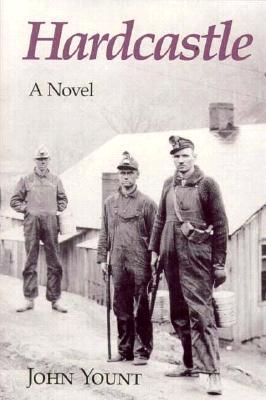
Hardcastle, by John Yount ****

hardcastleThis hauntingly evocative Depression-era novel centers around a coal battle near Harlan, Kentucky. Our protagonist is Bill Music (originally Musik, before the Ellis Island people decided to yank the German element from the family name). Music has gone from his family’s bare-dirt farm in Virginia to seek his fortune in Chicago. He worked his way through a nine month electrician’s certification program, did hard labor to support himself, and just when he was ready to go on home, he was robbed. His attackers even found the $20 hidden in his shoe, since they took his shoes also. Barefoot, broke and hungry, he joins throngs of other down-and-out Americans by jumping a freight train toward home. The third day on an empty stomach, he sees a farm with piglets in the back yard and crazed from hunger, leaps from the train with no thought how he’ll get back on one. A twenty mile, post-piglet walk leads him to Hardcastle, a mining town filled with impoverished, bitter miners on the brink of unionization.

Regis Patoff may be my favorite character in Yount’s story. The name itself is great; I will leave the reader to uncover its origin, one of the few humorous moments in the story. Patoff offers Music the heart-stopping salary of three bucks a day, more than he used to make in a whole week, to be a mine guard. He deceives Music by telling him that the mine is too small to attract union drama anyway, and so he will be paid this handsome amount to routinely trudge around the property at night three times a week.

When something looks too good to be true, it generally is.

Music moves in with Regis and his mother, the wonderfully drawn Ella Bone, who takes to him as a second son. When all hell breaks loose, Music is in too deep to walk away. Winter is coming; he has been away so long that he can no longer imagine the faces of his parents or siblings, but Regis, Ella, and his beloved Merlee are right there in front of him. He stays.

The reader should expect to deal with a certain amount of Appalachian/country dialect. If English is your second language, you will want an e-reader for definitions, or a native English speaker to guide you through some of the vernacular.

For me, however, it created an immediate bond. Two generations ago, my father’s people were miners; they were comfortably ensconced in more lucrative, less dangerous work by the time I was born. Until I read Yount’s novel, I was unaware of how many cultural artifacts had leeched into my own childhood from the mines of the Depression era. Immediately a little girl calls her grandfather “Pappaw”, and I found myself missing my own Pappaw, who died in 1977. One of the main characters calls out the greeting, not hello but “Hydee!” and I can hear my father’s voice, gone 35 years, as clear as day. When you read the word “victuals”, hear it as “vittles”, and it means food, usually a good meal. And so it went.Somewhere along the way I realized I had flagged so many terms I hadn’t heard for ages that those reading my review would not want to march through all of them with me, so I will leave off here and continue with the story.

For me, this was a page-turner. The last star fell off the review during the last ten percent of the story, when some historical inaccuracies too great to dismiss as mere story-telling devices came up. The greatest was the depiction of the United Mine Workers as a union made up entirely of communists. And given that contemporary working class history is my field of expertise, it really grated. For those who want the truth, here it is:

During the early years of American union struggle, most industrial unions banned anyone who was not Caucasian; who was not an American citizen; or who was a communist from their ranks. The UMW refused to let its ranks be decimated by these distinctions, believing in solidarity. So yes, people who were communists and said so openly were allowed to join, and if the ranks voted them into leadership, they were allowed to take their posts. The union did not yield to red-baiting. There were white folks in the union who didn’t think people of color should be allowed in, but the UMW pointed out that solidarity was the best way to keep workers all on the side that would fight for their interests.

Yount correctly depicts the UMW as inclusive of every ethnicity, race, and nationality, but it incorrectly paints the UMW as a communist union, to the extent that in order to stay in the union, members were ultimately expected to renounce their Christian beliefs and take up little red flags. It is preposterous. When it came into the story, I expected some other thing to happen in order to undo the incorrectness of it, but he left it lay there, the dead elephant in the room. It really got in the way of the story. It was just stupid, and I did a complete 180 from being really entertained and enjoying the story and its characters, trying to determine what would happen in the future to the main surviving players, to being aggravated at the lie on which the resolution of the tale hinges. I also didn’t like the implication that mine workers were dumb enough to be led around by the nose without having known who was leading them. Many of them (including my grandfather) had a low or nonexistent literacy level, but that didn’t make them stupid, just poor.

For other readers, the whole story may be entirely enjoyable. The characterizations are endearing, the setting palpable. When Yount brought winter, my feet got cold. His writing is really strong.

But watch the history. Changing major historical events and realities through fiction is a dangerous thing, because when emotion runs high, people bond to what’s in the text, and if they have no reason to believe otherwise, they assume they are getting the truth, or the mostly-truth. And this author hasn’t merely tampered with some minor realities for the sake of a good story; he has stood the historical record on its head.

A Painted House, by John Grisham*****

apaintedhouseGrisham has written a wonderfully refreshing book. He is a fine writer, and I think he dwelt a bit too long and too timidly in the familiar swimming hole of the legal thriller. This is a really strong, well-written novel, steeped in the deep South (USA) in the 1950’s. For those of us up north who heard in school that the cotton weevil ended cotton farming soon after the end of the Civil War, Grisham has news. The protagonist and narrator is a seven year old boy named Luke Chandler. He is wise beyond his years, but I bought the premise for two reasons. First, it is discreetly revealed up front that he is academically talented, and so having him able to analyze things that an average 7 year old cannot, becomes believable. Second, he has no siblings, but has been raised in an all-adult household, a big frame house (NOT painted) that somehow houses himself, his parents, and his paternal grandparents. His “buddy” is 12 years older than himself. Uncle Ricky is his father’s younger brother, and is fighting in Korea, and anxiety over his well-being filters in and out of the myriad other anxieties that went with cotton farming. Though the Great Depression officially ended with WWII, small farmers (80 acres plus “the garden”, which is vastly larger than any ordinary suburban garden) in the deep south are living decades behind those in cities. They have water from a pump out front, and an outhouse. There is electricity, convenient but expensive. There is no telephone. The latter is viewed with cheer; it gives neighbors permission to visit one another without advance notice or an appointment, and there is a tacit understanding that this will happen mostly in the off-season. Winters are for rest and hospitality; summers are for work. And they ALL work. The two men haul huge cotton bags along with the workers they’ve hired, and they bring in 100 pounds of cotton off their own backs every blessed day, rising at 4, finishing at dark. It is a grueling existence. The women, including the grandmother, spend less time in the fields due to domestic chores. (There is no washing machine). But once they have cleaned up the breakfast dishes, they too are out in the field, leaving earlier than the men to cook a hearty lunch. There is often a break afterward due to the incredible heat and humidity, but because of the ever-present fear of rain, a very real fear, given that their farm is “bottom land” fronting the river, they are out again as soon as humanly possible. The seven year old, whom modern mothers would be taking for play dates and curling up to read with, is expected to haul 50 pounds of cotton daily also. Interestingly however, despite the family’s immense debt burden, he is paid the same wage as the other workers, and may dispense with the money as he sees fit. The two most striking features of this time, place, and way of living that struck me were the stratification of classes and subclasses, and for all the hail-well-met hospitality, a deep sense of privacy, and the need to keep secrets. At first, our young protagonist is weighted with one or two sworn secrets, and they are fairly benign. Later, however, he is beset by some whoppers, ones that could cost someone a life. Beyond this point are spoilers. If you have not read the book and think you may want to, stop here. If you have read it and want to compare notes, keep going.

The social levels are deep and intrenched. The most respected are the small business owners in town, preachers, and the farmers who own land, no matter how heavily indebted they may be. Those next were families like our protagonists, renters. Again, their debt level might be heavy, their clothing worn and not abundant, but they could hold their heads high, be church deacons, and be well regarded socially. After that, there is a large drop. On a similar social par, yet treated differently to an extent, are the hill people (very rarely are they referred to as “hillbillies”) who come down to pick cotton for a summer wage. They are not respected, but they are treated with a certain level of deference, nevertheless, because if they leave, the cotton may not all get harvested, and it is essential that every possible bole be brought from the immense cotton bushes to the truck. Workers are paid according to the amount they pick in weight. They can get away with a certain amount of disrespectful talk and obnoxious behavior because it will be hard to replace them once harvest season has begun.

On a social par with hill people, but considered more of a community responsibility, are the sharecroppers. Sharecroppers are considered to be above Mexicans only. (There do not appear to be Black people, at the time referred to as ‘Negroes’, in this town or its surrounding community). One does not interact socially with them; they are wage-slaves, forced to give most of their crop to the landowner, and often suffering from malnutrition. They are described as thin and dirty. They are so demoralized that no real attempt is made to teach their children manners, and any discipline meted out is so extreme that it would earn them a trip from a social worker today (assuming someone told; it might be the local “secret”, though nothing to that effect is said; it is considered typical sharecropper behavior). It is considered “Christian duty” to feed extra vegetables from the garden to the sharecropper’s family, and the giving is done in such a way as to protect, to the extent possible, the pride of the recipients.

The local sheriff, known as Stick, has no respect from anyone. This appears to be because he DOES NOT WORK. The work ethic in this town goes wide and deep. While respectable people are in the fields breaking their backs from sun-up till sundown, the sheriff “takes naps in that patrol car” and comes around “nosing into things” when a crime has been committed. In point of fact, two murders take place more or less under his nose, and no one, not ANYONE will give him the full story. Luke is witness to both murders. They are SECRETS. Later, when he finally confides in his grandfather at a time when knowing the facts will not mean economic ruin for the family, he is told that he “did the right thing” in keeping his mouth closed. “Are you gonna tell Gran?” he asks his grandpa. “Nope.”

Mexicans, even those who have far better manners and are far more tidy when they depart the Chandler farm, who do as they are told (with one singular exception, and even he was sorely provoked) are on the bottom of the social heap, and racism is not veiled, it is right out there in the open. “The Mexicans” are provided for well, just as the hill people are. They are given lodgings in the barn, and Kathleen, Luke’s mother, has been campaigning for them to be brought in for picking season in a bus, not heaped on the back of trucks where they will become parched and sunburned. She puts out quilts and pillows in the well-swept loft, and takes them big baskets of vegetables “that they like” from her garden, and introduces these as part of the wage package, so that they will not feel they are accepting charity; her decency is above that of most white folks. But they are Mexicans, and when one of the hill people, a 17-year-old named Tally who has told Luke she’d like to go north and never pick cotton and see real snow, runs away to marry one of them, the whole Chandler family feels sorrow for the degradation to which the hill people have been submitted. The hill people’s head of household even suggests his daughter has been kidnapped, until a letter is found from his daughter, at which point the pretense implodes and the reality, that his daughter genuinely fell in love with someone with dark skin, is laid bare. The word “humiliation” is used repeatedly.

The hill people, though they work for a wage and are poorly clad, actually enjoy a higher standard of living than the farmers do. One of them, Hank, who bullies young Luke in unconscionable ways that he keeps “secret” so his father will not have to dismiss him and lose the whole family’s labor, brags endlessly about how his family has a car and a painted house. It is the disabled family member who takes pity on them, and together with funds earned by Tally, secretly begins to paint their house white.

Kathleen Chandler accompanies Gran more than usual to visit the sharecropping Latcher family with vegetables these days. They have been enlisted by the local church ladies, who want to know the Latchers’ secret. It is rumored that their fifteen year old daughter has become pregnant, and as the Latchers’ nearest neighbors, they have been deputized to learn the truth. Gossip is not viewed as unchristian, but is almost the only form of recreation available in this insular community. But the girl is kept deep inside the house, and Darla,the Latcher family’s mother, is lightning-quick at greeting them on the porch so that they can’t come inside. Ultimately, the secret is made manifest when the truth of Libby’s pregnancy is doubled with another, closer-to-home truth: Ricky, the 19-year-old who is away fighting in Korea, is the baby’s father. It is of course only Libby’s word…except for the fact that both Chandler women say that the baby boy looks just like Ricky. Again, Luke forsees humiliation and public shunning as real possibilities. NO ONE is supposed to even socialize with a sharecropping family unless they, too, are sharecroppers.

Then there is the house. It had been secretly painted in a back corner. About half the farmers had painted houses and half did not, so until now, having an unpainted house meant no embarrassment locally. Now, however, a house that is partly painted is just not acceptable. Because rain has ruined the crop and left his parents destitute, Luke gives up his dream of a Cardinals jacket to wear to school when it starts close to Christmas, and instead invests his own money in paint and brushes. Once more, Tally kicks in and buys more too, and hill people, Chandlers, and Mexicans all paint 3 sides of the family home. The Mexicans display gratitude this way because they know other farm families do not always show respect by offering bedding, clean sleeping quarters, a fan, and vegetables. They can’t pick because the crops are flooded, and while Eli Chandler, the patriarch, seeks employment for them elsewhere, they burn off the boredom by helping Luke, side by side. He begins to perceive that the Mexicans are real people.

Later, when the rains come harder, the Latchers are in danger of drowning. Eli and Luke’s father take him with them to rescue all eleven Latchers, and temporarily house them in the barn. Though Gran insists that they have enough to feed everyone in their own family and the Latchers too for the next 6 months, Luke isn’t so sure. Gran is doubling the food in her mind, but the Latchers have twice as many family members, including Ricky’s baby, who will only stop crying for the ultimate, unheard of luxury of store-bought vanilla ice cream.

Kathleen Chandler, the mama, has the final word, at least when it comes to Luke’s future. All along, she has told him he will NOT become a farmer. She has shared the home and kitchen of her in-laws with decency and grace for seven years or more; one year, Luke’s father went north to Flint, Michigan and worked in an auto plant long enough to cover all or most of the debt incurred, and then brought it home. Kathleen has gone to work on her husband. She wants to go to Michigan, for him to go to work in the plant (where his obnoxious but helpful brother has a job waiting for him), and leave the cotton fields, the dirt, and the poverty behind forever. They will have indoor plumbing, drive a car (“unheard of” in their tiny community, where everyone owns a truck for farming), and maybe even have a television set. And this is the most fascinating to me of all: ultimately, the second-most powerless person on the surface, after Luke only, is the one who determines her family’s fate. In the home of her in-laws, she has little to say and is occasionally overruled even in the discipline of her own child (though she usually prevails in that venue, as well as the vegetable garden, which will keep Gran, Grandpa and the Latcher family from starvation after they leave for Michigan). In the end, Luke states, the “final word” in what will happen to his smaller family–himself, his father, his pregnant mother (but that’s a secret)–will be up to his mother. His mother is the one who persuades his father that the time to break loose has come. They leave behind a painted house, with only a few boards at the top left undone when the paint and money ran out. His grandparents promise that when he “comes home”, those boards will be white, but Luke understands that he will never live in the painted house in the Arkansas hinterland again.

Shannon, by Frank Delaney *****

 shannon

Frank Delaney has done it again.

There are some writers that have such a gift for spinning a compelling tale while seamlessly weaving in subplots that the rest of us can but applaud. He’s clearly one of them. I was spellbound by his Ireland, but there are a lot of people with one remarkable book in them. I was surprised again, then, at how good Tipperary was. Now this.

Everything I’ve read by Delaney thus far (including Shannon) is set in some part of Ireland for most of the novel. He favors the period when the whole world is changing–World War I is either imminent, taking place, or we’re in the aftermath; Ireland struggles for her own freedom, and he doesn’t gloss over the errors and tragedies that go with this struggle–and I mentally note that it’s also the period of the Russian Revolution. He’s done a whole lot of research so that he can provide his novels with a rich, accurate background. His target audience is one with an interest in Irish history, but he is never dry, never lapses into the lecture-like style that I’ve seen in some writers who are specialists in a given academic area use when the narrative aims at their area of expertise. It’s riveting clean through. The people, whatever their station in life (we have several members of the Catholic clergy and a nurse foremost) are individuals first.

If you have a strong anti-Catholic bias, you may not like this story. There are some Catholic bad guys, for sure, though they aren’t two-dimensional ones, but you won’t see the pedophiles that have been the sole focus of the mainstream US press where Catholics are concerned. Rather, there are those who are corrupt ladder-climbers; there’s (oh my god) an assassin; and the protagonist, Robert Shannon, who is recovering from PTSD, then known as “shell shock”.

Altogether, I found it nearly magical. I will read anything that Delaney writes at this point; he’s that good!

Bittersweet, by Colleen McCullough ***-****

bittersweetIf you’re looking for a light beach read to keep you company during what remains of summer, you could do worse than this frilly piece of historical fiction by Colleen McCullough.

You could also do better.

The story follows the lives of four sisters, two sets of twins who share the same father but have different mothers, one of whom is deceased. It takes them from their teens into their adult lives, skimming the surface of each without fully developing any of them.

At first I thought perhaps I was too harsh in my judgment; after all, McCullough wrote The Thornbirds, and not every book can be that strong. But consistently throughout the story she tells us what each woman is thinking, repeatedly tells us in what ways they are different, and because she does this with narrative rather than showing us these things through the story, it renders the whole effort slightly clunky. There are small changes in the way each of them regards the world, so each is slightly dynamic. Yet the thing that was missing for me was that connection that makes me want to talk to a character, or that makes me care deeply about how their story ends. In really good fiction—and my blog has plenty of examples, including love stories—the protagonist becomes so real that they are nearly tangible. I find myself daydreaming about what the character would think of this thing or that. It didn’t happen here.

Still, at bedtime I found myself reaching for this book rather than the others I am reading. It’s good mind candy when you don’t want to think too hard. It’s linear in the telling so there aren’t a lot of changes to keep straight.

Unconscionable, especially for historical fiction where the setting is primarily a background and the story devolves so heavily upon its fictional characters, is the use of the term “tar brush” to suggest that one of the sisters may have African ancestry somewhere in her genes. To bring out a term like that, there had better be a really strong reason related to the plot calling for such a nasty term, however common among white folk during this period, and McCullough doesn’t have one.

Bright spots are the early development of Charles Burnham, and the way Edda’s situation is resolved.

Read it for free or for cheap, but don’t spring for a hard copy.

One of Ours, by Willa Cather *****

one of ours

I always seem to love Willa Cather’s writing. Just imagining the country as it was a hundred years ago or more is time-travel of the imagination, and Cather can help a person get started, with her meticulous research and careful, thought-provoking shaping of the protagonist and other characters as well. I feel that the cover description provided on this site is a spoiler, since it takes the reader at least halfway through the book; if you haven’t read it yet and like strong historical fiction, save the goodies as a surprise.

Claude is a wonderful protagonist; he is flawed, and I find myself wanting to go up to him, as if he were before me, and tell him he needs to stand up for himself. And I want to yell, “Don’t DO it! Don’t marry her!” But he is at Cather’s mercy, and she shows us what love and beauty look like, but poor Claude also sees some real heart break. As a mother of grown sons, I identified somewhat with his mother, even though she is not a main character.

The Jungle, by Upton Sinclair *****

thejungleIt’s not your best beach read, but it’s an important bookmark in the history of American literature.

The second wave of immigrants who came to the USA around the turn of the century (our setting is 1905) came mostly from Eastern Europe. Political turmoil and poverty were the push factors for myriad Italians, Greeks, Slavs, Turks and others who needed to get away, and the still vivid hope of the American dream, the possibility of social mobility unthinkable in Europe, was the pull factor. The Statue of Liberty still meant something back then.

It wasn’t as simple as it seemed, though. One of the primary large cities to which immigrants flocked was Chicago, and one of the chief industries that would offer them work–as usual, work that those born here would not do–was meatpacking. It looked like good money, even after meeting coworkers who had fewer body parts at the end of their tenure at the packing plant than they’d had going in. It was bloody, nasty, inhuman, and heartless, both toward the workers and the animals. And the stuff that landed on the conveyor belt went into the product to be sold at the supermarket, whether it belonged there or not.

I’ll let that sink in a moment.

Sinclair’s novel was intended to be a workingman’s call to arms. Cast off the bonds of wage slavery. Let the people who do the work own the means of production, set the time tables, and divide the spoils. He’d been reading Karl Marx and Frederick Engels, and believed his book would be a revolutionary vehicle. After all, working people read back then, and their attention spans had not been reduccd by the instant gratification that television and video games would later provide. He hoped it would be effective.

It was, but not the way he planned. When Americans read about all of the disgusting stuff that was landing in what they intended to serve for dinner, they revolted, and the Food and Drug Administration was born.

Today, meat packing workers are still among the most injured and the lowest paid, and they are still largely manned by immigrant workers.

The bottom line: read this for its historical importance and its place in American literature, but don’t expect to enjoy the experience. It’s pretty grisly material, but rightly so.

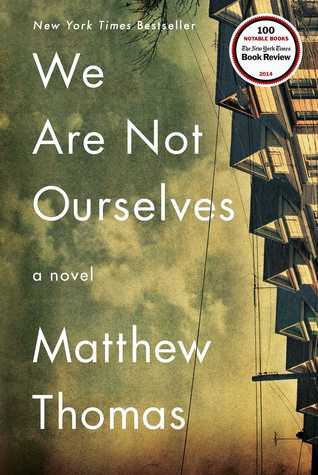
We Are Not Ourselves, by Matthew Thomas *****

WearenotourselvesA haunting, epic story that stays with the reader long after the final page has been turned; Thomas has created a masterpiece. Thank you once and once again to Net Galley and Simon and Schuster for the ARC.

When I saw that some goodreads reviewers had marked this book at three stars, at first I wanted to grab those people, shake them by the shoulders and ask, “What is wrong with you?”

But eventually, I came to understand, or at least I believe I do, what it was that bothered them. Our protagonist is not always a lovable one. She’s deeply flawed and hard to bond with. Those who equate a lovable character with a well written book may indeed be disappointed, not only by this story, but by many of the Great Books.

As for me, I am impressed. My measure of extraordinary literature is that I am still thinking of, or even wishing I could have a conversation with the main characters after I have finished reading. I’ve moved on to other books, and yet this one remains with me. Aw, geez; poor Ed. We didn’t know. And what’s up with Connell, anyway? It speaks to me on a deeply personal level as I find myself comparing my own family and relationships with the Leary family. Given that I am a reader who absorbs a dozen books a month and sometimes more, this says a great deal.

Our protagonist is Eileen, who grows up in an Irish immigrant family that cuts across the typical large, boisterous, poor-yet-loving stereotype of the New York Irish. Instead she is the only child in a chilly, quiet apartment. Relationships are often strange and distant despite the fact that her parents love each other and her. The second bedroom is taken, for most of her childhood, by a tenant. Her father is a genial man, well loved among the Irish workingmen’s community, a union man and a hard drinker. Her mother is lonely, hardworking, and bitter until she also takes to drink; yet her parents don’t drink together, but apart. The only fun time is when relatives from Ireland come across the ocean and spill over into her family’s wee apartment as their final pit stop before finding a place of their own.

Eileen grows up knowing that she wants more.

As her hormones work their alchemy and her body grows and changes, she becomes disarmingly beautiful, and she understands that marriage may be her ticket to better things. Once she finishes college and becomes a nurse, she wants to marry a man of great capability and ambition. She believes she has found him when she meets Ed, a brilliant young scientist with a promising career ahead of him. Between the two of them, they ought to be able to bring in the money needed to live the good life. By the time children come, he should have climbed far and high enough that she can stop working and be happily domestic in a magnificent home. It is the dream of the 1950’s, though she wants something a bit finer than a suburban house with a picket fence.

Eileen’s grasping nature and her harsh behavior, at times, toward Ed and their son are off-putting. When their only child brings home a test marked 95%, her husband exudes praise while she asks what happened to the other five percent. I cringe. At times she seems to understand that she is showing no more warmth than her own mother did, yet the habits are ingrained. She does not reach out for the hug, does not easily part with praise. And as it becomes clear that her goals and Ed’s are not really the same, the marriage begins to founder.

The harder she pushes, the more irritated I grow with her. It’s like watching a relative who is bent on self ruin; I want to talk her out of this. I want to hit the “escape” key for her. I want her to be more empathetic, more flexible. But the one thing I absolutely don’t want to do is put the book down.

Then the unthinkable happens, not at all what I expected though, and everything that has gone before takes on new meaning. As events unfold, Eileen must change also.

To say more would be to spoil the read, and you should read it. Happily, this is one book that works just fine on a digital device, and I am grateful to the publisher and Net Galley for letting me read it that way. But if you are a reader who needs the tangible object in your hands, I will tell you that this is worth investing in. All you need is an attachment to excellent literature.

Absolutely brilliant. I look forward to seeing more of Matthew Thomas’s work in the future!

Six Million Accusers: Catching Adolph Eichmann, by D. Lawrence-Young *****

sixmillionaccusersPlease lower the safety bar in front of you, and make certain your belt is securely fastened. We will be traveling at an astonishing rate of speed; keep your hands firmly on your book or digital reader. As you finish Six Million Accusers: Catching Adolph Eichmann, you may be disoriented and need to remind yourself where you are and what day it is. It’s that gripping.

My deep gratitude goes to Mr. Lawrence-Young, his publishers, and NetGalley for letting me read and review this amazing novel.

David Lawrence-Young packs a powerful story into a well plotted, brilliantly paced narrative in order to tell the story of the capture of Adolph Eichmann, one of the nastiest and most powerful Nazis responsible for the deaths of six million Jews in eight nations, not to mention millions more who were Gypsies, political opponents, disabled, gay, or who were mistaken for somebody else. And of course, these numbers don’t include those who died in the battlefields, seas and skies of the European theater of World War II. Only Hitler and Himmler were above Eichmann in the fascist pecking order.

Because story is such a potent vehicle for the truth, the author has chosen historical fiction over a more expository nonfiction format. I think he chose well. He has a long list of previously published books that precede this one, from Shakespeare to an English textbook to other works of historical fiction, but he says this one was the most difficult, and I believe it. As is true of the finest writers of this genre, he has a bibliography at tne end of his work to let us know that the story is absolutely true; he has filled in the cracks by inventing the dialogue instead of paraphrasing as he would have to do with a work of nonfiction, but this is the real deal nevertheless. This is what happened.

Once this was made plain (I always read the introduction, and I also read the author page before I begin), I dug myself into my favorite reading corner and prepared to concentrate, convinced that while compelling, the historical journey would require full focus and strong literacy skills. I was surprised to find that he wrote in a manner that will be accessible to just about anyone who wants to read it, and the need to focus is moot, because from the get-go, he has our eyes and full attention automatically. The pace builds in a glorious arc, reaching breakneck speed as we close in on Eichmann along with the team of spies and undercover representatives of Israel’s government.

The questions that arose in my mind were answered. Given that these agents slip into Argentina with the assumption that they will need to act outside that nation’s unfriendly rules of law, and are essentially going to kidnap Eichmann, I wondered why the fuss. If they were willing to go that far (not that they shouldn’t), why not just sail in under a black flag and cap him behind the ear? Why all the fuss and bother to smuggle him back to Israel to be tried?

And it became clear. Many other SS officers were dealt with in the manner I had been thinking of, but this man was so utterly symbolic of the Holocaust that the world had to see him tried, and Israel and her people had to lay out the facts, document them irrefutably, and wisely so, because half a century later would come the Holocaust deniers who would want to pretend the whole thing was a hoax, sham, or exaggeration, and the Nuremberg Trials make it much harder for anyone to do so.

A thing that gave me great pleasure was reading about the agents, including our nominally fictitious protagonist, Haim, who DID get out of Germany or other parts of Europe in time to avoid arrest, torture, and maybe death.

I was surprised, and surprised to be surprised, about the news that Israel had had to fight for its independence. As a history teacher, how is it that I did not know this? I think it’s simple. It was too recent to be in the curriculum, but since I had barely been born when it took place, I was too young to remember. And independence from Britain was important. On the surface, it looks as if they bit the hand that fed them; hey, they put up a Jewish homeland to help people escape Hitler, and now you’re going to shoot at them?

But it turns out this was very necessary. Part of Britain’s game plan was to limit how many could come out. They were more generous in their immigration policy than the USA, but that’s not saying much. Israel needed independence in order to have a nation where all Jews could safely exist. (I won’t even go into the Palestinian question which is worth many other books, a huge issue unto itself.)

Like a lot of academics, I have many Jewish friends, and though all are too young to have experienced the horror first hand, they have family stories, even legends. (“My grandmother personally rescued one of the last remaining Torahs from a burning synagogue”, a colleague told me.)

But even if I had not had their friendship, simple justice would have permitted me to sigh with satisfaction, once when Eichmann was in custody, and again when he was convicted.

Don’t just read this book; keep it. Share it with your children. The world must never, ever permit such a thing to happen again. It is by educating the next generation, and they the one after them, that we keep the neo-Nazis firmly on the fringes, which is the best place for them to enjoy the First Amendment rights they would gladly grind beneath their hobnailed boots for the rest of us if permitted to do so.

I Been in Sorrow’s Kitchen and Licked Out All the Pots, by Susan Straight *****

IBeeninsorrow'skitchenWho knew that there is a completely separate people living on the Sea Islands off the coast of South Carolina? They are descendants of escaped slaves, and the language they speak, known as “Gullah” or “Geechee”, is a dialect similar to Creole English, but it also uses sentence structure that is borrowed from African languages and what Wikipedia calls African “loan words”. I was introduced to this culture by this wonderful novel, written by the talented Susan Straight. It was written some time ago, but remains a personal favorite; your best bet is to order it used.

The story’s protagonist is Marietta, who grows up in this isolated environment in the 1950’s, She’s written several good novels, but this one may be the most memorable so far. Her protagonist lives in an almost unreachable island off the Carolina coasts. Deep back in a nearly impenetrable area that is technologically about 100 years behind, a flushing toilet and an electrical outlet are unseen. Yet tourists somehow get there (god, aren’t they everywhere?) and so she and her family eke out a living by cutting the reeds that grow in the swamps and weaving them into intricate baskets.

She learns early that if a girl (teenage life is unknown in this culture) is six feet tall and very dark, the pale tourists will be frightened and they’ll leave. This gave me pause. I’m not generally into the whole ‘white guilt’ thing; I prefer action to introspection. But I did wonder: if a very dark woman who was seated near me suddenly stood up and she was six feet tall (to my just over five feet), would I take a step back? I don’t think I would now, but there was a time when I would have. The startled reaction comes from isolation and unfamiliarity. I grew up in a very Caucasian neighborhood; there were hundreds of students in my graduating class, and except for the foreign exchange students, there was only one African-American student. The first thing I did, upon gaining independence, was to move straight to the inner city. Isolation wasn’t for me.

But let’s get back to Marietta. When her mother dies, she is forced to move to the mainland, and experiences culture shock. She has to learn to speak standard English; everything is extremely different. Seeing the world through Marietta’s eyes made me view things very differently. What comes of it is a really off-beat civil rights lesson.

How many white authors have the nerve to write as if they can see into the very soul of an African-American protagonist? I only know of one, and I think she carries it off really well. It’s a gutsy thing to do. There’s good reason for it: Straight grew up as virtually the only Caucasian in a Black neighborhood in Riverside, California. Culturally, she considers herself Black.

If this sounds interesting to you, give it a try. See what you think, and let me know. I hope to add a discussion page to this site, which is nearing its one-week anniversary. What could be a better topic for conversation than a really good book?

I