
“Up on the hill, Lucille Beemer said, ‘Good morning, everybody.’
“Two hundred and three people just waking up answered, ‘Morning’.”
 Fannie Flagg is legendary, and rightly so. In fact, at one point in my reading of this DRC, I reflected that someone with her power to move people has power indeed; how fortunate that she uses her gift to benefit the rest of us. I don’t know about you, but I am ready to read something that provides a level of reassurance that all has not gone sour in this world, and that everything passes, sooner or later. I was fortunate to read this free and in advance thanks to Random House and Net Galley, but it’s one of the very few books for which I’d have paid full freight if it came down to it. It hits the shelves November 29 and is available for pre-order right now.
Our story begins with the first residents of what will become Elmwood Springs. Lordor Nordstrom arrives from Sweden, and after months of searching, finds the perfect place for his dairy farm in a pleasant spot in Missouri. The year is 1889. He puts up a house, buys some cows, and then, as a founding father, he decides he will donate a piece of land, because every town needs one thing for sure…a cemetery.
“Lordor guessed that preparing a place to spend eternity and trying to figure out how many places to set aside for himself was what made him think about his future.”
I went back and reread that sentence a couple of times; it begins our second chapter. Oh my but Flagg is droll. If one were to read this gem with half a mind on other things, nuggets like this might be missed.
The years go on, and with brief, colorful chapters, Flagg develops the town, introducing new residents that move in or are born here, and at first it seems as if the story is cotton candy, all fluff and sugar. But just as the impression is formed, it is vanquished, because our author is just warming up. Moments that are poignant, bittersweet, and darkly funny are sprinkled in lightly as we start, because after all, we are new to Elmwood Springs.
But the longer we stay there, the more intimately we become acquainted with its denizens and their peccadilloes, and then the more emotional aspects of the story unfold, almost as they might within your own large family or tightly knit community. Flagg convinces me that these people are my people, and her characters are so brilliantly developed, so utterly convincing that even when one of them does something surprising, I understand how that has come to pass. And every time I think I see where she is headed with one thread or another, she surprises me.
About a fourth of the way in, someone dies and we find them interred, of course, at Still Meadows. But there’s an engaging twist to this aspect of Flagg’s story: the first person to pass wakes up when someone new arrives and greets them. They may be six feet under, but they can see what’s happening at the cemetery, along with everything that can be seen from the cemetery, just fine. And so the discussions that took place in life continue after death, and the dead look on avidly and wait for word of the loved ones they left behind.
As the story develops and characters’ lives are more deeply explored—always remaining more light than dark, and without a single word anywhere that isn’t needed—it occurrs to me that she just may have done it again.
Some people like to take gadgets apart to see what makes them work; I enjoy doing that with literature. And so I find myself looking back at my highlights and notes, looking for what, apart from a dry, accurate wit, makes this writer’s work so special. Some of it is an alchemy whose elements can never be described perfectly, taking ordinary Americans and spinning them into gold. But part of it is undoubtedly her deep respect for working people, and her readiness to see redeemable qualities in characters that upon first glance seem abrasive and unlovable:
“Ida had always been different. At school, when all the kids used to play church and one would be the preacher, another the preacher’s wife, a deacon…Ida said she wanted to be God, because she was the only one who knew how to do it.”
But later, once she was grown, “Someone else remarked, ‘By God, if Ida had been a man, she would have made general by now.”
She also acknowledges that once in awhile, someone comes along that no matter what heroic effort is made on their behalf, will never do anything good for anyone. Hey, it happens.
The comments that are made by various characters reflect both the character’s outlook and usually, the prevailing attitude of the time period as she rolls the town steadily forward to 2016.
And this leads to one cautionary note: as with all of Flagg’s work, it is essential to read the chapter and section headings, which provide context. This reviewer once taught a group of teenage honors students that were unable to make heads nor tails of Fried Green Tomatoes, and I discovered it was because they weren’t reading the chapter headings, and so they didn’t know what the time period was or whose point of view they were reading. Don’t let that happen to you!
Finally, I want to thank the author for the kindly manner in which she draws teachers. Fannie Flagg, every teacher I know that talks about books, loves your work. We need the encouragement sometimes, and your friendly regard means a great deal.
Highly recommended to everyone.
 Martin Cruz Smith is the best-selling author of Gorky Park and the Arkady Renko series. His new stand alone novel, The Girl from Venice, shows he hasn’t lost his magic, and it quickly became my favorite DRC once I began reading it. Thanks go to Simon and Schuster and Net Galley, from whom I received an advance copy in exchange for an honest review. You can get this book today.
 The Birthday Boys is a fictionalized account of the Scott expedition’s travel to Antarctica in 1910. It’s told sequentially through the perspectives of five men that participate, each picking up where the last has left off and of course, also including some personal reflections and memories to make them more real to us. I was invited to read and review this novel based on my enjoyment of the book Ice Brothers, which was also a maritime tale (and is reviewed here:
  Brown has had a long and auspicious writing career, and right about now she can do whatever she pleases. I came to this title thinking that it was a stand-alone novel; thank you, Net Galley and Random House Ballantine for the DRC, which I received free in exchange for this honest review. The book is available to the public October 18, 2016.
 Gwendolyn is 19 years old when she marries Laurence Hooper, the owner of a tea plantation in Ceylon, an island nation south of India now named Sri Lanka. Jeffries provides a compelling, sometimes painful glimpse of the mores and assumptions of the heirs of the UK Empire at the outset of the peasants’ rebellion led by Ghandi. Though a few small glitches occasionally distract, this is a strong piece of fiction that fulfilled the writer’s mission admirably. Thank you to Net Galley and Random House-Crown Publishing for the DRC, which I received free in return for an honest review. The book is on sale today.
 Frank Delaney was well known in the UK before those of us in the United States had heard of him; NPR has called him “the most eloquent man in the world”, and after I had read Ireland, an epic novel that has to do with a storyteller and so much more, I was sold. I wasn’t blogging or reviewing back then, and after I had turned the last page, I told my family that I wanted to read everything else Delaney had written. Then I received this novel as a Christmas present, and was underwhelmed. I set it aside and figured I would give it away, but later I realized that it was the first in a trilogy for which I had also received the other two books. In February of this year, I took a deep breath and plunged in for another try.
 James Lee Burke is a legend, a venerable and highly respected writer known for his luminous prose and quirky characters. In this, his second work of historical fiction in a planned trilogy, he demonstrates that he can still work magic better than ever. I received this DRC from Net Galley and Simon and Schuster in exchange for an honest review, but I would have paid full freight if I had to, and I rarely say that about any book anymore.
 I was originally turned down for a DRC of this novel when I requested it last spring, and I took the unusual step of following up with Atria, more or less begging for it. I’ve been reviewing titles for Net Galley for two years and have received nearly 300 DRCs, so it is a sign of my interest level that I went to this extreme to read this one in advance in exchange for an honest review, and it’s a sign of decency and responsiveness that a representative from Atria Books invited me to review it after all. Although I am grateful , this five star review is not about gratitude, but a measure of the importance I attach to the issues it addresses and the skill with which the story is told.
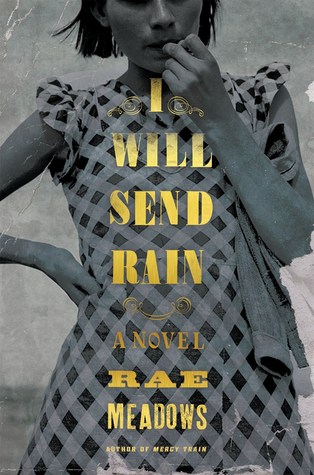 Annie Bell could have chosen to marry a well-to-do member of the gentry in her home town, a man with fine china and a full time kitchen servant. Young and buoyant, she chooses love instead, and moves to Oklahoma with Samuel Bell to start a brand new life on the free land that’s been provided. What could go wrong when two young people are strong and dedicated to one another? Oh, it’s an old, old story in so many ways, but Meadows makes it brand new. Thanks to Net Galley and Henry Holt Publishers, I read it free and in advance in exchange for this honest review. It will be available to the public August 9, 2016.
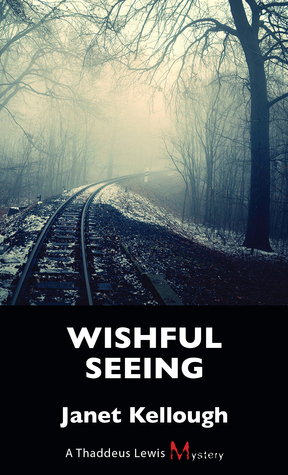 Thaddeus Lewis, the traveling preacher sleuth, is back on the road again. He’s headed to speak at a gathering of Methodist Episcopalians when he finds himself involved, once more, in a murder case. This cozy mystery is my second in an endearing series by Janet Kellough. I snapped up the DRC when I saw that Dundurn had made it available on Net Galley, so I read it free in exchange for an honest review. This title will be available to the public this Saturday, July 30.
 Seattle Book Mama