After Annie, by Anna Quindlen*****

After Annie tells the story of a family that is changed by the sudden death of the mother, a woman still in her thirties. My thanks go to NetGalley and Random House for the invitation to read and review. This book will be available to the public Tuesday, February 27, 2024.

I’ve read a number of books by this author, and I have come to notice a pattern. I read the synopsis, like the sentence I used to begin this review. I see what it’s about and shrug. Doesn’t sound like it would be all that special, but hey, it’s Quindlen, and I have liked her work before, so let’s give it a shot. After all, in past novels, the topics also didn’t seem engaging at the outset. One novel is about a family being forced to relocate due to eminent domain; another has to do with parking spaces in New York City. There’s a memoir about grandparenting, and another about—I kid you not—her dog. Nothing here seems all that appealing.

Yet in some ways, it is the very ordinariness of her subjects that draws us in. So many of us have had to move when we didn’t want to, and so we fought it; or we became so angry with a neighbor’s thoughtlessness that we fantasized about terrible revenge; or we dealt with a death that came out of the blue, striking down someone that was perfectly healthy, or that seemed to be. If we haven’t done any of these things, chances are excellent that someone else we care about has. By tapping into every day experiences and crises of various sizes, Quindlen finds commonalities.

But perhaps the most important feature of her books, particularly her novels, is the way that she crafts characters that are so visceral we would know them if we saw them on the street. Young Ali, the daughter who’s just beginning middle school, yet suddenly finds herself burdened by all of the things her mother did for the family, from child care to meals to housework, is so real to me that I nearly climb inside of her skin, and when Annie’s best buddy tries to tell Bill, Annie’s husband, Ali’s dad, that this isn’t okay and he blows her off, I want to cry out. We can see that he’s behaving selfishly, whether he knows it or not, because he is so poleaxed with grief. It’s hard to prepare a meal when you can’t stop crying. Hell, Bill can hardly go into the kitchen, because that’s where she died.

Grief was like spring, maybe. You thought you were getting out from under it, and then it came roaring back. And getting out from under it felt like forgetting, and forgetting felt like treason.

I began reading this story because I like the author, but it also serves as a grief book. I found this out when my sister died about halfway through. Unlike Annie, my sister was not in the prime of her life, nor was her death unexpected. She’d been horribly ill and in great pain for years on end. Her death was a relief, ending her pain, and ending the anguish of others that had been constantly seeing her that way, helpless to improve her life in any way. So I am not poleaxed like poor Bill. She didn’t leave behind a houseful of small children and a middle schooler trying to pick up all of the pieces. She didn’t have a six year old who would explain to everyone that his mommy wouldn’t be dead anymore once she came home from the hospital. But what I am saying is that I find this book more soothing than I would have guessed. If you or someone near to you is dealing with loss, After Annie may help you too.

Highly recommended.

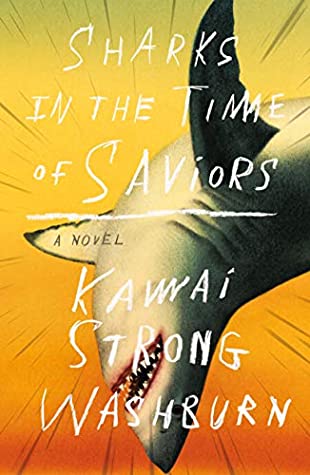
Sharks In the Time of Saviors, by Kawai Strong Washburn*****

A story like this one only comes along once in a rare while, luminous, intimate, and deeply affecting. My great thanks go to NetGalley and also Farrar, Strauss and Giroux for the review copy. This book is available to the public, and you should get it and read it.

Initially I was drawn to this book for several fairly superficial reasons. The cover is certainly arresting; the title is perplexing. But the biggest draw for me was that it was set in Hawaii, and all of the characters are native Hawaiians. In my corner of the world, the Pacific Northwest, there are a lot of Pacific Islanders. Why anyone would leave such an idyllic climate for the dark, soggy winters we see here used to be a mystery to me, but ultimately, people follow the jobs, and so many Seattle residents come from there.

As a history teacher, I’ve always felt that my students deserve to be included in the curriculum, and so in addition to teaching about Caucasians during whatever time period we’re examining, I work in African-Americans, Latinx, Native peoples, and a variety of Asian ethnicities, but time and again I hit a wall when I tried to find something for my Islander students. And when I’ve taught literature, it’s been the same struggle. Islander kids get shut out every time.  And so now I am retired, and here’s my appeal to other educators out there. Put this book in your classroom.

For the rest of you: apologies. Let’s get on with it.

As we open, the setting is Hawaii in 1995, and the protagonists are two parents and three children, all members of the Flores family. They’re on vacation when seven year old Noa falls into the ocean where sharks are circulating. But instead of devouring the boy, one of the sharks delivers him back to his family, carrying him gently in its jaws, “Like you were made of glass, like you were its child.” The first chapter is told in the second person, with Malia, the mother, recalling the event, speaking to Noa. She tells him, “The gods were hungry for change, and you were that change.” It’s obviously a miracle, and others see it happen also. Their lives will never be the same.

As the story continues, we hear from all of the family members. At first, Noa appears to be gifted with a magical healing ability, but he is still a child, and the demands on him are grueling, exhausting. But this is not the only change his magical abilities produce. Noa is the youngest child in the family, but now the siblings’ hierarchy is completely flipped, and the resentment felt by his brother and sister is dreadful. At one point Kaui, who is academically talented, fumes that she is “just his shadow, shaped like a sister.”  And his brother Dean, who is an athlete, explains:

You’re out at breakfast without him, eating cereal and joking with Mom and Dad, Kaui coming in, and you get them all laughing and smiling, just because of you. But then Noa shows up right, and suddenly it’s all questions about what’s happening with his day and did he sleep okay and here’s some thoughts about which extracurricular program he should enroll in…Hard not for get angry at that. I felt it like a fist flexing inside my own chest.

To make matters even more fraught, there’s an economic downturn that makes it impossible for the parents to support the family. They begin charging people that come to be healed by Noa, and so the youngest child is not only the golden favorite because of his miraculous ability; he’s also the family breadwinner. And again: it’s an awful lot to put on the shoulders of one small child.

The dialect combines with the authorial voice to create characters that I swear I would know if I ran into them, and in many ways, they remind me of the adolescents that I taught. Because I was so unconscionably late here, I checked out the audio version at Seattle Bibliocommons, and I have never heard an audiobook I loved more. The voice actors are so convincing that I can hear them now, more than a month and several other audiobooks, after I finished it.

For me, that would be enough. Create visceral enough characters and I don’t even care much about the plot. But the plot is also gobsmackingly brilliant! I believed I could track where it was headed up until perhaps the 60% mark, and then there’s one surprise turn, and another, and another, till at the end I was simply sitting with my mouth open and my eyes on the text as the audio gave way to the afterword and credits. I had to remind myself to breathe.

This is one of those rare galleys that I could see reading again just for the love of it. This review is my 923rd for NetGalley, and I have chosen to reread fewer than 10 of them, so let that indicate the measure of esteem in which I hold this novel.

Unnatural Death, by Patricia Cornwell*****

Unnatural Death is the twenty-seventh installment in the Kay Scarpetta series by Patricia Cornwell, and it’s as good as they get. My thanks go to NetGalley and Grand Central Publishing for the review copy. You can get it now.

For those not conversant with the series, Scarpetta is a medical examiner for the state of Virginia. She’s moved around over the course of the series, decamped to Boston, and come back. So now she’s in her old stomping grounds, but all is not well. The obnoxious, obstructive secretary she was saddled with in the last book, a miserable woman that blamed her for the ouster of the corrupt man that came before, has been—finally—fired, but somehow, she is back in a different government position in the same building, along with the corrupt guy she likes working with, so it’s tense.

Our other permanent characters are Pete Marino, who’s worked with Kay forever and is now married to her sister, Dorothy, who’s a hot mess; Benton Wesley, Kay’s enigmatic husband, a forensic psychologist that works in extremely high level situations that he can’t tell Kay about, even when they have a bearing on her life; and Lucy, her adult niece whom she has raised as her own, and who is the daughter of Dorothy. Lucy is a wunderkind, a tech wizard employed by the FBI, sometimes on loan to the CIA.

I won’t go into the premise for this installment because you can get that in the promotional blurb, but I will tell you that by the ten percent mark I was riveted, and before the halfway point my notes say, “I hate being away from this thing.” A shocking development occurs that is much more impactful to those of us that have followed the series from the start. I have heard other reviewers say that they used to read the series, then lost the habit, so I will say this: if you have read most of the series but missed a book here or there, you can still get the full measure of this thriller. If you just missed the most recent one, that’s okay. But if you go into this book cold, your very first time reading a Scarpetta book, some of the magic will be missing. Perhaps you will read it and be impressed enough to go back and binge read the whole series. It’s not a bad idea!

Any author that writes a long running, successful series like this has to flesh out the main characters to keep readers’ attention. For the first few books, pure plot-based adrenaline rushes are possible, but at some point, there’s going to be a credibility issue continuing that way. I would have difficulty believing that a forensic coroner had been kidnapped by bad guys and hurled into the back of a vehicle, bound and gagged, even once, but when it happens over and over, I’m done and I’m done. Cornwell does the smart thing instead, developing crises that are sometimes more about others in Kay’s family, but that nevertheless spill over onto her in a big way. In doing this, she forces us to examine questions that have no easy answers. For example, if an extremely dangerous development comes up that could affect you or your family, but it is also a matter of national security, and one family member knows, should they break the vows of their office in order to let you or other family members know? Or should they keep it ambiguous, along the lines of, “Maybe you should stay home today?” What if two know, and you don’t?

One way or the other, this story is a wild ride. The tension is occasionally broken up by Marino’s fixation on Bigfoot. He’s obsessed, and it cracks me up when we’re worried about killer drones and enemies unseen, and then Marino pipes up about the big ole footprint he found in the woods. For quite awhile I have wondered why Cornwell hasn’t been made a Grand Master by the Mystery Writers of America. Hopefully, this outstanding novel will serve as a clarion call. Highly recommended.

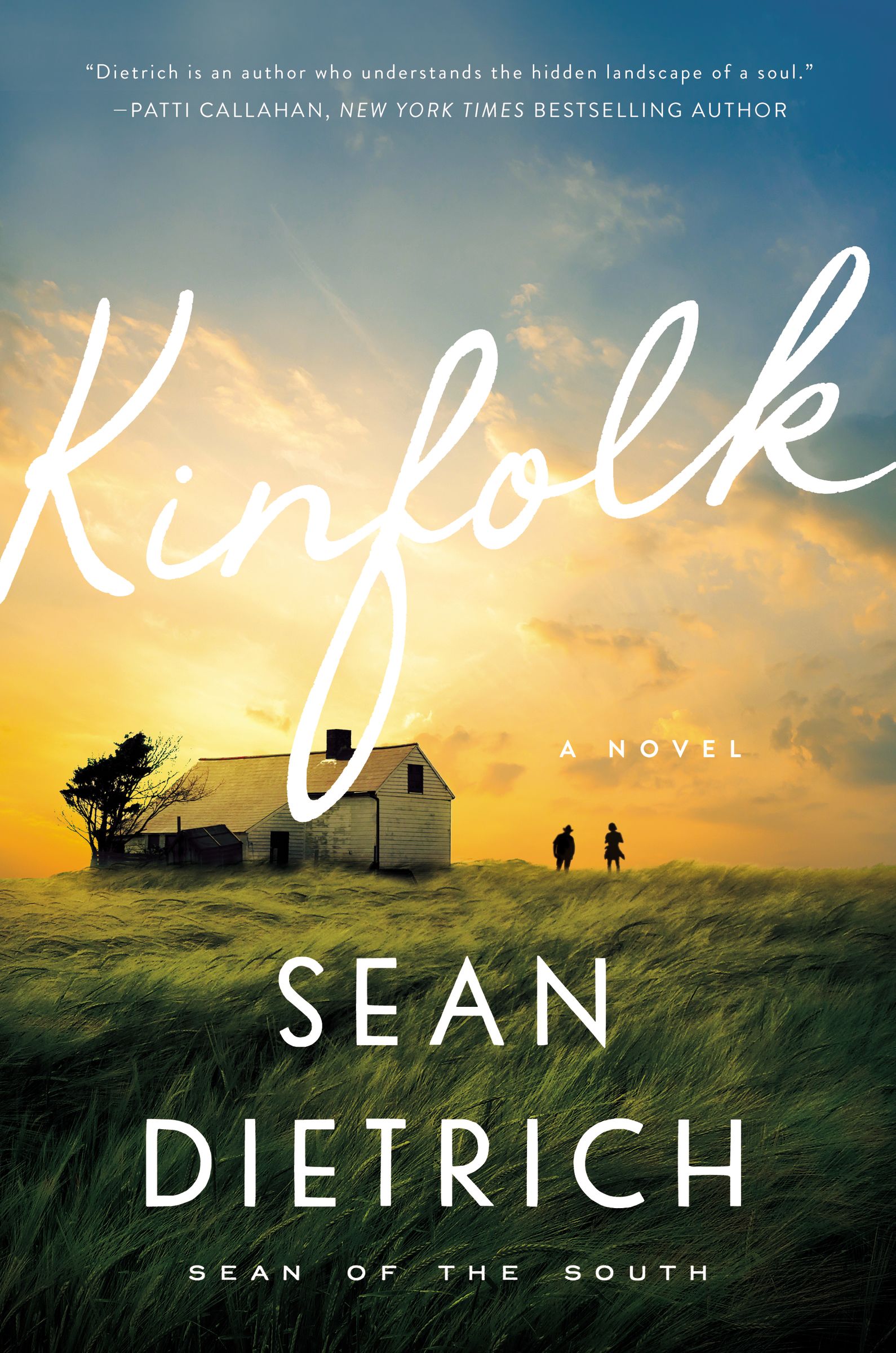
Kinfolk, by Sean Dietrich*****

“Thanksgiving is not about being happy. The holiday is not about mirth and beauty and the warmth of gaiety. Thanksgiving is about fulfilling family obligations and being miserable the way the good Lord intended.”

When we meet our protagonist, Nub Taylor, it is Thanksgiving night, and he and his cousin and best friend Benny are three sheets to the wind, idling in a rusty old truck across the street from the dignified, stately home of Nub’s daughter, Emily. Nub has been invited to dine there, but knows better than to attend. Emily is a widow; she married up, and every mover and shaker in town has shown up. No, Nub won’t be joining them. Nothing good would come of it.

My thanks go to Net Galley and Harper Muse for the review copy. This book is for sale now.

Our story is set in the 1970s in a tiny town in Alabama. Nub is long divorced from Emily’s mother, who keeps her distance these days. He takes his meals at the Waffle House, and that includes today:

“Waffle House did not close on Thanksgiving because Waffle House never closed. Waffle House was like the Vatican, only with better hash browns. Nobody on staff at the Waffle House had a key to the store, not even the manager. Because there were no keys. The doors were never locked. Waffle House just went on and on. Sort of like a disco.”

It is here that he meets Minnie. Minnie is fifteen years old and well over six feet tall. Why is this girl spending her holiday here, instead of with her kin? The answer is that she has none. Her father is in prison, and her mother has just recently killed herself.  

Of course, Nub doesn’t know these things at first, but something about her calls to him. Perhaps all children of suicide victims wear something similar in their expressions; Nub had lost a parent the very same way, and he has never gotten over it. How does anyone? He knows “the cardinal rule about suicide. You don’t talk about it.”

Now, Minnie is orphaned and she is pregnant, courtesy of a thoughtless, spoiled local boy that told her he loved her, then laughed behind her back. And so it is that Nub realizes, as he learns more about Minnie Bass, that perhaps he may have a chance to redeem himself.

This is a wonderful story, full of warmth and a lot of heart. Dietrich is a master story teller, able to create viscerally real characters that leap from the page and a narrative that billows with home truths. There is no question that Kinfolk is among the finest books to be published this year.

Highly recommended.

I Did It for You, by Amy Engel****

Amy Engel is the author of The Roanoke Girls and The Familiar Dark, both of which were unrelentingly creepy, and I loved them. When I saw that she had written another, I had to read it. My thanks go to Net Galley and Random House Dutton for the review copy of I Did It for You. This book is for sale now.

Greer Dunning’s sister, Eliza and her boyfriend, Travis, were murdered when they were teenagers. One minute they were making out in his car, and the next, boom. Someone shot them dead, right through the window. The guilty party was eventually caught and charged, and eventually admitted what he’d done, but it never made sense, especially not to Greer. She had a hunch that the killer, an intellectually disabled fellow with little imagination, had not acted alone. But he has said nothing about it, refused to provide a motive, and what he knew, he took with him to the electric chair.

Greer moved on. She finished school, moved from her hometown of Ludlow, Kansas to Chicago, where she works as a middle school counselor. But now a similar crime has occurred back in Ludlow, and Greer feels the pull, the urge to turn toward home and find out for real just what is going on.

This is a solid mystery, though not one with the sort of page turning urgency as the other two. It’s deeply atmospheric, and there’s a melancholy, brooding mood that’s thick and rich, and this is becoming Engel’s signature quality. The internal monologue is an absorbing one.

The choices that she makes while she is home make sense in a strange way, and parallels form in the most unexpected of places.

The solution itself doesn’t work for me. What? No. But the journey we take to get there makes this novel worth reading.

The only problem with writing a big-deal debut novel is that you’ve set the bar high, and readers develop stratospheric expectations for each subsequent book. So it is here. I Did It for You is a decent read, but it isn’t The Roanoke Girls, and it isn’t The Familiar Dark. Instead, it is simply a good book.

For mystery lovers that have never read anything by this author, this book is recommended. For those that have, you may want to get this one free or cheap, rather than paying full cover price.

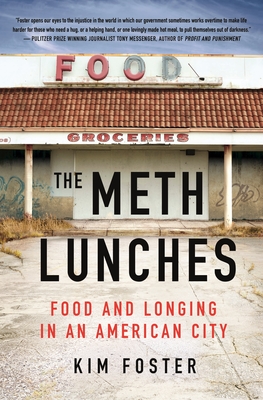
The Meth Lunches, by Kim Foster****

Kim Foster and her husband, David, create a food pantry in front of their house—and later, inside it—during the pandemic. It begins with the employment of one hungry handyman who’s also an addict, and from there, it mushrooms. This is her memoir of that time, and also a philosophical treatise on poverty and hunger in the United States.

My thanks go to Net Galley, RB Media, and St. Martin’s Press for the review copies. This book is for sale now.

When Foster’s family moves from New York to Las Vegas, one of the first thing she notices is the meth. It’s everywhere. Perhaps it is the milder weather; addicts in New York have to find a spot out of the weather during much of the year, but Vegas is in the desert, mild enough for the unhoused to sleep just about anywhere, warm enough that addicts don’t have to hide themselves away to get high.

The pandemic hits Vegas hard. So many people make their living from some aspect of the entertainment business, and for a while, it is a dead industry. And so, after hiring a man with an obvious dependency to do work on their property—work that he never completes—and hearing his story, the Fosters decide to convert the little free library in front of their home to a little free pantry. And from there, it mushrooms.

The pantry begins small, but Foster is a chef, and she can’t stand the notion of just putting out pre-packaged crap when she can cook food with fresh ingredients that will make others feel better. And as the book takes off, I momentarily regret taking this galley, because I generally hate stories that drop recipes into the middle of the plot. If I want cooking information, I’d rather go to a cookbook, or to a recipe website. And it was right there in the title, after all: The Meth Lunches. It’s pretty obvious from the get go that lunch is going to be juxtaposed with social issues.

But as the story continues, I don’t hate it after all. For one thing, this whole book is nonfiction. There’s no plot that is sidelined by a recipe. The whole point is that that Foster considers food, and the act of feeding others, to be a sort of therapy. She makes the point well.

Eventually, the scale of the operation becomes mind boggling. Multiple freezers to hold meat; trucks that deliver food. The pantry begins as an out-of-pocket gift from the Fosters to the down and out of Las Vegas, occasionally supplemented via Venmo from friends, when they are able to help. Inevitably, the pantry finds its way into the local media, and networks form with other food banks and nonprofits.

In between all of this, Foster develops relationships with some of the people that come by. She and her husband are foster parents—ironic, given their name, right? And we hear not only about what the children they house and love have experienced, but also about the children’s biological families. Because although it’s officially discouraged, Kim strongly feels that the children heal best if their biological parents are in their lives in whatever limited way is possible. So before we know it, she is deeply involved with some horribly dysfunctional adults as well. And it is the stories she tells about interacting with them and the children, two of whom she and David eventually adopt, that make this story so riveting.

At the outset, she intends for the pantry to be a resource for local families that have homes and kitchens, but whose finances have taken a huge hit due to the pandemic. The very poor already have resources, she reasons. But of course, the homeless find her, and she doesn’t turn them away.

And here is the rub, the only aspect of this book that I dislike. She tells us that one unhoused person in four is mentally ill, and she believes that this official figure is low, at least in Las Vegas. And then she talks about those with addiction issues.

But what she never gets around to discussing at all—unless she does it so briefly that I miss it—is the unhoused people that are not chemically dependent on anything, whose mental health is stable, but who don’t have a permanent residence because they straight-up ran out of money. To hear her tell it, you’d think they don’t exist, and you know that’s not so. So many American families live from paycheck to paycheck, even when the economy is said to be booming. And I feel that she has left these people without faces or voices. And that, in turn, perpetuates a stereotype, the one that suggests that everyone that is homeless is there because they’re either crazy or junkies or both. I use the offensive terms intentionally, because that’s how the stereotype works. 

And the stereotype in turn begets a lie, the insinuation that nobody has to be unhoused. Don’t use drugs. Get mental health care. Get over yourself. And whereas I can see that Foster doesn’t intend to promote such thinking, and in fact takes a hard line over poverty existing at all in such a wealthy nation, when she doesn’t give space to the many, many individuals and families that are out there because the wage earner was laid off, or because they were just squeaking by but then the rent increased, it does distort her overall picture. I don’t come away from this book thinking that most of the homeless are not using meth or any other dangerous, life-altering street drugs, even though it’s true.

Nevertheless, this is a poignant, stirring tale that won’t be told by anyone else, because it can’t be, and bearing in mind the caveats above, I recommend it to you, both as audio and print.

Happiness Falls, by Angie Kim*****

Angie Kim’s barnstorming best seller in 2019, Miracle Falls, showed us that she is a force to be reckoned with. Now she’s written something even better. My thanks to go Net Galley and Random House for the review copy. This book is for sale now.

I admired Kim’s debut novel, but because of its complex nature, it was a fair amount of work to read. Happiness Falls is every bit as brainy, but it’s streamlined, with just five important characters and a handful of secondary ones, so the reader can spend more time enjoying it and trying to puzzle out the solution, and less time trying to keep up with the plot and recall the intermittently appearing characters as it progresses.

As with her debut, this story features a main character with special needs. Eugene Parson has Angelman syndrome, a rare disorder that has rendered him incapable of speaking. This is a problem, because one day, Dad and Eugene go to the park for their daily walk, but Eugene comes home alone, bloody, disheveled, and tremendously upset. What happened? The family’s concern intensifies when Dad’s backpack is found floating downstream, but Eugene cannot speak. And so, the mystery that is interwoven into this family drama is established.

The story is told in the first person by Mia, Eugene’s older sister. Mia’s twin, John, rounds out the siblings, and their mother is the fifth family member. It’s set in Virginia during the pandemic; however, plot and character are much more important here than setting.

The mystery—what has happened to Dad—is wholly original because of the critical role played by Eugene’s communication challenges. Originality becomes more important to me every time I pick up a mystery; once you’ve read several hundred of these things, sameness can produce tedium. But this novel has much more going for it than that. The characters are absolutely believable. The teenagers are all convincing; they are age appropriate, bright but occasionally impulsive. Best of all is that there is no abuse story tucked in here. Their dad is or was a loving one, and the same is true of their mother. The parents have navigated bumps in their marriage, but by the time we hear of them, they’re fine. There’s no horrific baggage waiting to ambush us. These are nice people whose lives are complicated solely by the need to assist Eugene, whom everyone also loves. I make a point of telling you this, because I am sick to death of stories about terrible mothers. I’ve had enough of them, and am delighted Kim doesn’t go there.

Our narrator, Mia, is cleverly drawn; she is the family cynic, and she’s the family motormouth, and so if we occasionally wonder why Mia is telling us everything in such detail, it’s because Mia is a talker.

There are twists and turns all over the place. Just when I begin to think I might have a handle on this mystery, Kim throws in something else that leaves me gaping like a guppy. What? Huh? Oh. Well, there goes my theory. What now?

Because I came to this post-publication, I checked out the audio version at Seattle Bibliocommons to help me catch up. The audio is very well done. Initially I didn’t find Mia’s narrative voice appropriate because she seemed mighty chirpy for a girl that may have just lost her father; however, once Mia’s character is further developed, which doesn’t take long, I realize that the chirpiness is part of Mia’s denial. She’s very close to her dad, and she can’t bear to think that he is in danger, or worse.

I have rarely felt any interest toward any profound learning disability, but Kim made me care about Eugene and Angelman’s.

This novel is brilliant, a standout for 2023. I highly recommend it to all that love a good mystery or family story.