The Family Recipe, by Carolyn Huynh*****

“We all need to feel needed. Otherwise, what’s the point of living?”

Carolyn Huynh made her authorial debut in 2022 with The Fortunes of Jaded Women. It was one of my favorite novels not only of that year, but of all the thousand-plus galleys I have read since I began reviewing. She’s back again with The Family Recipe, and it’s every bit as good as the first. My thanks go to NetGalley and Atria Books for the invitation to read and review, but make no mistake: I would have hunted this thing down and bought it with my Social Security check if it came down to it. I wouldn’t have been sorry, either.

This book is available to the public now.

Once again, our protagonists are Vietnamese and Vietnamese-Americans, mostly women, and once again, they are siblings and other family members that must come together; it isn’t a voluntary reunion. And that’s where the similarities between the first book and this one end.

Duc Tran, the patriarch, has laid out the terms by which his children may inherit his fortune. Once upon a time, he was the Vietnamese sandwich king, and in order to become his heir, each of his four daughters must relocate to a city she doesn’t want to live in, and revive a down-at-the-heels restaurant in a now undesirable end of town. It’s a contest; that is, unless Duc’s one son, Jude, succeeds in getting married within the one year’s time limit of the contest. If he can do that, he wins. (His sisters aren’t worried; who would marry Jude?)

The story is told from several points of view; these include the siblings, their uncle—a shady lawyer, and Duc’s best friend; their mother, who abandoned them when they were small, when her mental health collapsed, and never went back; Duc’s second wife; and briefly, Duc himself, who mostly serves as a mysterious figure that doesn’t even return to the States to lay out his children’s requirements, sending their uncle as his proxy.  As the story unfolds, we learn more about each sibling, and about the traumas they have experienced, as well as their successes.

The thing that makes it work so well is Huynh’s unerring sense of timing. It’s a dramatic tale, but it’s shot full of humor, as we see at the outset, when we learn the sisters’ names. Their father was a huge fan of the Beatles, and so the girls are named Jane, Paulina, Georgia, and (wait for it…) Bingo!

There are plenty of twists and turns, and the dialogue crackles. The internal monologues are mesmerizing. This book would make a fantastic movie.

Since I was reading this galley digitally, I highlighted quotes that I thought I’d like to use in this review, but there are 28 of them. Obviously, I cannot share them all here, but let that inform you, if nothing else here has, how much I love this book.

Highly recommended to anyone that has a beating heart, at least a passing interest in Vietnamese-American culture and/or family stories, and can use a few good laughs.

Somewhere Toward Freedom, by Bennett Parten*****

Bennett Parten is a fine historical writer, and here he examines General William Sherman’s renowned march through Georgia during the American Civil War through the lens of the formerly enslaved people that followed him. It’s a job that needed doing, and I’m glad that Parten was the one to do it. My thanks go to Simon and Schuster and NetGalley for the review copy. This book is for sale now.

The Union’s approach to formerly enslaved people evolved considerably over the course of the war. (This is your reviewer talking, not Parten.) In the beginning, when both North and South thought the conflict would be a brief one—ending, of course, in their own victories—anyone that left a plantation without permission to follow the Union army was promptly returned to their owner. But this was problematic from the start, if only logistically, as such practices slowed the army’s pace and drained resources from it, all in service to the enemy. For a while, then, everything was unofficial, as gradually, the formerly enslaved were sometimes folded into the army as support staff, helping cook, set up camps, pave roads, and whatever other noncombat roles needed to be filled. Eventually the practice was codified, not because slaves were declared free—not yet—but as “contrabands” of war. The idea was that by taking the enemy’s property that one runs across, be it livestock, crops, or (wince!) human beings, one’s own forces were strengthened, the enemy’s weakened. And after the Emancipation Proclamation, the formerly enslaved could theoretically go wherever they chose, but since guns and dogs can render such a proclamation from a far away and often unrecognized authority, it seemed like a wise plan for the formerly enslaved to follow the Union army.

Prior to reading this book, I was unaware of the relative size of the crowd of followers as opposed to the army itself. As Sherman’s forces made their way through Georgia waging total war, razing fields and burning cities, the crowd behind it grew from hundreds, to thousands, to tens of thousands!

Sherman’s first obligation, as he saw it, was to win this war. The army had to be his focus. Yet, as enthusiastic followers swarmed, they needed food, shelter, and sometimes other assistance. Initially, the troops were instructed not to give food to anyone other than those followers tapped to serve the army, but it proved difficult to enforce. There were children there, and they might well starve if not fed. The army had, as an intentional strategy, denuded the farms and villages of food and other necessary resources, so telling the followers to go find their own food was disingenuous. The army had nearly all the food there was; unfortunately, it wasn’t enough for thousands of extra mouths. And at times, Sherman and his generals made an effort to prevent, or to at least not help, the followers from remaining with them.

The greatest scandal was the one at Ebenezer Creek. (Sherman himself was not physically present for this, but what happened was consistent with his policies.) Georgia was full of rivers, swamps, creeks, and bogs, and in order to cross them, sometimes the engineers constructed bridges, and then either burned them behind themselves to prevent the enemy from following, or retrieved them for later use. In this instance, the enemy was close at the rear, and the order was given to pull up the bridges just as soon as the last soldier was across. The result was horrifying: with the hounds baying behind them, the desperate followers used every possible means to try to stay with the army. Some drowned; others were captured and either returned to slavery or killed. Women and children perished in those muddy waters, and later, the Federals launched an investigation.

There were other less dramatic, yet still tragic, incidents of the same sort.

In order to solve this conundrum, Sherman ordered a series of abandoned plantations in Port Royal, an island in South Carolina, to be turned over for the use of the freedmen and women. The book goes into a fair amount of detail about how these were run, with a fierce competition between two sides for control. Despite an overly colonial administration, formerly enslaved people were able to farm for themselves, and in some cases were able to buy land with the money they earned. It was a sound, if flawed program that was ultimately destroyed when Lincoln was murdered and Andrew Johnson, a sympathizer of the South, became president and gave the plantations back to their original owners, making no provision whatsoever for the farmers that now worked them.

It is this aspect of which I knew nearly nothing. Part of this is because I am a coward; I have a dozen or more books about Reconstruction that I say I will read, but then I don’t, and that is because I know the ending will be heartbreaking. But there’s also this: conventional histories of the Civil War tend to follow one or another army, general, and so forth, and very few tell the story of what happens after the army marches onward. And so I learned a good deal from this portion of the book; and yes, my heart broke, but not as much as those of the people that were first assisted, and then abandoned by the U.S. government.

Finally, I want to comment on the notes and sources used here. They are beyond reproach, with many primary sources used, multiple sources per endnote in most cases, and well-integrated. I particularly appreciated the quotations of the followers themselves.

I highly recommend this book to all that are interested in the American Civil War, Reconstruction, and the many social and racial problems that have continued to weigh on American society ever since.

You’ll Never Believe Me, by Kari Ferrell**-***

My thanks go to NetGalley and St. Martin’s Press for the invitation to read and review. This book will be available to the public January 7, 2025.

The blurb for this book had me at hello. Korean baby girl adopted by Caucasian Americans, who then become Mormons; a childhood and adolescence rife with alienation, discrimination, and ultimately a life of crime; prison time, followed by social crusades, among them prison reform, which is hugely necessary. I was all in, but that was before I read this thing. My own daughter is half Japanese and has to listen to “Where you from?” a fair amount, so this is a sensitive area for me, too. Racial teachings within the LDS (Mormon) church are a veritable minefield, and indeed, I can see how Ferrell’s upbringing would have been fraught.

And yet, the memoir that I read was not what I expected. The memoir, the blurb said, would be laugh out loud funny; I chucked a few times at the outset, and then was mostly just horrified. I received both the digital and audio galleys, and halfway through I abandoned the audio, because Ferrell, who provides her own narration, sounds so ebullient, so proud of herself, that I couldn’t take it. Reverting to the digital made it doable, but I found myself finishing it from a sense of obligation rather than a desire to read more.

Ferrell’s friends during her adolescence are what most adults would consider to be the wrong crowd. Truancy, petty theft, lying, drinking, and drugs are hallmarks. But Ferrell neither stays there as an adult, nor reforms herself once she reaches adulthood, though her parents, even though they divorce, likely can provide her with psychiatric treatment or counseling. Instead, she escalates, and commences stealing and defrauding her friends, pretending to need an abortion, pretending to have cancer, receiving so-called loans and gifts from those that don’t have a lot of money but love her dearly, and then disappearing. Steal in Utah, move to New York City. Steal in New York, go home to the folks in Arizona. And it continues until, at long last, she is arrested, tried, and convicted.

I tried to put my finger on what it is that makes me edgy here. Why do I not believe she’s all that sorry? Partly, it’s that other people appear only briefly and vaguely here. Of course it’s Ferrell’s life that’s the focus, but I would have expected some passages that flesh out the people that have loved her and tried to help her, even if it is necessary to conceal their identities as a matter of their own preferences. What happens to them later? What hardships, if any, do they suffer because of her actions? Instead, all of them come across as shadows, and as if they don’t really matter. I would have expected some emotion around reconnecting with some of these people, trying to make amends and financial restitution, even if they don’t want to see or hear from her. She talks a fair amount about the realization that her behavior is a form of self-sabotage, cutting herself off from positive relationships, but she doesn’t talk much about how she has sabotaged, or even completely blown up, the lives of others.

Lastly, I’m disturbed by some of her assumptions. The one that comes immediately to mind is when she reminds us—as if this is well known—that lying is fun. What??

In order for a memoir to be successful, the reader must be able to bond with the author. I have been unable to do that, either because Ferrell enjoys talking about her crimes and betrayals a little too much, or because she is unable to convey remorse in her writing; either way, I cannot recommend it to you.  

Emperor of the Seas, by Jack Weatherford*****

How much do you know about the Mongol empires? If you grew up in the U.S., chances are you answered, “Absolutely nothing.” The world is a big place, and world history has never been much of a priority in American schools; we study various phases of U.S. history, state history, and in a wild flurry of internationalism, some districts now teach a semester of Canadian history. The single year of world history in high school is usually devoted to World War II, which is impossible to teach without including information about Europe, and a smidgen about Japan along with, yes, more American history. There you go. Here’s your diploma.

In my retirement years, I have reveled in the freedom to learn about the history that wasn’t on the syllabus for what I studied, and later, what I was hired to teach. Having marched my way through various other times and places, I realized that I knew nothing about the Mongol khans. I read one novel about Genghis, and I was hooked.

My thanks go to NetGalley and Bloomsbury for the review copy. You can buy this book now.

If you’re going to read a single nonfiction book about the Mongols, this would be a fine choice. Jack Weatherford’s research is outstanding, including works in several non-English languages that most of us couldn’t hope to read on our own. His scholarship is so meticulous that he has been awarded both of Mongolia’s top national awards. Not half bad, for a boy from South Carolina. And while this book is not written as narrative nonfiction, the tone is conversational, the language accessible. I read it daily at lunch time, and it wasn’t long before I was shouting out random, amazing facts to family members that dared venture into the kitchen.

It began with Genghis, a young man whose family was left homeless, left to freeze or starve when his father and protector died. With desperation, talent, and ruthlessness that he learned well, he turned it around, and as he grew up he vanquished his enemies, brought the most talented and trustworthy elements to himself, and let the devil take the rest. His instinct for military strategy was a thing of pure genius. But this book is mostly not about him; it’s about his grandson, Kublai Khan, who expanded the empire Genghis began until his domain stretched from Baghdad to the far shores of China.

Until Kublai arrived, Mongols were an inland people, but it was Kublai who realized that in order to expand and become a world power, he had to have ocean-going vessels and people that knew how to use them. The peoples of Southern China were tough to defeat, but once it was done, he was able to use their technologies in ways that were of immeasurable value.

The progression looked like this (in a very simplified version): Genghis conquered, and took no prisoners, with a few rare exceptions. Kublai conquered, but also used diplomacy, highlighting the potential benefits of becoming a Mongol subject; he didn’t routinely kill everyone he defeated. And under Kublai’s son Temur, the Mongols segued from physical battle to economic dominance, making China’s ports the ideal destination of merchants from all over the world.

One of the most interesting things I learned had to do with the authority that was vested in the women of the highest placed families. When the men rode off to conquer, it was women that looked after the business interests and saw to local governance. It worked out nicely; Europeans should have taken note.

I can’t compare this book to others because I haven’t read any others on this topic cover to cover, but I wouldn’t let that stop you. If the Mongols are persuaded that Weatherford has done the work and done it well, who can argue? I learned a great deal and enjoyed it, and so I highly recommend it to you.

The Chinese Question, by Mae M. Ngai****-*****

Mae Ngai is an award-winning author and a professor at Columbia University. In her third book, The Chinese Question, she examines the race relations and to some degree, the economic underpinnings of the Chinese diaspora.

My thanks go to NetGalley and W.W. Norton and Company for the review copy. I am disgracefully late, but when I began reading this book I realized that if I were to absorb and retain anything here, I would need to take it in small bites. That said, this is an unusually well researched work, and it’s well worth the time and attention of anyone interested in the topic.

Usually when I see research having to do with Chinese immigration, it is within the context of immigration to the United States, or an examination of the push factors of emigration, examining why Chinese chose to leave their native land and embark upon an expensive, dangerous, and uncertain journey to a place they’d never visited—in most cases—and where they usually did not speak the language. Instead, Ngai examines it as a global diaspora that includes English speaking nations, namely South Africa, the United Kingdom, Canada, Australia, and the United States. In doing so she is able to highlight the similarities of treatment, to put it politely, and also to dismantle some of the stereotypes that have rooted themselves in English speakers’ knowledge of history.

For starters, she wants us to know that Chinese immigrants were not necessarily “coolies” or indentured workers, and they didn’t always face conflicts with Caucasian powerbrokers. But there certainly were a great many blood chilling abuses, sometimes brought about by White fear of the “other,” but oftener from greed and the desire to exploit the Chinese working class and eliminate competition from the businesses of better off Chinese.

This study is adjacent to my own graduate study topic of many years ago, when I examined the “Model Minority,” and the attempt to counter the demands of U.S. Civil Rights activists of the 1950s and 1960s with the suggestion that Black people quietly accept abuse and quietly climb the economic ladder, or not, as Asians of Chinese and Japanese descent had supposedly done. Ngai demonstrates that Chinese immigrants weren’t all that quiet, and they weren’t all that accepting of maltreatment at the hands of employers and local officials. This is interesting material indeed, and I wish I had known these things sooner.

As a general read for a wide audience, this may be a four star book because it is dense and has an academic approach that not all pleasure readers will appreciate; however, for those with a strong interest in the topic, whether for academic research or personal knowledge and growth, it is hands down the best work I’ve seen in decades.

Highly recommended to those passionate about the issue.

Left for Dead, by Eric Jay Dolan***-****

When I saw this book, I was eager to read it. Shipwreck, treachery, and survival? It doesn’t get a lot more exciting than that. I signed myself up for both the digital and audio galleys, and settled in to immerse myself in history.

My thanks go to NetGalley, RB Media, and W.W. Norton and Company for the galleys. This book is available for purchase now.

The book is well paced and well researched, with plenty of quotes from primary sources. The events described take place during the War of 1812, and involves British and American ships and crew members, none of them particularly lovable, but definitely resilient and ingenious at surviving in extremely dangerous conditions. The men on the American ship have been at sea since before war was declared, and are astonished to find themselves prisoners of war when they are rescued by the British at one point. There are a great many twists and turns, and this is one of those stories that would be considered completely unrealistic if written as fiction. What an experience these sailors endured!

Nevertheless, I am not the best audience for this story after all. I came into it thinking of history and survival, but when I applied for the galleys, I didn’t appreciate the word “sealer” in the ship’s description. Sealer, as in clubbing the seals to death. Hundreds! So easy! Filling the hold of the ship and…I will spare you the rest, since I was unable to spare myself. I sternly reminded myself that this was a different time period with different societal expectations. No animal had been declared endangered, and there had been no technologies that would render the need to wear animal skins for warmth obsolete. People need to stay warm and dry; seal skins will do that for them. I vowed to let it slide past and focus on the rest of the book; but it never slid past, because it was mentioned again, and again, and again, not with a tremendous amount of detail, yet far more than I needed or wanted to hear.

Yes, a baby is born on the ship, but that babe gets about three sentences. Yes, there’s a dog on board, and he saves the crew members many times over, but his heroics don’t show up until the last portion of the tale, and although other reviewers have said that the book is worth reading for this alone, I must respectfully disagree.

Clearly there are a number of people that appreciate and enjoy this book, and I agree that it’s important to document historical events, but I finished reading this thing weeks ago, and I still get a sour gut remembering. If you still want to read it, then do so, but it’s important to go in with your eyes wide open.

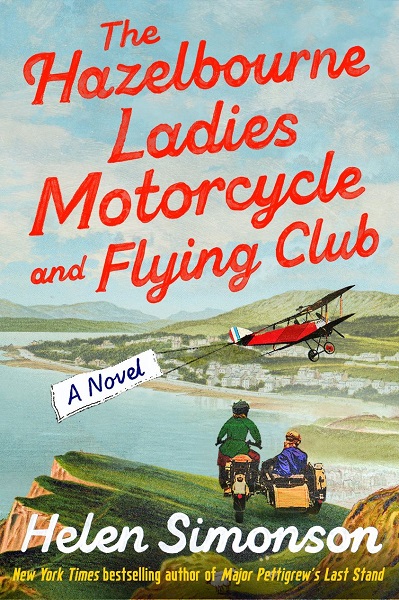
The Hazelbourne Ladies Motorcycle and Flying Club, by Helen Simonson*****

Helen Simonson is the author of the bestselling novel, Major Pettigrew’s Last Stand. With her new release, The Hazelbourne Ladies Motorcycle and Flying Club, she is once more in her element, creating believable characters and using them to skewer the pervasive racism and class snobbery of Britain, and also, in a smaller way, that of the U.S.  With outstanding word smithery and an unflagging pace, this historical novel should be number one on your summer reading list.

My thanks go to NetGalley and Random House for the review copy. This book is for sale now.

The year is 1919; the place is England. Constance Haverhill has been ousted from her job running an estate; the Great War has ended, and now the women that have been gainfully employed and done a fine job are unceremoniously ejected so that their jobs may go to the men that have returned from the conflict. For the time being, she has a position as a traveling companion to a family friend who’s recuperating at the seashore; once this situation ends, she has no idea where she’ll go or what she’ll do.

Out of nowhere comes Poppy, a daring young woman from a wealthy family. Poppy wears trousers and drives a motorcycle; she befriends Constance and sweeps her into her motorcycle club. Things become even more interesting when Poppy purchases a used biplane to bring home to her brother Harris, a handsome but severely depressed young man who’s lost a leg in the war. At one point he laments, “They look at me as if my brain has gone missing along with the leg. Or rather they refuse to look at me at all.”

Poppy is utterly fearless, challenging local authority and promoting women’s rights. She doesn’t care about the opinions of others; her eye is set on the horizon. And she can do that, because she has a soft nest in which to land. At the same time, Constance is always aware of the stark class division that prevents her from behaving as Poppy does.

“Respectability was the currency in which Constance knew she just trade for the foreseeable future. She…did not have Poppy’s wealth and position from which to defend herself against notoriety.”

There are a number of amusing side characters whose less progressive attitudes contrast with Poppy’s. The two women—also very wealthy—on the adjoining estate sniff at her exploits and declare them to be unladylike. The class division is also highlighted when Constance is offered a position with the hotel where she and Mrs. Fox, the family friend she accompanies, are staying. However, she is told that once she accepts the offer, she can no longer be a guest at the hotel, nor may she use the restaurant, which is a frequent gathering place of Constance’s new friends. No hobnobbing with the clientele will be tolerated; she must use the back door. Constance reflects to herself that wherever she goes, her friend Poppy will use the front door.

Britain’s racist attitudes toward people of color is also featured here, but in a way that does not hijack the plot. There’s an Indian guest of the hotel that is snubbed left and right; at one point, an American visitor attempts to have him excluded from the social events to which he’s been invited. This is resolved in a deeply satisfying manner, as is the issue of taboo friendships formed by Mrs. Fox.

If I could change one thing, it would be to add a bit more nuance. The bad characters are oh so bad; and while the good characters make the occasional mistake, we never doubt their complete goodness. However, this is a minor bone to pick, and overall this is a delightful book.

Highly recommended.

The Great Divide, by Cristina Henriquez*****

I found The Great Divide, by Cristina Henriquez, on a short list of most anticipated novels of 2024. I don’t like to get shut out when a book gets this much buzz; then there’s the added draw of an unusual setting. The U.S. doesn’t see a lot of fiction published that’s set primarily in Panama during the early 1900s, and so that sealed it. My thanks go to NetGalley and Harper Collins for the review copies, both audio and digital. This story lives up to the hype, and I recommend it to you.

I am not so sure about it at the outset. There is a robust quantity of characters that are important to the story, and each of them is given a brief chapter all to themselves. I wonder whether they will ever intersect, or if this will turn out to be a collection of short stories, but before much longer, characters are meeting other characters. They don’t all end up together in the end, but we can see the ties that have formed. There are a lot of people to keep track of, and for me, having both the print version and the audio is tremendously helpful. Robin Miles narrates in a way that is natural and fluid, and I don’t notice much of what is around me when I listen to her. But once in awhile a character is mentioned and I draw a blank; here is where the Kindle version is essential, because I highlight the names of each of the characters, and this enables me to instantly flip back to where they were introduced to us without having to stop listening. Eventually, of course, I no longer need to do so, but knowing that I can makes for stress-free reading.

I am engaged with these characters, each of whom feels real to me, and I groan when I see them get into trouble, and sigh with relief once they are in the clear again. The ones that I care about most are a father and son that are estranged from each other, neither wanting to stay that way, yet both of them incorrectly interpreting the silence of the other. As we reach the climax, I can tell there are three ways for this situation to resolve: they can reconcile; one of them can die; or the son can decide to follow another character back to the U.S.A. without reconnecting with his dad.  It only now occurs to me that there was a fourth possibility, which was to leave them still estranged at the end; but by this time, Henriquez had shown herself to be a better writer than that, and while I won’t tell you how they wound up, I will say that she didn’t leave her readers dangling.

Because this is an intricately woven tale with a lot of equally important characters, I’m not including any quotes, but I will say that Henriquez is a talented writer, and anyone that loves good historical fiction should get this book and read it. This applies even more so to those interested in Latin American history and the building of the canal. I hadn’t read her work before, but she’s on my radar now, and I look forward to seeing what she writes next.

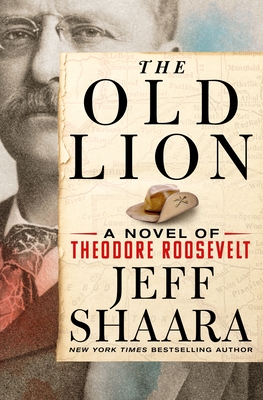
The Old Lion, by Jeff Shaara****

There are a good many books that have been written about President Theodore Roosevelt, and no two are exactly alike. That said, the two I’ve read—this one, and a biography by Clay Risen—could not be more different. In fact, you would never know they were writing about the same man.

My thanks go to Net Galley and St. Martin’s Press for the invitation to read and review. This book was published in May, but it took me some time to push my way through it.  I started out not knowing what tack Shaara would take here, and it is this introductory note that caused me to sit back a bit:

“Few, very few, would disagree that Theodore Roosevelt ranks high among the most revered, most respected, and most admired presidents in history.”

I guess it’s time for me to change my name to Few.

Because I had signed on for it—on the strength of my admiration for its author, whose books I always read without regard to topic—I hunted down the audio version at Seattle Bibliocommons. The voice actor that reads it is second to none, and does a remarkable TR impression. But I also have to say that the various thoughts and conversations which the historical fiction genre permits its author to create seem a bit on the rosy side. Where is the TR that not only organized volunteers, himself included, to fight in Cuba, but used vast amounts of his family’s connections and wealth to advocate for it? Where is the braggard that crowed to his friends about how much he enjoyed shooting an enemy soldier from just a few feet away “like a jackrabbit,” and called his 45 days of combat the ultimate hunting trip?

This is one more reminder that all history is political. Nobody will, or should, write a book about a public figure that uses every single fact available, but it is when the author chooses what to include, and what to leave out, that bias shows. There’s no way around it, even for the most objective of writers.

I cannot deny that there were positive aspects of TR’s tenure in the White House (which he named,) the birth of the nation’s park system, beginning with Yellowstone; he also gets points for having seen, ultimately, that these are not meant to be preserved as hunters’ playgrounds, but rather to preserve the natural life, including animals, that are native to the park. His attitude toward women and Black peoples’ suffrage is laudatory, compared with other politicians of his time, but Shaara doesn’t comment on the ugly racist attitude Roosevelt displayed toward other races and ethnicities, most notably those from Central and South America.

This is a four star read because no matter what he chooses to write about, Shaara spins a tremendously entertaining tale. If you choose to read this one, I recommend you obtain the audio version, and take the dialogue and in particular, Roosevelt’s innermost thoughts with a larger than usual grain of salt, and also read a second, nonfiction work for balance.

The West, by Naoise Mac Sweeney****-*****

4.5 stars, rounded up.

Those that have taken a course on Western Civilization—as college freshmen or otherwise—are familiar with its framework, that the modern world can attribute its earliest, most progressive, democratic, and technically superior attributes to the dead White European men that came before us. Archeologist and award-winning historian Naoise Mac Sweeney has taken a sledgehammer to this construct, proving that many of the smartest scientists, inventors, and social, military, and political leaders were not White, not European, and not male.

My thanks go to Net Galley and Random House for the review copy. This book is for sale now.

Mac Sweeney demonstrates her thesis by discussing fourteen key figures from the past that don’t fit into the standard framework. She begins with Herodotus and ends with Carrie Lam. Some chapters read like a college text or lecture, one where I know that this information is important, but my mind keeps wandering, and I check to see how much longer the chapter will be. Others woke me up. In chapter seven, she features Safiye Sultan of the Ottoman Empire. She was not legally able to become sultan following her husband’s death, so she saw her son installed, and then “summarily executed” his nineteen younger brothers to prevent anyone from contesting his right to rule. Another that made me sit up and take notice is Njinga of Angola. I was riveted by this one, to the extent that I actually shouted at one point. (It’s all right; I was at home.)  If we judge her work by whether she has proven her thesis, then unquestionably she has done so. 

There are two aspects that I didn’t care for here. The first is a mannerism. The use of the Victorian “we” is grating. “As we shall see…” “We have discussed…” No. She has already seen, and the only one doing the discussing within the pages of this book is the author.  Also, since the title itself identifies this tome as a history book, Carrie Lam of Hong Kong, whose quotes date from 2021 and 2017, has no business being included here. History is defined as what has occurred fifty years or more prior to publication. Mac Sweeney knows this.

In a fit of pique over these two flaws, in addition to the snoozy parts of the narrative, I initially rated this book with four stars, but this is a groundbreaking body of work, and after reflection, I changed my rating to 4.5 stars, rounded up.

Highly recommended to students and to anyone interested in world history.