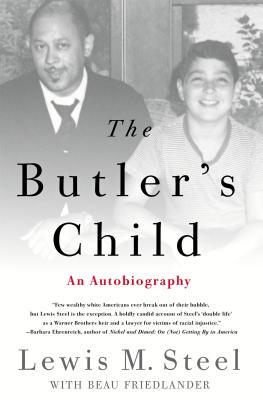
The Butler’s Child: An Autobiography, by Lewis M. Steel****

thebutlerschildLewis M. Steel has a long, noteworthy career as a civil rights attorney.  He was an observer during the Attica Prison riots; worked for the NAACP during the Civil Rights movement, and later defended boxer Hurricane Carter against a frame-up charge of murder. And I was permitted to read this story free and in advance, thanks to Net Galley and St. Martin’s Press in exchange for this honest review. I rate it 3.5 stars and round upwards; it is now available to the public.

When I first approached this title I expected to see what the life of a butler’s son was like. In fact, Steel’s social class is at the other end of the spectrum. An heir to the Warner Brothers fortune, he spent much of his time in the company of the family butler, and he was deeply affected by the emotional distance that this family servant, whom he had innocently regarded as a father figure, began to demonstrate as Steel grew older. Later, as an adult, he realized that this faithful retainer, an African-American man, surely had a family and life of his own that he went to visit on his two half-days off work, and he began to wonder what he might do to tear down the wall between the worlds of Caucasian families and Black folk. Ultimately he decided to become a civil rights attorney, and he credits the man that helped raise him as a key reason.

The NAACP of the Civil Rights era—the National Association for the Advancement of Colored People– was deeply immersed in litigation as a means to end segregation. Again and again, racist judges sat in court, north and south alike, and they told the NAACP to go to hell even when their evidence and research was baldly, plainly in the plaintiff’s favor. The NAACP continued to push litigation over mass action because of a strong conviction that if they could get a case heard by the Supreme Court, relatively liberal in many regards and headed by Chief Justice Warren, then surely justice would be done.

It didn’t shake out that way. Outraged over the way the nation’s highest court failed to provide equal protection to its Black citizens, Steel wrote an article for Time Magazine titled “Nine Men in Black Who Think White”, and was summarily fired from the NAACP, who still wanted to curry favor with that court. Many of his colleagues walked out of the NAACP offices in protest.

A common question among Caucasians that want to fight for the rights of people of color in the USA is what can we do?  How can one use this white privilege that exists whether it should or not, to change US laws and society for the better? And this question is raised exponentially when one is an heir, a ruling class scion that can do a tremendous amount for the cause in which he believes.

This reviewer has a friend that found himself in this situation. The distant but only heir of a corset magnate’s fortune, he decided that the best way to seek justice was to walk his talk. Reserving a small percentage of the fortune for himself—which is still a tasty enough chunk to own a middle class home in Seattle, take a vacation abroad annually, and eat in restaurants instead of his own kitchen—he donated the vast majority of his personal wealth to the organization he thought best. He doesn’t live in an all white neighborhood; doesn’t have a household staff; and he does blue collar work on the railroad so that he can talk politics with other working people. Because to help people the most, one needs to be among them and facing similar circumstances to those they face. So he gets up at crazy o’clock in the morning, goes out and gets greasy and banged up with everybody else, and then he goes home and cleans his own house and mows his own grass. He gets that more people listen when you put your life where your mouth is, and he believes the future of the world lies with the working class.

So when Steel commences his hand wringing over how wealthy, how privileged he is and how bad he feels about it, I want to say, Cry me a river. Steel freely admits that he enjoys his lovely home that looks down on Central Park and allows him a lovely view of the Macy’s Parade every Thanksgiving. He enjoys the servants, and his neighborhood is all white. He sent his children to all white private schools even as he fought to integrate the public schools that he wouldn’t let his own children attend in any case.

At one point, Steel mentions that his therapist told him to stop whining, and I wanted that doctor here in the room so I could offer him a high five.

Now that I have addressed the elephant in the room, I have to say that Steel’s memoir, despite the wealthy liberal whining, is worth a read for those interested in Civil Rights history and in particular the part of it that has played out in the courtrooms. You don’t have to like the author to benefit from the treasure trove of information in the pages of this memoir. Steel has been involved in some landmark cases, and he is at his best when he talks about the cases he has taken and how they shook out.

Black lives DO matter, and those of  us that think so need all the information available to fight that fight, and there are many worthwhile lessons that still apply right here, this book is worth your time and money regardless of whose memoir it is.

This book was released earlier this month, and is available for sale now.

Florence “Flo” Kennedy: the Life of a Black Feminist Radical, by Sherie M. Randolph***

Florynce Flo KennedyFlo Kennedy was a force to be reckoned with, dismissed by a portion of mainstream Caucasian America as a kook, yet far too clever, too cagey, and too damn smart to be wished away by those that wanted to defend the racist, sexist status quo. When I saw that a memoir of her life was up for grabs at Net Galley I requested a copy immediately, and then took a long time to finish reading it. Part of my tardiness is a stubborn dislike for the PDF format, and so I apologize to University of North Carolina Press and my readers for being so slow; yet a small part of it was the surprisingly dry quality of the memoir. Given the subject, I had expected this biography to set my hair on fire.

Though she was new to Randolph, according to the introduction, Kennedy was no stranger to those of us in the Boomer generation. Her audacity, her wit, and her raw courage that at times bordered on recklessness made for great theater and fascinating press coverage. Raised by parents that taught her not “to take any shit” long before the Black Power movement or even the end of Jim Crow, Kennedy pushed the margins. She studied, worked, and fought her way into Columbia Law; she defended famous individuals like Billie Holliday and Stokely Carmichael, and she did it with style.

By far the most significant part of her legacy was the leadership she demonstrated in bringing together the women’s movement of the late 1960’s and 1970’s with the Black Power movement. As a young woman sending out my own tendrils into the larger world apart from high school and my parents’ home, some of the most influential feminist speeches given were by Kennedy and Gloria Steinem, and sometimes they appeared together. I never got to see them in person, but it didn’t matter that much, because I knew what they had written and what they had said, and soon I was attending meetings of NOW, the National Organization for Women, which was the leading women’s rights organization in the US before their split over women in the military later in the 20th century. Because of women like Kennedy and Steinem, I fundraised my fare to national marches on the Capitol for women’s right to choose whether to reproduce, and to fight for the Equal Rights Amendment.

So I owe Kennedy a great deal.

Kennedy’s confidence and controlled rage positively crackled; she made headlines and was often seen on the evening news. Once when I told a classmate that I wanted to support a female candidate for president of the US, he told me that if I was going to vote for a protest candidate, I should shoot for the moon and vote for Flo Kennedy.

He had a point.

I don’t agree with everything Kennedy said or did, particularly her suggestion that rather than expending great effort to end the US war against the Vietnamese people, Americans should focus their energy toward supporting Black owned businesses. Say what? But nearly everything else she did was so vastly ahead of her time that it made me gasp in awe.

I understand that a memoir produced by a university press is generally going to be scholarly in nature, and that’s one reason I request works like this that are associated with such reputable sources. But a scholarly treatment doesn’t have to drone. By arranging a few of Kennedy’s livelier quotes up front and at chapter beginnings and endings, she might receive the treatment she deserves, instead of being consigned to the dustbin of history a mere decade, give or take a year, after she wore a tee shirt reading “I had an abortion” during her most senior years.

So although I know Randolph is new to Kennedy and probably also has some academic parameters within which she has to work, I still feel that Flo’s memoir should reflect her verve and character to a greater degree.

Nevertheless reader, if you care about women’s rights and the rights of African-Americans, if women’s history and African-American history hold meaning and importance for you, I think you should read this memoir anyway, because as of this writing, it’s really the only memoir of Kennedy that’s available. You can find some of her speeches in feminist collections, but no one else has tackled this woman’s life, and so until and unless something better comes along, you should get this and read it. Because a dry, somewhat conservative treatment of Kennedy is better than nothing.

The Man Who Cried I Am, by John A. Williams*****

TheManWhoCriedIAmThe Man Who Cried I Am was originally published during the turmoil of the late 1960’s, in the throes of the Civil Rights and antiwar movements, and following the assassinations of President Kennedy, his brother Bobby, Martin Luther King Junior, and Malcolm X. Now we find ourselves in the midst of a long-overdue second civil rights movement, and this title is published again. We can read it digitally thanks to Open Road Integrated Media. I was invited to read it by them and the fine people at Net Galley. I read it free in exchange for an honest review. It is available for purchase now.
The story is a fictionalized account of the life of writer Richard Wright, one of the giants within African-American literature. I am ashamed to say that although I did pick up a copy of both Native Son and Black Boy, his two most famous books, they were still perched on my to-read pile when this invitation rolled in. I found myself perusing this meaty material without knowing anything about Wright himself, apart from his legendary stature and his occupation. I wanted to be able to give my readers a strong critical analysis of this novel, but I have really struggled with it. I found myself having to do a Wiki search in order to figure out whether Max Reddick or Harry Ames was supposed to be Wright. It’s embarrassing. I will read it over again and try to publish something more useful than this review in the future, but I promised to publish my thoughts on the book no later than today—a week following its release—and so I’m going to tell you what I can.

As literary fiction, it’s strong. Ames, who is Wright, as it turns out, and Reddick, who is James Baldwin fictionalized, go on an Odyssey all their own, leaving the USA and its myriad racial issues behind for Europe. A number of other historical luminaries are recognizable in its pages by different names, in addition to those called by their real names, such as Dewy and Truman, and philosopher Camus. The time period spans from post-World War II to the Civil Rights movement.

So many social issues are embraced here that I found myself making far more notes and highlighting more quotes than I can use. The debate unfolds as to how the Communist Party USA treats artists, as opposed to workers, and even touches briefly on the assassination of Trotsky at the hands of a Stalinist agent. Discrimination against African-American (then referred to as Negro) soldiers in the Buffaloes is part of Reddick’s inner narrative. Black Pride had not yet had its day, and Black men often coveted relationships with Caucasian women, partly, as Malcolm X later pointed out, from self-hatred, partly as a social status symbol, and occasionally for the practical material benefits of marrying into, or becoming aligned with, a woman that had access to money. But this was also a double-edged sword, because the women’s movement hadn’t occurred yet either, and women were supposed to stay home and have babies while their men went off to work.

The whole thing is very complicated.

In this time prior to the 1973 Roe vs. Wade decision that made abortion legal for American women, an unwanted pregnancy is dispatched by a doctor who is supposed to be quite good and risk free, but of course, the procedure is not legal, and there are no emergency facilities available. One of the characters loses the woman he loves when she bleeds to death after a back-alley abortion. This is not intended to be the primary focus of the book, but it’s huge to me, and so it stayed with me.

Be aware that there are scores of ugly racist terms, used for the purpose of highlighting racism, as well as sexist terms and references to gay men as the f-word. All references are either there because of the time period in which the story is set or for the purpose of defining the struggle of the Black man in America, but readers have a right to know and to brace themselves. There are descriptions of the atrocities visited upon European Jews during the war, as well as references to their struggle in the USA, primarily New York City; again, there are some ugly terms used.

Should you read this title? Not at the beach. This excellent novel is for the serious student of African-American history and for the history student focused on social justice. It’s more than worth your while, and I will re-read it myself after I have read Wright’s work. Just understand that there are many, many historical references that will make you reach for Google. The story was written during a time when the average reader had most of these things—from clothing styles such as zoot suits and pegged pants, to offhand references to the cigarette jingles that once punctuated our radio and television broadcasts as frequently as Coke and Pepsi do now, to slang terms whose use is either gone or worse, changed to mean something else. For example, if someone is high, they haven’t been using street drugs; they are drunk. None of these things is explained to the reader. We must have them stored in our memories; search for the meanings of unfamiliar references; or attempt to understand the text without knowing them.

I consider this literature to be accessible only to those that read at college level.

Highly recommended for those that take African-American literature and history seriously, and whose reading ability is well above average.

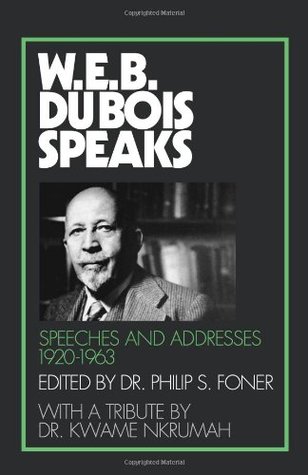
W.E.B. DuBois Speaks: Speeches and Addresses, by WEB DuBois*****

WEB DuBois SpeaksI read this book about 2 years ago, and then found I was intimidated by the 60 multicolored sticky notes that I had used to flag all the brilliant passages, and so I told myself I would review it…later. I didn’t have a DRC this time; I bought that book fair and square at full jacket price from Pathfinder Press many years ago, and then my life was too hectic for me to find time for it. And make no mistake, this is not a collection you want to take on while multitasking. This is deep, serious, articulate writing from one of the most brilliant civil rights leaders the world has yet known. And so although he has been dead for a long time, like Dr. Martin Luther King, his words have made him immortal. I recently read and reviewed another title about this luminary scholar and class fighter, and that reminded me that I had some unfinished reviewing to do for him…or maybe for me. Here we go.

It was DuBois that wrote The Souls of Black Folk, a wrenching reminder that even those Caucasian folks up north that think they have no racial biases, often have some issues they haven’t yet faced. It was true when he wrote it, and I’m sorry to say it is largely true today as well. In the letters and speeches, he takes the pain laid bare in that famous book and explains what the source of racism is, and what we can do about it.

Dr. King wrote the intro to this series of speeches and letters, and I actually liked that introduction better than I like the Dream speech. It has more substance. When you get this book, for heaven’s sake, don’t skip the introduction. In fact, the book is worth having just for the introduction.

Because it is a collection rather than a memoir, it isn’t linear. The opening text is a short overview of his own life, and so when we come to the second piece in the book, the reader steps backwards in time. Although it’s harsh and hard to read in some places because of the writer’s capacity to convey the pain that he and other Black folk have endured so that everyone can at least taste it for a moment, there is more to it than that. This volume is singularly useful, because in addition to laying America’s problem out bare and plain, DuBois has concrete recommendations for change. They are radical, but then we’ve seen what band-aid measures and the electoral process has done for Black folk, and anyone that regards the matter with any degree of seriousness has to recognize that what’s happened so far is a train wreck, primarily for African-Americans and other people of color, but also for all Americans, because those of us that have lived here for our entire lives have been denied the capacity to find out what it’s like to live without racism.

Is that asking too much?

DuBois became a deeply political individual, a Marxist that founded the NAACP, and eventually left that same organization because of political disagreement. He provides a thorough explanation of his experiences and reasoning. When he presents the problem as an economic one, it provides a path forward, and although he is gone now, it isn’t too late for the rest of us to climb on board, if we care deeply enough to do so.

DuBois’s speeches and letters reflect the progress of his thinking, and so some of what he says toward the end is very different from the ideas set forth earlier. It’s a good idea to read it in order, even though it’s a collection, because then the reader can see his personal and political evolution. I don’t think there has ever been anyone more articulate, more brilliant as a writer and speaker, than DuBois.

If you agree that the USA needs big change in order to end the institutions and practices that have created second-class citizenship for African-Americans, and if you want to see justice done for the families of all the men, women, and children that have lost their lives at the hands of racist cops and vigilantes even during the tenure of America’s first Black president, then you ought to get this book. It’s radical, but maybe it’s time to consider radical measures. Because the government and the elected officials that run it won’t correct this problem for us. We can’t leave it in the hands of others; we have to do this ourselves.

And DuBois explains it better than anyone else.

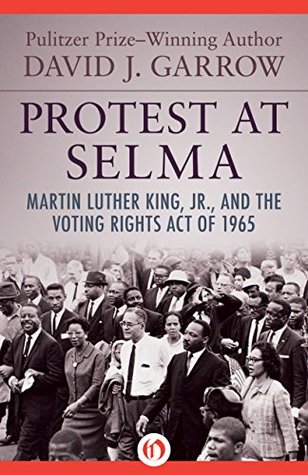
Protest at Selma: Martin Luther King, Jr. and the Voting Rights Act of 1965, by David J. Garrow *****

protestatselmaThis newly released digital version of Garrow’s outstanding, comprehensive recounting and analysis of the famous Selma demonstrations carried out by Martin Luther King Junior, other civil rights leaders, along with masses of African-American civil rights activists could not be more timely. In 2013, the Voting Rights Act passed in 1965 after a lot of effort and sacrifice was gutted. The US criminal “justice” system has drawn the eyes of the world, and they aren’t friendly eyes. Thank you, and thank you once more to Net Galley and Open Road Media for making the DRC available for me to read, and for publishing this excellent book digitally for you to access also.
Please be aware that this is not a popular biography of the struggle, but a scholarly one, and will be most appreciated by those who, like your reviewer, have a strong interest in the topic, or who are doing research. In that spirit, I encourage those who also read it to access the endnotes. Garrow has some really interesting remarks, and his references and cross-references will make any researcher bow in awe.
Many people don’t know that Dr. King entered the struggle as a civil rights novice, newly out of graduate school and just 26 years old. (Open Road has also just released the digital version of Garrow’s Pulitzer-winning biography, which I have also reviewed.) Initially his hope was to shame segregationists into integrating schools and providing equal services to Black Southerners. The failure of the movement to make any in-roads in Albany, Georgia convinced King and other leaders that this method would not work. Instead, the eyes of the nation must be made to witness the injustices being meted out in Dixie. For the media, both print and television, a relatively recent mass media source, to pick up events there, they needed to demonstrate in a nonviolent fashion, not back down, and do so in a place where a nasty, violent response on the part of Caucasian cops could be counted upon. In other words, no change could take place without confronting Black America’s worst nightmares head on and intentionally.
Birmingham was the first place this was attempted. Bull Connor was known for gratuitous violence, and the footage of some really ugly aggression, especially the widely-circulated photo of the cop holding an unarmed demonstrator in place while siccing a huge German Shepherd on him, prodded the consciences of Caucasian viewers in the North. (Many Northerners of color were already funding the movement; musician Harry Mancini was one important fundraiser.)
But the attempt of Birmingham demonstrators to effect change was limited. Although it drew international attention, the Kennedy administration seemed more intent on finding ways to shut King and the Southern Christian Leadership Conference down than they were on creating adherence to Federal laws that gave Black folks equality.
Garrow reminds us (or informs us, depending on the reader’s age) that in the late 1960’s, one in three white Americans polled said they would not want to sit next to a Black person on a train or bus, and similar figures also showed that they didn’t want African-Americans living near them, at their kids’ schools, or even trying on the same outfits in department stores that they themselves might later try on.
Young people that are tired of hearing the Dream speech and watching Eyes on the Prize footage (for which Garrow also receives a portion of the credit) don’t seem to understand exactly how brave these people were. My own father told me, when I asked about the footage on television, that the policemen on the evening news were just doing their jobs. He shook with rage as he pointed at the screen and told me, “These people are breaking the law!” I was six years old at the time.
So some people up North needed to either change their minds, or be so repelled by the violence being done to innocent people who obviously wanted something reasonable that they would insist that the right thing be done. And although the movement never did change my father, it changed the thinking of a lot of people.
Birmingham failed to do the job for two reasons, says Garrow . First, they were not able to maintain a completely nonviolent atmosphere on the part of the Black participants. While demonstrators were nonviolent, thousands of African-Americans, some of whom dared not demonstrate actively lest they lose their jobs, became enraged at the maltreatment of the demonstrators; some threw pieces of bricks, concrete, and bottles at the cops from the sidelines.
When I think about this, it doesn’t seem like an even contest to me. Swarms of cops in riot gear; huge attack dogs; fire hoses; lethal weaponry of just about everything except tanks and missiles were accessed by the cops. And a few locals pitched a few bottles. Big damn deal.
But media loves to try to portray both sides of an issue, however uneven they may be. My own years spent participating in, organizing, and sometimes leading demonstrations taught me that if one demonstrator or supposed supporter shows aggression and can gain the media’s attention, the demonstration will magically turn into a “riot” on the news the next day. Or a “conflict”. We can find synonyms all day long, but you get the picture. When there are ten thousand peaceful demonstrators and ten people that break windows, the evening news will give as much time, or more, to the window breakers as the ten thousand. If a member of the lunatic fringe shows up with a forty-foot bloody cross, they’ll goddamn interview the nut and the demonstration’s goals may not get any time at all.
But the people that trained me in struggle were largely educated by their own participation in the Civil Rights movement. The methods of the Civil Rights movement would become valuable lessons for those that led the movement against the Vietnam War. The SCLC, SNCC, CORE, and other organizations that led this movement had to invent most of it, or at least Americanize it; many of the basic tenets were borrowed from Gandhi when he led the movement to kick Britain out of India.
So, there were a few folks that were not strictly nonviolent in Birmingham; the other problem, says Garrow, is that there was no one, clear goal in Birmingham. So much was so wrong that they went in with a laundry list. When it got into the news, it seemed muddy. Those who loved justice could see what was wrong; but every struggle needs a single, clear demand in order to start those waters of justice rolling. In Birmingham, it wasn’t plain what they were there to do.
Selma was the tipping point. All those lessons came into play. The single goal, one that the Democratic administration had pledged (privately of course) to support, was for Black folks to be able to walk into the courthouse and register to vote. No literacy tests; no poll fees; no goddamn alley entrance for people of color. Just walk through the front door; register; and vote.
This time discipline was perfect; the marchers were absolutely, completely nonviolent. Sheriff Clark, the mad dog that the movement sought to bring out of his ugly hole snarling and swinging, did not disappoint. People were sent to the hospital, and a Caucasian clergyman who answered Dr. King’s call to come support the Civil Rights of Southern Blacks was killed by the cops. This time it was clear what the goal was, clear who was wrong and who was right. And the telegrams (an ancient technology since replaced by e-mail) rolled into the Capitol.
Black intelligentsia and working class, I; crazy Southern Bubbas, 0.
President Lyndon Johnson was a crafty old bastard, a politician who knew what side his bread was buttered on. At first he too sought to shut the whole thing down, get people out of the streets and home to their own hearths. But when events unfolded and it became clear that a sea change was occurring, he got on television and gave the best damn speech possibly since the days of Lincoln. Garrow reprints the entire masterpiece. It was viewed by seventy million Americans.
If you are still with me—and my five star reviews are almost never brief—then you may also have sufficient interest to read Garrow’s history of the movement and particularly of Selma, Alabama and the crossing of the Edmund Pettus Bridge. His research is impeccable, his organization easy to follow (or to access a portion of, for those doing research of their own), and his narrative is really compelling.
Once you are done, I hope you will give some time and attention to the new Civil Rights Movement unfolding before us right now. It’s everyone’s job to be sure everyone can vote. And until African-American men and teenagers can drive, walk, and work without harassment or violence from cops and vigilantes, #ICAN’TBREATHE.

Book review One Mississippi Two Mississippi: Methodists, Murder, and the Struggle for Racial Justice in Neshoba County by Carol VR George ***-****

onemississippi I was drawn to this title because it deals with the Civil Rights movement. Fifty years have gone by since the pivotal events of that time, and now, as a second movement unfolds in response to the disproportionate jailing of African-Americans and out-of-control cop violence, it seemed like a good choice. I have no particular interest in Mississippi as opposed to any other part of the USA, and absolutely no interest in the Methodist church, but I was willing to slog through the various ins and outs of church history in order to find the nuggets that were salient to the political struggle. Thank you to Net Galley and Oxford University Press for the DRC. I’ve rated this book, which reads as if it was perhaps someone’s thesis at some point, a 3.5 for general interest levels, but for those with a particular interest in Methodist history or the history of Mississippi, I suspect it would rate five stars.
Methodists take great pride in having participated in the Underground Railroad prior to the American Civil War, and George takes the church to task for having failed so miserably in upholding this standard following Reconstruction. As Jim Crow laws became the rule of the south, Caucasian Methodists in Mississippi closed their doors to African-American worshippers, and the central church administration, after a certain amount of struggle, folded like a card table. Separate churches became the law of the land. Only in recent years has this changed, and even then, change has been slow.
Neshoba County is of particular interest to Civil Rights scholars because it is there that the Freedom Riders, in addition to countless local black voters that opened their homes to Civil Rights activists and helped run the Freedom School, were murdered by the Klan and the cops; it was opened in the (black) Longsdale Methodist church to assist black voters in running the gauntlet of red tape and assorted obstacles through which its citizens had to pass in order to use the power of the ballot. In contrast to Longsdale, the Neshoba County town of Philadelphia is overwhelmingly Caucasian, and its vicious racism, along with that of most of white Mississippi, was a tough nut to crack. There has been progress made, but much work yet to be done.
I was aghast to see that 96 percent of white Mississippians supported the continuation of Jim Crow laws, and it was because of their conspiracy to keep the Old South in entirely white hands that it was nearly impossible to bring the killers of the Civil Rights workers to justice. Only recently have its residents been open to change. The Choctaw Indians opened a casino in the area and in doing so created more jobs, and therefore more turnover in those that reside in Neshoba County, and this is partially responsible for recent progress.
Should you go out and spend money on the hard cover book? I guess this depends upon how deep your pockets are, and whether or not you are interested in the history of Mississippi and of Methodism. I am glad I read it, although the recently re-released biography of Dr. King is unquestionably the definitive story of the Civil Rights movement. Still, for those that have the time and interest to read more than one book on the topic, and I hope you do, you could do much worse than to read this interesting study. I’m glad I did.