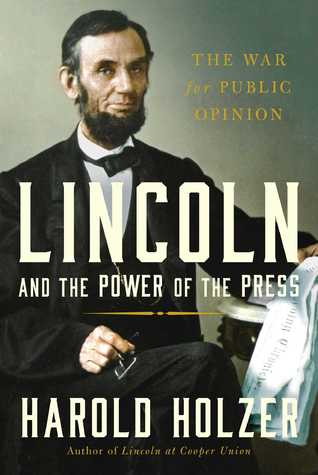
Lincoln and the Power of the Press: the War for Public Opinion, by Harold Holzer ****

lincoln and the pressThis book is for the serious reader. Well researched and creatively conceived, it traces the influence of the newspaper on young Lincoln, and then follows its role in his emergence as a politician, as a contender for the presidency, and later the complicated relationship between Lincoln and the press during the American Civil War. It raises thorny, thoughtful issues regarding censorship; when do we hold the First Amendment dearest above all, and when may its authority be abrogated for the security and integrity of the Union?

It starts a bit slow, and I began wondering whether this would be one of those rare books that I skim and then review, as opposed to reading every word. Still…LINCOLN. I stayed the course and was rewarded. Just be aware that the narrative doesn’t really wake up until about the 30 percent mark.

Lincoln had amazingly little formal schooling. Though this was common among pioneer families at the time, with settlements sparse and young males needed to help with a tremendous amount of hard physical labor, but knowing not only that he became US president, but that he was an attorney before that, I was surprised to learn that most of his reading skills were obtained by reading every single newspaper he could get his hands on, no matter how old it was by the time it made its way to Illinois, which was then considered the northwestern USA. A sister later recounted seeing him turn a chair over and lean against it while he sat on the floor and used the firelight to read by. How many people are sufficiently motivated today to teach themselves reading skills through this sort of very difficult total immersion?

He later fed his newspaper habit by becoming postmaster, and he used this office to read the newspapers being sent by mail before they were delivered to their intended recipients. (He would later use the franking privilege bestowed upon postmasters to send out his own campaign materials free of charge.)

Newspapers were tremendously influential, approaching the zenith of their importance during this time. There was no radio or any other media to spread the news of the nation besides word of mouth. Litigation for libel or slander had not yet blossomed, and so newspapers were often very loose with the facts, and this made it all the more important to read as many of them as possible in order to tease apart truth and rumor.

Young Lincoln left home hoping to become a journalist himself. He was well known as a gregarious fellow who always had a great story ready for whoever wanted to listen. I envision his parents throwing their arms up in the air: all that work to be done at home and where is their son? Off somewhere talking, talking, talking. I also found this tidbit interesting because it contrasts sharply with the haunted and often depressed man he would later become when authority and personal tragedy marked him.

As a congressman and also as a frequent writer of freelance articles and letters to editors, Lincoln marked out his position against the extension of slavery early and with great passion. He called the war with Mexico for what it was: a land grab that would primarily benefit the feudal rulers of the south. At one point he even suggested that the attack against US citizens by Mexican soldiers was a hoax, demanding to know exactly where on the map this had occurred. Folks in Washington DC, Illinois, and even New York sat up and took notice.

Holzer also traces the beginnings of the most notable newspaper publishers of the time. The unfortunate Elijah Lovejoy is dispatched with haste, just as he was in life. Greeley, the bootstrap newsman and fervent abolitionist, at least most of the time, at first spurned Lincoln. For most of both of their careers, they had a strong working relationship, but Greeley was both quixotic and a bit unstable, and he turned on Lincoln at some pivotal times, most noteworthy when the latter was running for re-election. Bennett, founder of the Herald and innovator of a number of the institutional practices that are still in place today, was conservative politically and represented Manhattan’s pro-secessionist, pro-slavery majority. Raymond was Lincoln’s most steadfast supporter and campaign manager the second time around, though he wavered for a brief but terrible time when the tide seemed to turn in favor of the Copperhead Democrats, who wanted to give the secessionist states independence in order to end the war.

In the land of Dixie, there was no debate about Constitutional rights to freedom of speech and the press; newspapers who even hinted at Union sentiments were quickly suppressed without qualm. Despite Lincoln’s suspension of Habeas Corpus and at times the suppression and/or closure of newspapers that either leant aid to the enemy by publishing battle plans before the fights had taken place, or by less overt and therefore more controversial antiwar editorials, he won his office in a fair fight, not attempting to tamper with the electoral process or outlaw the printed word that ran in favor of McClellan, a former general whom this reviewer regards as a treasonous scoundrel.

I confess it gave me a good deal of food for thought. I was a child during the 1960’s and a teen during the 1970’s, but I recall well the controversy regarding free speech, the Vietnam War, and Nixon’s enemies list. If I am in favor of free speech and press during contemporary times, why should it have been different during the Civil War? But I eventually concluded that it was indeed different, and the exasperation of General Sherman toward the press that gave away critical secrets all in the interest of a scoop and the bottom line was entirely correct.

But that’s just one reviewer’s opinion; thanks to Net Galley for the ARC. If you are willing to devote the time and attention this tome demands, you are sure to come away with a viewpoint of your own.

To those interested in the American Civil War, President Abraham Lincoln, or the history of the American newspaper, highly recommended.

Confederate Bushwhacker: Mark Twain in the Shadow of the Civil War, by Jerome Loving *****

confederate bushwhacker Good things come to those who wait. Jerome Loving established his credentials as an academic and historian a long time ago. I haven’t read the other biographies he has written, but they’re going on my list now.

Here’s what you have to know going into it: if you are looking for the sound bite, the cut-to-the-chase, you can’t have that wish. Loving uses induction rather than deduction, and brick by brick he builds toward his conclusion, taking the time to set context in a way that only a specialized biography such as this one, which focuses on the single year 1885, can do. And since I received this gorgeous little hardcover book as a Goodreads.com First Reads giveaway, I was impatient at first. “What the heck. Where’s the bushwhacking? Where’s Grant?”

Uh uh uh. No. Go back, reread. Everything that is in this book is there for a reason. If you hustle through the first part to get to the second, you may leave too many holes in the foundation. Do you want the wall to fall down? Of course not.

What I noticed, as I marched through with my sticky notes, is that the clusters were initially sparse, as the stage was set, and then suddenly ramped up around page 100, and by the end of the biography I was putting a sticky on every page and sometimes on facing pages.

I could tell you what he has to say; I went back and looked at all of those notes, but then, why would I wreck it for you? An author who builds up to the last page does not need a reviewer to hand over his punch line for him.

Instead, I can tell you that this is a careful, painstaking, well-documented analysis of a complex character. Twain’s ideas evolved between his 20’s and the end of his life, and of course, for most of us they do, but perhaps because his mind was open and searching, or perhaps because of his great fondness for “Sam” Grant, he watched what took place–including the Haymarket martyrdom, which I never knew had been an interest of his–and revised his ideas accordingly. Smart people can do that.

Perhaps the greatest measure of the success of this work is that it not only makes me want to see what else Loving has written, it also makes me want to revisit Twain. I had avoided much of Twain’s philosophical writing because of his anger toward the “damn human race”, to which I am much attached, thanks. But I want to see more about the connection between the events that played out during this time period and his changing perspectives.

One small correction is in order to Loving’s work, though I know this is a tiny, picky detail: Loving states that a huge redwood tree had been named for Grant. Ahem. It is a Sequoia tree. It is immense, but it is General Sherman’s that is the largest in the entire world. Sequoias belong to the same family as redwoods, but they are different. Having driven several days from Seattle to Southern California to see the tree; survived a four-car pile-up, rescued my luggage, bandaged and iced myself and my children, hired a rental car and driven onward to fulfill my mission, I can’t let it go by without mentioning it. Two great huge trees in honor of my two favorite American generals of all time. Sequoias. A hint is that they are located in Sequoia National Park. Makes sense, no?The biggest tree in the world!  50%

If you are reading this exclusively for the Civil War aspect, I will tell you that most of the book is not devoted to that time period; it says it is about 1885, not 1865, and when examining the book’s jacket, a knee-jerk reaction will leave you dangling. There is a small but meaty portion in which Twain discusses his part in the American Civil War, but this is not a Civil War history.

For those who read memoirs and biographies as rapaciously as I do, this is a must-read. For those who enjoy American history and literature, and most of all Twain, it is highly recommended. If you like Grant and maybe have even plowed through his remarkably readable autobiography, even better! But you can easily understand this book without it.

Many of my Goodreads.com First Reads will eventually be given away to my daughter’s school or some other good cause. Not this one; it will retain a place of pride in our home library. Thank you for writing it, Mr. Loving, and thanks to the University Press of New England for the free copy.

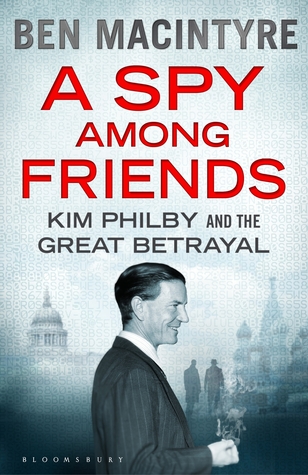
A Spy Among Friends: Kim Philby and the Great Betrayal, by Ben Macintyre *****

Recently released; reblogging!

seattlebookmama's avatarSeattle Book Mama

A Spy Among Us Kim Philby     This was a real page-turner, which says a lot, given that I already knew how it would end. I read the historical fiction version by another author and was fascinated by it, but also wondered what was fact and what was invented. Macintyre take his job so seriously that 25% of the book is citations. You KNOW he’s not making this up!

A great big thank you goes to Net Galley and Crown Publishers for the free read; that said, yes, this one is worth buying. I haven’t read anything else by Macintyre, but now that I have seen what he can do, he’ll be on my to-read list!

Kim Philby is considered by many to have been the world’s greatest spy. Perhaps the phrase should be “best known spy”, since the best spies are never found out. But that’s a digression. The fact is that this British-born, upper-class…

View original post 390 more words

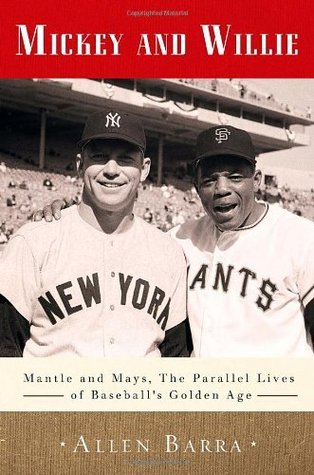
Mickey and Willie: Mantle and Mays, the Parallel Lives of Baseball’s Golden Age, by Allen Barra ***-****

mickey and willieThree stars for general interest; four stars for a niche audience. If you enjoy baseball and also like biographies, this may be a winner for you. Thank you to Crown Publishing and edelweiss for the advance reader’s copy.

As for me, I found myself wishing I had read separate biographies of each of these players before tackling one that compares the two. The first third of the book was very slow going for me, because the narrative flips from one to the other frequently, and during their growing up years I found myself becoming confused…now wait a second, which one has the horse? There was so much minutiae and I had a hard time keeping track.

That said, the story has a certain elegance. I like the fact that it breaks apart stereotypes: Willie Mays grew up in the Jim Crow south, but his family was part of the Black middle class, urban folks with a degree of sophistication. Pictures of him as a youngster show a well developed, well nourished child wearing a nice suit. Mantle, on the other hand, grew up in a very poor mining community in Oklahoma. Had baseball not permitted him to escape Commerce, Oklahoma, he would likely have had to go into the mines as well.

Mantle was diagnosed early in life with osteomyelitis, and nearly had to have his leg amputated. Though he was able to save the leg and go on to run like lightning on the field, he was booed by New York fans who were convinced he had dodged the draft. His agent and manager both spread the word that he had been declared unfit to serve because of his condition, but the fans saw the man run and, in the parlance of the time, believed his sick-leg story to be a lot of hooey.

Mays tried to avoid the draft by pointing out correctly that he had eleven dependents, but they made him serve anyway. However, he was never placed in harm’s way, and spent his tenure in the armed forces playing ball for a military team. When he returned to the professional field, he was already in shape, just as if he’d been off playing winter ball for a year or so.
This middle portion of the book is very interesting and has a photograph section that can actually be seen on an e-reader, a definite bonus. I enjoyed reading about their professional lives, and since they start far away from one another and grow gradually closer until they are together, the transitions are buttery smooth.

The end portion of the book is a let-down, although since it discusses their careers and bodies in decline, it is probably inevitable; I felt it could have done with some pruning, but those who hang onto every individual statistic will enjoy the charts and comparisons.

To me, however, trying to decide which athlete is “better” is specious. Who cares? They are both legends. They both deserve to be remembered well. There is no contest, as far as I am concerned.

Seeing how they struggled financially once they could no longer play was really a sad thing, and a good reminder of why star athletes earn every penny they make. By their late 30’s they will be deemed old men, and most of their lives will still be in front of them. Not everyone can become a coach, a manager, or an announcer. There aren’t enough of those positions, and many athletes aren’t gifted as writers, speakers, or teachers. They know what to do, but it’s muscle memory, and when it’s gone, it’s gone.

Barra’s research is mostly comprised of secondary sources; he has a few brief interviews, but his perpetual insistence on badgering Mays over his abstinence from the Civil Rights struggle got him cut off time after time. Mays was a reticent person, and it struck me once again that Black athletes have put up with such double standards; nobody climbs all over a Caucasian player who simply isn’t political and prefers to keep his thoughts to himself. Yet Mays hears about it all the time, and his biographer here is as bad as any of them.

I appreciated his references to what he says are the best biographies of each man individually; those are now on my to-read list. Meanwhile, I recommend this book to die-hard baseball enthusiasts who already know a little something about Mays and Mantle individually.

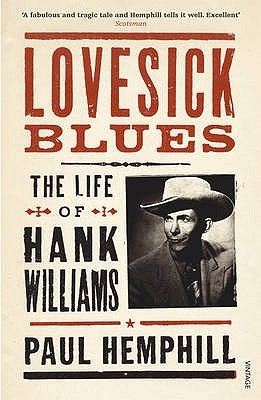
Lovesick Blues: The Life of Hank Williams, by Paul Hemphill ****

lovesick bluesPaul Hemphill put in a lot of time and research to write this book. I am not really a true country music fan, but because country music is in part the history of the US working class, it’s an important book for me to read (and of course, I love memoirs and biographies in general).

Williams grew up during the Depression. Whereas some who would be music stars gave up a great deal for their shot at fame, Williams had nothing to lose. His father had departed, and his mother was a bully and a user who would later ask about his car, when he was dead, before inquiring about his death or the disposition of his remains. He learned that he could at least earn enough money singing and playing the guitar to earn his food and some pocket money…which would go for booze. LOTS of booze.


Before he was out of school, Hiram, whose name became “Harm” once the local accent was accounted for, had renamed himself the cooler-sounding “Hank Williams” and had jobs playing at road-houses and other local venues in Alabama. He had a small band which included the “new” steel guitar, and he had his own sound. At first he and his roadies were always safely stowed back at home by 10 PM so that he could be present at school the next day, but his genius was not a conventional one, and music meant more to him than anything the classroom of the time period could offer him. His illiteracy was in fact so complete that even after he began making a lot of money, he would trustingly empty all his pockets onto the counter at the local bank and instruct the teller that “I make it. You count it.” Before his life and career were over, he would play in concert venues all around the continental US and Europe.

Some of the places he played in initially were tough enough that chicken wire surrounded the band so that the talent would not be cold-conked by a flying beer bottle. Don Helms, his best-known steel guitarist, told the author that in some of the places that hired them, a prerequisite to playing was proving that one was armed, either with a billy club, bowie knife, shot gun, or even a broken bottle; the point was to show that no other protection was required and that the musicians could survive the night on their own.

Hank’s first wife, Audrey, who badly wanted to be his singing partner but appears, by all accounts, to have been talent-free and tin of ear, figured out that the best way for Hank to make himself known was to write (meaning create; he could not read music). In this way he became a scion of rural culture. Before his death at the tender age of 29, he had written 50 songs, and 37 of them made the Billboard charts.

As a child of the sixties and seventies myself, I did not listen to traditional country music except when bumming a ride from my father. In reading Hemphill’s biography of Williams, I was startled to find the origin of one of my dad’s favorite sayings, “…good Lord willing and the creek don’t rise.” (“Creek” is pronounced “crick”.) I was also surprised how many songs I knew that turned out to be composed by Williams.

Hemphill offers a readable narrative, enough details to make the reader feel like a fly on the wall, at least at times, in Williams’ life, and he documents everything thoroughly without slowing the tale. It’s hard to tell whether his comparisons and speculations at the end are intended to provide filler, or whether there really has raged a Hank versus Elvis debate to which I have never been privy. I also found his unflattering description of Hank, Jr. and Hank III a little abrasive.

When all is said and done, I would respond, history marches forward, whether it is political, cultural, military, technical, or musical history. Nobody sings like Hank now because it isn’t the fifties, and cowboys are no longer in vogue. Hank’s death didn’t affect the style. I think if he had survived, he would either have had to adapt or seen his career wane.

My own musical tastes have tended more in other directions, and I never bought a Hank Williams collection, but I do own one by Hank, Jr. I got onto a popular computer thread and streamed some music by each of the three Hanks. The original Hank Williams is immortalized primarily as a song-writer, but also as the first American artist to add a yodeling type of element to his style, and of course for pioneering the use of the steel guitar in country music. Tee author classifies Hank III as a head-banging punk rocker, but when I watched a streamed performance, if anything Hank III appears to have really played up the rural working man’s angle to the hilt. The original Hank spent a bundle on clothing for his performances; Hank III flaunts a battered felt hat and sings in a stylized drawl that at least to me, appears to be unmistakably country in flavor. But of course it is not the same; technology, tastes, and the world of entertainment have all changed, and nothing in this world, including the music world, will ever stand still.

The argument about whether or not Hank “could have survived Elvis” is specious. One might as well ask whether he could have survived the Beatles. They are different, and the music world has held a time and place for each. It isn’t an exclusive category.

To sum up, it’s a good biography. I was lucky to find it; apparently (and this sounds crazy), the UK published his life story before any credible source in the USA got around to it. Whether or not you read, or believe, the speculations that take up the last 10% or so of the book, it’s worth your time and your money.


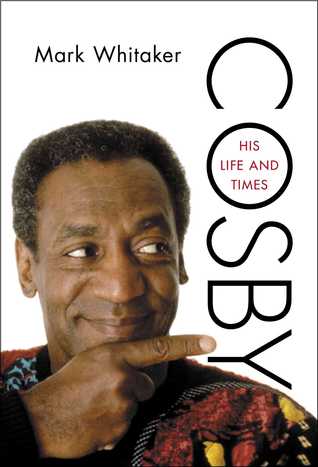
Cosby: His Life and Times, by Mark Whitaker *****

In the lateCosby twentieth century, Americans trusted “God, Walter Cronkite, and Bill Cosby”. Cosby is an icon, and Mark Whitaker is his biographer, author of the first comprehensive biography of the great comedian, actor, author and humanist. I have admired Bill Cosby my entire life, and it was an honor to be able to advance-read this well written, thoroughly documented biography. Kudos to Whitaker for a job well done, and thank you to Net Galley and Simon & Schuster.
Cosby grew up really poor, the child of a man his friends later described as a “wino” and a hard-working, ambitious mother who valued education. His teachers could tell he was very bright, but he had no interest in school work during his formative years, enjoying sports, friends, and jazz music more than academia. He would later change his mind. His college degree and graduate work were done legitimately; he respected education too much to ever accept an honorary degree anywhere. He was ready to show up to class after having become famous, but he was swarmed when he turned up on campus, and so an alternate method was devised. A string of children’s television shows shown on Public Broadcasting including Sesame Street and The Electric Company were created as a part of his doctoral program, and his studies determined that they made a difference in the educational success of the children for whom they were created.
Race is in the news more than ever as I write this; earlier this week Times Square was filled with people demanding an end to police violence as yet another unarmed African-American man was gunned down by police. It is a telling indictment of the US government and its police—and this is my own take, not Cosby’s—that Camille Cosby told their son Ennis not to drive her green Mercedes when he was visiting Los Angeles partly because she feared police would see a Black man driving an expensive vehicle and pull him over on account of it. From the day he was killed till this moment, nothing has changed. I’m telling you, it needs to stop.
But back to Bill Cosby. For those who don’t know, Cosby started out trying to break into the music business, but he was very funny, and made extra money here and there by sitting on a bar stool and making people laugh for a few minutes. Of course it grew. His early inspirations were the stories his mother read to him by Mark Twain; comedians Dick Gregory and Jonathan Winters; and his grandfather, who read to him from the Bible, creating the voices of Noah, God, and various others.
Ultimately, it was a combination of comedic talent, a sterling work ethic, and unusually strong social skills that created a successful career. Cosby made a point, once he was in a position to do so, of hiring as many talented African-American professionals as he was able. His generosity in the form of scholarships, endowments to his alma maters and well as the nation’s historic Black universities is legendary. Less well known is the world-class art collection he and his wife have collected. They have quietly accumulated art work by the finest Black artists, sending other representatives to bid for them at Sotheby’s and other auctions where items of interest were available.
Bill Cosby is known for shining his light upon the common humanity between races, enabling Caucasians who had been afraid of Black folks to understand that every one of us is a person. His goal, though, in creating the Cosby family on television in the late 1980’s (which was so closely modeled after his own that he occasionally stumbled during script discussions, referring to “Cliff Huxtable” as “Bill”) was to show African-Americans a positive example of their own culture. It is telling that while white journalists constantly asked whether the Huxtable family, which featured a doctor and a lawyer as parents, was ‘realistic’, African-Americans surveyed found it entirely believable. Cosby’s wife, Camille, deserves credit for encouraging him to avoid the stereotype of the Black working man, and Cosby created a whole new art form in creating a sitcom based around family stories, rather than one-line jokes and put-down humor.
Long a champion of the solid Black family, Cosby wants young men of color to help raise their children. His remarks at the ceremony where he received the National Medal of Freedom were taken out of context and upset some folks who thought he was making fun of Black youth. He says this wasn’t his intention, and I believe it. The book that followed, Come On, People, addresses the issue. I have a copy on my shelves; it’s a wonderful book. I got it partially because of its author and partially because my family is racially blended and it is relevant to me; consider acquiring it after you get Cosby’s biography, which will be released mid-September.
I have seen enough tragedy that I no longer tear up easily, but reading of the loss of Ennis, something I already had known about but which Whitaker made whole and present to me, made my eyes well up. The horror of losing a child is not something anyone gets over readily, and the casual way the robber disposed of “a n*****r” was appalling. When Cosby performs stand up now, he always has a sweatshirt that says, “Hello, friend!” because that was Ennis’s greeting, for which he was known in his New England community. After the loss of their son, the Cosbys found refuge in South Africa with Nelson Mandela, who gave them some time and private space in which to recover. This, too, was moving.
Perhaps you believe this review was so long that you no longer need the book. Trust me; I have barely scratched the surface. I made 157 notations in my e-reader, edited it down to 125, and still, this is a mere outline. This book is destined to become a classic, a story of success gained against the odds, success gained with talent, a work ethic that still hasn’t stopped, and a tremendous amount of heart.
Sometimes I tell readers that a book is worth reading if they can get it at the library or get it cheaply; not so for this one. If you can’t afford it, request it as a Christmas or birthday gift. You won’t be sorry. It’s one in a million!

A Spy Among Friends: Kim Philby and the Great Betrayal, by Ben Macintyre *****

A Spy Among Us Kim Philby     This was a real page-turner, which says a lot, given that I already knew how it would end. I read the historical fiction version by another author and was fascinated by it, but also wondered what was fact and what was invented. Macintyre take his job so seriously that 25% of the book is citations. You KNOW he’s not making this up!

A great big thank you goes to Net Galley and Crown Publishers for the free read; that said, yes, this one is worth buying. I haven’t read anything else by Macintyre, but now that I have seen what he can do, he’ll be on my to-read list!

Kim Philby is considered by many to have been the world’s greatest spy. Perhaps the phrase should be “best known spy”, since the best spies are never found out. But that’s a digression. The fact is that this British-born, upper-class man was drawn to the ideas of Bolshevism at exactly the time that Lenin’s legacy became corrupted and Stalin held sway. It didn’t matter to Philby, nor did the purges and the reign of terror that occurred when Stalin went slightly bonkers and began seeing betrayal in every corner, executing lifelong friends over imagined treason. And one has to wonder, given the level of material comfort and exclusive old-boy club pampering that Philby enjoyed on the ground, exactly how much he truly believed in the class struggle, and how much of what he did was done for the sheer joy of deceit and skullduggery.

The most amazing thing to me, in reading this excellent, compelling narrative, was how much he did and how many lives he cost before he was discovered, and even then, that his life was spared. I can well understand that the British government preferred not to endure the public humiliation of having its grievous errors known to the world. Why they didn’t cap the guy behind the ear or arrange for a dreadful tragedy is harder to understand. And it all boils down to class: Elliott, who believed himself to be Philby’s closest friend for decades, from fresh-scrubbed youth to middle age, simply said, when later interviewed, that Philby was “One of us.”

If you are a U.S. citizen and are patting yourself on the back because you live in a ‘meritocracy’ in which antiquated notions like breeding are not factored into one’s fate, think again. How many millionaires, let alone billionaires, do you see on Death Row in the US of A?

Exactly.

The skill of the writer became most apparent to me when I read the ending, including a passage by the famous John le Carre. The passages in which Elliott is quoted verbatim set my teeth on edge. What a detestable individual, so smug! “Stiff upper lip” indeed. A stick stuck somewhere else came to mind.

Yet Mcintyre reinvents him in order for us to have a sympathetic protagonist to offset our villain. His nonfiction narrative reads like a spy thriller; in making his text as readable as well written fiction, he joins the formidable ranks of Barbara Tuchman and Isobel Wilkerson. Not many people are capable of such pacing and plot-spinning when confined by the actual facts.

Highly recommended to general audiences.

Rebel Yell: The Violence, Passion, and Redemption of Stonewall Jackson, by SC Gwynne ****

rebelyell

Available now! I had a sneak peek from Net Galley and Simon and Schuster; thank you twice, to both of them. Reblogging this for Memorial Day.

Gwynne describes his biography of Jackson as an amateur effort, and as such, it is a strong one. He documents meticulously, using both primary documents and highly respected secondary sources. It is a sympathetic portrait of Jackson, generally speaking, although the author maintains a reasonable professional distance and objectivity. Sometimes his point of view is that of the dispassionate observer, and at other times, he speaks as if he were Jackson’s friend, a quirky touch that I found oddly endearing.

Although I have read a good deal about the American Civil War (and taught about it), I have never read a Jackson biography before, so I don’t have a basis for comparison. This is a bare spot in my own Civil War scholarship that I hope to rectify.

I encountered one obstacle in reading this otherwise well written work, and also what I believe is a flaw. The obstacle–and it’s happened more than once and is no fault of Gwynne’s–is that history can’t be read really well on an e-reader. Elaborate battle plans are described, and then this teeny weeny map pops up. Even if I had been able to use the zoom feature (which on a galley is not offered), I still would have needed to see the whole picture at once to really understand what he did. If you are a reader who is satisfied to know that he did something unconventional and brilliant, this may not bother you, but much of the biography is devoted to specific military tactics, since it is primarily this that brought Jackson his fame. It only whetted my curiosity, and in one way or another, I will follow up at a later time and get maps of those battles on paper in a readable size. If you feel the same, and if you get this book, I strongly advise you to buy the hard cover edition rather than e-reader or audiobook (unless it goes to paperback, which would be both useful and more affordable).

The other thing that bothered me is that Gwynne tries to do too much. The first twenty percent or so goes off onto unnecessary tangents, trying to provide us with a thumbnail version of the entire Civil War from its inception to the time of Jackson’s death. This is both off topic, since the book is a biography, not a Civil War history, and of course also an inadequate history. At the end of the book he does the same thing, trying to thumbnail sketch the ultimate fate of every player in the parts of war in which Jackson participated, and some others also.

On the one hand, maybe this makes it more approachable to someone unfamiliar with the Civil War, but really nobody should plunge into a biography of a Civil War general without first becoming familiar with the basic facts of the war. I would have preferred he consider the basic outline of the Civil War to be assumed knowledge, and move forward, focusing exclusively on Jackson and whatever other information is necessary to set context.

I felt he did well in his detailed sketch of Jackson. His religion was an integral part of his personality, and though I am an Atheist, I have known others who have had the same capacity to carry their faith into everything they do. They don’t remind others constantly to give God the credit for whatever achievements bring them praise, but this is a different time; the period just after the Industrial Revolution saw a much wider and more visible Christianity throughout the US. Others were assumed to be Christians unless they went out of their way to say otherwise. Therefore I agree with Gwynne’s assessment that Jackson’s religious behavior was not a sign of mental illness, but merely a personal trait distinguished by its consistency.

Like other heroes of the Civil War such as Sherman and Grant (my own favorites), Jackson was not successful until the war broke out. He grew up poor and by his own determination succeeded in procuring a military education, which was tuition free. Afterward he became a teacher, but was by all accounts just dreadful. His delivery was mumbled and unenthusiastic, his discipline harsh even for the time, and his instruction consisted of assigning students to memorize passages of the text without his first explaining the meaning of the text or offering a chance for students to ask questions. Students called him “Tom Fool” behind his back and made fun of him in his presence.

The war transformed him, and somehow when it came to training soldiers, he was a wonderful teacher. Anyone who did not seem to understand what to do was drawn aside by Jackson and given one-on-one training. He wanted to invade the Northern states right away, under a black flag (so shoot everyone and take no prisoners). He found this entirely consistent with his religion, since like so many warriors before and after, he was persuaded that God was on his side. His most famous quote, perhaps, is to the affect  that it is good that war is so terrible lest we grow to love it too much. By all accounts, it lit him afire, with a light in his eyes that occurred at no other time. In modern times, he’d be known as an adrenaline junky, I suspect.

His men at first despised him for his long, forced marches through all kinds of terrible weather and terrain, but it was victory that made them love him. Most of them were young, and what better way to march into manhood than a structured situation in which one is guided in his actions, and meets with nearly immediate success? The battles were traumatic, to be sure, but given the circumstances, they would have been drawn into battle, one way or the other. Under Jackson they found an unassuming leader who took no luxuries for himself and didn’t ask his men to do anything that he himself would not do. He became the ultimate father figure for many.

His campaign in the Shenandoah Valley made him famous; his successes at both battles at Manasses (Bull Run), the 7 Days battle in the Wilderness, and others too numerous to list–in fact, I was surprised how many, since I had come to regard Jackson as a star who had shown brightly but briefly–made him a hero even Union soldiers would cheer, and the Confederate news source that claimed that “Stonewall” would become as much a legend as “Old Hickory” (Andrew Jackson) actually understated what posterity would hold for this humble man.

His fearlessness was due to his absolute and utter conviction that God had sent him on a mission, and nothing could happen to him until God was satisfied that his purpose had been fulfilled.

This gives me pause. At what point does one draw the line? He didn’t do anything clearly foolhardy such as jumping into raging rivers or leaping off cliffs, and yet he thought nothing of exposing himself to a hail of bullets near the front of the battle, convinced that he was covered by a magical shield provided by an omnipotent God. Again, I don’t say he was crazy, but it makes me curious. This is one character for whom I’d love to go back in time and have a conversation.

Gwynne’s writing style is lively, his transitions smooth as butter. Another book of his, which I’d like to read, was a finalist for the Pulitzer, and that word-smithery is evident here also. He turns a compelling narrative that at times may make one forget that this is nonfiction, not unlike The Guns of August (by Barbara Tuchman). If he were to refine his format to a more laser-like focus on Jackson, maybe he’ll be nominated again; hell, maybe he will anyway.

A wonderful read; get it in paper format!

King Leopold’s Ghost: A Story of Greed, Terror and Heroism in Colonial Africa, by Adam Hochchild *****

Just as Europeans once looked upon the Americas as land that was unclaimed and waiting to be discovered, explored, and claimed by Caucasian Christian civilizations, so too was Africa, referred to as “The Dark Continent”, ripe for exploitation when the Europeans arrived.

Initially, through their own caste system, tribal chiefs were absolutely delighted to trade away the Africans they themselves kept in bondage for the wonderful new munitions, cloth, and other goods that were offered. But their satisfaction turned to horror when they learned that where Black folks are concerned, Europeans just don’t play by the rules. King Affonso of the Congo sat down and wrote a letter to the ruler of Portugal, explaining that he had sent his son to Europe to attend school, and he was never heard from again. Now he has learned that his own family members were being rounded up by slave traders! There must surely be some sort of mistake.

African missionary, explorer, and British emissary Dr. David Livingstone traveled to Africa and was the first known (at the time) European to cross Africa from coast to coast. He returned to England to be feted and celebrated, and then plunged back into Africa…and stayed there. He was happy. Why go home?

Henry Morton Stanley was a journalist of uncertain origins (see the book) who went in search of Livingstone and found him, uttering the famous quote, “Dr. Livingstone, I presume?”

Meanwhile, a royal in Belgium grew restless. Leopold had delusions of grandeur, and why not? If France, England, and Spain could enjoy colonialism, why not Belgium as well? Leopold thirsted for power. He wanted to become a king. As African territory was snapped up piecemeal, he leapt in and grabbed a slice through the middle, in what would for a time be known as the “Belgian Congo”.

By now, slavery had been declared illegal in Britain, and so Leopold strode in to civilize and Christianize dark-skinned people whom he was certain could not do so for themselves. A great road was built there…and it went straight in from the ocean, and straight back out again. Leopold had learned of the ivory to be obtained through the wholesale slaughter of elephants. He offered prizes to locals who brought these forward, and assured them they would be protected from the aggression of any other European powers. What a deal. Leopold sponsored Stanley and gave him the royal seal of approval when he went in to further explore the area. In the end, Leopold claimed all of the Congo, an area, says the author, the size of the United States east of the Mississippi River. Many different tribes and cultures, some peaceful, some not, were brought under his ruthless leadership.

Leopold himself was almost a perfect villain, obsessed with power and obnoxious even to other Europeans of his time and station. When Prince Albert visited the new palace Leopold was having built, he believed he was complimenting the man when he said it would be like “a little Versailles”. Leopold took offense instead. “Little?”

But as amusing as anecdotes like this one are, the brutal fact is that tens of millions of Africans were killed under European colonialism. When Belgium was more or less forced to grant sovereignty to the people of the Congo, he sabotaged the new government of Patrice Lumumba, a popularly elected leader, by refusing to let go of the mines where the remaining mineral riches of the nation were located. The United States helped him crucify this man and was party to the manipulation of tribal rivals. Wholesale slaughter of unimaginable cruelty ensued. Multinational corporations were “also in on the take”.

Though this is a painstakingly written and riveting account, and the research undeniably fastidious, well documented, and scholarly, I would differ with the lame conclusions drawn at the end, namely that the United Nations should have sent in a peacekeeping force during the transition. Who is in the United Nations? Britain and the US, for starters? What a pitiful conclusion to an otherwise brilliant book. I know that if Malcolm X were here, he’d say this was “like leaving the fox to guard the hen house.” For this reason, I considered giving four stars. It’s just too well done otherwise to deny it all five, with this caveat: those final two pages of conclusions should cause any reader who makes it this far down in my review to understand I really mean, four and a half stars.

I say the only way the Congo or any other African nation can rule itself is for colonial powers to get out. Go home. There is nothing there that they own anymore; it’s over. Africans can rule Africa, as long as colonialists let go of the entire pie.

The Trials of Lenny Bruce ***** by Ronald K.L. Collins, David Skover

 thetrialsoflennybruce I cannot remember the last time I felt so strongly about a book I had bought. I have never, ever felt this strongly about a CD! I found, by a rare bit of luck, this hardcover book in brand new condition, in a used book store. The CD inside the cover was still sealed. It is not just an actor on the CD; it is actual footage of Bruce’s voice performing (along with narration by someone else). It cost me all of five bucks. Unbelievable!

If you are a champion of free speech, you have to know that this amazing (though oh yes, profane) comedian broke new ground. It could be (and has been) argued that he paid with his life, that performing in a nightclub LINED with cops all up and down ultimately broke him, but he did not go gently.

The first time I heard the material was in the movie “Lenny”, starring actor Dustin Hoffman in the title role. I knew it was good, but I was also young, had very tender ears, and I think there were times when the one-two punch of some of the words that I hadn’t heard much, caused me to miss some of the point. Even then, I understood that this was a powerful thing, though.

This book and ESPECIALLY the CD, which provides not only the words, but the all-important inflections (transcribed, for those who miss some of what goes by in the snappy nightclub patter, in the book), is one of the most important pieces of primary evidence I have ever been privileged to hear, see, and own. I cannot believe the clarity of the sound! For those, like me, to whom the early sixties are not within the realm of memory, the book is essential for context. There are people who were well known at the time whose names go by like gunshots in his routine; two who come to mind were a cardinal and a bishop. The context that the CD does not provide is in the book.

The text itself is 442 pp. in length; the rest is meticulous documentation. Pictures of everyone…this is a treasure!