
He Will Be My Ruin, by K.A Tucker***

hewillbemyruinMaggie Sparkes, heir to a fortune, is called to New York City when her closest friend, Celine Gonzalez, is found dead. Did Celine really commit suicide? Maggie doesn’t believe it for a minute, and when she finds Celine’s personal effects hidden away with a note, she believes it even less. Thanks go to Net Galley and Atria for the DRC and invitation to read and review this title. It was released February 2, 2017 and you can get a copy now.

Maggie and Celine grew up together; Celine’s mother Rosa was the housekeeper and nanny to Celine’s very wealthy family, and so apart from school, the girls were inseparable. Now Maggie is determined to find out what happened to Celine.

The cast of characters here is limited to Maggie, Celine’s neighbor Ruby, who was my favorite character, a cop named Doug, and two hunky men, both of whom were involved at some level with Celine. Jace is an investor; Grady is the property owner of Celine’s building, and both are described as immensely attractive. Who can be trusted? Who is a killer?

The limited number of characters and repetition—how wealthy and philanthropic Maggie is, how creative and hardworking Celine was—makes for an accessible read. The vocabulary is adult level but not out of range of the average reader. For those that are newly venturing into reading English language novels, this is a great place to start, because if something important slides by you the first time, you’ll be told again.

As for me, I prefer more nuance in my literature. When Maggie tells us how things went in high school, she wasn’t merely a debater, she was the captain of the debate team. Likewise, Celine wasn’t just a student actor, but scored the role of Juliet. Having both of them be so perfect within their realms of interest keeps them from seeming real to me. Maggie is rich, and we get told constantly in case we forgot. Maggie has a million charities and wants to save the world, and we’re unlikely to forget that either.

On the other hand, I wasn’t always this old and sometimes cynical. I can recall a younger version of myself that adored the writing of Victoria Holt, and I think that younger self might well have enjoyed this novel. Tucker is a successful, experienced novelist, and I have a hunch this is the pool of readers that find pleasure in her work.

Recommended to those that love Harlequin romances, Victoria Holt mysteries, and readers that enjoy romance but are still relatively new to reading in the English language.
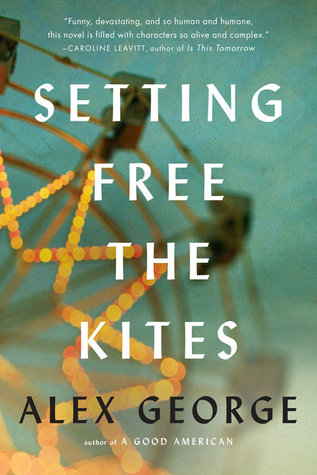
Setting Free the Kites, by Alex George*****

settingfreethekites“Hope is a curious thing. It emerges in the most unexpected places.”

Robert Carter is an introverted boy with few friends and loving but preoccupied parents. His life changes forever when he is befriended by a new kid at school. Nathan stands up for him when he is being assaulted by a bully, and a friendship is forged that will last for life. Thank you Net Galley and Penguin Putnam for the DRC, which I received in exchange for this honest review.

Our story is set in a small Maine town in 1976. Nathan’s parents are creative people, sculpting, writing, building one-of-a-kind kites, but tragedy strikes early in the story and Nathan’s mother retreats into herself, and is not available to her only child. Robert’s parents are fond of Nathan, who also befriends Robert’s terminally ill brother Liam, and soon Nathan has found a second home.

Most reviewers describe Setting Free the Kites as a tragic tale, and they’re right, but what few people mention is how many really funny scenes lie in between the somber stuff. George’s writing has tremendous voice, one that brings these adolescent boys to life as few others do. I actually laughed out loud more than once, and this not only makes this a more enjoyable read, but also underscores the tragedy, taking the reader through a whole wide range of emotions.

The genre crosses between adult and young adult fiction. If I were still teaching highly capable language arts students, I’d want half a dozen copies of this book to use in a reading circle; that said, the sexual content would also force me to send home permission slips, because conservative parents would otherwise rampage into the district office with torches, hot tar and feathers. However, I consider this an outstanding enough read that I’d jump through some hoops to use it.

In some ways, however, it is more suited to literate adults. George uses a high vocabulary and uses it well. It’s certainly not a story I’d recommend to someone whose mother tongue is not English, because there’s too much cultural nuance and subtlety for that audience, and likewise, most adolescents won’t benefit from such a novel.

There are a couple off odd extraneous reveals toward the end of the story that startled me, and that did nothing to enrich the story or develop its characters. However, the rest of the book is so outstanding that it’s a five star read regardless.

This book is available to the public February 21, 2017. Highly recommended to those that love great literary fiction.

Forever is the Worst Long Time, by Camille Pagan****

Happy release day! This title is available to the public today.

seattlebookmama's avatarSeattle Book Mama

 “Each story is different. Every story ends with loss.”

foreveristheworstCamille Pagan is the author Life and Other Near Death Experiences. Thank you Net Galley and Lake Union Publishing for the DRC, which I received in exchange for an honest review. This title is for sale February 7, 2017.

The story starts in the second person, with the narrator speaking to us intimately; he is James Hernandez, and soon we realize that he is speaking to a child about her mother and his memories of her. The narrative is therefore intimate in tone, but also carefully measured and paced, beginning in 1998 when James meets Lou and unspooling toward the present.  I have read oh so many novels in which alternating viewpoints are used to keep the reader’s attention from wandering, and this fresh approach had me at hello.

James is Rob’s best friend; James’s own childhood home was dysfunctional…

View original post 357 more words

Always, by Sarah Jio****

alwayssarahjioAlways, Sarah Jio’s much anticipated new release, takes on the homelessness epidemic using the powerful medium of fiction. I received my copy in advance in exchange for an honest review; thank you Net Galley and Random House Ballantine for the DRC. This title is available to the public today, and if you have enjoyed Jio’s other novels, I am confident you’ll like this one too.
Kailey Crane is a journalist living in Seattle during the 1990s, and she has the whole package: a great job, a wonderful city, and a wealthy, handsome fiancée. It’s the life other little girls dreamed of but didn’t get.  Then one night as she and Ryan are leaving a restaurant, she literally bumps into a long lost love. Cade McAllister is the man Kailey had been going to marry until he disappeared. He practically vaporized. Stunned and humiliated, she picked herself up and rebuilt her life, and now here he is, a half-crazed homeless man living downtown on the streets.

What the heck happened?

Kailey wants to marry Ryan, but she also wants to help Cade find housing, medical care, and food. Ryan makes it easier by agreeing that she should do the right thing. Quickly she learns that it isn’t as simple as it seems. There’s a whole safety net in place for people like Cade, except that it doesn’t work. In fact, without her own ready access to Ryan’s money, she can do virtually nothing for Cade. But it’s all right, because Ryan is on the side of the angels; he sees that this cause is a just one, and he’s a generous guy. He’s in love, and he’s feeling expansive.

The problems begin when Kailey starts missing key wedding events because she’s off helping Cade, or trying to. She becomes so involved with one thing and another that before she knows it, she’s over an hour late. There are out of town relatives that are present, but where’s the bride? And before we know it, she’s telling lies, and sometimes they don’t even seem necessary. I want to reach through the pages of the book, yank Kailey into the kitchen and talk to her.

What  are you doing, girl?

Fissures in her relationship with Ryan turn into fractures as he senses the level of her obsession, and he doesn’t see things as she does anymore. His material interest is involved, since a project his development corporation is about to undertake conflicts with an already established homeless shelter in Pioneer Square, a historic part of Seattle’s downtown. He questions why so many resources are required for the homeless; aren’t these mostly drug addicts and crazy people? There ought to be a simple way to dispatch the problem.

A strong story overall is somewhat tarnished by what feels like a glib ending. I recall a favorite episode of the Muppets when Miss Piggy is working a jigsaw puzzle, and she hates to be wrong, so she slams a piece into a hole where it doesn’t belong and howls, “I’ll make it fit!” The ending of this story brought the episode back to me, because Jio seems to be doing more or less the same thing.

Recommended to fans of this successful romance writer.

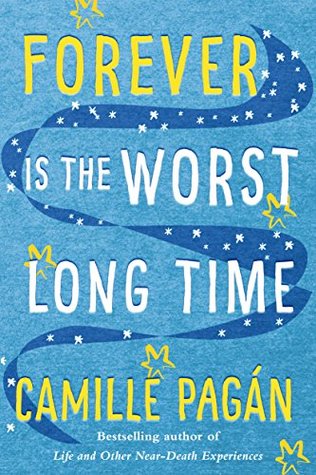
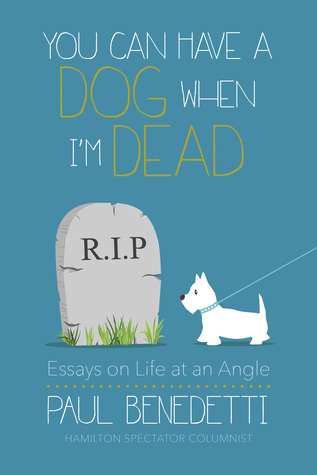
Forever is the Worst Long Time, by Camille Pagan****

 “Each story is different. Every story ends with loss.”

foreveristheworstCamille Pagan is the author Life and Other Near Death Experiences. Thank you Net Galley and Lake Union Publishing for the DRC, which I received in exchange for an honest review. This title is for sale February 7, 2017.
The story starts in the second person, with the narrator speaking to us intimately; he is James Hernandez, and soon we realize that he is speaking to a child about her mother and his memories of her. The narrative is therefore intimate in tone, but also carefully measured and paced, beginning in 1998 when James meets Lou and unspooling toward the present.  I have read oh so many novels in which alternating viewpoints are used to keep the reader’s attention from wandering, and this fresh approach had me at hello.

James is Rob’s best friend; James’s own childhood home was dysfunctional and bleak, and so Rob’s family included him on family vacations and other family-only events. They weren’t just close friends growing up; they were almost brothers. And so when James falls head over heels in love and decides to marry, the first thing he does is send for his BFF. They are introduced and James is asked to be best man at the wedding.  But in one of those blind random moments of fate, James himself falls madly in love with Lou the minute he sees her.

What would you do in a similar circumstance? Get over it and do it fast, of course. It’s just not possible. But years later, when the marriage founders and Lou walks, James can’t help himself.

There is foreshadowing in plenitude here, and the voice at the outset and at the end are what keeps those pages turning. Of course, there’s also mystery, because the speaker is telling us some things, but clearly withholding others.

If you have to like a protagonist in order to enjoy a novel, then this may not be your book. James isn’t merely flawed; in the book’s middle, he’s whiny.  I check my notes and find that in one place I wonder if Woody Allen will option the rights, and in another, I curse and request a violin. Seriously, I want to smack James upside the head and say sure, you shouldn’t have, but you did and it’s done, so man up and get over it already. But around the three-quarters mark, the whole thing takes another turn, one entirely consistent with what has gone before, and once again, it is a book I don’t want to put down till the last page is turned.

Those that enjoy fresh new fiction should consider this book even if romance is not generally a favorite genre. Pagan is an interesting writer, and now that I’ve read this, I want to go back and read the other things she’s written.  She’s already gained a lot of buzz—and a movie deal—with her first title, and I suspect she will be someone to watch in the future.

Don’t get left out.

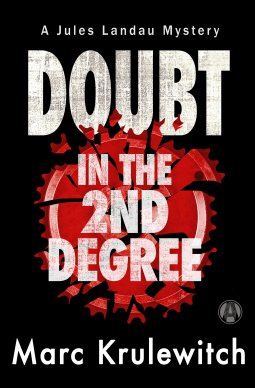
You Can Have a Dog When I’m Dead, by Paul Benedetti***-****

youcanhaveadogwhenThis is a collection of funny stories and brief essays. It’s geared for the Boomer generation, and is billed basically as bathroom reading. Thank you to Net Galley and Dundurn Press for the DRC, which I received in exchange for this honest review. I rate this book with 3.5 stars and round it upward; it will be available to the Canadian public –and presumably anyone anywhere that wants to buy it digitally—February 17, 2017.

I confess I made an assumption when I saw the title. I was expecting jokes and essays dealing with man’s best friend; actually, I find very few stories related to dogs, but an unexpected number related to death. Of course, many of the essays are not humorous, but of a more reflective nature. This is all well and good, and the quality of the writing is worthy of such a sobering topic. But when I saw the book billed as being similar to the work of Dave Barry, I wasn’t anticipating reflections on my own mortality. I was expecting jokes.

That aside, there are indeed some very funny pieces here, and although I am on the borderline in terms of being in—or out—of the Boomer generation, a lot of the humor does resonate. I love seeing Benedetti try to explain a home phone to a young person:


“I should probably explain to anyone under thirty that a home phone is an actual device about the size of a toaster that remains in your house. The reason you cannot take it with you to the bar, to your class, and into the toilet, where I’m sure you’re receiving very important calls, is that it’s attached by wires directly to the wall in your house.”


I enjoy the piece on his garden, and about his elderly mother’s dance class.  I am disquieted to learn that every person, real or imagined, in any of these stories is assumed by the writer to be Caucasian.

I also find myself wondering why every story has to have booze in it somewhere. Wine, beer, whiskey, Bailey’s, more beer, more wine, gin, Kahlua…what’s up with this?

Should you pick up a copy for yourself? I suppose that depends upon what the purchase price looks like and how much time you spend at home. If it’s affordable and you are retired, you might like to have it. If the price tag is hefty, you may want to wait.

But I imagine Mr. Benedetti would prefer you to purchase it before you get that dog. Because…yeah.


Small Admissions, by Amy Poeppel*****

smalladmissionsI received an advance reader’s copy of this darkly amusing novel from Net Galley and Atria Books. It’s funny as hell, and even more amusing to teachers, school counselors, and others that have dealt with high maintenance parents and the aura of entitlement they carry with them. I rate this title 4.5 stars and round upward.  It comes out December 27, 2016, just in time to chase away your post-holiday depression.

I sat on this book for more than three months, which is a rare thing for me.  I kept starting it, not liking it, and deciding to set it aside and look again with fresh eyes later. Finally November came, and I realized the book was not going to change; I’d given my word to the publisher I’d review it; it was time to suck it up and get the job done. And this is a little ironic all by itself, since that’s the position in which our protagonist found herself, but more on that in a minute.

The issue with the first part of the book is that it reads like a very lengthy introduction, steeped in character introduction and overlong inner narrative. After I had read—and loved—the rest of the book, I went back and reread that 15%. Was it just me? What was wrong with it? And once I had read the book and become familiar with all of the characters, it seemed perfectly fine. In fact, it seemed a lot like the voice-over at the beginning of a movie. Then I read the author’s biography, and discovered that this novel was first written as a play.

Suddenly, it all made sense.

Our protagonist is Kate, and she’s come undone. Her French boyfriend has dumped her:

“When he’d encouraged Kate to follow her heart, he hadn’t meant she should follow it to Paris.”

Meanwhile, upon departure she’s left her position at NYU.  She was studying anthropology, and now she isn’t, and her family doesn’t know what to do about it. Enter Angela, her sister, who moves heaven and Earth in order to get Kate’s life going again; once Kate’s out of the woods, Angela can’t stop maneuvering and controlling. She’s good at being a white knight, and she can’t give it up. We have Vicki and Chloe, her friends from college, and the old boyfriend from France lurking offstage.

The fun commences when Kate gets a job in the admissions department of a small, private secondary school. She’s misrepresented her skill set to get it, but she’s determined to give it a try:

“Kate viewed Hudson Day as an unknown culture that required her exploration.”

It’s time to start interviewing and selecting students, managing interviews with demanding, sometimes aggressive parents. I’ve taught honors students in a public secondary school, and I thought my experience took fortitude; Kate’s experience was similar to my own, but on steroids.

There are hilariously dysfunctional parents, kids whose folks don’t have a clue what they can do and what they can’t, and in the midst of it all, relationships among Kate’s nearest and dearest become unstuck and reconfigured in ways that mirror those Kate works with, and even Kate herself. I can’t tell you anymore, because it would ruin it for you, but this snarky romp is not to be missed. It’s cunning, wickedly bold humor at its finest.

Good Behavior, by Blake Crouch****

goodbehaviorcrouchLast spring I advance- read and reviewed the riveting sci fi thriller Dark Matter, which was my introduction to author Blake Crouch, who has already met with success as a screenwriter. When I saw that something else he had written was up for grabs at Net Galley, I landed on it eagerly. Thanks go to them as well as Thomas and Mercer at Amazon for the DRC, which I received in exchange for this honest review.
Good Behavior consists of a trilogy of Letty Dobesh stories, along with a brief narrative that follows each one explaining how it was tweaked (pardon the pun) as it was adapted to television. Our protagonist herself is, in fact, a recovering meth addict, and there is only one activity that comes close to the rush she experiences when she uses it, and that’s crime. Not just the seamy survival type of theft; not just cleaning valuables out hotel rooms while the guests are off in tourist-land. A big theft with huge risk and a potentially tremendous payday provides the adrenaline rush Letty needs to stay clean, not forever, but for one more day.

Letty is a kick-ass character, a woman who’s been knocked down a million times and gotten back up a million and one. I love the way Crouch works her motivation. Actor-director Jodie Foster once commented that when men in the film industry want to reach the core of a character’s motivation, they reach every damn time for rape, and I’ve noticed that male authors do this with female protagonists a lot also. It’s a fascination they can’t seem to let go of. I am cheered to see that Crouch does something much different, with Letty’s main motivation being the need either to stay clean, or on bad days, the need to score. Behind the need to stay clean is the possibility of seeing her six year old son, Jacob, again. He is living in Oregon with his paternal grandparents; he’s in a stable, loving environment, and though Letty yearns to see him, she won’t let herself go there until she is convinced she can stay clean. But there are triggers out there in the everyday world that some of us could never have imagined:

“She could almost taste the smoke. Gasoline and plastic and household cleaners and Sharpies and sometimes apples. Oh yes, and nail polish.”

Around every corner, temptation calls to her. She can’t even get a pedicure without the fumes invoking a primal craving.

My hunch is that Letty will be with us a long time, and I am curious to see whether this child will remain six years old forever; grow up, but more slowly than real-time chronology; or be aged as if in real time. I can think of some hit mystery series that have been frozen in time to good effect. Crouch could keep Jacob small throughout the life of the series, and this might make more sense than having him grow up and be independent; on the other hand, this series is so full of surprises already that there’s no telling what will happen.

To see the first television episode, in which the protagonist’s name is different from the book:

https://www.goodbehavior.tntdrama.com/?sr=good%20behavior%20video

The first story involves a murder for hire. The second is a complicated rip-off of a billionaire who’s about to go to prison. The last and by far the best is a scheme to knock over a casino. The casino plot is proof positive that a relatively old concept (theft of a casino’s funds) can be made brand new in the right hands.

I believed Letty nearly all of the time; the only weak spot I see is when she considers dialing 911, a thing that former prisoners just never, ever do. No matter how big and ugly a situation gets, for someone who’s been in jail, and especially for those that have gone to a penitentiary, calling cops will only make it worse. Even if the caller is Caucasian, and even if she believes she can do so anonymously, cops are never desirable. They’re just not on the menu of choices anymore.

This is a super fast read, one that might make for a fantastic holiday weekend. There’s lots of dialogue, crisp and snappy. Best of all, it has just been released, and so you can get a copy now. If the turkey is dry and the marshmallows on your yams catch fire, Letty Dobesh can knock everything back into perspective for you.

Recommended to those that love dark humor and big surprises.

Doubt in the 2nd Degree, by Marc Krulewitch*****

doubtinthesecondThis is the fourth and best installment to date in the Jules Landau series. Thank you Net Galley and Alibi for the DRC, which I scooped on the date of publication in exchange for an honest review. This title is for sale now, and if you like a good whodunit, you should get it too.
The shores of Lake Michigan are inhabited by rich white people, and Jackie Whitney is one of them. Once she is found dead and stuffed on the shelf in her own walk in closet, however, the good times are over.  Kate, Jackie’s girl Friday who hails from Appalachia, is arrested and the public defender asks Jules to look into the case. She doesn’t trust the state’s own people to find reasonable doubt without some outside assistance, but she cautions him that she isn’t going to pay him to find out who did it; all she needs is for him to muddy the waters enough to prevent conviction.

She might as well spit into the wind.

Landau is fired up, and he knows that Kate will be convicted if he can’t find another suspect. Partly this is because cops like to wrap up a case, and once they think they have someone they can convict, they stop looking anywhere else; but there’s another reason, too:

“Corruption and Chicago followed each other like conjoined twins.”

The more rocks Landau turns over, the more suspects he finds. It’s getting to the point where he hardly has time to get home and feed the cat. There are many wry remarks that give this story its kick; it’s a novel that’s part noir, part cozy locked-room-mystery, and whereas the author’s disinclination to settle himself neatly into one area of the genre may cost him in sales, I have to admit that I really like it this way. His clear eye on class divisions and his snarky sense of humor lit me up like Christmas, and I can’t wait to see what he does next.

Although this is the fourth book in the series, I think it works just fine as a stand-alone novel.  Highly recommended!

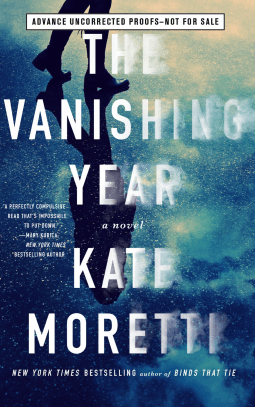
The Vanishing Year, by Kate Moretti****

thevanishingyear 3.5 stars, rounded up for this one. I received my copy from Atria Books and Net Galley in exchange for an honest review.  I am impressed most by the first half of the book, and particularly with regard to character, Kate Moretti is a rock star.

Our protagonist is Zoe Whitaker, and we learn that Zoe grew up as Hilary—with one “L”, and no political baggage—and then chose to adopt “Zoe”, the name on her birth certificate prior to her adoption. There’s a lot more mess here than there needs to be, the adopted-child angst, the guilt over having not given her mother Evelyn the funeral she deserved, and fear, fear, fear.

Moretti does a wonderful job of building suspense, and part of this is the vague but real tension, the constant shoulder-checking, wondering if someone has found her. It makes us wonder who, and it makes us wonder why. Bit by bit, she unspools tidbits of the past in the way you might expect someone that needs a friend and is learning to trust a new confidant might do.

Moretti’s main character is beautifully sculpted. Some novelists that withhold information to build tension hang onto so much that we don’t get to know our protagonist, but I was perched right on Zoe’s shoulder, or hanging out with her newly discarded friend Lydia, asking her why the heck Zoe is so passive. Is fear the only language Zoe knows? I felt close to Zoe, and I wanted her to tell me more.

Meanwhile, there’s the marriage. Henry Whitaker, an immensely wealthy man, sees Zoe across a crowd and homes in on her. Those familiar with the patterns common to abusive relationships know that this is a red flag; the guy whose gaze lights on a partner and from then on wants full possession of every move, every thought, and every minute. He makes a snap decision like lightning and then never lets up. And Henry has plenty of other red flags too, but he’s not a stereotypic abuser; Moretti is too cunning to permit any caricatures into her novel.

For the first half of this story, I relished the meaty ambiguity, not only in Zoe’s life but in what it represents. Yes, Henry is too possessive, too bossy, but on the other hand, this young woman that has never been known for her remarkable beauty or extraordinary talent has the Cinderella marriage without the stepsisters.

“I might be under someone’s thumb, but I have money now.”

Zoe has no living relatives to her knowledge, apart from the birth mom she hasn’t located and that may not want her when she does. She doesn’t have a degree, and is working at a florist’s shop in Manhattan when Henry finds her and whisks her away. He is devoted to her, provides her with every small thing her heart desires. She has a car and a driver, she has servants, she has clothes, jewels, and the whole nine yards. Everyone defers to her. There’s no restaurant that won’t make room for her at the front of the queue. Tickets to a sold out event? No problem.

It is easy for us to moralize from afar, we feminists with our principles, but economic want can shorten a woman’s life significantly. As this reviewer heads into retirement, I look at the lives of the women I knew when we were school girls, and no matter how clever or talented, their material well being seems tied, more than anything, to who they married and whether they remained married. Ask any woman over age 50 who’s looking for a job and watching those past-due notices land in her mailboxes, both electronic and physical, and many of those same women would be more than happy to let someone else tell them what to wear in exchange for such a well-padded safety net.

And so as Henry’s behavior escalates, I grow more entranced with the story’s Virginia Woolfish aspect, and I expect Moretti to take us up that mountain. How much is too much? At what point does one relinquish the guarantee, if there is one, of not only the basic requirements but luxuries one may quickly grow accustomed to, in exchange for breathing room, the dignity that comes with independence, self-respect, and with apologies to Woolf, possibly a room of one’s own?

But Moretti doesn’t go in that direction; at the last minute she tosses in a tremendous amount of new information that is original yet seriously far-fetched. Those that want a white-knuckle thriller with a female protagonist may be very happy here, but I was sad, left feeling as if the waiter had decided not to serve me and abandoned me after the hors d’oeuvres.

This title was released on October 4, and so if you are eager to see what all the buzz is about, get a copy, and then let me know what you think.

One way or another, Moretti will be a novelist to watch. The subtlety and nuance that escaped her as this novel progressed are still hers to be had, if she chooses to use them. I know I can’t wait to see what she publishes next.