
Cathy Williams was a real person, and Sarah Bird steps up to tell her story, marrying an engaging narrative with historical fact. Though I am mighty late, I received this book free and early. My thanks go to St. Martin’s Press and Net Galley for the review copy.

Cathy Williams was born a slave, though her mother told her to regard herself not as a slave, but as a captive, one of noble warrior blood whose destiny was freedom. The American Civil War led General Philip Sheridan to the tobacco farm in Missouri where Cathy and many others performed forced labor for “Old Mister.” Sheridan chooses her to work in the kitchen; she isn’t pretty, and he figures she will do what she’s supposed to, rather than being caught up in romance. She and other former slaves work in exchange for meals and protection against Rebel slave-hunters.
The American Civil War is my favorite historical period to read about, and I have a soft spot for Sheridan, so this makes the story all the sweeter for me. Before my retirement, I was a history teacher and the civil war was what I taught for one term every school year, yet I didn’t find any inaccuracies here. That’s a rare thing.
Usually, stories that are set during this period hit a climax when the war ends, and soon after that, the book is over. Bird doesn’t do that here; after all, this story isn’t about the war, it’s about Williams. Victory is declared, everyone whoops for joy, and we’re not even halfway in it yet. I like this, because it shows some continuity, and one must wonder, at times—so the war ends, and then what? The South is decimated. The army virtually dissolves. What becomes of those we have been reading about? Reconstruction starts and fails, we know this; yet one wonders about individual stories.
After the war, the army is still Cathy’s home. She is a big woman, and when a soldier friend is murdered, she takes his army coat and dresses herself up as a man, becoming Private Cathay, and she joins the Buffalo Soldiers. In real life, she is the only woman to do so.
I won’t even try to recount the many experiences Williams has; in some ways, it’s a less exaggerated version of Forrest Gump, or Little Big Man, but an African-American woman is the subject, and the story is true. Bird did some top-notch research for this thing, and between that and her considerable skill with character development, pacing, and dialogue, the result is pure gold.
It starts a little slow, but patience will reward you. There’s a fair amount of violence—how could there not be—and a number of ugly situations that might make this a bad fit for a classroom read-aloud, and that’s a shame, but the story had to be told this way. I recommend it for high school libraries, and Black History Month shelves; it might also make a fine gift for your precocious reader, depending on your comfort level and theirs. The very best thing to do, younger readers or no, is to read it yourself. I alternated my review copy with the audio version that I scooped from Seattle Bibliocommons, and the reader is a standout, so I recommend it in that form as well.
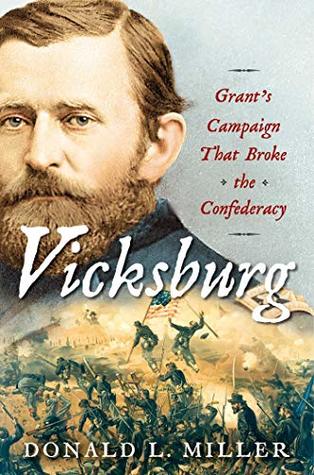


 I received this excellent Civil War tome from one of my sons as a Christmas gift. I don’t request a lot of books anymore because it’s so easy to get others free, but I asked for this one and I am glad I have it. I’ll be reading more by this guy. Despite one fact that I dispute—for which the citation also is sketchy—and some crummy maps, there’s no way to deny five stars here. The topic is among my favorites, and of course Sherman is my all time favorite general, hailing from a time when the United States government still attracted and produced heroes.
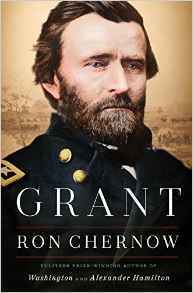 I’m tempted to add this title to my Southern fiction shelf. For a Pulitzer winner to be so careless with his facts is egregious. I got 200 pages or so in, and I found a glaring error. To be honest, I thought maybe it was me. I haven’t taught the American Civil War in 8 years now; am I slipping? Because I could swear that the famous tidbit about a single battle killing more soldiers than the American Revolution, War of 1812, and war with Mexico all added together was about the battle of Antietam, yet here is Chernow, saying it’s Shiloh.
 Grant and Sherman are my favorite generals of all time, and Flood is a highly respected author. This book was on my must-read list, and so I searched it out on an annual pilgrimage to Powell’s City of Books, and I came home happy. It turned out to be even better than I anticipated.
 The American Civil War is part of the curriculum I used to teach, and in retirement I still enjoy reading about it. When I saw that Open Road Media had listed this title on Net Galley to be republished digitally this summer, I swooped in and grabbed a copy for myself. I was so eager to read it that I bumped it ahead of some other DRCs I already had, and I really wanted to like it. Unfortunately, this is a shallow effort and it shows. Don’t buy it for yourself, and for heaven’s sake don’t advise your students to read it.
 Seattle Book Mama