
 The Last Road Home, bold and impressive new fiction by Pushcart Prize nominee Danny Johnson, came to me free thanks to Net Galley and Kensington Books in exchange for an honest review. It tells the story of Raeford “Junebug” Hurley and his friendship with neighboring twins, Fancy and Lightning Stroud. Junebug is Caucasian; the twins are African-American, politely referred to during that time as ‘colored’ or ‘Negro’. The story is set during the Civil Rights movement of the early 1960’s, but in rural North Carolina, the Klan stands tall and strong and absolutely nothing has changed in terms of race relations. Junebug finds himself riding on the fence rail from hell. This fascinating tale will be available to the public in late July. Those that love good historical fiction should read it.
The book begins with one horrible loss after another. At age 8, Junebug’s parents are both killed in a car wreck, and he goes to live with his grandparents. His life is pleasant and stable, helping his grandpa run the farm, but then his grandpa dies too. And by the time his grandmother dies, I have decided that the theme of this story must be grief and loss, or given the number of religious references, perhaps there is some sort of Christian redemption theme here. And on both counts, I find I am mistaken. Johnson is a masterful storyteller, and there is nothing simplistic in how this novel unfurls.
For while Junebug has plenty of questions about the religious fervor that pervades small towns of the South during this era, by the time he buries his grandma, he has had it with religion. “The preacher said a prayer, asking the Lord to be with me in this time of grief. I’d had all of God’s shit I could take and didn’t need His sympathy. If he said it was ‘God’s Will’, I might choke him.”
I wanted to stand up and cheer.
At age 15, orphaned and the sole remaining member of his family, he is on his own. “Fifteen was considered adult in farm years.” Lightning leaves home suddenly, unhappy with the limitations placed on Black men in his part of the world. Fancy is left behind, and she is the only friend Junebug has within walking distance of home. As friendship turns to passion, both find themselves occupying a dangerous place in their community. Given that they are cold shouldered simply for appearing in town together to run an errand, the thought of letting their feelings for one another be known is terrifying. He recalls his grandma’s admonition:
“’Junebug, you need to understand that cruelty and memory have been married together a long time in the South.’”
Johnson does an outstanding job of depicting white neighbors’ responses to the notion that our protagonist is linked romantically with Fancy. At first they are able to maintain the age-old fiction that she is his housekeeper, but she goes home at night, then sneaks back in darkest night to lay beside him. The muted references, little hints given by Caucasian elders nearby to guide the young white farmer away from a liaison that doesn’t fit local expectations, are rendered skillfully. There are a number of really vicious racial epithets tossed casually around by the local landowners, not always even in anger, sometimes in ugly jokes, as this writer knows from childhood experience is the way racists behave when a white supremacist perspective is not something being fought for as an outlier, but rather the dominant, even comfortable, norm. As the book continues, not only anti-Black pejoratives, but also nasty terms regarding Jews and Asians are tossed into the vernacular. None are gratuitous; they are an undeniable part of the setting, which would be revisionist without them.
Fancy and Junebug seem doomed. He tells her, “It feels like my life’s sprung a lot of leaks, and I’m running out of fingers.” She points out that she only has ten fingers too.
I was watching for the pat ending, the comfortable happy fiction that novelists are often drawn toward. Every time I thought I knew where the story was headed, it went somewhere else. Johnson is brilliant at breaking apart stereotypes, making setting real and immediate, and his character development is strong apart from some minor inconsistencies toward the end. And his framework is materialist by and large, showing that our surroundings and role in life shape us in ways we sometimes don’t expect.
Those interested in this period of history or that love excellent fiction should order this book. It will be available to the public July 26, 2016; strongly recommended.
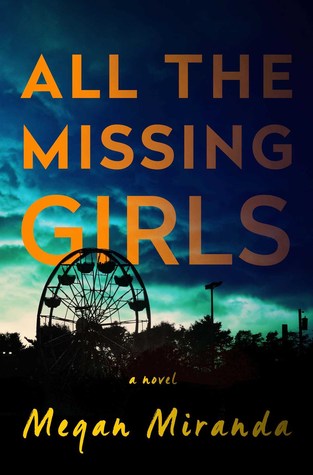 I was invited to read by Net Galley and Simon and Schuster in exchange for an honest review, and I am so glad I did. It’s a juicy read that kept me transfixed through most of my Memorial Day weekend. You can order your copy now and have it when it comes out June 28.
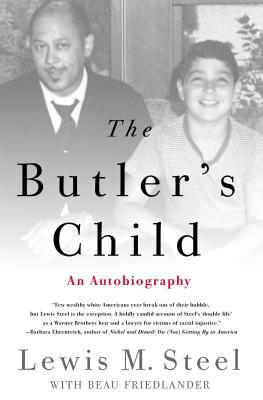 Lewis M. Steel has a long, noteworthy career as a civil rights attorney. He was an observer during the Attica Prison riots; worked for the NAACP during the Civil Rights movement, and later defended boxer Hurricane Carter against a frame-up charge of murder. And I was permitted to read this story free and in advance, thanks to Net Galley and St. Martin’s Press in exchange for this honest review. I rate it 3.5 stars and round upwards; it is now available to the public.
 Isabella Leitner was a Holocaust survivor, and she scribed her memoir using brief entries similar to a diary in format. The length is just 120 pages, about the size of a novella. I was asked to read and review this memoir free of charge before it was released digitally. Thanks go to Net Galley and Open Road Integrated Media for the invitation. This title was just released, so it is available now for purchase.
 Fearless women change history.
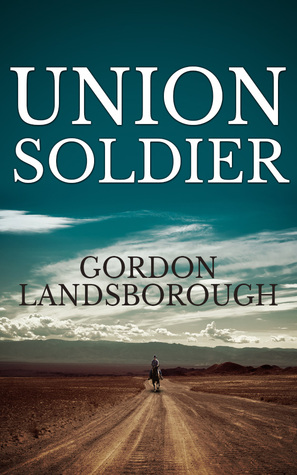 I received this title courtesy of Endeavor Press, who invited me to read and review their material directly; I thank them for the invitation to read and review this Digital Review Copy free in exchange for an honest review.
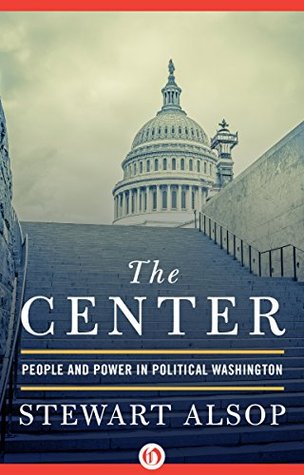 Alsop’s book is a collection of essays describing Washington, DC as it was in the 1960’s. Everything here was written then, so it’s a chance to jump back in time and see what the media—and this reporter in particular– thought was appropriate for mainstream Americans reading the news of the day. I was invited to read and review this book thanks to Open Road Integrated Media and Net Galley in exchange for this honest review. I always hate to pan a book when I’ve been invited; it sounds as if I am insulting the host after eating at his table. However, the truth is the truth, and I see this title as fitting a narrow niche audience, but not so much the general public.
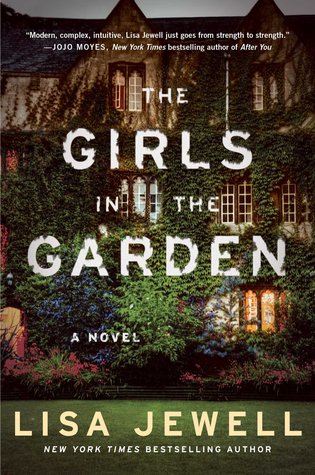 Lisa Jewell is an experienced author, but she is new to me. The Girls in the Garden, published in the UK last summer and soon to be in bookstores in the USA, is good strong fiction, and you should read it. I was fortunate and obtained an advance copy thanks to Net Galley and Atria Books for the purpose of a review. One night I stayed up late, unable to put it down until it was done.
 This title appeared to be a sure fire winner, a thriller that would also spotlight domestic violence and even more so, campus rape. I was pleased when Net Galley and Touchstone Publishers green-lighted my request for a DRC, which I received free of charge in exchange for this review. And without the social issues, which are a mixed bag but still partially useful, this would be a 1.5 star review, because as a mystery, as a thriller, as any kind of fiction, it doesn’t stand up.
 Those that occasionally hole up on their days off and binge on reality TV shows will love this book; those that don’t will love it too. This reviewer has never watched a single episode of “Survivor” or any other reality-survival show, and yet once I began reading this novel, it elbowed aside all the other books I was reading till I was done. Thanks go to Net Galley and Random House Ballantine for the DRC, which I received in exchange for this honest review.

