
Unknown's avatar

About seattlebookmama

Greetings! I am Donna Davis, a retired teacher living in my favorite city in the world. I've found that one of the greatest comforts in life is a good book. We can all use a little of that. Welcome, and enjoy! Donna Seattle Book Mama

Skitter, by Ezekiel Boone****

skitter Skitter is the sequel to Boone’s monstrous horror novel, The Hatching. Mutant spiders are on the rampage, fulfilling the worst nightmares of every arachnophobe, and president Stephanie Pilgrim has to decide how to save the USA—if it isn’t too late. I received my copy free and in advance from Net Galley and Atria Books in exchange for this honest review; copies will be available to the public May 9, 2017. Don’t miss out.

The first portion of the book is dedicated to bringing the reader up to speed so that those that didn’t read the first book can jump right in. The pacing feels a little slow, and I am thumbing my reader impatiently, wanting to find out what happens next. There is a fair amount of time discovering and discussing cold egg sacks versus warm, throbbing, glowing ones, but the emphasis is there for a reason, and it also makes for a more accessible read to a wider audience. At the 34% mark the ground work is done—so to speak—and the story breaks loose and really flies. The scene in Japan is particularly arresting.

So…imagine a bag of nice, warm spider eggs roughly the size of a bus; think of it as a “giant packet of doom in the corner”. It might hatch at any moment, and although the spiders may kill you, there’s a chance they may not. They spare some people to use as incubators for the next generation to come.

Let me just ask: how is your stomach doing right now? Are you feeling okay?


“Somebody gets bitten and then, what, five hours later they’re opening up and spilling out spiders like a bag of frozen peas?”


After The Hatching came out, I suddenly began noticing the spiders that came into the bedroom at night. It was uncanny how one turned up right after my spouse had fallen asleep, every single night. The spider would start in a far corner of the room—nothing to worry about here, ma’am, just minding my own business—and then gradually either circle to where it was directly overhead, or make its way to a location above the very center of the king sized bed, start a nice web, and commence to rappel doooown. I had never been that aware of them before, but now they seemed ominous. What the hell? Every night? Before he knew it, my spouse, who is nimbler than I, found himself drafted into spider-bombing the attic.

So yes, there is risk in reading this mesmerizing horror tale, but on the other hand, how can you not?

Ultimately, everything that can go wrong on Earth, does. There are mutant spiders from the South Pacific to Scotland, from Asia to Michigan. Quarantine zones fail. Hospitals fail. Other nations have tried everything, including using nuclear weapons on their own soil. And ultimately the president and her advisers wonder whether it is time to break out the Spanish Protocol.

I won’t tell you more than this; you need the book itself, either to take with you on vacation, or to make you feel better about the fact that you can’t go anywhere this year. Afterward, you’ll look at every little spider web in your living space with suspicion, and you’ll know it’s time for spring cleaning…right away!
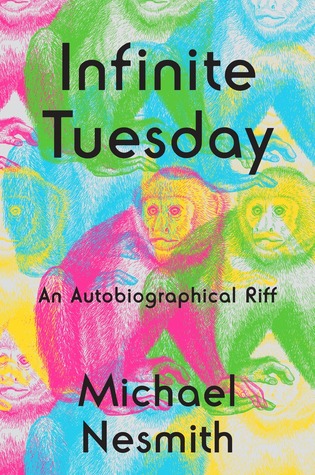
Infinite Tuesday, by Michael Nesmith****

infinitetues

Michael Nesmith is a veteran of the entertainment industry, but his name is most recognizable as the wool-beanie-wearing member of The Monkees. Nesmith has a treasure trove of experience and insight, and he’s very articulate. I really enjoyed this memoir, and if American musical and cultural history interest you, I recommend you get a copy when it comes out April 18, 2017. Thanks go to Net Galley and Crown Archetype for the DRC, which I received free of charge in exchange for this honest review.

Nesmith came of age in Texas, the child of a single hardworking mother, and was mentored by the profane elderly Uncle Chick, whose spoken cadence Nesmith would later find in his own sense of musical rhythm. Because Texas was the exclusive province, at the time, of country and gospel music, Michael and his pregnant girlfriend loaded themselves and Mike’s guitar into his mother’s car and took off for Los Angeles. It proved to be a good move.

Those that cannot remember the birth of rock and roll have no idea how polarizing it was. The cliché term “generation gap” represented a genuine source of friction and alienation in a lot of families; some parents decided that rock was not an art form but instead a type of devil worship. Some disowned their children over it and didn’t take them back later. I’m serious. And so when Nesmith credits his mother for her patience and forbearance—he actually didn’t ask if he could take her only car, for instance—he’s not just being gracious. Here, let him tell you:


It was unthinkable to everyone who had just fought World War II that the music…the whole cultural imperative of the victorious warriors would be torn down by their kids as if it were ugly curtains in the den.


Soon Nesmith would be chosen as a member of The Monkees, which catapulted four little-known young men to instant fame; Nesmith recalls that although seventeen to twenty-year-old Beatles fans were incensed by the TV imitation, the nine to twelve-year-old television kids—of which this reviewer was one—saw them as a fact:

What followed was what Nesmith calls “Celebrity Psychosis”, a sense of disproportion and entitlement caused by instant stardom, obsequious handlers, and bizarre social circumstances. He humorously recounts strange experiences, such as singing at a local school and being pursued by screaming adolescent girls, and being “sighted” shopping in a grocery store.

He recalls his experience as John Lennon’s house guest in London, and he cites Jimi Hendrix as the best rocker that ever lived. He also drops a rather nasty slam at Bob Dylan without any real explanation, and I confess that is part of the missing fifth star. What the hell?

Bette Nesmith, Michael’s late mother, invented Liquid Paper while he entered show business, and her fortune helped finance some of his creative products. Nesmith was a pioneer in the field of country rock as well as the music video. He produced movies and won a Grammy for “Elephant Parts”, an early music video:


He is also an ardent feminist, and his recollections show that he was one before it was cool. Thank you, Mr. Nesmith.

I have to admit that I find the first half of the memoir more interesting than the second half. The author goes on in the latter half of the book to speak at length about his spiritual experiences with Christian Science and the ways in which wealth distorts a person’s character, though he recognizes the latter doesn’t garner a lot of sympathy.  “Never complain about the air-conditioning a private jet.” He also does a lot of brow-beating about having stolen a friend’s wife, and attributes the failure of that marriage—his second, or his third maybe—to guilt.

Despite the aspects that I didn’t enjoy, I do recommend this memoir, because it eloquently describes a wide, enormously dynamic period in American film, music, and television. Nesmith unspools the last half of the 19th century with the wisdom of his experience, and it’s a perspective completely unlike any other I have seen.
Recommended for those with an interest in contemporary American cultural history, as well as to fans of Nesmith and The Monkees.

Silence, by Anthony Quinn*****

silenceSilence is the third in the Inspector Celcius Daly series, but I read it alone and didn’t realize I had missed anything until I got online and looked. I received my copy free from Net Galley and Open Road Media in exchange for this honest review. It’s been for sale for almost a year and I apologize for my tardiness; the book had been out for several months before I received my DRC, and so I kept setting this review aside in order to write about stories that were about to be published immediately.  None of this should keep you from rushing out to order a copy; as you can see I rated it five stars, and I am picky these days.
I am immediately drawn to this book because of the setting; it takes place in Northern Ireland during the Troubles of the 1970s. Although I am impatient with the trite expression used by the journalist in the story—“sectarian violence”—I find the setting resonant and the characters credible. The entire thing is wholly original, but it’s complex, so it’s not something you can read while you’re trying to do something else.

Our protagonist is the Inspector Daly, a lonely man with kind intentions and deteriorating mental health. We have a dead man in the priest’s hotel room, but then we learn the dead man isn’t Father Walsh. If that’s not Father Walsh, where has he gotten to, and who is our victim? Last is our villain, Daniel Hegarty, an IRA man captured and turned by the Special Branch.

I particularly appreciate the moment with the sheep.

The field of mysteries, thrillers, and others of this ilk are thick with mechanisms that make me want to throw things. I think everyone that’s read many books in this genre has a private list. I am simply ecstatic to find that no one here is trying to solve the mystery either because they themselves are framed for something they didn’t do, or because a loved one has been threatened; no one in our tale is kidnapped, blindfolded, gagged, and tossed into the trunk—er, boot—of a car.  It’s refreshing.

Of course, to get a five star rating takes more than just a lack of irritating features. The setting, in the dark, in the muck, and sweating past police checkpoints, is both visceral and at times, scary. It’s the sort of story that makes a reader snuggle under the covers and be grateful for a safe, warm place to lie down. The characters are not always lovable, but they are entirely believable. That’s what counts with me. And the ending is a complete surprise, yet also makes sense.

For those that like literate, complex mysteries, it’s hard to beat. Highly recommended.

Say Nothing, by Brad Parks***

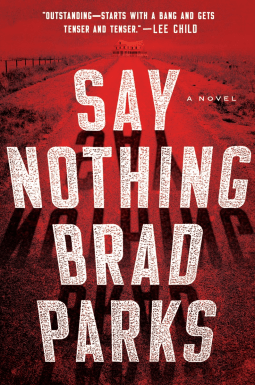
saynothingEvery parent with a baby or toddler has this one terrible, dark fear: that someone will take that baby.  In Say Nothing, that horrific event is doubled when Sam and Emma, twin sons of Scott and Alison, are taken and the note that sends frozen tendrils of fear up their spines instructs them not to tell anyone. No police; no one at all can know. “Say nothing.” Thanks go to Net Galley and Dutton Penguin for the DRC, which I received in exchange for an honest review. The book came out last week and is now available for purchase.
This story takes off like a rocket.  Scott Sampson is a Federal judge, and some devious criminals that know the family’s every habit snatch the children and send him a text message before either parent knows they are gone. Someone has impersonated Alison, swept by their preschool, and whisked the little ones away. How absolutely terrifying!

The purpose is soon clear: the kidnappers want to manipulate a major case on the Federal docket, assigned to Scott Sampson. Contacting police is out of the question. They’ve threatened to cut off their little fingers, one by one, and mail them to their parents.

Parks is a champ at building suspense. For me, the thrill is tarnished when I see a repetitive error—one many people won’t even notice—that has the effect of sweeping aside the curtain and showing me that the Great and Powerful Oz is just a guy in a chair. In this case, having had a judge in the family for many years and seeing the mistake in the text makes it hard to maintain the premise.  You see, when one is in court, the judge is “The Honorable” and is addressed as “your Honor”; in private life, his employees, friends and family all call him John, or Mr. W—. We used to eat out with this man frequently, and there was always a little family eye roll and slight smile when the obsequious maitre d’ at a downtown restaurant where we often ate came dashing out to the valet parking area calling, “Oh, Judge W—! Judge W—! We have your table ready now!”

In private life, if you need a title, a Supreme Court judge is called “Justice Jones”. Everyone else is called “Mr. Jones” or “Ms. Jones”.

I try to push past this obstacle but the error is made often in the dialogue, and so the memory of my relative’s patient courtesy is always lurking in the margins of my perception of the story. The upshot is that for me, it really gets in the way.

That said, I like the pacing of this story, and the solution is elegant and plausible.

Recommended to fans of the author’s Carter Ross series.

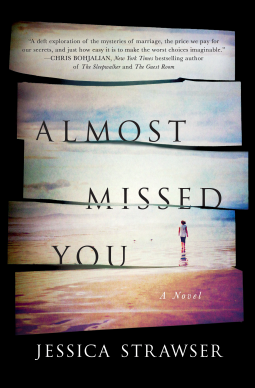
Almost Missed You, by Jessica Strawser****

almostmissedyo“Fate, people liked to call it. But Violet pictured it as dominoes. Somehow, they’d been positioned perfectly. And at the end of the line was Finn.”

Thanks go to Net Galley and St Martin’s Press for the DRC for this intricately crafted novel, which I received free in exchange for an honest review. Unique and tightly woven, it’s sure to arrest your attention until the last page is turned. This book goes up for sale March 28, 2017.

Violet meets Finn while on vacation in Miami, and wild coincidences draw them together. They went to the same obscure, short-lived summer camp, and they’re both from Cincinnati. How crazy is that? And so when they come together again, it feels like something out of a fairy tale. They marry and have an adorable son they call Bear. Later they return to Miami as a little family.

Then Violet returns, warm and fulfilled, to the hotel room…and both Finn and Bear are gone, along with their luggage.

This is a story that speaks to every mother’s worst nightmare, the abduction of her child. Her baby! And Strawser plots it cleverly, so that the obvious answers are no longer feasible. Of course the police are called, but since there was no divorce, no restraining order, there’s only so much they can do. They have other cases as well. Meanwhile, Violet is both frantic and bewildered. She had thought they were so happy together; what on Earth happened here?

Our main characters are these two parents as well as their closest friends, Caitlin and George. George is a ruling class scion, and at the start of the book it seems as if this is overemphasized. At one point I enter it in my digital notes: put the trowel away already, we get it! But here I am mistaken, because the frequent references are here for a reason; that’s all I will say about that lest I ruin the end for you.

An endearing side character is Gram, the woman that raised Violet after her parents died. Older women tend to be stereotyped in novels; they are either background characters that emerge with cookies or chicken soup and then depart again to make way for the real characters, or they are the cause of all that is bad—shrews, harpies, abusers, enablers, nags. Gram has shrewd advice and insights. She’s not just a cardboard cutout.

The inner narratives, which alternate and in doing so build suspense, are where the strongest voices are found. The dialogue is nicely done, but not as effective as the narratives. And more than anything I have read recently, this book is driven by the plot. The ending is a humdinger.

Ordinarily I would call this a strong beach read, but mothers of tiny children might want to read it somewhere else. It’s a fine debut novel, and Strawser will be an author to watch in the future. Recommended to those that like strong fiction.

The Weight of this World, by David Joy*****

It’s out! Get this one now, if you appreciate stark, immediate settings and hardscrabble characters. I will follow this author anywhere!

seattlebookmama's avatarSeattle Book Mama

theweightoftheworldDavid Joy is a writer that keeps it real, and that’s what made me lurch forward in my desk chair and grab my mouse when I saw his second novel was done.  Big thanks go to Net Galley and Putnam Penguin for the DRC, which I received in exchange for this honest review. This title will be available to the public March 7, 2017. Those that cherish strong fiction should buy it and read it.

The setting is Little Canada, North Carolina, a wide place in the road in the middle of nowhere. The family unit, such as it is, consists of April—the most unwilling of mothers—along with her son Thad, and his best friend, Aiden McCall, who shares the trailer at the rear of April’s property with Thad. The plot is centered on the inadvertent death of the local meth dealer, and a small fortune that is unexpectedly left…

View original post 448 more words

Ill Will, by Dan Chaon**

IllWillThe good news is that if you’re looking for something dark, then Chaon is your author. I received a copy free and in advance in exchange for an honest review; thank you Net Galley and Random House Ballantine. This book was released today and is available to the public.

The plot centers around a psychologist, recently widowed, who’s coming unstuck. One of his sons has developed an ugly drug habit right under his distracted father’s nose, but his dad just keeps giving him money and doesn’t ask questions. At the same time, the psychologist’s brother, who was sentenced to two life terms for the murders of their parents, aunt, and uncle, is exonerated when DNA analysis is done.  Simultaneously a patient of Dan’s comes to him with questions about a series of drowning of drunken college boys that he says he believes are linked. At first, Dan assumes these are paranoid ramblings, but over the course of time, the patient begins to assume greater and still greater importance in Dan’s life, until the reader begins to wonder which of the characters is the psychologist and which is the patient.

The quality of the prose is surreal and at times, dreamlike.

Every reader has a threshold for the level of violence he or she can sustain before a book ceases to be deliciously creepy and instead becomes a thing we wish we never read. I knew when I hit the term “snuff film” before the twenty percent mark that I might be in trouble, but it was a passing reference and since I had an obligation to the author and publisher, I brushed it off and kept reading.  I read multiple books at a time, usually half a dozen or so, and I found that this book was the one that I just didn’t want to read. With the publication date upon me, I forced myself through to the end, and have been slightly queasy ever since.

I didn’t have any fun here; it was just too disturbing.

I want to be fair, and so I read carefully in order to see whether there are any clever literary nuances that might improve my rating, and the second star is included here because of some interesting and innovative stylistic tools that are employed. I liked the triple narrative that appears to be taking place simultaneously, and am interested in the business employed with sentence endings that begins with the father and ends with someone else.

The story’s ending is both unpleasant and disappointing, in that it doesn’t present any sort of epiphany or surprise. My reaction to the end of this whole unfortunate thing is, “Oh.”

None of this means that you won’t like this story. There’s a lot of buzz right now about the now discredited belief in Satanic rituals that were in the news during the 1980s, and if this is in your wheelhouse, maybe you’ll like the book. If your tastes run way out on the edge of horror, you might find it more appealing than I do. On the other hand, it won’t make the ending any less anticlimactic.

Recommended to those interested in extreme horror stories and with a bottomless wallet, or that can read it free or cheaply.

The Roanoke Girls, by Amy Engel*****

Happy release day! I read and reviewed this title back in December and called it “…smoking hot, a barn burner of a book.” Today it’s for sale. You won’t find anything like it out there.

seattlebookmama's avatarSeattle Book Mama

theroanokegirlsAmy Engel makes her debut as a writer of adult fiction with this title, having begun her career writing fiction for young adults. The Roanoke Girls is smoking hot, a barn burner of a book, diving into some of society’s deepest taboos and yanking them from the shadows into the bright rays of Kansas sunshine, where the story is set, for us to have a look at them. It’s not available to the public until March 7, 2017, and frankly I don’t know how you are going to wait that long. I received a DRC for this title from Net Galley and Crown Publishing for the purpose of a review.

Lane grows up in New York City, raised by a mother that shows no sign of warmth or affection, a woman that seems to either cry or sleepwalk through most hours of most days. When she hangs herself, Lane bitterly…

View original post 638 more words

The Devil’s Country, by Harry Hunsicker****

thedevilscountryHarry Hunsicker is the former executive vice president of the Mystery Writers of America as well as a successful author. Reading this suspenseful and at times almost surreal tale makes it easy to understand why so many people want to read his work. I’d do it again in a heartbeat. Thanks go to Net Galley and to Thomas and Mercer for the DRC, which I received in exchange for this honest review. This book will be available to the public April 11, 2017.
Arlo Baines, a former Texas Ranger, is on the road when it all unfolds; he’s stopped at the tiny town of Piedra Springs, traveling from one place to another by Greyhound Bus, and he doesn’t intend to stay. He finds a place to get some food, sticks his nose in a copy of Gibbon, and tries to ignore everyone around him. Friendly conversation? Thank you, but no.

Unfortunately for him, there’s a woman with kids, and she’s in big trouble. Clad in an outfit that screams sister-wife, she is terrified, tells him she is pursued, and next thing he knows, she is dead. What happened to the children? Before he knows it, Baines is hip deep in the smoldering drama of the Sky of Zion, a cult that has deep tentacles into the local business and law enforcement establishments.

The narrative shifts smoothly back and forth between the past and the present, and Baines’s motivation is revealed. He is on the move because his wife and child were murdered by corrupt cops, who he then had killed. One particularly chilling scene, the one in which Baines is told to leave town, gives me shivers. In general, however, I find that the scenes taking place in the present are more gripping and resonant than those in the past.

Interesting side characters are Boone, a retired professor with a crease on his head and flip-flops that are falling apart; the local sheriff, Quang Marsh; journalist Hannah Byrnes; and the bad guys in Tom Mix-style hats, with the crease down the front. Setting is also strong here, and I can almost taste the dust in my mouth as Baines pursues his quest in this little town with quiet determination. Every time I make a prediction, something else—and something better—happens instead. In places, it’s laugh-out-loud funny!

Readers that love a good thriller and whose world view leans toward the left will find this a deeply satisfying read. Hunsicker kicks stereotypes to the curb and delivers a story unlike anyone else’s. I would love to see this become a series.

Unpunished, by Lisa Black**

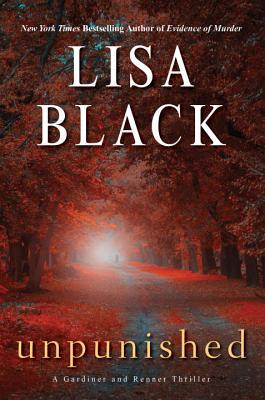
unpunishedThis novel is the second in the Gardiner and Renner series. I was invited to read and review it by Kensington Press and Net Galley. I appreciate the invitation and have enjoyed other titles published by this house; unfortunately, this particular book didn’t work for me. It is now available for purchase.

The premise is that a man has been found hanging at the office of the Cleveland Herald. Forensic investigator Maggie Gardiner is called to the scene. Ultimately, she will pair once again with Jack Renner, a vigilante killer that uses his homicide cop skills to enforce his own code.

This aspect of the story is not without appeal. As traditional relationships between the public and law enforcement become more fraught with injustice, it’s hard to relate to a traditional cop, though for the sake of a good yarn, I can pretend. While it is unthinkable, in real life, for anyone to make their own private hit list according to who’s good and who’s not—in the mind of the list maker—it does make for good fiction.

That’s about all the good I found here, though. Stereotypes, women referred to as “girls”, at-risk urban youth all lumped into the category of “gangbangers” and made disposable; these things all set my teeth on edge. There’s some over-long dialogue that is flat, and there’s more information about the production of newspapers than I ever needed to know.

The place I reacted the most strongly was at the beginning, where we get detailed information about neck ligatures that tell whether a body on a rope committed suicide or was strangled and left there to swing. For some readers, I think this will be fascinating. But for those that have been close to someone that died by his or her own hand, particularly in this manner, let this review serve as a neon trigger warning. There’s no scooting past it to get to the story; the forensic aspect plays heavily here.

For fans of Lisa Black’s other novels, of which there are several, this will likely be a welcome read. And perhaps I am a wee bit harsh simply because I have read so much strong fiction lately; every reviewer is susceptible to the urge to compare work. What else is on the table that I could be reading? How good is it? And right now, the answer is that the table is groaning under the weight of excellent literature, and those with limited time and resources can likely find a better book than this one.

Not this book; not this time.