Unknown's avatar

About seattlebookmama

Greetings! I am Donna Davis, a retired teacher living in my favorite city in the world. I've found that one of the greatest comforts in life is a good book. We can all use a little of that. Welcome, and enjoy! Donna Seattle Book Mama

Inland, by Tea Obreht*****

This memorable novel is my introduction to Tea Obreht, and I read it free and early, thanks to Net Galley and Random House. The combination of word smithery and whimsy creates the purest literary magic, and I recommend it to anyone that has a high vocabulary level and stamina. It is for sale now.
The tale takes place just after the American Civil War, and the narrative is divided between two characters, Lurie and Nora. Lurie begins his life in Arkansas; he is orphaned early and the man that takes him in is a grave robber that uses Lurie and other boys to assist him in his nightly plundering. Lurie grows up hard, fast, and mean; he wishes that he did not see and feel the dead, but he does, and most of all he senses their cravings.  I am immediately drawn by his second person narrative as he relates his memories to someone named Burke. You don’t see many writers use the second person, and I am curious as to who Burke is. When I find out, I am even more fascinated.

Nora is one of the early (Caucasian) Western settlers, and here Obreht uses the third person omniscient. Nora is unlike any Western protagonist I have ever read, and it is delightful to see the way this author turns stereotypes and caricatures squarely upside down. Nora has her hands full, trying to care for the aged, wheelchair bound Gramma; fighting a political battle in the press that is run by her husband and sons, none of whom she has seen lately; and carrying on a running dialogue with the ghost of her daughter Evelyn, who died in infancy. To add insult to injury she is saddled with Josie, a relative Emmett insisted they must take in. Nora is carrying a heavy emotional load, but the slow revelation of the secrets that weigh her down and the way that these impact the decisions she makes and the way she solves problems is completely convincing.  Whereas Lurie’s narrative is mostly about setting, Nora’s is about character. Both are rendered brilliantly.

I initially rated this novel 4.5 stars because of a few small areas where historical revisionism has crept in, but ultimately it is too fine a work to deny all five stars. I am reluctant to say more because the surprises start early, so to relate details that occur even twenty percent of the way in feels like a disservice both to the reader and the writer. 

One feature that is present throughout both of the narratives is thirst, and it’s related so well that I found myself downing extra water in sympathy and thanking my lucky stars that I live in Seattle rather than somewhere dusty and drought-stricken. In fact, there are places in Nora’s narrative where she is busy with other tasks or discussions of an urgent nature and I find myself telling Nora to just go ahead and ask the person she’s talking to for a sip of water. Nora won’t do it because she is proud and self-reliant, and the fact that I am already talking to the character instead of the author tells you how convincing the story is.

The reader is also advised that it’s a violent, gritty tale, particularly in the beginning but in other places also, and it’s loaded with triggers. To tell it otherwise would be to deny history, but if you are a mealtime reader or avoiding harsh prose for other reasons, it’s worth knowing. But I also think that the whimsy is all the sweeter for it.

Perhaps one of every ten novels I read becomes that book, the one that I can’t stop talking about. My spouse understands that to pass through a room when I am reading it is to guarantee he will be hijacked, at least momentarily, because I am either  going to paraphrase an interesting tidbit or read a particularly arresting passage out loud. This works well for me, though, because I find myself with more uninterrupted reading time. Inland is that sort of book.  Highly recommended.

Hollow Kingdom, by Kira Jane Buxton***

I received a review copy courtesy of Net Galley and Grand Central Publishing. Buxton has had her work appear in The New York Times and some other impressive places, and I was drawn by the buzz. To be honest, this book didn’t work for me, but I also have to admit that I am probably outside the target audience.

The setting drew me first; it’s hard to resist work set in my own hometown of Seattle. The premise has to do with a smart crow and a dumb dog setting out to save what’s left of their world. It’s billed as a romp, and I make a point of punctuating my other reading with humor so it doesn’t get too dark out there. So there were reasons to think I would enjoy this book.

But I was expecting a story arc and a plot. And I noted at the ten percent mark that I had seen enough product placements for the rest of the story and a boxed set to go with it. I quit about halfway through and skimmed till I reached the 80 percent mark, and then read the ending; no joy.

If a friend has read this book and says they think that you will like it, that friend might be right. But I can only share what I have seen and give you my honest opinion, which is that this is only something to be obtained only if it’s free or cheap unless your pockets are deep.

The 7 1/2 Deaths of Evelyn Hardcastle, by Stuart Turton*****

I am late to the party, but it’s still going strong. Stuart Turton’s masterful debut generated so much talk that I couldn’t not read this book, and it lives up to the buzz. Big thanks go to Net Galley and Sourcebooks Landmark.

Aiden wakes up stranded in the woods, and he has no idea who he is. Strangers rescue him and he’s taken to an aging English manor house, where a party is taking place. Everyone recognizes him but he doesn’t know any of them, and in time he realizes that he is living inside the body of another person at the scene of a murder. Every time he wakes up, he is in the body of a new host  at the same party in the same house, often someone he has already seen from the outside while he inhabits a different body; he lives through the same day he has just experienced, but through a different perspective. He will never be permitted to leave the manor or be restored to his own body until he is able to solve the mystery; he is in a competition with others in more or less the same position.  At the outset, he is inside Jonathan Derby, and everyone obsequiously attends to his needs. He is injured. He needs rest.

This story has a house-that-Jack-built quality, because each time Aiden wakes up, he can recall everything he learned when he was inside someone else. This advantage is offset by the fact that each host is more difficult to occupy, with the personality of the host warring for control over the body that he shares with them.  Several curves—including more murders—are added to the mix.  The reader has to decide which events are related to the murder, and which are extraneous; on top of that, some of the characters Aiden encounters are liars.

When I began reading I tried to keep track of the information, but soon it became obvious that I would need a flow chart to stand even a small chance of solving this thing, so I gave up and rode along, enjoying the progress of the story, but clueless as to how it would work out. Even so, it is a complex enough tale that I learned quickly not to read it after I took my sleeping pill.

Not only is it cleverly conceived and well paced, but there is character development, made possible with Anna’s back story and the humanizing of the Plague Doctor. I can only tip my hat in awe.

So Turton has a monstrously successful debut novel, but the pressure is on in terms of what he writes next. Can his second effort live up to the reputation he has created for himself? Whatever he writes, I want to read it.

Highly recommended.

The Reckless Oath We Made, by Bryn Greenwood*****

People talk about having an angel on one shoulder and a devil on the other. I had a pair of imaginary bill collectors, so no matter which way I turned, there was somebody to remind me I needed money. That’s how I ended up on a train at four o’clock in the morning with my nephew and a hundred pounds of weed.

Bryn Greenwood met acclaim with All the Ugly and Wonderful Things, which I also read and reviewed, and I liked it a lot, but The Reckless Oath We Made is special, possibly the best novel we’ll see in 2019. The charm of the narrative voice is just as strong as the last if not more so, but there’s greater character development. It’s quirky and groundbreaking, and I will love this story until the day I die. My thanks go to Net Galley and Putnam for the review copy. You can buy it now.

Zhorzha—you can call her Zee—is in a state of perpetual crisis. Her father is in prison for robbery, and her mother has fallen apart, become a hoarder, massively obese, and agoraphobic to boot. At age 12, Zee was forced to leave home, and has been sofa cruising ever since. Recently she’s been staying with her sister LaReigne, but now LaReigne has been kidnapped. Zee and her nephew Marcus are stranded with nobody left to call for a ride; then her stalker steps forward and offers them a lift, and she takes it.

It’s the beginning of something beautiful.

Gentry has been following Zee for years; he saw her at physical therapy when she was recovering from a serious accident, and the voices in his head told him that he must be her champion. He doesn’t harass her, but he is always there. When all hell breaks loose, Gentry transports her to her mother’s house, but it’s even worse there. She is humiliated to have him—or anyone—see what kind of squalor her mother has chosen, but Gentry  sees her mother entirely differently, and since his narrative is peppered alternately with Zee’s and occasional glimpses of side characters’ perspectives, he tells us:

There, in the inner chamber, reclined upon a throne of red leather that scarce contained her serpentine hugeness, was the dragon Lady Zhorzha called Mother. My lady was blessed with a great mane of fire that ne comb ne blade might tame. Mayhap in the dragon’s youth, she had worn such a mantle, but in her age, her hairs weren grayed.

Fearless, Marcus approached the throne and flung himself upon the lady dragon. For a time, there was kissing and lamenting, for they weren greatly distressed with the fate of my lady’s sister…I would go upon my knee, but the dragon’s hoard was too close upon her.

At one point someone asks Zee whether she talks like Gentry too, and she replies, “Honestly, I don’t always understand what he says. I got a C in English in high school, and we never got to Shakespeare. I wasn’t in the advanced class.”

In fact, the juxtaposition of Gentry’s old world speech and Zee’s contemporary, frank responses that keep the story hopping. I laughed out loud several times when we moved from his speech to hers, for example:

Lady Zhorzha! Art’ou well?

Oh, thank fuck, Gentry. Yes. We’re okay.

But as much as I love Gentry, I love Zee harder. Zee is utterly believable, and she is unlike any other character I have read anywhere. She explains, when she’s asked whether she goes hunting with Gentry, that she wouldn’t know how; she comes from generations of “citified white trash whose main food-related struggle has to do with “opening dented cans of off-brand Spam from the food bank.”  

Zee is a large woman, and I am so heartily tired of tiny-firecracker female protagonists that I am cheered tremendously.  She’s nearly six feet tall, and her uncle says she is “Built like she could hunt bear with a stick.” When she is leaving the emergency room after a scare involving her mother, a staff member advises Zee to lose weight herself. One of Gentry’s friends notes that “Honestly, if she dropped fifty or sixty pounds, she would be pretty hot.”

And the thing I appreciate the most about this is that her weight not our central problem. It isn’t a problem at all. Zee is a romantic heroine who is fat, but this is an incidental part of her character. The problem is the kidnapping, and it’s complicated by all of the other challenges faced by poor people, challenges that Zee has to face without much of a tool kit; but between the kidnapping and the point when LaReigne is found, other life-changing events take place, and the Zhorzha we see at the story’s end is both wiser and happier than she is at the outset.

Greenwood doesn’t just avoid stereotypes in recounting Zee’s plight; she knocks the knees from beneath them and gives us breathing human beings and real world plot points instead, and she does it without being obvious about it. This is no manifesto; it’s more like a magnificent modern-day fairytale.

Take Gentry again, for example. Gentry is autistic, but he is not friendless, and he has some mad skills that take bullies unawares. Also?  Gentry is adopted. He is white; his adoptive mother is Black. Again, this is incidental to the story, but readers cannot miss it; there’s a very brief spot that brings it front and center, and I cheer when I see it.

Those that read my reviews know that I seldom gush, but this story is perfect in so many ways that I cannot help myself. By this time next year, I will have read roughly 140 more books, but I will still remember Zee, and I will still remember Gentry. This is among the sweetest stories of  2019, a new favorite.

I highly recommend this book to everyone that has the literacy skills and stamina to brave Gentry’s prose. Get it at full price or discounted, from the library or stolen. You won’t be sorry.

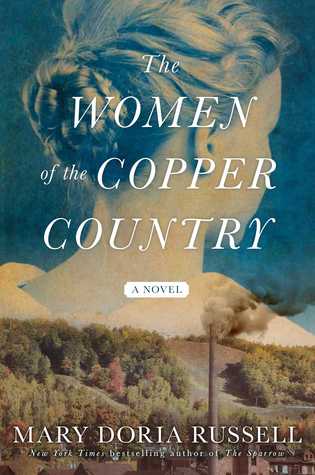
The Women of the Copper Country, by Mary Doria Russell*****

Annie Clements is a badass union warrior, nearly six feet tall with fiery red hair and a voice that carries.  When the men that work the Quincy mine strike for better wages, an eight hour day, and an end to the treacherous one man drill, Big Annie leads the women’s auxiliary, and her role makes headlines around the world. This magnificent novel, which holds closely to events as they unfurled, came to me free and early, thanks to Atria Books and Net Galley. It’s for sale right now.

The Quincy mine is owned by Calumet and Hecla, and it is one of the deepest underground—and therefore one of the most dangerous—in the US.  It’s on the upper peninsula of Michigan, an isolated location closer to Canada than to other states or even the rest of Michigan; the winters are fierce. The only thing crueler than winter there is the heart of the general manager, James McNaughton, a vicious, vindictive man, who vows that “Grass will grow in the streets of Calumet before C&H recognizes the Western Federation of Miners.”

Charlie Miller is our union organizer, traveling from camp to camp, gathering support from working families. He intends to attack the smaller, more outlying mining companies first and save the huge, wealthy ones like Calumet for after inroads have been made around them. But miners are angry about the one man drill, a recent change that saves the company on wages, but leaves a single miner at risk of being injured or buried without a second miner present to help get him out of there. The company won’t send workers in after the injured, so working in pairs is a critical part of what little safety exists. Too many have gone home dead or maimed, and emotion is high. The women’s auxiliary organizes the wives and other family members of miners, and the women are rising up as well. Miller doesn’t see a strike as winnable right now, but if the union doesn’t get behind them soon, it may well become a wild cat strike, one in which the workers strike without union backing; that would embarrass the WFM.

Russell combines beautifully woven prose with careful attention to historical detail; not much has been changed here, but in her end notes she explains what has been altered and why. Where possible she uses direct quotes, and this is above and beyond what most novelists will do.

Although the story is about Big Annie Clements, my favorite part is when Mother Jones comes to Calumet. (Those interested in labor history should also read Mother Jones’s autobiography, which is shorter and better than what any biographer has done for her.)

This is the first time I have read Russell’s work, but it won’t be the last. A measure of how much I love a book can be found in how much I read, quote, and carry on about it right here at home. My husband could scarcely enter a room without my demanding whether we have any other materials about the copper strikers, and does he know about (this, that, the other thing)? I was reading ten different books, but he was hearing about only one of them. My own grandfather was a miner and died of Black Lung many years ago, but I felt him beside me as I read; I find myself hungry for pasties, the recipe preserved from my Finnish great aunt. But I digress.

Finally, readers should also know that this is a tragic read, positively miserable in places. There are dead and dying children, and the ending isn’t heartwarming. Yet it contains elements—an unlikely romance, and in James McNaughton, a villain of monstrous proportions—that could not be written into a purely fictional tale because nobody would believe them; and yet, these are aspects that stick closely to historical reality.

For those that love excellent historical fiction, this is a must read. For those that love both historical fiction and labor history, it provides the sweetest of crossroads. Highly recommended.

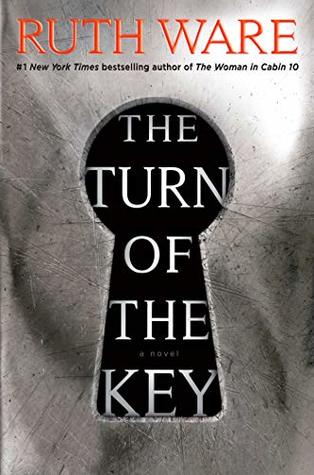
The Turn of the Key, by Ruth Ware****

Ruth Ware is on a roll. The Turn of the Key is a lot of fun; I received it free and early, thanks to Net Galley and Gallery Books.

Our protagonist comes across the job posting almost by accident while web-crawling, looking for something else. It sounds too good to be true, a live-in nanny position with a professional salary and the use of a car. The location is a beautiful home in Scotland, and the children are 3 adorable little girls, along with a middle schooler who’s away at boarding school. But the funny thing is, they haven’t been able to keep anyone in the position.

Rowan is called for an interview, and she stays overnight in the room that will be hers. It’s gorgeous. The bed is sumptuous, and she has a private bathroom, with state-of-the-art everything. The house was originally an historic pile, but it’s been updated with all sorts of smart house features.

This, I think, is what sets this mystery apart from others, because it speaks to an anxiety many of us face today. Everywhere, we are monitored. Cameras keep us and our belongings safe, but we are always watched. We don’t always know whether we are being watched or not; sometimes cameras are tiny and concealed, and sometimes there are drones that come and go. Every time Rowan—who of course gets the job—has a bad moment, either because she has snapped at one of the kids, or because her clothing is stained or disheveled, or because she’s getting ready to take a shower, she wonders if someone is looking at her.

To me the most surprising thing is that she never pushes back. Why doesn’t she ask about the camera in her bedroom? When she is told that she is only getting about a third of her monthly salary, with the rest being held back as a “completion bonus” after one year, she doesn’t bat an eye. At the end we learn of an additional motivating factor that could account for these things, but that factor feels contrived to me and doesn’t add to the story. It actually weakens it, partly because Megan Miranda just published a mystery with similar features.

The ghostly noises that come in the night are augmented by the smart home features, and here I can only bow in admiration. I also appreciate the poison garden, which is wickedly cool.

The red herrings are obvious ones, and I figured out most of the outcome early on. The shocker at the end didn’t seem credible to me. It took me a long time to buy into the format. The beginning is in the form of a letter our protagonist writes from prison to obtain legal help. But Ware is skilled at creating a hypnotic narrative, and by the ten percent mark I forgot about that aspect and focused on the story itself. Despite a predictable outcome or two, I found the ending satisfying.

That said, I love the use of the microphone feature in gmail that gives Rowan’s charge Ellie, the kindergartener, the capacity to send messages; particular the cute little errors (the messages that read “fairy” instead of “very” and so forth) are adorable.

This is a fast read and a deeply absorbing one. It’s available now.

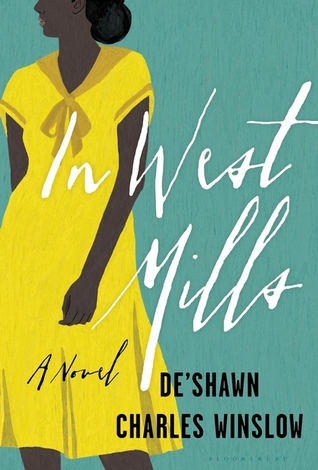
In West Mills, by De’Shawn Charles Winslow***

I received a review copy of this book courtesy of Net Galley and Bloomsbury. It’s for sale now.

Winslow’s debut is set in 1941 in North Carolina. Our protagonists are Azalea Knot, an alcoholic school teacher in an African-American community, a woman shunned by her neighbors and kinfolk for her unconventional behavior and obnoxious personality. Otis Lee has family troubles of his own, but seeks redemption by helping Knot, who has two babies out of wedlock at a time when you really could not do that without terrible social repercussions. Otis is a helpful sort, and ultimately, the story becomes one about the family we choose.

I abandoned and restarted this book three times, and in the end, I never did engage with it much. I read the first thirty percent, the last twenty-five percent, and skimmed the middle. The writing style didn’t speak to me, and I couldn’t understand why Otis would care about Knot. But to be fair, Southern fiction has been a competitive genre for several years, and I was reading books by Attica Locke and Jesmyn Ward at the same time I read this.

I have a hunch Winslow is just warming up. He’ll be one to watch in the future.

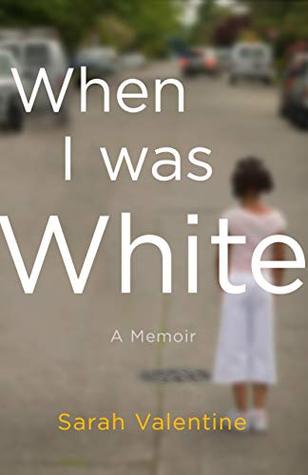
When I Was White, by Sarah Valentine****

Sarah Valentine was raised to believe that she was white, and that her dark complexion was the product of her Greek ancestors. But whereas she does have Greek ancestry in her DNA, Sarah is also of African descent. This strange but compelling, searingly honest memoir came to me courtesy of Net Galley and St. Martin’s Press; it will be available to the public tomorrow, August 6, 2019.

Valentine is an excellent writer, and she spins us back in time to her childhood, spent in a private school, a Catholic upper middle class family, celebrating European cultural events. She is the only African-American or mixed race student at her school, and every now and then, someone there will make a remark that infers she is Black. This puzzles her. Her own mother makes remarks bordering on White Supremacy, assumptions about the habits and character of Black people; of course, none of this should apply to Sarah, in her view, because she insists that Sarah is Greek and Irish, and Irish, and Irish.

Reading of her experiences, I am initially surprised that such culturally clueless, entirely white parents would be permitted to adopt a Black child; but here’s the thing. She isn’t adopted. She is her mother’s biological child, and to talk about who her biological father is, is to recognize that her mother was not always faithful to her father. It’s a keg of dynamite, one that her parents carefully navigate around. Not only have they not spoken about this to Sarah; they have not spoken about it to each other. It is a fiction that holds their marriage together; toss a tablecloth over that keg of TNT there and for goodness sake, don’t bump it.

I came away feeling sorry for her father.

There’s a lot more going on between Sarah and her parents, particularly her mother, a talented but not entirely stable parent who assigns impossible standards to her daughter. Meanwhile, as Sarah grows up and leaves for college, the fiction of her heritage is uncovered, first as a mere suspicion, then later as fact.

This isn’t an easy read or a fun one. It can’t be. Sarah’s pain bleeds through the pages as we see the toxic ingredients and outcomes in her story; her mother’s mental health and her own, as well as eating disorders and the implosion of her parents’ marriage. The particulars of her lifelong struggle make it impossible to draw a larger lesson in terms of civil rights issues; there are some salient points that will speak to women that grew up in the mid-20th century as Sarah’s mother did, and as I did. And here we find one small spark of optimism, the fact that when women are raped, whether at college or elsewhere, we stand a greater chance of being believed than we did in the past. Still, it’s a grim tale overall, and I don’t think there’s any other way Sarah could honestly have told it.

That’s What Frenemies Are For, by Sophie Littlefield and Lauren Gershell***-****

I have been a Sophie Littlefield fan since A Bad Day for Sorry came out ten years ago; That’s What Frenemies Are For is co-written by Littlefield and new author Lauren Gershell.  Is Littlefield Gershell’s mentor? If so, she has created a literary monster.

My thanks go to Ballantine and Net Galley for the review copy. I rate this book 3.5 stars, rounded up.

Socialite Julia Summers is a stay-home mom with a nanny; her real avocation is in keeping up appearances. What would look better–build Julia’s brand, if you will–than for her to take the Nobody that teaches her spin class and turn her into a Somebody?  Just think how impressed the other moms will be!  But fitness instructor Tatum turns out to be more than Julia has reckoned for. This is wickedly funny satire, full of sass and snark that made me guffaw out loud in places.

The fun at the outset is in watching to see where Julia’s dominoes will begin to fall. There are at least a dozen teasers planted as it moves along, places where I see her do something so risky that it almost has to backfire. The greatest surprise for me is in seeing how my own attitude toward this entitled protagonist changes. At the start I cannot wait to see someone knock her off of her high horse, but I also can’t help but engage with this character, and as she confides in the reader through an intimate first person narrative, I find myself rooting for her in spite of everything. It’s fascinating.

The resolution isn’t as satisfying as it could be. It’s a bit like getting to the highest spot on the rollercoaster and having the ride stop so you can get off and take the elevator down to safety. Watch your step, folks. Stay behind the guardrail as you exit the cars.

Nevertheless, I found myself thoroughly engrossed for the first eighty percent , and the rest isn’t bad. Gershell is a writer to watch.  

If you have a vacation coming up, toss this in your bag. It’s for sale now.

The Book Charmer, by Karen Hawkins***

Grace Wheeler is stuck. She has the perfect life; job, home, fulfillment. But filial duty calls; she is needed by her orphaned niece and her foster mother, who is showing signs of dementia. The obvious thing to do would be to take them back to the city and resume life as usual, but with adjustments; however, she can’t do that because a sense of place—Dove Pond, North Carolina, where she has always lived–is what ties Mama G to what’s left of her real world. Also, there’s a house they can have there.  When Grace proclaims loudly and often that she’s only staying for a year, we know right away that she will fall in love with Dove Pond and stay forever.

 I like the cousin who owns the house that Grace, Mama G, and niece Daisy will live in, but she is with us for just a short time before she hops in her RV and drives away. Mentally I am standing on the curb shouting, “Come back! Come back!”

I read this book free and early thanks to Net Galley and Gallery Books.  I read the first thirty percent, skimmed, and then read the last twenty-five percent.

Sarah Dove is the town librarian as well as a book whisperer. Books speak to her—literally—and they have decided they like the looks of Grace. Sarah is lonely, and when the books speak, she listens, and she pesters Grace relentlessly as she tries to befriend her. Ultimately it is the Trojan Horse in the form of Daisy that creates the connection Sarah desires. Daisy is going through a rough time and is grieving and acting out; she and Sarah bond over Little Women. (Insert eye roll here.)  However difficult she may be, Daisy is actually quite clever, gifted even.

Ohhh goody.  My eyes roll again. Fictional children are always so precocious, aren’t they?

 Grace’s new next door neighbor, the bad boy on a motorcycle, as well as Sarah’s old flame, who’s come back around, create romantic side stories whose paths are clear from the get-go.

So here’s the thing.  I confess that the cozy genre is not my main literary lane. Usually when I find a cozy series that works for me, other cozy reviewers just hate it because it’s too edgy. This story will make a lot of cozy readers very happy. It’s wholesome and has a soothing tone; the narrative voice is charming. I know there is an audience that will eat this up, and when I step away from this cozy banquet, I won’t be missed.  

But for me, the story feels formulaic. If I can tell how the main story thread will go, and how some of the side business will turn out, by the ten percent mark, I’m not a fan. The one place I really connect is when the bad boy on the motorcycle gets his hair cut, and I am so sad, because I liked this character and now he’s ruined for me.

So for those of you that want a soothing, wholesome feel-good story you can read in a weekend, maybe this book is for you. If you aren’t sure, consider reading it free or cheap.  

It’s for sale today.