Vigil, by George Saunders*****

George Saunders is a luminary in the world of literary fiction. His latest novel, Vigil, tells the story of Jill Blaine, also called “Doll,” a formerly alive person who’s now tasked with escorting dying souls on Earth to their next destination.

My thanks go to NetGalley and Random House for the review copy. This book will be available to the public January 27, 2026.

Ms. Blaine, our protagonist, has been tapped hundreds of times to transition the dying to their next stop, but this time it’s different. Others needed to be comforted and consoled; KJ Boone, however, does not. He’s an oil company executive that has oh, so much for which to atone, but he doesn’t see it that way. Boone has more self-esteem, more rampant self-regard, than almost anyone else on the planet. So, in one sense, Blaine isn’t really needed, and yet she is.

Saunders writes some of the most whimsical prose I’ve read anywhere. This novel isn’t getting as much love from some other reviewers, and when I read what they have to say, a bit puzzled by the lukewarm responses, I see why. Saunders has written other books, in particular, two other massively successful novels, Lincoln in the Bardo and Tenth of December.  To reviewers that read and loved either of these, that is the standard to which he will forever be held. I have no such outsized yardstick by which to measure this writer. Both of those books are in my queue, but I haven’t read a word of either one yet, so I measure his novels by the same yardstick as I use for every other author, and frankly, that seems fairer to me.

Therefore, when Jill Blaine plummets to Earth headfirst and sinks nearly to her waist in the dirt, feet sticking up, then has to pull herself back out, I read it and laugh like hell.

I won’t give any of the plot away; this is a short book, after all, and you deserve to be surprised by everything that takes place inside it. However, in addition to its original and vast humor, the story examines some philosophical questions. What do we owe the world and its people? What is chosen, and what is inevitable? Humor is a great way to explore these issues, because we are confronted with them while we’re in a relaxed state; we don’t become defensive before a question is even asked.

Highly recommended to those that love fantasy and philosophy and can use a good, hearty laugh.

The Briars, by Sarah Crouch*****

In 2024 author Sarah Crouch made her novelistic debut with Middletide, a hauntingly atmospheric mystery set in her native Pacific Northwest. This year she’s produced The Briars, which shows that where Crouch is concerned, there’s no such thing as a sophomore slump.

My thanks go to NetGalley and Atria Books for the review copy. This book will be available to the public January 13, 2026.

Annie is an Oregon game warden, but a ruined relationship sends her packing across the border of Washington State to the isolated hamlet of (fictional) Lake Lumin. There she finds friendship and a measure of solace, as well as an unexpected connection with the area’s mystery man. But all of it threatens to come crashing down when a teenage girl is brutally murdered and left in the woods near his property.

I enjoyed Crouch’s debut novel, but I love this one even more. Crouch depicts the wilderness of Washington State flawlessly, and I can practically smell the evergreen trees and damp, decaying bark as I read. But The Briars is even more about character, and I feel I know Annie, the mystery man known as Daniel, and local ranger Jake intimately. I am sure by about the halfway mark that I know exactly whodunit, but I tell myself that I don’t mind because the narrative is so compelling. In the end, the joke is on me; I don’t already know who killed that girl, and yet the solution makes sense.

I highly recommend this outstanding mystery to all that love the genre.

Charlie and Me, by Mary Neiswender, Kate Neiswender

Mary Neiswender was the first and primary journalist that the notorious serial killer Charles Manson was willing to talk to. She did so at a time in history in which women in journalism were exceedingly rare, and she put up with a whole lot of crap, first in order to remain in her field, and then later to rise to its pinnacle, receiving a Pulitzer nomination.

My thanks go to the University of Nebraska press and NetGalley. This book is for sale now.

Charles Manson was the leader of a group that called itself “The Family,” almost entirely made up of girls and young women that had nowhere else to go. However, people came and went within it, and so those that spoke of it as a cohesive entity were mistaken. Manson was handsome and charismatic despite his small physical form, and he was convicted of the 1969 Tate-LaBianca murders even though he was almost certainly not present at the time.

Neiswender regarded him as a killer, but also was convinced that he hadn’t had a fair trial. She makes a good case. She delayed writing this book until Manson’s death in prison in 2017, as she had promised to keep much of what he said off the record. Once he died, she considered herself to be freed from that agreement. Neiswender died in March of this year, and her daughter has assisted her in seeing that the book was completed and published.

I don’t read a lot of true crime, but I couldn’t put this book down. Neiswender’s observations and insights are fascinating, and she does a fine job of bringing Manson to life—in a way that the public can appreciate without the physical threat the man represented in person.

Highly recommended.

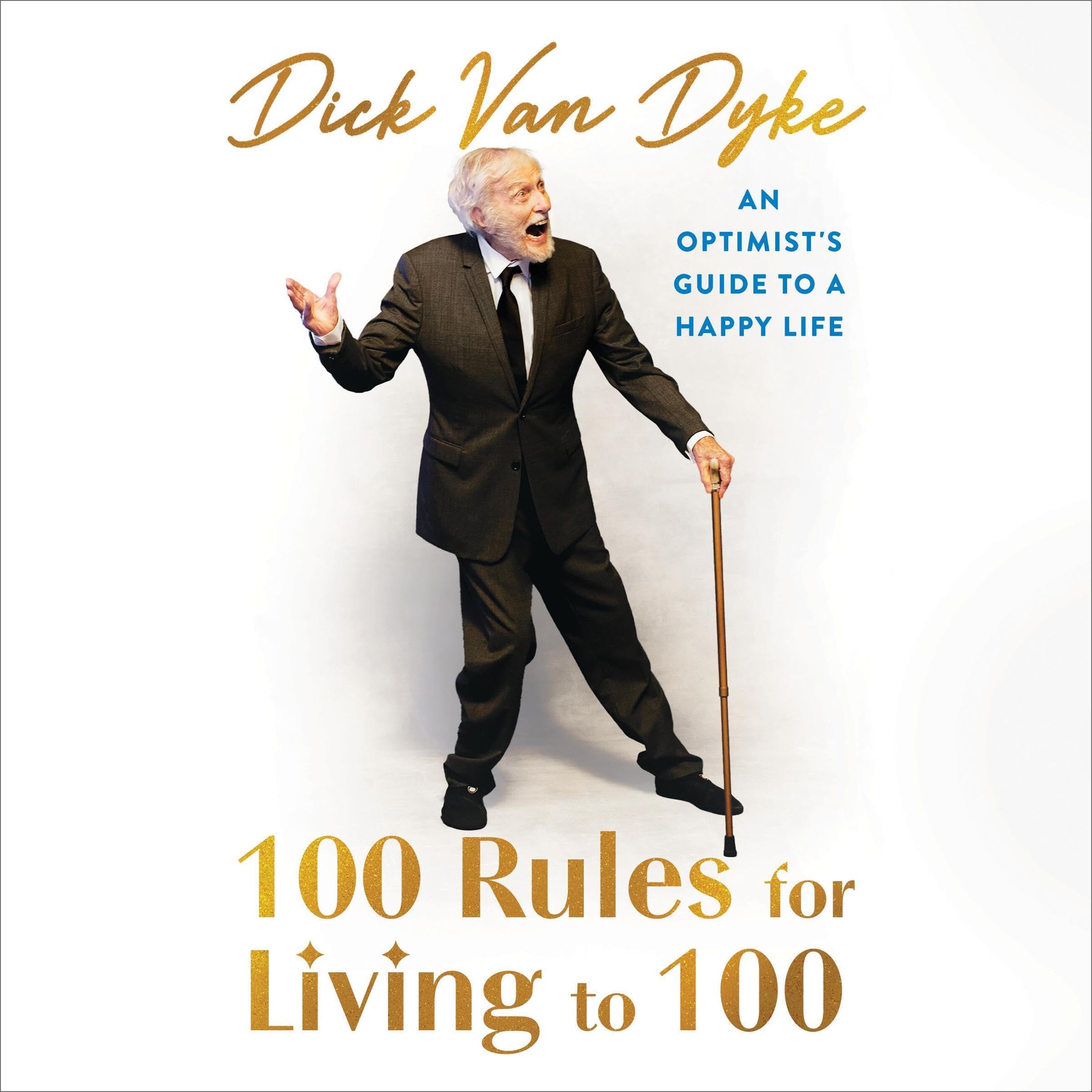
100 Rules for Living to 100, by Dick Van Dyke****

Version 1.0.0

Dick Van Dyke was a wonderful part of my childhood, and this lovely audiobook has put a little more bounce in my step. It’s not really about rules, of course, but the format is a perfect scaffold for a combination memoir and self-help book. My thanks go to NetGalley and Grand Central Publishing for the review copy; this book is for sale now.

Van Dyke entered my consciousness when I was a kindergartener, and the original movie Mary Poppins brought droves of families to theaters. I was not the only family member that was entranced, and all of us sang along to the sound track once the record was on our stereo turntable. The movie, and its lead characters, played by Julie Andrews and Van Dyke, glowed with humor and optimism.  What a wonderful message to share, the idea that the best we can give our children is our time and our attention. In the early 1960s, the suggestion that adults ought to listen to children was ahead of its time and much needed.

Many of the anecdotes the author conveys have to do with experiences shared between him and Arlene, his current wife. Despite the May-December romance, it sounds like a wonderful union. He talks about the recent and horrific events with the Santa Ana fires that took the homes of so many—though his own was spared. My favorite parts, though, are the ones in which he discusses the future roles he’d like to play, because he isn’t really retired from the industry. Way to go, Dick!

Reader Tom Bergeron does a nice job, and as a bonus, he sounds quite a bit like the author.

I recommend this little gem to everyone that could use some positive energy, and to all that love the author.