Serpents Rising, by David A. Poulsen ****

serpents risingWhat fun to get in on the first mystery novel of a planned series! Poulsen is an experienced writer, and he knows how to set the hook to reel readers in. I was immediately engaged as I read the initial chapters.

Thank you, Net Galley and Dundurn Press, for the advance peek!

I’d classify this as a cozy mystery, and it’s the first such book I’ve read that was written by a man. I enjoy a limited number of this sub-genre. I dislike seeing everyday people (housewives, caterers, hoteliers) “outsmart” the professionals, and I avoid like the plague any cozy mystery with (*shudder!*) recipes! For those, I use a cookbook. And Poulsen doesn’t do either of those annoying things listed above; so far so good.

His reason for wanting to get to the bottom of his wife’s death by arson is a strong one, not all that new, (the cops suspected him for a long time, and he misses his wife), but old devices like these can still work if the writer is skillful enough to make them seem new. In the beginning, it worked for me.

Equally if not even more engaging is the help he provides his friend Cobb, a private detective being paid to search for a missing teenager with a history of drug abuse. The characters of Jay and Zoe were almost tangible. I used to teach kids of this age, and Poulsen made them so believable that I felt as if I knew them.

That said, the first half of the book is better than the second half. Some of the details in the resolution strained credibility, and the second half also saw a couple of seen-it-many-times plot devices that didn’t look new; they made me groan and mutter, “Oh come on, not that again!”

But you’ll note there are four stars there. It’s a good book, despite the occasional momentary mutter on my part. When the second Cullen and Cobb mystery comes out, it will be on my to-read list.

I was pleased that the author did not add a sickening amount of gore, or add elements that would leave me with a leaden gut for the next two days. Some authors feel that in order to gain the attention of an increasingly easily distracted audience, they have to dig up every horrible possibility and traumatize us. Not so here (or in anything I would label “cozy”). If your “ick” factor keeps you away from Stephen King, you can read this one.

For a fun, relatively quick read to curl up with over the weekend or take to the beach, get a copy of this book. If you are a mystery fan, I think you’ll like it!
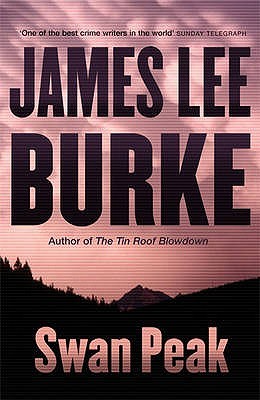
Swan Peak, by James Lee Burke *****

Swan PeakThis series began decades ago, when Dave Robicheaux and his best friend and cop partner, Cletus Purcel, were in their prime. Now they are much older, aging along with their creator, the legendary James Lee Burke. Robicheaux is happily married to Molly, a strong, loving woman who can deal with the harsh twists and turns that Dave’s life metes out. Clete continues to be drawn toward women with “disaster, stay away” stamped on their foreheads. It’s nice to know there are some things the reader can depend upon.
Just as the author divides his time between Montana and New Iberia, Louisiana, so does Dave, and this installation is set in Montana. Dave, Molly and Clete are on vacation, staying with friends, but Clete drives headlong into trouble, for once not of his own making, almost immediately. The local cops aren’t entirely sympathetic, nor are the Feds, all of whom know that he has a suspicious history in the area; he may be connected to a flaming plane that took down a nasty mobster and some of his entourage, a crash that may not have been accidental. Nobody has ever proven anything, but the presumption of innocence doesn’t apply to the attitudes that people take. It’s unfortunate, since Clete will need all the help he can get in this one:

 
Clete Purcel had given up on sleep, at least since he had been sapped with a blackjack,
wrist-cuffed to the base of a pine tree, and forced to hear a machine dig his grave out
of a hillside. He kept his nightlight on and his piece under his pillow and slept in fitful
increments. The trick was not to set the bar too high. If you thought of sleep in terms
of minutes rather than hours, you could always keep ahead of the game.

 
Yes, friends, there is trouble to spare on this vacation-from-hell, the bevy of frustrated wanna-be artists, corrupt wealthy baddies, and women with miserable pasts and questionable futures to whom Cletus is invariably drawn, moth to candle flame, that we have come to expect from a colorful, adrenaline packed story like the ones Burke spins when he writes this series.
But not all is rotten and wrong. Dave and Molly are fonder and more loving than ever as they grow older together. The protagonist explains that

 
There are occasions in this world when you’re allowed to step inside a sonnet,
when clocks stop, and you don’t worry about time’s winged chariot and hands
that beckon to you from the shadows.

 
Is the man with the half-melted face someone associated with Sally Dio? Is he Dio himself? Or is he merely a disabled man with a deeply flawed character?
Who killed those teenagers?
To find out, you need to get a copy of this wonderful book, but if you haven’t read the rest of the series, I recommend reading them in sequence. Because nobody writes better than Burke.

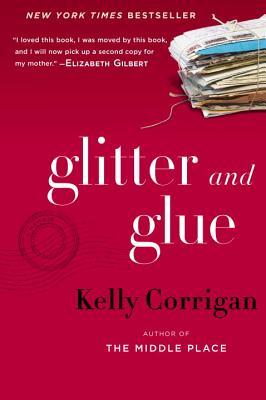
Glitter and Glue, by Kelly Corrigan*****

GLITTERANDGLUE

Whoops, nearly forgot! Thank you, thank you to Ballantine Books and the First Reads program at Goodreads for permitting me to read this book free and in advance!

This isn’t Corrigan’s first book, and it shows. At first it appears to be light, fluffy material, a beach read. The confidential one-gal-to-another tone may create the illusion that we’re going to sit down over a cup of coffee and have a little chat, just us, and the book.

It goes deeper than this, though. The complexity of relationship between mother and daughter is not a new topic, but Corrigan is a strong writer, and she makes it feel new. She recounts how she had saved her money so that she could leave home to find out who she was, following college graduation. She needed to go out into the world to do that, she explained to her mother, who thought she should do something more practical with her nest egg.

In Australia, Corrigan runs low on money, and she finds herself signing on as a temporary nanny. The dad has just been widowed, and his 5 and 7 year old children are smarting from the loss. Reminders of “Mum” and mortality seem to be everywhere. And Corrigan, who is for better or worse playing the role of surrogate mother, finds herself channeling her mother. Everywhere she goes, her mother is still in her head. I recognize some of the truisms and turns of phrase from my own mother, though I am about a decade older than Corrigan. And gradually, Corrigan comes to realize that what her mother had said before was true: her father, who always praised her and was always positive, but didn’t deal with any of the details of raising her or disciplining her, was the glitter. Her mother was the glue.

Later she comes to realize that there is not one woman inside each woman, but dozens of them: the mother who has always seemed a trifle harsh, undemonstrative, curt, and (my word) anal at home is “a hoot” at the office. Everyone finds her hilarious there. She isn’t trying to be anyone’s role model, so she cuts loose. What a revelation!

Two favorite moments: toward the beginning when she is a “classic” snoop while babysitting. Whoa, I totally did that, and my friends did too! We used the house phone where we were babysitting to call each other up and announce our findings! Funny. Another favorite was toward the end, when the author, fuming a bit at home in San Francisco because she has been back home to her folks many times, but her mother hasn’t visited her, is told by a friend that she needs to invite her mother. “Maybe she thinks you don’t care.” Again, hell yes! My own mother instilled in me the notion that once your kids are grown, you don’t push yourself at them, sure as hell don’t drop in on them. I have been inside my own son’s house just once, and last summer he made an ironic remark about it. Hey, I was waiting for the invitation! Last thing any mom wants is for her kid to pull back the curtains and hiss to whoever is present, “Oh crap. It’s my mom.” *cringe!*

Ultimately, Corrigan experiences the role reversal that inevitably must come, and she becomes her mother’s glue when she falls ill. Her father is still the glitter.

I end a lot of reviews by saying that the reader shouldn’t pay full cover price, but consider reading it if your library or used book store has it. Not so this time. If you love an accessible yet intelligently written memoir as much as I do, cut loose and buy this when it’s released. If not for yourself, read it for your family. You’re bound closer than you may think.

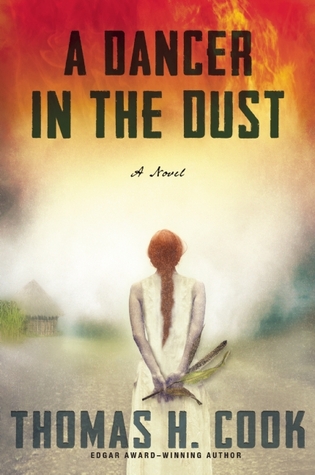
A Dancer in the Dust: A Novel, by Thomas H. Cook *****

a dancer in the dustA Dancer in the Dust is a multifaceted novel. It is a love story, the doomed love of Ray Campbell, a risk assessor from the United States for Martine Aubert, an African woman of Belgian descent. Martine lives in, and loves, the country of her birth, a fictitiously independent nation called Lubanda. And it is a story of paternalism, and of how much easier it is to place someone else in a risky position rather than oneself. It is also a story that raises thought-provoking social issues.
My thanks go to the publisher and the first reads program for the chance to read this free. It is beautifully written, but it is also one that starts with a man grieving, and by chance it arrived in the mail when I was grieving a younger family member who died very unexpectedly. Every time I picked the book up, the clouds formed, and so I took what I would generally consider to be an unconscionably long time reading it. For awhile, the words just couldn’t sink in.
When I got my wits about me, it occurred to me that I ought to find out whether Lubanda was a real place or not, lest I make an ass of myself while reviewing it. Sure enough, Lubanda, though not really an independent nation, exists in east-central Africa as a subsection of Tanzania. Cook makes it larger and more populous than it is in real life for the purpose of his fictional vehicle. And when you are as painterly and skillful with words as Cook is, you can pretty much do what you need to in order to tell your story.
So we rejoin Campbell as he sets out on his return trip to Lubanda. He left there after Martine was killed, returned to New York City, but the death of a man known to both Ray and Martine sets his wheels back in motion. Seso, whom Campbell considered a friend, has turned up dead, murdered, in New York City. Campbell has weighed risks and taken the safer course all of his life, and in turn, he has been left with nothing and no one. He is finally ready to toss all of his chips on the table in hopes of at least winning redemption, and so he sets out in search of Seso’s killer.
“Actually, we have plenty of opportunities to do the right thing…It’s taking back the wrong thing we can’t do.”
Martine had died because she would not do what the Western aid providers think she should do, a program the government bought into lock, stock and barrel. She had tried to explain in logical terms why their plan for her country was wrong, but no one was listening. Nation after nation had become a “funhouse mirror into hell” because of Western policies: Uganda, Kenya, Congo, and the list continues. Patrice Lumumba embraced modern ideas and methods, but ultimately died when he defied his keepers.
In setting out to find out what happened to Seso and why, Campbell is looking to trace back the thread. Cook’s account is brutal and searing, but it is too well told, too compelling, and raises too many thorny social issues that bear examining to be set aside. Read it for Africa; read it for the mystery it unravels; or read it for social justice. But get the book, and read it now!

Alex’s Wake: A Voyage of Betrayal and a Journey of Remembrance, by Martin Goldsmith *****

alexs wakeHolocaust memoirs take on added urgency right now, between the revisionists who want to rewrite history and claim that the entire thing was either a hoax or dreadful exaggeration, and the fact that the eye witnesses and survivors are nearly all dead now. Martin Goldsmith retraces the journey, both academically and where possible, literally, to the places his Uncle Helmut and grandfather Alex were taken. It’s quite a story, and would be a fun read if it were not so horribly, terribly true. As it stands, Goldsmith’s narrative pulls his readers in one slim finger at a time, until we are held firmly to the text and must remain until it’s done.

The narrative starts out introspective and almost dreamlike. If I were not reading this free courtesy of Net Galley in exchange for my review, I think I might have set it aside about twenty percent of the way in and not returned, thinking to myself that of course, I know the Holocaust was real, but do I want to read about it again? It’s not an enjoyable topic, and what good can it do to revisit it? Furthermore, I started to believe that this particular narrative was not so different from other heartbreaking stories, and might be more of interest to the writer and his surviving kin than to strangers like me.

I am glad I kept reading, because just past this point is where we quit the runway and the story takes wing. The writer starts with the visits, first to the Holocaust museum, and then to Europe. He is greeted warmly in his family’s former homeland, and he makes speeches and accepts certificates and expresses appreciation to the family who now occupies what was once the family manse for their clumsy token gesture. The current owners clearly understand that circumstances have skewed things badly, and they want to make it up in some impossible way. They were wondering what he would think of a nice plaque on the building’s exterior noting its place in history and recognizing his family.

He understands these folks aren’t the ones who stole from him. He says and does the right things, but the edge is unmistakably there, as part of him longs to say that if they really want to make things right, to give him back his family’s home. Like many who lost wealth and/or family in the Holocaust, he waxes nostalgic, looking with poignancy at the beautiful place that should rightfully be his.

Here I squirm a bit. I don’t read rich people’s stories for a reason. I don’t believe anybody is entitled to vast wealth. It’s why the only memoirs I avoid are those of the ruling rich.

But another more important principle trumps my usual one: nobody, nobody, nobody should be disenfranchised of even a penny on account of their ethnicity or race. If anyone at all in Germany gets to have a big fancy house, then Goldsmith’s family should. His resentment is righteous; he has the moral high ground here. I think back to an old bumper sticker I once saw, courtesy of the American Indian Movement during the 1960’s that read, “AMERICA: love it or give it back.” And thus is the untenable yet irreparable theft of the Holocaust’s descendents. We can’t fix it, so here’s your framed letter, your trophy, your plaque, your award. His ambivalence runs deep and is clear and harsh. It should be.

From there, Goldsmith’s family saga telescopes out in a way that is so deft, I don’t even catch the transitions. This is rare. I spent years of my life teaching teenagers how to make transitions in their writing, and usually when it is well done in professional writing, I sit back and admire it, like the French paintings he describes. I love to watch good transitions happen, but the very best are noteworthy in that I am so deeply into the text that they float by unseen. It’s almost magical. And so, as the family’s tale is told, we see the larger picture of France and French fascism.

Many of us today want to believe that all of France and much of Germany was simply too afraid of the fascists to resist, but Goldsmith unflinchingly grabs us by the hair, makes us look. There are cheering throngs that are thrilled when the fascists take power. They aren’t trembling; they are overjoyed. This is how fascism works, in demonizing a sector of the population, others believe themselves lifted up.

In the end, I was glad to have joined Goldsmith on his journey. For anyone with a serious interest in World War II; the Holocaust; the face and effect of fascism; or contemporary European history, this gem is not to be missed.

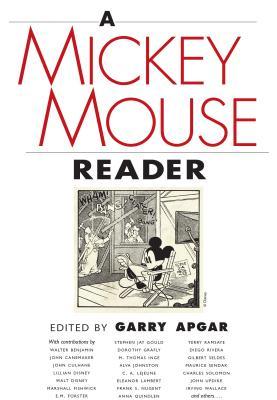
A Mickey Mouse Reader, by Gary Apgar ***-****

AmickeymousereaderThe key word here is “reader”, which means don’t expect a sumptuous coffee table book replete with lush full page illustrations. This is, instead, a collection of articles written over the years about the character Disney referred to colloquially as “The Mouse”, and also some about Disney himself.
The first third or so of the book is somewhat monotonous, because several articles are printed that essentially give the same information. They talk about the first cartoons that played as short films in movie houses during the era of silent films, and the consequence adaptation in which Mickey was given his voice, which was Walt Disney speaking in falsetto. The company was founded on a shoestring by Disney and a partner with whom he fell out when the man swindled him; consequently, Walt’s brother Roy came on board with a significant cash infusion and a willingness to join in. It was Walt Disney’s wife Lillian who prevented him from naming Mickey “Mortimer Mouse”. The character’s humor was modeled largely on the self-effacing humor of Charlie Chaplin, though Disney said that the two did not share political perspectives.
Those who have the attention span and the interest level will find more diverse material in the remaining portion of the book, and everything is fastidiously documented; articles published in a language other than English are reprinted in their entirety in the original language at the back of the book.
Mickey is analyzed up one side and down another by such diverse individuals as Carl Jung, Maurice Sendak, and Stephen Jay Gould; in relation to the last of these, there is an achingly tedious article giving all the cranial dimensions of the various incarnations of Mickey’s head. Who knows? Maybe that will be your favorite part. It didn’t do anything for me. Many others commented on Mickey and his role socially, internationally, and even politically. Some claims that seemed gob-smackingly over the top to this reviewer dampened my enthusiasm a little bit. For example, one commentator said that Mickey is the greatest contribution ever made to world culture by the USA because he is so instantly recognizable and has a different name in every language. The reasoning is specious, because it takes a trademark image and equates it with culture. Given that jazz music was originally hatched on US soil, it’s a little hard to swallow that Mickey is America’s greatest contribution, almost a damning by faint praise. But you can decide for yourself, and this book will throw plenty of claims and historical information in your direction.
In 1937, as world politics became tense, the New York Times pointed out that the only two internationalists left in the world were Mickey Mouse and Leon Trotsky.
The longstanding rumor that Disney was sympathetic toward German fascism before World War II is never addressed. As Mickey has been kept carefully squeaky clean, so is his and Walt’s biography. Instead, it is mentioned that the sight of the Mickey Mouse button worn by children throughout the developed world infuriated Hitler, who wanted German youth to display only the swastika. It is also mentioned that the name “Mickey Mouse” was used as a code during that war. And one of the book’s few illustrations is a political cartoon in which Mickey represents the USA, perched on the nose of , Charles de Gaulle, whom the Allies backed when France was split between the two sides.
Disney’s genius was not only geared toward animation; he had a good head for business. The Disney fortune compounded itself with merchandising. Initially, Mickey’s success bankrolled the expensive production of Snow White, Dumbo, Bambi, and the other early, magnificent animated full length films that followed. Tee shirts and wristwatches were everywhere in the 1960’s and 1970’s; Disney took the 50,000th watch that came off the assembly line and put it on his desk, which had once been graced with studio mice (actual rodents) which he had lovingly caged, observed, and set free in fields earlier in his career.
Brief mention is made of the cartoons made in an earlier era that caricatured African-Americans, and I confess I myself had wondered why those dreadful things were not pulled out of circulation, or limited to those studying animation history as opposed to popular entertainment. Brief mention was also made of the NAACP boycott instigated by the release of “Song of the South”, one of Disney’s few flops.
What does the future hold for Mickey, Apgar wonders. Disney himself had pointed out that there were limitations to what one could do with “The Mouse”. After all, Mickey is eternally young and eternally good; unlike Donald Duck, Disney’s more rounded character, Mickey could never have a sexual thought, lose his temper, or take a controversial stand. Because of this, and the fact that he had already been in some 70 short films as well as the acclaimed Fantasia and The Sorcerer’s Apprentice, he more or less hit a dead end (my phrase, not Disney’s).
Cartoonist Art Spiegelman, creator of the graphic novel Maus, commented that if Mickey were to be updated, the obvious thing would be to make him gay. “After all, he’s already halfway there!” This gave me my first real laugh during the time I read this historical collection.
For the general audience, I rate this three stars due to the repetitive nature of a large amount of material and its dearth of artwork. For a niche audience including those researching the history of animation, the history of Disney , or that of Mickey Mouse, my sole concern is what is left out or glossed over: Walt Disney and pre-Hitler fascism; issues with the NAACP; and the reprehensible exclusion of the king of pop, Michael Jackson, who doesn’t even get a mention. For these reasons, five stars are not possible, so four stars for a niche audience. The collection is comprehensive in all that is glorious, and almost entirely devoid of rockier, more controversial moments.

All We Had: A Novel, by Annie Weatherwax*****

All We HadThis quirky, funny, poignant story had me from hello. How often have you read a really strong mother-daughter novel? The legendary Marge Piercy brought some our way, and of course Amy Tan. Does Annie Weatherwax deserve a place in such auspicious company? I think she does.
Ruth and her mother have nobody and nothing, apart from each other and whatever they can throw in the car, and most of that stuff might not actually belong to them. They sleep together on whatever flat surface is available, sometimes a nasty mattress in an unfinished basement, but they call no place home.
Sometimes it seems more that Ruth is raising her mother than the other way ‘round, and so the fur flies when her mother suddenly decides to exert authority.
Does this sound like anyone you have known? It rings true to me. I’ve known people like this, both professionally and in my personal life. A friend in social work once told me that this “type” of kid keeps it together until she is in her mid-20s and then falls apart, because she didn’t get to scream and act out as an adolescent. At least in developed Western societies, the adolescent stage is necessary to development; if a kid can’t do it at the socially acceptable time of life that most people do, she’ll do it later.
And the fact that I found myself thinking such things, making such predictions for a fictional character, proves exactly how real Ruthie and her mother became to me as I gorged on the literary feast Weatherwax has cooked up. I was notified by Net Galley that since the book was coming out August 5, it would be nice to have my review run in early August, just before its release, and so I set the galley aside when I hit 60 percent. Later, I told myself. You can read it later.
I couldn’t stand it. I have over 100 unread books, most of them used, some of them galleys with a sell-by date on them, but I dove back in mid-July, like a dieter on a chocolate binge. I’ll run this review on my blog in July and then run it again in August, because All We Had is not just any story. It’s the story that couldn’t wait.
Rejoining mother and daughter, then, we head westward. Mom is determined that come what may, Ruthie will go to college, and she has her eye on the Ivy League schools. No matter how many boyfriends she takes up with, moves Ruthie and herself in with, and then books it (sometimes with the guy’s car and almost always with some of his money), their journey continues toward New England.
That is, until they come to Fat River, Ohio, a place that proves exceptional. It is here that Ruthie becomes fast friends with Peter Pam, the transvestite waitress at the local diner. People are different here in Fat River. Nobody has a lot of money, but there is such character here, a sense of community surpassing anything they had ever believed was possible for people like themselves, and the cynical, wise-cracking, foul-mouthed Ruthie and her mom find their defenses breaking down, a bit at a time, as the town takes its hold on their hearts.
What happens from there you will have to learn by yourself. I couldn’t tear myself away. I don’t know whether this book will be a best seller, but I do know that I would have been the poorer for not having read it.
Highly recommended!

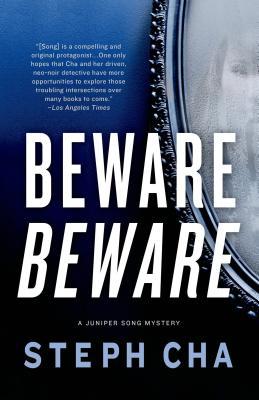
Beware Beware, by Steph Cha *****

Bewarebeware

Steph Cha’s new thriller, Beware Beware, starts out like a sassy beach read and ends with muscle and authority. It’s gritty, urban,edgy, and ultimately deals with a burning real life issue in a way that is not preachy, but instead is integral to the plot. Her character development and pacing are handled as expertly as a champion driver at the Indy 500. Buckle up and be ready!
Daphne Freamon, a renowned painter, contacts PI Juniper Song, the first Korean-American to join the formidable array of female sleuths marketed in contemporary detective fiction, for what appears to be a routine domestic investigation case. In the end, it is far more. There are more twists and turns than you can possibly imagine, and the pages turn so rapidly that by the end of the weekend, I was done, yet still thinking about what I had read, which for me is significant; usually I mow through one book, reflect long enough to spin a review, and then move on.
Freamon hires Song, a hard-drinking, hard-working PI with a past that haunts her daily, to follow her boyfriend around. Is he having an affair? Is he back on drugs?
The answer is obviously “yes” to at least one of these, and yet Freamon still wants Song on the case. Two weeks have gone by and she’s still doing this work after she has more than enough information; something feels off about it, but hey, it’s Daphne’s dime. Daphne Freamon wants her to continue, and Song follows through. Oh boy, does she follow through!
A distraction that becomes urgent, then menacing, is the ugly man who has taken an unmistakable yet unwelcome interest in Song’s roommate, whom she considers her little sister. Why can’t Lori lose this guy? When Lori’s boyfriend, the one she loves, is beaten so badly that he requires hospitalization, the facts come out, and they aren’t pretty. Now Song has two problems instead of one. How can she protect Lori from this thug, a man with a thousand tentacles that reach everywhere?
Freamon, who has become not only a client but a friend as well, sees the problem too. She has a quick word with Lori at a nightclub. From there, things speed up. You may find yourself leaning forward as you read!
One small thing that twitched at the back of my brain all the way through the book, being a practical-minded gal, was whether Freamon pays up for Song’s sweat and hard work. I keep waiting for Song to send an invoice or cash a check. She spends so much time on this case and does so much for this woman, and I just want to know that Song can pay her bills at the end of the day. It shouldn’t bother me, given the immediacy of the story line, and yet it does.
This picky detail shouldn’t keep you away from fresh, original writing by a new talent who is sure to be a huge hit. Cha writes with confidence and authority, and if you take this book to the beach, you won’t notice the sand or the sea. Carve out some time, because you won’t want to do anything else till you have turned the very last page!


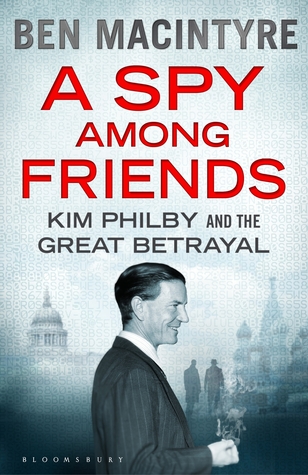
A Spy Among Friends: Kim Philby and the Great Betrayal, by Ben Macintyre *****

A Spy Among Us Kim Philby     This was a real page-turner, which says a lot, given that I already knew how it would end. I read the historical fiction version by another author and was fascinated by it, but also wondered what was fact and what was invented. Macintyre take his job so seriously that 25% of the book is citations. You KNOW he’s not making this up!

A great big thank you goes to Net Galley and Crown Publishers for the free read; that said, yes, this one is worth buying. I haven’t read anything else by Macintyre, but now that I have seen what he can do, he’ll be on my to-read list!

Kim Philby is considered by many to have been the world’s greatest spy. Perhaps the phrase should be “best known spy”, since the best spies are never found out. But that’s a digression. The fact is that this British-born, upper-class man was drawn to the ideas of Bolshevism at exactly the time that Lenin’s legacy became corrupted and Stalin held sway. It didn’t matter to Philby, nor did the purges and the reign of terror that occurred when Stalin went slightly bonkers and began seeing betrayal in every corner, executing lifelong friends over imagined treason. And one has to wonder, given the level of material comfort and exclusive old-boy club pampering that Philby enjoyed on the ground, exactly how much he truly believed in the class struggle, and how much of what he did was done for the sheer joy of deceit and skullduggery.

The most amazing thing to me, in reading this excellent, compelling narrative, was how much he did and how many lives he cost before he was discovered, and even then, that his life was spared. I can well understand that the British government preferred not to endure the public humiliation of having its grievous errors known to the world. Why they didn’t cap the guy behind the ear or arrange for a dreadful tragedy is harder to understand. And it all boils down to class: Elliott, who believed himself to be Philby’s closest friend for decades, from fresh-scrubbed youth to middle age, simply said, when later interviewed, that Philby was “One of us.”

If you are a U.S. citizen and are patting yourself on the back because you live in a ‘meritocracy’ in which antiquated notions like breeding are not factored into one’s fate, think again. How many millionaires, let alone billionaires, do you see on Death Row in the US of A?

Exactly.

The skill of the writer became most apparent to me when I read the ending, including a passage by the famous John le Carre. The passages in which Elliott is quoted verbatim set my teeth on edge. What a detestable individual, so smug! “Stiff upper lip” indeed. A stick stuck somewhere else came to mind.

Yet Mcintyre reinvents him in order for us to have a sympathetic protagonist to offset our villain. His nonfiction narrative reads like a spy thriller; in making his text as readable as well written fiction, he joins the formidable ranks of Barbara Tuchman and Isobel Wilkerson. Not many people are capable of such pacing and plot-spinning when confined by the actual facts.

Highly recommended to general audiences.

Good Morning, Mr. Mandela! by Zelda la Grange *****

Good Morning Mr MandelaZelda la Grange, an Africaner, grew up in South Africa under apartheid. Her family was steadfastly right-wing, and she was brought up to believe that Africaners were fighting against the “black communists”. She had been taught to fear them. The family servant, Jogabeth, was black, but she fell into a slightly different category, since she had a large role in raising la Grange while her parents, who were low income and struggled financially despite their white privilege, were working. But Jogabeth was not permitted to touch Zelda’s skin. When Zelda needed carrying, she climbed on the woman’s back, but already knew not to touch her hair, her hands.

It might rub off. It might soil her.
When she was finished with school, she got a secretarial position in the government, and it was there that she found herself working for a new president after the death of apartheid. She worked for Nelson Mandela’s personal assistant. White South Africa was in turmoil; some Africaners were progressive and welcomed the change, but her own family was outraged and frightened. La Grange needed her job and assured herself that because she was fairly far down the food chain, she would likely never actually see President Mandela.
And the very thought of running into Black people in positions of authority terrified her. How much must they hate her and all of the Africaners who had kept them down for so long? Would they hurt her? And when the day finally came that she saw the president, she kept on moving, eyes averted, but he asked one of his staff to bring her in for a conversation.

When she arrived, she burst into tears of mortification and fear. He took her hand, ending her lifelong habit of never touching a black man before she even realized what she was doing, and he made a point of holding that hand until he was ready to give it back to her. And in his kindly, genial manner, he told her, as she stood sobbing in terror before him, that she was overreacting. It would not be the last time he would tell her this.
When I began reading la Grange’s memoir, I was initially disappointed. She spoke of her own life and told the reader that this was not Mandela’s memoir but her own. I didn’t want to read about the daily doings of some Africaner functionary. If I hadn’t received the book in exchange for a review, I’d have abandoned it, and it would have been my loss. Because soon after she found herself working for Madiba, her job became inextricably intertwined with his, and it continued through his retirement. Her life was, in many ways, his life. But because Mandela did not address his presidency when he wrote Long Walk to Freedom, and because he would never brag or dwell upon his own successes unless they were important historically, her story about life with him is different from his own. And because he would never name-drop, she does it for him.
I reflected upon his choice of la Grange when he chose the entourage with which he would travel. He made a point of having a multi-hued staff around him, blacks, browns, golden toned and Africaner. She and a professor were the two Africaners he chose. So initially, he had just wanted her to be the Africaner who would represent her own race and culture on the new presidential staff. And it was a smart move. A man in his position must watch constantly for security risks. When choosing an Africaner for the staff, he needed not only someone who was organized, hard working, and competent—which she was. He also needed the least likely individual to be an assassin! La Grange describes herself as very young (I think she was short of age 20), but also shy and much inclined to blushing. Duplicity was beyond her. She also says she was plain looking and overweight.
Madiba was a really smart guy. He understood that her youth made her more malleable than some, and that she was no part of anyone’s plan for a coup. In time she replaced his private secretary, and over the course of twenty remarkable years, she developed a steel spine as she became the gate-keeper to Mr. Mandela both during his presidency and after his retirement.
La Grange has a lot of stories to tell. She traveled with Madiba to many places, and tells of his friendships with other members of royal families abroad, with celebrities, and with ordinary people. She also speaks of his tireless effort, even after the age of 80, to raise funds for clinics (especially for AIDS patients) and schools in what was still an underdeveloped nation. There was (and probably still is) a tremendous amount of corruption in government, but Madiba was completely clean, as one might expect, and made a point to keep his charity funds separate from those of the government. His travel abroad and frequent appearances sometimes caused political friction with those who succeeded him, who felt he had no right to speak for South Africa anymore; Madiba insisted he spoke for himself alone. And la Grange points out that it was the ANC that chose to make him the icon of anti-apartheid struggle, and thus they had no business complaining when international figures asked for Madiba rather than Mbeki or others who currently held office.
There is a part I skipped through at the beginning that explains what apartheid was, and how it affected the lives of those who lived under it. I didn’t read it because there was nothing there I didn’t know; I was an anti-apartheid activist once myself. But for those who were too young to recall it or whose attention was elsewhere, it may help plug the gaps.
But the vast majority of her story is of her life with Nelson Mandela. For two decades she was on the go, 24/7, and served at such a frenetic pace that she often could not take 20 minutes for a meal. The phone often rang in the middle of the night, and sometimes she worked all night long as well. Her transformation and dedication were complete.
At the very end, a fracture within Mandela’s family formed, and a couple of his daughters decided that she could no longer see him, but she had been there for him right up until he was well into his decline. The memories she shares are ones you will find nowhere else; Madiba had attempted to write a second memoir, but was unable to complete it. And even had he done so, he would not have proudly told the world about the good that he did the way that la Grange does for him.
Highly recommended to everyone.