
Fire Lover, by Joseph Wambaugh*****

fireloveratruestory John Orr was a fire fighter that wanted to become a cop. The psychological test weeded him out; his personality wasn’t stable enough for a guy that carries a gun for a living, and they turned him down. Over the years, however, he became not only a fire chief, but a highly respected arson investigator, and took tremendous pride in the fact that he was part of the law enforcement community. However, occasional snubs from that group made him livid, and he dealt with his rage in the most horrific manner imaginable: he became the most prolific arsonist in California history. Joseph Wambaugh captures this true crime story in electrifying detail. I received my copy from Open Road Media and Net Galley in exchange for an honest review, but you can get your copy Tuesday, October 18, 2016 when it is digitally released.

It starts with the Ole Hardware Store fire. Ole is a family owned business, but it is large in scale, the size of a big box store, and four people die there. Wambaugh provides personal, poignant details of those that perish, and I appreciate this. The white Volkswagen is particularly moving.

Orr doesn’t see it as poignant or tragic, however; he is enraged at the cops and insurance investigators for calling it an accident, and in order to achieve recognition for his twisted projects, he sets more fires. More. And still more. And as the fires increase, the budget, which had been going to be cut, isn’t cut after all, and Orr has all the work he can handle and more, because he is investigating his own crimes. Time and time again, he is seen at the sites of fires doing uncharacteristic things, or before an alarm has yet been sounded, but no one is ready to suggest that he is the party responsible until it is screamingly obvious.

The author is tremendously skilled at shifting the mood from the somber, to the ironic, to the occasional moment that is genuinely comical, without ever missing a beat, setting an inappropriate tone, or dropping his documentation, which is meticulous and must have taken a lot of years to compile. I usually am not fond of true crime stories because I know I may not like the ending; the author can’t choose how it comes out if his story is true. But this one drew me like a moth, and I had to get a closer look.

Wambaugh chronicles Orr’s life as well as the arsons, investigations, and then the trials that follow, and he does it brilliantly. He received an Edgar Award for Best Fact Crime, and it was an honor he earned.

Highly recommended.
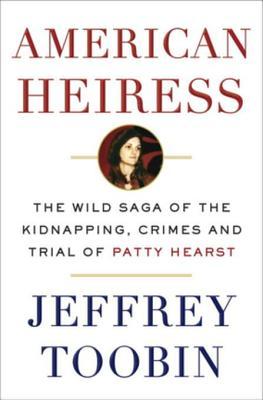
American Heiress: the Wild Saga of the Kidnapping, Crimes and Trial of Patty Hearst, by Jeffrey Toobin****

AmericanheiressSometimes the truth is stranger than fiction, and the Patty Hearst fiasco was definitely a case in point. This reviewer is old enough to remember the news coverage at the time; here Toobin presents us with what is likely the most objective and well researched account of the kidnapping and subsequent crime spree in which Hearst was a participant. Thanks go to Net Galley and Doubleday for the DRC, which I received in exchange for an honest review. This book was released digitally earlier this month and is available to the public now.

In February of 1974 Patricia Hearst, favorite daughter of Randolph Hearst, the publishing magnate, was kidnapped from the Berkeley apartment she shared with her fiancee. The group that grabbed her called themselves the Symbionese Liberation Army, or SLA. It was an historical time when many young people considered themselves revolutionaries, inspired by the Civil Rights movement, the women’s movement, and the Vietnamese and Cuban revolutions. But the SLA was an odd formation at best. They were the product of students from the University of California at Berkeley that had been part of a project to tutor prisoners at the Vacaville penitentiary. Instead of the prisoners gaining literacy, the students were mentored by a handful of prisoners in how to handle explosives and commit crimes against private property and the US government. The entire SLA, it would later be learned, consisted of seven Caucasian people under the age of 30 and one Black man named Donald DeFreeze. By the time this group of irresponsible nut wings made headlines, there wasn’t a legitimate group on the Left that would have anything to do with them.

But the story gets weirder still. The heiress had become bored with her boyfriend and was a terrible student; her future was looking lackluster, even depressing when the kidnapping took place. Within a few weeks, Hearst had joined her captors, brandishing an automatic weapon during a bank robbery, one of a number of crimes in which she participated. And the enormous amount of media attention paid to this band of misfits set tongues to wagging from city, to suburb, to the hinterlands: was Hearst truly a convert, or was she just following orders to stay alive?

Other books have been published about this bizarre series of events, but as far as I know, all of them have been written by those with a stake in the outcome. Toobin, an independent journalist who’s written for the New Yorker, has examined court documents and a host of other primary resources to ferret out the truth. Hearst chose not to cooperate with his book, which is the most objective treatment of the subject I have seen.

Most of the book chronicles events that are too strange to be fictional, and there is tragedy as well. But my favorite passage is when things are falling apart and one of the kidnappers tells a friend on the outside that a “Ransom of Red Chief” situation is developing, and everyone would really like to release this woman so the cops would stop searching so hard, but she just won’t go home. I also enjoyed the anecdotes regarding attorney F. Lee Bailey.

This is a fast read, with plenty of dialogue. There are no slow spots. And I can almost guarantee that no matter how off kilter your own life is right now, Hearst’s adventures will make it look tame indeed.

Thirty-Eight Witnesses: the Kitty Genovese Case, by AM Ronsenthal***

38witnessesAM Rosenthal was a journalist, but in the 1960’s he was moved to write this relatively brief book—if fictional it would be considered a novella—about the failure of neighboring New Yorkers to come to the aid of Kitty Genovese, a woman that was murdered in 1964. I received this DRC free of charge from Net Galley and Open Road Integrated Media in exchange for an honest review.

The crime, one that occurred before drive-by shootings and mass killings in schools and other public places became an all-too-frequent occurrence in the USA, horrified New York and all that heard about it. The killer attacked 28 year old Kitty Genovese as she returned home from work. She lived in a middle class neighborhood, and when police later investigated, they would learn that 38 witnesses heard her scream for help. Nobody called the police until it was too late to save her. This is especially horrifying given that the killer left her bleeding after stabbing her several times, and she had the time, while he moved the car, to approach an apartment building and make her way inside its doors. But before she was able to go further, her murderer parked the car and returned to finish the job. She screamed a number of times, and one man opened his window and yelled at whoever was down there to leave her alone. Later the coroner would testify that had any of the witnesses phoned the police sooner, Kitty could have been saved. Instead she bled to death.

Largely Ronsenthal uses this opportunity to wax philosophical, both about the callous nature of people in general, and of New Yorkers. One New York newspaper managed to infer that it was her own fault by referring to her as a “barmaid” and mentioning that she was not living with her husband; the takeaway from this appearing to be that had she stayed with the mister and been home raising kids, she would not have been in danger. In this instance I think we can surmise that half a century later, any journalist who got that kind of misogynistic garbage past his editor would have heard from readers.

I found this little nugget hard to review. Part of it was due to a stereotype I wasn’t aware I carried; I assumed this attack was somehow related to the mafia (note the Italian last name). Whoopsie! Yes, I know that not everyone that bears an Italian name has a mobster in the family. So it goes.

But also, it’s an unusual piece of writing in that it isn’t really a memoir, isn’t really philosophy, isn’t really sociology. But the overall thesis appears to be that human beings don’t take good enough care of each other. He also uses the occasion to speak in defense of New York cops, who performed their jobs as well as they could in this circumstance. But what timing, given the behavior of NYPD of late! The piece hasn’t really aged all that well.

The writer speaks of a time in India when he himself failed to help others, a time when he regularly strolled past beggars that were ragged, often badly disabled or diseased, and he didn’t help them. He brought this item back time and again to where it felt a little like breast-beating and gnashing of teeth. I wasn’t interested in providing the author with the catharsis he seemed to be reaching for. For that, get a therapist already!

In all, I think his narrative is probably geared more toward native New Yorkers, and since the event is long gone and doesn’t really have a modern parallel, the niche that may be interested has shrunk to New Yorkers of Social Security age.

The writing was fluent, as one might expect of a seasoned journalist, but its prime period has come and gone. I was happy to read it free, but would not have wished to pay for the privilege.

Victorian Murderesses, by Mary S. Hartman ****

victorianmurderessesIt took me awhile to decide to include this title on my blog. The problem as I saw it was that it was marketed in October as a fun-but-naughty romp through history. The reality is less interesting, and to my eye, unbelievably dry. My daughter, a high school student, saw it differently. The four stars are our compromise between my three stars and her five.

“True crime” is a big house with a whole lot of rooms. Some true crime books are deliciously prurient; others are as dusty as the top of a ten foot tall bookcase. In this case, the title (“unspeakable”) and the jacket artist lead the reader to believe we are really going to get down and dish the dirt, and what is more…it’s all true!

Instead, what we have here is a very well-written, well-documented, extremely scholarly if surprisingly dull bit of research, maybe the author’s advanced degree work. The collision between the teaser and the product are somewhat jarring. This was a First Read sent me free through the Goodreads program and the publisher. I would have abandoned it more readily had I not felt a duty to get through it.

What would have fit the bill without ruining the author’s hard work is a good piece of juicy narrative nonfiction. Put in the documentation, but pick up the pace! As is, the book is sometimes a feminist treatise that all but blames Victorian society’s social contract for slut-shaming as an understandable excuse for murder in the case of unsuitable, unmarriageable mates of the lower classes (sorry, no sympathy here), or a self-defensive maneuver against constant verbal abuse, without the loss of a high standard of living that came with the ornery groom. A baby born out of wedlock gets snuffed when an abortion can’t be obtained. The author is inexplicably sympathetic to the not-for-long-I’m-not young mother. Don’t get me wrong; I am pro-choice and an ardent feminist, which you already know if you’ve been reading my blog long. But we’re talking about an infant carried to term, birthed, then suffocated. It turns my stomach to think of it.

At other times, the pace quickens a bit, as if the author is about to get excited and take us along with her, but then her dispassionate researcher’s mind grabs hold of her–stop it right now, you’re getting worked up!–and we go back to the librarian’s hushed monotone.

The font, while suitably Victorian, is really tiny and hard on the eyes.

It may be that I am being unfair to Hartman; she has done a good deal of work here, and the fault may lie with Dover or whoever is publishing and promoting her work. All I know is that I expected this to be a fun read, and it wasn’t. I kept pushing it away in favor of other reading, as if postponing the book might make me like it better once I returned to it.

My daughter, on the other hand, took it to a corner and became disconcertingly fascinated by it, not unlike a cat who’s just found an aquarium full of fish. Hmmm! Her explanation: “It’s even better than I expected!” Well…okay. And now, it’s HER galley.

A strong, scholarly effort that should have been marketed as such. Not a Halloween read.