
 Kya Clark lives with her family in a shack deep in a North Carolina marsh. The year is 1969. They are miserably poor, but Kya’s mother tells her it will be alright, as long as the women of the family stick together. But then one day, she leaves. Older brother Jodie tells Kya that Ma will be back, because it isn’t in a mother to leave her children, but Kya isn’t so sure. Ma is wearing her alligator heels, and she doesn’t turn midway and wave like she always has. And one by one, everyone in her family leaves, and they don’t return. Kya is not even old enough to enter first grade, and she is alone.
This haunting novel is the best surprise of the summer, and it’s for sale today. Thanks go to Net Galley and Putnam Penguin for the review copy.
Owens is a wildlife scientist of some renown; here she changes lanes with her debut novel. She uses her knowledge base to create an evocative setting that is real and immediate, but she never adds scientific information at the expense of pacing. Instead, the setting is used to reinforce Kya’s character; this is unusual in a researcher turning toward fiction writing. Professors and other specialists tend to shoehorn in every fact that they think the reader ought to know regardless of what it does to the flow of the narrative. Instead, Owens blends setting and character seamlessly, spooling Kya’s life before us with the patience and discipline of the finest master storyteller.
Kya barely survives, digging mussels to eat and selling them at a waterside convenience store owned by an African-American entrepreneur known as Jumpin’. Little by little, Jumpin’ comes to realize exactly how dire this child’s situation is, and he and his “good sized” wife, Mabel, contrive to provide her with a few of life’s necessities without frightening her or hurting her pride. I would have preferred to see these resonant characters voiced without the written dialect, but there are no stereotypes in this book.
Tate is an older boy that has been a family friend since she was tiny, but she doesn’t remember him, and thinks she is meeting him for the first time after he begins leaving her beautiful bird feathers on a stump in the swamp. It is he that teaches Kya to read, and he becomes her first love.
The narrative shifts between Kya’s life and an investigation of a murder. Chase Andrews, a local football hero and the son of a local bigwig, is found dead at the base of a nearby water tower. Kya, who is poorly groomed, impoverished, and has no family to protect her becomes the focus of the investigation. Townspeople have long considered her to be “swamp trash,” and this discrimination is age old; Kya can remember her mother telling her that she must never run when she goes into town, because if she does someone will say that she stole something.
One of the most appealing aspects of this novel is that the mystery of Chase’s death never eclipses the main story. The book isn’t about Chase or his demise; it’s about Kya in the marsh, and as she becomes an official suspect, we only want what is best for her.
I read several stories at a time, now that I am retired, but this is the one that occupied my thoughts when I was doing other things. I kept thinking about that poor little girl out there. I can almost always put a book down; it’s what I do, after all. This one is exceptional.
Those that love excellent literary fiction; Southern fiction; or romance need to get this book and read it, even If you have to pay full jacket price.
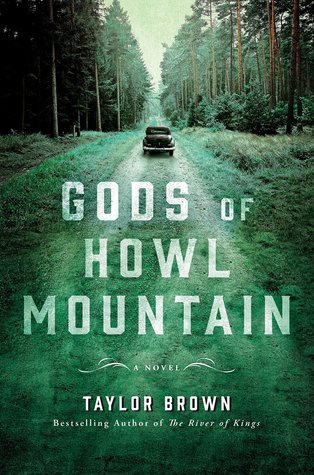
 Darl Moody and Calvin Hooper have been best friends forever, and so when Darl has the worst kind of accident, he knows who to turn to. You know what they say real friends will help you bury. The body in question is Carol Brewer; Darl was hunting out of season, and when he glimpsed something moving through the woods he thought it was a wild pig. Turned out he was wrong; turned out to be Carol, poaching ginseng on Coon Coward’s land. But you can’t bring the dead back to life, and you sure can’t call the cops for something like this. Carol is Dwayne’s brother, after all. Dwayne is a huge man, half- crazy and rattlesnake mean. There are no bygones in Dwayne Brewer’s world. There is only revenge.
 “Christ’s father let him die on that cross,” she said. “I understand why he done it.” She leaned closer, whispering, “But Christ never had no granny like me.”
 Ward is a force to be reckoned with, a literary power house whose books everyone should read. I read the third book in this trilogy, the National Book Award winning Sing, Unburied, Sing last summer, and then I knew I had to read everything else she had ever written. When I saw that this title, the first in the same trilogy, was being released again and that review copies were available, it seemed like Christmas. Many thanks to Net Galley and Scribner. This book was released again last week and is now for sale.
 “You ever hear of the Bobbsey Twins from homicide?”

 I had never read Ward’s work before, and now that I have I will follow her anywhere. Sing Unburied, Sing is a literary masterpiece, and one that fits the time in which we live. It opens up all sorts of thorny questions for examination, but like most thorns, it stings. I received my copy free and early courtesy of Scribner and Net Galley. This title is available to the public now.
 Leah Weiss hits the literary scene with electrifying Southern fiction August 22, 2017. If the Creek Don’t Rise is a story told with tremendous heart, and it’s one you won’t want to miss. Weiss writes with swagger and grace, and her prose crackles with conviction. Thanks go to Net Galley and Sourcebooks Landmark for the DRC, which I received free in exchange for this honest review.
 Voice, voice, voice; nobody writes like Sharyn McCrumb. Here her dry, dark humor combines with her expertise in Appalachian culture and above all, her deep respect for the working poor, and the result is a masterpiece of an historical mystery. Thanks to Net galley for the DRC, and to Atria for sending a hard copy galley and a finished copy of this excellent novel. However, had I paid full freight, I’d have come away happy. This book will be available to the public September 12, 2017.
 “We know so very little about the people we are closest to. We know so little about ourselves.”
 Seattle Book Mama