
“Christ’s father let him die on that cross,” she said. “I understand why he done it.” She leaned closer, whispering, “But Christ never had no granny like me.”
Rory Docherty has come home from overseas “with war in his blood”; he’s come home to the mountains of North Carolina, and home to Granny May, the local herbalist—some also say she’s the local witch. His mother Bonni is in a mental institution, which was even a worse place to have to go in the 1950s than it is now. Rory doesn’t know for sure what broke her, because she hasn’t said one word in the years between then and now; Granny May knows, and withholds this powerful secret for reasons of her own. The life of the Docherty family is seldom easy, having Bonni erased from their midst has hit them hardest of all.
I read this book free and early, thanks to Net Galley and St. Martin’s Press. I’m not permitted to share my galley with anyone else, but I can do this: I can read it as many times as I damn want to. And although I can count on one hand the number of times I’ve done that, out of the five or six hundred free novels that I’ve received in the last few years, I’ll do it with this one.
But back to Rory, to Granny May, and to Eustace, the wily, ruthless old bootlegger that owns Howl Mountain and almost everyone on it. And back to the sweet-faced preacher’s daughter that has lit a fire under Rory’s troubled heart. Granny May would have him stay away from those snake-handling holy rollers, but Rory is utterly bewitched, and when the lights are on at the storefront church, he finds himself there too.
The characters and the setting are what drive this novel, but what also drives it are the cars, most specifically Maybelline, the custom-made vehicle that can outrun Federal revenue agents. I’m generally not interested in cars; if they run, that’s good, and if I will be comfortable inside them, that’s better. But Brown has some magic of his own, and the way he crafts this ride, which is the family’s main source of income and their most valuable piece of property apart from the mountain itself, is magnetic. It is almost a character itself.
The balance of power is shifting on Howl Mountain now. Rival Cooley Muldoon seeks to unseat the Docherty clan; threats to Granny May have taken ominous forms, and she waits on the porch with her pipe and her gun late into the night. She storms into the brush to find what, exactly, has made the cry like a panther on her roof.
“Death, which walked ever through these mountains, knew she would not go down easy.”
This is likely the go-to novel of 2018. I cannot help but think that Rory Docherty, Eustace, and Granny May will join the ranks of beloved literary characters whose names are recognized by a wide swath of the English-speaking world.
If nothing else, Brown has taken the hillbilly stereotype that some still cling to and in its place leaves believable characters with nuance, ambiguity, and heart. It’s a showstopper, and you won’t want to miss it.
 Ward is a force to be reckoned with, a literary power house whose books everyone should read. I read the third book in this trilogy, the National Book Award winning Sing, Unburied, Sing last summer, and then I knew I had to read everything else she had ever written. When I saw that this title, the first in the same trilogy, was being released again and that review copies were available, it seemed like Christmas. Many thanks to Net Galley and Scribner. This book was released again last week and is now for sale.
 “You ever hear of the Bobbsey Twins from homicide?”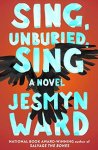

 I had never read Ward’s work before, and now that I have I will follow her anywhere. Sing Unburied, Sing is a literary masterpiece, and one that fits the time in which we live. It opens up all sorts of thorny questions for examination, but like most thorns, it stings. I received my copy free and early courtesy of Scribner and Net Galley. This title is available to the public now.
 Leah Weiss hits the literary scene with electrifying Southern fiction August 22, 2017. If the Creek Don’t Rise is a story told with tremendous heart, and it’s one you won’t want to miss. Weiss writes with swagger and grace, and her prose crackles with conviction. Thanks go to Net Galley and Sourcebooks Landmark for the DRC, which I received free in exchange for this honest review.
 Voice, voice, voice; nobody writes like Sharyn McCrumb. Here her dry, dark humor combines with her expertise in Appalachian culture and above all, her deep respect for the working poor, and the result is a masterpiece of an historical mystery. Thanks to Net galley for the DRC, and to Atria for sending a hard copy galley and a finished copy of this excellent novel. However, had I paid full freight, I’d have come away happy. This book will be available to the public September 12, 2017.
 “We know so very little about the people we are closest to. We know so little about ourselves.”
 Gusick’s hero, Detective Darla Cavanaugh, became an instant favorite of mine when I read the screamingly funny Officer Elvis, and so when I saw that Random House Alibi was about to publish this third book in the series, I scrambled quickly over to Net Galley to snatch up a DRC. Though Gusick is a tremendously courageous writer, one that seeks to stand uncompromisingly on the side of the angels, this time he’s stepped over a line in the sand that was better left uncrossed. I look forward to the next book in the series, but am not sure I can recommend this one.
 The Last Road Home, bold and impressive new fiction by Pushcart Prize nominee Danny Johnson, came to me free thanks to Net Galley and Kensington Books in exchange for an honest review. It tells the story of Raeford “Junebug” Hurley and his friendship with neighboring twins, Fancy and Lightning Stroud. Junebug is Caucasian; the twins are African-American, politely referred to during that time as ‘colored’ or ‘Negro’. The story is set during the Civil Rights movement of the early 1960’s, but in rural North Carolina, the Klan stands tall and strong and absolutely nothing has changed in terms of race relations. Junebug finds himself riding on the fence rail from hell. This fascinating tale will be available to the public in late July. Those that love good historical fiction should read it.
 Seattle Book Mama