Cat’s People, by Tanya Guerrero****

Cat’s People marks author Tanya Guerrero’s debut in writing a novel for adults, and she does it beautifully. This heartwarming feel-good story tells the story of five people in Brooklyn that are brought together by a stray cat in the neighborhood. My thanks go to NetGalley and Random House Ballantine for the invitation to read and review. This book is for sale now.

When I first received the call to read this book, I was leery. That pink cover with a cat on it; I thought it might be cloyingly sweet. I let the widget sit in my file for a while. However, Goodreads friends—people that are not dimwits—really liked it, and it occurred to me that my own selections were a little on the dark and heavy side, so I went back and retrieved it. It was a good choice. Because I was running a little late with it, I checked out the audio version from Seattle Bibliocommons, and it made a delightful travel companion when I found myself driving across the state line for a semi-emergency within my family. Even Ox, my oversized beagle, seemed to find it soothing. Reader Elena Ray does a wonderful job.

I’m not entirely sure whether the protagonist here is Nuria, the woman that volunteers for a local group that feeds stray cats in the neighborhood, or Cat himself; this would make a nice book club discussion question. Nuria is single and a bit at sea in New York, the city where her mother told her not to move. However, she begins finding post it notes in the area where she feeds Cat; they are from a secret admirer.

The admirer in question is Collin, a successful author who’s also single, lonesome, and very shy. Collin sees Cat outside in the cold, so he builds him a small house with a bed, and he puts it in his courtyard. Others in Cat’s orbit are Omar, the mailman who’s going through a crisis of his own; Bong, the owner of Nuria’s favorite Bodega, who’s grieving the loss of his wife; and Lily, the sprightly newcomer who’s come to the city to find Nuria. All of them are brought together when Cat becomes ill.

I have never said this about a novel for adults before, but this book is adorable! The tone is perfect, balancing the cares and anxieties of the humans with acts of kindness by each that remind us that humankind is inherently good.

Recommended to those that need something a little bit warm, light, and fluffy–even dog people.
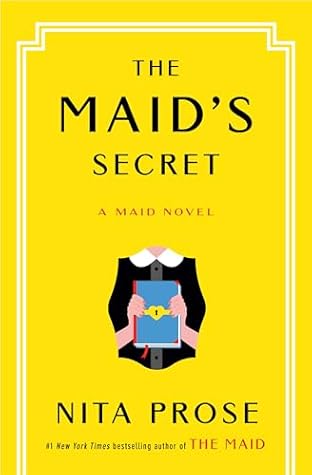
The Maid’s Secret, by Nita Prose****-******

Molly the Maid is back for the third installment of Nita Prose’s excellent and wildly successful series. My thanks go to NetGalley and Random House Ballantine for the review copy. This book will be available to the public April 8, 2025.

As in the first two books, we find Molly employed at The Regency Grand Hotel; she’s been promoted to Head Maid as well as Special Events Manager. She is engaged to chef Juan Manuel, a lovely fellow that helped fill the void in her life when her beloved Gran died. But everything changes when Brown and Beagle, art appraisers famed for their reality television program, come to do a show at The Regency Grand. Along with all of the “polishing to perfection” that is necessary for such a massive event, Molly decides to bring a few of her late grandmother’s trinkets along; you never know, maybe one of them will be worth something.

Oh, it most certainly is!

Once her rare and valuable object becomes public knowledge, Molly’s life changes completely. She no longer has privacy, which she holds dear; strangers are constantly in her face seeking autographs, and the press won’t leave her alone. Meanwhile, we are apprised of the circumstances leading up to this startling discovery. Gran comes to us from beyond the grave—so to speak—in the form of a diary that Molly didn’t know she kept. Chapters in this book alternate between the present day in Molly’s life, and the past, as told in epistolary fashion by Gran.

I wasn’t a big fan of this method, and I’m still a bit ambivalent, which is where the half star off the rating went. It seems like a lazy way to go about telling a story. However, if an author must use this method, it’s hard to imagine it being done better.

Of course things don’t go smoothly following the discovery of the heirloom; if they did, then there would be no novel. But I will leave the conflicts and resolution to the reader to discover.  As for me, I found the series of events, and the ending, believable enough for our purposes, and I enjoyed the story greatly, despite my misgivings about Gran’s storytelling method.

Recommended to those that enjoy the series; this book may be read as a stand-alone, but will be better enjoyed if you can read the first, second, or both earlier books first.

Good Dirt, by Charmaine Wilkerson*****

Charmaine Wilkerson is the author of the massively successful Black Cake. Her sophomore effort, Good Dirt, carries some of the same components—an impending marriage, a family heirloom, secrets and betrayals—but is nevertheless a very different story, and it’s an even better one. My thanks go to Random House Ballantine and NetGalley for the invitation to read and review. This book will be available to the public on January 28, 2025.

Our protagonist is Ebby Freeman, which is short for Ebony. She lives with her parents in an affluent neighborhood in New England, but there was a fourth family member, her brother Baz, who was murdered during a home invasion; Ebby witnessed all of it, and has long carried the guilt of survivors. Could her ten year old self have done something to save Baz?

Now Ebby is grown, and plans to be married, but things don’t go as anticipated.

As in her previous novel, Wilkerson packs so many points of view into the story that I eventually stop counting, and although I am skeptical about this choice through much of the book, by the end I have to admit that she has carried it off nicely. Some points of view are urgently necessary to carry the plot forward; others, like that of the intended groom, Henry, are straight-up hilarious in places. Once again, we move not only between points of view, but time periods as well, reaching back into an earlier century, when some of her ancestors were enslaved. These passages aren’t entertaining, but they are necessary to provide clarity and urgency.

Ordinarily, I don’t read stories with wealthy protagonists, and make no mistake, Ebby’s family has a great deal of money; but having the family be African-American, and self-made rather than heirs to massive, often ill gained fortunes helped a great deal. Ultimately it was easy to bond with Ebby. When she experienced pain and rejection, I felt it, too. I carried her around in my head in a way that I usually don’t; over 1,000 reviews are in my rearview mirror, and only the truly special ones take hold of me as this one has.

Highly recommended.

The Book of Fire, by Christy Lefteri****

My thanks go to NetGalley and Random House Ballantine for the invitation to read and review. I found myself drawn to this novel because it’s different from everything else I have read. I’m fairly sure that I have never read a book set entirely in Greece; then there’s the fire, and the way that the forest interacts with the rural community living in and around it; many people have relied upon it, in one way or another, to make a living.  The Book of Fire is an interesting read, and it’s available to the public now.

Having said this, my first 25% or so of the story finds me with buyer’s remorse (or, reader’s remorse?) The thing is sorrow, grief, and more sorrow. I begin to think maybe I’ll abandon it, because eventually one disengages when there’s no hope of any kind for a brighter outcome. But just as these thoughts begin to crystalize, there is a subtle shift, and then the whole thing becomes more toothsome.

The story is told in alternating timeframes, with the current day being told to us in the first person, while the past is told as if it is a fairytale, and so in it, our protagonist, Irini, is referred to most of the time as “the mother,” her spouse is “the husband,” and their child is “the girl.” It took me a long time to figure out the protagonist’s name, but then there is dialogue, and that helps.

Initially, the protagonist confides to us what she has done. She found the arsonist in the burnt forest; he was on the ground beneath a tree with a rope around his neck. The branch above him is broken, so it’s either a botched lynching or a botched suicide, but not entirely botched, because he’s in bad shape. She begins to try to help him, but then she remembers what he has done, and she walks away from him. When she returns the next day, full of remorse, he’s dead. And so already we have this fact thrown in there along with the man’s own crime. We don’t know whether he did this or it was done to him until nearly the end.

In time more details emerge to muddy the waters of responsibility, so then she has a hundred little ethical questions to examine, and these are joined with a powerful environmental message. Because of this, I think this novel would be terrific for book clubs, and also for the high school classroom. There’s no sex in it, and the vocabulary is accessible. And despite my early fears, the entire book is not a portrait of grief and misery.

Recommended to those that enjoy literary fiction.

The Ghost Orchid, by Jonathan Kellerman****-*****

4.5 stars rounded upward. My thanks go to Random House Ballantine and NetGalley for the review copy. This book will be available to the public February 6, 2024.

The Ghost Orchid marks the thirty-ninth entry in the Alex Delaware series, one of the longest series in publication. It’s easy to see why it’s lasted so long. The protagonist and side characters are engaging, and the dialogue never loses its sparkle.  In this one, Alex has been recovering from a savage beating that he took at the hands of the murderer in our last mystery. Milo, his BFF, is a homicide cop who often hires him to assist the LAPD with cases where a psychologist is needed, but now Milo is so mired in guilt that he can hardly look at his friend. Finally, with a nudge from Delaware’s longtime (and slightly boring) girlfriend, Milo includes him in another case, and we find snappy dialogue that never fails to entertain.

This time it’s a double homicide in Bel Air. The man and woman are found by the pool, naked and dead. The investigation reveals that he is the son of a mega rich European shoe magnate; she is the wife of another rich man, a young, socially awkward member of the ruling elite who isn’t pleased to learn what his wife has been doing when he’s away on business. But then we learn that she was using an assumed name, and so the whole thing is even more mysterious. Who is this dead woman, and who killed her?

At the same time, Alex is engaged to interview a child in his early teens whose adoptive parents have decided to bail. They are divorcing; neither of them wants the kid.

The main storyline is a lot of fun. Everyone enjoys seeing the super-rich suffer. With wealth of this magnitude, there’s no chance any of Kellerman’s readers will identify with the male murder victim or the husband of the female victim, either. The way it’s resolved is believable, and it’s done without any of the prurient or kinky sex that Kellerman inexplicably included for a handful of books in this series a few years back. The half star is withheld from my rating because the other storyline, the one about the teenager, sort of fizzles without going anywhere, and it’s hard to see why he included it in the first place. Kellerman’s career, and this series, were originally launched around crimes where kids were involved, often as witnesses, and those initial books are fascinating. I’d love to see the author return to his roots, write some more episodes that incorporate his credentials and experience in child psychology.

You can read it as a stand alone novel if you choose, but you’ll want to read the others afterward.

Nevertheless, if you are looking for a fast, fun whodunit, this book is a hard one to beat. I highly recommend it to those that love the genre.

The Golem of Brooklyn, by Adam Mansbach*****

Len Bronstein is an art teacher. He has a whole lot of clay he’s filched from his employer’s supply closet, and now he’s stoned. He should make something. He should make a Golem. And friend, that’s just what he does.

Traditionally, The Golem is made by a rabbi to help the Jewish people during difficult times. Len isn’t a rabbi, and he doesn’t expect much from his creation:

Five minutes passed, and nothing happened. Len reminded himself that he didn’t actually expect anything to…he didn’t believe in any of this shit. He stood, dusted himself off, and went inside to grab a beer…Len deposited his beer in the sink just as The Golem ripped his back door off the hinges and flung it aside.

My thanks go to Net Galley and Random House Ballantine for the invitation to read and review. This book is for sale now.

Now that The Golem has awakened, he needs to know what his target is. His answer comes to him as he views the news on Len’s television. White Supremacists are railing about a Jewish conspiracy; the Holocaust, they say, was a hoax. The Golem was asleep during the Holocaust, but once it’s explained to him, he’s ready to get busy. But first, he must talk to the rabbi.

Our second main character is a woman named Miriam, Miri to you and me. She works at the bodega down the street, and Len recruits her to be a translator; The Golem, you see, only speaks Yiddish, and Len doesn’t. Miri has been drummed out of the temple because she is a lesbian, but The Golem likes her just fine. Before you know it, Len, Miriam and The Golem are on a road trip beyond all others, first to find a way in to see the Sassov Grand Rebbe, a wealthy and powerful man with a great many gatekeepers, and then to a scheduled White Pride rally down south.

This is, as may be obvious by now, very edgy humor. There’s a great deal of profanity, and whereas most of it is hilarious, at the beginning, the author could have varied his choices more. There are lots of cuss words out there, and not all of them begin with F. But this is a small matter. This novel’s action is interspersed with brief passages of Jewish history that I find very interesting, and they are so brief, and so skillfully woven into the narrative, that you may not notice that you’re learning some things.

My favorite passages involve a bombastic politician, and multiple encounters with cops. (The Golem doesn’t care for them.) As for me, I have read several very funny novels this year, but none made me laugh out loud as often as this one. And in the end–well, you don’t expect me to tell you how this ends, now do you?

Highly recommended to readers that lean left and can tolerate profanity.

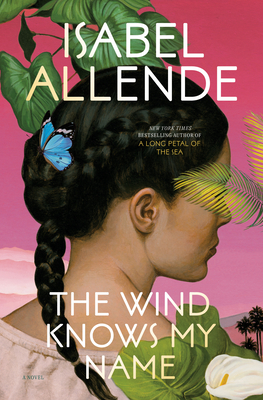
The Wind Knows My Name, by Isabel Allende****

Isabel Allende is a living legend, a literary genius and fierce defender of human rights, foremost of women and immigrants. The Wind Knows My Name is a novel that features the struggle of two generations of immigrants, those that came to the U.S. during the Holocaust, and those that are coming here now from Latin America. Allende moves us seamlessly from one set of characters to the next, and then back again.

My thanks go to Net Galley and Random House Ballantine for the review copy. This book is for sale now.

I have been reading Allende’s work for decades. To read her stories is to be transported. In this case, the protagonists include two small people designed to possess the human heart. Samuel is a Jewish violin prodigy, still quite small as this story unfolds; his parents send him to safety when the Nazi occupation of Vienna takes hold, thinking that they will square things away and join him later. Of course, they are never able to do that. Our present-day protagonist is Anita, a Guatemalan immigrant child that is nearly blind. She is separated from her family at the U.S. border, and does her best to stave off loneliness by talking to her sister, Claudia, who is dead.

On the one hand, Allende is, to my way of thinking, on the side of the angels here politically. She always is. But if this feels a bit lecture-like to me, a diehard fan, it seems unlikely that she will reach a lot of newer readers. Usually I bond with her characters and carry them around with me for some time after I have turned the last page, but this time I find I am watching the page numbers go by. The person I feel most affinity for is Samuel, the tiny child clinging to his precious violin, but he disappears quickly and when he returns, he is an old man. Another reviewer commented that too much is told here, and too little shown, and that sounds right to me. And as much as I love Samuel, I also am burned out on historical fiction set during World War II. I hope in her next project, the author will turn in another direction.

To Allende’s many devoted readers, this book is recommended with the above caveats.

Unnatural History, by Jonathan Kellerman****

Unnatural History is the 38th entry in the wildly successful Alex Delaware series. I began reading it soon after the first volume was published; When the Bough Breaks came out in 1985, so the series has been going strong for close to forty years, and very well may continue for many more. My thanks go to Net Galley and Random House Ballantine for the review copy. This book is for sale now.

For the uninitiated, Delaware is a child psychologist; Kellerman is also a child psychologist, and his earlier books incorporated his area of expertise, placing him in a subgenre all his own. I’ve wished many a time that he would write more books along these lines, but he hasn’t done a lot of it lately, and in this book,  there are only glimpses of it. Nevertheless, the story held my attention.

I’m not giving you much of the plot, because there’s a synopsis for that, but in large strokes, the story is about the murder of the son of one of the world’s wealthiest men. He’s an odd duck, not terribly bright; his mother is dead, and his father is a hands-off parent, to say the very least. Our victim has unlimited access to money, and that’s about it. He makes a splash in the art world by photographing homeless people in costumes that reflect their deepest dreams. Find a derelict street person, and find out what they always wanted to be. A pilot? A surgeon? A ballerina? Offer them the chance to be photographed as if that’s what they are now, and give them a juicy wad of cash for their trouble; then send them back to the streets where they came from.

The family structure for this strange young artist is truly bizarre; the father marries, and he fathers a child. One child, no more. Then, a couple years later, he divorces his wife and does the same thing again. The children of these unions are never introduced to one another.

Thus, Milo has plenty of meaty material to work with, and with such strange circumstances, Alex is tapped to analyze the participants.

Delaware works part time as a kiddie shrink, often consulting when there is a court case involving insurance claims or divorce. However, he still has plenty of time to work for the Los Angeles Police Department, consulting on cases where a psychologist’s input is valuable. His BFF, Milo Sturgis, is a homicide detective, spurned by others in the department because of his sexual orientation. Often as not, Delaware ends up riding along as an unofficial partner.

This aspect of the series—the almost-a-cop—is usually where things start to slip a little, when anything does. I want to buy the premise, and so I can go along with it as long as it doesn’t become too obviously unrealistic. We all want to be entertained, right? So when Alex trots out to the patrol car and slides in beside Milo, I smile and nod, and I push away the little skeptic within me that says, “But really…?”

There have been a few Delaware books that have gone sideways for me for that reason, books where Delaware puts on his Kevlar vest and packs a revolver. I am happy to say that this isn’t one of them. In fact, the manner in which these details are dealt with is one of its strengths. First of all, there are times when Milo wants Alex to go with him, but Alex is busy. He has to be in court that morning. Thank you! Then later on, toward the climax, there’s a situation that (no spoilers) shakes out in a way I find the most believable of anything Kellerman has written. It’s satisfying, without sacrificing the fun of the story.

The whodunit at the end might be the nicest touch of all.

I recommend this mystery to Kellerman’s faithful readers, and to those that love the genre.

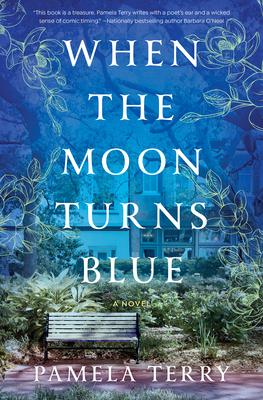
When the Moon Turns Blue, by Pamela Terry*****

Once in a while the odd thing happens,

Once in a while the dream comes true,

And the whole pattern of life is altered,

Once in a while the moon turns blue.

The tiny Georgia hamlet of Wesleyan is preparing to bury one of its own, and Mother Nature is preparing to cover the entire town in ice. But nobody—well, almost nobody—knows that a source of local tension is about to go nuclear, as someone is planning to topple and destroy the statue of a Confederate general in the park inside the boundaries of Old Man Griffin’s land. “The fight was just getting going good, and now somebody’s declawed the cat.”

This riveting, curiously charming and sometimes hilarious novel is the second by Pamela Terry, whose outstanding debut novel was The Sweet Taste of Muscadines. This one may be even better. My thanks go to Net Galley and Random House Ballantine for the invitation to read and review. This book is for sale now.

With the death of Harry Cline, we find ourselves at his funeral, a massively attended affair. But his wife, Marietta, develops a disabling, blinding migraine, and although they have been on the outs for years, Butter, her (former) best friend, comes to the rescue. By the time they’ve snuck out the side door of the church, we already know at least a little about both women, and now we want to know everything.

With just two novels published, Terry has already proven herself to be among the best authors when it comes to character development. Soon we’ll meet others—Marietta’s obnoxious brother, Macon and his beleaguered wife Glinda, who will have a large part in this story and is one of my favorite characters, as well as a host of others, who have smaller roles but are each so unmistakably established that it’s no work at all to keep track of them. But perhaps her finest achievement here is in creating a masterpiece that is ultimately a feel good book, despite the use of a red hot real world controversy within its pages.

I generally read several books at a time, and this one is the one that I saved for bedtime, because I wanted to be able to read it uninterrupted, and it is the one I wanted in my head when dreams came. It didn’t let me down.

This inspirational work of Southern fiction stands shoulder to shoulder with the finest classics, To Kill a Mockingbird and Fried Green Tomatoes. I wholeheartedly recommend it to you.

The Things We Do To Our Friends, by Heather Darwent**-***

2.5 stars rounded upwards.

The Things We Do To Our Friends is a debut thriller by newbie Heather Darwent. Our protagonist is Clare, a young woman who’s studying art history at a university in Edinboro. She’s new and knows no one, but is soon swept up in a small, elite group of students she meets in one of her classes. Before she knows it, they are her main curriculum, and her classes become secondary.

My thanks go to Net Galley and Random House Ballantine for the invitation to review. This book is for sale now.

At the outset it’s easy to relate to Clare, who tells us her story using the first person limited. She has never lived here before, and she doesn’t have a lot of resources. She gets a job at a nearby bar, and the everyman proprietor, Finn, punctuates the story now and then with an objective take on Clare’s life and her new friends. She is soon invited to join a clique of students that are flashier, louder, and more confident than most of her classmates, and she wants desperately to become one of them. Tabitha is the ringleader, and it is she that Clare most wants to please.

The opening chapters here make me wonder if we are about to rehash Ruth Ware’s most recent mystery, The It Girl. The elements are certainly there. But there’s an undertone that builds here, teasingly referencing Clare’s unfortunate past. We don’t know much except that she’s estranged from her parents, who don’t want to hear from her.

That can’t be good.

The clique goes to Tabitha’s family home in France over the winter break, and Clare is thrilled to be included. But while they are there, she is pressured to join with them on a moneymaking venture that isn’t entirely legal. They let her know they are aware of her past, so she’d better cooperate.

Here is where the book starts to lose me. Clare is essentially being extorted, and yet her emotional attachment to the group only intensifies. At one point, she tells us that she sometimes forgets whose skin is whose, so tightly bonded are they, and in particular, she and Tabitha. But this makes no sense. Tabitha has threatened to harm her, as have the others. Why does she love them all the more for it?

More and more tidbits from Clare’s past are revealed, and yet Clare herself isn’t developed much. Neither is anybody else. We are told a lot, but shown only a little. I love books that are about character, and if there’s not much plot, I’m fine with that, but these characters are all static. At the 50 percent mark, I become impatient and skip to 62 percent; from there, I read to 72 percent, which is where things should begin to feel urgent, but they don’t. I skip again to 90 percent and read the ending. I seldom skip anything when reading, and on the occasions when I have done so, I sometimes find things when I skim the last half that convince me to go back and read it completely. That didn’t happen here. There are loose threads dangling, and plot elements that appear to have no purpose. Worst of all—and to be fair, this is probably not the author’s doing, but it rankles, nevertheless—is that this weak tale of warped humanity is billed as a “feminist page-turner,” which is what drew my interest initially, and as a lifelong, card-carrying feminist, I can assure you that this is absolutely not that.

I cannot recommend this book to you.