The Ogress and the Orphans, by Kelly Barnhill*****

This book is not at all what I expected; it’s much better than that. My thanks go to Net Galley and Algonquin Young Readers for the invitation to read and review. This book is for sale now.

This lovely story is told in the second person omniscient, and we cannot tell, until the end, who the narrator is. Our setting is the sweet (fictitious) village of Stone-in-the-Glen, and it’s told in linear fashion. Because its telling is straightforward, with no changes in point of view or time period, and no heart-hammering suspense, it is ideal for bedtime reading. It’s marketed as a children’s book, and here I disagree, in part anyway. The vocabulary is too advanced for an early reader, but would serve well as a story to read aloud to students in upper elementary classes, or as a read-alone for the gifted child. There is no sexual content, drugs, or bad language.

Because I believed this was going to be a children’s book, I thought I’d whisk through it in no time and review it the same week I started, but I sensed immediately, once I’d begun, that this was not that kind of story. Its length, density of page and paragraph, and content call for a more leisurely pace, but also, it’s just too good to rush through. I am a sucker for excellent alliterative language (see what I did there?) and Barnhill is a champion in this regard. I found myself going back a page or two to reread, highlighting the best passages for no reason but my own pleasure.

The plot is easily summarized. The lovely little village is friendly and flourishing until the town library, which has magical powers, burns down. Without benefit of the library, villagers keep to themselves, and they become secretive and greedy. The mayor could help, but chooses not to do so. He’s a real piece of, um, work.

The orphanage in particular is in dire straits. They haven’t been getting their promised funding lately, and the place is starting to fall apart. The children are hungry. Were it not for the largesse of an anonymous donor, one that leaves big boxes of vegetables at the gate for them to find in the morning, they would starve.

The Ogress is their benefactor. We know this early on, so I don’t consider it a spoiler. However, due to the misconceptions of the villagers, which the mayor feeds shamelessly, the Ogress soon becomes a scapegoat. These two problems—local poverty, and the hostility toward the one among them that is different—form the basis of the story.

As to the allegory, which is dropped in midway through in a fairly heavy-handed manner, I am of two minds. On the one hand, my philosophy is similar to the author’s, and so I snicker when I see what she’s doing here. On the other hand, this is exactly the book one reaches for when one has had enough, enough, enough of current events and the outside world, and allegory becomes something of a distraction. When I see who the mayor represents, I start eyeing the other characters. Does the Ogress represent someone in the real world as well? What else am I missing? These musings are more likely to lodge themselves in the mind of a language arts teacher; I recognize that. But my preference would be to either turn the whole thing into a piece of political satire and own it, or to leave it alone and have a sweet story devoid of political content, one that readers on both ends of the political spectrum can enjoy—maybe even enjoy together.

These minor issues aside, I love this story. It’s my first taste of Barnhill’s writing, but it surely won’t be the last. Highly recommended.

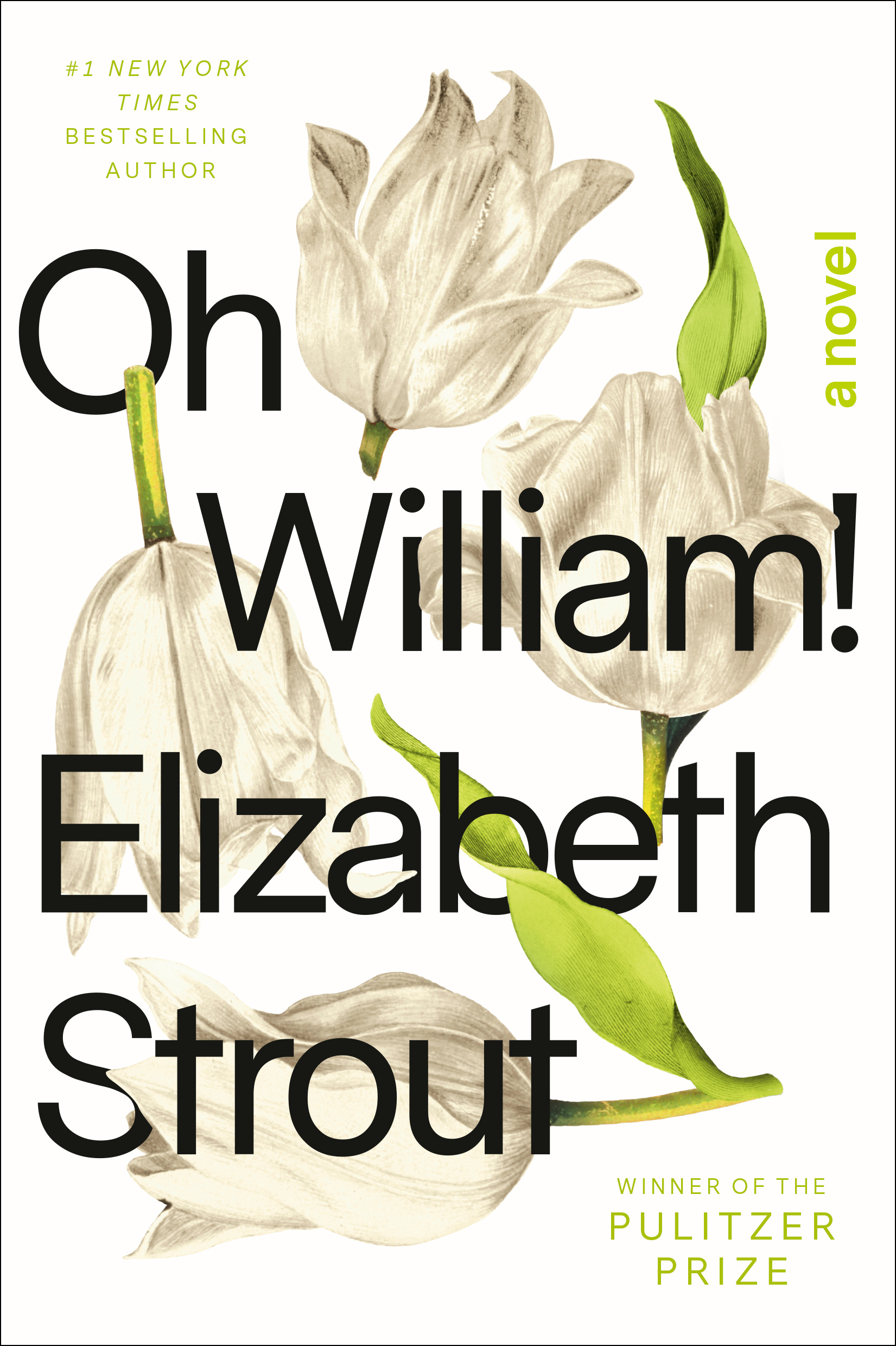
Oh William! by Elizabeth Strout*****

Nobody writes more convincing characters than Pulitzer winner Elizabeth Strout. In her most recent novel, Oh William!, she brings back Lucy Barton, the protagonist in My Name is Lucy Barton and Anything Is Possible.  My thanks go to Net Galley and Random House for the invitation to read and review; this book is for sale now.

Reading Strout is a mixed blessing. On the one hand, it’s a glorious thing to read writing this strong. On the other, poor Lucy Barton has endured a tremendous amount of pain, and Strout’s skill enables her to communicate every inch of Lucy’s pain and suffering to the reader. I wasn’t sure if I was up for it, but now I am glad I read it, because in this installation, most of her dreadful early years are left in the past, where they belong, and she is a successful novelist that can afford to provide for herself and when necessary, her adult daughters.

The premise is that Lucy’s ex-husband, William, has once again been left by his most recent wife; this is what happens when a man can’t keep his zipper shut. But he has taken an ancestry test, and he’s discovered that he has a half-sister that lives in Maine. His mother is dead, so there’s no asking her about this. Should he contact this sister? Well, probably not. But he’s curious. Should he? Maybe. Well, no. Unless.

Lucy is recently widowed, and she is hurting. Her second and last husband, David, was a wonderful man, and it was a terrific marriage. She misses him terribly. But she has remained friendly with William; after all, they had two daughters together, and so there are occasions. William calls Lucy to ask her advice about the half-sister, and later, he wonders if she’d drive with him to Maine. He’s not sure what to do.

I am always astonished at people that can divorce, yet remain so friendly. It’s hard enough to be courteous on occasions involving children and grandchildren; to be chummy enough to chat on the phone, to seek each other’s advice, to go on a road trip together, for heaven’s sake, seems to me like a tremendous gift. At any rate, Lucy and William are friendly, and she agrees to go with him to scope out the land of his forefathers, and do a little recon on Louise, the secret sister.

The magic of Strout’s prose is in her sterling character development. Earlier here, I was discussing how amazing it is that Lucy and William are on such good terms; these are fictional characters, but to me, they have become flesh. Lucy’s first person narrative is so intimate that I feel as if I am talking with an old friend over coffee.

If I could change one thing, I’d tone down a couple of Lucy’s mannerisms. The title, Oh William!, is used so frequently in the narrative that by the last quarter of the book I want to say, Yes, okay, I get it already. The other one is “What I mean is…,” and “…is what I was thinking.” These are legitimate devices that contribute to the writer’s voice, but I would use them less often.

Because I had fallen behind–or more truthfully, I had been avoiding this galley because I expected it to be grim—I checked out the audio version from Seattle Bibliocommons. Kimberly Farr is an exceptional reader, and for that reason I recommend the audio book over the print, although both are excellent.

Highly recommended to those that treasure fine literary fiction.  

Violeta, by Isabel Allende*****

Violeta is an epic tale that spans, along with its protagonist, a century-long period that begins during the Spanish Flu and ends with our modern day pandemic. Technically, then, it is part of the growing body of pandemic literature, but as is always true for Allende’s novels, it is so much more.

I received a review copy, courtesy of Net Galley and Random House Ballantine, but had I not, I’d have found a way to read this glorious story anyway. It’s available to the public now.

Violeta is born to wealth and privilege, the only daughter in a large family. Schooled at home by a nanny, sequestered in a mansion with servants to do her bidding, she is unaware that her luxurious standard of living comes at a tremendous cost to others. Then the market drops, and her father, who has overextended himself with unwise investments, is ruined. Most of her brothers are already grown and gone, but one brother, Jose Antonio, had remained at home, groomed by their father to take over the business one day. “He was the model son, and he was sick of it.” After their father’s abrupt departure, Jose Antonio finds himself responsible for the family; with the local populace in a state of near insurrection, the only thing left to do is to take his family—including Violeta—and leave town. They remove themselves to a distant farm owned by poor but generous friends, and they learn to make do as they’ve never done before.

We follow Violeta through her early marriage to a German immigrant who was “so bland and boring that he inspired instant trust,” and then through a long, tempestuous relationship with a handsome thug named Julian, who makes his fortune in dark, horrible ways involving illegal substances, the CIA, and the Mafia. And here, Allende’s startling sense of humor is in full brilliant flower, as she describes his retrieval of ill gotten funds from the septic tank of their Florida home:

He pulled a filthy bag from the hole, dragged it to the kitchen and poured the contents out on the floor; rolls of wet bills covered in poop. Gagging, I saw that Julian planned to clean the money in our washing machine. “No! Don’t even think about it!” I shouted hysterically. He must’ve understood that I was willing to draw blood to stop him, because I’d instinctively grabbed the largest knife in the kitchen. “Okay, Violeta, calm down,” he begged, frightened for the first time in his life. He made a call, and a short while later we had two mafia goons at our disposal. We went to a laundromat and the gangsters paid everyone to leave. Then the men stood guard as Julian washed the poop-covered bills. After that he had to dry them and pack them in a bag. He brought me along because he had no idea how to operate the machines. “Now I understand what money laundering is…”

As with all or most of Allende’s protagonists, Violeta becomes a strong woman that can stand on her own, and who picks and chooses the men she wants to be with. She is beautiful, intelligent, and ends up with piles of her own money that she has earned in an ethical manner. And here is my one, very small issue with this book; just once I would like to see an Allende main character that doesn’t get rich, but is fine anyway.

I am late in reviewing this book, but it’s important not to try to rush through a story such as this one, because the literary alchemy Allende creates is the sort that must be appreciated at one’s leisure. Her novels are not page turners; they don’t try to be. Instead, Violeta is the sort of book you take with you on a spa date, or to your very own bathtub with bubbles, candles, and your favorite beverage.

Highly recommended to feminist readers that enjoy top quality literary fiction.

Genghis: Birth of an Empire, by Conn Iggulden*****

Though I usually review books that are either newly published or are about to be, once in awhile I reach back and discuss books that have been around for awhile. This one is excellent, and I consider it unmissable.

This book is phenomenal. How much do any of us know about Genghis Khan?

One thing I learned in discussion with my spouse, who is a Japanese citizen, is that whereas we from Western cultures pronounce the warrior’s name with a hard G, Asians–including the Mongolian culture from which the Khan emerged–pronounce it softly, like a J. I figure Mongols know how the name should be pronounced, so I have begun to pronounce it that way, too.

I wanted to read this series, or at least the first entry, because although I have read at least something about most of the greatest warriors in the world over time, I had read nothing about Genghis. We have a nonfiction tome, but it’s the sort of slog one only undergoes out of desperation, or as assigned coursework.

The first two or three chapters seemed fine, but not great. I wasn’t even sure if I would read the rest of the series. By the halfway point, however, my mind had changed completely! I found myself online doing image searches for the housing, clothing, and other parts of the nomadic life.

I have purchased the next in the series. I rarely buy books for myself, because I have so many already and have such constant access to galleys that it isn’t necessary; yet now and then, there’s a book I’ve gotta have, and that’s how I feel about this series.

Highly recommended for those that are interested in this time and place in history; in Genghis himself; or in military history.

Chevy in the Hole, by Kelsey Ronan***-****

3.5 stars, rounded up. Chevy in the Hole is Kelsey Ronan’s debut novel. I love strong working class fiction, and the title and book cover spoke to me. But while it shows a good deal of promise, it’s also a cautionary example of how, in trying to do too much, one can do too little. My thanks go to Net Galley and Henry Holt for the review copies. This book is for sale today.

The protagonists are Gus Molloy, who is Caucasian, and Monae Livingston, who is Black. The book opens as Gus is being revived with Narcan on the floor of a dirty restroom in Detroit. We follow him as he meets Monae, a student working at a farm outside of Flint. Their stories are told alternately with bits and pieces of the lives of their predecessors.  

The story is promoted as a love letter to Flint, and a tribute to the resilience of its people; it’s a story of “love and betrayal, race and family.” And we do surely see all of those things, but as soon as one aspect or another is touched on, I wink and poof, it’s gone. Gus and Monae are both sympathetic characters, and I can’t help pulling for them, but I suspect the author could have developed them more fully had we not spent so much time and detail on fragments of their parents, grandparents and so on.

If the author’s purpose is to use these characters from the past to showcase the various struggles through which Flint has gone—sit-down strikes, Civil Rights marches, and now, this horrifying industrial sludge that has polluted the town’s drinking water—it could have been done in a paragraph or two, or through some other device than shifting the point of view. The frequent changes of character and time period make it confusing as heck, particularly while listening to the audio version; that’s a shame, because Janina Edwards is a warm, convincing reader.

But we frequently shift from one protagonist to the other, even after they are married, and all of these people from the past have to be sorted by both time period, and by which protagonist they are related to.  A story like this should flow. As it is, it’s work listening to it, and had I not been granted a digital review copy as well to refer to, I might have given up.

My other frustration is that both the labor history and the Civil Rights issues—with Black people shut out of company housing in the past, and the issues with cop violence as well as the pollution that is visited most within the Black community—are huge. The pollution problem is immense, and ties back into both of the other issues. This book could be a powerhouse, a call for change to reward to the plucky souls that have stuck with this place through hell and high, toxic water. Instead they present almost like postcards; oh, look at this! Now look at that! Okay, never mind, let’s go on back to the present.

That being said, the author’s mission is an ambitious one, and her word smithery is of high caliber. I look forward to seeing what else she publishes.

If you choose to read this book, I recommend using the printed word, whether digitally or as a physical copy.

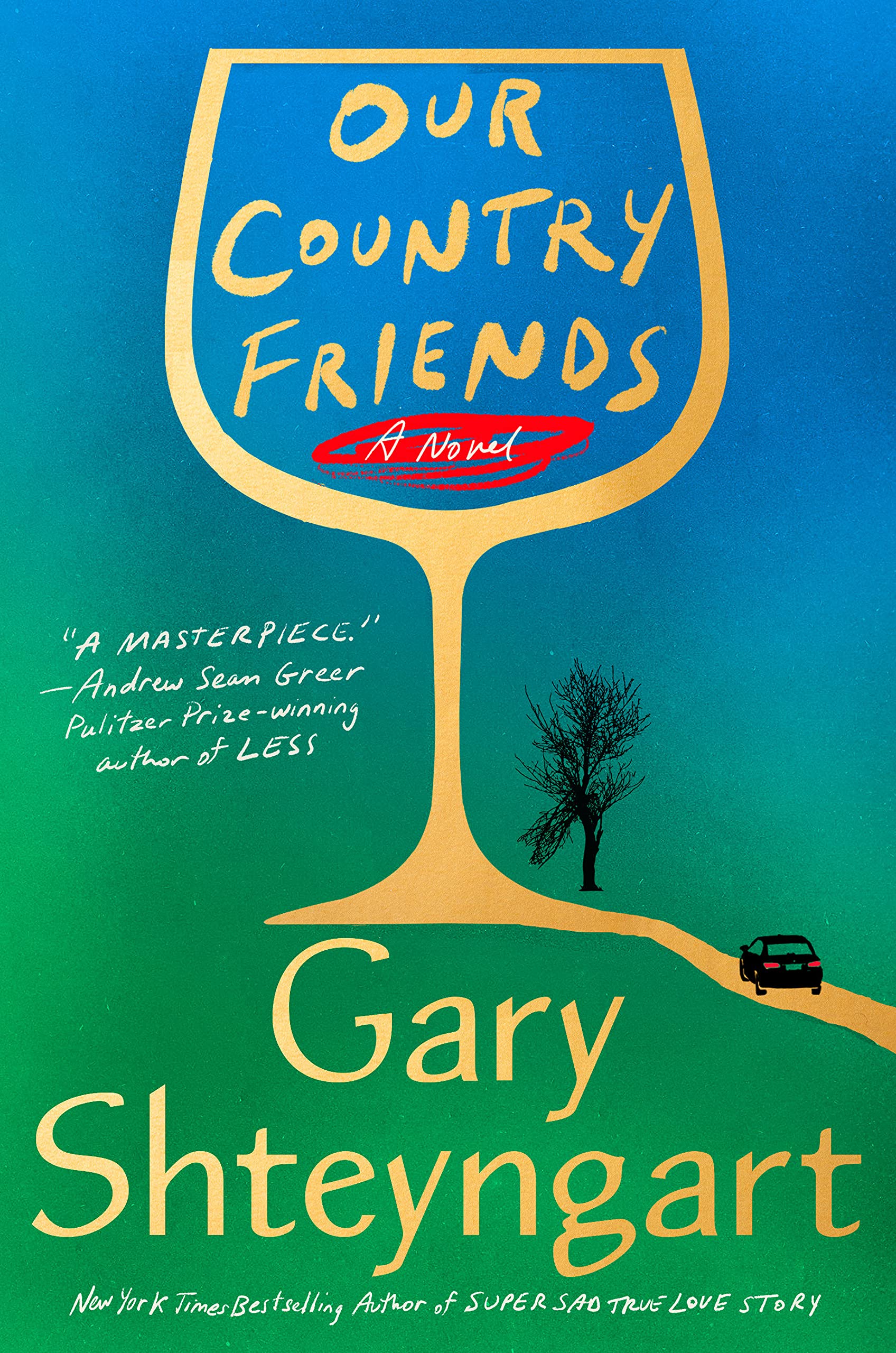
Our Country Friends, by Gary Shteyngart*****

Gary Shteyngart is a funny guy. In Our Country Friends, he tells a story in which Sasha, a former literary luminary, up to his eyeballs in debt, invites five friends to join him and his little family at their country estate to weather the pandemic. The results are not at all what he anticipated.

My thanks go to Net Galley and Random House for the invitation to read and review. This book is available now.

Shteyngart does us the favor of listing the cast of characters (“Dramatis Personae,”) at the book’s opening, and I relied on it heavily. Because all of the characters are introduced at the outset, I took a ridiculously long time getting them straight, but it was worth it. The group’s dynamic would be fairly stable but for the introduction of “The Actor,” someone he knew back in the day but who is an A-lister now. But frankly, some, if not all, of the other guests would probably not have come but for the mention of The Famous One as a possible addition. When he comes, the women practically swoon in his presence, and then nothing is the same for the rest of the story.

The first third of the book seems relatively formless, but I suspect the author (should I say, “The Author?”) is warming us up, letting us get to know the characters before a lot of other action takes place. The promotional blurb tells us that this story encompasses six months and four romances, and that it’s about love, friendship, and betrayal, and that sums it up.

Generally speaking, I don’t enjoy novels about rich people, but because Shteyngart is setting them up for satirical misery and angst, I dive in, and I emerge shortly afterward, laughing. This sly humor is unmissable.

Because nearly all of the characters are over forty, I highly recommend this story to readers of a literary bent—if you know Chekhov, it’s even funnier—who are forty or over.

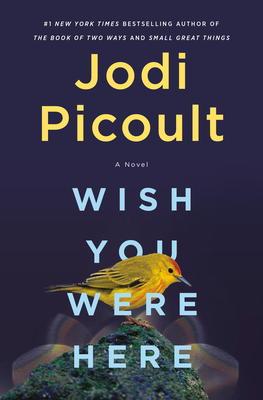
Wish You Were Here, by Jodi Picoult****

Diana has a high pressure job, and so does her boyfriend, Finn. Thank goodness they’ve made reservations in the Caribbean for a two week vacation. Sun, sand, cold drinks, turtles. But when the pandemic hits, Finn can’t get away. He tells Diana to go on ahead.

My thanks go to Net Galley and Random House Ballantine for the invitation to read and review. This book is for sale now.

Nothing goes as planned for Diana. As her boat conveys her to her destination, everyone else is leaving, rather than arriving. The island is closing, an emergency measure against the pandemic. But Diana is a typical American tourist, and she knows that she has already paid for her stay, so once she is there, of course they’ll accept her…right?

The first few chapters depict our protagonist as such an entitled, smug tourist that I nearly give up out of distaste. But between the promotional blurb and my familiarity with Picoult’s work, I continue, knowing there’s a good chance that Diana will develop into a more likable character. She does.

Soon after she arrives, she runs into a handsome but irate local tour guide turned farmer, and as soon as they collide and conflict erupts, I figure, Ho hum. She’ll end up in bed with him. What else is new? And since this is near the beginning, I will tell you this much: sure she does, and plenty is new! As Diana is forced to live differently, with her luggage lost, very little wifi, no cell coverage, and nobody at her beck and call, she learns some things about herself.

Picoult is early to emerge within the growing body of pandemic fiction—hmm, will this become a genre, sub-genre maybe? And this makes Wish You Were Here all the more appealing.

Again, just before the halfway point, I think I can see how this is going to end, but I couldn’t be more wrong. At about the two-thirds mark, everything changes, and I marvel at the author’s audacity. But she makes it work, and I cannot tell you anything else without ruining it.

Because I was running late with my review, I checked out the audio version from Seattle Bibliocommons and listened alternately with reading the digital review copy I was given. Marin Ireland does a solid job as reader; as to which version I recommend, it’s a complete toss up, so go with your usual preference.

Recommended to Picoult’s fans, and to those that enjoy fiction.

Black Cake, by Charmaine Wilkerson****-*****

“I was not the first person to go through the world living two separate lives, one out in the open and the other locked up inside a box.”

Elly Bennett dies and leaves a detailed recording for her children. Wilkerson’s novel is about Elly’s life, but more than that, it’s about secrets. Everyone in this book has one or has been impacted by one in a major way, and for most, both are true. Elly and her late husband had a whopper, and they built their lives and their family around it. Their two children are Byron and Benny, and Benny’s secret is all consuming for much of her life; it has had a role in estranging her from her once-adoring older brother and parents. Meanwhile, there’s a child—now grown to middle age—in Europe that is herself a secret, and whose very identity has been obscured by one. Elly’s closest childhood friend carries a particularly potent secret, and so does the nanny that raised her. Even the lawyer that handles the estate has one.

When is it safe to let go of a secret?

I was invited to read Wilkerson’s debut novel by Random House Ballantine and Net Galley, and I thank them for the review copy. This book is for sale now, and everyone is talking about it. You’ll want to get in on it.

Our story unfolds with seventeen year old Coventina Brown, known as Covey, quietly launching a plan to join her boyfriend, Gibbs, in London. He’s gone there to go to school, and when she’s done with school, she will join him. That is, until her father, who has raised her alone, gets into big trouble with a loan shark, a local thug who now holds title to her father’s store and his home, and now wants the one thing this father has left: Covey. If Covey marries this nasty old man, the debt will be squared. Most fathers would send their daughters to safety, and then square their shoulders and solve their problem, even when their own lives hang in the balance. But alas, Johnny Lyncook is not most fathers. He’s not a particularly nice man. As one of our characters will observe later, “A shit is a shit, young or old.”

Covey escapes on her wedding day (at which Black Cake, similar to fruitcake, is traditionally served), and her experiences from that time forward will form the foundation of her own life, her (future) husband’s, and their children and other loved ones.

The story is told in the third person omniscient, with the point of view changing by chapter, along with the time period. Readers will find themselves wretchedly confused if they fail to note the chapter titles, which are the key to everything that follows. The result is a story that is assembled like building blocks, and although it works out in the end, with everything coming together for a satisfactory resolution, I am frustrated at times, because just as a character begins to take shape for me, we leave them and join someone else.

I would have enjoyed more integration and perhaps a wee bit of streamlining. For example: we learn that Johnny, Elly/Covey’s father, is ethnically Chinese, and that there are a lot of them in the Caribbean, but there appears to be no reason whatsoever to include this. It is as if Wilkerson wants to include every interesting fact about life in the Caribbean, and so there are components her that add nothing to the narrative. It’s a distraction. The story is complex enough without tidbits thrown in for no benefit. There are some small credibility issues as well. Two people within the story become famous enough to be recognized on the street, and receive breaks that they ordinarily wouldn’t; one is a distance swimmer, and the other an oceanographer. I can imagine how one or the other might be charismatic and photogenic enough to achieve this, but two? Name a famous oceanographer. Name a famous distance swimmer. See what I mean?

Nevertheless, this is in many ways a story for our time, and as such, it will make meaty discussion material in book clubs and in classrooms.  When is a person black enough, and must a biracial person choose one side of their heritage over the other? How much information do adoptive parents owe their child, and when should they provide it? What about biological parents? When is it acceptable to keep secrets related to their children’s heritage, and when not? There are MeToo and other women’s issues at play, and there are issues of race. You could probably read this thing three or four times and still come away with observations, ideas, and questions that you hadn’t found the other times.

I am grateful that this story never devolves into a cookbook.

As debuts go, this is a strong one, and I look forward to seeing what else Wilkerson publishes. I recommend this novel as a welcome distraction from the stormy months ahead.

Black Cloud Rising, by David Wright Falade*****

Black Cloud Rising, the historical novel that’s already been excerpted in The New Yorker, is the book I’ve always wished someone would write. Author David Wright Falade tells the story of the African Brigade, a unit of former slaves tasked with rooting out pockets of Confederate guerilla fighters in the Tidewater region of Virginia and in North Carolina’s Outer Banks. This outstanding work of historical fiction is one of the year’s best surprises, and it’s for sale now.

My thanks go to Net Galley and Grove Press for the review copy.

Sergeant Richard Etheridge is our protagonist; he is the son of a slave and her master. This is the only small criticism I have here; it seems like every time I see a fictional former slave that goes on to do momentous things, he’s the master’s progeny. However, Sergeant Etheridge did exist in real life; I have been unable to discover whether this aspect of his beginnings is fact or fiction. If it’s fact, then I withdraw my objection.

One way or the other, this is nevertheless a fantastic novel. In fact, since I taught the American Civil War for many years and have never heard if this sergeant, I wonder, initially, if his story is even true. But a little research shows Etheridge to be have been real. I had known about the existence of this brigade, but the only aspect of it I’d seen was–oh how embarrassing—from the movie, Glory, in which an all-Black military unit volunteers to lead the charge on Fort Wagner. But there, the story is told not from the viewpoint of infantrymen, but from the Caucasian officer chosen to lead them. It’s not as if I failed to do research; but during my years in the classroom, I couldn’t find a single thing that reflected the memories and experiences of the former slaves that fought for the Union. And although this book comes too late to help me teach the upcoming generation, it will be greatly useful to teachers that come after me.

At the outset of our story, Richard approaches his master at dinner, a thing that is generally not done, to tell him that he is going to enlist in the Union Army. Because he is the master’s son, he is able to get away with this, and this has also allowed him to learn to read and write, which in turn makes him officer material. Richard is a well developed character; it is wrenching to see his loyalty and devotion to his father, as well as to his half-brother Patrick, who is the legitimate heir to his father’s estate. Repeatedly the narrative points out that “the son will always seek out the father,” and it makes me ache for this young man. Nevertheless, he does go to war against his father’s wishes, and he demonstrates leadership and skill under pressure.

There is one visceral scene in which the Caucasian master of a plantation who is linked to the guerilla Confederates, is dragged to his own whipping post and beaten by his former slaves. I find it deeply satisfying. In the end and after much bloodshed, the unit is successful in its mission to clear the area of the guerillas that threaten the Union effort.

In many ways this is a coming of age story, but those that will love it most are those that enjoy military history and all things related to the American Civil War, as well as those interested in the Black struggle. It’s a great selection for Black History Month, but it will make excellent reading during the other eleven months as well. Highly recommended.

The Golden Couple, by Greer Hendricks*****

Audio Narrated by Karissa Vacker and Marin Ireland

 My thanks go to Net Galley and St. Martin’s Press for the invitation to read and review. The Golden Couple is the third novel I’ve read by Greer Hendricks and Sarah Pekkanen, and it’s the best so far. This book becomes available to the public, in print and in audio, March 8, 2022. Those that enjoy a solid psychological thriller should order it right now.

We have three major characters. The first is Avery, the therapist, and she is the only one to use the first person, so if we have to choose one character as protagonist, she’s the one. The other two are Marissa and Matthew, two halves of the married couple she is counseling. The narrative shifts between them, with the lion’s share going to Avery and Marissa, and less to Matthew.

Before we go farther, I will tell you that when I learn that Avery is a therapist, my initial reaction is the eye roll. Seriously? Another therapist, as in An Anonymous Girl? Can we have a little variety here, maybe. And suspicious type that I am, I think I smell a good writing team becoming hacks, too comfortable with a formula. But oh no no no, that’s not at all what is happening here! This is nowhere near the same story.

The premise is that Marissa wants to come in with Matthew for counseling. She has cheated on him—just once—and she wants to tell him, but she is afraid of his reaction. She treasures her marriage, and the little family they have created with their son, eight year old Bennett. She doesn’t want him to leave her, and he has a bit of a temper. She’s come to ask a pro for help, and has heard fine things about Avery’s work. Avery has a ten-step method that she swears will help every couple, whether it’s to find a way to stay together, or the best way to uncouple. She believes the marriage can be saved.

Now, Avery, our therapist, is an odd duck. She’s lost her license to practice as a psychologist because of some unconventional methods, and we learn this right at the outset, so we’re already on the back foot, watching to see if she does something hinky. She seems like she may be a bit sketchy, and the couple seem almost too good to be true, both ready to do whatever it takes to salvage their relationship and move forward. And yet, clearly, not all is as it seems.

I can’t tell you more than that. You don’t want a lot of information going in. Because this is a work of suspense, you can’t guess who the baddy is by keeping track of the facts as they are revealed; just sit back, and enjoy the ride.

I also received the audio version, and I alternated my reading between it and the review copy on my Kindle. Voice actors Karissa Vacker and Marin Ireland do a fine job; it’s really a toss up as to which version is better, so go with the medium you most enjoy.

Highly recommended to those that like the genre.