
The Terrifying True Story of Montana’s Baby-Faced Serial Sex Murderer

They say you should do what you’re good at, and unfortunately, Wayne Nance was good at killing people. He enjoyed his work. This is the true story of the man dubbed “The Missoula Mauler”, who killed primarily based on opportunity, high in the rugged Rocky Mountains between 1974 and 1986. Thank you to Net Galley and Open Road Media, from whom I received a DRC in exchange for this honest review. The digital version of this true crime story was released October 18, and so you can buy yourself a horrifying Halloween present today. But turn all the lights on before you dive in. Lock your doors, and check your windows. If you have a basement, secure that as well. This isn’t a thing you want to read while you’re home alone at night.
I don’t read much true crime, because it’s dark stuff. To be honest, I wouldn’t have read this one, but an Open Road rep contacted me by email regarding another title I had read, and she was having a Monday moment; consequently, she asked me to review this title rather than the one I had read, and I figured I’d been invited to read it. I don’t turn down an invitation unless I know for sure I won’t like the book, so really, I read this one mostly due to a misunderstanding. By the time it was cleared up, I had downloaded it and was 20% of the way in, and I wanted to see how it came out.
The interesting thing about Nance is that he doesn’t seem to fit the serial killer stereotype. He was a quirky guy, true. But nobody said he kept to himself, or that he was quiet. He was sociable, and he was considerate, an apparently thoughtful young man that would run an errand, drop something off at your house while you were working, bring you your lunch…of course, there was always a chance he’d either forget to return your house keys or make a copy to keep, but that couldn’t hurt you if you didn’t know about it, right?
Well, actually it could. Sometimes it did.
I recently reviewed Open Road’s Fire Lover, a true crime story in which the killer seems drop-dead obvious. That isn’t the case here. At one point Nance came up as a suspect, but he had an alibi. I think when a person lives in a small Montana town and terrible things happen, it’s comforting to assume that the horrific, violent things that have been in the local news are done by an outsider, someone passing through. Maybe it’s a trucker that drives through from time to time, or some other outlier. Nobody wants to think it’s someone they work with, that they see every day.
I have to tell you, this story is not just scary, but it’s also tragic. There are children involved. The book’s blurb says there are photos, but these are not grisly photos of dead people; nevertheless, I found my stomach turning over a time or two. It’s dark, dark business, and you alone know whether you want to read something like this. The satisfying thing is that he is caught, and so other people didn’t die that undoubtedly would have. But as for me, I don’t want to read any more true-serial-killer tales for a good long while, if at all.
That said, Coston has to wade through a lot of data to tell this story, and he does so without getting bogged down in minutiae while setting an appropriate tone and pacing the story expertly. He tells us about the victims so that their own stories will not get lost while we learn the ugly deeds of Wayne Nance.
For fans of true crime that have strong stomachs, this may be the story for you. One thing’s for sure: all your own troubles will look smaller when you are done here.
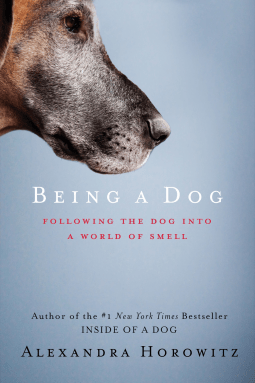 Horowitz is the author of Inside of a Dog, and here she follows it up with an examination of the sensory experiences a dog encounters, primarily that of smell. I received my DRC courtesy of Scribner and Net Galley in exchange for this honest review. And though I’ve never been a science maven, Horowitz’s unbridled enthusiasm for dogs had me at hello. It’s a book bound to engage any dog lover.
 Alsop’s book is a collection of essays describing Washington, DC as it was in the 1960’s. Everything here was written then, so it’s a chance to jump back in time and see what the media—and this reporter in particular– thought was appropriate for mainstream Americans reading the news of the day. I was invited to read and review this book thanks to Open Road Integrated Media and Net Galley in exchange for this honest review. I always hate to pan a book when I’ve been invited; it sounds as if I am insulting the host after eating at his table. However, the truth is the truth, and I see this title as fitting a narrow niche audience, but not so much the general public.
 Tail Gunner is the memoir of a member of the Royal Air Force during World War II. I was fortunate to receive a copy free in advance from Net Galley and Endeavor Press in exchange for an honest review. It’s both compelling and informative.
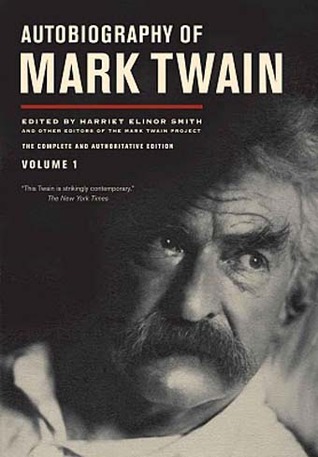 Initially I was surprised not to have seen the autobiography of such a famous individual before. Twain, I learned at the outset, composed his memoir with the stipulation that it not be published until 100 years following his death, because he wanted to be entirely frank about some situations and persons without incurring the displeasure of them, their children, or their grandchildren. Twain died in 1910, and his memoir had been finished just four months. For those of us living now, it was worth the wait. Although I was fortunate enough to snare the DRC for volume 3, I had to go out and hunt down volumes 1 and 2. It’s well worth obtaining and reading for those with the attention span and literacy skills it requires.
 Seattle Book Mama