The Bookshop of the Broken Hearted, by Robert Hillman*****

This quixotic little book had me at hello. Set in Australia in the 1960s, it tells a story of love, loss, and redemption in a way that I’ve never seen anywhere from anybody. I’ve finished reading other books since I finished this one, and yet I am still thinking about Tom Hope.

Huge thanks go to Net Galley and Putnam Penguin for the review copy. It will be available to the public April 9, 2019.

At the outset, Tom’s last name seems cruelly ironic, because the guy can’t seem to catch a break. Trudy, his perpetually dissatisfied wife, up and leaves him with no warning and no discussion. Just takes off. Tom is heartsick, but a ranch is still a ranch, and so he woodenly goes through all of the tasks—milk the cow, herd the woolies—that must be done. He is such a sad fellow, and he berates himself for not having done more to make that woman happy and comfortable. The ranch is not long on frills; an indoor shower would be nice, and a big old bathtub would be even better.

He actually makes lists.

 But then one day Trudy comes back. She’s been gone for a whole year, and now she’s pregnant. Say what?

When Tom takes her back, I look at the things he has said and done and wonder whether he is maybe a little on the simple side. But just as the question takes hold in my mind, we hear people in town talking about him. One of them tells another that after all, Tom Hope is not a stupid man. And so again I wonder why he lets her back in the house. But he does. He welcomes her. Sssh, he says to her self-recriminations, don’t worry about it. You’re back now.

Trudy has the baby, and then Jesus calls her and she leaves again—without the baby. So there’s Tom. You can see what I mean about that last name. Hope? What good has hope done for him so far? He’s stuck raising an infant while he runs a ranch, and it’s exhausting, nearly impossible, but he adores this little boy that isn’t his, just loves him for years, right up until the time Trudy decides that Jesus has called Peter to come to the religious compound with her.

So when the flamboyant Hannah, a woman older than himself, a Hungarian immigrant, comes to town and decides she likes the looks of Tom, all I can think is, thank goodness. Let the poor man have a life post-Trudy and post-Peter. There’s nothing like a fresh start.  But Hannah comes with baggage of her own, a refugee who’s experienced the horror of Auschwitz.

Before I requested access to this novel, the Holocaust reference in the description very nearly kept me away. Younger readers less familiar with this historical war crime need to know about it. The survivors are mostly dead and gone, and there are revisionists trying to deny it, or to say that stories of it are greatly exaggerated. So yes, there’s a need for its inclusion in new literature, and yet I feel as if I have had my fill. But the other piece of it—Tom, the ranch, the child, the romance—won the day, and I am so glad I decided to go for it. And indeed, it’s not a Holocaust story; instead, we see how the horror through which Hannah has lived informs her present day choices.

So yes, Hannah is an interesting character, and the bookshop is hers, but the story is really about Tom. One heartache after another comes his way, and he deals with every single one uncomplainingly, telling those that love him that he’s fine. Really. At times I want to push my way into the pages to say to him, what the hell? Go ahead and throw some dishes or something. You are entitled to your anger. But instead, he forges stolidly on, not because he is free of pain—we can tell that he isn’t—but because there’s no use in burdening others as well. And as one violent act after another works its way into his experience, the story builds, and builds some more, and we have to wonder when he will draw the line and say, that’s it. Enough. And the way Tom develops from the outset to the end is so resonant, so believable.

This novel is one of the warmest, most affectionately told stories that I have read in a long time. It’s never mawkish or overly sentimental; Hillman strikes the perfect balance. I would read more of his work in a heartbeat, and I highly recommend it to you. If you can find it at a discount, that’s great, but if you have to pay full cover price, you won’t be disappointed.
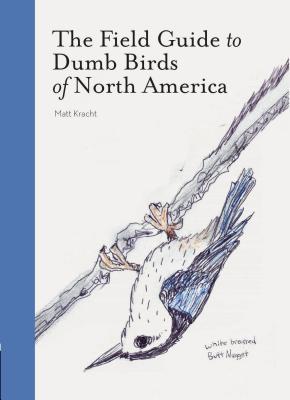
The Field Guide to Dumb Birds of North America, by Matt Kracht***

I received this review copy free and early, courtesy of Net Galley and Chronicle Books. This whimsical yet bawdy take on our feathered frenemies will be for sale on April Fool’s Day, which figures.

Kracht—whose name sounds ever so slightly like something a crow might say—illustrates each bird he discusses in a style that is not half bad, with some anger tossed in as seasoning. I have to admit I don’t entirely understand his indignation, given the state of the environment. I myself tend to relish the sounds of birds, most of whom the author refers to as “shit sacks,” “noisy little fucks,” etc; yet clearly his tongue is in his cheek, since he studies them sufficiently to write about them.

Much of the humor will be appreciated by teenagers, and so if you are expecting a teenage guest over the spring and summer holidays and the blue language won’t be considered inappropriate in your family, you might want this book for your guest room.

If I could change one thing about this book, I’d expand the section devoted to “Murderers,” meaning birds of prey. This is where the art is the best and also the funniest, and so I don’t understand why he only includes four birds here, one of which is the bald eagle, which even Kracht cannot diss. Most of all I wonder how a Seattle birder can omit the Peregrine Falcon, a magnificent and adaptive bird that dwells on the ledges of many of our city’s tallest buildings. Go figure.

If this eccentric little book sounds like something you or those you gift might like, you can get it April 1, 2019.

Soldier, Sailor, Frogman, Spy, by Giles Milton**

My attention was riveted on the title. Frogmen! Spies! Thanks go to Net Galley and Henry Holt for the galley, which I expected to love. Though I am disappointed, I would have been more so had I paid the cover price for this fast-and-loose pop history.

The author takes the events surrounding D-Day, the massive attack that turned the tide of World War II, and recounts them from the perspectives of those that were there, both on the Allied side as well as on the Germans’. Though the narrative flows in a congenial tone, it represents a smallish amount of research stretched and padded, and the result is a smattering of important information that’s already been conveyed in a million other sources, most of which he doesn’t cite, and a great deal of trivial information provided by bystanders, which he does.

So there is the research—or mostly, there isn’t. The author draws to some extent upon stories garnered through his German wife’s family, but a lot of it comes across as the sort of long-winded recounting that causes even loving family members to inch toward their coats and make noises about how late it’s getting to be. Long passages of direct quotations pass without a citation, and then later there are citations, but they aren’t well integrated, and almost nothing has more than a single source provided. In other words, it’s sketchy stuff that cannot pass muster.

In all fairness, I have to admit that it’s bad luck on the author’s part to have his work released so soon after Spearhead, which is brilliant and meticulously documented. On the other hand, this is no debut, and though I haven’t read the author’s other work, I can’t imagine that he doesn’t know he’s cut corners here.

Then there’s the other thing, an elephant in the room that isn’t entirely this author’s fault. Why is it that when a war ends and enmities cool, the folks that are invited back into the fold by the UK and USA are always Caucasians? Brits and Americans wax sentimental now alongside Germans, none of whom belonged to families that liked the Fascists, yet the Japanese fighters of World War II never make it back into the family, so to speak. And in this Milton has a vast amount of company, but this is where it is most obvious, so this is where I’ll mention it.  

So there it is. It’s for sale now if you still want it.

The Wolf and the Watchman, by Niklas Natt och Dag****

Quote


“From a collection of parts all individually worthless, a clockwork is formed that functions anew.”

This guy can write. Many thanks go to Atria Books for the two invitations to read and review as well as the gorgeous hardcover book for review. Happy publication day; this book is available to the public now.

We find ourselves in Stockholm at the end of the eighteenth century; it’s a tense time, with a political backlash resulting from the French Revolution and the fears it excites among those in power. The poor lead miserable lives, and life itself is cheap. There are very few protections in place for the vulnerable.

Mickel Cardell, the one-armed watchman, pulls a corpse—or what’s left of it–out of the Larder Lake. He sends the children that found it to get a cop. One thing leads to another, and then the chief of police, Johan Gustaf Norlin, sends for Cecil Winge.  The two men know one another well.

Winge is the most tragic hero I’ve seen in a long time. He’s dying of consumption (typhus), and he has left his wife because he doesn’t want her to have to watch him die; also, he’s impotent, and it’s painful to walk in on her with another man. Not that he blames her; he’d just prefer not to watch or hear it. He’s an attorney and has all the money he needs, but this is one time that money doesn’t help all that much. His illness prevents him from sleeping well, and he’s inclined to seek a challenge here or there when he can in order to distract himself from his own condition. Norlin has a distraction for him now. Winge reminds him that the last time he helped him with a case, Norlin had promised not to ask again; but Norlin is asking anyway.

The title comes into it when Winge interviews the textile merchant that recognizes the distinctive shroud in which the body was wrapped. The merchant is financially ruined and plans to climb aboard the ship bound for his home and then jump off into cold deep water and die. Before he boards, he points out that man is a lupine hunter, and that Winge himself is well on the way:

“No one can run with the wolf pack without accepting its terms. You have both the fangs and the glint of the predator in your eye…one day your teeth will be stained red and then you’ll know with certainty how right I was. Your bite will be deep. Maybe you will prove the better wolf, Mr. Winge, and on that note I bid you good night.”

The historical setting and characters here are beautifully drawn; for some reason, I like the moments when a character reaches up and yanks his wig off because it’s itchy and it’s driving him nuts. A number of characters are resonant, but Winge—who is perfect for the reader that needs an excuse to just sit down and cry—and Cardell, who holds his own in a fight surprisingly well, even with one arm—are my favorites. It is they, imperfect individually, that together make up the clockwork that functions anew.

Those of us that read a lot of books within the mystery genre (and its many offshoots) see a lot of the same settings and plots almost often enough to create a mystery story using MadLibs. Just fill in the blanks. In contrast, the unique setting, well-developed characters, and bad ass word smithery in this one are a potent combination.

And now I have to admit that for me, it is too potent. There is a great deal of detail about the corpse’s mutilation, and once I pushed my way past it, it came up again and again, because it’s right at the center of the case they are solving. So although for some this mystery will be, as the promotional blurb promises, “deliciously dark,” for me it is far too dark. In fact, I cannot remember ever using the word “shocking” as a descriptor within a review, but I’ll use it now. There are some things that cannot be unread once you have read them. I haven’t had my gut turn over in this way in several years, and I don’t ever want to go there again.

But that’s me. My daughter is not as easily horrified as I am; she may love this book.

Those contemplating purchasing this well-scribed novel should do one thing, and that is to carefully read the promotional description. It does warn the reader. The first time I saw it, I read that blurb and decided not to read it; then I was invited to read and review, and I accepted the widget but declined to sign up for a blog tour in case I couldn’t stand it; but then I was offered a hard copy, and I saw that other reviewers loved it, and my resistance worn down, I caved. Once I had it, I felt like I had to read it even when it was beyond the point of not being a fun read. But if you can read that blurb and are still game, then by all means you should get it, because all of the technical skills that make up an award winning novel are here in spades and the urgency never lets up. Highly recommended for those that are not even a tiny bit squeamish and have strong literacy skills.

The Liar’s Child, by Carla Buckley*****

Buckley is a force to be reckoned with,  an established writer, but she is new to me; I wasn’t done with this grab-you-by-the-hair thriller when I lurched over to my desktop to order two more of her novels from Seattle Bibliocommons, a thing I rarely do. Big thanks go to Net Galley and Random House Ballantine for the review copy. You can get this book March 12, 2019, and you should.

Sara Lennox is starting life new under the witness protection program. She has a new name and a dull new life, working as a cleaner—seriously, her a house cleaner?—and living in a damp, dull one-bedroom at the Paradise Apartments on North Carolina’s outer banks. It’s sweltering here. She asked to be placed on the Pacific Ocean, but no, she’s stuck here. Welcome to Paradise!

To top it all off, her handlers tell her not to go anywhere for a while; don’t take risks. It’s like telling a fish not to swim for a few months.

Meanwhile, the family next door is in crisis, but then for them, that’s not new. Whit and Diane Nelson have a stormy relationship; they know how to yank each other’s chains, and they do it constantly. Diane is gorgeous, a stunning woman that’s accustomed to owning every room she enters. She’s also completely irresponsible, devoid of even the most basic maternal instincts, and this came to a head when she snapped their little boy into his car seat, then went to work without dropping him off first. She forgot he was there, okay?

But it’s not okay. In the end, little Boon did come out of that coma—but psychologically he’s a mess, and once he is home, Diane is no better a mother than she was before. Add to this the ensuing visits from Robin the social worker and the intrusion of the state into their lives.

Why can’t that woman just mind her own business?

Whit loves his kids and knows he should leave Diane, but he can’t. They are the codependents from hell. So as twelve-year-old Cassie develops, she is burdened with many of the tasks that Diane ought to be doing; she’s the one Boon comes to when their parents’ raging battles scare him. Cassie has a right to be a preteen, but she can’t have a normal adolescence because Diane is doing that despite her age. It isn’t fair. What’s more? It’s making this girl mean.

Sara meets Cassie when Cassie breaks into her apartment. It sat empty for a long time, and Cassie had become accustomed to thinking of it as her own space. Leap across the balcony railing onto the one adjoining, and there you are. Cassie is a ball of rage, furious at her mother’s abdication and her father’s inability to set boundaries. Angry kids get into trouble. Lots of it.

And then Diane disappears. She’s done that before, taken off in a huff with no warning, abandoning her children and then reappearing after days, a weekend, a week or more. But this time is different. Her car and her purse are still here, for instance. And as the story climbs toward its crescendo, we get the sense that something sinister has occurred. Oh, Whit. What did you do?

Despite her disinclination to be involved with this family, Sara is pulled into the lives of the children. When a record-setting storm hurls its fury down upon the Outer Banks and the Paradise Apartments and evacuation is the order of the day, Sara sees Boon, then Cassie as she leaps into her car to peel out of there. His father’s car is gone. Though it’s the last thing she wants to do, Sara gets back out and lets Cassie and Boon scramble into her car. They’re off, and nobody knows who these children left with.

Buckley is absolutely unerring in her development of Sara and all of the members of the Nelson family. When an inconsistency appears, later in the story we see why the author put it there in order to move the story forward. Psychological fiction can be written without deeply layered characters, but it’s a lot better with characters like these, so achingly real.

So in the end, which character is the liar’s child? Every single one of them.

Those that love a true thriller, one that makes your pulse race and your breath stop from time to time should buy this book and read it. Buckley is a master storyteller of the first order, and you won’t want to miss it.

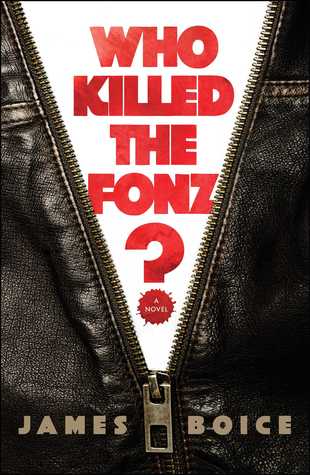
Who Killed the Fonz? By James Boice***

I was invited to read and review this strange little book by Net Galley and Simon and Schuster, and I thank them. It’s for sale now.

Fonzie is the eternally cool lone-wolf character in the television sitcom “Happy Days,” which was aired during the 1970s and early 1980s, back before the internet and the digital era gave us choices. The show is set in the 1950s, with malt shops, sock hops, and so forth. Richie Cunningham was the main character, an ordinary small town teen who was befriended by the Fonz.  This book morphs forward to the 1980s, which places Richie—er, Richard—in middle age. He’s a Hollywood producer but is called back home by the death of Fonzie.

When I saw this book in my email, I wasn’t sure what to think. How does anyone write this book? Neither Richie nor the Fonz was anything more than a stock character during the series itself. Every problem encountered by any character had to be resolved with humor and warmth within thirty minutes—more like twenty once advertising is figured in. So my first assumption was that this must be some sort of dark satire. But that would be very edgy and risky, and I wasn’t sure Simon would touch something like that. But, it’s an invitation and a quick read, so let’s have a look.

Satire it isn’t. It’s promoted as noir, and it isn’t that either.  I can go sit in the garage. I can say I am a car. I can get my children to all say I am a car. I still won’t be a car, or for that matter a motorcycle. And so I’m telling you right now that this is, in spite of its quirky title and book cover, a cozy mystery, period. It is what it is.

Now, that’s not a bad thing. There are a lot of readers that enjoy a good cozy, and it seems likely that a lot of those readers will fall into the demographic to which this story appeals, namely the Boomer generation, the readers that watched Happy Days when they were young and (hopefully) happy.

So here we are, back in Milwaukee, Wisconsin. Potsie and Ralph Malph distrust Richard because he has become some sort of Hollywood big shot. His career is on the rocks, but they don’t know that; all they know is that he’s come back to the Midwest wearing designer clothes, and when he calls himself “Richard,” they snicker. But ultimately they all work together to unsnarl issues of local corruption as well as the mystery about Fonzie, and Richard realizes he is really still Richie.

So we have corn; we have cheese; and we have cheese corn. But it’s an accessible story that will provide a pleasant level of distraction that doesn’t require a tremendous amount of concentration or analysis. If your gram is undergoing chemo, she can take this into treatment and it will help keep her warm.

I recommend this book to those that primarily read cozy mysteries and are familiar with the series.

Say Nothing, by Patrick Radden Keefe*****

The Irish have fought against oppressive British rule for centuries, but for many the most interesting—and for some of us, emotionally charged—period is that known as The Troubles, which unfolded in 1969 as Irish youth, inspired by the Cuban Revolution and the Civil Rights movement in the United States, sought to carve out some rights for working people living in the North of Ireland and concluded in 1997 following the ceasefire agreement struck between Sinn Fein, which was then the political arm of the revolutionary Irish Republican Army, and the British government. Keefe’s intense, compelling narrative is the most readable that I’ve seen, and the revelations it holds affected me more deeply than any literature I’ve read since I began reviewing books five years ago. Thanks go to Net Galley and Doubleday for the review copy, which I read free and early. You can buy it tomorrow, February 26, 2019. 

The history unfolds in three sections and is bookended by the quest of Jean McConville’s family to find her body and if possible, to learn who killed her and why. It’s an interesting choice given the number of dead the conflict produced, many of whom have never been found and identified, but the mystery and the ambiguity of her activities—was she merely a mother of ten as her children say, or working quietly for the IRA, or a double agent working for the British—is emblematic of the tension and secrecy maintained on both sides. We begin with Jean’s abduction in the first section, titled “The Clear, Clean, Sheer Thing,” move on to the meatiest and most tragic part of the struggle, “Human Sacrifice,” in which young hunger strikers and many others die, and conclude with “A Reckoning,” in which the ceasefire is signed and many Irish people that were involved in the guerrilla war are held accountable—and as usual, the British are not. The entire thing is carefully documented. 

Keefe notes that during the 1980s there was a good deal of “ambient” support for the IRA in the US, and this I know to be true. I participated in fund raisers for humanitarian aid to the six counties during that time, and I attended a presentation by Bernadette Devlin, an iconic leader of the struggle who for some reason barely bears mention in this work. It’s my only complaint about the book. 

The middle section left me shaking an in tears. I had not read Brendan Hughes’s claim about the deaths of the hunger strikers and the role almost certainly played by Gerry Adams, and it was a week before I could pick the book up again. I am still raw from it. I can recall seeing headlines in 1981 when Bobby Sands died, and at the time I was a practicing Catholic. When I saw the news, I picked up the phone and requested a special mass be held for him at my parish in the Midwestern city where I lived then. The parish priest thought it was a lovely idea but he needed the approval of the bishop. The bishop squashed it like it was a bug. There’s a metaphor in there somewhere. 

The final section discusses The Belfast Project, a series of interviews done under the promise that they would not see the light of day until the subjects were dead and buried. The names of the interviewees were coded as a further layer of protection, and the whole thing was stored in the vaults of the Burns Library at Boston College, where it was believed that the British government would never lay hands on it. Never say never. 

This book is a masterpiece. The writer is a journalist on the staff of The New Yorker, and this project took four years of steady effort by the author and his assistants, and a good deal of travel as well. The documentation is meticulous. Nevertheless, there are a number of details that are impossible to nail down, and the book’s title gives the reason for this. The only way to be sure a secret remains a secret is to keep your mouth shut, and that’s precisely what most of those involved in the struggle have done. A great many details that could doubtless condemn large numbers of working class Irish to lengthy prison sentences are buried with the bones of those that could have told. And although the author doesn’t explicitly say so, it’s obvious from the fate of the interview tapes that there is never any other guarantee of confidentiality; the code of silence still held to by the survivors of The Troubles has been all the protection that Irish participants have ever had. The vow to keep information private was decimated time and time again by the horrifying physical and psychological torture on the innocent and culpable alike by British jailers, none of whom will ever be brought to justice. 

Those that didn’t follow this fight in real time will likely not be as shattered by the things this book holds as I was. The author paints a vivid scenario—imagine coming home and noting that there’s a British soldier in uniform, gun drawn, in the rhododendrons in the front yard, for example—and peppers the account with well-chosen quotes. The slow deaths of Irish youth held in virtual dungeons are hard to read about, but then, war stories usually are. It’s fascinating stuff, though but necessarily material for bedtime, depending on your level of sensitivity. 

Highly recommended. 

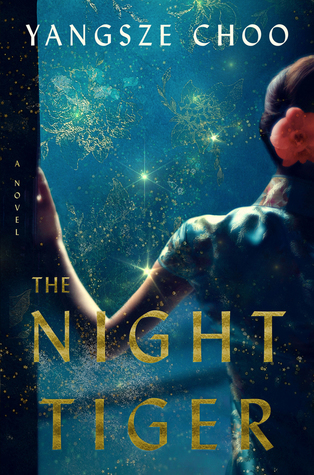
The Night Tiger, by Yangtze Choo****

Choo is a force to be reckoned with. Her dazzling second novel, The Night Tiger, crosses genres from historical fiction, to literary fiction, to mystery, to romance, to magical realism; it’s deeply absorbing and unlike anything else being published right now. My thanks go to Net Galley and Flatiron Books for the review copy. It’s hot off the presses; get yours before they sell out.

We have two protagonists, Ji Lin, whose widowed mother has married a tin ore dealer, and Ren, an eleven-year-old orphan that works as a houseboy. The story takes place in 1931 in Ipoh, Malaya, which was the name of Malaysia when it was still occupied, part of the British Empire. As the story commences, Ren’s master, Dr. McFarlane, has died of malaria, and his last words instructed Ren to go to Dr. William Acton, find McFarlane’s amputated finger and return it to McFarlane’s grave. He has 49 days, and the clock is ticking. Go.

So powerful is Choo’s storytelling voice that I was most of the way through the book before it occurred to me to wonder: who puts that kind of responsibility on a little kid, especially since the task involves traveling alone to a different town? But Ren loved his master, and he’s a loyal kiddo. Despite an offer by his former master’s housekeeper to take him in, he forges forward, determined to do as bidden.

Ji Lin has a different set of problems. She recently reached marriageable age, but the only man she’d have considered desirable is engaged to someone else. Her stepfather is looking for candidates so he can be rid of her, and Ji Lin doesn’t like the same men her stepfather prefers for her. And in 1931, there are very few respectable alternatives for women to support themselves. She might like to train as a teacher, but she needs money right this minute, before her stepdad finds out about her mother’s Mahjongg debt. That man beats her mother savagely over much smaller things, and this gambling debt is potentially ruinous. Ji Lin takes an apprenticeship with a dressmaker, but secretly makes a lot more money as a dance instructor, a risky job that can lead to assault, a ruined reputation, or both. One night on the dance floor, as she skillfully parries a handsy salesman trying to make a move on her, her hand brushes his pocket and a little glass tube rolls out. She pockets it so she can check it out later, and oh hey, there’s a finger in there!

Ji Lin’s stepbrother, Shin is an intern at the local hospital, and that place is seriously messed up: “There’s a secret, white and yeasty maggot, which threatens to undermine the neat and orderly life of the hospital.” Just for starters, what happened to all the amputated fingers that are supposed to be in the storeroom with the other medical specimens?

At the same time, an unusual number of deaths have occurred lately, and there’s concern that it’s a weretiger that’s behind them. A weretiger is like a werewolf in reverse: instead of originally being a human that changes to a monstrous sort of wolf when the moon is full, a weretiger actually is a tiger that can at times become human.

Choo is masterly at weaving a complex plot, developing characters, and using imagery and possibly allegory as well; the river is a symbol that has been around as long as literature. But her greatest contribution here is in the way she uses all these things to create suspense. Once the possibility of the weretiger is raised in more than a passing way, I find myself examining every secondary character—and some fairly important ones—whose whereabouts are unknown at about the same time a corpse is discovered with tiger tracks nearby. Could that person be a weretiger? Could this one? No. Well, maybe. We learn that a weretiger is distinguished by a limp or otherwise deformed back foot, and so then I am eyeing anybody with a hurt foot or a limp or a wheelchair.

There are a number of threads that weave in and out of the story: troubled dreams are shared by Ren and Ji Lin, who have never met, and Ren’s dead twin, Yin, speaks to him. Ren’s “cat sense” guides him away from trouble and toward the finger. I often struggle with magical realism, because I’ll be trying to solve the story’s main problem using real world information, but then someone will do something people cannot do, and I yelp with frustration. But Choo sells me on the notion that there’s a weretiger, because now I know that a dead twin that magically communicates here; who’s to say there can’t be a magical tiger monster that’s killing the local folk too? Somebody sure as heck keeps leaving tiger tracks, and I know it’s not me.

The author provides information about Chinese folklore, including the weretiger, in notes following the story, and about halfway through the book I read the author’s notes before finishing the story.

The only part of this book that I don’t like is the romance that pops up between Ji Lin and her stepbrother. Ew, ew! Why does Choo find this necessary? It doesn’t add interest so much as distraction. When their mother goes bonkers and tells them to stay the hell away from each other, I’m right there in her corner. You tell them, honey. Hit them again. You can borrow my umbrella. Let them have it! Sick little bastards. The author goes to pains to stress that they aren’t biologically related and that Shin’s father never legally adopted Ji Lin, but who the hell cares? The incest taboo has nothing to do with biology; it’s a social construct. We don’t screw the siblings we grow up with, period. This aspect of the story is just plain tasteless, and if I were her editor, I would cut it clean out of there, making Shin the fantastic brother that he had been when they were younger and nothing else.

That said, I nearly went for a five star rating anyway, because it is so gratifying to see a well written story about any part of Asia during the colonial period that is not written from the point of view of the colonists and whose main characters are native residents rather than the occupiers. By showing the ignorant, patronizing way that local Brits—many of whom are expatriates because they aren’t decent enough people to be accepted socially back home—Choo exposes the true nature of colonialism, and for this alone, I could stand up and cheer.

With the single caveat emphatically mentioned, I recommend this story to you.

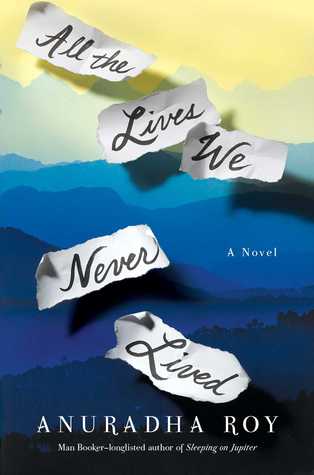
All the Lives We Never Lived, by Anuradha Roy***

I had not read Roy’s work before, but when I saw this galley—with an arresting cover and the promise of a Man Booker nominated author—I jumped on it.  Thanks go to Net Galley and Atria Books for the review copy. It’s for sale now.

I’m months late with my review, and the cause of my tardiness is my ambivalence about this book and my confusion as to why it fizzled for me. It starts out well, and at the outset I love Gayatri, the nonconformist mother of Myshkin, our other main character. Every stereotype ever built about Indian women is utterly crushed as she screams with joy while riding downhill on her bicycle. Her sari is torn, her hair is a mess…and her husband adores her.

The story is set just prior to World War II as well as the Indian quest for independence. But as India struggles to break free of the British Empire, Gay struggles to break free of her marriage.

Myshkin is extremely close to his mother, and when we meet him he is elderly, retired from working as the town’s landscape director and gardener, and living alone in greatly reduced circumstances compared to the ones in which he grew up. His whole life has been nothing but sorrow and loss since his mother abandoned him. We see in her letters to friends and in his own inner monologue that she had intended to take him with her, but the timing was right down to the wire. She told him not to be late coming home from school because something important was happening; but then his teacher was unhappy with the class and kept them all after school, and faced with the choice to fish or cut bait, Gay left without her little boy.

Usually when I don’t like a book, I also know exactly why I don’t like it. This time I had to mull it over. On the one hand, I heartily dislike the mother here; I’m a diehard feminist, but child abandonment is child abandonment. However, a flawed or even villainous protagonist shouldn’t be a deal breaker. Think of Hannibal Lector! Think of The Talented Mr. Ripley! And of course we also know that for Gay to leave her marriage was a dicey proposition during this time period when an Indian woman was legally little more than chattel. Nevertheless, I resent this character, who is portrayed as flawed and yet heroic. Why doesn’t she keep Myshkin home from school, have him feign illness or hide somewhere, rather than set up this failure? Her love for him is supposedly tremendous, and yet she chooses to leave without him; when she becomes a famous painter and openings exist to find and reclaim her son, she has endless excuses.

In addition to my frustration with the character, I also see pacing problems. Rather than experiencing the powerful range of feelings that the book’s teaser promises, after I was twenty-five percent of the way in, I was mostly just weary, depressed, and watching the page numbers crawl by.

Is it over yet?

Another reviewer suggested that although there is a long, slow part during the book’s first half, once we get to a certain point—which he identified, but I have forgotten where it was—the whole thing would gel and make it worthwhile. And so I soldiered on, reached his benchmark and then past it for a few pages more, just in case. But no.

Having forced myself along this far, I resolved to skip to the last 25% so that I would be able to write a fair review. Sometimes the way a book ends can completely change how I feel about it. But I found that so much change had occurred in the portion I had skipped that I couldn’t regain the thread, so with a heavy sigh I flipped back to where I’d been and saw it through. But the ending is worse than the middle, with Gay’s entire narrative attached to it in the form of detailed letters to a third party, the friend that helped her sneak out of India. 

I once met someone that had added onto his home in a do-it-yourself way that had nothing to do with building codes, and the floors sloped precariously, the style of the addition resembling a hillbilly patchwork job more than a suburban home. And that’s what the end of this book is like. It’s as if a deadline was nearing and the writer tacked something on quickly to get it done in time.

How did something that started so well turn into such a mess? It’s perplexing. All I know is that when I was done with it, I felt as though spring had arrived, and there was an added bounce to my step, not because the book made me feel that way, but because the book was over, and I would never have to read it again.

All this said, the initial character sketch of Gayatri is wonderful. I could see using a cutting from it in a creative writing class. But get it free or cheap unless your pockets are deep; I cannot recommend the book as a whole.

Finding Dorothy, by Elizabeth Letts*****

“Don’t let anybody steal your marbles.”

Maud Gage Baum is one of a kind. The godchild of Susan B. Anthony, child of first-wave feminist Matilda Joslyn Gage and an indulgent, progressively inclined father, she is unhampered by many of the traditional expectations that shackled women born during the American Civil War. But though her parents encourage her to develop her mind and talents, they have little prepared her for the wider world that greets her, and when she arrives at the women’s dormitory at Cornell University, she is considered peculiar by her classmates. She is a lonely young woman, until her roommate sets her up with Frank, an eccentric, clever man whose whimsy equals her own. My great thanks go to Net Galley and Random House Ballantine for the galley, which I received free in exchange for this honest review. It will be available to the public tomorrow, February 12, just in time to be wrapped in red paper and given to the bookworm you adore.

Maud’s story comes to us from two different time periods, one of which starts in 1871 during her childhood and moves forward in linear fashion, and the other in 1939, when she comes to the set where The Wizard of Oz is being filmed to fulfill her beloved Frank’s dying wish; he has asked her to look after Dorothy.  And though it initially means gaining access to the studio through duplicitous means, Maude befriends the unhappy but massively talented Judy Garland, and advocates for the intention behind her character, sometimes successfully, sometimes not.

I love this book hard. It has an unusual appeal, not a thriller nor a grab-you-by-the-hair page turner, but rather a strangely comforting novel, one that offers us the chance to follow Maud to another time and another place. I read several books at a time, and this one became my bribe to myself, the reward I could look forward to after completing increments of other books that I wouldn’t abandon, yet didn’t love as I did this one.

How many times have I reviewed a book favorably yet with the caveat that it isn’t bedtime reading, and maybe not good for mealtime either? Listen up. This one is good for both. It will make you appreciate your meal as you move through the hungry years of the Depression, and as you read about poor Judy being starved with lettuce and cottage cheese, her penalty for reaching puberty when the studio wanted her to look like a scrawny waif. And at bedtime, even the sorrowful passages are wonderfully hypnotic.

The love story between Maud and Frank is one for the ages, and without Letts, who would have guessed? Midway through the story I felt the need to know how closely the author kept to the truth, and I skipped to the notes at the end. I am delighted to say that this writer did a great deal of research, and she tells the reader specifically where and when she departs from historical fact for the sake of the story.  The way that the character of Dorothy is invented, based on a string of actual events from the Baums’ lives, is riveting, and in fact had the author not told us otherwise, I would have assumed that much of it was made up, because it’s almost too cool to be true.

Letts develops her characters subtly, with never a caricature or stereotype. Though her settings are well drawn, this is a character based book if ever I read one, and it must truly have been a labor of love. I’ve read a dozen books between this one and the present, yet this is the title that makes me smile.

This beautifully crafted story is bound to rank high among the year’s best historical novels. Sweet, soothing, and highly recommended.