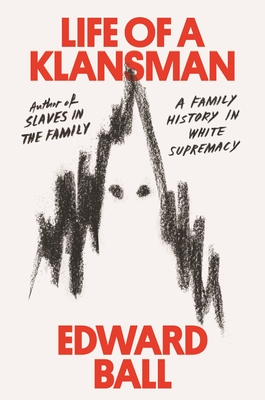
Life of a Klansman, by Edward Ball*

“White supremacy is not a marginal ideology. It is the early build of the country. It is a foundation on which the social edifice rises, bedrock of institutions. White supremacy also lies on the floor of our minds. Whiteness is not a deformation of thought, but a kind of thought itself…
‘The story that follows is not that a writer discovers a shameful family secret and turns to the public to confess it. The story here is that whiteness and its tribal nature are normal, everywhere, and seem as permanent as the sunrise.”

I read this book free and early; thanks go to Net Galley and Farrar, Strauss, and Giroux for the review copy.

Edward Ball writes about his ancestor, Constant Lecorgnes, known fondly within his family as “our Klansman.” The biography is noteworthy in that it is told without apology or moral judgement, as if Ball wants whites to feel okay about the racism, the rape, the exploitation, the murders, the terrorism that membership in the Ku Klux Klan, the Knights of the White Camellia, and any and all of the other white supremacist organizations have carried out, and will continue to carry out, in the United States. Relax, he tells us, it’s normal.

Well, let’s back up a moment. The “us” in the narrative is always Caucasians. It apparently hasn’t occurred to him that anybody else might read his book. In some ways, the “us” and the “our” used consistently and liberally throughout this biography are even worse than the explicit horrors detailed within its pages. It’s as if there is a huge, entitled club, and those that don’t belong are not invited to read. Further, it’s as if all white people are of a similar mind and share similar goals.

Not so much.

Ball won the National Book Award some years back for Slaves in the Family, a title currently adorning my shelves downstairs. I have begun it two or three times, but it didn’t hold me long enough for me to see what he does with it. And this book is the same, in that the late Lecorgnes is not particularly compelling as a subject, except within the framework of his terrorism. He was not, Ball tells us, a key player; he was just one more Caucasian foot soldier within the Klan. And so, the reading drones along, and then there are the key pronouns that capture my attention, those that give ownership to his terrible heritage, and a couple of paragraphs of the history of the period, particularly within Southern Louisiana, follow; lather, rinse, repeat.

As I read, I searched for accountability. As it happens, I have one of those relatives too; but my elders, though not beacons within the Civil Rights realm by a long shot, understood that such a membership brings shame upon us, and consequently I was not supposed to know about him at all. I overheard some words intended to be private, uttered quietly during a moment of profound grief following a sudden death. My mother spoke to someone—my father? I can’t recall—but she referred to her father’s horrifying activity, and I was so shocked that I left off lurking and spying, and burst into the room. I believe I was ten years old at the time. I was told that the man—who was never, and never will be referred to in the fond, familiar manner that Ball does—was not entirely right in the head. He truly believed he was helping to protect Southern Caucasian women, but he was wrong. It was awful, and now it’s over; let’s not talk about it anymore. In fact, this topic was so taboo that my own sister didn’t know. She is old now, and was shocked when I mentioned it last spring. She had no idea.

As I developed, I understood, from teachers and friends more enlightened than Mr. Ball, that the best way we can deal with ugly things in our background that we cannot change, is to contribute our own energies in the opposite direction. I’ve lived by it, and so I was waiting for Ball to say something similar, if not in the prologue, then surely somewhere near the end; but he never did. If Ball feels any duty whatsoever to balance the scales of his family’s terrible contribution, he doesn’t offer it up. There’s no call to action, no cry for social justice. Just the message that hey—it’s normal, and it’s fine.

I’m not sure if I want to read his other work anymore; but I know that what I cannot do, and will not do, is recommend this book to you.

Falling Onto Cotton, by Matthew E. Wheeler*****

“This is the most famous thing to happen in Milwaukee since Laverne and Shirley got cancelled.”

Chance McQueen is a musician and restauranteur, an honest man doing his level best to tiptoe around the morass of organized crime that exists around him without getting his toes wet. It isn’t easy. His ancient Uncle Vinny is the local don, and he’s dying. Chance has told him many times that he would prefer to avoid this part of the family business, but he’s been dreaming. Uncle Vinny has stage four lung cancer, and he summons his nephew to share some hard truths:  “It’s simple. Either you take over the family before I’m dead, or Frank will have you killed before my body’s cold…Charles, when did you ever get what you want?”

This oddly charming debut came to me free and early, and my thanks for the review copy go to Net Galley and M.D.R. Publishing. This book is for sale now.

Wheeler’s debut reads as if scribed by a seasoned novelist, and he introduces a lively collection of memorable characters. He serves as mentor and father figure to Winnie, a dapper young man that has it bad for a sweet young thing named Alex; Geoff, his best buddy, who is Black and gay, and endlessly loyal; a homeless veteran living behind the restaurant, who is never a caricature; and Chance’s nemesis, Frank Bartallatas: “Frank Bartallatas was pure evil in a massive frame. More than one little fish had disappeared after swimming too close to Mr. Bartallatas.”

The story is set in 1990, and each of the agreeably brief chapters is headed with the title of a rock song from the 1970s and 80s, which is a portent of what the chapter brings. I like this guy’s playlist, and I stopped reading more than once to add his songs to my own collection.

Here are the things I like most, apart from the playlist: I like the strong, resonant characters, which are well enough developed that they are easy to keep straight; the setting, which hasn’t been overused by other writers, and is a credible choice; the selective use of violence, which cannot be left out of a story like this, but never feels excessive, sickening, or prurient; and the pacing, which never flags. In addition, I like the mobster aspect of this story, an angle that we aren’t seeing much in new fiction.

I have no serious complaints, but if I could change anything here, there are two things I’d tweak: First, Geoff practically can’t have a conversation with Chance without making awkward race jokes, and Caucasians that spend time with African-American people will tell you that never happens, no matter how close you are; and second, the alcoholic protagonist is becoming trite, so I’d either let Chance kick his habit without a protracted, detail-laden struggle, or I’d just let the guy drink. Chance’s dead fiancée is enough hubris all by herself. But clearly these are minor concerns, or this wouldn’t be a five star review.

This rock solid debut signifies great things to come from this author, and a little birdie tells me that there may be future novels featuring Chance McQueen. My advice to you is to get in on the ground floor of this series-to-be, because it’s going to be unmissable. Highly recommended.

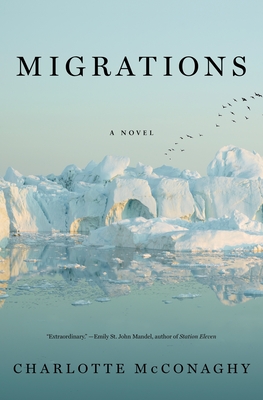
Migrations, by Charlotte McConaghy****

My thanks go to Net Galley and Flatiron Books for the review copy. I alternated my digital copy with the audio version I found at Seattle Bibliocommons; the reader does a fine job, and so if you want this book, you can’t go wrong in terms of print versus sound.

This is either exactly the right time to read this book, or exactly the wrong time.

Franny Stone has never been happy staying in one place, and now, when the walls are about to close in on her, she decides that one final voyage is in order. The Artic terns are about to make one final migration, and she means to go with them. Posing as a marine biologist, she persuades a fishing crew to take her along; she has the data to follow the terns, and the terns are following the fish. It’s in everyone’s best interest to work together here, now that so many species are extinct and the fish are so scarce. Once in motion, however, few things go according to plan.

The setting is the future, at a time when humanity has depleted most of the world’s wildlife. It is bleak, bleak, bleak.

Much of the story revolves around Franny’s character, and since we know from the get-go that she doesn’t intend to return alive once this trip is done, there are two questions that keep me turning the pages. I want to know why she wants to die, and of course, whether she does. The reason for her morbid plans is spooled out to us in small bits; whether she dies at the end is something the reader must learn for herself.

As for me, I had huge expectations by the time I began reading, because this novel shot up to bestseller level almost overnight. Perhaps that’s why I felt a trifle let down when it was done. It’s a good story, but I wouldn’t call it one of the year’s finest. Certainly, there is moral gravitas behind it, and yet those most likely to read it are not climate change deniers. For me to have loved this story, I would have needed more hope and less utter despair. When a story starts sad and ends sad, the little places in which it is slightly less sad aren’t enough to bond me to the narrative.

On the other hand, I am just one reviewer. There are a whole lot of readers out there getting all the feels and loving them. I recommend this story to anyone looking for a catalyst for a good ugly cry.

Agent Sonya, by Ben Macintyre*****

Ben Macintyre is a badass writer of narrative nonfiction about lesser known historical figures from the World War II era. I read and reviewed his blockbuster, A Spy Among Friends: Kim Philby and the Great Betrayal, which was published in 2014; when I was invited to do the same for Agent Sonya, I didn’t hesitate. My thanks go to Net Galley and Crown Publishing for the review copy. You can buy this book now.

Her real name was Ursula Kuczynski, and she was a German Jew. Hitler came to full power when she was visiting China, and her entire family fled. Born before the Russian Revolution, she lived until after the fall of the Berlin Wall, and so her lifespan encompassed the entire duration of the Soviet Union. An unusually intelligent woman, she was drawn to Communism by the horror of Fascism, and by the misery created by disparate wealth that was right in front of her. The Chinese peasantry were so wretchedly poor that she found dead babies in the street; starving mothers sometimes concluded that they might be able to save one child, but they surely couldn’t save more than that, and they were forced to make a tragic choice. This, in spite of the vast and opulent wealth of the most privileged classes; it was obviously wrong, and there appeared to be only one way around it. She signed on to be a spy for Moscow.

Kuczynski’s career in espionage spanned twenty years and took place in myriad locations across Europe and Asia. She briefly harbored doubts about her career at the time of the Molotov-Ribbentrop pact, but shortly after its creation, Hitler broke it by attacking the USSR, and the matter became moot. Others around her were apprehended and either jailed or executed, but Ursula always got away clean. As she advanced in the Red Army, ultimately receiving the rank of Colonel, she was given increasingly important work, and her ultimate achievement was in recruiting a scientist that was placed at a high level within the Manhattan Project. More than 500 pages of important documents made their way to Moscow, and because of his defection and Ursula’s skill, the USSR soon had the atomic bomb also.

Though Ursula never considered herself a feminist, she never hesitated when commanding men—a thing few women did at this point in history—and she didn’t let the men in her life shove her around. One of my favorite passages is when she is pregnant at an inconvenient time, and her estranged husband and lover put their heads together to decide what should be done. The two of them agree that Ursula needs an abortion, and Ursula tells them she’s decided to have the baby. Mansplainers never stood a chance with Ursula.

There were many instances when motherhood conflicted with her professional duties, and she had to make a lot of hard choices, but being a mother also provided her with an excellent cover. Sexist assumptions on the part of M15, M16, and other spy-catchers were also responsible for part of her success; how could a mother of three children who baked such excellent scones be a foreign agent? Don’t be silly. And consequently, her husband (whichever one) often drew scrutiny, but nobody ever dreamed that Ursula herself was the high level spy they sought.

The one thing I would have liked to see added to this excellent work is a photo of this woman; perhaps it is included in the final publication, but my digital review copy showed none.* I found photos of her online and understood right away why she was so effective. That disarming smile; that engaging face. Who could help loving her? She looks like everyone’s best friend. She appears incapable of duplicity.

Although the biography itself is serious in nature, there are some hilarious passages involving the nanny, and also an imbecilic British agent that couldn’t find his butt with both hands.

Finally, one of the most fortunate aspects of this biography is that although it is absorbing, it isn’t written like a thriller, and so it’s a great book for bedtime. You already know that Ursula isn’t going to be executed, right? Her story is told in linear fashion, so although it’s a literate, intelligently told story, it’s never confusing. With autumn upon us, I cannot think of a more congenial tale to curl up with on a chilly evening.

This book is highly recommended.

*An alert reader tells me that the final version includes photographs of Ursula and all the major players.

YouTube: https://www.youtube.com/watch?v=eyFRUcCLNns

Behind the Red Door, by Megan Collins**-***

I enjoyed Collins’s debut, The Winter Sister, and so when I was invited to read and review this second novel, I jumped on it. My thanks go to Net Galley and Atria Books for the review copy. This book is for sale now.

Have you ever had someone in your life that’s a hot mess and makes terrible decisions, one after another? This felt a little bit like that, at least during the periods when I believed the character; and I did, some of the time. But whereas The Winter Sister held together beautifully until the implausible ending—a common issue with mysteries and thrillers—this one is riddled with difficulties throughout.

Fern had a traumatic childhood. Her father used her to conduct cruel experiments, deliberately terrifying his daughter in a variety of ways so that he could write about her responses. Now she’s grown and gone, though not surprisingly plagued by serious mental health issues, but healing nonetheless, and he summons her home. He says he needs her. Against the advice of stable people in her adult life, Fern packs her bags and comes a-runnin’. Who knows? Maybe her daddy wants to say sorry; perhaps he is terminally ill and set on making amends.

Well, um, no.

Upon her return, three terrible things happen almost immediately. First of all, her father, Ted, has not changed a bit, and he only called her back because he’s moving and doesn’t have time to pack. He wants her to pack for his move. He doesn’t plan to help pack his own crap, and he doesn’t plan to pay her for her time. Plus, he still plays cruel tricks on her, just like bad old times.

On top of this, her best friend’s sadistic brother, Cooper, is still around, and he’s still not a real nice guy. She discovers this almost immediately firsthand.

And on a trip to the store, she runs across a book, a memoir written by Astrid Sullivan. Flash! Bang! She knows that face, doesn’t she? Did she know Astrid?  Now Astrid has been murdered, and Fern has been having dreams about her, which might be flashbacks. Has she buried memories of the murder? And…WHO would have DONE such a thing?  Nobody SHE knows would do a mean thing like that! Unless…naw.

Oh dear.

The story is told in alternate narratives, Fern’s and Astrid’s, courtesy of her memoir. This method does build a sense of dread, but it feels a little choppy in the telling.  In addition, I had difficulty believing the character’s motivation. I could see reflexively running home—I’ve known people that would do the same—but what I cannot understand is why, when she found out what Ted’s big emergency was, she didn’t toss her bag back in her car, say Buh-bye and good luck with the move, and hightail it home.

There’s a lot of extraneous business here; we have Fern’s mental health problems, and on top of it all, she’s pregnant. (Oh, good idea. A baby. What could possibly go wrong?)

I believe Collins has a great book in her, but this isn’t it. That’s okay; back to the drawing board. Life is long. But reader, as for you, I recommend you either pass this one up, or read it free or cheap.

A Libertarian Walks Into a Bear, by Matthew Hongoltz-Hetling*****

How much would you pay right now to laugh out loud, and laugh hard, about something that has nothing whatsoever to do with current events? Exactly. My thanks go to Net Galley and Perseus Books for the review copy. This book is for sale now.

The author is a journalist who caught wind of a tiny hamlet in New Hampshire that was taken over by libertarians:

“The four libertarians who came to New Hampshire had thinner wallets than…other would-be utopians, but they had a new angle they believed would help them move the Free Town Project out of the realm of marijuana-hazed reveries and into reality. Instead of building from scratch, they would harness the power and infrastructure of an existing town—just as a rabies parasite can co-opt the brain of a much larger organism and force it work against its own interests, the libertarians planned to apply just a bit of pressure in such a way that an entire town could be steered toward liberty.” 

By the time the long-term denizens of Grafton realized the extent of the mayhem that these people intended, they discovered that “the libertarians were operating under vampire rules—the invitation to enter, once offered, could not be rescinded…At the same time the Free Towners set themselves to shaping the community to their liking, the town’s bears were working to create their own utopia.”

The newcomers’ idea of liberty meant no enforcement of any law, and no taxes, even for basic infrastructure and services. And when the local bear population blossomed, it was every Free Towner for herself.

Hongoltz-Hetling provides a succinct history of the town, then introduces a handful of the key players. There’s a man that buys and lives in a church in order to avoid paying taxes; an Earth Mother type that decides the bears are hungry and should receive free donuts, seeds, and grains daily in her own backyard; several tent dwellers that eschew basic hygiene and food safety; and oh, so many, many bears. Some of the townspeople are identified by name, but those that prefer anonymity are identified by colorful nicknames.

At the outset we see jaw-dropping levels of eccentricity coupled with hilarious anecdotes, and true to his journalistic calling, the author spends a good deal of time in this tiny, lawless burg, and so he reports events not second hand, but from his own experience. My favorite part is the showdown between Hurricane the Guard Llama and an ursine interloper looking for mutton on the hoof. Another is the conflict between “Beretta,” the resident next door to “Doughnut Lady,” who hates all bears primarily because they are fat.

Eventually things take a darker, more tragic turn for some; the most impressive aspect of this story is the seamless manner in which the author segues from the hilarious to the heartbreaking, and then brings us back up for air.

Ultimately, the bears are emblematic of the need human beings have for cooperation and organization.

Though the material used for this story is rich and original, it takes a gifted wordsmith like Hongoltz-Hetling to craft it into a darkly amusing tale of this caliber. If I were to change one thing, I would lose the digression near the middle of the book with regard to typhus, Tunisia, and diseases shared by bears. It slows the pace and could easily be whittled down to a single paragraph. But the rest of this book is so engaging that I cannot reduce my rating by even half a star. My advice is to skim that passage, which eats up about five percent of an otherwise perfectly executed narrative, unless of course you like that aspect of it.

In six years of reviewing, and out of the 666 reviews I have provided to Net Galley—and yes, that’s the actual number, until I turn this review in—I have purchased fewer than one percent of the books I’ve read, either to give as gifts, or to keep. That said, this book is going under my Christmas tree this December. If you read it, you’re bound to agree: the story of Grafton is the best surprise of 2020.

Do it.

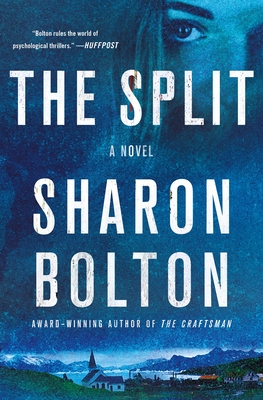
The Split, by Sharon Bolton****

My first book by this author was The Craftsman, which came out in the fall of 2018. That story blew me away, and after that I made it a point to watch for new books by Bolton. Thanks go to Net Galley and St. Martin’s Press for the review copy. This book is for sale now.

The title is a double entendre: our protagonist, Felicity, is avoiding someone, and she is certain he’s found her. Since her field is glaciology, she decides to travel to Antarctica with an expedition. He’ll never find her there, and even if he should, he’d be at a distinct disadvantage to her. Those are her stomping grounds. Thus, she is about to split.

The catch, however, is that her superiors are uncertain she is mentally stable enough for this journey. She keeps missing time; there are whole blocks, an hour, an afternoon, a weekend, when she doesn’t recall where she was or what she is doing. She finds evidence that she has done things she does not remember doing. As we perch in her psychologist’s office, veritable flies on the wall observing her therapy sessions, it soon becomes clear what the issue is, or at least it did to me; and thus, the second meaning of the title.

One of the things I appreciate about this story is that there is no coy effort on Bolton’s part to deflect the reader’s awareness of what ails Felicity. I would have liked at some point to see or hear the correct name used; Felicity has a dissociative disorder. But this is a small quibble.

What I appreciate the very most is that Bolton doesn’t sensationalize this disorder, but sticks closely to the truth. Why not? The real thing is dramatic enough all by itself to keep our interest. And when I realized where we were headed with this I regretted, if just for a brief while, having signed on, because this topic cuts close to the bone for me. I have a close family member with this disorder, and hearing the voices of people that were, and yet were not, my relative’s voice is one of the most horrifying experiences of my life. After a few weeks of it, I had to pull back and ask to only be phoned by the dominant person in my relative’s body, the one that I, like the rest of the family, was acquainted with. And so, once I decided to continue reading this book, I listened closely for inaccuracies in its telling, using my relative as a baseline (a sample size of one, which I’ll admit is sketchy,) and I found none. Most readers won’t have this experience for comparison.

Although the mental condition is revealed, bit by bit, fairly early in the story, there are still surprises aplenty, particularly with regard to the stalker. The climax is a bit farfetched, but nevertheless this is a solid job, and Bolton gets big props from me for dealing with a difficult premise accurately and fairly.

I flipped back and forth between the printed review copy and the audio version I scooped from Seattle Bibliocommons. Both versions are well done and easy to follow, so you can’t go wrong. Recommended to those that love a good psychological thriller, and that have no triggers that might conflict with your enjoyment.

Anxious People, by Fredrik Backman*****

He’s done it again, only better.

My thanks go to Net Galley and Atria Books for the review copies. You can buy this book today, and I suggest you do it. The world around us may have gone nuts, but Backman helps us to remember the good in ourselves and in those around us, even in the most unlikely people. For that alone, this book is worth its weight in gold.

We start with an attempted robbery at a cashless bank; as with so many crimes done on impulse, nothing goes the way it’s supposed to. There’s no money to be robbed, and with the cops on the way, the best thing to do is to duck out quickly…until you realize that the door you chose isn’t an exit. Then there are these hostages, an insurance policy to prevent your being swept away to prison, but “it’s harder than you might think to take people hostage when they’re idiots.”

Backman often creates complex situations with huge numbers of characters in his novels, and he does better than hardly anyone else when he does it. This book, by contrast, has a more manageable number of characters, and perhaps that’s a big part of its even greater success. We have the robber; the hostages, who are the people viewing an apartment for sale, and the seller and realtor; a pair of cops that are also father and son; the therapist that sees one of the hostages; and a couple of other people. The first that we meet is Zara, a sharp-tongued, wealthy woman that is viewing the apartment even though she is obviously too rich to want it. Just about everything that comes out of Zara’s mouth is smart, mean, and very funny; we gradually learn that she does this to deflect the conversation away from herself. With apologies to Dickens, Zara is as solitary as an oyster.

Besides Zara, the prospective buyers include two dysfunctional couples. There’s an older couple, man and woman; and there’s a pair of women, one of whom is hugely pregnant. When this is revealed I roll my eyes, convinced that the climax is almost certainly going to include the obligatory emergency birth. But I should know better, by now, than to underestimate Backman.  He doesn’t use tired tropes or formulas, and Julia isn’t going to give birth during this crisis.

I don’t want to give away any of the details here, but as we get to know our collection of hostages and others, it’s pretty clear, as the title suggests, that everyone’s misbehaviors come from their anxieties, and when they criticize and pick away at others, they are actually dissatisfied with themselves. But of course, Backman’s writing is much more magical than my own, and the result is the sort of feel-good denouement that doesn’t insult our intelligence or become maudlin. At this moment I can only bring to mind three writers that consistently do this for us. (The other two are Alexander McCall Smith and Amy Poeppel.) And right now, friends, we need all of this magic that we can get.

Buy this book if you can; if your wallet is too thin right now, then get on the list at your library. Highly recommended to everyone.

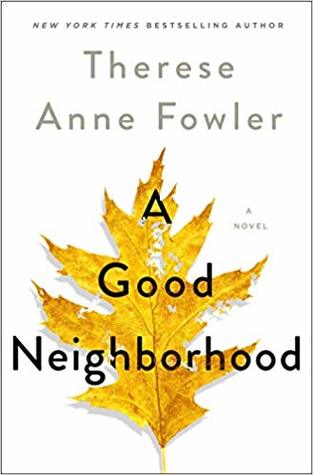
A Good Neighborhood, by Therese Anne Fowler*****

Therese Anne Fowler is a complete badass. I have never read her before, but you can bet your bottom dollar that I’ll read her next book. My thanks go to Net Galley and St. Martin’s Press for the review copy. You can buy this book now, and you should.

I don’t usually begin by discussing the narrative voice, but I’m doing it this time because it’s one of the most impressive aspects of this novel. The story is told in the second person, but the point of view shifts seamlessly from that of the neighbors that are friends with a key character—I’ll get there in a minute—to an omniscient narrative, and I never catch the shift; by the time I realize a change has taken place, we’ve been there awhile. So, one minute, the narrative will say things like “All of us thought…” and “Everyone knew…” but later, we’ll be told what a protagonist is thinking. This is a risky way to write, and she’s carried it off so well that I can only bow in awe.

The story is, to some extent, a modern day Romeo and Juliet. It’s a tragedy, and we’re told this at the outset. The neighborhood in question is Oak Knoll, an old, established one in North Carolina. Valerie Alston-Holt is a forestry professor with a deep dedication to the environment; her son Xavier is gifted. Xavier’s father was Caucasian, but died when the boy was small, so it is just the two of them, mother and son. The new folks next door, the Whitmans, are a blended family. Julia, the mother, was living a hardscrabble life as a single parent with her daughter, Juniper, when the wealthy, charismatic Brad Whitman, who was her boss, married her. They have a small daughter together, but Brad has also adopted Juniper so that they can be a real family. Julia can hardly believe her good fortune. Her standard of living has risen beyond anything she ever dreamed.

The tension is there from the start. The Whitman home is out of character in comparison to the neighborhood, a garish, over-the-top McMansion built on a large lot created by tearing down the existing home that had been there. And the outcome of the construction is that a tree—a beloved tree—on the Alston-Holt property next door—is now dying.  The forestry professor sees an attorney, and the battle is joined.

Despite the tension between the adults, Xavier and Juniper are drawn to one another. They are teenagers, upperclassmen in high school, and they’re both squeaky clean kids, serious students. Neither has been in a serious relationship before. As we see their romance blossom, the narrator reminds us that this won’t end well.

I began this novel using my review copy, and although I could see it was going to be good, I was falling behind my reading for unrelated reasons. I scooped up the audio version from Seattle Bibliocommons, and so I can tell you that the reader does a wonderful job, and the story is well suited to this medium.

Fowler is an experienced writer, and it shows. There are several lazy stereotypes she deftly avoids. The Alston-Holts are middle class, not struggling financially. (Here I think of the new book, Caste, by Isabel Wilkerson, who reminds us that only one in five African-American families is poor.) Brad Whitman, who is a complete horse’s ass, is a charismatic Christian, but he is not a preacher, he’s a businessman.

Of course this story has a great deal to say about race and wealth, and how society empowers us according to these parameters. But because the characters are so intimately developed, so brilliantly fleshed out, the message integral to the story never feels like a manifesto. And reader, I’ll tell you, I’m a tough old granny who rarely is undone by a sad story, but I grew a little misty at the end of this one, and I thought about it for quite awhile afterward.

Highly recommended in whatever form you enjoy.

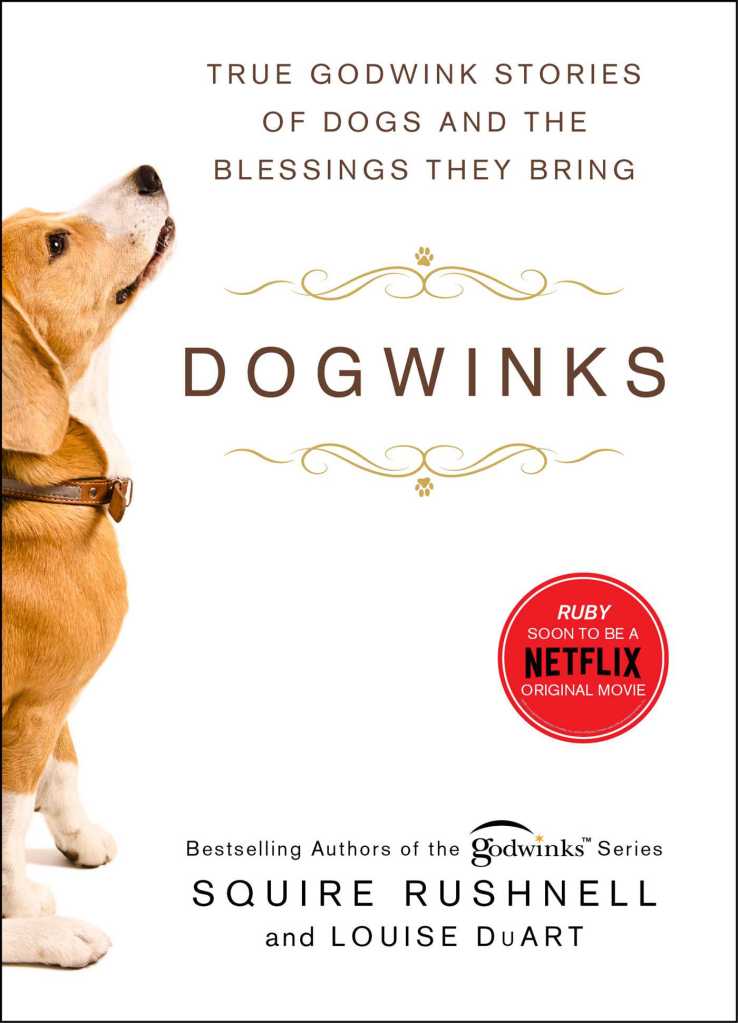
Dogwinks, by Squire Rushnell**

The old saw about not judging a book by its cover has come home to me in a big way. I was invited to read and review, and although I usually do some homework before accepting or disregarding such offers, I saw the beagle on the cover and leapt on the widget. And somewhere out there, at least one publicist must have my love of said dogs on file, because otherwise it would make absolutely, positively no sense to offer me this book. Dubious thanks go to Net Galley and Atria Books; I know you meant well. This book will be available to the public October 20, 2020.

Here’s the thing I didn’t understand when I signed on. This is not merely a book of dog stories, as I had supposed. Apparently, there is a “much-loved” series known as “Godwinks,” and so the title of this one is a play on that name. Since I read no religious material ever, it’s unsurprising that this fact eluded me.

Having foolishly committed myself, I tried to keep an open mind, because in addition to being religious in nature, this is also a collection of dog stories.  I want to be fair, and I hoped I could disregard the preaching and focus on the hounds.  But it’s impossible to enjoy these stories; the writing seems formulaic, the sort of thing you’d read in Reader’s Digest. The figurative language is stale, and the story arc of each is transparently manipulative. Guys, I just can’t.

By wild coincidence, my current reading includes Richard Dawkins’s The God Delusion, and I’m finding it to be better written and infinitely more agreeable than this superstitious bilge.

If you have a MAGA hat in your closet and a firm belief that your prayer group is protecting you from COVID19, then this collection may suit you down to the ground. Otherwise, I’d suggest you steer clear.