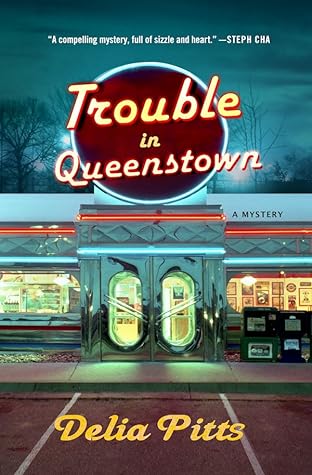
Trouble in Queenstown, by Delia Pitt***-****

Delia Pitts has been writing mysteries for quite some time, but she is new to me. In Trouble in Queenstown, she introduces hardboiled sleuth Evander Myrick. Myrick’s friends call her Vandy, and that helps to distinguish her from her elderly father for whom she is named; he’s in a memory care unit.

My thanks go to NetGalley, Macmillan Audio, and St. Martin’s Press for the review copies. This book is for sale now.

At first glance, I thought that this detective fiction was set in New Zealand. Queenstown, right? But in this case, the locale is Queenstown, New Jersey. The story opens with Vandy cleaning up a mess in her office just as Leo Hannah storms in and wants to see Evander Myrick. He assumes Myrick will be a Caucasian male, and that Myrick herself is a member of the cleaning staff.

Oops.

Hannah comes to hire Vandy in the wake of his wife’s murder. He knows exactly who did it, he tells her, and he wants her to prove it, starting with some surveillance. Vandy isn’t sure she should take this job, but she has to pay top dollar to keep her daddy in the best facility, so she reluctantly signs on. As the story progresses, there are numerous twists and turns, and the violence escalates. By the story’s end, three different people have tried to hire her for exactly the same case!

The thing I appreciate here is the way Pitts addresses cop racism. So many detective novels require the reader to suspend belief, to assume that every cop is fearlessly dedicated to finding out the unvarnished truth and arresting the perpetrator of the crime, regardless of race, ethnicity, or sexual orientation. But as Vandy conducts her investigation, Pitts keeps it real. At one point the detective speaks with a salon stylist that worked on Ivy’s hair, and he tells her that Ivy was afraid of someone at home. Vandy asks if he contacted the police.

“’The police?’ He jerked his neck, pursing his lips as if I’d farted. ‘Girl, you think the cops came here?’ He sniffed. ‘You don’t look like a fool. Maybe I read you wrong.’”

Sadly, the second half of the book doesn’t impress me as much as the first half does. I have a short list of tropes that I never want to see again in a mystery novel, and she trips a few, including my most hated one. I won’t go into details because it’s too far into the story, and I don’t want to spoil anything, but when it appears, I sit back, disengage from the text, and roll my eyes. Ohhh buh-ruther. As I continue reading, I can see who the murderer is well in advance, and the climax itself is a bit over the top, though without the tropes, I mightn’t have noticed this last issue.

In addition to the digital review copy, I have the audio. The reader does a fine job.

The more mysteries a person reads, the staler tropes become. I am perhaps more sensitive than most readers, having logged over a thousand novels in this genre. Readers that have not read many mysteries are less likely to be aware of, and therefore bothered by overused elements, and so this book may please you much more than it did me. But for hardened, crochety old readers such as myself, I recommend getting this book free or cheap, if you choose to read it. Newer readers may enjoy it enough to justify the sticker price.

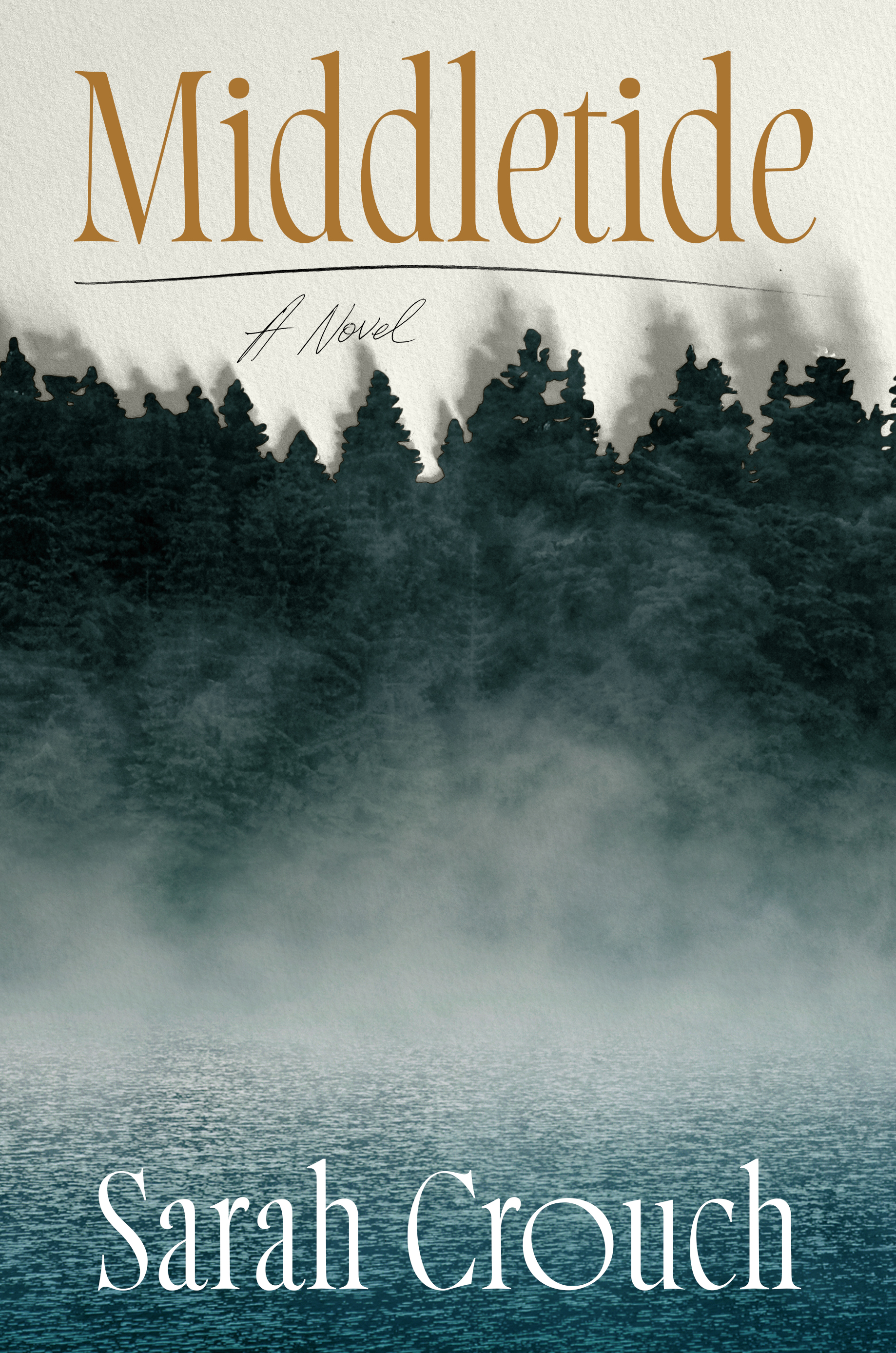
Middletide, by Sarah Crouch*****

Sarah Crouch makes her authorial debut with Middletide, a mystery set in the Pacific Northwest near where she grew up. Atmospheric and tense, it’s a damn fine start to what is sure to be a promising career.

My thanks go to NetGalley and Atria Books for the invitation to read and review. This book is for sale now.

The premise is that Elijah Leith leaves home when he reaches adulthood, eager to flee his violent alcoholic father, and make a name for himself in San Francisco. But his father dies, and when his first novel goes nowhere and he runs out of money, Elijah returns and takes up residence in the cabin where he grew up. He hopes to rekindle a relationship with his teenage sweetheart, but she has moved on, and since he was unreliable the first time around, she is reluctant to trust him anyway.

Then the cops find the body of Dr. Erin Landry hanging from a tree on Elijah’s property.

This whodunit is original and intelligently written. The pacing is perfect, and I never would have guessed the ending, at least not until nearly the end when the author spells it out. Elijah is not the most lovable protagonist, but Crouch develops him so that, although not a prince or a hero, he is nonetheless a decent human being by the end. Some will consider the solution to be over the top, but it’s only far fetched if the author fails to convince us that it’s true, and I am persuaded.

Those looking for a fun read to pack for a vacation, or just to occupy a weekend at home, here you go. Grab your book, your lemonade or your whatever, and head for your happy place. You can thank me later.

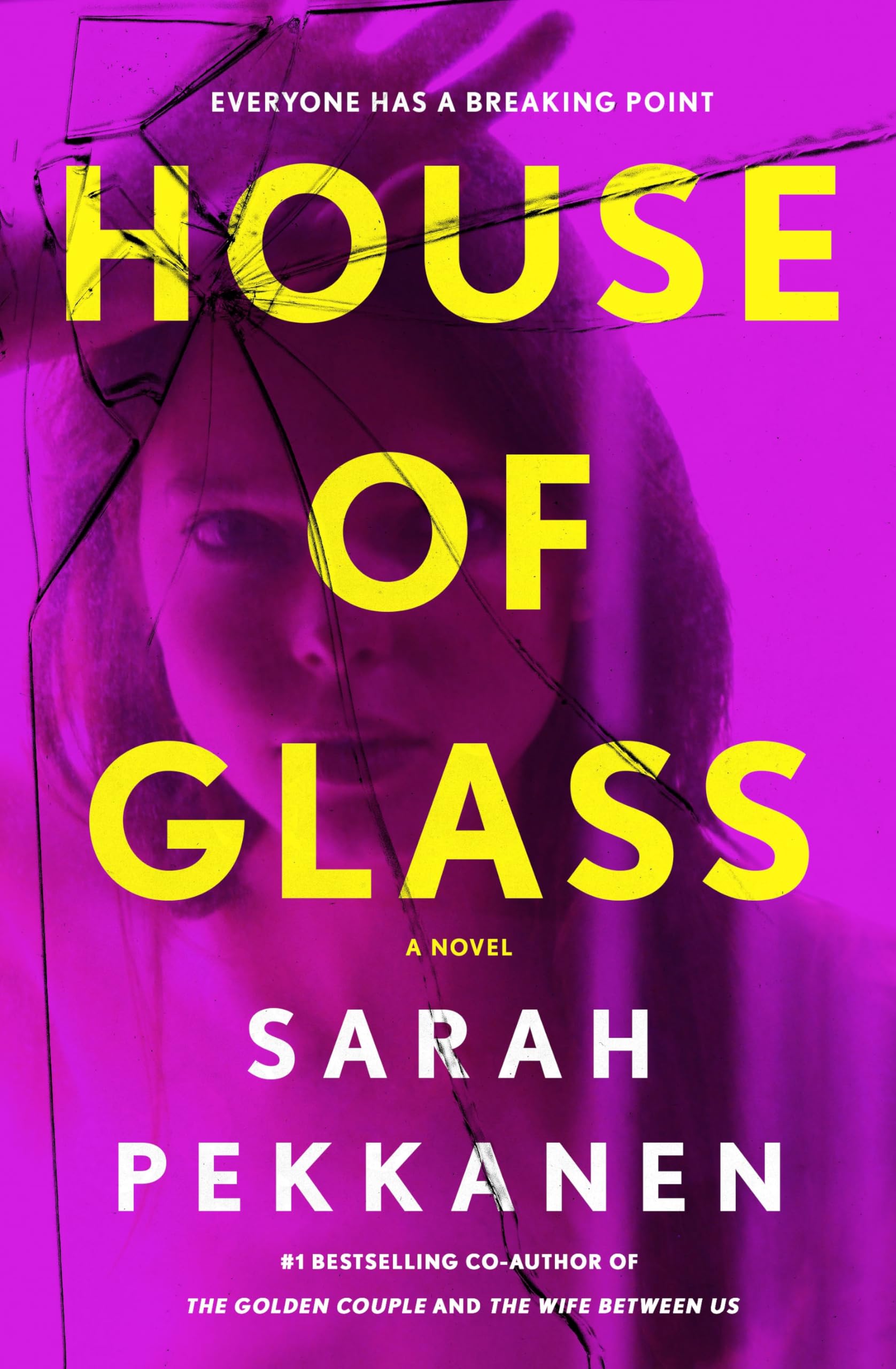
House of Glass, by Sarah Pekkanen***-****

3.5 stars, rounded upwards.

Author Sarah Pekkanen is known for writing psychological thrillers, and her newest novel, House of Glass, is a real page turner. My thanks go to NetGalley and St. Martin’s Press for the invitation to read and review. This book will be available to the public August 6, 2024.

Our protagonist is Stella Hudson, and she works as guardian ad litem, which is a professional whose job it is to represent the best interests of a child when he or she is the subject, or an important participant in, a court case. Stella’s father figure and mentor is a judge, and a case has come up that he feels Stella is uniquely qualified for. It’s a divorce case, two wealthy individuals squabbling over a child. The child, Rose Barclay, has experienced a great trauma that has left her mute. She saw her nanny fall (be pushed?) out of the attic window and die, and she hasn’t spoken since. By convenient coincidence, Stella also experienced the same condition after a childhood trauma of her own; this is why Charles, her mentor, has asked her to serve.

I’ll tell you right now, I am not terribly impressed with this book. A protagonist who’s been traumatized in ways related to her task at hand is fast becoming a trope, and I’m ready to be done with it. Rose is a prodigy, brilliant in every way, which is also overused, and very convenient for an author that doesn’t want to deal with developmental stages even though the child is a major character. Also, Stella’s job does not require her to solve the nanny’s murder, that’s the job of the cops. Yet the book leads us to believe that this is part of a guardian ad litem’s work.

But the most annoying facet of this mystery is that I had it solved before the 20% mark. That’s just straight up ridiculous. If I had solved it because I am so darned clever, that would be one thing, but I feel as if my cat could probably have done the same. First, a suspect that’s identified very early in the story is almost never the killer, and then of course, the person least suspected by the other characters is often the one that did it. And so at first I waited hopefully for some new spin or plot twist that would make me change my mind, but it never damn happened.

Consequently, I was prepared to give this book a rating of 3 stars, which is lower than my average, but one thing stopped me. I noticed that, however cranky I felt about this transparently obvious mystery, I didn’t want to stop reading it. I could have quit at the halfway mark, skimmed the ending to be certain I was right, and then written my review, yet even though I knew exactly how it would shake out, I still wanted to see/hear the rest of the story.

I was fortunate in having both the digital review copy and the audiobook, and the narrator, Laura Benanti, does a first rate job. That’s worth something, too.

Because of the fact that Pekkanen’s mysteries are beginning to feel formulaic, I am probably finished with this author, but I also think there are a great many readers that will like it. Nevertheless, my recommendation to you is to get it free or cheap, rather than to pay full cover price.

Instrument of Darkness, by Charlie Parker*****

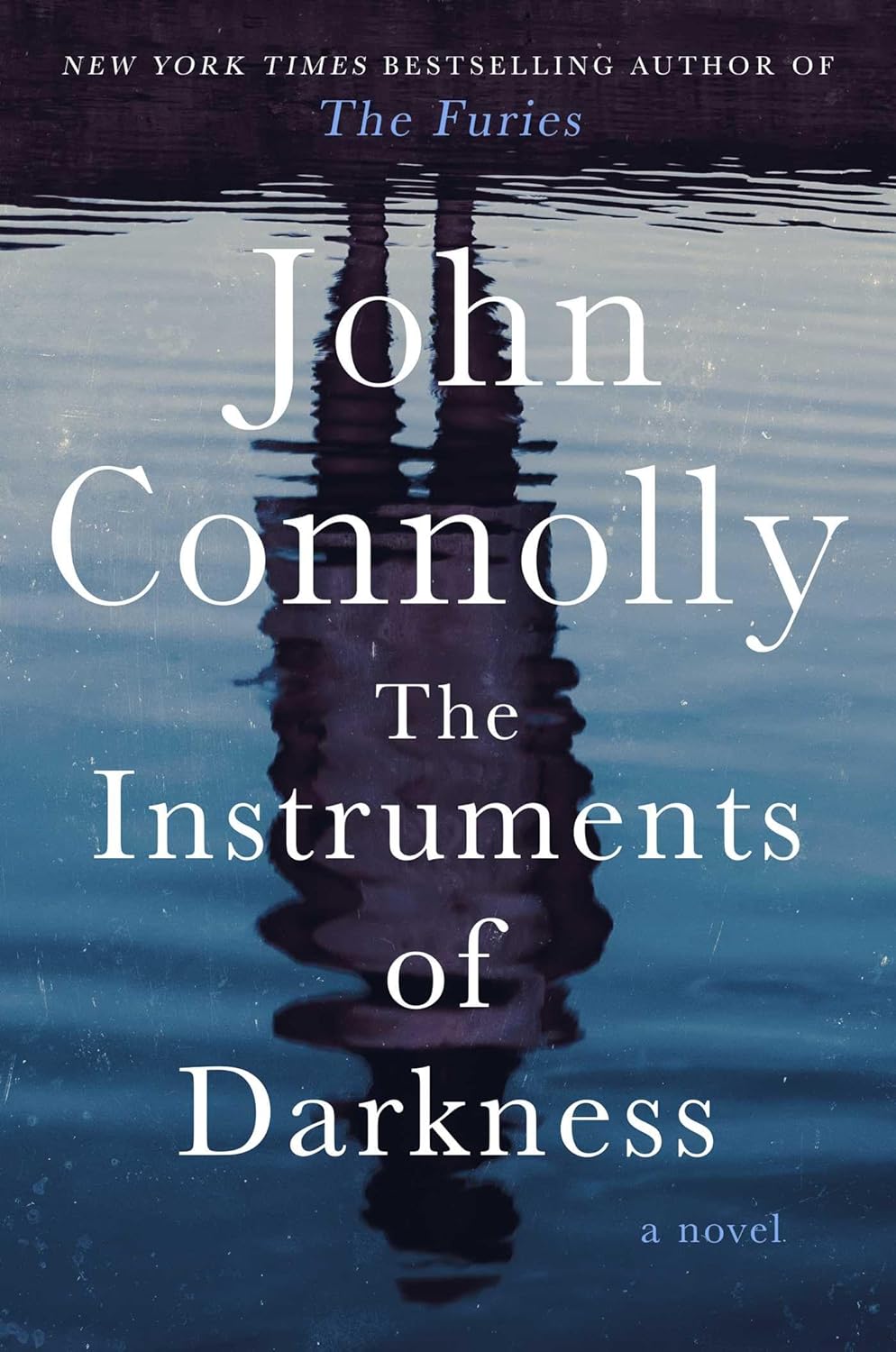
It’s a funny thing about long running series, how some of them become stale after a time while others just keep building. The Charlie Parker series by John Connolly is one of the latter, and with every addition to it I am more riveted, more amused, and more engaged than I was before. The Instruments of Darkness is the 21st in the series. My thanks go to NetGalley and Atria/Emily Bestler for the review copy; that said, this is one of the rare times that I would have laid out full jacket price if that was the only way I could obtain a copy.

This book is for sale now.

Charlie Parker is a former cop turned private detective with a terrible past. He stepped out to buy a newspaper one morning and returned to find his wife and small daughter savagely butchered; the guilt at not being home to defend them was overwhelming, if irrational. He dedicated himself to finding the person that had done it, and making certain they never did it again. Since then, he’s served as a professional snoop on behalf of other wronged persons. Because he often upsets people with money, power, and twisted morals, he often brings along his own muscle when he works, or in some cases, contracts with them to bodyguard his clients during the process. So it is this time.

The job has to do with a young mother whose baby has been kidnapped from its crib during the night. Colleen woke from the first sound sleep she’d had in forever only to find the nursery window open, and Henry gone from his bed. Later her husband Stephen finds a blanket in the trunk of her car, soaked in blood, which, when analyzed by law enforcement, turns out to be the boy’s blood. Stephen tells the police that he is sure she must have done it, and he leaves her.

But she didn’t. Of course not.

In his last few Charlie Parker novels, Connolly has added touches of horror and magical realism, and it’s only made his stories better. In particular, he is adept at sentient houses or other buildings. Sometimes it really is the structure; at other times there’s some sort of being that lives there, unseen. In this case it’s an old house built from a Sears Roebuck kit over a century ago, and so he names it “Kit No. 174,” and after it appears a time or two in the story, generally as the opening of a new chapter, I get the shivers just seeing the name. The narration tells us, “No one had ever spent long in it—or no one had ever lived in it for long, which is not the same thing. No, not the same thing at all.” There are some minor references to other houses that have appeared in the series, and these will delight the faithful readers that remember them; it did me. However, newbies that are just starting this series will be fine.

The recurring characters shine brightly here. The attorney that often hires Parker, Moxie Castin, opens the book, and we get a resonant character sketch:

“Moxie Castin was easy to underestimate, but only on first impression. He was overweight by the equivalent of a small child, didn’t use one word in public when five others were loitering nearby with nothing better to do, and had a taste for ties reminiscent of the markings of poisonous insects or the nightmares of LSD survivors…He lost cases, but not many, and his friends far outnumbered his enemies.”

Other recurring characters are the Fulci brothers, and when I see their names, I smile. They’re described as “two wrecking balls in human form.” Another is Sabine, a shy, tortured psychic that just wants the dead to go away and leave her alone, and best of all, Angel and Louis, a lawless couple of friends—the word “couple” applies in two different ways here—that Parker hires when things get spicy. If I smile when we are joined by the Fulcis, I beam when I see Angel and Louis. And in a nod to series regulars, there’s a point when Parker simply tells someone, “They’re coming,” and he doesn’t say who, but of course, we know exactly who. (Later he explains them for the uninitiated.) There’s a favorite passage of mine in which Parker is concluding an interview, done in a restaurant, and when he and the other person emerge, she sees them and asks,

“Are they with you?’

“They’re my associates.’

“They don’t look like private detectives. Don’t take this the wrong way, but they look like criminals. If they came into the store, I’d lie down on the floor with my hands behind my head.’

“Sometimes that’s precisely the effect we seek.’”

Oh, there’s so much more, but you need to find these things for yourself. The story is on the gritty side, but not nearly as much so as some of the others in the series. In fact, I generally have a policy of not reading this series at bedtime, lest it enter my dreams. I violated that policy once, and I did indeed have a dreadful night afterward. And so I behaved myself until I hit the last twenty percent, and at that point, I knew I would read it until it was done, regardless of the time or proximity to lights out, because I had to see the resolution. I had guessed, long before, whodunit, but that felt beside the point. So I stayed up and saw it through…and I’m not a bit sorry.

Highly recommended to those that love the genre, and especially to Charlie Parker buffs.

Summers at the Saint, by Mary Kay Andrews****

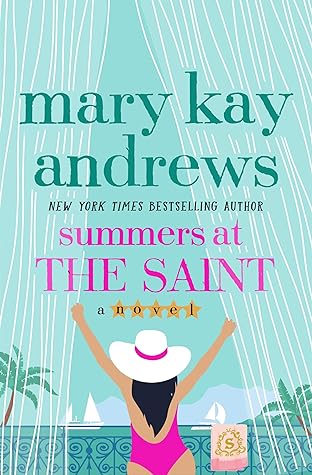
Summers at the Saint is the latest novel by veteran author Mary Kay Andrews. I am not usually a fan of what I think of as light and fluffy books, but over the last couple of years, I’ve developed an appreciation for this author’s work. This story centers on a fashionable beach resort hotel and those that run it, with the focus primarily on the women. It’s a good summer read—not a bad choice to take to the beach, actually. My thanks go to NetGalley, Macmillan Audio, and St. Martin’s Press for the invitation to read and review. This book will be available to the public May 7, 2024.

Our protagonist is Traci Eddings, the young widow of Hoke Eddings, heir to the Saint Cecilia resort. Traci has inherited part of the business from her late husband, but there is a power struggle in play as the book opens. The old man is dying, and the surviving heirs are scheming. The business seems to be on the rocks, or near to it, and Traci can’t figure out why. She makes several smart changes, hires good people, and yet…

We have interesting side characters. Parrish is Traci’s niece, whom she persuades to postpone her studies for one more summer as Traci implements the changes that are needed. We have the new cook, Felice, as well as Livvy, a capable young woman that Traci hires away from the diner where she is waiting tables; and we have Livvy’s mother Shannon, who used to be Traci’s best friend. Shannon completely dumped Traci many years ago, leaving Traci bewildered and hurt; she still feels that way. Lastly we have Whelan, who is working at the Saint as a pretext while he tries to unravel the circumstances that led to the death of his younger brother at the resort’s pool many years ago.

The book’s strongest aspect is the side characters, particularly Felice, Shannon and Livvy. Other characters are one dimensional, either entirely good or entirely awful. Rather, this is a plot based book. There are a great many moving parts, with a blend of genres that include romance, mystery, beach reads, women’s fiction, and contemporary family drama. It is in weaving the many pieces of this story that Andrews’s experience shines through. If there is a plot element that conflicts with another, or that is simply illogical, I didn’t spot it. At the end, everything and everyone is accounted for; in fact, I might have preferred not to have every single aspect resolved, and every positive character quite so perfectly happy. I seldom argue in favor of ambiguity, but in this case, it wouldn’t hurt.

I was fortunate enough to receive both the Kindle and audio versions, and once more, Kathleen McInerney does a fine job of narration with all of the women characters and the internal monologue. Her voice isn’t deep enough to voice the men’s characters well, and I suggest adding a second, male narrator next time around.

The story held my attention quite nicely as I did my morning bike ride, and I recommend it to Andrews’s loyal readers, and to those that enjoy a good beach read.

Pay Dirt, by Sara Paretsky*****

Sara Paretsky is a badass author with a badass protagonist. Her hero, Vic Warshawski, is a rough and ready private eye, and though based in Chicago, she sometimes—as now—finds herself elsewhere when duty beckons. Author Paretsky is one of the three that pioneered the hardboiled female private eye subgenre; the first in this series, Indemnity Only, came out in 1982, over 40 years ago, and that is how long I have been reading them. And though I was lucky to receive a review copy, thanks to NetGalley and William Morrow, this is one of those rare books that I would have paid full price to read if that was the only way I could get it.

This book is for sale now.

This story finds Vic in bad shape, both mentally and physically. She has attempted to help a student of her boyfriend Peter’s, a trans youth whose father blew out the kid’s brains rather than accept their new identity. The brains stuck to Vic, and the experience sent her reeling emotionally. She’s been forgetting self-care, not eating or exercising. What she needs is rest and quiet.

But that’s not how it goes.

Her godchild Bernie persuades Vic to attend a basketball championship game in Kansas. A group of them will be going down there; it’s just what Vic needs, she says. Reluctantly, Vic agrees, but once they are there and the game is over, one of the parties disappears, and Vic is enlisted to find her. When Vic finds the missing basketball player, she inadvertently finds a dead body. The cops in Lawrence, Kansas as well as the FBI like her for the killing. It’s so convenient to have a mouthy, street smart outsider blunder in; hopefully, they can pin it all on her, and then life will go on as it has been. And so Vic must stay behind because she’s been told not to leave town, but also in order to clear her name.

Now, this is one of the elements that generally irritates me in most mysteries; the whole clearing-my-name trope is desperately overdone. There’s another trope that shows up later in the story, but I won’t share it here because it’s a spoiler. But for every rule, there is an exception, and in the case of both tropes, Paretsky breezes through, and I barely bat an eye; this is because the characters are so real to me, and the situation they’re in is so immediate, that I blow it off so I can find out what happens next.

And as is so often the case, Vic Warshawski finds herself up against the town’s wealthy power brokers, who have a vested interest in not having the real killer caught. As for Vic, she makes friends with a few people that have no wealth and no power, but the small ways they assist her make all the difference.

Once she solves the crime, persuades the local police and others that she is innocent and that the blame lies with the men in the suits, are they hauled off in shackles? Don’t hold your breath. As one of her new pals reflects, “That is justice in America, plain and simple, before you wrap it up in a pretty package of Constitutional rights that only the rich get to have.”

The thing that sets this particular book apart from the other very good mysteries I’ve read recently is the development of the protagonist. She’s vulnerable because of her earlier trauma; her boyfriend left the country on business, and he hasn’t been responding to her texts. She is miserable, and she’s isolated. But as the pressure builds, Warshawski delivers. The last quarter of this novel is impossible to put down, and even before that, I set aside my usual rotation of books, because I wanted to read this, and only this.

This novel is written in such a way that a first time reader can jump into the series, but chances are good that once you do, you’ll reach back for some or all of the others. Highly recommended to those that love gritty, rough and tumble detectives; feminists; and those that lean to the left.

Little Underworld, by Chris Harding Thornton***

Chris Harding Thornton debuted in 2021 with Pickard County Atlas, a book I loved so much that I’ve had a finger in the wind ever since, hoping to score a galley of her next book. This is it. Sadly, I don’t love it the way that I did her first endeavor; perhaps I just loved the first one too much.

My thanks go to Net Galley and Farrar, Strauss and Girard for the review copy. This book is for sale now.

Our protagonist is Big Jim, a former cop now working as a P.I. He and his friend Frank, who is still a cop, take a man named Vern out to the river to beat the crap out of him for molesting Jim’s child. The plan is to smack him around and run him out of town, but at the last minute, Jim has a change of heart and snuffs him; Frank covers for him.  This is how the book opens.

My problem is that a great deal of information gets dumped at the outset, primarily characters, and by the thirty percent mark, I am still trying to keep them straight. It took me a ridiculous amount of time just to remember that Jim is the main character. I can’t recall the last time something like this has happened. There is rampant corruption in Omaha, Nebraska during the era of Prohibition, and there are a lot of local politicians whose names get thrown into the melee early. All of them are male and Caucasian, and while I believe that’s historically accurate for the time and place, it doesn’t help me keep them straight. By the halfway mark I have a better sense of who’s who, but I have reached a state where I have to force myself to read the book so I can write the review.

I would have liked to see at least one female character developed in here somewhere.

The pluses here—and there certainly are pluses—have to do with the author’s abundant skill as a wordsmith. This is grit lit, to be sure, and those with sensitive dispositions might want to steer clear. For me, though, when a character is described as “a guy whose canned meat had half the city’s fingers in it,” I love it. There are a few other moments of very dark humor that run along the same rails. What’s clear is that life is cheap, and Prohibition Omaha is a violent, vicious place to be. At one point, Jim wonders if there’s a single building in town that doesn’t have eight or ten corpses concealed in the concrete; in another, he reflects that “there wasn’t much risk of finding anyone innocent in Omaha.”

The second half of the story is better than the first half.

So there you have it. My advice is that if you want to read this book, get it free or cheap, but don’t pay full cover price for it. Meanwhile, I still have mad respect for this author; I look forward to seeing what she produces next.

Darling Girls, by Sally Hepworth****

Sally Hepworth writes creepy, spooky stories involving families, and I have friends that swear by her, but this is the first of her books that I’ve read. My thanks go to Macmillan Audio, St. Martin’s Press, and NetGalley for the invitation to read and review. This book will be available to the public April 23, 2024.

Jessica, Norah and Alicia are closer than most sisters, even though they are not biologically related. All three spent most of their formative years at an Australian foster home called Wild Meadows, under the gimlet eye of Miss Fairchild, an abusive foster parent. Miss Fairchild was adept at keeping up appearances, but once a visitor—an infrequent occurrence—was gone, the place got dark. The woman was cruel and unpredictable, dreaming up horrifying punishments for even slight perceived infractions. Open rebellion was unthinkable. But it was when she began accepting babies that they resolved to turn her in.

Now all are grown, but they remain tightly bonded, and the call comes in: bones have been found under the foundation of the razed house. They must all report to the local police, which in turn means returning to the vicinity of Wild Meadows.

I can see why this author has such a loyal following. The way the narrative flows is flawless, and although we transition often from the past to the present as well as between the three girls’ stories, there’s never even momentary confusion. The list of characters is kept manageable, and all of them are believable. I begin reading via audiobook because that’s the version that was offered me, but once I began, I asked for and received the digital galley also. Usually this is a necessity in order to keep up with what I am hearing, but I scarcely needed it. Narrator Jessica Clarke provides the perfect listening experience.

For me, the joy of this well written novel is somewhat dampened by the horrors of the girls’ experiences. The child abuse is so cruel, and so specific that I sometimes stopped listening early and went away with a ball of lead in my gut. I suspect that this is something most likely to be experienced either by those that were themselves abused as children, or—like me—those that have worked with such children. Although part of me still wanted to know what came next, another part of my thought that if I wanted this kind of nightmare, I should just go back to work!

Reader, you probably know what you can read and what you should stay away from. If this sort of novel is unlikely to haunt you, go for it. I doubt there are many that can do this thing better. With that caveat, this book is recommended to those that enjoy the genre.

The Hunter, by Tana French*****

In 2020, Tana French gave us The Searcher, the first in the Cal Hooper detective series. By that time I was already an established fan, but I loved that book particularly well, for reasons I’ll revisit in a moment. Now we have the second in the series, The Hunter, and if anything can reduce this crusty old English teacher to a blushing fan girl, this is it. Two books in, this is already on my short list of favorite series. My thanks go to NetGalley and the Penguin Group for the review copy. This book will be available to the public Tuesday, March 5, 2024.

The series debut introduced the characters, with the protagonist being a retired Chicago cop that found this tiny Irish village on vacation and, needing a new home far from his ex-wife, yet affordable, discovered a bargain fixer of a home and decided to stay. The story’s main problem revolved around a nearly feral tween that kept popping up at Cal’s place. The scrappy little stinker that was relieving Cal of food, occasionally, and doing other unsettling things turned out to be a girl; her name is Teresa, but she’s known as Trey. Her family was in dire straights following the departure of Trey’s father; her brother had left, intending to return, but never had. The mystery was where Trey’s brother had gone, what had become of him, and why. In the interim, she became greatly attached to Cal, who enjoyed her company and taught her some woodworking skills, but also kept a careful distance, lest rumors start and grow.

Now Trey is a bit older, and she is more civilized. She is close to both Cal and Lena, the local woman that Cal has been seeing. But as life settles into a civilized hum, one that would be comfortable had climate change not created a drought that has local farmers at the near end of their wits and their bank accounts, the unexpected happens once again: Johnny Reddy, Trey’s no-account father, has returned. Cal is prepared to step back, if need be, in case Trey wishes to bond with her actual dad rather than himself. Meanwhile, Johnny vows to visit Cal with some local moonshine, and “make a night of it.”

“Trey says nothing. If he does that, she’ll get Cal’s rifle and blow his fucking foot off, and see can he make his way down the mountain to Cal’s after that.”

Johnny never succeeds in bonding with Cal, who doesn’t like the look of him. “Johnny gives him the urge to pat him down and ask him where he’s headed. There are guys like that, who flunk the sniff test just going to the store; it’s a good cop’s job to work out whether they’re actually doing something hinky, or whether it’s just that they will be sooner or later, probably sooner.”

The village is a tiny one, and outsiders are few. Everyone in the vicinity knows that Johnny’s back; everyone wonders what he’s up to. They haven’t long to wait; he’s brought a man with him, one whose family once lived here, or so he says; and the man is interested in seeing if there’s gold on some of the local properties. “He has a rich man’s smile, easy and understated, the smile of a man who isn’t required to put in effort.”  Now the question is whether this “plastic Paddy” is a shyster trying to rip off the locals, or if he is someone that Johnny is seeking to fleece. Meanwhile, Trey has a different agenda, a private one.

The thing that makes this story so much better than your standard mystery is the characterization. If you are in search of a thriller that is all page-turning action, this isn’t your book. However, if you love a layered story with complex, convincing characters, this is for you. I said in my previous review of the first in the series that Trey is what makes an otherwise solid story a golden one, and that’s even truer here. One could even argue that it’s really her series, with Cal existing as scaffolding. Time will tell.

In particular, though, anyone that works with, or has worked with at risk youth cannot, must not miss this story. French has taken hold of my heartstrings hard, and I don’t want her to let go. Highly recommended.

Finlay Donovan Rolls the Dice, by Elle Cosimano*****

“I’m telling you, Finlay, this book is good. This whole SERIES is good. The plots may be a little far-fetched, but these characters are so real! It’s like they just jump off the page!

Finlay Donovan Rolls the Dice is the fourth in the raucously entertaining series by Elle Cosimano. My thanks go to the Minotaur and St. Martin’s Press Influencer Program and NetGalley for the review copy. It will be available to the public Tuesday, March 5, 2024.

At the end of the previous book, Javi, Finn’s nanny Vero’s boyfriend, was abducted by mobsters that wanted to collect a gambling debt incurred by Vero. In this one, the two women plan to travel to Atlantic City to rescue him, with the cover story of needing time to unwind. However, things snowball, and before you know it, almost all the people they hold dear—and a few people that they don’t—are headed there, too. What follows is a riotous adventure with a lot of moving pieces. I love it.

More than any other, this installment has been controversial among reviewers. In the series debut, Finlay is an innocent, entirely law abiding single mother strapped with bills, work, and child care issues. She’s in the midst of a contentious divorce and her soon-to-be ex is an attorney, which makes Finlay’s efforts an uphill battle. She’s easy to relate to, and when, through no fault of her own, she finds herself with a corpse in her car, it seems entirely believable.

With the second and third books in the series, Finn, accompanied by the more street smart Vero, find themselves in deeper trouble. Just as they mop up one mess, another arises, until there’s a sort of house-that-Jack-built tower of problems that see both women in increasingly tenuous circumstances. They break the law once as a life or death matter, but then cannot safely come clean, so they do their best to put it behind them, but someone or something comes along to threaten the modest safety and security they’ve begun to enjoy. Bodies and crimes pile up, and now, with the fourth installment, the author can’t reasonably convince the reader that whatever happens next is purely an oopsie. Instead, she has to draw on other possibilities. Personally, I like it.

Finn and Vero are chasing down the underworld figures that they believe have abducted Javi, and there’s considerable risk involved. A couple of times I literally draw in my breath at the risks they take. Add to this the need to fabricate excuses to tell the myriad members of the retinue that have descended on Atlantic City with them, and it’s an ambitious undertaking.

In this circumstance, I no longer require realism. The whole thing takes on the flavor of a comic caper, what with the clown car full of women, including Finn’s mother; Finn’s ex-husband, who is in charge of the children; and various others (I am being deliberately vague here) that descend on them once they arrive. To put it another way, if Stephanie Plum and John Dortmunder—or if you prefer, Bernie Rhodenbarr—had a baby, she might be Finlay Donovan.  

If you need a good laugh, this book is for you; however, with this series, you really should begin with the first in the series, Finlay Donovan is Killing It. With just four in the series (and the audio is outstanding, too,) this will be a quick and hilarious adventure. What are you waiting for? Jump on in.