
Angels Burning, by Tawni O’Dell*****

angelsburningTawni O’Dell is an experienced writer, but she is new to me. I was attracted to her working class setting and protagonist Dove Carnahan, the fifty year old police chief in a tiny Pennsylvanian coal town. I received this galley free for an honest review thanks to Net Galley and Gallery Threshold Pocket Books, and I liked it so much that now the rest of her work, some of which has been featured in the Oprah Book Club, is on my to-read list. Dispensing hilarity and palpable real life truths in equal measure, O’Dell is a keeper.

The strong characterization and the stirring immediacy of this storyline had me at hello. O’Dell’s genius and deft skill are shown by her capacity to develop her small town characters into flesh, bone, and sinew. We know Dove as if she were in front of us; we know her sister Neely; we even know Neely’s dogs.

In her 27 years in law enforcement, Dove has never had to deal with a murder before, and this one is particularly nasty. Camio Truly was just 17 years old when someone smashed her head in, dropped her down a sink hole and set fire to her body. Naturally, this murder isn’t Carnahan’s job; of course not. She has two deputies, one office worker and a busted vending machine. No, the larger and better funded neighboring cop department will deal with this problem. Yet in such a small town, every problem leads into every other problem, so she’s up to her neck in it in no time anyway.

The victim was one of many children in the Truly family. The Trulys are local rednecks whose days run into one another lulled by a steady dose of television viewing. The baby’s bottle has something brown and fizzy in it. Since the narrative is in the first person, Dove tells us herself:

“I marvel as I always do at this very specific kind of American poverty. The Trulys by most people’s standards would be considered poor, yet they were able to buy everything here that has ended up as trash in their front yard. They have a $3,000 TV and the latest phones, and I can’t imagine what they spend monthly on beer and cigarettes, but they couldn’t afford a laptop for their daughter to help her with her schoolwork or a copy of Psychology for Dummies.”

O’Dell gets some good ones in at the expense of this generally ambition-free family, but she also avoids turning them into a caricature. Eldest son Eddie lives away from the family home now, and when she talks to him about his last visit from Camio, she recognizes Eddie’s own traumatic past, which includes the deaths of two brothers and the horrors of Vietnam.

And in her interrogation of Shawna, the perpetually neglectful mother of the Truly brood, she throws us some surprises, establishing dignity and gravitas for this woman stoically enduring disappointment, heartbreak, and perpetual discouragement.

Interwoven into the murder mystery are two subplots that are more important than they appear. One is that her brother Champ, who’s been gone for twenty years, suddenly surfaces with a son; the other is that the man that spent a long stretch in jail for the murder of Dove and Neely’s mother is out of prison and harassing Dove endlessly, claiming that she sent him to prison knowing that he was not guilty.

Put it all together and it’s so much more than the sum of its parts. In fact, it’s pure gold. Janet Evanovich may have to move over and save a stool for a new regular at the Sassy Murder Writers’ Saloon. This title is super smart and the pages turn rapidly, leaving the reader with a sense of loss when it’s over. Whether you buy it for a beach trip or to curl up by the fire, this one’s a must-read, and it comes out January 5, 2016.

The Children’s Home, by Charles Lambert*****

thechildrenshomeLambert is a brilliant writer, and his absorbing new novel, The Children’s Home, is the best literary fiction I have read in some time. Thank you to Scribner and Net Galley for the DRC, which I received free in exchange for an honest review.

We start with Morgan, a bitter recluse rattling around in his immense family mansion, afraid to leave its walls for fear someone will see his face and ridicule him. His sister Rebecca runs the family business, and she hires Engel to serve as housekeeper and cook to him. Moira and David are two children that magically appear at his estate. Unlike normal children, they don’t leave messes lying around, whine, or need to be cleaned up; Morgan notices that whenever he wants to concentrate or not have the children around, they seem to vanish, appearing again when wanted.

Motherhood should be so sweet.

But back to the manse. Soon more children come, first in ones and twos, then in waves. Eventually Morgan can’t tell how many children are on his estate. Investigators show up eager to find that he’s breaking the law; they sniff around and leave without seeing anything. And to the burgeoning household a doctor is added. Morgan wants someone discreet and trustworthy to deal with his medical issues, and soon Dr. Crane is not only making house calls, but has a room of his own. And subtly, the power dynamics start to shift. A seismic change is in the wind.

Morgan doesn’t dare leave the estate. At first, the reader believes it is because he is afraid his appearance will be ridiculed, but then others also mention fear for his safety should he leave the walls of his property. And eventually we see the flipside of all this bitter privilege, the big house with the on call servants and medical care. Because someone has to pay in the end; there’s not enough wealth to go around when the few get so much of it, and we learn what is taking place outside those walls. That said, this is not a simple nod to social justice, but a juicy tale full of surprises.

I won’t take you any farther than that, but I must say that Lambert is a writer of undeniable talent. The Children’s Home is brilliant literary fiction. The allegory is a mite on the heavy handed side, but it doesn’t matter when the spell woven is as magical as it is here. I was expecting something along the lines of Miss Peregrine’s Home for Peculiar Children, but this is so much more than that.

Parents may want to be aware that there’s a great deal of violence inherent here. For some adolescents, it will be all the more delicious for it, but it is written for an adult audience, and some parents may want to read it themselves before passing it on to younger folk.

When you come down to it, you want to read it anyway. It comes up for sale January 5, 2016, but you can order it now, and you know you want to!

Alien Blues, by Lynn Hightower*****

alienbluesAlien Blues, the first in the David Silver series, was originally written in the 90’s, when I was busy returning to school, having my fourth child and raising the first three. I mention this only because I am dumbfounded that I missed this amazing series the first time around, and that’s the only possible reason; I was too busy trying to find a few minutes in which to sleep back then. Thank goodness Open Road Integrated Media has re-published it digitally. After reading and being really impressed by Flashpoint, another of Hightower’s terrific novels, I searched Net Galley for anything else she had written that was available to read and review, and I scored this little treasure. It’s a brave, bold genre cross of detective fiction and science fiction, and if I can read the others in the series, you had best believe I will.

First, of course, we have a murderer. Machete Man, as he is known, enjoys hacking his victims and their belongings into portable pieces. A nice touch is the would-be victim that gets away and can describe him. He hacks up all her stuff, and we know that if she hadn’t been as quick as she was, she would have been among the sliced and diced items in her bedroom. And I find the scene that occurs later between David’s wife Rose and Machete Man spectacular.

Into the mix we have the murder of an Elaki. Elaki are another species, but to a certain extent they work and interact with humans. They shimmer; they walk on fringe; they have flippers instead of hands. Roof tops are terribly dangerous, because they are slender and lightweight, and can easily blow away in a breeze. They are shorter than humans and because they have no legs, they must fold themselves to ride in an automobile made for humans. Their own are specially adapted. But we learn all these tidbits as we go along. Hightower doesn’t waste a lot of time describing them, but makes everything we learn part of the action. And so String, an Elaki that has never fit in well with his own folk, volunteers to aid in the investigation; some suspect his motives are other than what he says.

Lurking in the background is David’s traumatic past. He grew up in a ghetto, the tunnels underground known as Little Saigo. The tunnels were invented originally to house the wealthiest members of society from Earth’s degraded environment; imagine a carefully controlled housing development where there is no fear of skin cancer or other environmental hazards. But humans tend to crave the sun, and when the rich didn’t want to buy in, the project was never completed. Squatters populated the many half-completed nooks and crannies in the enormous subterranean catacombs, and eventually an implant similar to a microchip was developed so that those that lived there could identify one another, achieving a measure of safety from those that came to pillage and wreak chaos among the vulnerable.

David has not lived in Little Saigo for a long time; he has a modest but comfortable home, a wife, and darling daughters. But ultimately, he is forced to return to Little Saigo, home of his worst nightmares, in order to solve the crime.

It’s riveting.

Hightower is brilliant. The Elaki are the most memorable nonhuman characters in literature since Spock, and her female characters defy all possible stereotypes. Her pacing, character development, and capacity to develop setting that we can nearly see and breathe is outstanding. She has won the Shamus and her work has been included in the New York Times Most Notable Books list. She’s been published on four continents, and thanks to Open Road Integrated Media, those of us that missed her the first time around can now read her work digitally. And it’s available for sale now.

Highly recommended!

The Travelers, by Chris Pavone****

thetravelersChris Pavone is rapidly becoming a huge name in the psychological thriller genre. He is king when it comes to suspense; I was lucky enough to read the DRC for The Accident, his very successful mind-bender that came out in 2013. I was impressed enough by it that I also picked up his first novel, The Expats, on my annual pilgrimage to Powell’s City of Books in Portland. And so when I saw this little gem dangling on Net Galley, I wanted it right away, because Pavone had already shown me twice that he is a strong writer. Thank you Net Galley and Crown for the terrific read; I got this free in exchange for my review.
Will Rhodes works for a travel magazine, a journalist in a dying industry. He flies hither and yon, sampling food at promising little bistros; he knocks around the European countryside searching for the perfect photo, the little out-of-the-way piece of paradise no one else has written about. And while he is abroad, he makes a mistake, one that will come back to disrupt his life immeasurably. That’s how most spies are recruited: not out of patriotism or any ideological sense of mission, but in order to keep one’s darkest business concealed. Play it our way, friend, and nobody’s gotta know what you did.

Will’s boss Malcolm is also his closest friend. Well, he thinks so, anyway. There are a few things Will doesn’t know about Malcolm. He doesn’t know about the secret room. He doesn’t know to what extent he’s being monitored.

Will and his wife are trying for a baby, but there are things about Chloe he doesn’t know, too.

At the story’s outset, I began to feel as if the book was more about who sleeps with whom, and who knows what about each other’s sex life, than it was a thriller. I was ready to throw up my hands at one point, but I knew Pavone’s work and trusted that there must be a reason for all this, and oh my, yes there is. We can’t get to the spy versus spy material without going into all those hotel rooms.

The ending was deeply satisfying, if a trifle unlikely. We believe it could happen this way because Pavone has sold us the rest of the story, and so we follow him up one rocky cliff side and down another to the denouement.

This captivating thriller is available for purchase March 8, 2016. Put it on your list.

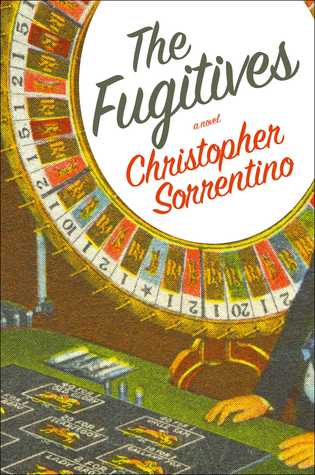
The Fugitives, by Christopher Sorrentino****

The fugitivesSandy Mulligan is a renowned author, but he’s hit a crisis. He’s left his wife and children for someone else, and it didn’t work out. Now he’s taken to the hinterlands to try to write the book he’s contracted to produce. Meanwhile, he runs across John Salteau, who claims to be an Ojibway storyteller, but it doesn’t ring quite true. Like Mulligan, Salteau is hiding from something. And if that isn’t enough, we have Kat Danhoff, herself a refugee of sorts, and she has landed in the same tiny burg, first to write about Salteau, and then to write about Mulligan interviewing Salteau. And before I can say more, I need to tell you that this clever satirical work was given me free of charge by Net Galley and Simon and Schuster in exchange for this honest review. It goes up for sale on February 9, 2016.

Early in the book we read of Mulligan’s infidelity, and I have to tell you, reader, that the explicit sex scenes and above all, the words selected to describe them, are not words that I am comfortable with. I am from the Boomer generation; if you are younger and don’t mind passages of erotica dropped into your novel, you might find this is a five star read for you. I was horrified, and read through it quickly.

Where are my smelling salts?

Where were we? Ah yes, the story. The dialogue in this thing is absolutely hilarious at times, and although Mulligan’s literary agent is a secondary character, I loved the sly, deliberate way Sorrentino crafted what we must regard as the typical agent, one who just wants him to write something, anything for heaven’s sake, so they don’t lose the deal. If Mulligan needs to retreat to the wilderness of Northern Michigan, then fine. Go. “Go walk in the footsteps of Hemingway, catch a trout or something…”

Mulligan does a lot of walking, alrighty, but what he does not do, is write. The internal dialogue is rich in many places; in a few, I wanted a red pen to edit it down a bit. The fact is, Mulligan is an exasperating character, but that’s okay; he is intended to be so. Not every protagonist is supposed to be lovable.

And so he ruminates endlessly, thinking of everything except his book. He recalls his affair, the one that snapped his already-fragile marriage like a twig. When the whole thing is over, he realizes that he could as easily had a conversation with the other woman’s underwear as he could have with her. But it’s too late now; water under the bridge. A lot of it.

Kat is from Chicago; she is married but also restless. She cheats in her marriage, but doesn’t turn it into a spectacle the way Mulligan does. Her work involves travel, and what Justin doesn’t know won’t hurt him.

Underlying all of this is the question of the storyteller, John Salteau. He’s a fake. Danhoff can smell it a mile away. At one point she witnesses him telling school children a Nigerian folk tale. What the hell? Her journalist antennae twitch, and she is on a mission.

Sorrentino is not a novice, and has been nominated for the National Book Award for Sound on Sound, a novel he published in 1995. His experience shows. His capacity to render setting immediate (and sometimes really funny) is important, because he constantly changes it up, bouncing us back and forth to the points of view of three different characters, switching from first person to third in the wink of an eye. If he isn’t proficient, the reader will get lost. As it is, this is a hyperliterate read, which suits me just fine, but if your mother tongue is not English, you might want to consider something else.

No one could possibly predict the way this story ends!

Recommended for those that love strong fiction.

Practical Sins for Cold Climates, by Shelley Costa*****

practicalsinsWhat a terrific surprise! Shelley Costa is a contender. This is the first of her books that I have read, although she has won the Agatha Award with her first novel, You Cannoli Die Once, which I have to find and read now. For those that love a snarky, spirited female investigator, Practical Sins for Cold Climates is a must-read. Thank you to both Net Galley and Henery Press for the DRC. The title is available for purchase January 26.
Val Cameron has been sent out to Lake Wendaban, which is out in the middle of nowhere way too far from Toronto. Worse, she has been directed by her boss to find Bob’s Bait Shop in order to be directed to the home of a reclusive writer with a hot new book that her publishing house covets. She figures it will take two days to achieve, since the train just goes once each way per day. Get off; take a day to get to the writer and get the signature; and then the next day, she can be back in her own Manhattan apartment, away from the bears, the mud, the snakes, the invertebrates. Done deal. Because the fact is, “She wasn’t a bait-buying kind of gal.”

Of course, it doesn’t go as quickly as she had hoped. What kind of story would that provide us? For starters,

“There had to be some mistake. Where was the town?
“When Peter Hathaway, her boss, first told her she had to get to the town of Wendaban, Ontario, she figured on awnings and sidewalk café seating. Some charming cross between Fire Island and Bedford Falls…Barbershops and garden clubs. …Had the train let her off pre-maturely, say, at a whistle stop? Some little pre-station station where you just had to wait while the moose crossed the tracks?…The town looked like the outskirts of itself.”

By the time Val successfully navigates the terrain—think of a cross between Mirkwood Forest and Venice, where the only way through all those hostile damn trees is by all-too-rare boat ride—she has learned of a murder that took place awhile back, but has never been solved. Once she is stuck out there in mosquito paradise, it occurs to her that it would really be a journalistic coup to sign the author AND solve the murder! Her career would take off like a rocket. No more doomed adventures in the hinterland, thanks. She can’t believe people actually paid money to come sit in the middle of the wilderness!

Stuck waiting for a ride out to the author’s almost-inaccessible cabin, “Val spent the night at the Hathaway cottage, listening for noises that portend god-awful death. Snuffling, growling, clawing, heavy footfalls, buzzing chainsaws, that sort of thing. When nothing materialized, she realized she’d been condemned to a day in somebody else’s paradise.”

This book made me laugh out loud all the damn time! I started considering it my reward for slogging through a few pages of a less desirable galley. But at the three-quarters mark, the casual city girl snobbery recedes as one discovery leads to another, and the tension is thick, tight, and unmistakable.

I fell for two red herrings Costa casually dangled, but she did cheat the reader a trifle by introducing late, new plot elements necessary to the solution; we really can’t figure it out without the information provided around the 90% mark. So for this, I should probably lop off half a star, but I’m laughing too hard to change my rating. Sorrr—eee.

When the last page was turned, I wanted more, and I realized that although there was no “Val Cameron #1” below the title, this could indeed become a series; in fact, it could become another Edgar winner. Oh, yes please! And I was gratified to discover while reading the notes that more Val Cameron mysteries are planned. Hell yes! I will be avidly prowling the Henery Press section of Net Galley looking for new opportunities to read and review this series as it unfurls.

In a nutshell: fan-damn-tastic. This is a terrific book in which to bury oneself on a holiday break or even a long, cold weekend. Not a bad beach read, either for that matter. Just buy it. Just read it!

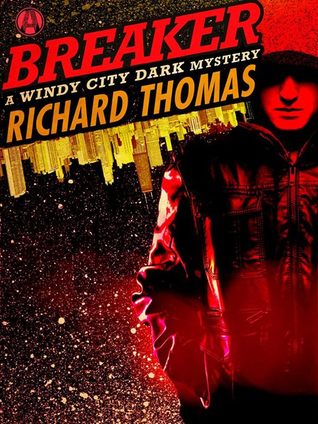
Breaker: A Windy City Dark Mystery, by Richard Thomas*****

breakerawindycityRichard Thomas is a monstrously great writer. In Breaker, a Windy City Dark mystery, he presents us with Ray, a man of unusual and intimidating appearance; a sinister stranger in a white van who victimizes Chicago’s working class school girls; and Natalie, the girl that lives next door to Ray. Though this is the first Windy City Dark mystery I read, I fell in, only extricating myself close to bedtime, because this is not the kind of thing you want entering your dreams. This smashing thriller came to me free of charge from Net Galley and Random House Alibi.

The first thing I usually look for in fiction is strong character development. In excellent fiction, sometimes the setting drives the character; sometimes the setting and character drive the plot; sometimes the plot is driven by character. Breaker definitely falls into the last of these categories. Told primarily in Ray’s first person and counterpointed by Natalie’s, along with a narrative that pops in and out surrounding the white van, the suspense is almost unbearable. The character is so palpable that I impulsively reached into my Goodreads account and checked the “literary fiction” box among my own library categories. The story is dark and haunting; fans of Stephen King, a writer Thomas lists among those that have influenced him, won’t want to miss out on this story. Though it is not driven by the supernatural, the tone and level of nightmarish suspense are quite similar.

Part of the hook is the affinity the reader must feel for Ray after just a short time. He lives alone; others are often afraid of him on sight because of his enormous size and ghastly pallor. His mother is dead, and we learn more about this eerie aspect of Ray’s past as the story progresses. He lives in the city’s gritty underbelly, spends almost nothing of what money he makes as a cage fighter—a sport so much more horrible than boxing—on himself, and he is constantly alone.

Meanwhile, Natalie, the 15-year-old next door, is being stalked by the white van. Because Natalie is kind to him and does not fear him, Ray reaches out to her in an uncharacteristic way and teaches her the self-defense tips none of her high school teachers will ever be able to provide. Their friendship is platonic but the bond is tight.

Meanwhile, the white van has Chicago even more on edge than it usually is; girls are disappearing, and no one knows who is taking them. Every white van begins to look sinister. I found myself gripping my electronic reader, and though I had been resting the arm that held it on a pillow, I found myself holding it up in the air because my hand had nearly tightened into a fist.

It’s that creepy.

I marked a number of really stellar passages—this guy is fantastic with gripping figurative language—but at the end of the day, I am not supposed to reveal any quotes till the book is on the shelves, and I want you to know about this one right now.

It’s up for sale January 5, 2016, and it will help you forget all about your post-holiday blues. Get this book!

The Lake House, by Kate Morton *****

thelakehouseAs a rule, I am not fond of British fiction; I prefer working class protagonists to the silver-spoon variety; and I like urban settings more than pastoral ones. But The Lake House is written by the author that produced The Forgotten Garden, and so when I had the chance to grab the galley, I went for it. And once more, experience proves that a brilliant writer can sell any story, in the setting of her choice, with the protagonists of her choice, and she can make it flow smooth as warm butter.
This deep, luminous story came to me from Net Galley and Atria Books, a division of Simon and Schuster. Thank you once, twice, and a third time too, because Morton has done it again. The book is a must-read for all that love mysteries and literary fiction.

Sadie Sparrow works for the Metropolitan Police, but her job hangs by a thread because she has become over-involved in the case of a missing woman. A toddler was found abandoned in her home, and Sparrow is haunted by the insistence of the child’s grandmother that her daughter would never, ever leave the child intentionally. Sparrow has been told to take some time off and stay away from the case; she retreats to her grandfather’s home in Cornwall, and becomes transfixed by an older, colder case, that of the mysterious disappearance of a child that lived in the beautiful old home nearby, Loeanneth, where a baby boy vanished many years earlier. Sadie sublimates her urge to follow up on her current, forbidden case by poking into the old mystery in Cornwall.

Morton takes us deftly from one setting, both time and place, to another so seamlessly that we cannot help being spellbound; this is literary fiction at its best. We meet the various members of the family that once summered in the once-lovely, now neglected Cornwall estate, and we watch across the years over three generations of the Edevane family that lived there, both in the years before World War II up to the present, with its elderly descendants that remain living.

Rather than a gripping page-turner, this is a well-crafted tale to be sunk into, like a feather bed or one’s favorite chair, with the phone turned off and a steaming cup of coffee (or tea, if you must) to go with it. Those without the stamina for a complex, well-developed story of the necessary length will find themselves frustrated; this one is for true literature lovers, so be prepared to give it the time it deserves.

The characters are developed so expertly that they feel like people we have known a long time. My favorite was Eleanor, who in my own mental movie appeared as a young Vanessa Redgrave; readers of a later generation than mine will choose some other face to match Morton’s description. Every possible stereotype one might create having to do with women of that time and social station has been cleverly sidestepped in a fully credible manner. Even the haughtiest among them is presented with dignity and a certain grace.

Some will find the ending a little too perfectly resolved perhaps; I find it congenial.

For those that like visuals to go with their fiction, here’s a clip of grand homes in Cornwall:

A Cold White Fear, by RJ Harlick***

acoldwhitefearMeg is alone with a 12 year old in her isolated cabin during a Canadian blizzard, when three escaped prisoners land on her doorstep, one of them injured. She helps dress the wound of the injured man, but then is held hostage, along with Jid, who is like a son to her, and her puppy. This mystery is the seventh in a series, but it was the first I had read, and it is easy to follow as a stand-alone thriller. Thank you to Net Galley and Dundurn Publishers for the DRC, and my apologies in being so tardy with my review. The book has been released and is available for purchase now.

Those that enjoyed The Shawshank Redemption or that are fans of Val McDermid’s mystery series will probably enjoy this story a great deal.

Each of us has a threshold of tolerance for how much terror and violence they can stand in a novel before it stops being entertaining and starts to be just scary and violent. That’s what happened to me here. Roughly eighty percent of this book is set in and near Meg’s cabin, with one aborted effort at escape after another; the writer wants us to also be worried about the puppy, and she played the card well, maybe too well for me. The small moments in which interesting tidbits of Algonquin culture are released, or in which one of the escapees does some small, compassionate deed are eclipsed by the sheer weight of the isolation and brutality present, and I finally got to where I could not stand it anymore around the 65 percent mark, and I skipped to the end and traced it back. That said, I also know that my own tolerance is lower than most. I watch very little television and few movies, and so a little goes a long way where I am concerned.

Harlick deserves a lot of credit for being able to spin a linear plot line with a limited setting, time span, and for most of the story with a limited number of characters. She never loses the reader’s interest or wanders off on a tangent; her facility with setting is good, and the tangibility of the place and people add to the terror experienced by the reader on behalf of the protagonist.

Scary-as-hell fiction from a series writer worth following in years to come.

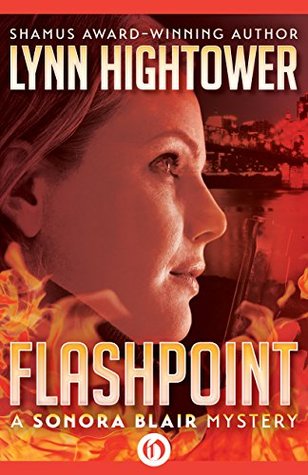
Flashpoint, by Lynn Hightower*****

flashpoint“Anybody talk to a doctor?”
“Guy came out of emergency and talked to the brother.”
“Hear what he said?”
“Just that they were very concerned with Mark’s condition, and were doing all they could.”
“Shit. Mark won’t make it then. They’re already hanging the crepe.”

Sonora Blair is one of the most kick-ass female detectives to hit the shelves in a very long time. Lucky me, I read it free, thanks to Net Galley and Open Road Integrated Media. The original publication date was 1995, and so the initial publishers must have dropped the ball big-time when it came to promotion, because I know this is the kind of story that resonates with large numbers of people, especially women. And I am glad to see it being resold by Open Road, because they know how to do the job right.

So back to Sonora. No wait, let’s go back to Hightower first. What a total bad-ass when it comes to setting! I loved seeing her enter the home where her children were asleep, and the explosion of naked Barbie doll parts in her daughter’s room. I loved the moment when her elderly dog had an accident in the living room, and she was so distracted by the hundred other things, personal and professional, all colliding at once, that it was not even the first thing she took care of once she found it.

So we have two interesting threads here. One is the problem. A killer out there has murdered a man by handcuffing him to the steering wheel of a vehicle and setting fire to it…and him. It’s grisly business, but Hightower doesn’t overwork the detail to where it triggers my “ick” button; in other words, although it’s terrible, it is never so terrible that I just don’t want to read it anymore. And the problem just becomes thornier and trickier the longer she works on it. Clues drop here and there, and the stakes go up.

The other thread is Blair’s personal life, and the problems she faces in dealing with home and work. It sounds like a tired old song when I put it that way, but like any really skillful writing, it sounds brand new when the author rubs her own brand of English on it and sends it spinning.

After having read several hundred mystery, crime fiction, police procedural, and thriller novels—okay, if I had starting keeping track sooner, I know it would be well over a thousand—there are a handful of devices that are so frequently used that my eyes auto-roll when I see them utilized. I was watching for them. But Blair never gets tossed into the trunk of anybody’s car; she never gets the phone call saying the killer has her kids; there is never a moment when we realize she has been framed for the killing herself, and has to solve it to save her own butt. I’m not saying a great writer can’t get away with any of those; there are some Grand Masters out there that have done it and before my eyes could make the full roll, they were glued back to the page. But once someone reaches into that worn, soiled bag of tricks, it becomes a lot harder to engage me, and I was delighted that Blair never went there.

Her facility with setting is consistently brilliant throughout the book.

One tiny odd bit: for the first chapter or two, I was convinced that Blair was African-American. When she turned up blonde later, I had to mentally reinvent her. It didn’t take long though, because I was riveted and had to get back to the story.

For fans of outstanding detective fiction, this is a must-read. Order it now for yourself, or as a gift for someone you know will love it.