Good Dirt, by Charmaine Wilkerson*****

Charmaine Wilkerson is the author of the massively successful Black Cake. Her sophomore effort, Good Dirt, carries some of the same components—an impending marriage, a family heirloom, secrets and betrayals—but is nevertheless a very different story, and it’s an even better one. My thanks go to Random House Ballantine and NetGalley for the invitation to read and review. This book will be available to the public on January 28, 2025.

Our protagonist is Ebby Freeman, which is short for Ebony. She lives with her parents in an affluent neighborhood in New England, but there was a fourth family member, her brother Baz, who was murdered during a home invasion; Ebby witnessed all of it, and has long carried the guilt of survivors. Could her ten year old self have done something to save Baz?

Now Ebby is grown, and plans to be married, but things don’t go as anticipated.

As in her previous novel, Wilkerson packs so many points of view into the story that I eventually stop counting, and although I am skeptical about this choice through much of the book, by the end I have to admit that she has carried it off nicely. Some points of view are urgently necessary to carry the plot forward; others, like that of the intended groom, Henry, are straight-up hilarious in places. Once again, we move not only between points of view, but time periods as well, reaching back into an earlier century, when some of her ancestors were enslaved. These passages aren’t entertaining, but they are necessary to provide clarity and urgency.

Ordinarily, I don’t read stories with wealthy protagonists, and make no mistake, Ebby’s family has a great deal of money; but having the family be African-American, and self-made rather than heirs to massive, often ill gained fortunes helped a great deal. Ultimately it was easy to bond with Ebby. When she experienced pain and rejection, I felt it, too. I carried her around in my head in a way that I usually don’t; over 1,000 reviews are in my rearview mirror, and only the truly special ones take hold of me as this one has.

Highly recommended.

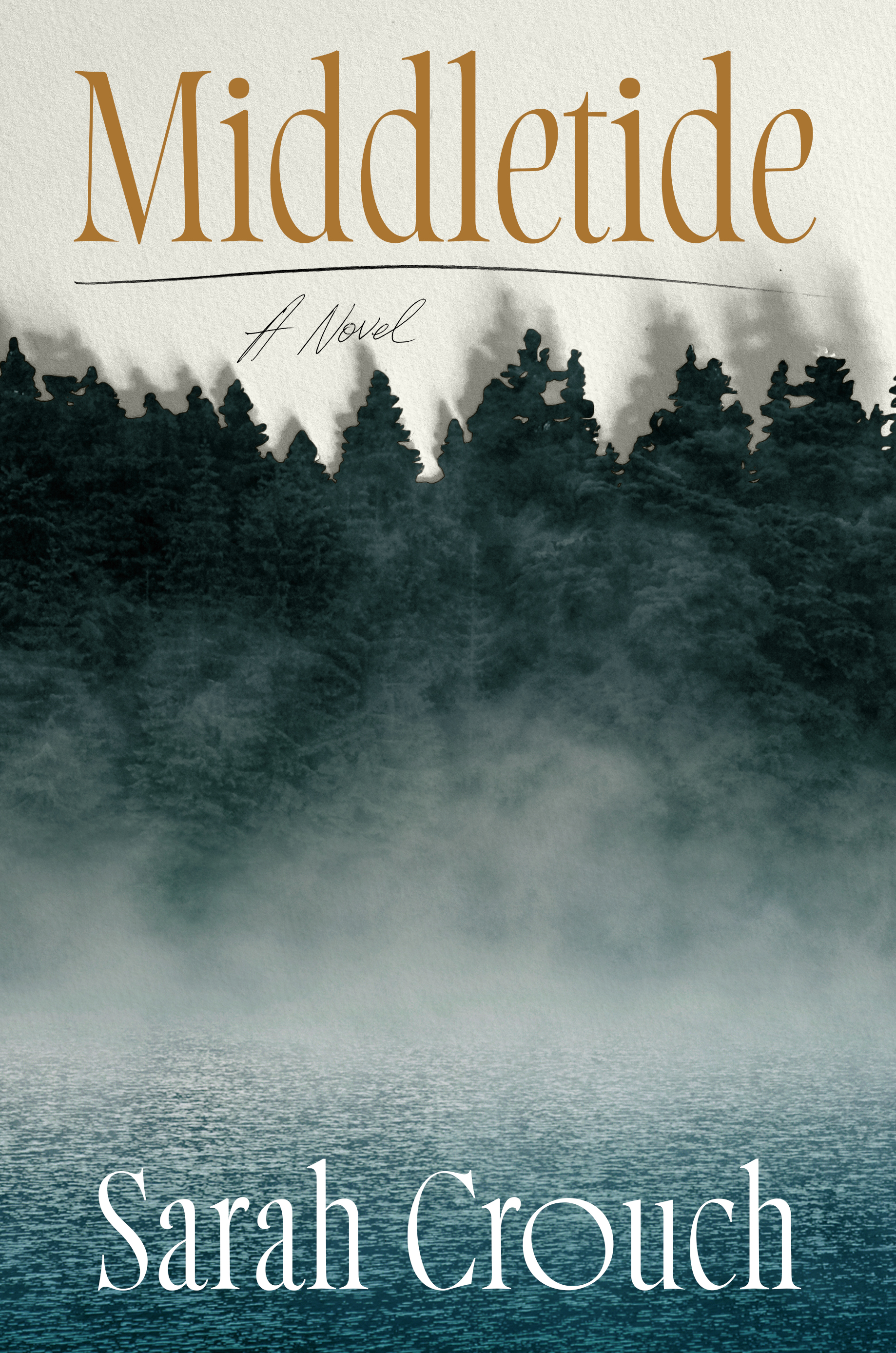
Middletide, by Sarah Crouch*****

Sarah Crouch makes her authorial debut with Middletide, a mystery set in the Pacific Northwest near where she grew up. Atmospheric and tense, it’s a damn fine start to what is sure to be a promising career.

My thanks go to NetGalley and Atria Books for the invitation to read and review. This book is for sale now.

The premise is that Elijah Leith leaves home when he reaches adulthood, eager to flee his violent alcoholic father, and make a name for himself in San Francisco. But his father dies, and when his first novel goes nowhere and he runs out of money, Elijah returns and takes up residence in the cabin where he grew up. He hopes to rekindle a relationship with his teenage sweetheart, but she has moved on, and since he was unreliable the first time around, she is reluctant to trust him anyway.

Then the cops find the body of Dr. Erin Landry hanging from a tree on Elijah’s property.

This whodunit is original and intelligently written. The pacing is perfect, and I never would have guessed the ending, at least not until nearly the end when the author spells it out. Elijah is not the most lovable protagonist, but Crouch develops him so that, although not a prince or a hero, he is nonetheless a decent human being by the end. Some will consider the solution to be over the top, but it’s only far fetched if the author fails to convince us that it’s true, and I am persuaded.

Those looking for a fun read to pack for a vacation, or just to occupy a weekend at home, here you go. Grab your book, your lemonade or your whatever, and head for your happy place. You can thank me later.

The Stepford Wives, by Ira Levin*****

Ira Levin, legendary novelist and playwright, published The Stepford Wives in 1972, a time when feminist ideas were at a fever pitch for many, and a frightening development for others. Women’s rights were at the forefront in a way that they had not been since the suffragists had won the right for women to vote over 50 years earlier. Now the book is re-released in audio format, at a time when the advances won during that time have been rolled back in some places, and appear to be under attack everywhere. So although I was already familiar with this book, I jumped at the chance to listen to it and promote it; I wish Levin was still alive today, because we can use men like him.

Version 1.0.0

My thanks go to NetGalley and Blackstone Audio for the review copy. This book is for sale now.

Stepford, Connecticut appears to be idyllic; beautiful homes; rolling lawns; good schools. There’s no crime to speak of in Stepford, and Joanna and Walter jump at the chance to move their young family away from the city and into a lovely new home. The children make friends almost immediately, but for Joanna, it’s a little harder. All the women are stay home mothers—not unusual in 1972—but they are insular, preferring housework and beauty regimens over any outside interests, including other women. She finds two women that are friendly, and that have moved here fairly recently themselves, and she turns to them for solidarity. But then one of them begins to change, and Joanna has become suspicious. Is it something in the water? Why are Stepford women such docile, ornamental drudges?

This is a brief book, more of a novella than a novel, and that’s part of what makes it so effective. Levin uses spare prose and doesn’t let anything clutter his central message. In doing so, he creates a more spine chilling effect than a more description laden, dialogue rich novel could have done. And once you read it, you’ll never forget it.

I highly recommend this classic work of horror for women and those that care about them.

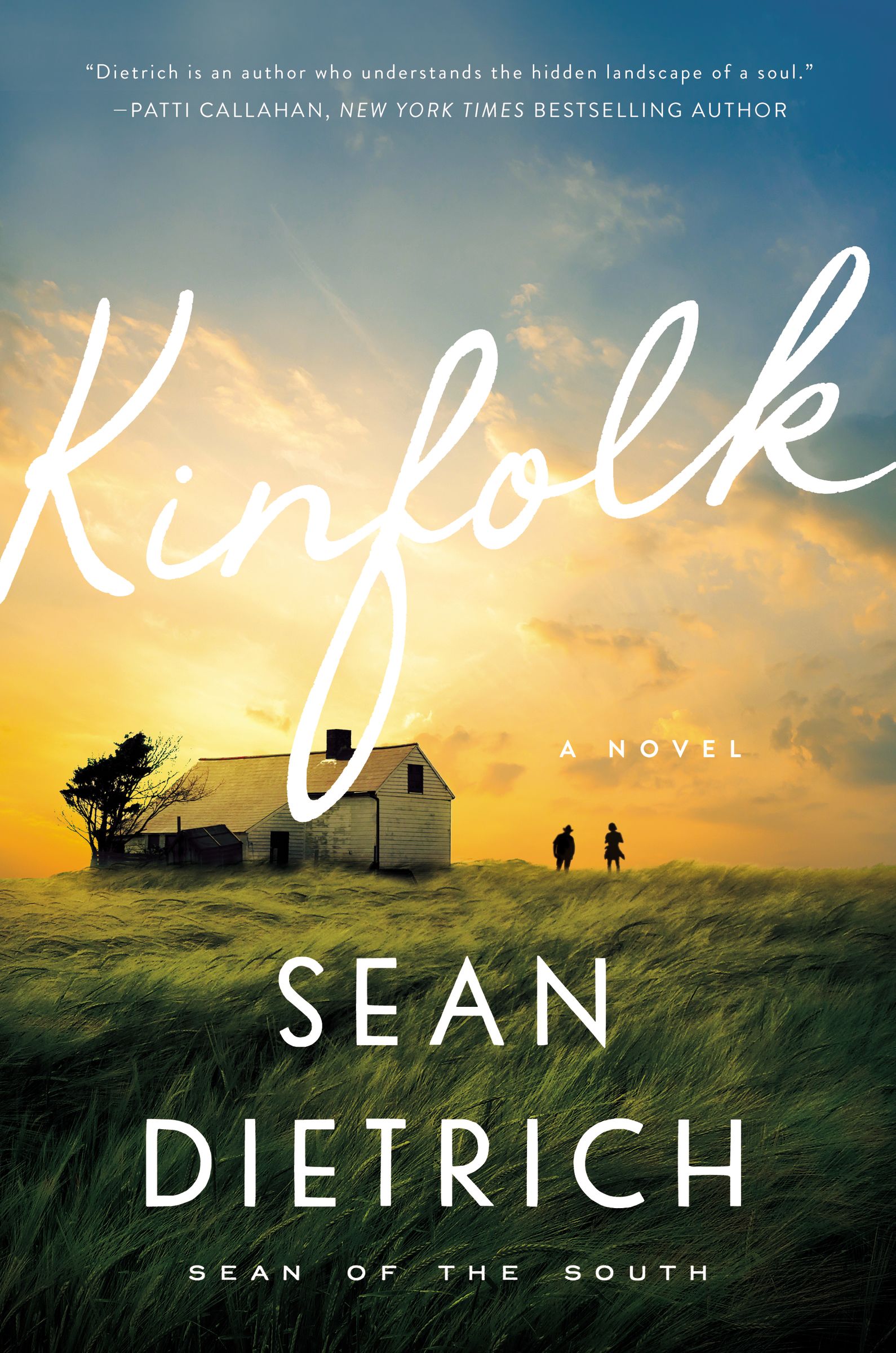
Kinfolk, by Sean Dietrich*****

“Thanksgiving is not about being happy. The holiday is not about mirth and beauty and the warmth of gaiety. Thanksgiving is about fulfilling family obligations and being miserable the way the good Lord intended.”

When we meet our protagonist, Nub Taylor, it is Thanksgiving night, and he and his cousin and best friend Benny are three sheets to the wind, idling in a rusty old truck across the street from the dignified, stately home of Nub’s daughter, Emily. Nub has been invited to dine there, but knows better than to attend. Emily is a widow; she married up, and every mover and shaker in town has shown up. No, Nub won’t be joining them. Nothing good would come of it.

My thanks go to Net Galley and Harper Muse for the review copy. This book is for sale now.

Our story is set in the 1970s in a tiny town in Alabama. Nub is long divorced from Emily’s mother, who keeps her distance these days. He takes his meals at the Waffle House, and that includes today:

“Waffle House did not close on Thanksgiving because Waffle House never closed. Waffle House was like the Vatican, only with better hash browns. Nobody on staff at the Waffle House had a key to the store, not even the manager. Because there were no keys. The doors were never locked. Waffle House just went on and on. Sort of like a disco.”

It is here that he meets Minnie. Minnie is fifteen years old and well over six feet tall. Why is this girl spending her holiday here, instead of with her kin? The answer is that she has none. Her father is in prison, and her mother has just recently killed herself.  

Of course, Nub doesn’t know these things at first, but something about her calls to him. Perhaps all children of suicide victims wear something similar in their expressions; Nub had lost a parent the very same way, and he has never gotten over it. How does anyone? He knows “the cardinal rule about suicide. You don’t talk about it.”

Now, Minnie is orphaned and she is pregnant, courtesy of a thoughtless, spoiled local boy that told her he loved her, then laughed behind her back. And so it is that Nub realizes, as he learns more about Minnie Bass, that perhaps he may have a chance to redeem himself.

This is a wonderful story, full of warmth and a lot of heart. Dietrich is a master story teller, able to create viscerally real characters that leap from the page and a narrative that billows with home truths. There is no question that Kinfolk is among the finest books to be published this year.

Highly recommended.

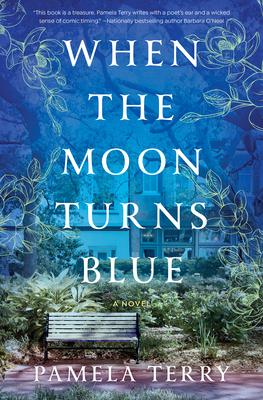
When the Moon Turns Blue, by Pamela Terry*****

Once in a while the odd thing happens,

Once in a while the dream comes true,

And the whole pattern of life is altered,

Once in a while the moon turns blue.

The tiny Georgia hamlet of Wesleyan is preparing to bury one of its own, and Mother Nature is preparing to cover the entire town in ice. But nobody—well, almost nobody—knows that a source of local tension is about to go nuclear, as someone is planning to topple and destroy the statue of a Confederate general in the park inside the boundaries of Old Man Griffin’s land. “The fight was just getting going good, and now somebody’s declawed the cat.”

This riveting, curiously charming and sometimes hilarious novel is the second by Pamela Terry, whose outstanding debut novel was The Sweet Taste of Muscadines. This one may be even better. My thanks go to Net Galley and Random House Ballantine for the invitation to read and review. This book is for sale now.

With the death of Harry Cline, we find ourselves at his funeral, a massively attended affair. But his wife, Marietta, develops a disabling, blinding migraine, and although they have been on the outs for years, Butter, her (former) best friend, comes to the rescue. By the time they’ve snuck out the side door of the church, we already know at least a little about both women, and now we want to know everything.

With just two novels published, Terry has already proven herself to be among the best authors when it comes to character development. Soon we’ll meet others—Marietta’s obnoxious brother, Macon and his beleaguered wife Glinda, who will have a large part in this story and is one of my favorite characters, as well as a host of others, who have smaller roles but are each so unmistakably established that it’s no work at all to keep track of them. But perhaps her finest achievement here is in creating a masterpiece that is ultimately a feel good book, despite the use of a red hot real world controversy within its pages.

I generally read several books at a time, and this one is the one that I saved for bedtime, because I wanted to be able to read it uninterrupted, and it is the one I wanted in my head when dreams came. It didn’t let me down.

This inspirational work of Southern fiction stands shoulder to shoulder with the finest classics, To Kill a Mockingbird and Fried Green Tomatoes. I wholeheartedly recommend it to you.

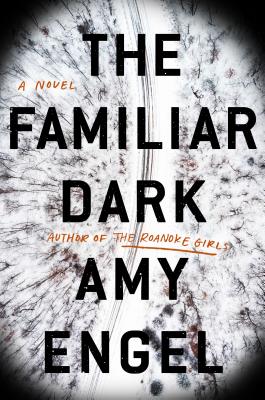
The Familiar Dark, by Amy Engel*****

When it comes down to it, some people just have it coming to them.

Amy Engel is the author of The Roanoke Girls, a shocking thriller that proves she is a force to be reckoned with. The Familiar Dark is even better. My thanks go to Net Galley and Random House Dutton for the review copy. It’s for sale now, and you should get a copy to help chase away your cabin fever.

Eve Taggart was raised poorer than poor in a ripped up trailer in Barren Springs, Missouri; it’s “a slippery part of the world. People dart in and out like minnows in a shadowy pool…Folks here are hard to pin down, even harder to catch…It’s a place for people who don’t want to be found.”  Her mother is an addict with a mercurial temper, and so when Eve gives birth to Junie, she resolves to parent differently from her mama, and to never take Junie to visit her. The more space there is between her present and her past, the better off Junie will be.

But when Junie and her best friend, Izzy are found in a public park with their 12-year-old throats slit, everything changes. Without Junie to provide for, all of the social conventions that Eve has so carefully nurtured, all of the tentative connections she has made with mainstream members of the community are gone in an instant. Eve’s older brother Cal, a cop, tries to provide a buffer between Eve and the town, between Eve and their mother, and between Eve and the disastrous errors she makes as a result of her grief; none of it does any good. And Cal is sitting on a secret of his own.

I am generally a reader that has between six and twelve books going at any given time, but once I was about a third of the way into this one, I read nothing else. Instead of asking myself which book I’d like to read right now, I knew exactly. The suspense is built numerous ways, by foreshadowing, by the little hints given by others in her tiny town, but there’s more to it than that. Part of it is Engel’s unusually vivid word smithery and the frank, unsentimental dialogue that moves it forward. But the meatiest part of this story is in the pathological family triangle that—resist it though she has—forms most of Eve’s world. The further we get into the story, the more layers are peeled away and the more we learn about Eve and mama, mama and Cal, and Eve and Cal. We learn some secrets about Junie that poor Eve didn’t know, but these are almost secondary as they reveal more about the three adults. It is mesmerizing.

Eve thinks she has nothing left to live for now that Junie is gone, but Mama, who’s been drawn to the killing like a vulture to roadkill, assures her she is mistaken. What’s left is vengeance. This resonates with Eve. Pulled into a press conference in which she doesn’t want to participate, standing alongside the other bereaved parents, people that are well groomed and whose social skills make them vastly more sympathetic figures to the public than she will ever be, Eve decides to cut to the chase. After the other two plead for possible witnesses to call in tips to the local cops,

“I pointed out at the cameras, stabbing my finger into the air…’I’m going to find you, you sick fuck. And I’m going to tear you apart.’

“I thought about all the press conferences I’d seen over the years, parents trotted out for missing kids, killed kids, abused kids. Everyone feels sorry for those parents, those mothers, until they don’t. Until the mothers don’t cry enough or cry too much. Until the mothers are too put-together or not put-together enough. Until the mother are angry. Because that’s the one thing women are never, ever allowed to be. We can be sad, distraught, confused, pleading, forgiving. But not furious. Fury is reserved for other people. The worst thing you can be is an angry woman, an angry mother.”

Does this ring as true to you as it does to me? Sooner or later, the mother always gets the blame. And so now I am still riveted and I am nodding. Uh huh. That’s right, Eve. Tell it!

When a novel is as outstanding as this one is, I almost hate to read the last fifteen or twenty percent, because often as not, that’s where it comes undone. Either the solution doesn’t hold water, or a hard cold tale of murder and revenge takes on a sudden sentimentality that doesn’t match the rest of the book; in these I sometimes picture editors and publicists urging the author to provide a feel-good ending, and the author ultimately bending. As I progress, I have figured out what the poignantly sweet ending to this one will likely be, if Engel goes in that direction.

But she doesn’t.

Instead, this story is one of badass female bonding gone dark, dark, and darker. Oh hey. The title.

Highly recommended.

Your House Will Pay, by Steph Cha*****

The quality that distinguishes Cha from other top-tier mystery writers is her absolute fearlessness in using fiction to address ticklish political issues.  Your House Will Pay is impressive. I read it free and early thanks to Net Galley and Harper Collins. I am a little sick at heart that I’m so late with my review, but this book is rightfully getting a lot of conversations started without me. It’s for sale now, and you should get it and read it.

Our two protagonists are Grace Park and Shawn Matthews. They don’t know each other, but their families intersected one critical day many years ago.  The Parks are Korean immigrants, the owners of a small pharmacy.  The Matthews family is African-American, and they have never stopped grieving the loss of sixteen-year-old Ava, who was shot and killed one evening by Grace’s mother in a moment of rage and panic. The other thing shared by Grace and Shawn is that both were quite young when it happened. Shawn was with his older sister when she was killed and has memories of what happened; Grace has been shielded from the event and knows nothing about it until the past opens itself up in a way that is shocking and very public.

The story alternates between the initial event, which happened in the 1990s, and today; it also alternates between the Park family and the Matthews’.  The development of the characters—primarily Grace and Shawn, but also Shawn’s brother, Ray and a handful of other side characters—is stellar. Throughout the story I watch for the moment when the narrative will bend, when we will see which of these two scarred, bitter families is more in the right, or has the more valid grievance. It never happens. Cha plays it straight down the middle. Both families have been through hell; both have made serious mistakes, crimes against one another. And ultimately they share one more terrible attribute: both families have been callously under-served by the cops and local government, for which relatively poor, powerless, nonwhite families are the dead last priority.

Cha bases her story on a real event, and she explains this in the author’s notes at the end of the book.

As a reviewer, I am closer to this than many will be: my family is a blend of Caucasians, Asian immigrants, and African-Americans. I read multiple galleys at a time, shifting from one to another throughout the reading parts of my day, but it is this story that I thought about when I wasn’t reading anything.

The first book that I read by this author was from her detective series. When I saw that she had a galley up for review, I was initially disappointed that this wasn’t a Juniper Song mystery, but now that I have seen what Cha is doing and where she is going with it, I see that this had to be a stand-alone novel. There isn’t one thing about it that I would change.Highly recommended to those that love the genre and that cherish civil rights in the U.S.; a must-read.

Call Your Daughter Home, by Deb Spera*****

Deb Spera is a force; small wonder that Call Your Daughter Home is the book that bloggers have been talking about. This barn burner of a debut goes on sale today.  My thanks go to Net Galley and Harlequin for the review copy.  It curled its fingers around me on page one, and by page ten I knew it wouldn’t let me go till it was done with me. It ended as powerfully as it began.

The year is 1924. Gertrude Pardee lives with her four little girls in a shack in the swamp in Third World conditions; they are nearly feral. A storm is coming, but Gert has a job to do. Her brutal ass hat of a husband lies dead in the swamp, dispatched by the bullet she blasted into his brainpan. As the storm bears down, she peels off her only dress and strides naked into the muck to deal with his corpse:

“Alligators feed once a week, and sometimes, if the prey is big enough, they don’t need to eat for almost a year. But I don’t know how long it takes a gator to eat big prey. Daddy never said nothing ‘bout that and I never asked.”

Our other two main characters are Retta, the first free woman in her family, and Annie, Retta’s employer. Retta cares for Mary, Gert’s youngest, when Gert is too sick and injured from the broken face she sustained the last time Alvin beat her; Retta’s husband Odell and her neighbors all tell her that it’s trouble to bring a white child into Shake Rag. “Don’t get messed up with that white family. No good can come of it,” and she knows it’s true. What if the girl dies? But Gert coaxed her into it, telling her it would be the Christian thing to do, and Retta is moved by this sick, helpless five year old. She assures everyone it’s just for three days.

Miss Annie is a Caucasian small businesswoman and wife of a farmer, yet she has trouble of her own; there’s some dark family baggage she’s been avoiding for a good, long while. As the storm bears down, evidence comes to light and she is forced to see it. Not one of us would want to be Miss Annie; believe it.

Spera weaves a captivating tale, and we see the world from the disparate points of view of all three women, each of them told alternately in a first person narrative, and we’re also told how they see each other. The setting is dead accurate, brooding and thick with dread, and it scaffolds the development of each character more capably than anything I have read recently.

It is Retta that tells us that as we give birth, we must call out to our child so that “whichever soul is at the gate will come through.” She called out to her girl as she birthed her, but now she is gone. In fact, each of these three women has lost a daughter, and this provides the central theme of the story.

Feminists and those that love Southern fiction have to get this book and read it. There’s nothing like it. Do it.

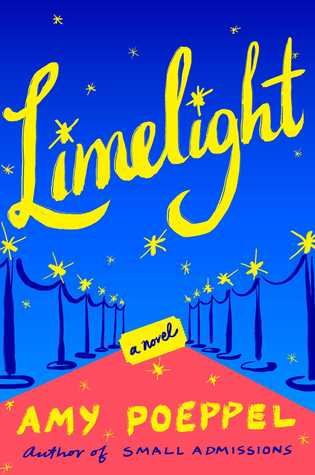
Limelight, by Amy Poeppel*****

Limelight“Welcome to Gotham, babe.”

Amy Poeppel is a star, and since I loved her debut novel, Small Admissions in 2016, requesting the galley of her second novel was a no-brainer for me. Thank you, thank you Net Galley and Atria Books. This book will be available to the public May 1, 2018.

Allison Brinkley is excited when her husband receives a promotion that takes them from suburban Dallas, Texas to New York City. The excitement! The opportunities! Most people consider themselves lucky if they are even able to visit Manhattan as tourists. She can hardly wait.

Once they arrive, however, reality sets in. There’s no room for anybody’s stuff, and the bedrooms are tiny. Her eldest child is sulking, and the youngest gets in trouble at school. The mothers at the prestigious private school where the children are enrolled snub Allison as if she were the new girl at middle school.  She loses her teaching position, and then she loses her tutoring job too. She wants to be a good family organizer, provider, and cheerleader; and yet.

On top of everything, she bangs into another vehicle right in front of the school; when she goes to settle up with her insurance details, she instead finds herself in the apartment of a badly behaved teenager that turns out to be a famous teen heartthrob. Allison is mesmerized, but not in the manner to which Carter Reid is accustomed; she wants to know how his apartment and his lifestyle has spun out of control so badly. Where is the boy’s mother?

Before she knows it, Allison is swept into the official Carter Reid entourage. He’s sick in bed, and half of his people have up and quit because he’s so insufferable. But Allison deals with adolescents for a living, both as a teacher and as a mother. She knows how to talk to kids, and she knows how to get them to take their medicine and show up to appointments.

But Carter has another problem nobody knows about. It’s not a problem to be proud of, and it’s getting in the way of his career.

Nobody writes like Amy Poeppel. The beginnings of her novels are bizarre and disorienting because the protagonist’s normal is not most people’s normal. My first impression is that one of us—Poeppel or me—must be crazy. But once I am properly hooked on the story, she pulls me in and lets me know what’s up with that. Before the halfway mark is reached, I want to be the gal pal that drops in on Allison, asks questions, maybe drags her into the kitchen for a conversation. I wonder, how much more of her own money is she going to spend on this wealthy brat before she asks for compensation? Has she forgotten she has kids of her own at home?  Has she completely taken leave of her senses?

I make one prediction after another, anticipating well-worn fictional formulas, but Poeppel doesn’t do formulas, she creates surprises. At the end I find myself walking with my head up and a spring to my step. I will bet you a dollar, reader, that you need some of that too.

Frosting on the cake is that rarest of all things, a positive abortion reference tucked in quietly toward the end. It makes my feminist heart sing.

I can’t wait to see what this writer brings to her next novel; will she bring Allison back with a sequel, or will she start from scratch? Whatever it is, I have to read it. Limelight is sharp, funny, and wicked smart. You have to get this book and read it.

The Bear and the Nightingale, by Katherine Arden*****

“Blood is one thing. The sight is another. But courage—that is rarest of all, Vasilisa Petrovna.”

 thebearandthenigh

The Bear and the Nightingale is the most brilliant fantasy novel I’ve seen since Tolkien wrote, and I want you to understand how different, how special it is. I received my copy free in exchange for an honest review—and those of you that read my last two reviews know that this privilege has never made me obsequious. Thank you Net Galley and Random House Ballantine for the advance copy. It’s worth its weight in spun golden magic, and it will be available to the public this Tuesday, January 10, 2017.


“The brave live…The cowards die in the snow.”


Our protagonist is Vasilisa, affectionately known as Vasya; she’s an adolescent with many talents, some of which are supernatural. She generally keeps these abilities to herself, lest she be called a witch. Her father, Pyotr, is a minor prince in the frozen Northern hinterlands of Russia during the 14th century.  The setting here is mesmerizing, and from the first page I understood that this particular story is one I would save for late nights when my family is asleep. Let my other reading be interrupted by the minutiae of running a household, but not this one. This is a juicy tale, perfect for a cold winter night burrowed beneath the quilts. I open this magical tale and am lost inside it.

Our setting is ancient Northern Russia, then known as ‘Rus’, since no central government had formed yet. This is a time when women carry about as much social worth as a poker chip or livestock, and yet as the story progresses, I realize that this is a stand-up-tall feminist folk tale of the highest order; in fact, it’s a lot of things. This is the sort of debut that most likely causes writers like Harper Lee to go back in the house and never publish anything else, lest the second novel be considered a let-down after the first.  I hope, however, that we’ll see a lot more of Arden.

Our story commences in the house of Pyotr, a minor prince whose wife has died in childbirth. He loved Marina dearly, but as his daughters grow closer to marriageable age, he knows he must go to Moscow to seek a new bride to run his home, and marry his elder daughter Olga to a man of wealth and power. And though Olga’s match is a good one, it’s in Pyotr’s remarriage that things go badly wrong.

A brief note about the setting and other details involved with time and place. First know that this story does require a relatively high literacy level; for those that struggle with a high vocabulary level, it may prove to be more work than fun. However—for those reading digitally especially—please note that there’s a glossary at the back of the book. And those that are able to read this digitally on a device with a touch screen will be happiest of all, because it’s so easy to touch a word and get a definition immediately. I also ran a few searches due to curiosity, since I was not at all eager for this book to end. I took my time with it, and while I was buried in this magical world, I was nevertheless learning details of history and geography that I hadn’t known before.

Because I taught teenagers how to write for a number of years, it’s my natural inclination, even in an absorbing story such as Arden’s, to go back and look again to see what specifically produced this alchemy.  Undoubtedly, the development of multiple characters in a deft, expert manner is essential. There’s not one character in this story that I don’t believe. Every last one of them is real to me, a feat in and of itself when writing fantasy. It takes confidence and authority to tell the reader that although the story contains all manner of supernatural elements, it’s all true, and so are its characters.

But also, there are real life details true to the time and place that Arden weaves in seamlessly. As I reread some key passages, I note that when the men come indoors from the snowy woods, they aren’t merely cold, dirty and tired; they’re covered in scratches, they’re voracious, and their boots steam and stink up the room once they remove them. In another scene, when Pyotr travels far from home, he can afford fine guest lodging, but although he gets a big, soft, fluffy bed, he also has to put up with vermin, because they were a part of everyone’s life.  Such details contribute to the immediacy of the story.

It’s Arden’s outstanding word smithery that makes this story a standout. When Arden writes, the mists clear and we are transported, quivering in the snowy forest of the 14th century Russia, tearing pell mell across frozen ground on the back of a noble stallion, facing down death as demons scream and shadows dance.

I won’t spoil any of the subsequent plot points for you, but please know that this is a multifaceted story with a lot of secondary threads that contribute to the main story rather than distracting us from it.  To do so in a debut novel is stunning. A particularly interesting side character is Dunya, the nurse that has raised Vasya and has held onto a talisman intended for Vasya at great personal cost.

Messages and possible themes come out of the woodwork once one looks for them. A story such as this one, in which Vasya defends the old pagan deities against the religion of Kostantin, would once upon a time have caused conservative Christian parents to come screaming to the school with their lawyers on their cell phones in one hand and a flaming torch in the other. It could happen still, but what greater honor could Arden ask than to find her way into the ten most frequently banned books?

Meanwhile, in this trying time for independent women, we need strong female characters like Vasya and Dunya to remind girls and women that we are powerful, and that together, we can conquer those that would strip us of our autonomy and march us barefoot back to our kitchens. I have no idea whether any such direct political purpose is intended by Arden, but it certainly serves as a potent message: we will be oppressed only if we let that happen. Those that have even a fraction of Vasya’s independence, confidence and courage can not only prevent the door opportunity from slamming shut;  we can knock that door off its fucking hinges, for ourselves, our daughters, and theirs as well.


’All my life,’ she said, ‘ I have been told ‘go’ and ‘come.’ I am told how I will live, and how I must die. I must be a man’s servant and a mare for his pleasure, or I must hide myself behind walls and surrender my flesh to a cold, silent god. I would walk into the jaws of hell itself, if it were a path of my own choosing. I would rather die tomorrow in the forest than live a hundred years of the life appointed me.’”


Those looking for themes here have a banquet of opportunities. Though I would say the story is one of solidarity among women, or of woman’s independence, there are so many other possibilities. One could make a case that this story is about loyalty; one could claim it’s about family. One could say it’s about the victory of the collective good over the pride, greed, and ambition of the individual.

One thing I can say for certain is that The Bear and the Nightingale is impressive any way you approach it. It holds the potential to become a favorite of the genre, handed down lovingly from one generation to the next.  Buy it for yourself, for your daughter, your mother, or for any woman that you love, or for someone that loves women and good fiction. A book like this doesn’t come along every day.

Don’t even think of missing this book. You can get it Tuesday, or better still, you can pre-order it now.