Clete, by James Lee Burke*****

Mortality is mortality. It comes to you when it’s ready. We don’t set the clock.

The Dave Robicheaux series by James Lee Burke is one of the finest ever written. As the faithful know, Clete Purcel is Dave’s partner in whatever he does. Once they were cops that called themselves “The Bobbsey Twins from Homicide.” (You probably need to be a boomer to get the reference.) Now they are on their own, but they are still like family to one another. This is the 24th in the series, and it’s the first to be told from Clete’s point of view. It’s a brilliant idea for two reasons: first, because Clete is a well written and wildly popular character, and also because it gives us a chance to see Dave through someone else’s eyes, someone that loves him, but isn’t him.

My thanks go to NetGalley and Grove Atlantic for the invitation to read and review, along with my profound apology for being so very late. This book is for sale now.

In this installment, a new drug ring has come to Louisiana, and it’s creating still more violence, more death, and more crime in general. Clete, who is now a private detective, is hired by a woman named Clara Bow. (If the name rings bells, it’s because the real Clara Bow was a famous movie star from the silent film era.) The Clara that hires Clete wants him to look into the activities of her skeevy ex-husband. Once he begins, we hardly have enough time to breathe. Clete hits the ground running, and there are no slow passages till the book concludes.

My favorite passages are the ones in which a woman named Chen, whom Clete rescues, then falls for, tells him how he appears to her. Here’s one: “You always gentleman, Mr. Clete. Your cats sleep on your face and you no mind. The world kill men like you because you brave and you kind.”

Later, Chen promises him that she won’t go back to taking drugs. “That because I go to a meeting every day with the Work the Steps or Die Motherfucker group. The Motherfuckers are very nice.” He advises her not to use that term in public. Don’t you love it?

Like every book in the series, this one moves seamlessly from scenes with quirky characters and dark humor, to glorious literary passages that I have to read more than once just to admire the writing, to passages that are gritty and violent and occasionally terrifying. Let me put it this way: you will never be bored.

Can you dive in mid-series? I did; then I became so enamored that I went back and read all the rest of them.

Highly recommended.

Apostle’s Cove, by William Kent Krueger****-*****

Apostle’s Cove is the 20th novel in the Cork O’Connor mystery series by William Kent Krueger. The series takes place in a fictional town of Aurora, Minnesota near an Indian Reservation. Most of the characters are all or partly Ojibwe (also known as Chippewa, or Shinnob). Apostle’s Cove is an area with spectacular views, and it is home to the malign widow of an enormously wealthy man, who built a mansion there.

My thanks go to NetGalley and Atria Books for the review copy. This book is available to the public now.

This story commences with Cork receiving a call from his son, Stephen, who’s working with The Great North Innocence Project, an organization that helps people that have been wrongly convicted. Cork is a restauranteur and private detective now, but Stephen tells him that during his time as sheriff, Cork sent an innocent man to prison. For 25 years, Axel Boshey has been serving out a lifetime term for a murder he didn’t commit. He confessed to it in order to shield the person he thought to be the actual killer. Now Stephen wants Cork to go back, untangle the mess, and get Axel out of lockup.

The story—and the series—is helped considerably by its appealing recurring characters. The two most compelling ones are the very oldest—Henry Meloux, an ancient wise man that lives in the forest and counsels those that seek his help—and the very youngest, the seven-year-old grandson affectionately known as Waaboo, a child with supernatural powers to whom the spirits speak.

Halloween is fast approaching, and there is great excitement as the small community prepares for it. Waaboo is excited, yet also troubled. The Windigo, a cannibalistic spirit, is nearby, and it’s hungry. It isn’t here for Waaboo, but nevertheless, he is disturbed by it.

The story is complex and, in most regards, believable. I read multiple books at a time, but while I read this one, the others became sidelined much of the time. This series is reliably well written and entertaining, and so it is with Apostle’s Cove.

Can you jump in mid-series? I did. I began reading it with the 18th in the series. Whereas it’s more fun once you recognize the characters, there’s nothing that will confuse a new reader.

Highly recommended to those that enjoy the genre.

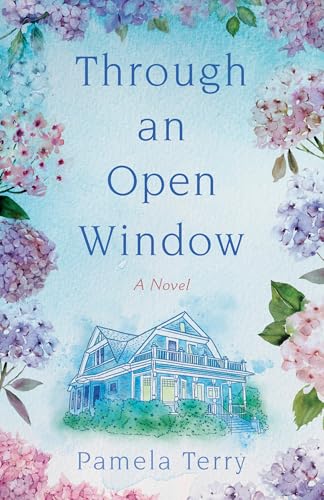
Through an Open Window, by Pamela Terry*****

“When you’re the last one with memories it’s like trying to hold on to hot sand.”

Author Pamela Terry never misses. Her debut, The Sweet Taste of Muscadines, forged such an emotional connection in me that if someone had told me they didn’t like it, I might not have cared for them as much as before. The same held true for her next work, When the Moon Turns Blue, which was every bit as good if not better. And now, with her new novel, Through an Open Window, I know that I will follow this author anywhere.

My thanks go to NetGalley and Ballantine Books for the invitation to read and review. This book will be for sale August 19, 2025. If you are female and have a beating heart, you should get it and read it.

We open with a scene from 1956. The local sheriff rescues two small children from a scene of horrific carnage; the baby girl is surrendered to the social worker before they find the little boy. The sheriff and his wife have been unable to have children, and want them so badly that instead of reporting the boy also, he takes him home and they keep him.

Cut forward now to the fictional town of Wesleyan, Georgia. A family is grieving the loss of its patriarch, Lawrence Elliot. His widow, Margaret is the first to receive a visitation—not from Lawrence, but from Great-Aunt Edith, who has been dead for years. Aunt Edith wants her to know something. And in fact, other family members will also see her at various times, in various places, but it’s not the sort of thing one shares with others. But Edith isn’t leaving until her message is received and understood.

As we see Margaret and her three adult children cope in different ways, we also see the interplay of their relationships to each other. This story is loaded with character development, and I believe each and every one, even Jubal, the rescued Clumber Spaniel that comes to live with Margaret. (I had never heard of this breed before, and now I kind of want one. Someone stop me!)

Events roll forward, and slowly we learn what it is that Edith is trying to convey, as the family does, and we find the tie-in to the prelude. It’s done brilliantly! Along the way, the author’s voice comes through in undeniable word smithery that forces me to highlight way, way too many passages to quote here. I experience the entire gamut of emotion, and when I near the ending, I am torn, wanting to read more slowly so that the book won’t end, but also needing desperately to know what is coming next.

The only possible improvement would be if Terry could write, and write up to the standard she has established, as fast as I can read, because I cannot wait for her next novel! She has become a favorite author, one I’d pay to read if I couldn’t do it free of charge. Highly recommended.

The Hounding, by Xenobe Purvis***-****

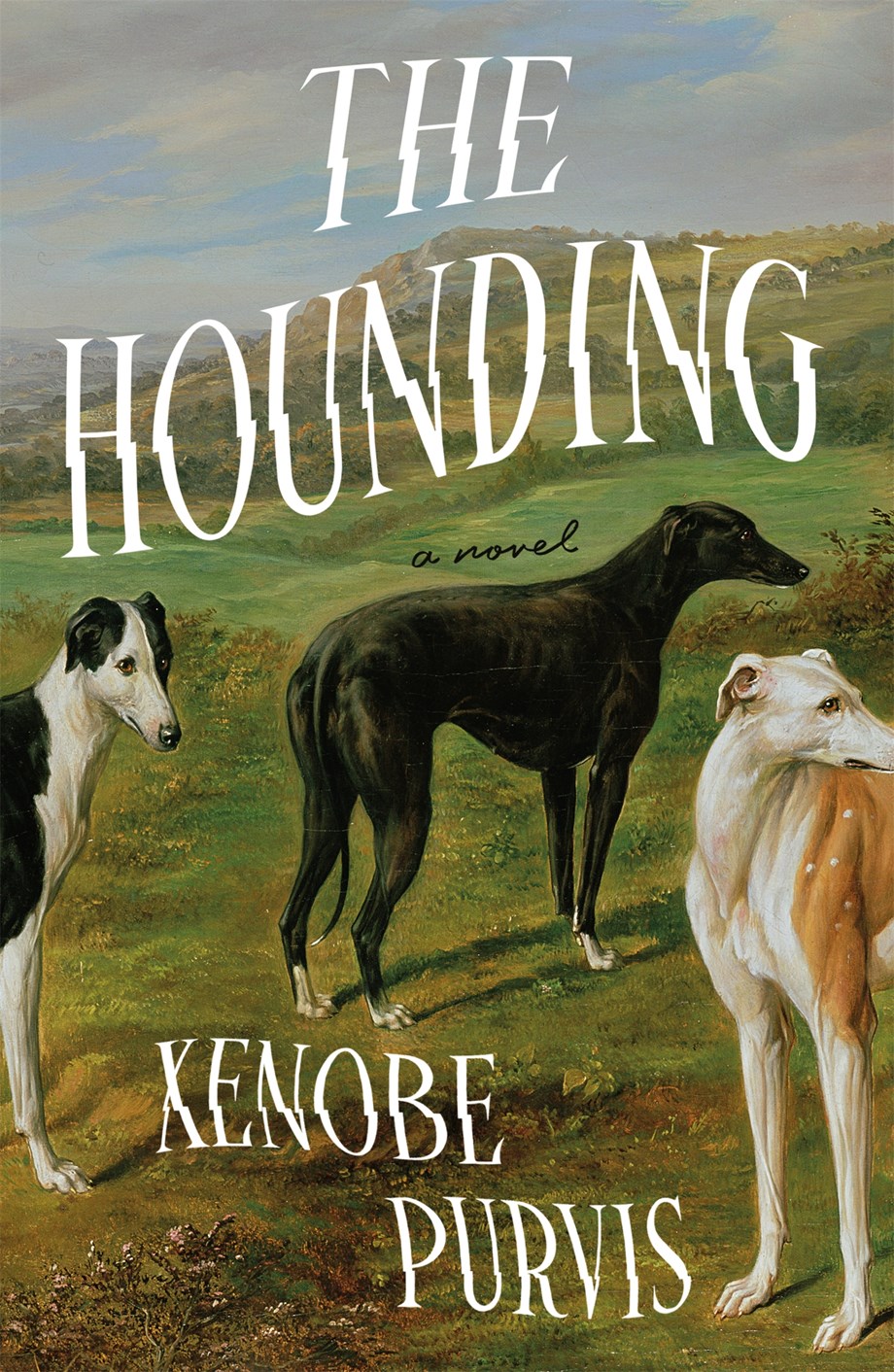
Who could walk away from this book cover? The Hounding, the arresting debut by Xenobe Purvis, is a story set during summer in eighteenth century England, in a tiny hamlet. Five motherless girls are given more freedom than is customary, and a rumor takes hold that the girls turn into dogs and wreak havoc on the village of Little Nettlebed.

My thanks go to NetGalley and Henry Holt for the invitation to read and review. This book will be available to the public August 5, 2025.

The Mansfield girls are being raised by their grandparents; their parents are long dead. But now, their beloved grandmother has died as well, leaving them in the care of their elderly grandfather, who is almost blind. It’s not a great summer for anyone else, either; there’s a dreadful drought that affects agriculture, and the riverbed is nearly dry. Then one day, Pete, the ferryman, tells the local gossip that he has seen the Mansfield sisters transform into dogs! Soon the rumor has spread, and others report that they’ve seen it happen, too; everyone wants to get in on the excitement.

The story tells a cautionary tale, not a new one, but a worthwhile one about the way society sometimes victimizes people that are a little different from most. There’s not much by way of character development, but this book is not about character or setting, it is purely plot-based. Purvis is a fine wordsmith, and since I was lucky enough to have both the digital and audio galleys, I found myself drawn into the narrative, first by the text, and then by the audio. Reader Olivia Vinall does a splendid job, and I recommend the audio version for those that enjoy the medium.

My only sorrow is that although this book is engaging, it could have been so much more. There are opportunities here that are left unfulfilled, and the plot twist at the end destroys the message that has been so carefully crafted up to that point. I find it frustrating. This is a good read, but it could have been a great one.

With that caveat, I recommend this book to you.

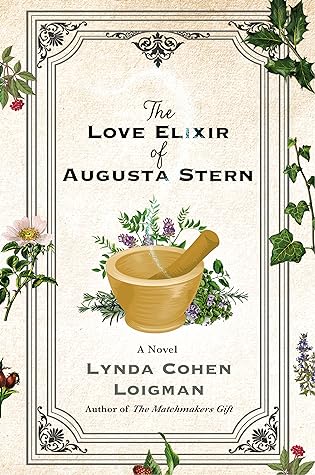
The Love Elixir of Augusta Stern*****

Augusta Stern is about to turn eighty, and she’s being forced into retirement, darn it. Her beloved niece persuades her to leave New York and spend what remain of her golden years in a Florida seniors’ community. From there, a wave of surprising events unfolds, changing Augusta’s life.

My thanks go to NetGalley and St. Martin’s Press for the invitation to read and review. This book is for sale now.

Loigman’s debut novel came in 2016, and as of now, she’s published three more. Every single one is golden. This author writes with warmth and intentionality, and although the first was wonderful, each subsequent one has been better than the last. And so, although I have gone on to read other novels by other authors since I finished this one, this is the one I’m still thinking about.

You see, in 1922, Augusta’s mother became gravely ill. Try though they might, neither the doctors nor her pharmacist father were able to help her, and she died. Augusta, her sister, and her father were all plunged into a dark and terrible place without her.  Great Aunt Esther showed up to run the household, and she brought with her a case full of herbs and tinctures; Esther was an apothecary. Her methods, which were sometimes unconventional, put her at odds with her nephew, but they got results, sometimes where conventional medicine had failed. Soon Augusta was spending her hours after school helping her father in the pharmacy, and sneaking out of bed in the middle of the night to observe Esther devising natural concoctions of her own. Esther declared Augusta to be her heir; she had a loving heart and a healer’s instincts.

Her social life was very limited, absorbed as she was with the family business, but the brightest spot in her day was when Irving Ripken, her father’s delivery boy, came to work. Often, they would talk as they worked; in time, they fell in love. Imagine her horror, then, when he abruptly married someone else and moved to Chicago! Augusta never recovered from the blow, and so she has never married.

Now, imagine her astonishment when sixty years later in Rallentando Springs, Irving shows up at the pool!

Much of what follows is what a reader might expect, but the details and character development take the story to a higher plane, and as we follow it, we also see the events of 1922, and these enable us to understand these characters and what drives them. There’s an unusually clever twist at the end, and it’s one that I absolutely do not see coming.

Ordinarily I would include ways in which the novel fell short or could be improved, but that’s impossible in this case. Loigman has spun magic for us from start to finish, and all I can do is bow in appreciation, and recommend this novel to you.

Let Us Descend, by Jesmyn Ward*****

Reading Jesmyn Ward always hurts so good. In Let Us Descend, she conveys the heartbreak and sense of betrayal a young girl, Annis, faces when she and her mother are sold separately by their owner—who is also her father–and the ways that she copes, and also the ways she is helped by the spirits of her ancestors.

My thanks go to Scribner and Net Galley for the invitation to read and review. I’m sorry to be so late here, and am grateful that the literary world has recognized this book for the masterpiece that it is.

You may have seen other reviews in which I complain and gnash my teeth over historical inaccuracies; sometimes I rant over an author’s failure to portray a child in a way that is developmentally inaccurate. There will be none of that here. Ward has taken the time and done the research, and so her well crafted characters aren’t compromised by sloppy background details. I had to take this story in small bites because it is excruciatingly sorrowful.  For part of it I listened to the audio version; this is a treat in itself, as Ward reads her own novel.

Some reviewers have taken issue with the amount of magical realism Ward employs. I disagree with them. How can any novelist portray such a story and such a character as Annis with any glimmer of hope, unless they employ these literary devices? Does anyone really want to read a book that is miserable at the outset, miserable in the middle, and miserable even at its bitter, wretched conclusion? Without hope, there’s not much incentive to keep reading, nor would it have been satisfying to write; but Ward will not and does not revise history simply to make her readers more comfortable. There was only one way to tell this story and be true to history and her characters, and Ward found it.

Yes, it’s a rough read, but it’s so well written that many readers must have smiled through their tears. Know that, of necessity, this story is absolutely loaded with triggers; assuming that you can navigate them without coming undone, I highly recommend this story to you.

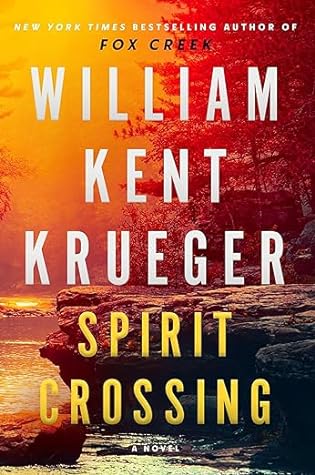
Spirit Crossing, by William Kent Krueger

Spirit Crossing is the spellbinding new novel in the Cork O’Connor series by William Kent Krueger. The book starts with two missing women, and an accidental discovery of a fresh grave. Readers faithful to the series will recognize the characters; there are enough of them, mostly related to one another, to provide depth and interest, without confusing the reader or making the plot too complex.

Lucky me, I read it free and early. My thanks go to NetGalley and Atria books for the invitation to read and review. This book is for sale now.

The story begins innocently enough, with the series protagonist, Cork, out berry picking with his son, son-in-law, and grandson, who is known by the Ojibwe nickname Waaboo. While searching for blueberries, they come across a fresh grave. Waaboo sees the victim standing before him, as if she is still alive, and he’s distraught because she is so unhappy. Waaboo is not the first one in his family to have this ability; nobody doubts that he sees what he says he sees. And so the men immediately wonder whether this is the grave of Olivia Hamilton, daughter of a wealthy Anglo, who’s been reported missing with massive headlines everywhere; or that of Crystal Two Knives, a missing Native girl whose name barely elicits more than a yawn from law enforcement.

And so right away, we are looking at not only the characters, but the longtime issue of missing Native girls and women, and the way that law enforcement neglects their cases for those whose families have money and connections.

One of the things I admire most about Krueger’s writing is the way that he incorporates urgent issues that especially impact the place where he lives—northern Minnesota—into the plot, blending them in so seamlessly that the reader isn’t distracted, because the issues are part and parcel of the mystery to be solved. He does the same thing with pipeline protests similar to the Dakota pipeline that lit up the headlines in recent years. Other aspects of the story include Ojibwe (Chippewa) culture and history, which is part of every book in the series, since most of the family is Ojibwe, and in this case, a character with a brain tumor. When significant events occur and the woman with cancer is the only one to witness them, did they really happen, or is it the brain tumor talking? This adds a layer of psychological tension not present in most of Krueger’s book; I’m not a fan of that subgenre, and am pleased to see that this doesn’t take over the plotline. It’s dealt with tastefully and without sensationalism.

Those that read my reviews know that I have an interest in seeing how authors develop child characters, particularly in a story such as this one, in which the child plays a major role. It makes me crazy when an otherwise competent author searches for shortcuts, such as a child that’s precocious or gifted, to explain away their own failure to craft the child’s character in a way that is honest developmentally. This is one more reason I enjoy this series. Yes, Waaboo has unusual powers, but he is still a small boy. The notion of going home without blueberries is a major blow. Tears threaten. I love the way Krueger develops this kid, and I can’t wait to see more of him in the future.

My one criticism involves a specific passage between the 88th and 90th percentiles, just as we rise toward the climax. Without going into spoilerish details, I will say that one character does something that everyone in the family agrees they must not do, and without any explanation, everyone in the family is fine with them doing it this time. This, of course, puts the character in danger, which anyone that’s paying attention can predict the very moment the action commences. It’s clumsy in a way that is atypical of this author, and I have no idea why he makes the choice he does, but it affects my enjoyment of the book, because suddenly I am not thinking as much about the characters as I am about the author. Having this occur a split second before the climax is especially grating.

On the other hand, I am picky. Very picky. I suspect that this passage will annoy only a small percentage of readers.

I do recommend this book, and this series, to those that love a good mystery. Although it can be read as a stand-alone, those with the time and inclination might enjoy going back a few titles, or even to the beginning of the series.

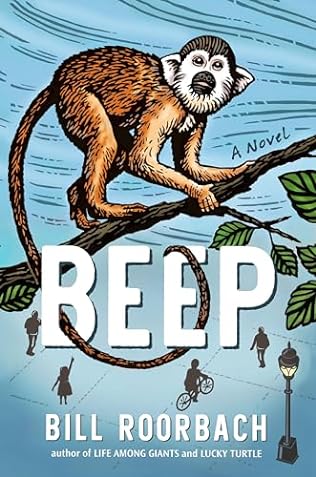
Beep, by Bill Roorbach****

Beep is squirrel monkey, born and raised in the rain forest of Costa Rica. He’s not a baby anymore, and his old uncles have informed him that all the females are spoken for, and he must travel to a new area to mate and propagate. It’s tricky business, though, because human encroachment has separated the forests from one another, so Beep cannot get to the next forest without going through areas developed by humans. Beep’s odyssey takes him much farther than anyone imagined, and in the end, he finds fame and satisfaction.

My thanks go to NetGalley and Algonquin for the invitation to read and review. This book is for sale today.

Much of the book is devoted to the relationship that Beep develops with a human child named Inga. While traveling through neighborhoods, a bit lost and unsure where the next forest might be, he spots her eating some delicious fruits in her backyard, so he introduces himself in order to get lunch. Inga’s mother comes out and meets him also, and this passage provides an idea of the story’s character:

“’Squirrel monkey,” the mother said warmly, ‘Ooooh. They aren’t usually solo. Oooh, ooh. Keep your eyes peeled, there will be more.’

“Ugh, eyes peeled? ‘I’d like some fruit,’ I said clearly.

“’Oh, how charming,’ said the mother. ‘Hoo-hoo, monkey.’ She’d wiped most of yesterday’s blood from her lips, but at the edges of the enormous mouth some remained (probably she’d caught and eaten a bird). Also, part of her outer wrappings had come loose and her poor chest looked more distended than ever, wrapped in a bright banner of some kind. Somemonkey once said they look like us, but come on: they do not.”

But this is not Inga’s permanent home; she is on vacation. When her family returns to New York, which Beep calls Nyork, she smuggles him in with her carry-on items and it is in New York City that he meets fame after surviving several harrowing situations.

For the most part, I find this novel charming. There’s no need to concern ourselves about the credibility of the overall story line, because after all, we’ve begun with a monkey providing the narrative, so it’s clear that we just need to roll with it. It is funny in places, a bit dark in others, and then—as with the above quote—sometimes it’s darkly funny. Some of the reviews I’ve read take issue with the ending, but I’m good with it. My sole dissatisfaction, and unfortunately it’s one of my pet peeves, is Roorbach’s failure to develop Inga appropriately in keeping with her age. There’s a scene at the airport when she starts to cry because her stuffed animals are being taken away to be scanned by security, and another soon afterward where she is walking her doll buggy in Central Park, so I’m figuring she’s maybe six years old; but subsequent scenes make her seem much older, and finally we’re told that she’s eleven years old. It doesn’t take years of study to know that an eleven year old girl doesn’t wail about her stuffed animals or take her dolls for a walk in the park. Get real.

Happily, as the story unfolds from there, Inga settles into being a real eleven year old, and my irritability ebbs so that I can enjoy the rest of the book.

All told, this is a delightful read. Because of its dark characteristics, which I will not provide because they’d be spoilers, this is not a book to read to your little ones, but if you have a young Goth in your home who is able to read alternate spellings and dialects, then this book would likely be that kid’s happy place. The overall message is a worthy one, although Roorbach is probably not going to change hearts and minds about the environment, since those in favor of unchecked development in the face of environmental devastation and disaster aren’t going to buy this book. All told though, it’s a fine read for those that are ready for something a bit different and that can handle dark humor.

Instrument of Darkness, by Charlie Parker*****

It’s a funny thing about long running series, how some of them become stale after a time while others just keep building. The Charlie Parker series by John Connolly is one of the latter, and with every addition to it I am more riveted, more amused, and more engaged than I was before. The Instruments of Darkness is the 21st in the series. My thanks go to NetGalley and Atria/Emily Bestler for the review copy; that said, this is one of the rare times that I would have laid out full jacket price if that was the only way I could obtain a copy.

This book is for sale now.

Charlie Parker is a former cop turned private detective with a terrible past. He stepped out to buy a newspaper one morning and returned to find his wife and small daughter savagely butchered; the guilt at not being home to defend them was overwhelming, if irrational. He dedicated himself to finding the person that had done it, and making certain they never did it again. Since then, he’s served as a professional snoop on behalf of other wronged persons. Because he often upsets people with money, power, and twisted morals, he often brings along his own muscle when he works, or in some cases, contracts with them to bodyguard his clients during the process. So it is this time.

The job has to do with a young mother whose baby has been kidnapped from its crib during the night. Colleen woke from the first sound sleep she’d had in forever only to find the nursery window open, and Henry gone from his bed. Later her husband Stephen finds a blanket in the trunk of her car, soaked in blood, which, when analyzed by law enforcement, turns out to be the boy’s blood. Stephen tells the police that he is sure she must have done it, and he leaves her.

But she didn’t. Of course not.

In his last few Charlie Parker novels, Connolly has added touches of horror and magical realism, and it’s only made his stories better. In particular, he is adept at sentient houses or other buildings. Sometimes it really is the structure; at other times there’s some sort of being that lives there, unseen. In this case it’s an old house built from a Sears Roebuck kit over a century ago, and so he names it “Kit No. 174,” and after it appears a time or two in the story, generally as the opening of a new chapter, I get the shivers just seeing the name. The narration tells us, “No one had ever spent long in it—or no one had ever lived in it for long, which is not the same thing. No, not the same thing at all.” There are some minor references to other houses that have appeared in the series, and these will delight the faithful readers that remember them; it did me. However, newbies that are just starting this series will be fine.

The recurring characters shine brightly here. The attorney that often hires Parker, Moxie Castin, opens the book, and we get a resonant character sketch:

“Moxie Castin was easy to underestimate, but only on first impression. He was overweight by the equivalent of a small child, didn’t use one word in public when five others were loitering nearby with nothing better to do, and had a taste for ties reminiscent of the markings of poisonous insects or the nightmares of LSD survivors…He lost cases, but not many, and his friends far outnumbered his enemies.”

Other recurring characters are the Fulci brothers, and when I see their names, I smile. They’re described as “two wrecking balls in human form.” Another is Sabine, a shy, tortured psychic that just wants the dead to go away and leave her alone, and best of all, Angel and Louis, a lawless couple of friends—the word “couple” applies in two different ways here—that Parker hires when things get spicy. If I smile when we are joined by the Fulcis, I beam when I see Angel and Louis. And in a nod to series regulars, there’s a point when Parker simply tells someone, “They’re coming,” and he doesn’t say who, but of course, we know exactly who. (Later he explains them for the uninitiated.) There’s a favorite passage of mine in which Parker is concluding an interview, done in a restaurant, and when he and the other person emerge, she sees them and asks,

“Are they with you?’

“They’re my associates.’

“They don’t look like private detectives. Don’t take this the wrong way, but they look like criminals. If they came into the store, I’d lie down on the floor with my hands behind my head.’

“Sometimes that’s precisely the effect we seek.’”

Oh, there’s so much more, but you need to find these things for yourself. The story is on the gritty side, but not nearly as much so as some of the others in the series. In fact, I generally have a policy of not reading this series at bedtime, lest it enter my dreams. I violated that policy once, and I did indeed have a dreadful night afterward. And so I behaved myself until I hit the last twenty percent, and at that point, I knew I would read it until it was done, regardless of the time or proximity to lights out, because I had to see the resolution. I had guessed, long before, whodunit, but that felt beside the point. So I stayed up and saw it through…and I’m not a bit sorry.

Highly recommended to those that love the genre, and especially to Charlie Parker buffs.

The Golem of Brooklyn, by Adam Mansbach*****

Len Bronstein is an art teacher. He has a whole lot of clay he’s filched from his employer’s supply closet, and now he’s stoned. He should make something. He should make a Golem. And friend, that’s just what he does.

Traditionally, The Golem is made by a rabbi to help the Jewish people during difficult times. Len isn’t a rabbi, and he doesn’t expect much from his creation:

Five minutes passed, and nothing happened. Len reminded himself that he didn’t actually expect anything to…he didn’t believe in any of this shit. He stood, dusted himself off, and went inside to grab a beer…Len deposited his beer in the sink just as The Golem ripped his back door off the hinges and flung it aside.

My thanks go to Net Galley and Random House Ballantine for the invitation to read and review. This book is for sale now.

Now that The Golem has awakened, he needs to know what his target is. His answer comes to him as he views the news on Len’s television. White Supremacists are railing about a Jewish conspiracy; the Holocaust, they say, was a hoax. The Golem was asleep during the Holocaust, but once it’s explained to him, he’s ready to get busy. But first, he must talk to the rabbi.

Our second main character is a woman named Miriam, Miri to you and me. She works at the bodega down the street, and Len recruits her to be a translator; The Golem, you see, only speaks Yiddish, and Len doesn’t. Miri has been drummed out of the temple because she is a lesbian, but The Golem likes her just fine. Before you know it, Len, Miriam and The Golem are on a road trip beyond all others, first to find a way in to see the Sassov Grand Rebbe, a wealthy and powerful man with a great many gatekeepers, and then to a scheduled White Pride rally down south.

This is, as may be obvious by now, very edgy humor. There’s a great deal of profanity, and whereas most of it is hilarious, at the beginning, the author could have varied his choices more. There are lots of cuss words out there, and not all of them begin with F. But this is a small matter. This novel’s action is interspersed with brief passages of Jewish history that I find very interesting, and they are so brief, and so skillfully woven into the narrative, that you may not notice that you’re learning some things.

My favorite passages involve a bombastic politician, and multiple encounters with cops. (The Golem doesn’t care for them.) As for me, I have read several very funny novels this year, but none made me laugh out loud as often as this one. And in the end–well, you don’t expect me to tell you how this ends, now do you?

Highly recommended to readers that lean left and can tolerate profanity.