My Name is Emilia del Valle, by Isabel Allende****

“Aren’t you afraid, Angelita?’ I asked her. ‘All the time, but I don’t think about it. I want to die with my boots on my feet,’ she answered…

“I did not know who I truly was until circumstances put me to the test.”

My Name is Emilia del Valle is the newest novel published by feminist icon and author Isabel Allende. The story is a fictionalized account of a journalist that travels from California to Chile, where war has broken out. Because she is a woman, her editor resists sending her, and then, under pressure, agrees that she may go, but only to cover human interest stories in the city. Those that have read any book ever by Allende will know instantly that this is not what our journalist does.

My thanks go to NetGalley and Random House Ballantine for the invitation to read and review. This book is available for sale now.

Like all of Allende’s protagonists, Emilia is a woman that refuses to be constrained by the expectations of the time regarding gender. She is possessed of feverish curiosity, and once she finds herself in the thick of the conflict, she has no interest whatsoever in finding and maintaining a safe, distant place from which to report. She assists the “canteen girls,” who provide water to fallen soldiers, along with minor first aid. Emilia learns first hand about the horrors of war, and she is forever changed by it.

This conflict is one that isn’t widely reported, and Allende writes about it so that it may not be forgotten. Ten thousand died here, mostly men from poor families, killed for no good reason. Emilia’s experiences highlight the disparity in treatment according to social class and wealth, as well as gender.

The writing is first rate as always. However, in most of her earlier novels, the author found a way to intersperse shocking or horrific passages with some that were uplifting, and often very funny. I would bark with sudden laughter at some witticism that I had not seen coming. I wish she had done that here. When there’s too much horror and bloodshed, it is tempting, natural even, for readers to tune out, let the words wash over us. And while there is romance here that provides some relief, I would have liked more.

Nevertheless, those that love historical fiction, social justice, feminism, and especially those that love Allende’s writing will want to read this book.

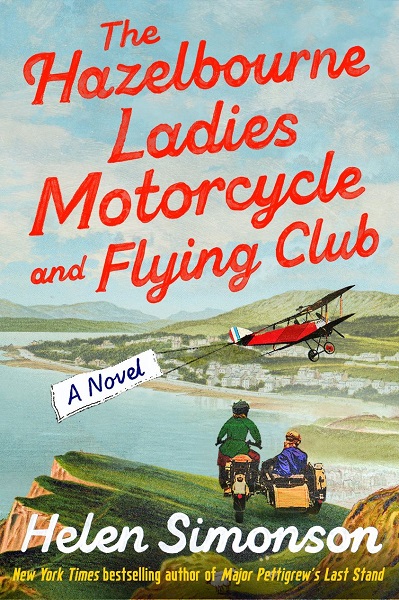
The Hazelbourne Ladies Motorcycle and Flying Club, by Helen Simonson*****

Helen Simonson is the author of the bestselling novel, Major Pettigrew’s Last Stand. With her new release, The Hazelbourne Ladies Motorcycle and Flying Club, she is once more in her element, creating believable characters and using them to skewer the pervasive racism and class snobbery of Britain, and also, in a smaller way, that of the U.S.  With outstanding word smithery and an unflagging pace, this historical novel should be number one on your summer reading list.

My thanks go to NetGalley and Random House for the review copy. This book is for sale now.

The year is 1919; the place is England. Constance Haverhill has been ousted from her job running an estate; the Great War has ended, and now the women that have been gainfully employed and done a fine job are unceremoniously ejected so that their jobs may go to the men that have returned from the conflict. For the time being, she has a position as a traveling companion to a family friend who’s recuperating at the seashore; once this situation ends, she has no idea where she’ll go or what she’ll do.

Out of nowhere comes Poppy, a daring young woman from a wealthy family. Poppy wears trousers and drives a motorcycle; she befriends Constance and sweeps her into her motorcycle club. Things become even more interesting when Poppy purchases a used biplane to bring home to her brother Harris, a handsome but severely depressed young man who’s lost a leg in the war. At one point he laments, “They look at me as if my brain has gone missing along with the leg. Or rather they refuse to look at me at all.”

Poppy is utterly fearless, challenging local authority and promoting women’s rights. She doesn’t care about the opinions of others; her eye is set on the horizon. And she can do that, because she has a soft nest in which to land. At the same time, Constance is always aware of the stark class division that prevents her from behaving as Poppy does.

“Respectability was the currency in which Constance knew she just trade for the foreseeable future. She…did not have Poppy’s wealth and position from which to defend herself against notoriety.”

There are a number of amusing side characters whose less progressive attitudes contrast with Poppy’s. The two women—also very wealthy—on the adjoining estate sniff at her exploits and declare them to be unladylike. The class division is also highlighted when Constance is offered a position with the hotel where she and Mrs. Fox, the family friend she accompanies, are staying. However, she is told that once she accepts the offer, she can no longer be a guest at the hotel, nor may she use the restaurant, which is a frequent gathering place of Constance’s new friends. No hobnobbing with the clientele will be tolerated; she must use the back door. Constance reflects to herself that wherever she goes, her friend Poppy will use the front door.

Britain’s racist attitudes toward people of color is also featured here, but in a way that does not hijack the plot. There’s an Indian guest of the hotel that is snubbed left and right; at one point, an American visitor attempts to have him excluded from the social events to which he’s been invited. This is resolved in a deeply satisfying manner, as is the issue of taboo friendships formed by Mrs. Fox.

If I could change one thing, it would be to add a bit more nuance. The bad characters are oh so bad; and while the good characters make the occasional mistake, we never doubt their complete goodness. However, this is a minor bone to pick, and overall this is a delightful book.

Highly recommended.

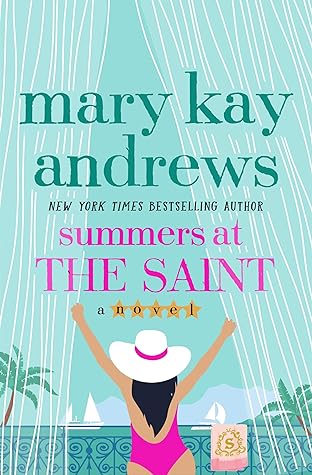
Summers at the Saint, by Mary Kay Andrews****

Summers at the Saint is the latest novel by veteran author Mary Kay Andrews. I am not usually a fan of what I think of as light and fluffy books, but over the last couple of years, I’ve developed an appreciation for this author’s work. This story centers on a fashionable beach resort hotel and those that run it, with the focus primarily on the women. It’s a good summer read—not a bad choice to take to the beach, actually. My thanks go to NetGalley, Macmillan Audio, and St. Martin’s Press for the invitation to read and review. This book will be available to the public May 7, 2024.

Our protagonist is Traci Eddings, the young widow of Hoke Eddings, heir to the Saint Cecilia resort. Traci has inherited part of the business from her late husband, but there is a power struggle in play as the book opens. The old man is dying, and the surviving heirs are scheming. The business seems to be on the rocks, or near to it, and Traci can’t figure out why. She makes several smart changes, hires good people, and yet…

We have interesting side characters. Parrish is Traci’s niece, whom she persuades to postpone her studies for one more summer as Traci implements the changes that are needed. We have the new cook, Felice, as well as Livvy, a capable young woman that Traci hires away from the diner where she is waiting tables; and we have Livvy’s mother Shannon, who used to be Traci’s best friend. Shannon completely dumped Traci many years ago, leaving Traci bewildered and hurt; she still feels that way. Lastly we have Whelan, who is working at the Saint as a pretext while he tries to unravel the circumstances that led to the death of his younger brother at the resort’s pool many years ago.

The book’s strongest aspect is the side characters, particularly Felice, Shannon and Livvy. Other characters are one dimensional, either entirely good or entirely awful. Rather, this is a plot based book. There are a great many moving parts, with a blend of genres that include romance, mystery, beach reads, women’s fiction, and contemporary family drama. It is in weaving the many pieces of this story that Andrews’s experience shines through. If there is a plot element that conflicts with another, or that is simply illogical, I didn’t spot it. At the end, everything and everyone is accounted for; in fact, I might have preferred not to have every single aspect resolved, and every positive character quite so perfectly happy. I seldom argue in favor of ambiguity, but in this case, it wouldn’t hurt.

I was fortunate enough to receive both the Kindle and audio versions, and once more, Kathleen McInerney does a fine job of narration with all of the women characters and the internal monologue. Her voice isn’t deep enough to voice the men’s characters well, and I suggest adding a second, male narrator next time around.

The story held my attention quite nicely as I did my morning bike ride, and I recommend it to Andrews’s loyal readers, and to those that enjoy a good beach read.

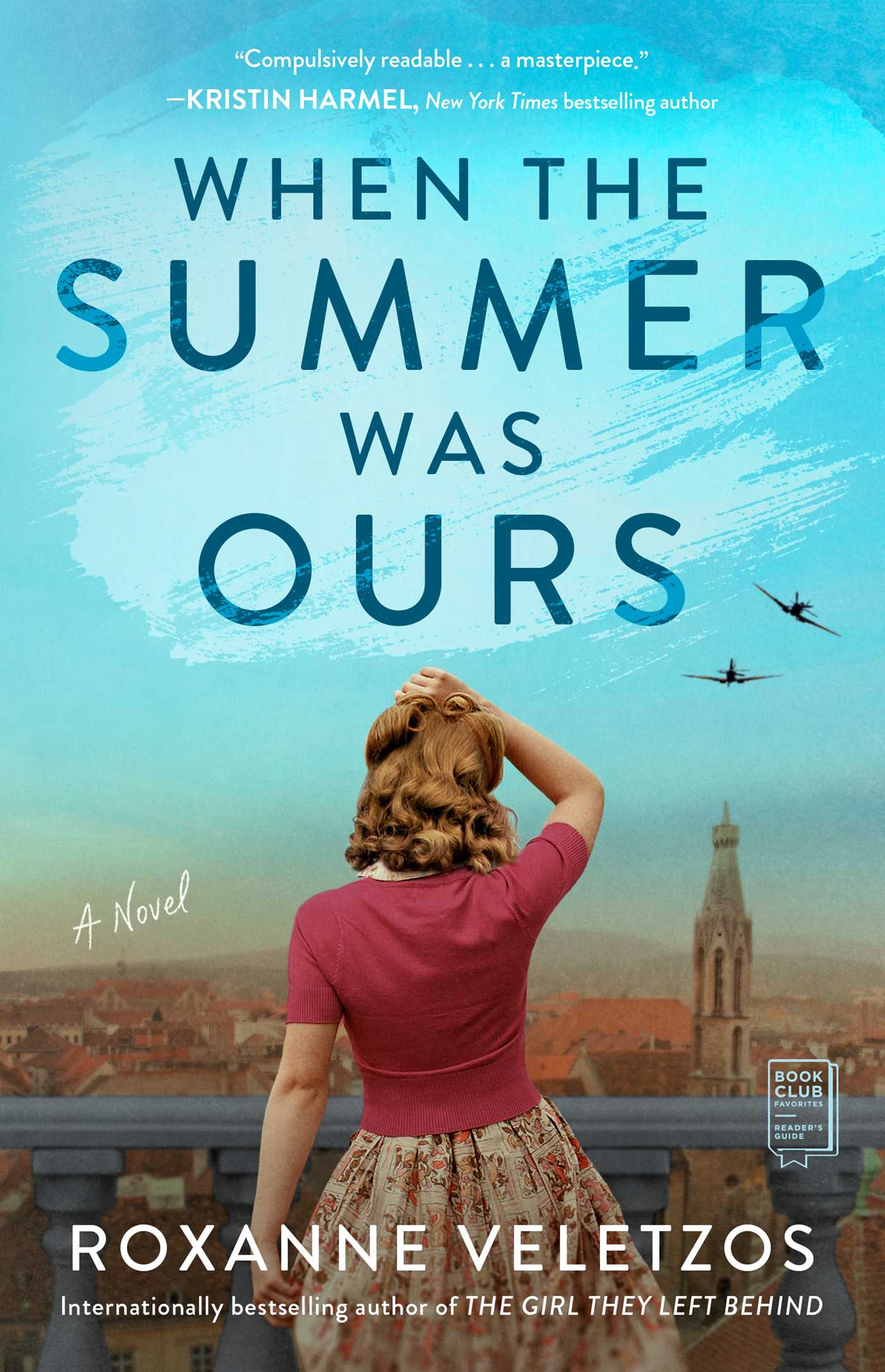
When the Summer Was Ours, by Roxanne Veletzos***-****

3.5 stars, rounded upward. I had proclaimed myself to be over and done with World War II fiction; there’s been a glut of it in the publishing world, and I have well and truly had my fill. My soft spot, however, is for any book written by an author whose work I have read and enjoyed. I reviewed Veletzos’s charming debut, The Girl They Left Behind, in 2018, and so when the opportunity came up, I agreed to read and review this one, too. It was a good decision.

My thanks go to Net Galley and Atria Books for the invitation and review copy. This book is for sale now.

Eva Cesar, daughter of the well-to-do but terribly strict local bourgeois, falls in love when Aleandro, a Romani artist stops in her tiny town in Hungary. He is a painter and a fiddler, raising his younger brothers alone following the deaths of their parents. Eva’s father knows nothing of this romance, and it’s a darned good thing. Not only is her father a Nazi sympathizer and bigot, but she is already engaged to marry Eduard, a dedicated Red Cross physician whom she also loves.

The story follows all three of them over the years, shifting points of view. All three are likable characters; Aleandro is obsessive enough that he seems a little creepy at the outset, but as the story develops, that’s no longer the case. Eduard is a stable, likable human being, but he is the one that is least developed. Eva often makes passive decisions, which I find grating, yet these are the early 1940s, and women don’t yet know they’re entitled to be decisionmakers, at least in many regards. The plot seems to go all over the place, but it comes together quite nicely at the end.

There are two related developments I would have liked to see handled differently. First—and I’m telling you this because it occurs early—Eva becomes pregnant after just one night of passion with Aleandro. Picture me sticking two fingers down my throat. Gag, spit, gag some more; what an overused trope. But then it gets worse. Eva heads to a clinic where abortions are performed quietly, since the procedure isn’t legal; the facility is filthy, and the staff are rude; we briefly meet the doctor, who virtually has horns and a spiky tail, and dines regularly on the flesh of aborted embryos and fetuses. More or less, anyway. And with women’s rights to choose our own reproductive decisions under attack, this is the very worst possible time to put such vile propaganda into a novel. She flees, of course, and has the baby, of course. In fact, as I write this, I question my choice to knock off only half a star from my rating. I’m growing madder by the minute, just writing about it.

Moving on!

The most difficult aspect of a complex story like this one is deciding how to end it. I come back around when I see how tastefully and realistically this is achieved. The ending is both credible and sweet.

There it is; you decide.  

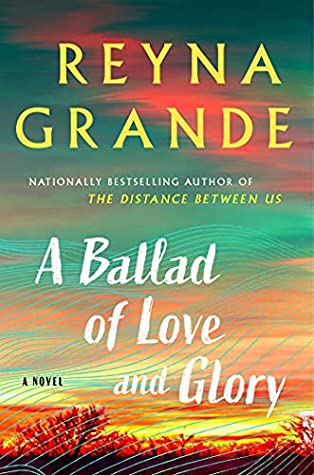
A Ballad of Love and Glory, by Reyna Grande****

“We Irish know what ’tis like to be oppressed by an aggressive neighbor.”

Reyna Grande can really write. This is the first of her novels I have read, but it surely won’t be the last. My thanks go to Net Galley and Atria Books for the review copy; this book is for sale now.

A Ballad of Love and Glory encompasses two genres, romance and historical fiction. It’s the story of John Riley, an Irish immigrant to the USA in the mid-nineteenth century, who is met at the dock by military recruiters that want him and his compatriots to serve in the US army, fighting the war against Mexico. Riley arrives half-starved and worried sick about the fate of his family that he left behind. The promise of soldier’s wages is enough to persuade him, and he enlists.

It’s also the story of Ximena, a Mexican naturopath whose husband is killed by Texas Rangers. She follows the army to help care for the wounded; she and Riley are drawn together.

As for me, I am drawn to this tale by my love of military history, whether nonfiction or fiction, and by the unconventional point of view regarding the U.S. land grab. At the time of the annexation of Texas, followed by the war against Mexico, most Americans accepted the official explanation and believed that the war was initiated by Mexican aggression toward U.S. citizens across the border. Some, including an up-and-coming politician named Abraham Lincoln, saw threw the ruse and understood that the whole thing was a pretext on the part of the US designed to capture Texas, California, and points in between. This is the background information that I bring with me as I begin reading this novel.

The title and book cover both focus on romance, and if a friend hadn’t mentioned this story, I would have passed it by; most romance is too sappy for my tastes. But an entire brigade of Irish immigrants that jump sides in the midst of the conflict and fight, instead, for Mexico? I have to read this!

Grande honors historical truth in her storytelling, and as such, this is one sad read. The Irish soldiers are treated more savagely by the American-born officers than I had known, and Grande gives us plenty of detail. And although I know, when I begin reading, exactly who wins this war, it’s hard to face the inevitable once I am bonded to these characters.

That said, I do think Grande does a better job with the military end of this thing, and of developing John Riley in other regards, than romance. There’s this tension between Riley and Ximena, because he is a married man with a child back home—and I can guess immediately how this conflict will be resolved. Until that resolution, the tension, part of the “honor” mentioned in the title, is drawn to nearly ridiculous proportions; at one point, as the two are straining passionately toward one another, they both stop simultaneously, whip out their rosaries, and start saying Hail Mary’s together. I threw back my head and laughed!

Nevertheless, this is a wonderful novel. If you enjoy historical fiction; unconventional points of view; working class fiction; or tales of forbidden love, this book is for you. If you are in need of a good ugly cry, this book is your catalyst.

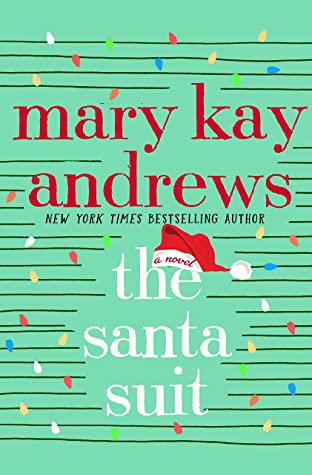
The Santa Suit, by Mary Kay Andrews***-****

3.75 rounded up.

I love a good Christmas story, but so many of them are cloying or insipid. A friend recommended this one to me, and she wasn’t wrong. My thanks go to Net Galley and St. Martin’s Press for the review copy.

Ivy is newly divorced, and she comes away from it with bruised feelings, but also money. Since she works from home, she has the choice to go anywhere, so she buys a farmhouse in a tiny town in North Carolina. She pays for it without ever seeing it in person, and it comes “as is.” At this point, I say, Welp, you’re in for it now, hon. And she is, sort of.

The realtor, Ezra, known locally as “The House Hunk,” has taken a shine to Ivy. He helps her with the heat; when she discovers that the old furniture is still there in the house, he and a friend cart it off for her, and when there’s a problem with her own furniture, he helps bring it all back in. And initially, she regards his attention as a nuisance, maybe even a stalker; but between the fine reputation he enjoys locally, and the number of times he helps her out of difficult situations, she gradually warms to him.

Ivy is a likable protagonist. She’s self-sufficient, but she isn’t cold. She sets about making friends right away. Her new bud, Phoebe, is in a state because she’s fallen in love with someone she met online, and has used a picture of someone else. Now the man Is coming to see her, and she’s panic-stricken. Other new friends include a local business person for whom she does some free, and very good, advertising, and a 96 year old man. Her dog, Punkin, goes everywhere with her, and she talks to him all the time, the way that some of us also do. When she needs assistance it’s because she doesn’t know the area, or because a job requires an extra set of hands, not because she is some helpless airhead. An engaging character indeed.

My rating reflects a couple of sloppy bits that the author and editor should have caught and dealt with immediately. They’re small, but they interrupt the magic, because they cause me to think about the two slackers rather than the story and characters. The first is when she offers Ezra coffee, but warns him that all she has is instant. Two paragraphs later, she is brewing the coffee. Oh, come on! Clean it up. A bit later, after Ezra and a friend have schlepped furniture in from the truck, he asks if she’s been out to play in the snow, and she tells him she doesn’t want to spoil its beauty. “It’s so beautiful, all that clean, untouched white.” And so I wonder: did they teleport the furniture indoors? Because otherwise, surely that snow would have been touched in a whole lot of places.

There are a couple of other inconsistencies, albeit smaller ones, and I am using a fair amount of ink to discuss problems that may seem trivial, but this is no debut author, this is a successful writer with a host of books in her repertoire, and she should know better.

The plot, on the other hand, is excellent. There was one development that I thought was obvious, but when I finished my eyeroll, I was surprised to see that she didn’t take it where I expected, and instead did something much better. I particularly like the way the romance unfolds, and the way that Ivy helps Phoebe out of her dilemma. There are other threads—involving a Santa suit, of course—that are equally delightful.

So, in spite of my complaints, I do recommend this charming, fluffy tale to you. It’s a mood elevator, and we can all use some of that. It’s for sale now.

Dear Emmie Blue, by Lia Louis***

I read this copy free and early, thanks to Net Galley and Atria Books. From time to time I find myself reading too much dark material, which is the direction I’m generally drawn toward. I found this title and thought that it might balance my selection. And for what it’s worth, it did that.

The premise here is that Emmie has fallen hard for a young man that she met years ago by pure chance. At age 16, she had written a secret that she needed to share on a scrap of paper, along with her email address, stuffed it into a balloon and launched it into space. (How does one get a slip of paper inside a helium balloon without losing the gas inside it? But let’s not dwell there.)  Rather than falling into the ocean and choking a seabird to death, the balloon makes it to dry land, and Lucas finds it. The two become fast friends, and as time progresses, she is sure they are meant to be more.  She is devastated to learn that his plans are different from hers.

This story is a quick read with lots of dialogue. One of my pet literary peeves right now, however, is the terrible-mother-who-ruins-everything. Oh. Come. On. You can do better than this. However, other aspects of the story are more congenial. In the end Emmie takes control of her own life, as she should have done all along, and good things result.

Those looking for a pleasant beach read could do worse. However, the publicist that compares this book to Eleanor Oliphant is Completely Fine is completely delusional.

It’s for sale now.

Amish Guys Don’t Call, by Debby Dodds****

AmishGuysDon't Amish Guys Don’t Call is funny, absorbing, and ultimately lifting. Dodds has a great heart for teenagers, and this title is one that should grace every high school and middle school library, and will also attract parents and teachers of adolescents. I read it free and early thanks to Net Galley and Blue Moon Publishers. This book will be available to everyone June 13, 2017.

Samantha is still smarting from her parents’ divorce and her father’s inattention when her mother moves them to Lancaster, Pennsylvania, which is the heart of Amish country. Samantha has been in trouble for shoplifting, and the urge increases when she is in stressful situations. To her surprise and delight, she strikes up a friendship with Madison, who in turn pulls her into the most popular circle at school.  The one thing that gets in Sam’s way is her wholesomeness. She doesn’t drink, smoke, or use street drugs; not only is she still a virgin, but she’s never had a boyfriend. Madison tells Sam that all of this can end, with some careful time and grooming. Thus is “Project P” launched.

Despite the name of the boyfriend project, this book is free of explicit sexual situations. We see drug use, and sexual situations arise, so those considering whether this title is right for your teen or group of teens should bear this in mind. If in doubt, buy a copy for yourself and read it first.

At a big party held at night in a cornfield by Amish boys during their Rumspringa, a period in which some Amish groups permit their adolescents a taste of what the outside world is like and tolerate sometimes-extreme behaviors as a rite of passage, Samantha meets a young man named Zach. He’s handsome, and he’s drawn to her. We can tell from his behaviors (as well as the book’s title) that he is Amish, but it takes quite awhile for Sam to catch on. She is obsessed with his failure to provide her with his cell number. Is there another girl in the picture?

This story was a fun read, but I don’t recommend it to general audiences apart from those that really enjoy a wide variety of YA novels. Every nuance is explained thoroughly, and so whereas the text is accessible to students—with vocabulary at about the 9th grade level—most adults will want something more nuanced.  That said, if I were still in the classroom, I would purchase this title. Because the subject matter might provoke conservative parents, I would not use it as assigned reading or use it as a classroom read-aloud, but I know that a lot of students will want to read it.

Recommended for teens that are not from highly conservative backgrounds.