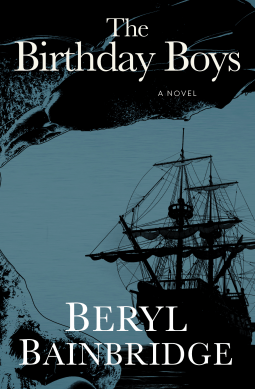
The Birthday Boys, by Beryl Bainbridge**

thebirthdayboysThe Birthday Boys is a fictionalized account of the Scott expedition’s travel to Antarctica in 1910. It’s told sequentially through the perspectives of five men that participate, each picking up where the last has left off and of course, also including some personal reflections and memories to make them more real to us. I was invited to read and review this novel based on my enjoyment of the book Ice Brothers, which was also a maritime tale (and is reviewed here: https://seattlebookmamablog.org/2015/01/03/ice-brothers-by-sloan-wilson/ ). Thank you to Net Galley and Open Road Media, but this isn’t my book. I pushed myself all the way through it hoping for some redeeming aspect of it to pop up at the end, but it only gets worse as it goes, at least from my perspective.

Our story begins in Cardiff, and the men and The Owner (always capitalized) are eager to get started before the Antarctic winter sets in, so they pass their whaler off as a yacht in order to prevent safety regulations from slowing them down. They understand they are sailing across the world in a leaky tub, but one of them is too unprincipled to care, and the others are so darn young. In fact, wouldn’t reaching the destination on one’s twenty-first birthday be the best gift ever? Hence the title.

At the outset, I struggled a bit with some of the technical terms, looking up “plimsol line” and a couple of others, but by the 15% mark I had my legs under me, so to speak, and felt more confident. Soon thereafter, however, the nasty references to gender and race came into it. I looked back at the copyright; since this author, highly respected in the UK and winner of awards, was born in 1932, might this be a digital release of a very old book? But not so much: the original copyright date was 1991. Perhaps Dame Bainbridge felt that ugly racist terms might provide some flavor here. Likewise, the women included here, generally wives of the men involved that were tucked safely away at the base camp, were carping or hysterical, squabbled with one another, and Mrs. Scott, the only woman with any character at all according to the narrative, kept insisting that she hated women.

Whoa.

The plot is rugged and gruesome. If not for the issues just mentioned, I might compare the writing to that of Jack London, fascinating for those that love the adrenaline rush of life-or-death adventures, but too grisly for me. There’s some good work with figurative language and at times the scenes are tremendously visceral. Yet at times the pace actually plods along rather slowly for a book of its kind, and so I find myself wondering how this writer managed to be recognized by the queen; that is true, at least, until I find the following passage:

“It’s difficult for a man to know where he fits in any more. All the things we were taught to believe in, love of country, of Empire, of devotion to duty, are being held up to ridicule. The validity of the class system, the motives of respectable, educated men are now as much under the scrutiny of the magnifying glass…”

Well, perish the thought!

If not for the racism and sexism I’d call this a three star read. If an Antarctic expedition thrills you and you have the stomach for the…never mind. I can’t finish that sentence without scrunching up my face and squinting, so let’s go with the bare truth: I don’t recommend this book to anybody.

Cakewalk, by Rita Mae Brown***

Dear heaven.

cakewalkBrown has had a long and auspicious writing career, and right about now she can do whatever she pleases. I came to this title thinking that it was a stand-alone novel; thank you, Net Galley and Random House Ballantine for the DRC, which I received free in exchange for this honest review.  The book is available to the public October 18, 2016.

For awhile I wasn’t sure just what to make of it; there are some wonderfully wry moments, and then there are others. I’ve since learned that this is actually a continuation of a series that is chronologically placed, and so many readers will already be familiar with the characters and setting.  Fans of Brown’s Runnymede series will be delighted. For those that don’t know:

“In Runnymede everybody knew everybody. Nobody forgot a thing, not one blessed thing, especially if a whiff of scandal attended it.”

The time is 1920; the small town just mentioned straddles the Mason Dixon line, with the Southern half in Maryland and the Northern half in Pennsylvania.  Everyone that is important enough to make it into the story is Caucasian, and the wealthy, benevolent folk appear to outnumber the less fortunate, who work hard and are rewarded with grace and maternal affection by the local bourgeoisie.

This reviewer’s mother, long gone now, was born in the 1920’s in a different part of the American South, and I grew up hearing that welfare was simply not necessary, because in a small town, those with money always “took care of our poor”. Nobody starved, and nobody had money that came from the government, and everyone was fine, just fine. And after we’d heard this story a few dozen times, my sister, who was older than myself by many years and knew more about the small town in question than I did finally said gently, “No, Mother, you didn’t. I know that you did your best, but not all the poor were ‘taken care of’, and yes, some people there went hungry.” And I cannot help but wonder whether Brown has based her story on the same sort of flawed premise, of a benign but paternalistic system in which those in need receive from those that have extra to give, and nobody but nobody suffers.

You don’t want to know what remarks are tapped into my reader. Every time I realized that my inner snarky Marxist was taking over, I closed that particular book and went to read something else, and later came  back to read it afresh. And though I found some bright spots, I was never a gentle reader here.

I think I might have enjoyed this story more had I heeded the note at the story’s outset that this is not a plot driven book. I assumed that characters would be more important than the storyline, and in this I was correct, but I wasn’t prepared not to have a plot at all, apart from one thing that leads to another in a meandering sort of way. Brown has created an everyday life using the small town she has fictionally reconstructed based on stories told her by her older relatives, and so the reader needs to be ready to drop in, almost as if looking through someone else’s attic at the letters, photos and diaries of those that were once there.

To read this novel one would never make the association between this author and the one that wrote Rubyfruit Jungle, the bold, hilarious, fiery lesbian manifesto of the early 1980s. But there can only be one such book, and when I look back at various famous writers that published one smashing novel and then never published anything else, I realize that maybe this is why. When one has made a name for oneself by writing a novel that is legendary and can never be paralleled, the choice is to move on and write something else, or stop publishing fiction and take up a completely different occupation.

Feminists will find a few satisfying nuggets here, and other nuggets not as welcome. There is a doomed lesbian relationship, but oh how gently it goes into “that good night” (with my apologies to Dylan Thomas). The cheerier aspect of it is that most of the important characters are women—a breath of fresh air in a realm still dominated largely by men—and some of them wield significant power.

I was dismayed at an episode in which a teenage girl with large breasts is compared to a cow as part of a visual prank in a school-wide pageant, and the entire town laughs about it. To me, it looked an awful lot like body shaming, and I wondered what in the world it was doing there. What’s up with that, Rita Mae?

For me and for readers unfamiliar with the series, this really seems more like a 2.0 or 2.5, but faithful readers have been rating it about 4 stars, so I am shooting down the middle and calling it 3. For those that have read and enjoyed the other volumes in the Runnymede series, this book is recommended.

The Tea Planter’s Wife, by Dinah Jeffries****

theteaplanterswifeGwendolyn is 19 years old when she marries Laurence Hooper, the owner of a tea plantation in Ceylon, an island nation south of India now named Sri Lanka. Jeffries provides a compelling, sometimes painful glimpse of the mores and assumptions of the heirs of the UK Empire at the outset of the peasants’ rebellion led by Ghandi. Though a few small glitches occasionally distract, this is a strong piece of fiction that fulfilled the writer’s mission admirably. Thank you to Net Galley and Random House-Crown Publishing for the DRC, which I received free in return for an honest review. The book is on sale today.
The protagonist is not a sympathetic one, and those that need a main character they can love should stop even considering this book right now. But some of literature’s most interesting characters are flawed ones, and the development of this one within the constraints of what Caucasians in the UK expected their lives to resemble at this time, and within the even greater constraints of material self-interest, is fascinating. I found myself wanting to haul this character out to the cheese room and tell her that all other women are not her enemies. She has almost nothing required of her by the easy life into which she has married, and as a local gossip points out, Gwen has “never had to fight for anything”.

Gwen has a passel of problems, however, some real, some imagined. She sees her sister-in-law as a rival not only for her husband’s affections and loyalty, but also for his fortune. She sees his wealthy former girlfriend and business associate, Christina, trying to pull him back into a relationship. What about MacGregor, the surly foreman of the laborers? What about Savi Ravasinghe? By the time the book was halfway done, I found myself alternately scolding her for making enemies everywhere and then, a heartbeat later, screeching at her to beware.

Ultimately I didn’t think I was impressed by this story until I looked back on my notes. I had highlighted nearly every warning bell and red herring and made little notations like, “Noooo!” Obviously this story engaged me all the way through. At times I was frustrated, but that was the author’s intention. At no time was I bored. And given the level of suspense and a certain amount of mystery, I realized that one genre tag had gone missing. I added this title to my “mystery” shelf, because there is so much unknown information that will keep the reader up late as well as any whodunit.

The author makes a few missteps that break the spell of time and place momentarily. At one point there is an argument between two of the characters about Ravasinghe, and one accuses the other of race prejudice, while the other responds that it “has nothing to do with the color of his skin!” This is either ignorance or revisionism. In the 1920s and 1930s racism was at a fever pitch. Colonialists based their system of rule partially on paternalism, which overtly declared that the “lesser” races needed the great white fathers to look after them, employ them, house and feed them. In the USA, Jim Crow and the Klan were at their all time most powerful; African-Americans were afraid to walk on the same sidewalks in the South, and in the North they nevertheless kept to their own neighborhoods to the greatest degree possible. Biracial marriage was an invitation to ostracism or even death, and less than one percent of the Caucasian population in any English speaking nation would even pretend that such ostracism wasn’t about race.

In fact, US President William Howard Taft declared that the day would dawn when the United States flag would fly at “equidistant points” that would include North America, South America, and Central America in fact rather than merely economically, and he told the American people that God had willed this due to the moral and racial superiority of Americans—by which he meant Caucasian Americans. In the East, look what the peasantry went through just to get the vote!  No, no white folks in the British Empire or USA were going to defend themselves against charges of racism; racism was assumed to be the will of God.

There’s another “oopsie” moment when the roof of a large building catches fire and the fire is put out with a garden hose and pots of water. No.

But all of this is mitigated by the expert manner in which the author describes the setting, having had a family member that lived on such a plantation, or a similar one. Part of the reason I wanted to read this DRC is the fact that it was set in Ceylon, and here Jeffries does not disappoint.  I was afraid the ending would either be saccharine or unspeakably brutal, but she deftly avoids both extremes and comes up with a surprising and believable alternative.

So in the end, I recommend this book to you. It’s not always easy for some of us to look in the mirror, or at the mirror of one’s ancestors, but everyone comes from somewhere, and the playing field still isn’t level. Nobody can fix what’s wrong today without knowing where the trouble came from. The Tea Planter’s Wife is a historical treasure in this regard; Jeffries is to be congratulated.

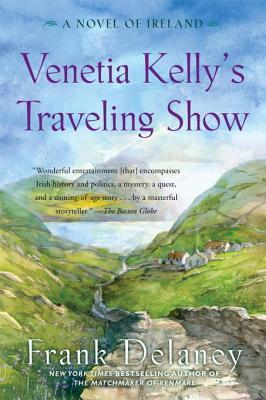
Venetia Kelly’s Traveling Show, by Frank Delaney***

venetiakellystravelingshowFrank Delaney was well known in the UK before those of us in the United States had heard of him; NPR has called him “the most eloquent man in the world”, and after I had read Ireland, an epic novel that has to do with a storyteller and so much more, I was sold. I wasn’t blogging or reviewing back then, and after I had turned the last page, I told my family that I wanted to read everything else Delaney had written. Then I received this novel as a Christmas present, and was underwhelmed. I set it aside and figured I would give it away, but later I realized that it was the first in a trilogy for which I had also received the other two books. In February of this year, I took a deep breath and plunged in for another try.
This novel is much briefer than Ireland, and I’m a reader that often finishes a good book of this length in a weekend. The problem is that this one isn’t that good. In fact, I found myself wondering whether the author had perhaps been about to produce another similarly epic work and instead decided to chisel three books out of it. Whereas Ireland magically blends Irish history, culture, and political struggle with the fictional memoir of a young boy that has met and been captivated by a wandering story teller, creating a story one can sink into and forget the rest of the world even exists, this story, which is also a family’s fictional memoir, feels like a hamster on its wheel, going through the same stuff over..and over…and…

The setting is rural Ireland in 1932; the protagonist is Ben MacCarthy, and he spins the first person narrative that makes up the story. His family is one of humble farmers, and like so many families, they barely eke out a living. The farm has been in Ben’s mother’s family for generations. His father is frustrated, not meant to be a farmer it seems, and maybe that is why he is so easily caught up in the snare set for him by the Kelly family. The Kelly patriarch is Thomas “King” Kelly, a wealthy, connected man, and Venetia is his daughter. She travels as the main act in a caravan, and Ben’s father falls in love with her instantly, leaving Ben and his mother without a means of subsistence.

Almost the entire book is the account of Ben, whose mother sends him to bring his father home, though he is just an adolescent himself, as he goes after his father, is rejected, and then is sent back after him again. It’s monotonous and irritating. Part of the story has to do with Venetia’s ventriloquism and her dummy, Blarney. Clearly Blarney is intended to draw and amuse the reader, but I found another of my eye-rolling frenzies coming on. Right, I want to say. Cute. Now can we cut to the chase?

Delaney at his best doesn’t cut to the chase; that’s the whole point of weaving a story, to make the reader want to hear more detail, not less. In Ireland, he succeeded, and I grieved for a week when the story was over, because I wanted it back. With this story it was more the opposite; I hit the 78% mark after months of reading it in small snippets, basically only resorting to it when my electronic reader had to be charged. I kept it conveniently by my bedside so it would entice me, but just looking at the cover became a chore, and I finally resolved to skip to the end, then figure out how much of it could be skimmed to understand the outcome and give the other two books a try. Had my loving relatives not put full cover price into not only this title but the two that come after it—and oh I do hope they’re better!—I wouldn’t have bothered.

One side character that stands out and prevents this from being a 2 or 2.5 star novel is Billy Maloney, the handyman that swears profusely. Because his mother won’t hear profanity, young Ben repeats Billy’s messages verbatim, and rather than leave out the curses, he substitutes the word “flockin’” in their place. We will forget all about Billy as we get caught up—or not—in the MacCarthy family’s drama and the Kellys’ schemes, and then all of a sudden a whole stream of ‘flocks’ will appear. There were some other devices Delaney also used, but they didn’t work for me. This one did.

Well, what can I tell you? If you are a dedicated fan of Irish literature and you have deep pockets, go ahead. You’ve seen what I have to say, and if you still want the book, you can buy it.

But if you’re only getting one sumptuous, luxurious novel and you love tales of Ireland, then that’s the book I recommend to you. Read Frank Delaney’s Ireland, and let this one stay in its warehouse.

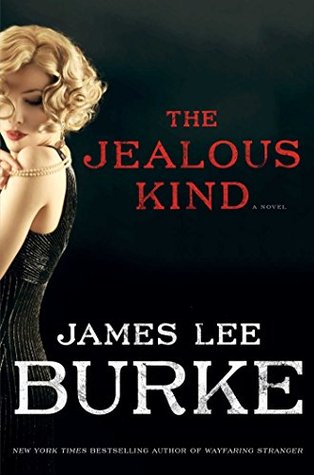
The Jealous Kind, by James Lee Burke*****

thejealouskindJames Lee Burke is a legend, a venerable and highly respected writer known for his luminous prose and quirky characters. In this, his second work of historical fiction in a planned trilogy, he demonstrates that he can still work magic better than ever. I received this DRC from Net Galley and Simon and Schuster in exchange for an honest review, but I would have paid full freight if I had to, and I rarely say that about any book anymore.
Our protagonist is Aaron Holland Broussard, and the setting is Houston, Texas in the 1950’s. Aaron is a child of the middle class. His father drinks too much and his mother is mentally ill, suffering terribly from depression during a time period when tranquilizers and electric shock were the best—and worst—that modern medicine had to offer. But he’s got a solid home to return to at the end of each day, his own bedroom, and a fine collection of pets. All told, his life is a great deal better than those that the young people around him face, especially his closest friend, Saber Bledsoe.

Diehard Burke fans will recognize in young Saber the ghost of Clete Purcel, a favorite character in the author’s Dave Robicheaux series. The role played by Saber, and before him by Clete, is that of the loyal friend that will do anything for the protagonist but whose judgment is often poor and whose impulse control is nearly nonexistent. At times the friend lightens things up with off-the-chain behavior, and at others the same friend creates problems that the protagonist has to try to repair. Even without Saber, it’s easy to become part of drama in this time and place, because

 “Violence was an inextricable part of the culture; it hung in the air, perhaps passed down from the massacres at Goliad and the Alamo and the Battle of San Jacinto or the feuds during Reconstruction or the systematic extermination of the Indians.”


Burke is widely known for his capacity to create settings from the natural and pastoral on down to the bizarre, the exotic, and sometimes the polluted or corrupted. When I entered an exclusive men’s club as an imaginary companion of Aaron’s Broussard’s, I was fascinated immediately not only by the description of the club, but by my anticipation of what Burke might do with it.

But let’s step back a minute and take it from the top. Early in this story, Aaron is at a drive-in restaurant when he sees the lovely Valerie Epstein get into a conflict with her boyfriend, Grady Harrelson, a child of the local bourgeoisie. Grady lives on “…that giant island of oak trees and wealth and faux antebellum splendor…” Grady usually gets what Grady wants, but not this time.

When Grady strikes Valerie, Aaron intercedes. Aaron and Valerie– “I never saw anyone who had so much light in her eyes ”–fall in love. Ah, youth! Mr. Burke may be in his sunset years, but he remembers adolescence like it was yesterday, and he paints a vivid, poignant picture of impossible, doomed love on the part of two young people that imagine so much more than can ever come true.

Meanwhile, Aaron finds he has accidentally created problems his family doesn’t need; combine down-and-out, loyal Saber Bledsoe, a thirst for justice, a sadistic shop teacher, a rodeo that features a notoriously vicious bull named Original Sin, and the local Mob. Toss in a Cadillac with a small fortune concealed in the door panels and some vigilante justice, and you’re in for a hell of a ride.

Readers always deserve to know when some racist terms are going to be tossed their way, and they’re here in plentitude. They span across just about every race and ethnicity, and keep company with ugly remarks about women—by bad guys, of course—and some homophobic remarks common to the time period. On the one hand, these things were part of the scenery of Caucasian middle-America in the 1960’s when this reviewer was growing up, and so I cannot imagine them not also being common in the decade before it, in which this story is set. On the other hand, for some folks one really nasty word can ruin an entire novel, and so if that’s you, step away from this one. This also serves as an advisory to teachers considering using this novel in the classroom; frankly, the literacy level is really past what the average high school student can handle anyway.

That said, the prose of the final two pages is so glorious that I stopped breathing as I read them without realizing it till the last word was read, and I felt myself exhale. The first book in this series was strong, but this one is still more compelling. I am an Atheist, but Mr. Burke can tell a redemption tale like nobody’s business and leave me yearning for more, more, more.  I read several books simultaneously, and it always strikes me that Burke’s work is vastly superior to just about everything else out there.  May he live and write forever!

Highly recommended, and available tomorrow, August 30, 2016.

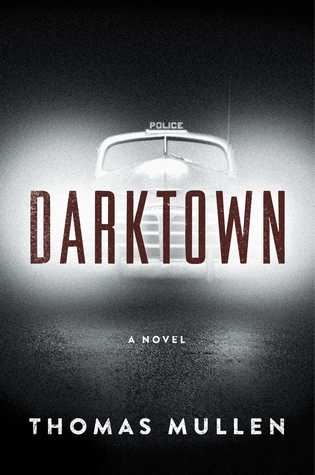
Darktown, by Thomas Mullen*****

darktown I was originally turned down for a DRC of this novel when I requested it last spring, and I took the unusual step of following up with Atria, more or less begging for it. I’ve been reviewing titles for Net Galley for two years and have received nearly 300 DRCs, so it is a sign of my interest level that I went to this extreme to read this one in advance in exchange for an honest review, and it’s a sign of decency and responsiveness that a representative from Atria Books invited me to review it after all. Although I am grateful , this five star review is not about gratitude, but a measure of the importance I attach to the issues it addresses and the skill with which the story is told.
The story centers on the first African-American cops hired in Atlanta; the year is 1948. This is considered an experiment, and to say the least, it’s awkward. The basic plan is that a small number of Negro—which is the polite term at this time in history—officers will report to a Caucasian supervisor, and they are responsible for patrolling the Black section of Atlanta. There are just eight men in this force.  They have no authority to make an arrest, so if someone has to go to jail, they must call for Caucasian police who are considered real police by higher-ups within the city administration.

To say the very least, it’s hard to take.

Mullen’s protagonists here are African-American officers Boggs and Smith, and the problem arises when they witness a crime, the assault of a woman by a Caucasian man in a car. The woman disappears, and no Caucasian cops are interested in hearing what these officers saw that night. The white cops that come in response to the report of a crime demean the Black officers, calling them “boy” and a variety of other horrible slurs.  As the white cops leave the scene, “Boggs was still standing in the street. If his rage had been a physical thing, it would have split the car in two.”

Eventually one of the white cops, a man named Dunlow, goes too far in the eyes of his rookie partner, Rakestraw, and the latter finds himself in a tenuous, secret alliance with Boggs.

Light banter breaks up tension in places, but no mistake, this is a brutal story. If it wasn’t harsh, it wouldn’t be the truth. This is one of the rare instances when the frequent use of the N word and other racist, vulgar language is actually historically necessary; you’ve been forewarned. Though Darktown is a useful history lesson, its greater value comes from causing readers to think more deeply about the role police play in western society.

A question I found myself considering, and not for the first time, is how much good Black cops can do even today to combat racism and other ugly biases by the department that employs them. Clearly cop violence toward people of color remains ever present.  If this book had been published ten years ago, I would have been concerned that in focusing on past racism, the story might have left us with the impression that racism was a problem only in the past, as if all that mess is over now.

But in 2016, we all know otherwise.

I hope you’ll read this painful but well crafted novel, and reflect some about how the dynamics of power have developed and why. Will a more diverse police presence be the key to equity for those that are so frequently crushed beneath the boot heel of what passes for a justice system in the United States, or is meaningful police reform impossible as long as cops are employed primarily to protect the property of the rich?  Would ordinary people be better off if we can, in the words of the old folk song, “…raze the prisons to the ground”?

This book becomes available to the public September 6, 2016. Highly recommended.

I Will Send Rain, by Rae Meadows****

Happy release day! I can’t wait to hear what you think of Meadows’ thunderous tale of redemption. It’s available today.

seattlebookmama's avatarSeattle Book Mama

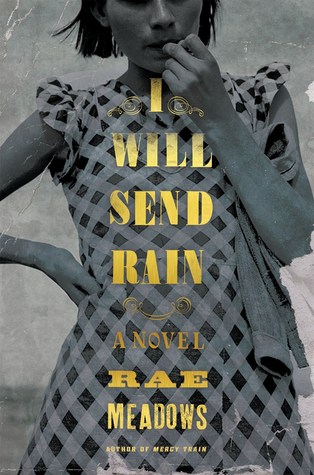
iwillsendrainAnnie Bell could have chosen to marry a well-to-do member of the gentry in her home town, a man with fine china and a full time kitchen servant. Young and buoyant, she chooses love instead, and moves to Oklahoma with Samuel Bell to start a brand new life on the free land that’s been provided. What could go wrong when two young people are strong and dedicated to one another? Oh, it’s an old, old story in so many ways, but Meadows makes it brand new. Thanks to Net Galley and Henry Holt Publishers, I read it free and in advance in exchange for this honest review. It will be available to the public August 9, 2016.
When we join the Bells they are no longer newlyweds; a lot of water has gone under the bridge. They have Birdie, a teenager determined to find a way out of Mulehead, and…

View original post 512 more words

Wishful Seeing, by Janet Kellough****

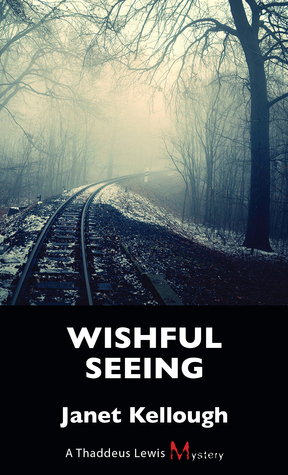
wishfulseeingThaddeus Lewis, the traveling preacher sleuth, is back on the road again. He’s headed to speak at a gathering of Methodist Episcopalians when he finds himself involved, once more, in a murder case. This cozy mystery is my second in an endearing series by Janet Kellough. I snapped up the DRC when I saw that Dundurn had made it available on Net Galley, so I read it free in exchange for an honest review. This title will be available to the public this Saturday, July 30.

A body has been found in Rice Lake, and there are witnesses that saw Major Howell and his wife Ellen, the woman in the blue dress, near the scene of the crime “in the right place at more or less the right time”.  In the Canada that existed back then, that was enough to put Mrs. Howell in jail; her husband would be there too, but he is nowhere to be found.

Lewis finds himself drawn toward her case. Is it because he saw bruises on her arm that suggested her spouse may have handled her ungently? Is it because she is lovely, and he wishes she were with him instead? Or is it because Lewis just can’t scratch that legal-eagle itch enough times to be rid of the urge?  Likely it’s some of each.

The main draw card here is setting. Kellough has done a good deal of research in laying out both the area around Toronto during its frontier period. The result is a historical mystery with a travelogue feel to it. Kellough takes us to a time and place nobody can visit anymore except through literature, and she does a great job of it. She includes a lot of interesting details about the history of the Canadian legal system that drew my attention, because it was very different from what those of us raised in the US have come to expect. I found this aspect of it fascinating.

I also really enjoyed the part played by the little dog, Digger. I wouldn’t care to see him start solving crimes, but I hope we see him again in a future installment.

The only weak part is—perhaps unfortunately—at the beginning. There is so much of Thaddeus’s inner narrative, so much soul searching and comparison of beliefs among the various Protestant denominations that if I had not read Kellough’s work before, I would have wondered if I had inadvertently stumbled across Christian fiction. In fact, my notes show that at one part I wondered anyway.

Yet in another way, if there has to be a slow part, let it be at the beginning. And it’s clear that Kellough is not attempting to put together a thriller that grabs the reader by the throat, but rather is treating us to a relaxing story that one may take to the hammock and flop down with.

Nevertheless, by the time all the groundwork has been laid, it is a hard book to put down.

So this is your beach read. Take it to the shore, to the mountains, to the river, or even your own back yard, but don’t cheat yourself by passing it by. You can have it this weekend, and those that enjoy both historical fiction and mystery wrapped up at once are in for a treat.

I Will Send Rain, by Rae Meadows****

iwillsendrainAnnie Bell could have chosen to marry a well-to-do member of the gentry in her home town, a man with fine china and a full time kitchen servant. Young and buoyant, she chooses love instead, and moves to Oklahoma with Samuel Bell to start a brand new life on the free land that’s been provided. What could go wrong when two young people are strong and dedicated to one another? Oh, it’s an old, old story in so many ways, but Meadows makes it brand new. Thanks to Net Galley and Henry Holt Publishers, I read it free and in advance in exchange for this honest review. It will be available to the public August 9, 2016.

When we join the Bells they are no longer newlyweds; a lot of water has gone under the bridge. They have Birdie, a teenager determined to find a way out of Mulehead, and their younger child Fred, a child beset with heavy health issues. He’s sturdier, however, than the baby that didn’t make it. So Annie and Samuel have had success, some fine fertile years on their farm when the wheat was tall and the rain came when it was needed, but they’ve also endured some heartache. Regardless, every Sunday they gather at the only house of worship in town and send up their thanks and prayers for the blessings of nature, and perhaps to ward off its curses as well.

But then, things deteriorate in a horrifying way. Without the sturdy prairie grasses to hold down the topsoil, it is depleted and finally just blown away in the horrible wind storms that come in terrifying intensity, a veritable hurricane of dust instead of water. There is no insulation that withstands the fierce and immeasurable storms, ones that turn day dark as night and fill every crevice in every home, barn, and public building with a layer of grit. Dust isn’t just on the bed, it’s in it. Dust is everywhere, including inside the lungs of little children. And so it is that Fred is stricken with dust pneumonia, an ailment akin to Black Lung disease but without even a paycheck to show for it.

In the midst of it all, Samuel has a message from God: the rain will come, and Samuel must build a boat. And so as the wheat dies beneath the remorseless sun, as the water is rationed and the cattle grow thin, Samuel goes to the barn and commences planning and building the ark that will save his family from the flood.

Everyone in town is laughing at him, but that doesn’t matter to Samuel; he has heard from God.

Meadows is a clever wordsmith, and her capacity to spin setting and develop character are impressive. Young Birdie is in so many ways her mother all over again, and yet Annie is unable to breach the abyss that separates her from her teenage daughter. Annie has learned a lot and she’s learned it the hard way, through experience; Birdie wants nothing to do with any of it, or with Annie. At times I longed to grab that girl by the shoulders and send her into the kitchen for a chat with her mother, but if I could have done so, she wouldn’t have listened anyway. Hopefully this gives the reader a glimpse of how real these characters became to me.

Most of the way through this compelling novel I was sure it would merit five stars, yet the ending left me dissatisfied. Even if I could explain this without spoiling it for you, I’m not sure what the writer should have done instead, but the denouement felt contrived to me even though in many ways it seemed like a reasonable ending. Perhaps you will feel differently.

You may have read other historical fiction set in the Dust Bowl, but you haven’t read anything like this. Check it out and see what you think. I’d hate for you to miss it.

City of Darkness, City of Light, by Marge Piercy*****

cityofdarknesscityoflightPiercy is a legend among feminists, and her writing was pivotal in my own development during the late 1970s and early 1980s as a newly-hatched adult. When this title, a novel based on the French Revolution, came out in 1996, I put it on my Christmas list and read it hungrily once I received it. When I noticed that it was released digitally this spring, I scored a digital copy from Open Road Integrated Media and Net Galley in exchange for this honest review. It’s a novel that is definitely worth reading twice.

Piercy is brilliant not only in bringing characters to life—and she did a prodigious amount of work before doing so, reading piles of biographies, memoirs, letters and other documents—but also in conveying the reader to the time and place In question. I think it’s because of this that her novel helped me to understand how such an amazing, incredible thing, the revolution, the democratic impulse that overthrew a monarchy, could end so badly. Dry history texts chronicle the “excesses” of the Jacobins. Say what? How meaningless is that? And it is by being able to see the roles played by key figures in the revolution, including the women that are usually left out, that I can see why the leadership degenerated as it did. An inexperienced working class with no background in how to organize a struggle ultimately paid the price, but in the end, the nation was still better off than it had been beforehand.

Using the grammar and conversational conventions of today for easier access to a popular audience, Piercy transports us back to a time when a life expectancy was less than fifty years for most people; open sewers flowed through the streets of Paris, causing horrible illnesses and a high infant mortality rate; and a starving seven year old child could be publicly hanged for stealing bread.

In fact, the bread riots led by the women of Paris were where it all began.

One thing readers should know if they read this novel digitally is that there is a glossary of sorts, a long list of characters and a few basic facts to identify them, but it’s at the back of the book, so you will want to go over it before you start and then refer back to it when you find yourself confused. The topic is huge, and you may need this cheat sheet, so it’s good to know it’s there. There are so many historical characters here, and if you aren’t fluent in this area, you may lose track of Robespierre, Danton, Madame Roland, and oh of course, Marat. And back then, Camille was a man’s name!

Piercy tells the story using the points of view of a wide range of figures important to this struggle. She gives a fair hearing to the perspectives of those that stood left, right, and center in this conflict, denying a sympathetic ear only to royalty—and even Marie Antoinette is treated with surprising sympathy. I came away feeling as if I knew so much more about the French Revolution and its terrible conclusion when I had read it, and rereading it was even more helpful, because it’s a lot to digest all at once, even if one is already aware of the broad contours of this pivotal time in French history.

When I love a book hard, I push it at everyone that comes within my reach, and I have pushed this particular novel at a lot of people over the years. Given how many times I loaned out my own (purchased) hard cover copy, it’s surprising that it isn’t falling apart, and maybe even more surprising that it’s always been returned to me.

Whether you prefer to read digitally or to purchase a paper copy, City of Darkness, City of Light is the most readable, accessible treatment of the French Revolution that I have seen. The fact that Piercy includes the key role played by women, both among the toiling masses and the elite salons of the intelligentsia makes it even better.

Recommended wholeheartedly to anyone that wants to understand the French Revolution!