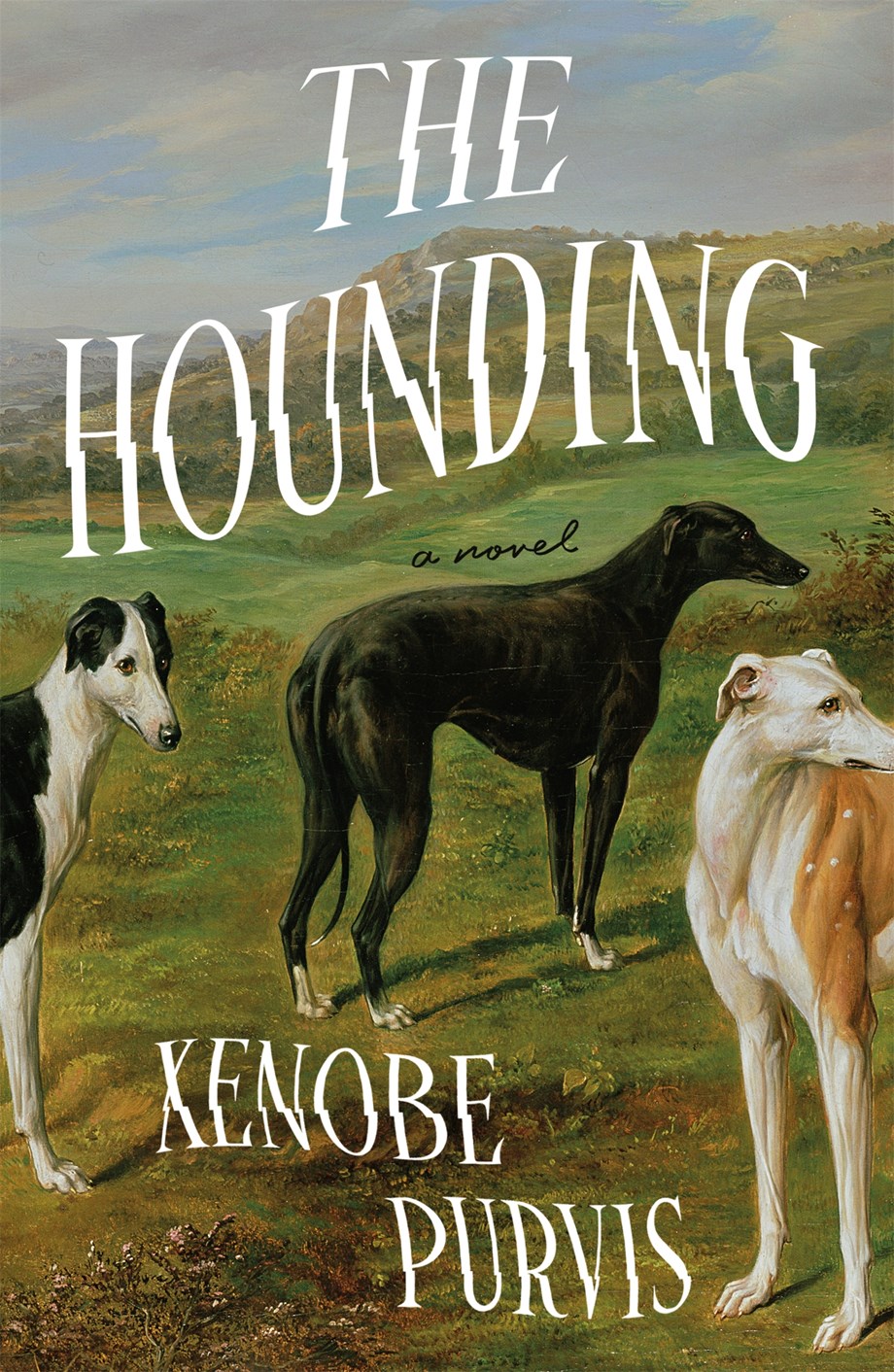
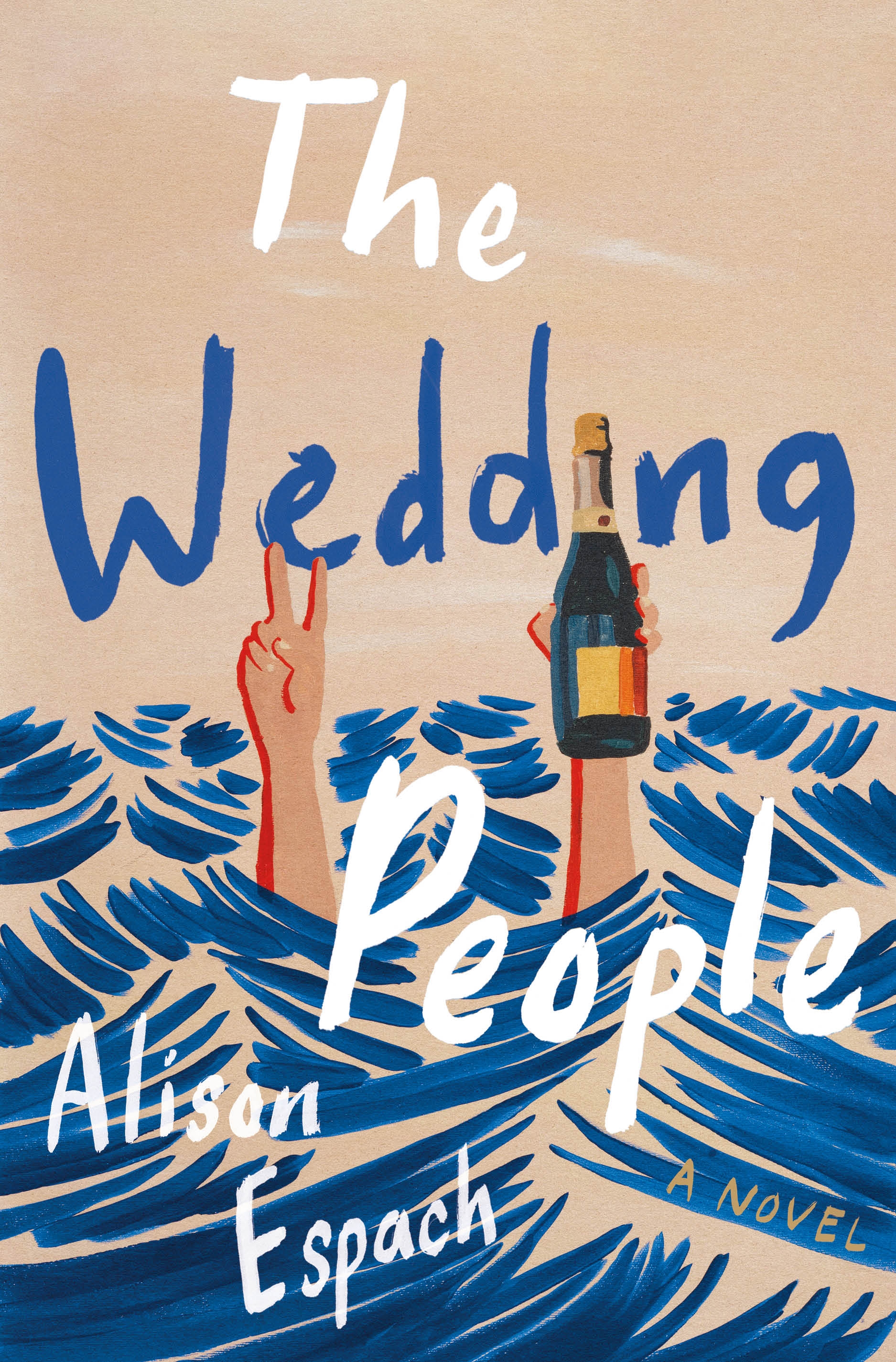
The Hounding, by Xenobe Purvis***-****

Who could walk away from this book cover? The Hounding, the arresting debut by Xenobe Purvis, is a story set during summer in eighteenth century England, in a tiny hamlet. Five motherless girls are given more freedom than is customary, and a rumor takes hold that the girls turn into dogs and wreak havoc on the village of Little Nettlebed.

My thanks go to NetGalley and Henry Holt for the invitation to read and review. This book will be available to the public August 5, 2025.

The Mansfield girls are being raised by their grandparents; their parents are long dead. But now, their beloved grandmother has died as well, leaving them in the care of their elderly grandfather, who is almost blind. It’s not a great summer for anyone else, either; there’s a dreadful drought that affects agriculture, and the riverbed is nearly dry. Then one day, Pete, the ferryman, tells the local gossip that he has seen the Mansfield sisters transform into dogs! Soon the rumor has spread, and others report that they’ve seen it happen, too; everyone wants to get in on the excitement.

The story tells a cautionary tale, not a new one, but a worthwhile one about the way society sometimes victimizes people that are a little different from most. There’s not much by way of character development, but this book is not about character or setting, it is purely plot-based. Purvis is a fine wordsmith, and since I was lucky enough to have both the digital and audio galleys, I found myself drawn into the narrative, first by the text, and then by the audio. Reader Olivia Vinall does a splendid job, and I recommend the audio version for those that enjoy the medium.

My only sorrow is that although this book is engaging, it could have been so much more. There are opportunities here that are left unfulfilled, and the plot twist at the end destroys the message that has been so carefully crafted up to that point. I find it frustrating. This is a good read, but it could have been a great one.

With that caveat, I recommend this book to you.

The Wedding People, by Alison Espach*****

It’s a good sign when I finish reading a book, and I’m smiling. Alison Espach’s new novel, The Wedding People, not only left me smiling at the end; it made me laugh out loud almost from the get-go, and it will do the same for you.

My thanks go to NetGalley, Henry Holt, and Macmillan Audio for the review copies. This book is for sale now.

I’m not usually fond of romances, but a friend mentioned the premise of this one, and I couldn’t resist. In a nutshell:  Phoebe, the protagonist, worn down by the pandemic and devastated when her husband leaves her, heads off to the posh hotel where they’d intended to spend their vacation. She takes no luggage or even her phone, because she plans to kill herself once she’s inside that lovely place.

Upon arrival, it’s clear that a mistake has been made. The entire hotel has been reserved for a wedding. But Phoebe’s room hasn’t been double booked, and so she is allowed, with apologies, to proceed to her room. However, the bride—wealthy, entitled, Bridezilla—learns of Phoebe’s presence, goes to her room, and orders her to leave. As they argue, Phoebe discloses her reason for coming, and assures her that she’ll be gone—so to speak—by the time the wedding takes place. But Lila, our bride, is having none of it. How dare Phoebe spoil her wedding! Absolutely not. She isn’t going to have guests gathering just as a corpse is being wheeled out to the morgue, right through the lobby! Phoebe must change her plans.

I won’t share any further developments, but I will tell you this: Espach can write.

Long ago, I decided that five star reviews should not be reserved for the rare gem bound to become a timeless classic. I give five stars to any novel that makes me unusually happy, and that represents the best being published within its genre. This book is one of those.

Helen Laser is the voice actor narrating the audio version, and she makes it even funnier. If you are strictly a visual reader, that’s fine, but if you like both formats, go with the audio this time, or use the audio and print versions together, which is what I did.

Highly recommended to those that enjoy a good romance, a good laugh, or both.

Piglet, by Lottie Hazell****

“Such a special day.”

Piglet is an offbeat novel that marks the debut of author Lottie Hazell. The protagonist is a young woman named Pippa, but everyone calls her Piglet. This author has me before I open the book, because with a nickname like this, I have to see what’s behind it, and where it’s going. My thanks go to NetGalley and Henry Holt for the review copy; this book is available to the public now.

Piglet lives in London, far from the working class area where she was raised, and where the rest of her family still resides. She’s a cookbook editor for a publishing company, is engaged to marry Kit, who is handsome and comes from a well to do family, and they have recently purchased a gorgeous home. Her star is clearly rising.

It’s a tightrope walk, to be certain. People with money have expectations, and so it’s not easy for Piglet to advocate for herself in the presence of his family. But she genuinely likes them, and so she works with them—which generally means that they get their way. Her own family mildly embarrass her when the two families meet, but her folks won’t often cross paths with these people once she and Kit are wed.

Then, two weeks before the wedding, Kit confesses a terrible, terrible betrayal, and Piglet has to decide whether she is in or out. As she unravels, I watch in horror. Piglet, you see, is an emotional eater.

In many ways, Piglet is the protagonist I have been wanting to read all my life. So often female main characters respond to stress by not eating. The lesser characters around them cluck over how pale, how thin they’ve become, and I sit back on my ample behind and say, “Yeah, right.”

But Piglet’s stress eating is epic in scope, and I also worry that the resolution will involve therapy, a new diet and a wedding gown in a size smaller than anything she’s ever owned. And since this much comes from my own imaginings rather than the book, I’ll go ahead and tell you, no. That doesn’t happen, and I am so grateful.

For most of this novel, I feel an intimacy with the protagonist that is rare. I can’t wait to find out what happens next, but I also can’t tolerate interruptions, and so I choose my reading sessions carefully. I am fortunate enough to receive both the digital review copy and the audio galley, and at the outset, I do what is my usual routine in such circumstances, listening to it while I am doing something else, but with the DRC nearby so that I can make notes or highlight likely passages for quotes. But by the time I am about thirty percent in, that’s over, and instead I am listening while reading also, because how can I think of anything else?

There are two things that I am dying to know. First, does she stay with Kit? And more importantly, what terrible thing did he do? Piglet keeps this information close to her vest, but the few people she tells are uniformly horrified, and so I know it’s bad. But what is it? Just what the hell did he do?

The ending feels incomplete to me. There are so many things that Hazell could have done and didn’t that I am disappointed by what feels like a slightly bland resolution. This is a good book, but it could have been a great one.

Hazell’s word smithery skills are stellar, and when I was done, I found I’d highlighted over 150 passages. Obviously, I won’t use them all here. Most of the novel’s tone is quite serious, but there are a few moments of dark humor that leave me shaking my head in admiration. In particular, there’s a wedding photographer that makes me howl!

The narrator is outstanding.

One way or another, Lottie Hazell is an author to watch. I look forward to seeing what she produces next.

Waco Rising, by Kevin Cook*****

Waco is a disaster that will be remembered for a very long time, one of the most egregious uses of excessive force against a group of people in the history of the United States. Kevin Cook’s new book, Waco Rising, is well researched and documented, yet is also written in a way that is accessible to a general audience. My thanks go to Net Galley and Henry Holt for the review copy. This book is for sale now.

The religious compound at Waco was headed by the charismatic David Koresh, and Cook takes us there, through the evolution of this sect, various splits and skirmishes among the faithful, and its final structure. Unlike many cults and other religious offshoots, this one was largely middle class, and numerous members brought their assets into the group. But the most distinctive aspect of it, compared to other such oddball organizations, was its fondness for munitions. The compound at Waco was armed to the teeth.

Koresh’s organization drew the attention of the Federal government when a disaffected former member leaked the news that Koresh was practicing polygamy—nobody else, just him—and that many of his wives were children:

“One Davidian remembered [Koresh] ‘approaching Michele in the dead of night.’ The word “approaching” was a euphemism. Describing the encounter later as if he found it amusing, [Koresh] told some of the men that he’d invited Michele, who had recently celebrated her twelfth birthday, into his bed “to get warm.” When he tried to pull down her underwear, she resisted. He kept going, he said, because God told him to.”

Initially, the ATF (Bureau of Alcohol, Tobacco, Firearms and Explosives) saw this situation as an opportunity to redeem themselves after the debacle at Ruby Ridge. This time, they would get it right, rescue the little girls, and their reputation would be restored. It didn’t shake out that way. The ATF, and eventually the FBI and the armed forces were deployed, surrounding the Davidians from the land and even the air in a siege of fifty-one days. When it was over, the compound was a smoldering ruin, and seventy-six people, including twenty-five children, were dead.

I was initially unsure if I wanted to read this thing. I knew how it was going to end, after all, and did I want the details in my head? However, Cook paces the story expertly, punctuating the first two-thirds with the occasional darkly funny vignette. But the ending is nothing but grim, and that’s because there’s no other honest way to tell it.

The conversational way it’s written makes it a quick read, and there are a lot of excellent quotes. Cook uses material that hasn’t been reported previously, and he does a fine job. I highly recommend Waco Rising to anyone that is interested in this topic.

Let’s Not Do That Again, by Grant Ginder*****

“Justice always comes first.”

Grant Ginder is one of the funniest writers alive. I read and reviewed Honestly, We Meant Well when it came out in 2019, and I knew then that I’d read whatever he wrote from that time on. Is Let’s Not Do That Again as funny? No, friend, it’s even funnier.

My thanks go to Net Galley, MacMillan audio, and Henry Holt for the review copies. This book is for sale now.

Nancy Harriman is running for Senate in New York City, with the assistance of her loyal son, Nick, and hindrance from her rebellious daughter, Greta. She’s focused; she’s determined. And that’s a good thing, because her daughter is focused on ruining Nancy’s life.

Parents don’t always know what their children get up to online; this is doubly true when there’s only one parent, and she’s busy running for the public office her late husband used to hold. And so Nancy doesn’t know that Greta is in league with the devil, till Greta has obtained an ungodly sum of travel money from her grandmother, and has flown to Paris to be with him.

With Greta is Paris, one thing leads to another and in a breathtakingly short amount of time, the wicked little Frenchman has manipulated her into causing destruction on a level that makes international news. Nick, the good son, is sent across the Atlantic to retrieve his sister, who appears penitent, but isn’t.

From there things spiral further out of control, and it’s hard to imagine just how this story will play out, but when I see where Ginder takes it, I bow in awe.

I am fortunate enough to have received both the digital and audio versions of this delightful spoof. Susannah Jones is such a skilled narrator that at times, I forget that there’s only one person telling the story. On the other hand, there’s some creative, very funny spelling peppered into the narrative that you’ll miss out on if you don’t see the text. All told, I’d say it’s a toss-up. Go with whichever mode makes you happiest.

Highly recommended, especially if you lean a little to the left.

Chevy in the Hole, by Kelsey Ronan***-****

3.5 stars, rounded up. Chevy in the Hole is Kelsey Ronan’s debut novel. I love strong working class fiction, and the title and book cover spoke to me. But while it shows a good deal of promise, it’s also a cautionary example of how, in trying to do too much, one can do too little. My thanks go to Net Galley and Henry Holt for the review copies. This book is for sale today.

The protagonists are Gus Molloy, who is Caucasian, and Monae Livingston, who is Black. The book opens as Gus is being revived with Narcan on the floor of a dirty restroom in Detroit. We follow him as he meets Monae, a student working at a farm outside of Flint. Their stories are told alternately with bits and pieces of the lives of their predecessors.  

The story is promoted as a love letter to Flint, and a tribute to the resilience of its people; it’s a story of “love and betrayal, race and family.” And we do surely see all of those things, but as soon as one aspect or another is touched on, I wink and poof, it’s gone. Gus and Monae are both sympathetic characters, and I can’t help pulling for them, but I suspect the author could have developed them more fully had we not spent so much time and detail on fragments of their parents, grandparents and so on.

If the author’s purpose is to use these characters from the past to showcase the various struggles through which Flint has gone—sit-down strikes, Civil Rights marches, and now, this horrifying industrial sludge that has polluted the town’s drinking water—it could have been done in a paragraph or two, or through some other device than shifting the point of view. The frequent changes of character and time period make it confusing as heck, particularly while listening to the audio version; that’s a shame, because Janina Edwards is a warm, convincing reader.

But we frequently shift from one protagonist to the other, even after they are married, and all of these people from the past have to be sorted by both time period, and by which protagonist they are related to.  A story like this should flow. As it is, it’s work listening to it, and had I not been granted a digital review copy as well to refer to, I might have given up.

My other frustration is that both the labor history and the Civil Rights issues—with Black people shut out of company housing in the past, and the issues with cop violence as well as the pollution that is visited most within the Black community—are huge. The pollution problem is immense, and ties back into both of the other issues. This book could be a powerhouse, a call for change to reward to the plucky souls that have stuck with this place through hell and high, toxic water. Instead they present almost like postcards; oh, look at this! Now look at that! Okay, never mind, let’s go on back to the present.

That being said, the author’s mission is an ambitious one, and her word smithery is of high caliber. I look forward to seeing what else she publishes.

If you choose to read this book, I recommend using the printed word, whether digitally or as a physical copy.

Broken, by Jenny Lawson****-*****

4.5 stars, rounded up.

Jenny Lawson, AKA The Bloggess, has a new book out, and I do believe it’s my favorite. My thanks go to Net Galley and Henry Holt for the review copy. This book is for sale now.

Lawson bucks a somewhat disquieting trend, and I am so glad. The trend is to make the first three chapters—most likely what sells the book—sterling, and then fill the rest with mediocre, highly missable prose. In contrast, the earliest part of this memoir is good, but it’s not great. She starts slow and then builds toward most of her best material, leaving me smiling as the book concludes.

But let’s go back to the material at the start, which I find to be random in a way that yearns for the hand of a high profile editor. I’m throwing my hands up, wondering just why a professional writer would blather on like this. Can she write a coherent sentence, and then end it when it’s over? Of course, I continued reading and loved the essays in the middle, and as we draw near the end, she refers to the challenges she encounters in writing, citing her inclination to overwrite, and the resultant paragraphs that contain “a run-on sentence that would make an English teacher cut herself,” and I howled, because that’s it, exactly. Almost exactly, I mean; I was moaning, but I hadn’t reached for anything sharp.

What is it about depression and humor, and the connection between them? It’s hard to tease apart all of the components that make Lawson’s writing so compelling; to a certain extent, it’s alchemy of the human spirit, I suppose, combined with skill at self-expression. But there are other components much easier to spot. One is her disarming frankness; for example, she mentions that people, remarking on her twentieth wedding anniversary, ask about her secrets for a long and happy marriage, and she tells us that actually, not all of those years have been happy. There are good periods, and there are bad periods. And then she adds, not entirely jokingly, that part of the reason she is still married is that there are things in her marriage that she doesn’t write about.

But even more compelling is her level of perception, and her ability to understand the subtext of just about everything.

I’ll mention my favorite parts, but I am not giving up any more humorous quotes, because that’s a crappy thing to do to a humor writer. There’s a funny part having to do with shoes, and the kayaking trip from hell, which she dubs “Divorce Creek.” The chapter about Transcranial Magnetic Stimulation, which is a serious bit for the purpose of informing us, is interesting and may be of help to a number of readers. (However, the searing honesty about her suicidal impulses might actually be a trigger for a profoundly depressed reader.) And the infuriating experiences she has had dealing with insurance makes me want to throw things, but it is important that she includes them here.

If you’re a fan of The Bloggess’s writing, you have to get this book. If you are new to her work, you can dive into this memoir without reading her previous ones. Highly recommended.

Trust Exercise, by Susan Choi**

Ah geez. I had such hopes for this one, but in the end I was relieved when I finished it. Thanks go to Net Galley and Henry Holt for the review copy, and to Seattle Bibliocommons for the audio book that helped me push through to the end.

Conceptually, it sounds like a winner. (And to be fair, it did win the National Book Award.) Students enrolled in a citywide magnet school live in a cloistered bubble, isolated from the city—and the world—around them. The time is the 1980s. The drama teacher, Mr. Kingsley, has an oversized role and influence in their lives, not only academically but emotionally. Boundaries, not so much. And when Sarah and David fall for each other, and then un-fall, Mr. Kingsley serves as a sort of puppet master, telling them what to do. The same applies to friendships turned sour.

The premise is believable. This reviewer recalls a respected public school with a strong performing arts program that operated in real life in the late 1970s. Some of the teachers didn’t seem to know about boundaries, and the students—of which I was one—never complained, because it made us feel like respected adults. A student and teacher had an affair while I was there, and they married after she graduated. They remain so. And so when I saw the teaser for this book, I was ready to jump right in, because it spoke to me.

Sadly, it stopped speaking to me by the twenty-five percent mark. I tried restarting a couple of times, but I hit a wall. Finally, determined not to miss out on an award-winning novel, I ordered the audio version from the library and listened to it while I sewed my family’s first set of COVID masks. Both were grim tasks.

While there must be art present here for Choi to win such a prestigious award, the plot is convoluted and difficult to follow, and the characters, which are the heart and soul of this novel, never come alive. In the last half it becomes clear that we’ve had an unreliable narrator all along, but if anything, it makes the story muddier.

This might be a one star read for me, but I still say the premise is meaty, and for that I tack on the second star.

Overall, I can’t recommend this book.  

The Secret Guests, by Benjamin Black****

It’s World War II, and the Blitz has begun. The Royals are torn, wanting to remain with their subjects and share their misery, but not wanting the risk the well beings of their daughters. It’s decided that the girls must be moved, but with the shipping lanes and skies fraught with peril, where can they go and be safe? Ah, a fine idea: they’ll send them to a cousin in Ireland.

My thanks go to Net Galley and Henry Holt for the review copy. This book is for sale now.

As historical fiction goes, this is lightweight material, based on almost no historical event other than the war itself. However, as general fiction goes it’s terrific, immensely entertaining and droll as heck. I figure it’s 3.5 stars for historical fiction, 4.5 stars as general fiction; thus my 4 star rating.

Our protagonist is Garda Strafford-With-An-R, a marginally competent Irish detective who resembles Stan Laurel, tasked with the security the estate where the girls will be housed. Secondary characters are Celia Nashe, a British cop equivalent to a Secret Service agent, who is assigned to serve as personal security for the princesses; an arrogant, sleazy ambassador named Laschelles; and Strafford’s boss Hegarty, who resembles Oliver Hardy. We also have clueless but entitled Sir William, the girls’ host; two bored princesses that get up to things when nobody’s looking; some household servants that know more than they are supposed to; and a few local people that also know too much.

The fact is that I’m entirely burned out on World War II fiction, and that fact nearly prevents me from requesting this galley. But the spin—Ireland, which remained neutral and flirted with taking the side of Germany, what with its enmity toward the British—proves irresistible. The greatest surprise is how much wit is employed and how fast the story moves. I have never read Black’s work before, and this guy is hilarious. He shifts the point of view often, always from the third person omniscient but varying several times within a single chapter, so we get snippets of the person that’s bored, the person that’s nosy, the person that’s confused and so forth. The word smithery is so original and clever that I cannot put my highlighter down. Highlighting is pointless when I highlight close to half of the text, but I can’t help myself. And best of all, the cliched ending that I think I can see a mile away isn’t happening.

Those of us in the States have a three day weekend right around the corner, and the weather will be too miserable to want to go anywhere. This novel might be just the ticket. If you’re lucky enough to be planning a vacation soon, this would also be a fine beach read. But the humor will be a terrific pick-me-up for those stranded indoors with a case of the grumps. I recommend this book to you, and I would read this author’s work again in a heartbeat.

Conversations with RBG, by Jeffrey Rosen*****

This is the RBG book I’ve been waiting for. My huge thanks go to Net Galley and Henry Holt Publishers for the review copy. This book will be publicly available November 5, 2019.

Justice Ginsburg wants us to know that the sky is not falling. Though progressive thinkers see great cause for concern, primarily within the executive branch of the federal government, the U.S. Constitution hasn’t changed, and the Supreme Court, she insists, is made up entirely of strong legal minds that revere it. Precedents are still the basis of future rulings; the overturn of precedent is rare and unusual. But for activists—and she loves us—she also points out that public opinion is what alters the course of the law. Congress makes laws based on what their constituency desires. So she isn’t suggesting we put away our pussy hats and our picket signs; she just wants us to know that our advocacy works, and she appreciates everything we do to further women’s rights, civil rights, and gay rights.

Twice previously I read other books about RBG; one is a popular biography that I enjoyed, but that didn’t go deeply enough into Ginsburg’s legal ideas, and the second is just dross, minutiae gathered from her high school year book and whatnot. Whereas part of me just wants her to write an autobiography, I have to recognize that she is very elderly, has faced health challenges lately, and to stand a chance of writing any sort of memoir, she’d probably have to resign from the Court. And goodness knows, I want her to stay there, ideally forever. Instead, Rosen’s series of interviews with this feminist icon serves nicely.

Rosen has been friends with Justice Ginsberg for many years; they were drawn together initially through elevator discussions of opera. His chapters are brief but meaty, organized around key rulings and topical interviews. Rosen explains succinctly at the outset how this friendship formed and grew, but he doesn’t get windy or use the opportunity to aggrandize himself. He keeps the focus strictly on his subject. The interviews flow in an agreeable manner that is literate without being verbose or Byzantine.

We live in politically polarized times, and so even when I am reading about a political figure that I admire, I generally expect my blood pressure to rise a little, perhaps in passionate agreement. But if anyone in this nation has the long view of history and the key domestic issues that have unfolded, particularly with regard to the rights of women, it is RBG. And although I am not as senior a citizen as Justice Ginsburg, many of the changes she mentions that have occurred over the decades are ones that I can also attest to, though I hadn’t thought of them in years. For example, when I came of age in the 1970s, it was still not unusual to try to enter a bar or club only to be barred at the doorway because women weren’t allowed inside. (“Gentlemen only, Ma’am. Sorry.”) I had forgotten about these things; as her recollections unspool I see that she is right. Change happens, but lasting change happens slowly. We are getting there, at least with regard to women’s rights and gay rights. Issues of race and class are something else entirely, and she points up specific instances where justice has not progressed and change is imperative. I could say more, but none of it would be as wise or as articulate as when Ginsburg says it. If you’ve read this far in my review, you should go ahead and order this excellent book now. I highly recommend it to all that are interested in social justice, both formal and informal.