Alien Blues, by Lynn Hightower*****

alienbluesAlien Blues, the first in the David Silver series, was originally written in the 90’s, when I was busy returning to school, having my fourth child and raising the first three. I mention this only because I am dumbfounded that I missed this amazing series the first time around, and that’s the only possible reason; I was too busy trying to find a few minutes in which to sleep back then. Thank goodness Open Road Integrated Media has re-published it digitally. After reading and being really impressed by Flashpoint, another of Hightower’s terrific novels, I searched Net Galley for anything else she had written that was available to read and review, and I scored this little treasure. It’s a brave, bold genre cross of detective fiction and science fiction, and if I can read the others in the series, you had best believe I will.

First, of course, we have a murderer. Machete Man, as he is known, enjoys hacking his victims and their belongings into portable pieces. A nice touch is the would-be victim that gets away and can describe him. He hacks up all her stuff, and we know that if she hadn’t been as quick as she was, she would have been among the sliced and diced items in her bedroom. And I find the scene that occurs later between David’s wife Rose and Machete Man spectacular.

Into the mix we have the murder of an Elaki. Elaki are another species, but to a certain extent they work and interact with humans. They shimmer; they walk on fringe; they have flippers instead of hands. Roof tops are terribly dangerous, because they are slender and lightweight, and can easily blow away in a breeze. They are shorter than humans and because they have no legs, they must fold themselves to ride in an automobile made for humans. Their own are specially adapted. But we learn all these tidbits as we go along. Hightower doesn’t waste a lot of time describing them, but makes everything we learn part of the action. And so String, an Elaki that has never fit in well with his own folk, volunteers to aid in the investigation; some suspect his motives are other than what he says.

Lurking in the background is David’s traumatic past. He grew up in a ghetto, the tunnels underground known as Little Saigo. The tunnels were invented originally to house the wealthiest members of society from Earth’s degraded environment; imagine a carefully controlled housing development where there is no fear of skin cancer or other environmental hazards. But humans tend to crave the sun, and when the rich didn’t want to buy in, the project was never completed. Squatters populated the many half-completed nooks and crannies in the enormous subterranean catacombs, and eventually an implant similar to a microchip was developed so that those that lived there could identify one another, achieving a measure of safety from those that came to pillage and wreak chaos among the vulnerable.

David has not lived in Little Saigo for a long time; he has a modest but comfortable home, a wife, and darling daughters. But ultimately, he is forced to return to Little Saigo, home of his worst nightmares, in order to solve the crime.

It’s riveting.

Hightower is brilliant. The Elaki are the most memorable nonhuman characters in literature since Spock, and her female characters defy all possible stereotypes. Her pacing, character development, and capacity to develop setting that we can nearly see and breathe is outstanding. She has won the Shamus and her work has been included in the New York Times Most Notable Books list. She’s been published on four continents, and thanks to Open Road Integrated Media, those of us that missed her the first time around can now read her work digitally. And it’s available for sale now.

Highly recommended!

Pawn’s Gambit and Other Stratagems, by Timothy Zahn*****

pawnsgambitPawn’s Gambit and Other Stratagems is a collection of kick-ass science fiction stories, including a novella, produced digitally for the first time. This is the cool thing about Open Road Integrated Media: the publishers find outstanding work from the pre-digital era and bring it to present-day readers anew so that it can be widely read and appreciated all over again. But though these stories were written earlier, many of them have never been published in book form before. I got to check out the collection free in exchange for an honest review, and I struck oil. I wondered why I hadn’t found this writer earlier, since I have been known to binge on sci fi now and then since the 1990’s. What Zahn is best known for is the Star Wars series, which I didn’t read. In passing it by, I nearly missed a fine writer, and I will watch for him in the future.
The settings, situations, and moods within this collection are artfully staggered, ranging from the ethical and philosophical dilemmas that the fertile imagination runs up against when what if scenarios are presented, to surprisingly funny situations. I love the characters Zahn creates, and the way they drive his stories forward. From that first “multi-tentacled grin” of the “Sk’cee” in The Price of Survival, I was hooked. The Giftie Gie Us had an infuriating ending that left me thinking of alternative possibilities. My own personal favorite, Cascade Point, was apparently the favorite of many others also, because it won the Hugo Award in 1984.

A couple of times I noted some gender stereotypes, but for work of its time period in a genre rife with this issue—which is probably why I need time out from my sci fi binges to read other things—it was surprisingly muted. Of 82 marks I made while I read it, only 2 related to gender stereotyping.

There are no weak links, nothing that seems like filler in between good stories; everything here is strong. At a couple of points I had to bite back the urge to laugh out loud while cruising through late at night while my spouse slumbered next to me. My second favorite story is the title novella, Pawn’s Gambit; I found it unexpectedly hilarious.

This brilliantly crafted collection goes on sale January 5, 2016. The only real question for the science fiction lover is how you are going to wait that long. Mark your calendar; you won’t want to miss out on this one.

Newly Released: Nirvana, by JR Stewart Excerpt

Nirvana

After a big-time rewrite and vast improvement, this hot new novel hits the shelves today. Below is an excerpt, courtesy of the publisher:

The shrill five a.m. siren jolts me awake to the usual calamity. The bunker’s stale air; the pelting of dust balls and stray debris. I groan and hear Andrew’s chuckle. When I open my eyes, he’s getting dressed.
“Are you leaving already?” I ask.
Andrew leans down for one long kiss. “It’s eight o’clock.”
I bolt up in bed. “The five a.m. just went off.”
“Nope. You slept through that one.”
I groan. “I’m late.”
He leans over me. “You always are, Kenders.”
I rub my eyes. “When will you be home?”
“Late. I’ve got a meeting with my boss.”
I let out a long yawn. “Cheating on me again?” I wink.
He laughs and pulls out my photo from his breast pocket. “I’ve got
this framed on my desk.”
“You should get a better picture.”
“The green dress matches your eyes.”
I turn up my nose. “My grad photo is outdated.”
“It says everything about you. No one dictates what Kenders does. You wouldn’t wear school colours like the rest of the class did. Your green dress stood out, just like you do.”
He’s right. Our punk band was protesting the loss of habitat for bees, and this wardrobe choice was one of many anti-establishment statements we made that year. Since 2080, when Hexagon became the university’s major sponsor, it had been a new tradition to wear school colours. We boycotted that convention, and even at graduation we were handing out flyers, standing up for what we believed in.
Andrew kisses me on the lips. “I’ll see you at lunch.” About an hour later, I wake up to a softer buzzing. This time, Andrew has set the alarm for me. He knows me well enough to be sure that I’ll drift back to sleep the moment he leaves. I jump out of bed to get ready. I run a comb through my tangled bangs, and pull up a mat of brown hair, covered in dust. That’s what happens when you hit the shower too late: no water in the reservoir, not even enough to brush my teeth. I rub at the dark splotches of dirt until my pale skin turns bright pink, and then give up on my hair and pull it into a ponytail while I step into my uniform. I stop for a moment before heading out the door, and pull Andrew’s sweatshirt over my head. It drapes in a large fold over my narrow shoulders. I rush to jump onto the bus rumbling down the road, but it’s already passed by my compound.

Nirvana, by J.R. Stewart****

NirvanaNew rating and review based on updated DRC:

Larissa Kenders is a musician living in a post-apocalyptic world; her lover Andrew is missing. This newly revised young adult novel is a winner, and it will be published  November 10. Thank you to Blue Moon Press, Net Galley, and Adam Mawer at DigiWriting Book Marketing Agency for including me on the second spin. It was time well spent.

The problem on Earth began when the bees began to die. How can anyone grow food, flowers, or anything else if pollen can’t be transferred? And indeed, how does pollen get from one plant to another without the bees? Corporate giant Hexagon has created an alternate world, and humans are dependent upon the company for their sustenance. Nirvana is a virtual world that workers can visit, for a hefty price, on their days off. The question Larissa has, then, is whether the Andrew she sees in Nirvana is the virtual Andrew of her memories, or whether he may in fact still be living, hiding out from those that may wish him gone.

Various topics are explored, from alienation and the question of whom to trust—one that will resonate with teenage readers—as well as environmental issues such as GMOs, and more futuristic philosophical questions. Edward Snowden comes up, and why should he not, in a story in which many researchers have uploaded their brains to the Cloud so that their work will remain once they are gone?

I was one of a handful of reviewers that read the first draft of this book. I reported that it was dreadful because it lacked character development. This new and vastly improved version creates a Larissa Kenders that is believable, a character to whom we can bond. The remaining stereotypes, such as the jealous female that is our main villain, along with the preponderance of males rather than the usual fifty percent of the population, are problems that are so rife within the genres of science fiction and fantasy that it’s hard to hang the whole problem on this one writer, who has created a truly original and interesting plot .

Teachers considering its classroom use should be forewarned that there are a couple of sexual situations; the porn industry, a pet project of one of the villains, also gets multiple mentions. I should emphasize that this reviewer sees no problem with today’s teenagers reading the book, since most of them have seen far more explicit material on their own. But those that teach in school districts so conservative that the villagers bring everything but flaming torches to the school board meeting may want the information ahead of time prior to going out of pocket for a classroom set.

In revising his story, Stewart has plucked victory from the ashes; a job well done.


Wakefield, by Andre Codrescu ***

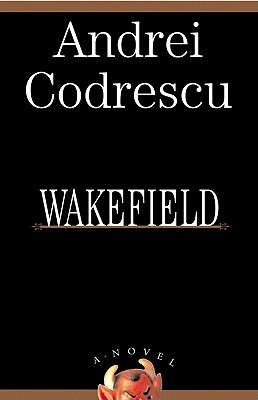
wakefieldWakefield is absurdist, dark humor written by award-winning poet and playwright Andre Codrescu. Thank you to Net Galley and to Open Road Integrated Media for permitting me to access a DRC. The title, originally published in 2004, will be available for purchase digitally September 8.

Wakefield is an anti-motivational speaker. He’s in great demand. People grow weary of the cheerful chipmunk types that show up with a big grin and a you-can-do-it attitude, and so corporations are seeking balance by also providing a guy that tells them it’s all a waste of time. As a natural cynic, Wakefield assumes, when the devil comes to call and tells him his time is up, that he ought to be able to strike a Faustian bargain. But oh what a surprise—the devil doesn’t want his soul. “You’re assuming, dear sir, that you have one…”

The devil wants one thing only: proof that Wakefield has found a “true life”. This broad brush stroke gives the author all sorts of leeway. At times, Wakefield’s search is savagely funny. There are some literary references that I thought were terrific; quirky philosophy; and, true to his poetic nature, some kick-ass figurative language.

The main problem is that the plot doesn’t really have a structure to hold onto. “True life” is too general, and so Wakefield wanders, both geographically, in his relationships, and in his own thoughts. The author is obviously a very intelligent man, but he’s relied too much on innate cleverness and not enough on the structural requirements of a novel. Even the most unconventional literature needs to be able to hold its audience, or it won’t be successful.

I confess I took issue with the author’s characterization of Marxism as a kind of religion; then as well, one might think that someone that spends his life considering matters philosophical would recognize that Marxism and Stalinism are not necessarily identical.

But this isn’t the reason for my rating. The three stars reflect a story that has moments of great strength, even ones that made me laugh out loud, but its inconsistency and lack of a problem that builds, peaks, and is resolved in one way or another, makes it hard to get a handle on. The result was that I found my attention wandering at times, which doesn’t happen much , and then I’d have to tab back a few pages and do some rereading. Even with notes in my e-reader, I can’t find any functional pattern. There’s an ending of sorts, but it seems to be sort of tacked on because the book has reached its required length, rather than because the plot has led us there.

Those that are familiar with Codrescu’s other work and are fans may feel differently, and so I recommend this novel to that niche audience.

The Peace Process, by Bruce Jay Friedman ****

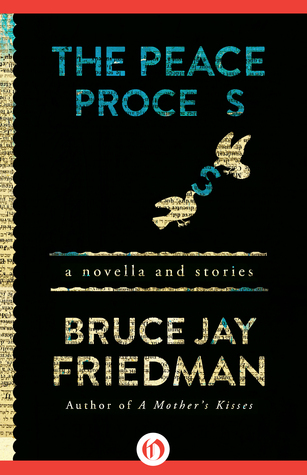
thepeaceprocessThe Peace Process is actually a collection of short stories plus one novella at the end. The writing is edgy all the way through and in a number of places it’s very, very funny. Thank you to Net Galley and Open Road Integrated Media for providing me with a DRC to read in advance. This collection will be available to the public October 13.

If any work of fiction you have read in the past five years or so has offended you in any way, the first selection in this collection is guaranteed to do so. It did me. Frankly, I am such a consistently fast, thorough reviewer that I could blow one off right now if I was disturbed enough by it, and I came pretty close. I don’t like to spoil things, but at the same time you ought to be warned. Is incest—even imagined incest, and with details—offensive to you? Is there a way to make a boy’s graphically imagined incest with an older sister acceptable, even funny? If so, then this is your collection. As for me, I almost wrote to the publishers to tell them that I wasn’t reading or reviewing one more story in this nasty little book; fortunately for me, I looked at the table of contents, figured out how much more of the book there was left to read, and decided to stick with it for one more story. And the next story, “The Storyteller”, was funny enough that I forgot—well, almost forgot–how mad I’d been a few minutes before.

But I seriously question the editor’s choice to put that one dreadful story right up front. It’s almost like begging the reader to throw the book out the window.

Moving on, the writing in all the other stories, from the second on through the last, is really strong. My imaginary red teacher’s pen sometimes comes out when I’m reading a galley, and I’ll think how much better the work would be if we could just nip this part here and take a meat-axe to another section. Not so for Friedman. Every word is well chosen, and the pacing is taut and brisk. Besides “The Storyteller”, my other favorites were “The Choice” and “The Strainer”. The endings always surprised me, and a couple of times, had I not had someone sleeping beside me as I read, I would have moaned aloud when I reached the denouement.

If I were to advise someone with tastes like my own as to whether to read the collection or leave it go, I would say get the book; skip the first story; read the rest of it. But then, you have to decide these things for yourself. I’ve done what I can, and the rest is up to you.

For fans of edgy, dark fiction, recommended with the caveat mentioned.

I Am Crying All Inside and Other Stories: The Complete Short Fiction of Clifford D. Simak*****

iamcryingallinsideClifford D. Simak is a science fiction legend. Before his 55-year career was done, he earned 3 Hugo Awards, the Nebula Award, and was named Grand Master by the Science Fiction and Fantasy Writers of America. I scored big when Open Road Media and Net Galley invited me to read and review this wonderful collection. It is available for purchase digitally now, and will be released October 20.
The fact is, I miss old-school science fiction writing, the fun stuff that is the product of a fertile imagination but requires no knowledge of programming code or other technological wizardry. What’s more, the quality offered in this collection is not only excellent, but evenly so. Common themes tend toward robots with complex feelings, sentient plants, and time travel, but there is no sense of sameness otherwise. Sometimes we are on a far-flung planet; sometimes we are back on planet Earth after it’s been wrecked to where anyone with any gumption has up and left, with only sorry-ass losers remaining. The common factor among all of these stories, in fact, is Simak’s ability to engage the reader.
Given the strangeness of the worlds science fiction and fantasy writers create, one would expect to feel intellectually curious about what the writer has cooked up, but what astonishes me every time I read really strong science fiction is the way the writer manages to work our emotions, causing a lump to form in one’s throat over something that could not possibly happen. By creating an alien setting in which a human, or human-like thought and emotion is present, a sneaking affection is created, and before you know it, there you are practically weeping over the poignant scenario that’s before you. The hook isn’t sentimental or maudlin, and that is why it is so successful. The subtlety is powerful, and we are connected to characters that not only don’t exist, but could never exist in the way the author has laid it out. And so, if Stephen King is drawn to things that go bump in the dark and binds our emotions to oddities in that genre, so has Simak laid our feelings bare using distant, fictional moons in solar systems that don’t exist. It’s a hell of a gift.
Every time I read a short story and decided that I had a new favorite, I looked back over the earlier ones—they were all so strong!—and then read on, and found myself uncharacteristically unable to choose one over the others. There isn’t a weak one in the batch; all are outstanding.
At one point I was ready to knock half a star off over the one-time use of the “N” word in one short story written in the first half of the twentieth century, but then there were all sorts of references to racial purity within the context of the story (alien races) that convinced me that he had an agenda when he did so, and not necessarily a bad one. If it were up to me, I’d leave the word out, but given its purpose here, one could argue for its inclusion.
But it’s worth being warned that it’s there. Nobody likes that kind of surprise.
The only other bad news here is that Simak is dead.
The good news is that over his prodigious career, he wrote enough material to fill 13 more collections beside this one, and if permitted, I will read and review every single one of them.
Highly recommended to anyone that loves old school sci fi.

World War Moo, by Michael Logan****

“Where there’s war, there’s udder destruction.” Michael Logan’s new release, World War Moo, is the sequel to Apocalypse Cow. Mix the zombie apocalypse with mad cow disease, toss in some technology, then ask the spirits of Terry Pratchett and Monty Python to hop into the cauldron. What follows is a deeply mooooving story that is bound to amuse. Many thanks go to Net Galley and St. Martin’s Press for allowing me a glimpse in advance.

worldwarmooHow does one contain the deadly infection that has taken over the British Isles, and why are some people inexplicably immune to it? The world appears to have gone stark raving mad, or at least, part of it has. Trade among nations has been obliterated, and famine is rampant. Inflation is out of control, and when you find yourself spending a thousand pounds for a rat kebab, it’s pretty clear that simply surviving ought to be the order of the day.

Not so for young Geldof. His Grandfather Carstairs, the evil genius who twiddles his moustache to prove his inner nature, has appeared and told him that his mother is alive and in danger. Fanny must be rescued from Britain before the bombs fall; there’s even talk of dropping neutron bombs. Grandfather Carstairs has come to help Geldof, not because of any depth of affection, but because he needs an heir to take over his evil empire. He has to find out whether Geldof is “man enough” to do the job.

In addition to being entertained, I greatly appreciated Logan’s metaphorical explanation of the difference between male and female brains. In fact, much of the book is composed of hilarious metaphors and similes. English teachers’ paradise meets the zombie cow apocalypse: the stuff of which dreams are made.

This absurd story, second in its series, was released yesterday. Better get going before they’re all gone!

The Mysterious Disappearance of the Reluctant Book Fairy, by Elizabeth George ***

the mysteriousbookfairyJanet Shore is the book fairy, a librarian gifted with the supernatural ability to send another person into literature in a literal fashion. She sends them in to enjoy a specific episode, guesses at the time it will take for the event to unfold, and then brings them back. This 75 page long story is interesting, but was mislabeled as a mystery, which is the author’s principal genre; it’s really more a fantasy story. I was waiting for the mystery until toward the end, when I realized there really wasn’t one, apart perhaps from final moment, and even then, it isn’t a mystery to us. And where are my manners? Thank you to Net Galley and Open Road Integrated Media for allowing me a glimpse in advance. This story goes up for sale digitally June 16.
All is going well as long as Janet’s supernatural power is kept under wraps. Just she and a friend know. Then another person finds out and persuades Janet to come out of her book-fairy closet and advertise her services. She could “make a mint”. Janet is aghast at the vulgar implication, but the acquaintance persists. She needn’t keep the funds for her own use, she tells Janet; think of the causes she could help! So many deserving charities could benefit, all while making so many people’s—let’s face it, women’s—fantasies into the vacation of a lifetime.
But it’s too much. Tiny Whidbey Island (located off the shore of Washington State) can’t sustain this level of traffic. The locals are at first pleased at the amount of custom, then dismayed at the disruption. No one can buy anything without standing in a very long line. Their favorite quiet spots are now very noisy, busy spots.
On top of all of that, Janet is about to give out. She is exhausted, and still they clamor for more.
The voice with which this story is told is so different from the Thomas Lynley series (which I adore) that at first, I thought I had inadvertently picked up something by one of the other authors of the same name. But then, it’s set on Whidbey, where the Thomas-Lynley-George lives, and she even slips in a sly reference to Havers when discussing excellent literature. So yes, it is she.
Other reviewers thus far have been more enthusiastic about this piece if they are unfamiliar with, or don’t like, the Lynley series. For me, it took a long time to really engage. There are no chapters at all; it is just one long story, a little long for a short story, but maybe too short for a novella. I would have liked it organized, and I might also have enjoyed it more had it been told in something other than the third person. There’s too much narrative, too little dialogue.
In the end, though, I found it charming. It just took me awhile to climb on board. I was looking for a mysterious disappearance, and in this case, the surprise element, which I eventually saw coming, was a little disappointing. There’s no mystery to unravel, no detective in the mix.
In short, for those who enjoy fantasy stories, this is a winner, and it should be billed as fantasy, not mystery.

The Stand, by Stephen King *****

thestandOctober spooky stories continue! I am nearing the end of some interesting galleys, but until I have new material to review, I am posting some old and creepy favorites. And who better than Stephen King? If this book were published today, it might get categorized as post-apocalyptic fiction rather than horror (or fantasy; it was nominated for the World Fantasy Award in 1979). By now, it’s legendary. If you haven’t gone there yet, what are you waiting for? It will surely keep you off the streets and out of trouble for quite some time. Here’s my take on it.

In the two part introduction, King tells the reader not to buy the book unless they either have never read it, or wish to reread it with the bits he really thought made the story stronger, but that in his less prominent days had been edited out for marketing reasons. And I thought oh hell yes. I love King’s work, and I trust his judgment.

What I didn’t think about was the copyright date and the fact that I am no longer young. Three quarters of the way through, I went back to the prefaces again to see if I could ascertain what was new here. And it was then that I realized that I had already read this version–only the cover was really new, it’s been out for quite some time–and by then I was so far along, remembered so little of the original plot anyway, that I decided to go ahead and finish it. It’s entirely  worth reading twice.

He refers to it (again in part 2 of the intro)as a “tale of dark Christianity”. And that it is. It’s really well done. If you are a Christian and take the bible quite literally, you may not appreciate the liberties he has taken. From a literary point of view though, this is a beautifully integrated plot. His memoir says that he pretty much just pounds his novels out, start to finish, and given the complexity and number of characters, I can’t believe he didn’t start this one with a flow chart. It boggles the mind.

So without ruining the ending, let me ask you: if hell were going to be in the continental USA, which major city would you choose? Among the major US cities you have visited, which one screams to you of wrongness most clearly?

I think King chose well. When the devil takes a major hit because his prisoner refuses to be impressed and laughs at him, it rings absolutely true.

I have changed my mind many times about which Stephen King novel I love best. This one is definitely a contender.

(A caveat: read it first before you give it to your precocious reader. Some Stephen King books work just fine for the clever 6th or 7th grade mind; personally, I’d save this one for high school, given my preferences for my own family).