Far and Away, by Amy Poeppel****-*****

Amy Poeppel is the queen of intelligent feel-good novels. Her newest work, Far and Away, is about two women that have never met, one in Dallas, one in Berlin, who exchange houses for several months. The deal is done fast, as both of them have a short time to line something up, and soon they will both regret their hasty decisions.

My thanks go to NetGalley and Emily Bestler Books for the invitation to read and review. This book is for sale now.

One of the things I love best about Poeppel’s writing is her ability to create a complex plot with a lot of moving pieces, along with believable, sympathetic characters; yet somehow, the whole thing is easily understood, never confusing. Our story starts with Lucy and her family in Dallas, Texas. Her eldest child, Jack, is about to graduate from a private high school, then attend M.I.T. At the last minute, however, he is expelled unceremoniously. He’s done something dumb, and it’s been interpreted as something more sinister. He isn’t even offered a chance to explain or to defend himself. And though there is a lot of other business involving other characters, I enjoy this part most for the message it sends us at a time it’s desperately needed. Before you judge someone, take a moment to listen. Ask some questions before you hurl accusations and seek vengeance. If the behavior is as deplorable as you think it is, there’s still plenty of time to accuse and avenge afterward.  We in the U.S. and also Europeans can benefit from this one tasty nugget. Plenty of others can, too.

On the other side of the world in Berlin, Greta’s husband Otto has been invited to teach for a term at a college in Texas. He’s accepted without even discussing it with Greta; he has to go right away! Where will they even live? Otto suggests a hotel; Greta is having none of it. In her desperate search for last minute housing, she is connected with someone that knows that Lucy has decided, quite suddenly, to relocate for the summer. The accusations against Jack have turned to harassment and vandalism, and she’s ready to get out of Dodge. Her husband is incommunicado, performing a simulation for NASA, a part of which is to be cut off from everyone else. Mason still thinks that Jack graduated, and that M.I.T. is Jack’s next step.

And so it is that Lucy and her brood relocate to Greta’s apartment in Berlin, and Greta and Otto take up residence in the massive experimental home in Dallas owned by Lucy and Mason. Not a lot of details have been exchanged about either place; there hasn’t been time. So, they get on the plane, and everybody gets what they get, to their sometimes consternation.

There are many hilarious moments here; I especially enjoy the foreign language errors made, both English to German, and German to English.

If there were one thing I could change, I’d rework the epilogue. There’s a considerable jump in time, but the chapter heading doesn’t tell us, and so I am taking in details while doing some mental calculations. That’s not so bad when it’s at the start of a book, but at the end, it’s disorienting and breaks the flow. I also feel as if there were too many things tied up with too many bows. A kindergarten teacher told me once that the key to having a kindergartner paint, was to know when to stop them. It may also apply to adults and their writing.

Nevertheless, I loved this book! Part of the magic is due to Poeppel’s understanding of human nature, which is inherently good, and part of it is her hilariously quirky humor that often drops in, seemingly out of nowhere. Highly recommended.

This American Woman, by Zarna Garg*****

Zarna Garg is an immigrant, born and raised in India. She was rich, except for when she was poor; more on that in a minute. Ultimately, she came here for the same reason many people do: she had to make a break for it.

My thanks go to Random House and NetGalley for the invitation to read and review. This book is available to the public now.

Garg works now as a stand up comic, but she has done many things, and worn many hats. First, of course, she was a runaway bride, more or less, bailing from India before her very wealthy father could marry her off as part of a business arrangement.

“If I hadn’t done that, right now I would be a Mumbai grandma in an arranged marriage to a much older, boring industrialist. I would be draped in brocade silk saris, but I would have a giant padlock on my big mouth.”

Garg’s immigration—fast and sneaky, which was the only possible way–was made easier by her older sister, who was already living in Ohio. Since then, Garg has finished law school and passed the bar, married another Indian immigrant, had three children, and done a number of other impressive things, but it was her own daughter that asked her mother whether she’d ever considered a career in comedy. It takes someone that’s mentally tough to succeed in that realm, but the streets of Mumbai, where she’d lived hand-to-mouth for two years as a runaway teen following her mother’s death, prepared her well, so she was ready for the gritty world she was entering. She explains,   

            “…I had played a show at a club on the Upper East Side and a cockroach fell on my head. The night before that, as I walked to the stage I had to step over a communal puddle of throw up from a bachelorette part who refused to leave. They just kept throwing up and laughing. So far my comedy career had been physically revolting—but it was still my dream! Now here I was in my very first New York City green room that smelled like air…I walked out on stage. Two thousand white ladies politely applauded. Oh my god. What was I doing? Would this audience even understand my humor? For them India is incense and chanting. Were they ready for a foul-mouthed real-life Indian auntie who hated meditation? “

I wondered, after watching some of Garg’s stand up work online, whether the book would be a duplication of her routine, more or less; it’s happened with other comic authors. But although there’s a small smattering of shared content, the memoir is mostly unique, and I never had the sense that I’d already seen this before.

Garg is funny enough that I’ve let her speak for herself here. Anyone that needs to laugh hard, and that enjoys reading about the disorientation and culture shock experienced by those new to America should read this book. Highly recommended!  

Broken Country, by Clare Leslie Hall*****

I am late to the party, but it would be a crime not to review Broken Country, the stirring love story by Clare Leslie Hall that can make even the hardest cynic weepy-eyed. My thanks go to NetGalley and Simon and Schuster for the review copy. This book is for sale now.

The story is set in a small village in Britain during the mid-1900s. The setting bounces back and forth between the present day and the past; it’s easy to keep track of, partly because the author takes care to delineate which chapter is which, and partly because there are few characters to keep track of. Our protagonist is Beth, and she and her husband, Frank, are farmers, have lived in the same community for their whole lives. A farm accident claimed the life of their only child, Bobby, a few years before, but they are both still fragile, ragged in their grief.

Then, oh my my, who comes back to town but Beth’s old flame, Gabriel, a man that came from money and went on to make a name for himself as a novelist. Gabriel has inherited the family house and land, and in the wake of his divorce, has brought his son Leo to live here. Here. Right next door to Beth and Frank.  And to complicate old feelings all the more, his son Leo is about the same age as Bobby was when he died.

Is it possible to be in love with two men at the same time? Beth would tell you that it is. Frank can see what is unfolding, and he tries to reason with Beth, but she assures him that everyone is grown up now, the past is the past, and there’s no reason that they and their new old neighbor cannot be friends.

Well.

I seldom reach for novels like this one, wary as I am of schmalz and schlock, but reader, I see none of either one in this story. The writing is disciplined and restrained, yet oh, so intimate. When a formula or trope comes into view, Hall goes the other way instead. And though I may have thought I knew where we would all end up, I was mistaken; the ending is beautifully planned and executed.

Because I had fallen a bit behind, I checked out the audio version from Seattle Bibliocommons; reader Hattie Morahan does a stellar job with the narration.

Highly recommended.

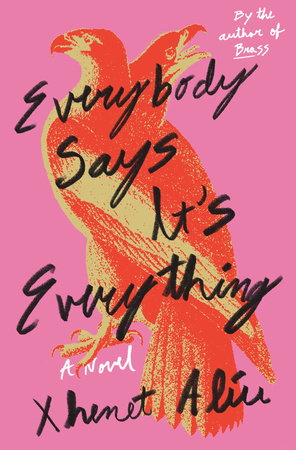
Everybody Says It’s Everything, by Xhenet Aliu**-***

2.5 stars, rounded upwards.

Xhenet (pronounced similar to “Jeanette”) Aliu is the author of Brass, the award-winning debut novel that was one of my favorites of 2018. When I saw that she had a new book, Everybody Says It’s Everything, I was so excited that I bounced up and down in my desk chair. My thanks go to Random House and NetGalley for the invitation to read and review; sadly, I found this book disappointing. The sophomore slump is real, friends.

Our story centers—to the extent that it has a center—on adopted twins, Drita and Pete, who’ve been leading quintessential American lives. Drita was a star student, and is in the midst of graduate studies when she is called home to care for her mother; Pete—actually Petrit—has been in various sorts of trouble, and now his girlfriend and son have landed with Drita looking for help, since they aren’t getting any from Pete. The story takes us through their native Albanian roots and heritage, through the war in Kosovo, and through Pete’s discouragement, hardship, and addiction.

I have a hard time connecting with any of these characters. The dialogue drags, and the poignant qualities that I found in Brass are nowhere to be found. Both are sad stories, but the protagonist in Brass had my whole heart and my full attention, whereas these characters left me feeling as if I was eavesdropping on one more group of depressed, underserved people, but also edging towards the door. I was just straight up bored, a word I rarely use in reviews. I continued all the way through because I was sure that it would turn brilliant any minute; it never did.

I look forward to seeing what this author writes next, because she has proven that she has the ability to connect with readers in general and me in particular, but I can’t recommend this book to you.

The Family Recipe, by Carolyn Huynh*****

“We all need to feel needed. Otherwise, what’s the point of living?”

Carolyn Huynh made her authorial debut in 2022 with The Fortunes of Jaded Women. It was one of my favorite novels not only of that year, but of all the thousand-plus galleys I have read since I began reviewing. She’s back again with The Family Recipe, and it’s every bit as good as the first. My thanks go to NetGalley and Atria Books for the invitation to read and review, but make no mistake: I would have hunted this thing down and bought it with my Social Security check if it came down to it. I wouldn’t have been sorry, either.

This book is available to the public now.

Once again, our protagonists are Vietnamese and Vietnamese-Americans, mostly women, and once again, they are siblings and other family members that must come together; it isn’t a voluntary reunion. And that’s where the similarities between the first book and this one end.

Duc Tran, the patriarch, has laid out the terms by which his children may inherit his fortune. Once upon a time, he was the Vietnamese sandwich king, and in order to become his heir, each of his four daughters must relocate to a city she doesn’t want to live in, and revive a down-at-the-heels restaurant in a now undesirable end of town. It’s a contest; that is, unless Duc’s one son, Jude, succeeds in getting married within the one year’s time limit of the contest. If he can do that, he wins. (His sisters aren’t worried; who would marry Jude?)

The story is told from several points of view; these include the siblings, their uncle—a shady lawyer, and Duc’s best friend; their mother, who abandoned them when they were small, when her mental health collapsed, and never went back; Duc’s second wife; and briefly, Duc himself, who mostly serves as a mysterious figure that doesn’t even return to the States to lay out his children’s requirements, sending their uncle as his proxy.  As the story unfolds, we learn more about each sibling, and about the traumas they have experienced, as well as their successes.

The thing that makes it work so well is Huynh’s unerring sense of timing. It’s a dramatic tale, but it’s shot full of humor, as we see at the outset, when we learn the sisters’ names. Their father was a huge fan of the Beatles, and so the girls are named Jane, Paulina, Georgia, and (wait for it…) Bingo!

There are plenty of twists and turns, and the dialogue crackles. The internal monologues are mesmerizing. This book would make a fantastic movie.

Since I was reading this galley digitally, I highlighted quotes that I thought I’d like to use in this review, but there are 28 of them. Obviously, I cannot share them all here, but let that inform you, if nothing else here has, how much I love this book.

Highly recommended to anyone that has a beating heart, at least a passing interest in Vietnamese-American culture and/or family stories, and can use a few good laughs.

The Road to Tender Hearts, by Annie Hartnett*****

The Road to Tender Hearts is aptly named, possibly the most big-hearted novel of 2025. Author Annie Hartnett first came on my radar in 2022 when she published Unlikely Animals, which turned out to be one of my favorites that year. When I saw that she had a new one out, I tried to temper my expectations; not many authors can write more than one novel so hugely imaginative, genre defying, darkly funny, and yet heartwarming. And it’s true; not many can. As it happens, however, Hartnett can, and she has.

My thanks go to NetGalley and Random House Ballantine for the review copy; however, this is one of those rare instances where I would have paid full cover price if that was the only way for me to read it. It will be available to the public Tuesday, April 29, 2025.

Like Hartnett’s previous novel, The Road to Tender Hearts has quirky characters and at least one sentient animal with an internal monologue, but the structure of the plot is not as complex—a thing I am grateful for, near bedtime—and there are fewer characters and settings. Both are magical, and the distinctions show that Hartnett is not one to write the same book, more or less, over and over. She has more imagination than that; she may have more imagination than ten or twelve ordinary people.

Our protagonist, to the extent we can identify just one, is PJ Halliday. PJ was living the good life, a happy family, steady work, and the esteem of his neighbors in Pondville, Massachusetts, but then his elder daughter, Kate, died when she was eighteen, and PJ, and his marriage, came apart. Since then, he’s been doing two things: drinking, and giving away chunks of his huge lottery prize to every sad sack and every player that comes with an outstretched palm. But all that is about to change.

The son of PJ’s late brother, from whom he was estranged, dies, along with his wife, leaving two elementary aged children without a home or family. It seems that PJ is the only relative these little tikes have. Luna and Ollie aren’t sure that PJ can be trusted, since their own parents and skeezy grandpa never could be, but he actually has some strong if rusty parenting skills, and he is determined to clean up his act for them. There’s just one other thing he needs to do: his old high school flame, Michelle Cobb, has recently become a widow. He never forgot her, and now he intends to drive to her retirement community, Tender Hearts, in Arizona and see if he can try again with her. Two little kids in the car? No problem. And now, add his (still living) daughter Sophie, who figures she’d better keep an eye on him and the tots, and Pancakes, the cat that has adopted him.

Pancakes has a unique talent: he can tell who is about to die, and he goes to them, so that oftentimes, their last breaths are taken as they stroke a purring kitty. And so, Pancakes goes on the trip too, but every now and then, he disappears and is found on the lap of some elderly individual in poor health. (Or, not elderly. Hey, Pancakes just knows.) It’s no coincidence that the story begins and ends with Pancakes.

PJ is not always the best decision maker, and there are several times when I wince at the choices he makes. Sometimes, someone else swoops in and fixes his blunders, and at other times, they’re left hanging in the wind, and we have to wait to see how they will affect the story’s outcome.

Every single aspect of this book is golden. The dialogue flows naturally, and the internal monologues, all told in the third person omniscient, are authentic and full of character. In short—and I rarely say this—there’s not one single thing about this glorious redemption tale that I would change.

Highly recommended to everyone that loves fiction, and that has a beating heart.

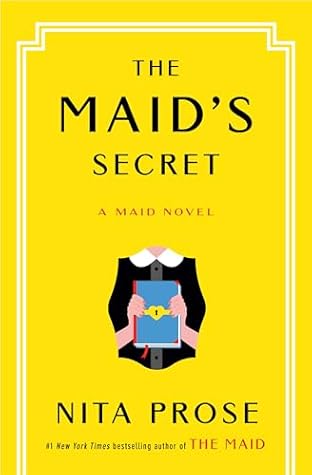
The Maid’s Secret, by Nita Prose****-******

Molly the Maid is back for the third installment of Nita Prose’s excellent and wildly successful series. My thanks go to NetGalley and Random House Ballantine for the review copy. This book will be available to the public April 8, 2025.

As in the first two books, we find Molly employed at The Regency Grand Hotel; she’s been promoted to Head Maid as well as Special Events Manager. She is engaged to chef Juan Manuel, a lovely fellow that helped fill the void in her life when her beloved Gran died. But everything changes when Brown and Beagle, art appraisers famed for their reality television program, come to do a show at The Regency Grand. Along with all of the “polishing to perfection” that is necessary for such a massive event, Molly decides to bring a few of her late grandmother’s trinkets along; you never know, maybe one of them will be worth something.

Oh, it most certainly is!

Once her rare and valuable object becomes public knowledge, Molly’s life changes completely. She no longer has privacy, which she holds dear; strangers are constantly in her face seeking autographs, and the press won’t leave her alone. Meanwhile, we are apprised of the circumstances leading up to this startling discovery. Gran comes to us from beyond the grave—so to speak—in the form of a diary that Molly didn’t know she kept. Chapters in this book alternate between the present day in Molly’s life, and the past, as told in epistolary fashion by Gran.

I wasn’t a big fan of this method, and I’m still a bit ambivalent, which is where the half star off the rating went. It seems like a lazy way to go about telling a story. However, if an author must use this method, it’s hard to imagine it being done better.

Of course things don’t go smoothly following the discovery of the heirloom; if they did, then there would be no novel. But I will leave the conflicts and resolution to the reader to discover.  As for me, I found the series of events, and the ending, believable enough for our purposes, and I enjoyed the story greatly, despite my misgivings about Gran’s storytelling method.

Recommended to those that enjoy the series; this book may be read as a stand-alone, but will be better enjoyed if you can read the first, second, or both earlier books first.

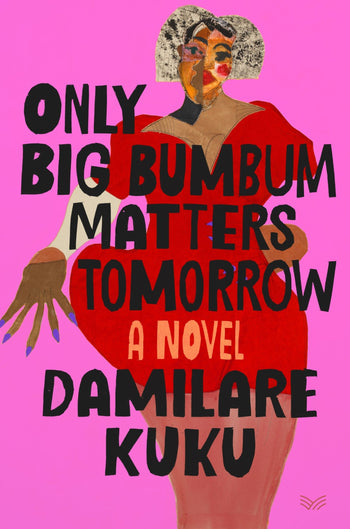
Only Big Bumbum Matters Tomorrow, by Damilare Kuku

When a novel written and set in Nigeria is so successful that it’s translated into English and sold in the U.S., you know it’s probably one hell of a good book, and Only Big Bumbum Matters Tomorrow is clear evidence that this is true. My thanks go to HarperCollins and NetGalley for the review copy; this book is for sale now.

Our protagonist is Teme (TEE-mee), a young woman fresh out of college who is sure of her next course of action: she must develop a perfect body, starting with her backside. She works and saves her money so that she can have her buttocks enhanced surgically. Everybody loves a woman with a big butt, and once hers is augmented, she can marry anybody she wants. It will be a great investment!

This choice, not surprisingly, blows the roof off her family home. All of the women, her mother, auntie, sister, and others are adamant, and they scheme together, and bicker together, about how to prevent her from carrying out what they perceive to be a dangerous and foolish task. In the process, they reveal their own long held secrets, and also? They are hysterically funny!

The reader should know that the best material isn’t dropped in at the beginning, as is the unfortunate trend. Instead, it starts out fairly serious, and then I find myself snickering a little, and then a little more, and by the end, I am howling! There are quite a number of characters, and not recalling all of them won’t interfere with your enjoyment; however, it’s easier to catch up and also identify certain Nigerian terms that are peppered in, most of which are self-explanatory anyway, if you read digitally. However, because I had fallen behind, I checked out the audio version from the library and followed along as I did my morning exercises, and the audio version is brilliant as well. The lilting Nigerian dialect is mesmerizing!

Although it doesn’t seem like it at first, this novel packs a satisfying feminist punch. I highly recommend it to any reader that has eyes, ears, or both. Don’t miss it!

Let Us Descend, by Jesmyn Ward*****

Reading Jesmyn Ward always hurts so good. In Let Us Descend, she conveys the heartbreak and sense of betrayal a young girl, Annis, faces when she and her mother are sold separately by their owner—who is also her father–and the ways that she copes, and also the ways she is helped by the spirits of her ancestors.

My thanks go to Scribner and Net Galley for the invitation to read and review. I’m sorry to be so late here, and am grateful that the literary world has recognized this book for the masterpiece that it is.

You may have seen other reviews in which I complain and gnash my teeth over historical inaccuracies; sometimes I rant over an author’s failure to portray a child in a way that is developmentally inaccurate. There will be none of that here. Ward has taken the time and done the research, and so her well crafted characters aren’t compromised by sloppy background details. I had to take this story in small bites because it is excruciatingly sorrowful.  For part of it I listened to the audio version; this is a treat in itself, as Ward reads her own novel.

Some reviewers have taken issue with the amount of magical realism Ward employs. I disagree with them. How can any novelist portray such a story and such a character as Annis with any glimmer of hope, unless they employ these literary devices? Does anyone really want to read a book that is miserable at the outset, miserable in the middle, and miserable even at its bitter, wretched conclusion? Without hope, there’s not much incentive to keep reading, nor would it have been satisfying to write; but Ward will not and does not revise history simply to make her readers more comfortable. There was only one way to tell this story and be true to history and her characters, and Ward found it.

Yes, it’s a rough read, but it’s so well written that many readers must have smiled through their tears. Know that, of necessity, this story is absolutely loaded with triggers; assuming that you can navigate them without coming undone, I highly recommend this story to you.

Like the Appearance of Horses, by Andrew Krivak****

I first read Andrew Krivak in 2017, when The Signal Flame was published. His glorious prose is something few authors can match. Here we have another novel involving many of the same characters and to an extent, the same setting. I am happy to get back to it.

My thanks go to NetGalley, Highbridge Audio, and Bellevue Literary Press for the review copies. This book is for sale now.

One of the things that initially drew me to Krivak’s writing is that he occupies a sparsely populated niche with his historical fiction. Who else writes about the Romani Resistance of World War II? Who writes about Romani refugees? Most authors are as susceptible as anyone else to trend following and bandwagonism. Krivak is not. He sets his own course, and he does it with spellbinding prose and sterling self-discipline.  

Here we see three generations of men that go to war, starting with World War II, then to a P.O.W. camp during the Vietnam War, and finally, to Iraq. This is a rough read, friends. There’s just about every possible trigger, so if you’re protecting the more tender parts of your mind, you may need to pass on this one. On the other hand, if you are looking for a catharsis to bring about a good ugly cry, rush out and get this book right this minute.

Krivak doesn’t write page turners; instead, he draws me in and makes me forget where I am and what I was doing a minute ago. His work is deeply absorbing and at times, moving.

Narrator Jamie Renell gives a flawless performance here. The book is tightly plotted enough, however, that the listener needs to pay careful attention. I had both the audio and ebook formats, and I still got confused once in awhile and had to backtrack.

If I could add one more thing to ice Krivak’s literary cake, it would be a well developed female character. The women that appear here seem to have been planted for the purpose of developing the male characters. That’s not necessarily a bad thing, and Krivak has crafted this story around a set of actual people and events, though he says it’s a loose representation, and so I can see why he chooses to focus on the men that go to war; yet, since he is taking a few liberties anyway, would it hurt so very much to send off a soldier girl?

This complaint is a minor one. Krivak is a badass, and I do recommend this book to you.