Phantom Orbit, by David Ignatius****

“When we know a secret that could have devastating consequences, what should we do?”

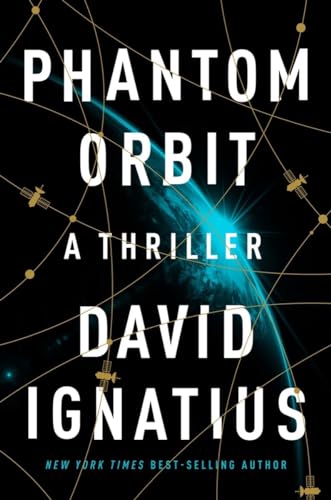
David Ignatius writes spy thrillers, and is one of the most reliable authors I’ve read within that genre. I can always count on an absorbing read. Phantom Orbit centers on Ivan Volkov, a young man from Russia that goes to Beijing to study science, and an American CIA officer named Edith Ryan. They come together and then part, because while their interests and personalities draw them together, their obligations to the lands of their births pull them apart.

My thanks go to NetGalley and W.W. Norton and Company for the review copy. This book is for sale now.

Our chief protagonist, Ivan, is courted by the Chinese, who want to recruit him and his brilliant mind to their space program, but he is summoned home when his mother becomes ill, and once he is there, he comes under intense pressure to remain in Russia. Later, once he has lost almost everything, he finds a chance for redemption.

Edith, on the other hand, is faced with every possible glass ceiling and endless sexism in her work, and nobody will take her ideas seriously. Eventually she gives up on the Agency and returns to civilian life in the States.

This story grabbed my attention from the get go and held it all the way through. I wasn’t able to guess what the resolution would be.

That said, this also isn’t the best he’s written. For those new to this author, I recommend The Quantum Spy. For Ignatius’s faithful readers, and for those fond enough of espionage thrillers to want more than one such novel, this book is recommended.

Unnatural Death, by Patricia Cornwell*****

Unnatural Death is the twenty-seventh installment in the Kay Scarpetta series by Patricia Cornwell, and it’s as good as they get. My thanks go to NetGalley and Grand Central Publishing for the review copy. You can get it now.

For those not conversant with the series, Scarpetta is a medical examiner for the state of Virginia. She’s moved around over the course of the series, decamped to Boston, and come back. So now she’s in her old stomping grounds, but all is not well. The obnoxious, obstructive secretary she was saddled with in the last book, a miserable woman that blamed her for the ouster of the corrupt man that came before, has been—finally—fired, but somehow, she is back in a different government position in the same building, along with the corrupt guy she likes working with, so it’s tense.

Our other permanent characters are Pete Marino, who’s worked with Kay forever and is now married to her sister, Dorothy, who’s a hot mess; Benton Wesley, Kay’s enigmatic husband, a forensic psychologist that works in extremely high level situations that he can’t tell Kay about, even when they have a bearing on her life; and Lucy, her adult niece whom she has raised as her own, and who is the daughter of Dorothy. Lucy is a wunderkind, a tech wizard employed by the FBI, sometimes on loan to the CIA.

I won’t go into the premise for this installment because you can get that in the promotional blurb, but I will tell you that by the ten percent mark I was riveted, and before the halfway point my notes say, “I hate being away from this thing.” A shocking development occurs that is much more impactful to those of us that have followed the series from the start. I have heard other reviewers say that they used to read the series, then lost the habit, so I will say this: if you have read most of the series but missed a book here or there, you can still get the full measure of this thriller. If you just missed the most recent one, that’s okay. But if you go into this book cold, your very first time reading a Scarpetta book, some of the magic will be missing. Perhaps you will read it and be impressed enough to go back and binge read the whole series. It’s not a bad idea!

Any author that writes a long running, successful series like this has to flesh out the main characters to keep readers’ attention. For the first few books, pure plot-based adrenaline rushes are possible, but at some point, there’s going to be a credibility issue continuing that way. I would have difficulty believing that a forensic coroner had been kidnapped by bad guys and hurled into the back of a vehicle, bound and gagged, even once, but when it happens over and over, I’m done and I’m done. Cornwell does the smart thing instead, developing crises that are sometimes more about others in Kay’s family, but that nevertheless spill over onto her in a big way. In doing this, she forces us to examine questions that have no easy answers. For example, if an extremely dangerous development comes up that could affect you or your family, but it is also a matter of national security, and one family member knows, should they break the vows of their office in order to let you or other family members know? Or should they keep it ambiguous, along the lines of, “Maybe you should stay home today?” What if two know, and you don’t?

One way or the other, this story is a wild ride. The tension is occasionally broken up by Marino’s fixation on Bigfoot. He’s obsessed, and it cracks me up when we’re worried about killer drones and enemies unseen, and then Marino pipes up about the big ole footprint he found in the woods. For quite awhile I have wondered why Cornwell hasn’t been made a Grand Master by the Mystery Writers of America. Hopefully, this outstanding novel will serve as a clarion call. Highly recommended.

The Bitter Past, by Bruce Borgos***

2.5 stars, generously rounded upward.

The Bitter Past is the first in the Porter Beck series by Bruce Borgos, and if I liked it, I’d be thrilled to read more. On balance, though, I don’t. Nevertheless, my thanks go to Net Galley and St. Martin’s Press for the invitation to read and review. This book is for sale now.

The setting is the hinterlands of Nevada; part of the story takes place in the 1950s, and part of it is in the present. I rate the historical threads as 3.5 stars, and the contemporary part as 1. The premise is that Porter Beck is the local sheriff who is called when a grisly murder is discovered; in addition, a sister-wife goes missing. Sana Locke is the woman that the Feds send in, uninvited. The premise for the other thread is that a Russian operative named Georgiy Dudko lands in Nevada, tasked with entering the nuclear test site and stealing a nuclear warhead. Toward the book’s conclusion, we see how the two stories are joined.

Before I am even twenty percent of the way into this story, my hackles are up. I haven’t seen an author write with such brazen disrespect for women in a very long time, and I hope not to see it again. You see, Beck is God’s gift to women, and it’s a good thing, too, because none of them prove smart enough to find their butts with both hands until he sails in and fixes everything. From the instant Agent Sana enters the narrative, introducing herself as FBI, Beck is the guy in charge, and Sana is his li’l buddy, his sidekick. Good thing he is here to educate her. It is Beck that finds a hidden room in a house they’re searching; it is Sana whose eyes “go big.” He has to dive quickly to save her from the bad guy with the gun. He tells her what to do, and she does it. Here are some quotes that set my teeth on edge:

“Before [Sana] can speak, I place a finger over her lips.”

“Sana appears confused.”
“I bring my finger under her chin. ‘Look up.’”

And no collection of sexist bilge is complete without the old saw about how women are unable to get along with other women: “[Sana’s] still miffed about Brinley, [Beck’s sister] and it’s clouding her judgment…I glare at Brin, a warning to her to retract her claws.”

Beck feels completely free to comment on Sana’s physical features, particularly her “exquisite ass,” but of course, Sana likes that in a guy. She’s in the sack with his middle-aged, um, butt in no time flat.

For a long time I hold out hope that things will turn around, and the author will prove to us that actually, Beck is about to get his just desserts, and Sana had been sent to take him down for some reason, but the only comeuppance she deals him at any point is when she pulls a jujitsu move on him, and that’s only once.

What else? Ah yes, the sister-wife. The girl’s husband is a good FLDS neighbor, Beck tells Sana. They don’t force anyone to marry. She’s seventeen years old, so it’s fine.

What the fuck. Seriously? Excuse me while I grab my blood pressure medication.

In addition to all of this, there is the constant use of the word “illegal” to describe a person that is in the U.S. without documentation. They don’t even call them illegal immigrants, or illegal residents. They don’t merit a full grammatical description.

The thread that takes place in the past is more palatable. Georgiy needs into the nuclear test site, and so he befriends a scientist that works there, and is introduced to Kitty, the scientist’s daughter, whom he courts and accidentally falls in love with. Kitty is not developed as a character any more than Sana is, but at the same time, during the 1950s in the U.S., marriage and motherhood were very nearly the only acceptable path for women, so within the context of time and place, this is believable. I like Georgiy much better than Beck, that’s for sure!

There’s a twist of sorts at the end, but it’s not all that impressive, and it mitigates nothing.

I was provided with the digital review copy and the audio as well, and so I listened and read at the same time. Narrator James Babson does a fine job portraying the characters as they are written, and he isn’t to blame for the way I feel as I read.

That’s it in a nutshell. If all of this sounds just fine to you, then go ahead and get this thing, and stay away from me. Does anyone have any matches I can use?

The Power Couple, by Alex Berenson****

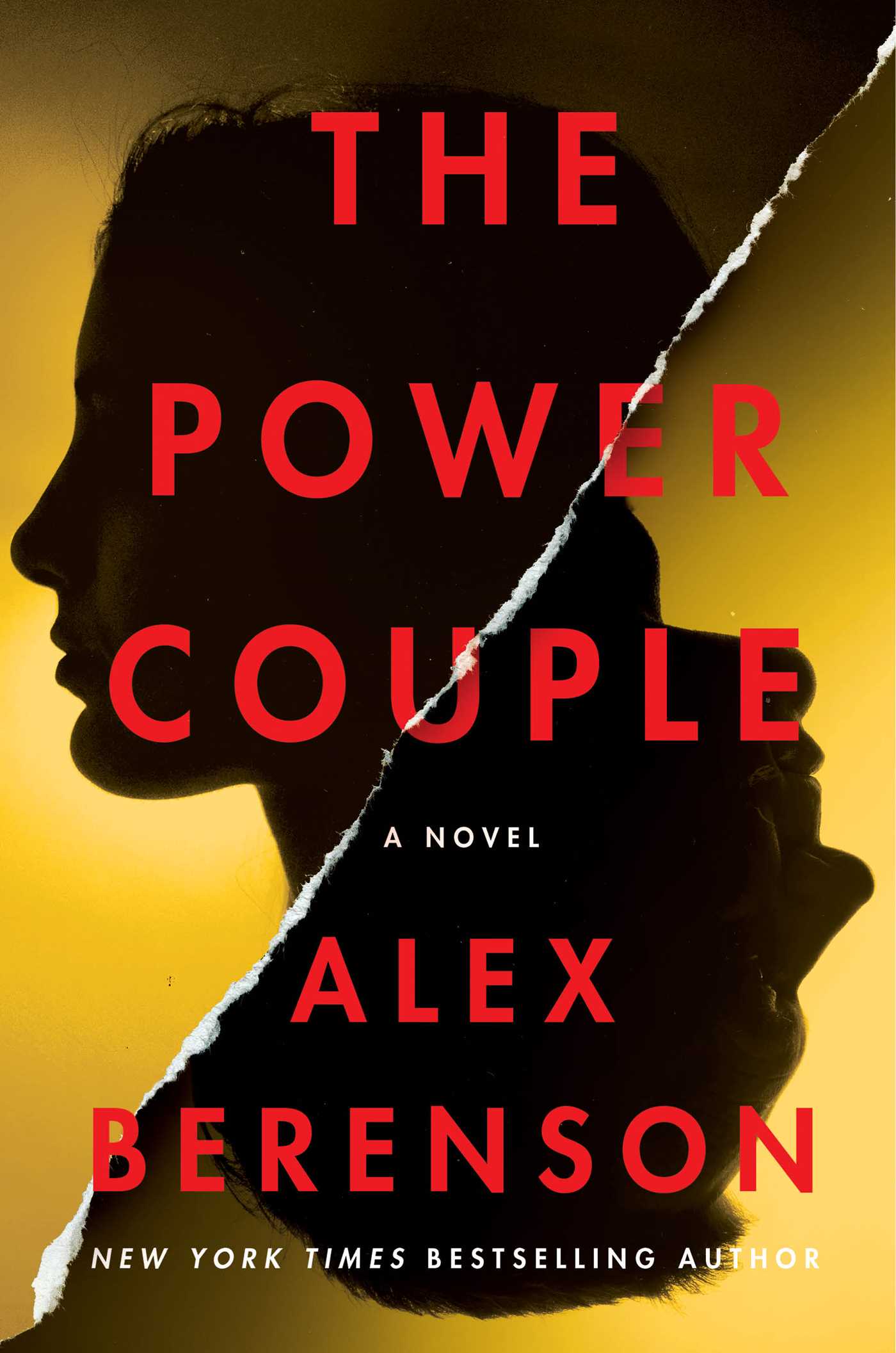
Alex Berenson has done it again! I first read his work when I found a galley for The Prisoner, the eleventh in his John Wells series. When I saw that this stand alone thriller was available, I jumped on it. My thanks go to Net Galley and Simon and Schuster for the review copy.  The Power Couple is a fast read and a fun one, and I recommend it to you.

Rebecca (call her Becks) and Brian Unsworth are type A achievers, and both work for the federal government; she is a spy, and he is a hacker. But like so many couples, the similarities that brought them together are getting in their way now. With their children, Kira, who is nineteen, and Tony, who is younger, they take off for Europe to let off steam and spend quality time together. Maybe.

Early in the story, Kira is abducted, and from there forward, the pacing is perfect. Now and then Berenson pulls us back a bit as he shares sketches from their pasts that lead up to this event, but each reminiscence is brief, and the shift between points of view and time periods adds to the suspense. We see their lives through the perspectives of all except Tony, who is a minor character. In the end, Kira is the one we like best. (Trust me.) There’s not a lot of character development, but this isn’t that kind of novel.

I don’t want to give more away, because if I kill any surprises, you won’t enjoy the story as much; what I will say is that even if your own marriage is less than perfect, it is a shining beacon of integrity and affection when contrasted with that of the Unsworths.

This book is for sale now, and just right to take on vacation with you.

Love and Other Crimes, by Sara Paretsky*****

Sara Paretsky is a venerable author, one who—along with the late, great Sue Grafton—reframed the role of women in detective fiction nearly forty years ago. When I saw this collection available for review on Edelweiss, I jumped on it. It’s for sale now, and you should get it and read it—although there’s a caveat coming up that should be considered first.

Sometimes when a favorite writer releases a book of short stories, I find that I’ve already read a lot of them in one form or another. This time, nearly every story is new to me. One forms the basis of a full length book that I read a long time ago and have forgotten much of. Another is a reworked version of the short story “Wildcat,” which I purchased a short time ago. These are the only duplicate stories I can detect, and I am a voracious reader where this author is concerned.  Some of her work was included in Sisters in Crime anthologies, but I haven’t seen them. Not all of them feature the iconic V.I. Warshawski. The signature elements that include social justice issues such as women’s rights, immigration, racism, and the homeless are here in abundance, as one might hope.

My favorite selection is the second, “Miss Bianca,” a mystery in which a little girl saves a research rat and ultimately uncovers a dangerous conspiracy. Paretsky gets the tone of the child’s voice just right, making her bright within the bounds of what a child that age is capable of, and registering the thought processes and perceptions of her protagonist flawlessly.

There’s an historical mystery that involves a Sherlock Holmes retelling, and like all of that ilk, it bored the snot out of me, a first where this writer is concerned. I abandoned it halfway through. The five star rating is unchanged, because the reader can skip this story and still get her money’s worth and then some; also, I am aware that not everyone is as averse to this type of writing as I am.

Another story is set during the late 1960s, and the Civil Rights Movement is center stage. In order to convey the horror of the backlash by some Caucasian Chicagoans during this tumultuous period, the *N* word is included several times. I used the audio version of this book for some of the stories, including this one, and I feel as if it should have a warning sticker of some sort because hearing that word shouted angrily sent a cold finger right up my spine, and I don’t like to think of other readers, especially Black readers, listening to it within the hearing of their children. I don’t deduct anything from my rating, because the author includes a note about its use and her reasons for it at the end of the story; in fact, there is an author’s note at the end of many of these that makes the story more satisfying. But you should know that this word is there, so be ready for it.

When all is said and done, there are few authors that can deliver the way Paretsky can. With the considerations above included, I highly recommend this collection to you.

The Paladin, by David Ignatius***-****

David Ignatius writes reliably entertaining spy novels, and when I saw that this one was available, I hopped right on it. Big thanks go to Net Galley, Edelweiss, and W.W. Norton for the review copies. It’s for sale now.

Michael Dunne is a career operative for the CIA, and he’s sent to sniff out what appears to be an enemy intelligence service fronting as a news organization. This particular assignment is risky because it’s illegal to run surveillance on journalists, but his boss tells him that he’ll run interference for him, and like a good soldier, he goes. He does what he’s been told to do, and next thing he knows, he’s been arrested for spying on the press, and nobody at the CIA will go to bat for him. What the hell just happened? With his career in tatters, and his family torn asunder, Dunne’s only interest, upon emerging from the year he spends in prison, is vengeance. He wants to find the guy that set him up and ruin him. From there come multiple surprising twists that kept me on the edge of my seat.

My first David Ignatius book was The Director, which I won in a Goodreads giveaway in 2014. I liked it so well that I bought one of his older novels during my annual pilgrimage to Powell’s City of Books that summer. In 2018 I read and reviewed The Quantum Spy, a title perched on my favorites shelf not only for its brilliant pacing and suspense, but also for its insightful take on the challenges faced by Asian Americans within sensitive government positions. The strong impression I received reading it is likely to blame for my being slow on the uptake this time around. I realized when I finished reading The Paladin that it wasn’t as strong as his earlier novels, but I don’t think it’s fair to judge an excellent writer against himself when rating a novel. I initially rated this book five stars because there’s still no other spy novelist whose work I like better than his…except.

There’s a serious problem with his use of gender roles here, one I am surprised not to have noticed from the get-go, because it’s so obvious. Another reviewer opened my eyes and made me ashamed of myself for not homing in on the problem, because it’s not a small one.

There are two women that play important roles in our protagonist’s life. One is the virgin, and the other is the whore. Frankly it is so obnoxious that for any other writer, I would have given a negative rating and a scathing review. I am being measured in my response because I still see this as atypical of this author’s work, and I suspect it’s a slip rather than a true reflection of his own ideas. Then too, protagonist Dunne is portrayed as a hawk with regressive attitudes, and so the value he places on his wife’s virginity when he married her may have been a deliberate choice in developing this flawed character. I surely hope so.

The second female character is the seductress that lures Dunne into a “honeypot trap,” his sole but egregious infidelity that makes his overseas behavior all the more contemptible and costs him his family. Whereas this is a classic element of a great many spy stories, both old and new, it would have been more acceptable if Ignatius had included some other female roles that were more nuanced and that fell into neither category.

It is perhaps a measure of the author’s ability to write tense, believable tales of espionage that I had to have this major flaw pointed out to me. Because of his track record, I give this story 3.5 stars and round up. I will be interested to see what he writes next time.

If you read this one, I recommend doing so critically.

Need to Know, by Karen Cleveland***

NeedtoKnow

“My God, Vivian, what’s it going to take for you to trust me?”

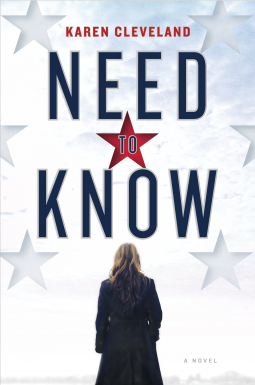
 Need to Know is an espionage thriller written by a former CIA analyst. I read it free and early thanks to Random House and Net Galley. This book will be available to the public on Tuesday, January 23, 2018.

Our story is told in the first person by Vivian Miller, a CIA analyst with a mortgage to meet and four small children. In the course of her research she comes across the identity of someone she knows and then the whole house starts to tumble, as she makes one bad decision after another, punctuated with the occasional wise choice to heighten suspense.  Around the sixty percentile I found myself reading it for giggles as it becomes increasingly clear that our protagonist is as dumb as a box of rocks.

With this in mind, I have devised a drinking game for rowdy book clubs that meet in real life. Here are some ideas:

  • Take a drink every time Vivian refers to Matt as her “rock”.
  • Take two drinks every time she refers to Matt as their children’s “rock”.
  • Take a drink every time you run across the word “ringleader”.
  • Spin around three times and take a drink for every rhetorical question you find in the narrative.
  • Take a drink for every stereotype you see.


Spoiler alert (*snerk*): you may want to clear your calendar the day after your book club meets, because it’s going to be a rough one.

Now I understand that there may be abstainers in your drinking book club, patient souls that either really like the people in your club, or that can’t find a book club made up of tea-totters. For those people I have special instructions:

  • Take a drink when you find a well developed character.
  • Take a drink when you find a positive female role model .


Another spoiler alert: provide this second group of people with water, because otherwise they are going home thirsty.

I can also recommend this title to women that are newly divorced, mad as hell, and looking for something to throw. For these ladies, I recommend obtaining a hard copy, because you won’t want to ruin your expensive electronic devices. Before commencing with this title, remove pictures, monitors, and china from the wall where you’ll be reading. Broken glass is nobody’s idea of a fun Tuesday night.

“They’re good, the Russians.”

Newly divorced, mad-as-hell, book-throwing women that have recently divorced a Russian man may even want to pre-order a copy. I’d do that right now if I were you.

Купить книгу.

The Spy Who Never Was, by Tom Savage*****

TheSpyWhoNeverI love Savage’s work, and this title is his best to date. I got my copy free and early thanks to Net Galley and Random House Alibi. You can get it January 9, 2018.

Nora Barton is our protagonist, and she is recruited by Edgar Cole as an unofficial CIA agent—she has been helpful to the Agency before—because of her physical resemblance to someone being targeted by the enemy, an enemy known as TSB.

“Edgar Cole was using her as bait: here, kitty, kitty. Now Nora was in Paris with TSB, and the two of them were playing an elaborate game of I-know-you-know-and-you-know-I-know, and Nora wondered what would happen next in their little charade.”

Nora isn’t allowed to tell her husband, who is an intelligence agent himself, but she tells him some of it anyway. I smile, knowing I would do the same. He tells her not to accept this assignment—absolutely not—but Nora doesn’t take orders from him, and she makes the decision to go.

Savage writes true thrillers. Like his other novels, this one grabs you by the hair on the first page and doesn’t let go. I am accustomed to the traditional story arc, rising toward a climax, but that’s not what we get here; instead, there’s a huge surprise around every corner. My pulse raced while I read this thing, and my blood pressure rose. There are several places in my notes throughout the book that say “Holy crap!” or, “My heart!”

Once in Paris, people start getting dead. That agent that was attacked because he was guarding her—wait a minute, was he guarding her? Nora isn’t sure who she can trust, but happily, she has a personal friend, an elderly fellow now retired from intelligence that lives in Paris. Her friend’s message to her is sobering indeed: “Go home, Mademoiselle.”

Every now and then Savage breaks up the tension for a split second with humor, and I love this. Her mentor in Paris prides himself on his English use, and he misuses idioms in ways that are charming and sometimes very funny, and this is done in a way that doesn’t mock the French or anyone else. Savage is a pro, handling this delicate characteristic deftly. The mentor tells Nora that a spy known as “Le Faulcon” is here to kill her; he is a “Russian hitting man”.

Whoa now. Frankly, I would be on the plane back to the States in a jiffy; but then, I would not have gone at all. Nora, on the other hand, is a badass.

This leads me to my very favorite aspect of Savage’s work, which is becoming a literary signature: women generally don’t get saved by men here. Women either save themselves, or they save others. But in this regard, Savage is the ultimate anti-noir author. There are no helpless women. Three cheers for Savage’s powerful feminist fiction.

Last, let’s look at the side characters. There are a host of them, and a number of them are known by multiple names, so this is not a beach read. I quickly learned not to read this story after I took my sleeping pill, because if I did, I would just have to read it again the next day. In addition to our colorful older French mentor, Savage introduces a new character named Fanny that I would love to see again.

Get it digitally or get it on paper, but if you love a well-crafted psychological thriller, you have to read this book.

The Quantum Spy, by David Ignatius*****

“America is a country where race matters. The more people say they are, what, color-blind, the more it is a lie.”

thequantumspyDavid Ignatius writes gripping spy fiction, and this is his best work.  The basis of this one is the longstanding intelligence war between the CIA and its Chinese counterpart; the story is fictional, but his careful research ensures that this could have happened.  Lucky me, I read it free thanks to Edelweiss and W.W. Norton and Company Publishers. This book will be available to the public tomorrow, November 7, 2017.

Harris Chang is Chinese-American, raised to respect the red, white and blue.  He works for the CIA, and has been sent to investigate a leak in a quantum research lab. As the USA and China struggle to achieve technological dominance, tensions rise. Chang wonders if he has been chosen to investigate based on his ethnicity, since he knows very little about China or even his own family tree; why yes he has. The Chinese expect to be able to turn him because of it, and over the course of time, his bosses begin to suspect that it’s happened.  Harris is loyal, and he chafes at the unfairness of his treatment, but is determined to succeed. After all, what could prove his loyalty more clearly than to perform above the standard to which most of the Agency’s employees are held?

The setting changes constantly as spies chase other spies all over the world, but the story takes place primarily in Arlington, Virginia and in Singapore. There are also some especially tense, intriguing scenes set in Mexico, and I love the side details about Trotsky’s house, which is now a museum.

Ignatius dumbs down nothing for anyone, and so the reader should have literacy skills that are sharp and ready. Don’t read this one after you take your sleeping pill. Trust me.

The story can be read—and mostly will be, I think—as an enjoyable bit of escapism. With current events so intense, we all need some of that, and it’s what I expected when I requested the DRC. But I find it much more rewarding because of the racial subtext. It’s an area that’s important to me, and at first my back was up when I saw hints of it without knowing what the writer’s intentions were. So many are astonishingly clueless, or worse, when it comes to this aspect of fiction. But as I saw where he was taking it, I had to completely reevaluate my opinion. I would love to be surprised in exactly this way more frequently.

The ending made me want to stand up and cheer.

Highly recommended to those that love strong thrillers, and even more so for those that also cherish civil rights in the USA.


Three minutes to Doomsday, by Joe Navarro***

threeminutestodoomsday“Nothing’s ever over till the fat lady sings.”

Trite? Yes. Abrasive? Absolutely!  Sexist? All the damn time. Profane? Seriously profane, and not in a way that some of us might find amusing. And yet, this memoir has a strangely fascinating aspect as well.  It combines two stories, the primary one an espionage case in which the author plays the primary role, and a secondary one, the implosion of the author’s personality and marriage. It’s not fun reading, but after a certain point, there’s no turning away from it either. Thanks go to Net Galley and Scribner for the DRC, which I received free of charge in exchange for an honest review.

Navarro is a hot-shot young FBI agent in 1988, and it is while conducting what is expected to be a fairly routine interview that he notes a “tell” from former US soldier Rod Ramsey. It becomes the basis of an espionage case that goes much deeper than anyone anticipated. Navarro uses his expertise in nonverbal communication to tell what Ramsey is feeling during the various phases of his interviews, and he also uses it to control and manipulate Ramsey into cooperating with the investigation. Ramsey is the one soul on this planet with fewer friends than Navarro, and so Navarro spends years making Ramsey believe that he himself is that friend, practically family. He does it so he can have this kid busted and send him away for a really long time.

Navarro knows a lot about reading and controlling others nonverbally, but he doesn’t know a thing about building a family life or about how to make friends, and it’s clear he knows this, yet he can’t help himself. He tells us that an agent he wants to assist him tells a supervisor that she would prefer to work with someone else, and specifically, with anyone, anyone, anyone else but him. A number of other people echo this, and yet his personality continues on its hell-bent-for-leather downhill trajectory.

While he continues his self-aggrandizement with a hearty side-serving of brazen braggadocio, Navarro recounts again and again how much he hates the office staff at work, little people that are getting in his way by attempting to do their jobs. Clearly they just don’t understand how very important he is, but that’s okay, because he is letting the world know now.  Regarding the office manager that dares remind him of small requirements like changing the oil in his official vehicle, he uses a tired aphorism:

“Don’t try to teach a pig to sing. It annoys the pig and it wastes your time.”

He lets us know that he swore at, patronized, and berated her constantly, and lest we take his admissions as a sign of penitence, he also lets us know that he hates her still. He has changed her name for obvious legal reasons, but he hasn’t changed his obnoxious attitude or gained a speck of humility.

Add to this the fact that, though this case is terrific book material, the guy isn’t much of a writer. Clichés abound, and very basic principles of narrative writing are either never learned or disregarded. He starts chapters with lists, apparently too busy and important to transform these into paragraphs. I’m not all that sure he ever edited his work (because he might have noticed his overuse of parenthesis) and I’m not sure he permitted anyone else to do so either (because surely they would have come to his rescue).

Still, it’s an interesting story. Whereas someone else could no doubt do a finer job of writing this thing, it’s undeniably compelling. I recommend this memoir to those that enjoy espionage thrillers and true crime stories, but don’t give up the full sticker price. Read it for free or cheap, and save your serious dollars for serious writers.