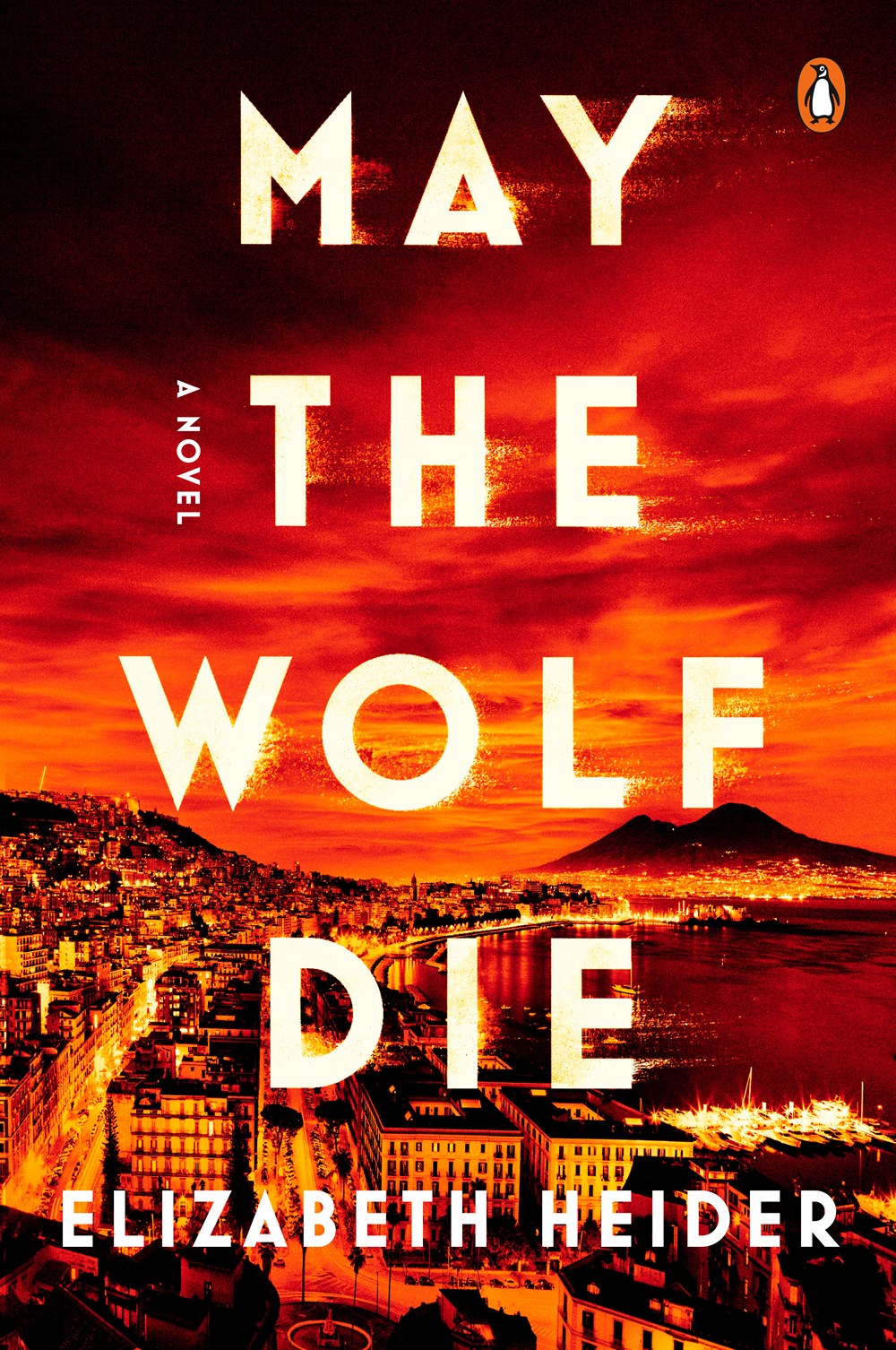
May the Wolf Die, by Elizabeth Heider***-****

“Sometimes, killing is necessary.”

Elizabeth Heider is a scientist with a long, impressive track record. Now she has published her first mystery, May the Wolf Die, as well, proving that some of us can wear multiple hats very well indeed. My thanks go to Penguin Random House and NetGalley for the invitation to read and review. This book is for sale now.

Our protagonist is Nikki Serafino, an investigator living in Italy. She’s out in her boat one day when she finds a man’s corpse, and from there we venture into local organized crime.

The mystery itself wasn’t as engaging as I had anticipated, given the buzz, but there are a few laudatory aspects nonetheless. First, Heider is a scientist, and often when someone is a specialist in some other field, they info-dump so much data into their novel that it loses its sheen. Heider’s restraint here is admirable. The unusual characteristic of the corpse, which I won’t disclose, appeared to be a gimmick that would take over the story, but it wasn’t and didn’t. The ending was solid. But the best and most important feature, the thing that elevates this mystery from three stars to four, is the punchy yet tasteful manner in which Heider deals with sexism and violence against women in the military. There are a couple of stand up and cheer moments that made me sit up and take notice.

This is a debut novel, and a promising start for Heider. I wish her well in her new career.

Cat’s People, by Tanya Guerrero****

Cat’s People marks author Tanya Guerrero’s debut in writing a novel for adults, and she does it beautifully. This heartwarming feel-good story tells the story of five people in Brooklyn that are brought together by a stray cat in the neighborhood. My thanks go to NetGalley and Random House Ballantine for the invitation to read and review. This book is for sale now.

When I first received the call to read this book, I was leery. That pink cover with a cat on it; I thought it might be cloyingly sweet. I let the widget sit in my file for a while. However, Goodreads friends—people that are not dimwits—really liked it, and it occurred to me that my own selections were a little on the dark and heavy side, so I went back and retrieved it. It was a good choice. Because I was running a little late with it, I checked out the audio version from Seattle Bibliocommons, and it made a delightful travel companion when I found myself driving across the state line for a semi-emergency within my family. Even Ox, my oversized beagle, seemed to find it soothing. Reader Elena Ray does a wonderful job.

I’m not entirely sure whether the protagonist here is Nuria, the woman that volunteers for a local group that feeds stray cats in the neighborhood, or Cat himself; this would make a nice book club discussion question. Nuria is single and a bit at sea in New York, the city where her mother told her not to move. However, she begins finding post it notes in the area where she feeds Cat; they are from a secret admirer.

The admirer in question is Collin, a successful author who’s also single, lonesome, and very shy. Collin sees Cat outside in the cold, so he builds him a small house with a bed, and he puts it in his courtyard. Others in Cat’s orbit are Omar, the mailman who’s going through a crisis of his own; Bong, the owner of Nuria’s favorite Bodega, who’s grieving the loss of his wife; and Lily, the sprightly newcomer who’s come to the city to find Nuria. All of them are brought together when Cat becomes ill.

I have never said this about a novel for adults before, but this book is adorable! The tone is perfect, balancing the cares and anxieties of the humans with acts of kindness by each that remind us that humankind is inherently good.

Recommended to those that need something a little bit warm, light, and fluffy–even dog people.

How to Summon a Fairy Godmother, by Laura J. Mayo*****

“She was Theodosia Balfour. Good things did not happen to her.”

Theo is engaged to be married, despite her wishes; her mother has bartered her to an ancient, badly behaved duke for the prestige of his title and the money she must have to keep the family manse. Beggers can’t be choosers, amirite? Her stepsister and the prince have barred her from their castle due to her own unseemly behaviors, and her sister is about to be wedded to a more desirable man. There’s only one way out of it: Theo needs to find her stepsister’s notes on summoning a fairy godmother. Only magic can possibly get her out of this mess.

My thanks go to Orbit Books, Hachette Audio, and NetGalley for the review copies. This book is for sale now.

Because I am lucky enough to have both the print and audio galleys, I pair this book with my morning regimen on my exercise bike. While my feet are doing the work, my eyes and ears are on a pleasure cruise, listening to the story as read by the talented Josie Charles. At the outset, I’m not sure I’m going to enjoy it. After a handful of quick laughs, the story and voice actor seem to be a little over the top, perhaps trying too hard. However, a number of other reviewers that I respect have really enjoyed this thing, so I keep an open mind, and sure enough—about a third of the way in, I realize that I’m bonded to the protagonist. As I follow the narrative and become accustomed to the writing and narrative styles of the author and performer, the whole thing grows on me, and before long I find myself looking forward to my wretched exercise bike, because Theodosia needs me.

Once the fairy has been summoned, Theo is magicked away to fairy land, and she is provided with a set of tasks she must accomplish in order to be freed from the loathsome old toad to whom she’s betrothed. She is provided with some assistants and supervisors, and it’s a good thing because she needs rescuing now and then. The hardest part, perhaps, is the caveat that as she completes the steps required, she must behave respectfully—at all times!

The chapters are brief and have hilarious titles. A couple of examples: “Chapter 5 Where Theo Should Probably Think of Something Before She Ends Up Married,” “Chapter 11 Where It Becomes Quite Clear Theo Was Never Trained as a Lawyer.”  There’s lots of snarky dialogue, with a tender moment or two tucked in here and there.  There’s a twist at the end that I absolutely did not see coming.

Should you listen to the audio, or read the printed version? There are some American readers that don’t like a British accent, and Ms. Charles’s is a heavy one. Once I’m used to it, I rather like it, but you know what type of reader you are. Follow your usual go-to. If you enjoy an audiobook, this one could make your commute much pleasanter.

Highly recommended to those that enjoy fantasy and/or humor.

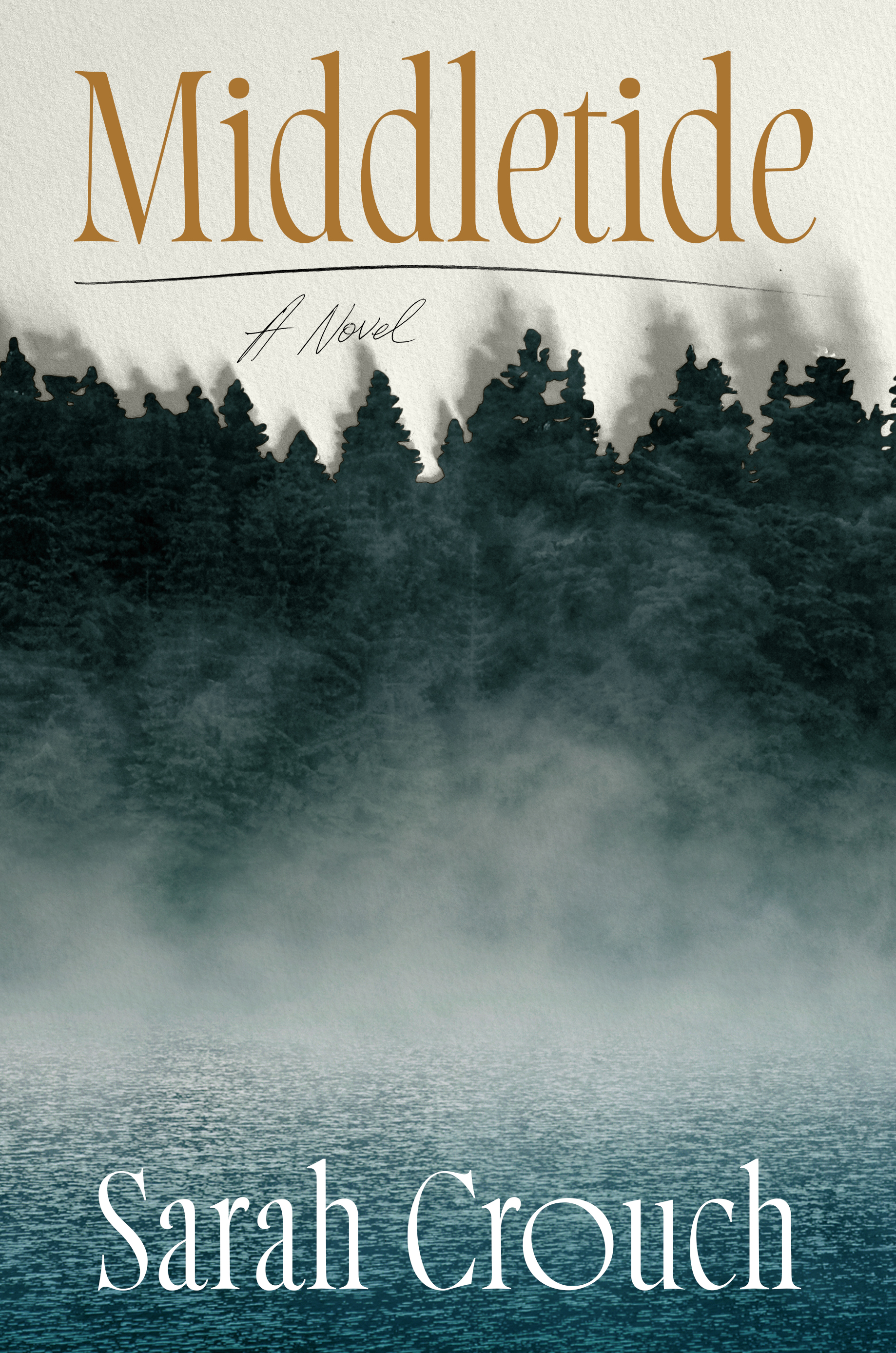
Middletide, by Sarah Crouch*****

Sarah Crouch makes her authorial debut with Middletide, a mystery set in the Pacific Northwest near where she grew up. Atmospheric and tense, it’s a damn fine start to what is sure to be a promising career.

My thanks go to NetGalley and Atria Books for the invitation to read and review. This book is for sale now.

The premise is that Elijah Leith leaves home when he reaches adulthood, eager to flee his violent alcoholic father, and make a name for himself in San Francisco. But his father dies, and when his first novel goes nowhere and he runs out of money, Elijah returns and takes up residence in the cabin where he grew up. He hopes to rekindle a relationship with his teenage sweetheart, but she has moved on, and since he was unreliable the first time around, she is reluctant to trust him anyway.

Then the cops find the body of Dr. Erin Landry hanging from a tree on Elijah’s property.

This whodunit is original and intelligently written. The pacing is perfect, and I never would have guessed the ending, at least not until nearly the end when the author spells it out. Elijah is not the most lovable protagonist, but Crouch develops him so that, although not a prince or a hero, he is nonetheless a decent human being by the end. Some will consider the solution to be over the top, but it’s only far fetched if the author fails to convince us that it’s true, and I am persuaded.

Those looking for a fun read to pack for a vacation, or just to occupy a weekend at home, here you go. Grab your book, your lemonade or your whatever, and head for your happy place. You can thank me later.

Piglet, by Lottie Hazell****

“Such a special day.”

Piglet is an offbeat novel that marks the debut of author Lottie Hazell. The protagonist is a young woman named Pippa, but everyone calls her Piglet. This author has me before I open the book, because with a nickname like this, I have to see what’s behind it, and where it’s going. My thanks go to NetGalley and Henry Holt for the review copy; this book is available to the public now.

Piglet lives in London, far from the working class area where she was raised, and where the rest of her family still resides. She’s a cookbook editor for a publishing company, is engaged to marry Kit, who is handsome and comes from a well to do family, and they have recently purchased a gorgeous home. Her star is clearly rising.

It’s a tightrope walk, to be certain. People with money have expectations, and so it’s not easy for Piglet to advocate for herself in the presence of his family. But she genuinely likes them, and so she works with them—which generally means that they get their way. Her own family mildly embarrass her when the two families meet, but her folks won’t often cross paths with these people once she and Kit are wed.

Then, two weeks before the wedding, Kit confesses a terrible, terrible betrayal, and Piglet has to decide whether she is in or out. As she unravels, I watch in horror. Piglet, you see, is an emotional eater.

In many ways, Piglet is the protagonist I have been wanting to read all my life. So often female main characters respond to stress by not eating. The lesser characters around them cluck over how pale, how thin they’ve become, and I sit back on my ample behind and say, “Yeah, right.”

But Piglet’s stress eating is epic in scope, and I also worry that the resolution will involve therapy, a new diet and a wedding gown in a size smaller than anything she’s ever owned. And since this much comes from my own imaginings rather than the book, I’ll go ahead and tell you, no. That doesn’t happen, and I am so grateful.

For most of this novel, I feel an intimacy with the protagonist that is rare. I can’t wait to find out what happens next, but I also can’t tolerate interruptions, and so I choose my reading sessions carefully. I am fortunate enough to receive both the digital review copy and the audio galley, and at the outset, I do what is my usual routine in such circumstances, listening to it while I am doing something else, but with the DRC nearby so that I can make notes or highlight likely passages for quotes. But by the time I am about thirty percent in, that’s over, and instead I am listening while reading also, because how can I think of anything else?

There are two things that I am dying to know. First, does she stay with Kit? And more importantly, what terrible thing did he do? Piglet keeps this information close to her vest, but the few people she tells are uniformly horrified, and so I know it’s bad. But what is it? Just what the hell did he do?

The ending feels incomplete to me. There are so many things that Hazell could have done and didn’t that I am disappointed by what feels like a slightly bland resolution. This is a good book, but it could have been a great one.

Hazell’s word smithery skills are stellar, and when I was done, I found I’d highlighted over 150 passages. Obviously, I won’t use them all here. Most of the novel’s tone is quite serious, but there are a few moments of dark humor that leave me shaking my head in admiration. In particular, there’s a wedding photographer that makes me howl!

The narrator is outstanding.

One way or another, Lottie Hazell is an author to watch. I look forward to seeing what she produces next.

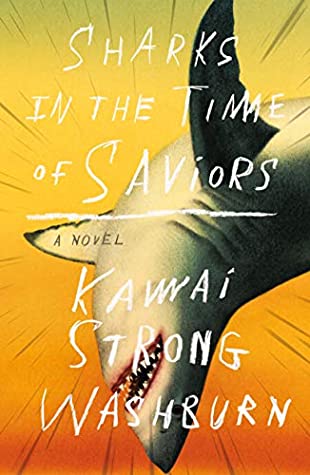
Sharks In the Time of Saviors, by Kawai Strong Washburn*****

A story like this one only comes along once in a rare while, luminous, intimate, and deeply affecting. My great thanks go to NetGalley and also Farrar, Strauss and Giroux for the review copy. This book is available to the public, and you should get it and read it.

Initially I was drawn to this book for several fairly superficial reasons. The cover is certainly arresting; the title is perplexing. But the biggest draw for me was that it was set in Hawaii, and all of the characters are native Hawaiians. In my corner of the world, the Pacific Northwest, there are a lot of Pacific Islanders. Why anyone would leave such an idyllic climate for the dark, soggy winters we see here used to be a mystery to me, but ultimately, people follow the jobs, and so many Seattle residents come from there.

As a history teacher, I’ve always felt that my students deserve to be included in the curriculum, and so in addition to teaching about Caucasians during whatever time period we’re examining, I work in African-Americans, Latinx, Native peoples, and a variety of Asian ethnicities, but time and again I hit a wall when I tried to find something for my Islander students. And when I’ve taught literature, it’s been the same struggle. Islander kids get shut out every time.  And so now I am retired, and here’s my appeal to other educators out there. Put this book in your classroom.

For the rest of you: apologies. Let’s get on with it.

As we open, the setting is Hawaii in 1995, and the protagonists are two parents and three children, all members of the Flores family. They’re on vacation when seven year old Noa falls into the ocean where sharks are circulating. But instead of devouring the boy, one of the sharks delivers him back to his family, carrying him gently in its jaws, “Like you were made of glass, like you were its child.” The first chapter is told in the second person, with Malia, the mother, recalling the event, speaking to Noa. She tells him, “The gods were hungry for change, and you were that change.” It’s obviously a miracle, and others see it happen also. Their lives will never be the same.

As the story continues, we hear from all of the family members. At first, Noa appears to be gifted with a magical healing ability, but he is still a child, and the demands on him are grueling, exhausting. But this is not the only change his magical abilities produce. Noa is the youngest child in the family, but now the siblings’ hierarchy is completely flipped, and the resentment felt by his brother and sister is dreadful. At one point Kaui, who is academically talented, fumes that she is “just his shadow, shaped like a sister.”  And his brother Dean, who is an athlete, explains:

You’re out at breakfast without him, eating cereal and joking with Mom and Dad, Kaui coming in, and you get them all laughing and smiling, just because of you. But then Noa shows up right, and suddenly it’s all questions about what’s happening with his day and did he sleep okay and here’s some thoughts about which extracurricular program he should enroll in…Hard not for get angry at that. I felt it like a fist flexing inside my own chest.

To make matters even more fraught, there’s an economic downturn that makes it impossible for the parents to support the family. They begin charging people that come to be healed by Noa, and so the youngest child is not only the golden favorite because of his miraculous ability; he’s also the family breadwinner. And again: it’s an awful lot to put on the shoulders of one small child.

The dialect combines with the authorial voice to create characters that I swear I would know if I ran into them, and in many ways, they remind me of the adolescents that I taught. Because I was so unconscionably late here, I checked out the audio version at Seattle Bibliocommons, and I have never heard an audiobook I loved more. The voice actors are so convincing that I can hear them now, more than a month and several other audiobooks, after I finished it.

For me, that would be enough. Create visceral enough characters and I don’t even care much about the plot. But the plot is also gobsmackingly brilliant! I believed I could track where it was headed up until perhaps the 60% mark, and then there’s one surprise turn, and another, and another, till at the end I was simply sitting with my mouth open and my eyes on the text as the audio gave way to the afterword and credits. I had to remind myself to breathe.

This is one of those rare galleys that I could see reading again just for the love of it. This review is my 923rd for NetGalley, and I have chosen to reread fewer than 10 of them, so let that indicate the measure of esteem in which I hold this novel.

Martyr! by Kaveh Akbar

“’Do you worry about becoming a cliché? ‘

“’How do you mean?’

“’Another death-obsessed Iranian man?’”

My thanks go to Doubleday and NetGalley for the invitation to read and review this singular debut novel. This book is for sale now.

Our protagonist is Cyrus, an Iranian immigrant who comes to live in the U.S. as an infant. He is raised by his father, Ali; his mother’s plane was shot down shortly after Cyrus was born, an accident on the part of the U.S. military. His father dies suddenly while he is away at college, leaving him rootless. He spends a lot of time anguishing over death, wondering what is worth dying for. He doesn’t want to waste his “one good death.” Later, he points out that “If I died trying to kill a genocidal dictator tomorrow, the news wouldn’t say a leftist American made a measured and principled sacrifice for the good of his species. The news would say an Iranian terrorist attempted a state assassination. “

And you know that he’s right.

The thing that attracted me to this story is its difference from everything else that I have read. Persians almost never show up in American novels, and when they do, the Persian is the other, the bad or weird person, pretty much like the quote above suggests. So I was all in.

However, I have to say that the amount of angsty inner dialogue makes this a slooow read in places. There is also dialogue between Cyrus and friends, but most of it basically the same thing with a different format. I was primed for humor, since that’s how the book is being promoted, but didn’t find much of it.

The story wakes up a bit when Cyrus leaves Indiana for New York, but the writing remains inconsistent, and the transitions are sometimes a bit ragged.

The revelation about his mother, which occurs toward the end of the story, is startling, and I didn’t see it coming, but it also presents a credibility issue; I won’t go into details here, because it would be a spoiler. Still, apart from this one reservation, the ending is nicely rendered.

Akbar is an interesting writer, and I look forward to seeing what he writes next.

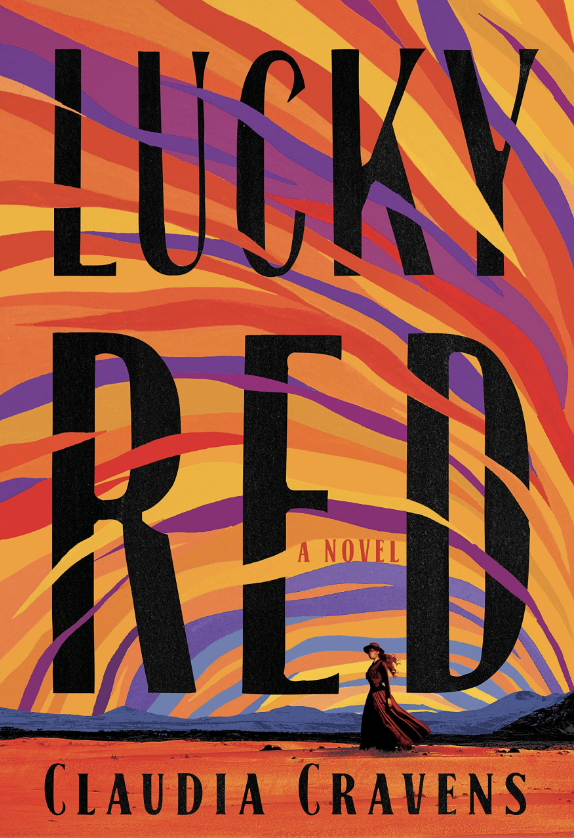
Lucky Red, by Claudia Cravens*****

Larry McMurtry, eat your heart out. There’s a fine new word-slinger come to town, and her name is Claudia Cravens.

My thanks go to Random House and Net Galley for the invitation to read and review Lucky Red. This book is for sale now, and you should get it and read it.

Bridget lives a life of hardscrabble deprivation; her mother died in childbirth, and all she has is her pa. He loves her, but he’s worthless; when he finally gets a bit of money, he invariably drinks and gambles till it’s nearly gone. During one such episode, he gambles away their little house, and then buys a homestead, sight unseen and many miles away. What they find instead is a tar paper shack; there are no crops or tilled acreage, no tools or even a decent place to live. They crawl into the miserable hovel to get out of the elements, at least, and get some sleep; a rattler has the same notion, but when pa thrashes in his sleep, the rattler bites him in the neck, and then there is only teenage Bridget.

Bridget makes her way to Dodge City, and in no time, she is stone cold broke. She’s recruited to work in a brothel, the only one in town owned and run by women. She doesn’t mind the work and makes friends among the other “sporting women,” and is curiously removed from the process for which she is paid; slide prong A into slot V; moan a little, gush, and collect your pay. But later, she finds herself obsessed with a new sex worker; a lovely blonde woman named Sallie. Everyone around her understands the significance of this fascination, but Bridget herself doesn’t get it. She’s young, and she’s naïve. But when Spartan Lee, a female bounty hunter, comes to town and asks to hire Bridget, the sun shines and the angels sing.

This story is epic, and in many ways reminds me of Little Big Man, but with a female protagonist. And in many ways, what makes it so successful is its restraint. At the book’s outset, there’s a slimy man that wants to buy Bridget’s hand in marriage, which would give her father a nice chunk of change, but she hates the man, and her father doesn’t push it. A less capable writer would have done it the other way, but here, and in every instance where I predict what will happen because it’s so obvious, Cravens does something else. And the lesbian sex is brief and almost free of physical details—a sad thing for anyone looking for soft porn, but it serves to keep the story moving forward—with the emotion behind it carrying the internal narrative.

Although Bridget has no complaint about the work she does, and the management is more benign than in houses owned and run by men, Cravens keeps it real. One night, Sallie is attacked by a client, and Bridget bursts in to rescue her. It doesn’t go well. Sallie berates her for her naivete:

“You don’t see the first thing about this, though, do you. They all have a knife, Bridget. They all have a gun, and they were all born with two fists on the ends of their arms. You think you’ve got this all figured out, but any single one of ‘em could take a swipe at you some night and you’d be dead before you hit the ground.”

To tell you more would be to spoil it for you, so I’ll leave you with this: Lucky Red is the best debut novel of 2023, and one of the best books I’ve seen this year, period. Don’t miss it.

The Making of Another Major Motion Picture Masterpiece, by Tom Hanks*****

Tom Hanks has more than one talent, that’s for sure; or perhaps he is an artist that’s ridiculously talented at telling stories, whether they be on the page or screen. One thing I’ll tell you now: I am completely convinced that he did indeed write this book himself, and it’s damn good, too.

My thanks go to Net Galley and Alfred A. Knopf Publishing for the review copy. This book is for sale now.

The story begins with a child prodigy, an artist living in Lone Butte, California, who as he matures, becomes a comic book illustrator. Fast forward about thirty years, and that comic becomes a movie.

Our story doesn’t have just one protagonist, and it is intentional, or so it appears to this reviewer. We have the big boss, Bill Johnson, his assistant, Candace, and the assistant she recruits in Georgia, Allicia. We learn something of their backgrounds and their personalities, but mostly, we see how important they are to the success of the movie. When the movie is finished with Atlanta, Allicia, who now goes by Al, comes along and is eventually promoted; she then finds someone to take her place. We learn more about other people that are working the production, and I am amazed by the sheer number of people involved, and how much must be done to keep everyone on an even keel. Eventually we meet the two big stars of this action movie; one is hardworking, cooperative, and comes up with a host of useful ideas; the other is an egotist, a Do-You-Know-Who-I-Am type, and everybody walks on eggshells in an effort to make him happy, and to make him want to show up and do his job.

In the hands of a less talented writer, this whole thing might feel list-like, but Hanks sculpts these characters so that I feel I know them, and I care about what happens to them.

There’s more than a little wry humor in this tale, and the copious footnotes at the end of each chapter are a part of that. I read them all, because some of them are hilarious, but readers that lack the patience for it can breeze right on by them without missing anything critically important. And here’s a nugget that cracked me up:

“Of late, Bill had been using military-style call words rather than expletives. Fuck was Foxtrot. Asshole was Alpha Hotel. Cocksucker? Charlie Oscar Charlie Kilo Sierra.”

As a bonus, artist Robert Sikoryak has written the comics themselves, and they are included in the book. Those that love comics should probably get this book in hard cover, because a lot of the detail is hard to see in the digital version that I read. As for me, I don’t give one single poo about comics, and I skipped them.

Movie buffs will be fascinated with the vast amount of movie making minutiae here. I am not a big movie viewer, but I eat it all up, anyway, because I had no idea of the amount of time, personnel, and materials necessary to creating a major movie, masterpiece or otherwise.

Although he doesn’t beat the drum hard enough to distract from the overall story, Hanks’s message is crystal clear: everyone involved in creating a movie is important. If the crew doesn’t have enough restrooms, it affects the movie. If nobody brings lunch to the set, some people will be miserable and perform below par, whereas others will slip away in search of food and not be available when needed. And if just one person is a horse’s ass and drags his feet, or if he blabs things to the press that aren’t supposed to be released yet, he can add millions of dollars to the cost of the production. Here’s a perfect quote:

“What advice can you give us to make it in Hollywood?” She talked about the great divide between solving problems and causing them, and the importance of being on time.”

Through all of this, I keep wondering when we will see the young artist that made the comic again. If we started with him, it makes sense we will see him again at some point, right? Yes. This detail—along with every other—is done beautifully.

There’s not one thing about this book that I don’t love, and the feel-good ending is icing on the cake. Highly recommended to those that love movies as well as excellent fiction.

The Wonders, by Elena Medel***

Elena Medel is a Spanish award winning poet, and this is her debut novel. My thanks go to Algonquin and Net Galley for the invitation to read and review.

I am initially excited to be asked to read a work of fiction that “brings a half century of the feminist movement to life,” but in most regards, the magic has escaped me. I suspect part of this may be cultural, and/or a matter of translation, because the style is very different from North American and British novels. A single paragraph may last for pages, and there are vast swaths of internal monologue that leave me checking the page count.

And yet, there are some fine moments here. I can’t recall having seen a novel that demonstrates so decisively what happens to a woman that is not given the choice to terminate a pregnancy, or what kind of life the child is likely to have. We begin with Maria, who is completely disinterested in her baby, and almost immediately leaves her with her mother, parenting only by sending money home as she is able. She works the night shift, facing danger and harassment constantly.

Her daughter Alicia is not only disinterested in motherhood, but never develops human attachments. She takes joy in hurting other people, physically and emotionally, from an early age. She makes no true friends, and she doesn’t want any. Her character chills me to the bone.

Although it isn’t an enjoyable read for me, I recommend it to a niche audience, those that have a particular interest in international feminist literature. It will be available to the North American public tomorrow, March 1, 2023.