Black-Eyed Susans Giveaway; My Very First!

I am pumped about this! I was contacted by a rep from Net Galley and offered a copy of Ballantine’s hot new mystery for a blog giveaway, which I have not done before. I hope a lot of people will enter. If you’d like to be included in the drawing, which will occur at the end of this week in a totally random manner, please go down to the bottom of the page where it says “Leave a Reply”. Type in your name (or a pseudonym for now if you prefer) and an e-mail address where I can reach you. If you win, I will send a message to your e-mail, and at that point you need to give me a real name and snail mail address, which will be released only to the Net Galley rep.

I promise not to use your e-mail address for anything else. Actually, I don’t have an e-mail list to sell, and I don’t have anyone to sell it to. But if someone pops up and offers me great riches, I will turn them down…I promise!

This page will dominate my blog for the whole week. As a refresher, here’s the review again, and the attention-getting cover:

BlackEyedSusansTessa is the sole survivor of a group of young women who were left for dead in a mass grave, which was then planted with flowers. The Black-Eyed Susans became a metaphor for the trauma she experienced. This thriller, Heaberlin’s first following a highly respected career in journalism, is a great read with a few problems, most of which have to do with trying to cram too many details into a single novel. It was looking like 3.5 stars to me until it passed the halfway mark; then it hit its stride. Ultimately, the eloquent manner in which issues surrounding the death penalty were braided into the narrative won the final .5 star from this reviewer. And at this point, I have an obligation to tell you I read the book free, and to say thank you to Net Galley and Random House Ballantine for the DRC. The book will be available to the public August 11.

Tessa is an adult, a single parent, and it’s been twenty years since her abduction and attempted murder. There are memories she tries to bury, and there are other niggling details that she can’t make sense of. In a writing style somewhat reminiscent of Jodi Picoult, Heaberlin flashes us back and forth from Tessa’s adolescent memories to the present, a life in which her sole objective at first is to protect her own teenage daughter, Charlie, whom she is afraid may pay the ultimate price. Because Tessa’s stalker has been planting Black-Eyed Susans in her yard and various other places, and she is scared half to death.
Strange, threatening packages appear in the mail. And her best friend Lydia disappeared mysteriously not long after the trial. There are so many shadows, so many possible threats out there that her inclination is to retreat into her artist’s studio, and into her home. Don’t rock the boat.

The problem is that an innocent man is about to become one more victim of Texas’s capital punishment. Her supposed attacker, the supposed killer of the other Susans, waits on death row…and the clock is ticking. She knows he didn’t do it, and she’s been holding out. Once she decides to testify to his innocence, will she be believed? Can she get there in time?

A tremendous amount of research went into teenage trauma and its possible affects, and the capital punishment process (and the process of its defense) in Texas. Heaberlin has done her homework; if anything, she may have done a little too much, or tried to incorporate too much of her work into one novel. Somewhere around the 37 percent mark, I found myself not mystified, but confused. What were all these references to the OJ Simpson trial doing here? Who the hell is Jo? Is Lydia dead, moved away, or what? The suspense fell away while I stopped reading in irritation to go back over the book and try to discern what I had missed or forgotten.

However, just before the halfway mark, the author found her stride and everything came together. From that point till ninety percent, I was riveted. Portions of the text approached the level of literary fiction. I found myself questioning my earlier complaints, and went back and reread the passages I had marked earlier to see whether I had just been distracted, or in a snarky frame of mind. But no, the inconsistency is really there.

The supernatural bits about the other Susans being in her head, talking beyond the grave, may have turned up in the author’s research as a possible outcome of trauma, but they felt extraneous to me, as if they had been shoe-horned into the text. If I had been her editor, I would have cut them.

I was not entirely happy with the ending, which felt a bit contrived, but I was so deeply satisfied by what I had read up to that point that I didn’t feel let down.

My advice to the reader is this: if you are opposed to the death penalty and love a good thriller, get a copy of this novel. I think you’ll find it as satisfying as I did. You may want to flag pages where you have questions with sticky notes, or mark it digitally if you read it that way; later on it will all make sense.

And whatever you do, remember: there are no millionaires on death row. Not in Texas, and not in any other state that has capital punishment in the USA.

X, by Sue Grafton *****

xBefore I review this title, I have a plea: can we just make the alphabet a teensy bit longer? Because I don’t think I am ready for this series to end, and it’s getting perilously close. But meanwhile, thank you to Net Galley and Putnam-Penguin Publishers for the free DRC, an unexpected treat, especially since it was such a clean galley. The title goes up for sale August 25, but you can order it in advance, too.

As often happens, our story isn’t just about one mystery. There’s an official investigation that goes bad; an unofficial investigation that goes worse; and then there’s a big pile of trouble that drops itself into the neighborhood where Kinsey and Henry (who is ten percent Kinsey’s landlord and ninety percent her surrogate father) live. As always, taut suspense is intermingled brilliantly with silly, naughty, impulsive things that Kinsey Millhone, our intrepid but mischievous detective, dreams up.

This past year saw Grafton inducted as a Grand Master by her fellow mystery writers, and it really should have happened sooner. The level of writing she practices spills over the standard detective story genre and at times approaches literary fiction.

In this story, Kinsey is concerned about the drought in California, and the issue is deftly interwoven into the plot without ever becoming preachy or slowing the pace. Like everything else Grafton writes, it’s well executed.

And here’s my own confession: I love this book so hard that I deliberately slowed down how much of it I read each day. I could have had this review to you last week, but every time I noted that I’d gone 10 or 15 percent further in, I took it away from myself and forced myself to go read a different galley for awhile, sort of like Mary Ingalls making her Christmas candy last as long as possible. But now it’s finished, and the only thing left to do is tell you that it’s every bit as good as what you have come to expect. And if you are new to the series…well okay, I guess if you are new to the series, you are either really young, or you’ve been in a coma for the last twenty years. Welcome to the world of the living; here is your book. And although it can stand on its own just fine if you read it without reading the A-W mysteries, it’s even better if you read them in order.

I can remember my first Kinsey Millhone story. I found C is for Corpse in a train station shop, and soon afterward found myself in bed, recovering from whiplash. (People really do get whiplash; mine was from a car wreck, not a train wreck.) I was mostly okay as long as I kept my head on the pillow and did not try to move my neck—so ideal for reading a paperback. Once I was up and at ‘em, I hunted down the A and B titles, and from then forward, I read the series in order. And over the years and many installments, Kinsey has evolved from the super-hardboiled detective she was in the first book (which was already really strong) to a more developed character. Because when you have a longstanding series, you really can’t have one episode after another in which your protagonist gets whacked over the head or grabbed from behind, hogtied and tossed into the trunk of a car. People start to roll their eyes if you do too much of that shit, but then you have to find another way to maintain their interest level. Grafton does this by combining some really tricky, interesting problems (and yes, some danger) with a lot of character development.

I don’t know about you, but I tend to assign faces of people I know or have seen to characters in books. It helps me run the book as a mental movie if they have a face and a voice. Since Grafton has said in interviews that she sees Kinsey as a sort of younger, skinnier alter ego, I have created an imaginary Kinsey who looks like a cross between younger-Grafton and Stephanie Zimbalist (actor who played a TV detective many years ago). But when she opens her mouth to crack wise, I hear the voice of Roseanne Barr. So go figure!

So here we are. I am more than twenty years older than when I first met Kinsey; since then, I’ve gone back to school, had a career, had another child and raised her, adopted another child and raised him, and retired from teaching. Through it all, Kinsey has remained a wonderful constant, perhaps the adult version of having Grandma come to visit. Oh boy, she’s here! Or, oh boy, she’s coming back! And frankly, I am just not ready to let go. If you’ve been following the series for a long time too, you may feel the same.

The good news is the present. Right now, there’s this wonderful detective novel that you can order up, and you can float away to Santa Teresa. What an awesome vacation read. Even if it rains wherever you are going, you could have a terrific time curled up on a bed just reading this. In fact, you don’t really even have to go anywhere. Turn your phone off; get your favorite beverage and maybe some munchies; and reserve a time to just wallow and enjoy. Because when it comes to a riveting novel that is also, at times, laugh-out-loud funny, I just don’t see where you will find anything better.

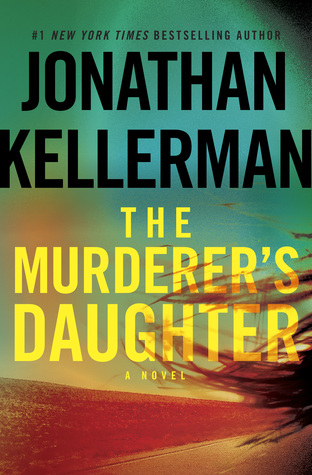
The Murderer’s Daughter, by Jonathan Kellerman *****

kell__jkt_all_r1.inddGrace Blades is a psychologist helping victims of violent trauma, those she mentally refers to as “The Haunted”. And she should know; as a small child, she watched her mother murder her father, and then more or less eviscerate herself before Grace’s own tiny eyes. So yes, she knows. But a client has come to her with a concern that is more than it appears to be, and it dovetails with a harrowing part of Grace’s past. In fact, she has reason now to believe she may be in danger, and it’s up to her to sort out the pieces and save her own life. This riveting DRC came to me free from Net Galley and Random House-Ballantine Publishers; thanks go to both. The book is for sale August 18.

Fans of Kellerman’s have likely bonded with his Alex Delaware series. Although Delaware’s name is coyly inserted into the background text a time or two, this book isn’t about him, it’s a stand alone. It’s a strong story, and Kellerman’s initial career as a child psychologist makes Grace wholly believable. Someone that has gone through the multiple traumas her childhood has visited upon her would probably have trouble bonding with others, and indeed, Grace goes through life neither wanting nor having real friends her own age. She trusts one social worker, as well as the psychologist who together with his wife ultimately adopts her. And even with them, she has to force herself to smile, to show affection; these are never spontaneous behaviors, but ones learned by observation.

Readers of my blog know that I generally don’t review books about wealthy people. I don’t relate to the rich, and it generally seems like a coward’s way out on the part of the author, because they can excuse their protagonist from the daily financial obstacles that most people have to deal with. But Grace has gone through so many hells by the time she reaches her wealth that this book is different; then too, Jonathan Kellerman is such a crazy-good writer that it would be hard to leave a galley of his by the wayside in any case.

In addition, I appreciated the strength and intelligence of this protagonist. Although the sexual (and sexually violent) content makes the book unsuitable for younger teens, it’s still great to have a strong female character that doesn’t need to be saved by men. And thank you, thank you Mr. Kellerman for avoiding the nearly-obligatory kidnapping scene as part of the climax. I have often wondered why exactly so many sleuths, particularly female ones, end up bound, gagged, and in the trunk of a car at some point near the story’s crescendo, and I was heartily glad not to find it here.

In short, fans of Kellerman’s will get their money’s worth and more, whereas those that have never read his work but love a good mystery can dive in here and also be deeply satisfied. Terrific work by one of the best mystery writers out there.

The Burying Ground, by Janet Kellough ****

This book will be released in a couple of weeks, and I can tell you, it’s already gotten some really good reviews. Since I read and reviewed it clear back in January, I’m reblogging it today.

seattlebookmama's avatarSeattle Book Mama

theburyinggroundThis is the fourth book in Kellough’s Thaddeus Lewis series, but it was brand new to me, and I was able to follow the story quite well as a stand-alone. My thanks go to Net Galley and Dundurn Group for the DRC. This book comes out in early August, and I will run my review a second time on my blog then to remind readers that it’s available.

Kellough has merged two enjoyable genres, mystery or detective fiction and historical fiction, and added a splash of social justice–the sort that slides into the story neatly and without preaching. Lots of different story threads eventually braid together elegantly into an ending that satisfies deeply.

The settings are Montreal close to the time of the Industrial Revolution, and outside of Montreal in a village called Yorke. Our protagonists are Thaddeus Lewis, a Methodist Episcopal preacher who travels the circuit, and his son…

View original post 219 more words

Brush Back, by Sara Paretsky *****

brushbackA good mystery writer engages the writer at the beginning, and gets the adrenaline pumping by the 75% point in the story arc. A great mystery writer grabs us by the shirt right from the get-go, ramps us up into overdrive during the first quarter of the story, and doesn’t let us go till we turn the last page, exhausted, feeling both satisfied and bereaved because the story is over. And Sara Paretsky is a great writer, every single time. She’s only gotten better with this 17th installment of the Vic Warshawski series. Thank you and thank you again (and again, and again) to Putnam-Penguin Publishers and Net Galley for the DRC. You can buy this book July 28 if you want to. And you know you do!

Vic is a working class hero, but she’s left the mean streets of the south part of Chicago behind, and when she goes back to visit, nobody who knew her when she was younger will let her forget it. But she does go back, because an old flame approaches her with a serious problem. His mother Stella is out of prison, finally. She pulled the full twenty years for murdering her daughter Annie. But now there is a possibility she really didn’t do it, and Frank wants Vic to search for the truth. Vic doesn’t like it one bit, but agrees to give him a single hour off the clock; after that, it’s the standard fee. She has bills to pay just like he does.

Things turn ugly very quickly, of course. Of course they do! But just as she is ready to wash her hands of the whole unpleasant business, the evening news picks the story up, along with insinuations that smear her own family’s legacy. Now it’s a matter of family honor; Vic is in it for keeps. Her attorney tells her to keep out of it; Lotty, who is like a second mother to Vic, tells her the same thing. Steer clear; let it go. But our detective is like a dog with a bone, and together with her family pride and reckless nature, she’s in it up to her neck again in no time.

In this installment of the Warshawski series, Paretsky has eighty-sixed young relative Petra, who visited a recent installment, and I was glad to see her go. I found her abrasive. However, young cousin Bernie, a high school student checking out colleges, is visiting, and every inch of my being understood Warshawski’s annoyance at the lack of privacy a teen in one’s home creates, and the irritation of having a young person who’s awake half the night and sleeping in the living room all damn day. I have five grown children and endless others have accepted my hospitality over various summers, and so this tidbit hit home. But Bernie is a much more agreeable sidekick than Petra was, and I hope Paretsky will find cause to bring her back in some future installment.

Another of my favorite moments was the lecture Warshawski’s mechanic treated her to when her car was stripped right down to the nub after she left in parked in a South Chicago hot spot under emergency circumstances. He recites the litany of every bad thing she has ever permitted to happen to every single car she’s owned and brought to him, and I laughed out loud as I read it. I would quote it here, but for that I am supposed to wait for the published copy to be sure it hasn’t been altered, and that won’t happen, since you need to know to order your copy right now.

In closing, there are four things you need to remember. First, don’t just pack your gun; pack enough ammunition to get you through your misadventures. Second, technology is a great boon to those that collect threatening evidence against bad guys; scan your pictures, your receipts, your photos and damning letters and put them in the Cloud where bad guys can’t get to them. Third, try to stay away from the cement mafia if at all possible. The things they do to their enemies just aren’t pretty. And fourth, in an unfair scrap when they’re bigger than you are, go for the ankles!

Oh, there’s so much more, but hey, that’s what the book itself is for. It’s not due out till the end of the month, but you can reserve your copy now. Do it!

Threshold, by GM Ford *****

thresholdGM Ford writes really strong mystery novels. He takes the reader from falling-down-funny to high voltage suspense with a mere flip of the kindle page. As usual, this novel, a stand-alone called Threshold, is set here in Seattle.

Mickey Dolan is a detective sergeant, and he is tasked with helping find the wife and two daughters of a powerful city councilman. But not all is as it appears. Much of the mystery centers around an albino woman named Grace. Grace has the ability to bring people out of comas; at one point, she says that these are people that weren’t really ready to die yet anyway, but this is the closest Ford has ever come to dabbling with the supernatural. It makes me wonder whether he will ever try writing horror. But that is speculation on my part; here, it is just one element of a really great tale of suspense.

Back to our story. Grace, her mother Eve, and the missing family members appear to be tucked into an anonymous, generally industrial chunk of land in the industrial Duwamish heartland of Seattle. Why are they there of all places, and why was it so impossible to find them? Why is Grace so reclusive, and what does she have to do with the missing family members?

At some point, the credibility question pops up. I’m a big believer in facts. I like the material world, and when things start to go woo-woo, as when supernatural gifts are introduced into the plot, my forehead wrinkles. What’s up with the weird stuff?

But when all is said and done, a strong writer can make me believe just about anything. Just as Steve King convinced me that there was a haunted clown in the sewer, Ford got me to buy Grace Pressman’s quirky little talent. Because when all is said and done, if the story is good enough, we will want to believe it in order to keep the magic flowing, and that’s how this tale was for me.

Note that there is no thank you to the publishers here. I found this little gem for less than a Lincoln on Amazon, and I said oh hell yes. I almost never pay full jacket price for a book these days; retired academics don’t have a lot of pocket money, and my educator discount bit the dust when I left my profession. This one was both cheaper than usual, and by an author I really enjoy, so I straight-up bought it.

So should you.

Officer Elvis, by Gary Gusick *****

officerelvisThat was absolutely ridiculous…and just in the nick o’ time! Many thanks to Random House Alibi and Net Galley for the DRC. This second installment of the Darla Cavannah mystery series reads just fine as a stand-alone novel.

I like to read several books at a time, and it was getting a little dark out there. The Blitzkrieg had broken out in the master bathroom, with Hitler’s troops having overrun Belgium and Poland and on into France. On my e-reader, Bull Connor had sent huge attack dogs and fire hoses against the teenagers of Birmingham, and Dr. King already understood he would not make it out of the struggle alive. And by bizarre coincidence, Elvis was already perched on my nightstand. We were in the Vegas years, and Priscilla said that on the nights he wasn’t performing, the man just ate and took pills out of boredom. And downstairs, even my fiction and humor were looking a trifle grim.

In situations like that, some foot-stomping humor is not only welcome, but necessary. In Officer Elvis, someone has murdered an Elvis impersonator in Jackson, Mississippi. The case goes to Damn Yankee transplant Officer Darla Cavannah. “Damn Yankees were the ones who came to the South and stayed.” She is assisted by her newbie partner, Rita, who “…might be a licorice stick short in the judgment department, but she ain’t afraid of the devil.”

Darla doesn’t fit in well in Jackson, but she has to stay because her husband is the last doctor in the state that will help women who want to terminate a pregnancy. If he leaves, they lose their access. And as if we hadn’t irony enough, Darla and her spouse are trying to get pregnant…but who has time?

I will grant that my fondness for this ham-handed satire is assisted by my own Yankee urban snobbery; and yet, I did have an Aunt Sister and not one but two Uncle Brothers of whom I was quite fond, thank you very much, and so if you are a Southerner, you just might enjoy this as much as I did…bless your heart.

It was a quick read and extremely accessible.

Who doesn’t need a laugh? You get online now, and you order you a copy. It’s up for sale April 21.

It’s for your own good!

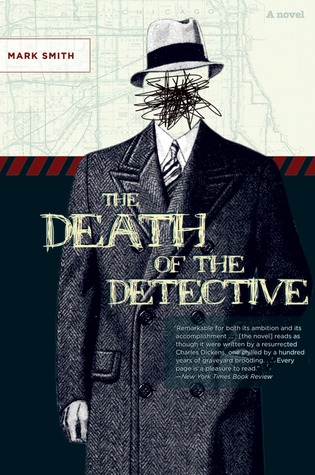
The Death of the Detective: A Novel, by Mark Smith *****

deathofadetectiveMark Smith is one helluva writer. The Death of the Detective is complex yet hazy, with a million details both enumerated and obfuscated, not unlike a day in Chicago, the city in which it is set. All told, an enormously satisfying read. Tremendous thanks go to Net Galley and Brash Books for the DRC.

The time period is the post-war era. With the Great Depression well behind it and World War II a recent triumph, the USA is at the pinnacle of its wealth and worldwide power. The Death of the Detective is spun around the lives of a handful of men , all in Chicago during this time period, men whose lives intersect and then trail away from each other, sometimes joining again, and sometimes not. The style is a lot like that last sentence, compound sentences that last a long time and yet build up to something rather than becoming unwieldy. I have never read a voice like his before.

But back to our story. First we have the protagonist, Magnuson. He is retired from his life as the head of a locally famous security firm, and life has not been the same after his wife died. He is depressed. He’s invited old friends over to play cards and perhaps talk about their glory days, but the evening is ruined, because one of them has invited a man he detests without consulting Magnuson first. He is so irritated that eventually he abandons his guests and goes to bed. If only he would stay there!

Next up we have Farquarson, at least for a short time. Farquarson is a wealthy old man, and a mean one. Perhaps it is fortunate that he is dying. Unfortunately, he has just enough time and evil intent to send out a number of extremely unkind messages, some of them whispered, others sent as poison pen letters through the US mail. Once he is gone, his parting actions send things spinning in all sorts of directions, disrupting and ending the lives of good and decent people…and others’ also.

In addition there is Cavan. Cavan has lived his life in the self-absorbed, irresponsible, idly dilettantish manner of a sole heir to a vast fortune. After all, Farquarson has no children, and he is the only nephew. He spends and drinks recklessly while planning his scholarly (and expensive) trip to Africa. His field is anthropology, and his budget is one he assumes to be bottomless. What a surprise he has awaiting him.

Finally, we have our assassin. The man would probably be considered bipolar today; he has delusions of grandeur and a lot of other strange notions too. He was committed to a psychiatric hospital, but then getting over the wall is sometimes just a matter of persistence and athletic ability. Once he is out, he takes on a number of identities, foremost among them, Death. How fortunate, then, that he has wandered into a murder mystery where he can be useful.

At times, Smith’s noir fiction is reminiscent of the late, great Donald Westlake. At one point I was surprised to find myself laughing out loud over a wry turn of events.

Smith’s well-braided story also pulls in additional supporting players with more limited roles. We have a klatch of criminals, members of an organized syndicate, and we also have some hoods that want in and will do terrible things to prove themselves. We have local cops. We also have an assortment of young people associated with Cavan, as well as ordinary people across whose paths our story marches.

Because we’re all in this together, ultimately.

One thing of which the prospective reader should be aware is that the main characters are all Caucasian, and they are generally racist. The “N” word drops in now and then, and although its use is entirely consistent with the characters who are either using it out loud or thinking it—think of white Chicago businessmen and cops during the 1950s and 1960s—it is jarring. Perhaps it would have been more offensive simply to assume, as many writers still do, that characters in the story are all Caucasian; yet I think I would have enjoyed the novel more without that particular word, and perhaps with fewer racist statements and thoughts by the characters involved. This is my sole complaint about what is otherwise a truly outstanding mystery.

Smith is brilliant at conveying the emotions and thoughts of his characters through action. This reviewer was hooked at the end of the first paragraph, when the man in the diner cut his meat and then stole the knife. Smith’s internal dialogues are lengthy but so well done that rather than reacting with impatience, the reader must instead feel as if she is getting extra time with a remarkable story for no extra cost. His facility with figurative language, particularly simile, metaphor, and repetition are so skillful that I found myself flagging pages to share with students I no longer teach. It was both wondrous and disappointing.

I no longer have my students, but I have you, reader, and unlike most of them, you read what I have to say by choice. Pay attention! Sit up straight! Spit out your gum! Oh hell, I’m sorry; I forgot myself for a moment.

What I really want to point out is that not only do I consider this book well worth your time and money, but it was nominated for a National Book Award, and the author has an impressive list of credentials. But had he not, I would still recommend this amazing novel on its own merits. Originally released in 2007, it was re-released February 3, 2015. Get it and enjoy!

Where the Heart Is, by Billie Lett ****

wheretheheartis  I recently read and enjoyed another title by this author. A quick internet search brought me to this title, which the same search told me had made Oprah’s book club. I rarely watch daytime television and have never seen that show, but I know that books she recommends are often titles I like as well. Such was the case here.

Just imagine it: seventeen years old, basketball-belly pregnant, and riding in a car so beat-up that when you nod off, your shoes fall off your feet and through the rusted-out spot in the floor of the car. There they go! And what could be worse than that?

Then the man of your dreams, who to be fair doesn’t seem all that engaged in your relationship, drops you off at Walmart to get some house shoes, and floors it as soon as you enter the store. There he goes, too.

This story is fascinating because it forces us to examine the difference between innocence and ignorance, between the trusting nature that being a trustworthy person sometimes engenders, versus straight-up stupidity.

Novalee Nation is innocent and maybe a little bit ignorant, but when given the chance to improve her own knowledge base, she does it with enthusiasm. She isn’t stupid; she suddenly realizes, as she enters the Walmart, that Roger would not have given her a ten dollar bill when she only asked for five, if he hadn’t planned to dump her there. She runs back out to the parking lot, but she’s too late. All she has now is Walmart.

Once in awhile the fringe characters in this affable tale are a tad overdrawn (all those bandaids; really?), but most of them–Sister Husband, Forney, Moses Whitecotton, and others, not to mention our protagonist– are so palpable that I found myself inventing other scenarios for them as if they were actual people. That’s always a good sign.

So get your copy–I got mine at the Seattle Public Library–and hunker down in your favorite reading spot. This is engaging fiction from a writer I’ll be following in years to come.

The Bum’s Rush, by GM Ford *****

thebumsrushI have read every speck of fiction written by the man who calls himself GM Ford. Part of it is that he sets a good deal of his work in Seattle, and I was stunned to find him (in one or another of the Leo Waterman books) chasing a villain into my neighborhood, down my street, and when he turned and I read the description of the house in which the body was found, I thought…MY STARS! I KNOW WHICH HOUSE HE MEANS!

Okay. That won’t happen for most of you. But if you can track down the old Leo Waterman books (Ford’s earliest series), they are both riveting in their own right, and absolutely hysterical in places. I have always liked books that feature working class heroes. Some of Waterman’s friends are homeless men, and when he gets money, he takes them things. It’s sort of sweet, at the same time that the mystery is compelling, at the same time that it is, in a wry, clever way, very VERY funny!

I was heartbroken when he ended this series, and overjoyed to see him come back with Chump Change, his most recent release (see review). Consider this a generic endorsement of all of the Waterman books. His other series, with Frank Corso as protagonist, is well written, but not meant to be funny. It was good too, but ultimately, my heart belongs to Leo.

Droll, witty, and brilliantly written. If you can, get them all and read them in order!