Miller’s Valley, by Anna Quindlen*****

MillersValeyMiller’s Valley is an intimate, poignant story so personal that it is hard to remember that it’s fiction rather than a memoir. Thanks to Net Galley and Random House for the DRC. Though I usually read several DRC’s at a time, this was the one I saved for the end of the day, for that time when the phone stops ringing, the dogs quit barking, the family doesn’t need my attention, and there’s nobody at the front door. During those deep, silent hours I immersed myself into the life of Mimi Miller, hypnotized as if my best friend were perched on the bed spilling out her secrets.

If you love good literary fiction, you have to read this book!

The Millers are a family of working farmers. Day by day, inch by inch, water is claiming their land. Shifty business is going on between a developer, who wants to build and sell a waterfront community in what is now rural land containing farms and woods, and the government, which is interested in increasing the size of the local dam. Visitors come to all land owners in the valley, slick people ready to wheel and deal, threaten and cajole.

The Millers are having none of it.

The reader sees all of this through the eyes of Mary Margaret “Mimi” Miller, who grows up amid the tension, the resistance to the governmental takeover of their land, and the pride…above all, the pride. Her family mucks out the mud when the floods come, and they persevere. They resign themselves to the notion that wall-to-wall carpeting can never happen because water comes into the house so often. You can shovel the muck off of wood or linoleum, but a carpet would be ruined the first time the flood came.

Woven in and out of her story is that of her family members and closest friends, including reclusive Aunt Ruth, her mother’s sister who lives in a separate house on the property. Ruth is agoraphobic, and would not come out of her house if she believed it to be on fire. Ruth says that getting out of the house is “overrated”. We also see her older brother, Eddie, who is “the glory of Miller’s Valley”, the perfect son who goes off to college and makes good; we also follow her other brother Tommy into a host of trouble, trouble, and more trouble.

We view each setting as individual snapshot; she paints it, and we are there. Character development is likewise outstanding. As Mimi grows older, we see the same characters with deeper layers of complexity, just as our understanding of those around us grows fuller and deeper as we age. And as she grows into her adulthood, Mimi becomes so similar to her mother in so many ways that I have to remind myself continually that this is fiction, not memoir.

Quindlen is a veteran writer, and when I started to pass this galley by, I realized it was for a foolish reason: I had been required to read her essays and stories sometimes in teachers’ workshops, and so when I ran across her name, my instinctive response was to associate it with work. But those required-readings were some of the best workshops I ever sat through, and now that I am reading on my own time, I find her novel suits me down to the ground.

And I agree with Mimi’s conclusion that “Maybe everyone stays the same inside.”

Those that love good literary fiction as well as stories of finding ourselves through our heritage will appreciate this beautifully told story as much as I did. It is available for purchase April 5, 2016. Highly recommended.

Pilgrims: A Lake Wobegon Romance*****

PilgrimsOh my stars. Keillor is at his finest here. I’ve never read anything funnier. Every now and then I permit myself to read a title that isn’t a new release but that I’ve been considering reading for a long time. This is one of those.

By now you probably have an idea whether or not you are a Keillor buff. His appeal is largely (but not limited to) the boomer generation. His trademark capacity to satirize people from rural Minnesota, and in particular Lutherans and Norwegians and most of all himself, is legend. He somehow manages to tug the heartstrings occasionally and evoke bittersweet feelings that are experienced by those of us who grew up in the USA during a particular time period, even if we are not from his part of the nation or his culture.

Keillor seemed to me to be sort of a hit-or-miss writer for awhile, but lately, he’s been hitting, at least for me. Liberty, Pontoon, and this one, which parodies Chaucer’s pilgrims in the Canterbury Tales, carries on without slowing or hitching or ceasing to be interesting and at many times (especially the end) a total crack-up.

If you have never read Chaucer and don’t intend to, that won’t wreck it. The basic contours: Chaucer wrote about people going far away, in a limited group, and Keillor uses the same style of poetry Chaucer used to mark the beginning and end of this book. If there are other parallels, then I am not deep enough to find them, but if I found this to be a good bedside read with only that much recollection, then it will likely suffice for you too.

Here are the story’s components. (I actually flagged fifteen hilarious passages, and then realized that if I quoted them here, it would ruin it to you, so I’ll just give you the basics and set you free.) Margie is 53 and very unhappy. Life has sort of ground to a dull halt; the nest is empty, and husband Carl has moved to a different bedroom. She doesn’t know why. She hopes that if they take a romantic trip to Italy, it will rekindle the flame.

Writer Gary Keillor comes to town. No one includes him in anything. They all assume he is being standoffish by not coming, and he is hurt that no one invites him; very Scandinavian. Before he knows it, he has livened up the speech he is giving (and which is obviously boring his audience senseless) by offering to fund the trip to Italy. Holy smokes! What has he done?

On top of all of it, the town hero, Gussie, their fallen Norwegian soldier who fought in World War II, should have his grave decorated. His daughter Margo, born in Italy outside the sanctity of wedlock, has never gotten around to coming to the USA to meet him, and his remaining brother, very elderly and in a nursing home in another part of the USA, has long wanted someone to convey a photo of Gussie to his grave site. A simple request, and nobody would do it. Now, Margie calls to tell him she’ll be happy to help, and joy of joys, he sends her a big pile of money, and on his deathbed, he refers to her as his “daughter, Margie.” She is entirely untroubled about taking his money as the little band from Lake Wobegon sets out on its vacation and its mission to decorate Gussie’s grave.

This should give you enough information to decide if you want to see the rest. I will only tell you this: the story has some surprises in store at the end; it is not as predictable as it appears to be at the 75% mark.

I found my copy during an annual pilgrimage of my own, to Powell’s City of Books in Portland, Oregon. It has been available to the public for some time.

Hilarious, and highly recommended!

Evicted: Poverty and Profit in the American City, by Matthew Desmond*****

EvictedI was cruising for something new to read, something that wasn’t yet another mystery or thriller. I ran across this title and requested it from Net Galley, then asked myself what I had been thinking! Who wants to read an entire book about eviction? What a grim prospect. I was even more surprised, then, when I opened it and couldn’t put it down. Desmond approaches his subject in a way that makes it not only readable but compelling. Thanks go to the people at Crown Publishing and Penguin Random House for approving my request for a DRC. This book is available to the public March 1.

Desmond undertook his study as part of his study of sociology while attending the University of Wisconsin, and continued it into his graduate studies at Harvard. The whole book is based on rentals among high-poverty families living in Milwaukee, Wisconsin, and Desmond explains why this location is a good case study as regards the rest of Midwestern urban America.

Most of the text is told as narrative nonfiction, with the author shadowing eight families, some African-American, some Caucasian, through trailer parks and ghetto apartments in Milwaukee. There is a great deal of dialogue, all of which was captured with permission via digital recorder, so the text flows like good fiction. One Black landlord and one Caucasian landlord are also shadowed, and although I came away feeling that both landlords—one of whom, to my horror, was a former fourth grade teacher—were lower than pond scum, Desmond is careful to also demonstrate the ambiguities, the times when one or the other let things slide when an eviction could have been forced; brought over some groceries for a new tenant and did not ask for repayment; gave tenants opportunities to work off back rent to avoid eviction.

At the same time, we see how ultimately, almost all of what appear to be landlords’ small kindnesses are actually adding to their profit margins.

The text is nicely organized. The beginning and ending are expository in style, as a newspaper or magazine article would be, with the statistics that demonstrate how much more of a renter’s income is eaten by housing than was true in previous years; how a bad credit history can lead a low-income family into an apartment that is substandard and costs as much or more than a nice apartment of the same size in a calmer neighborhood that might be rented by someone with a good credit history; and the terrible dance that must be done to keep both heat and rent paid sufficiently to avoid being cut off with winter on the way, or evicted. It also points out that there are people living in low income apartments that should not even be living independently due to mental health issues or extremely low IQ; Desmond recognizes the times—though they are a tiny minority—in which someone takes that welfare check and does something tremendously stupid with it, not using it for housing, utilities, food, or even clothing for the kids.

He clues us in to the fact that while huge numbers of Black men are getting locked up, huge numbers of Black women, particularly mothers, are getting locked out.

Desmond discusses the various ways landlords manage to avoid fixing even the most desperate plumbing and structural issues in rental housing. He discusses the inevitability of eviction for a renter that calls police—or for whom someone else calls police—due to domestic violence. The problem is considered a “nuisance” by the city; three visits by cops in a month mean huge fines for the landlord unless an eviction is ordered, in which case fines are waived.

It’s enough to make you sick.

Particularly appalling is the situation in which Lamar (all names are changed ) is diligently scrambling to paint apartments and clean out a basement to avoid eviction. The man has no legs, but he can’t collection SSI, because theoretically, he could do a desk job. He crawls around on his stumps to paint the areas his elementary-aged neighbor kids have missed, climbs through filth and muck in a half basement, and is cursed at by his landlord, who says he is trying to disrespect her by doing such a terrible job.

He is evicted anyway, and the landlord becomes unavailable to do repairs for other tenants soon, because she and her co-owner spouse are off to Jamaica.

There are some people that would fit so cleanly into Dante’s seventh circle.

It is the individual stories of the eight families, the various fascinating rationalizations of the two terrible landlords, which keep this from simply becoming a dark place the reader would never want to go. Some of the cultural nuances were really interesting to me, and I have lived in some hard neighborhoods back in the day, and taught many high poverty students. I’ve been to some of their homes. Yet Desmond taught me a great deal.

For those interested in America’s housing crisis; for anyone that has ever been evicted; for those interested in sociology and culture, this book is a must-read.

Hail Storme, by W.L. Ripley**-***

HailStormeIn 2015, I reviewed Storme Front, the second of four books in the Wyatt Storme series. I loved it and rated it 5 stars. Given the opportunity to read and review this first in the series, thanks to Brash Books Priority Reviewers Circle, I didn’t have to think twice. Thank you to Brash for the DRC, which I read free in exchange for this review.

In this first installment, Storme, a retired football hero and Vietnam veteran, goes bow hunting for deer in Missouri and runs into trouble. Tracking deer, he literally walks into a field of marijuana; before he can decide what if anything to do about it, a snarling Doberman charges him, and he has to kill it. From there, the action unspools, taking him into town and leading the reader to a series of conversations and confrontations Storme has with the local law, the local goons, and of course, women.

The local law can’t quite decide what to make of him:
“’You a wiseass, Storme?’ McKinley asked.
“I shrugged. ‘It’s a gift.’”

Of particular interest is Willie Boy Roberts, a local businessman that has full time body guards, here in this tiny town. So right away, we know there’s trouble a-brewing that extends far beyond a simple field o’ weed.

Storme also meets Chick Easton, who will become his wisecracking, crime-fighting partner continuing on into the series. Easton has been a green beret, has killed people for the CIA, and is also a Vietnam vet. He has considerable regret about the life he has led, but he’s a great guy to have in your corner. He also provides the perfect counterpart for all of the genuinely funny snappy patter in the book.

I also genuinely appreciated, as I did with the second Storme book, having a protagonist that drinks coffee rather than whiskey or beer, but doesn’t constantly agonize over his alcoholism. It seems like two out of three works of fiction these days feature alcoholic protagonists or important secondary characters, and I have had my fill. Just pour the coffee and shut up already! A welcome change.

This first novel started out a little bit uneven, but hit its stride well before the halfway mark. I really thought it would be a four star read till I got to the last ten percent. There, it gets ugly. There’s a steady stream of anti-gay venom. Easton discusses a suspect with Storme, and he deliberately lisps—gee, I’m not laughing—and does the whole limp-wristed thing when he speaks of the character’s possible motivation. I won’t say more here lest I spoil a (small) part of the whole who-dunnit, but there is so much ugliness toward gay men, not just the offensive jokes, but some plot moves that left me feeling as if I’d eaten spoiled food, packed into this last portion of the book that it’s impossible to disregard it and move on.

I checked the copyright date, longing for something that would permit me to give this otherwise really good story the four stars it deserved up to then. It was originally published in the 90’s. No, no, no. Not okay.

Because of this factor, I rate this novel 2.5 stars and round it up with a fair amount of ambivalence.

The writer makes a point, subtle yet distinct, that Storme is a Christian. Fine with me. But if the anti-gay aspect of this novel is tied to dearly held principles Ripley possesses, I can’t become a constant reader. If it was simply a failure of the writer to update his work to reflect a more widely held social view—and here I am thinking of the occasional novel that gets written, sits on someone’s desk for several years, and then sees publication much later—then he and Brash might want to have a conversation about editing. Don’t get me wrong; I support the First Amendment right to express one’s ideas freely. But when those ideas brim over into hate speech and homophobia, I also can’t give a positive review, or consider myself a potential customer of the work presented me.

If you are homophobic and love mysteries, this one is your book, and it’s available for purchase now. Otherwise, consider moving on to Storme Front. You don’t have to have read the first in the series to enjoy the second.

Am I game to read #3 and #4, knowing that #2 is free of these challenging issues? If I can get the DRC’s for them, I’ll dive right in. Everyone is entitled to make a mistake early in their career. But right now, I wouldn’t lay my money down

House of the Rising Sun, by James Lee Burke***-****

houseoftherisingsunI confess that I am a big fan of Burke’s. He’s written a prodigious number of novels over the past fifty years, and I have read almost all of them. This is why, although I get nearly all of my books free prior to publication, I put this title on my Christmas wish list when I wasn’t given access to a galley. Perhaps because my spouse paid full jacket price for it, I am holding it to a higher standard than I usually do. This book is either a three star or four star read, depending on whether we factor in the dollars. Let’s call it 3.5 and round it up. It seems like a shame to 3-star a writer who is so talented and has contributed so much to American literature.
Most of Burke’s novels are detective fiction, crime fiction, mystery, or all three; now and then he writes historical fiction instead. And his choice to send Dave and Clete, the protagonist and side kick of the Robicheaux series, is a good one. No matter how much I enjoyed it, in that fictional world where cops do the right thing and bad guys are really bad every time, there is no way the reading public would be able to continue to enjoy their vigilante behaviors between the covers of a book at the same time that the Black Lives Matter movement has made us aware of that problem—along with the throw-down weapons used to justify gratuitous brutality after the fact–that exist in real life. So, that series is over, and I’m okay with it.

Technically, House of the Rising Sun is a four to five star novel. Burke’s use of imagery is rivaled by few and exceeded by none. Here, his use of allegory, creating a personal Odyssey based on one of the author’s own ancestors, is unquestionably strong. If you love literary fiction for its own sake, this is your book.

By far the strongest writing lies in the portions are set on the battlefields of Europe. Burke’s prose is eloquent and stirring in narrative passages that speak to the class nature of imperialist warfare.

For me, the issue has to do with plot and pacing. The entire book is essentially built around Hackberry Holland’s effort to find his son. They are separated when his wife leaves him and Ishmael is still a child, and through World War I and the period that follows, the journey to find Ishmael winds its way in a way that serves the allegory, but that feels tedious to me as a reader. A fight here; a fall off the wagon and drunk in the streets; looking here, there, everywhere; writing letters; making phone calls; it seems for a long time as if he has barely missed his son. Throw into it the villains—Maggie, Beatrice, and above all, Arnold Beckman—and that’s pretty much it. I don’t want to give anything away, but there isn’t that much suspense to begin with.

A lot of the dialogue seems as if it has been recycled from Burke’s previous books; not whole paragraphs, just speech patterns with a fragment here, a fragment there that left me thinking I had read it before this.

Anytime I find a jarring racist term in a novel, I point it out so that prospective readers will know it’s coming. The “N” word gets used several times; it is within the context of establishing or emphasizing someone’s malign nature. There are also other areas in which Holland takes Caucasian characters to task for racist behavior. Still, I like to think a writer of Burke’s stature can and should develop a credible villain without resorting to this hurtful, and to my thinking, cheap and easy method.

Whether this novel is for you probably depends most on what you look for in a novel. Lush descriptions and horrifically real violence abound, but there isn’t the kind of suspense you’d expect a missing-kid story to employ.

When push comes to shove, I recommend you read this, if you are still interested after reading the reviews, but get it once it goes to paperback, or wait for it to be available used; don’t pay full cover price for it unless your pockets are deep and your interest strong.

Bonita Faye, by Margaret Moseley****

bonitafayeBrash Books has a new release, and it’s exactly the kind of novel you’d want to take to a warm sandy beach, or perhaps just to curl up with while the snow falls. I was permitted an advance glimpse, courtesy of Brash Books Priority Reviewers Circle. It was originally published in 1997, but due to be released again February 23, 2016. You’re in for a good time with this one.

Bonita Faye is our protagonist, of course, and although her story has been compared to Fannie Farmer’s work, I found her to be more of a female, less extreme version of Forrest Gump. The narrative begins in a dialect that is semi-literate; the setting is partly in Poteau, Oklahoma and partly elsewhere. Bonita Faye is born poor and without any real source of support, but rises above it through means that are both ingenious and at times, very funny. Although the story is ostensibly a mystery, we don’t need to know who-dunnit, because Bonita Faye did it. All of it.

Because some of us don’t need a knight to ride to our rescue. Some of us can take care of ourselves.

Although I found the protagonist to be engaging, I think the novel would actually be strengthened by pulling back a bit on the cornpone dialect. There is also a point at which her education is improved and her English becomes more eloquent, but then for no discernible reason, she falls back into the same aw-shucks dialect she had initially.

There are multiple characters that are developed besides Bonita Faye. I liked Claude (“Oink oink!”) and also Simone. I had trouble buying into the second half of the thread involving Michel. I also found the thread with Elly to be problematic, although I loved the final resolution of the problem that develops toward the end.

When push comes to shove, Margaret Moseley is a force to be reckoned with, and I look forward to seeing more of her work in the future. Those looking for a fun, accessible vacation read should order this book.

Dragon’s Teeth, by Upton Sinclair*****

dragonsteethDragon’s Teeth is the third in the Pulitzer-winning Lanny Budd series. Set in 1942—the present, at the time it was written—it provides the reader with a fascinating, well-informed, hyper-literate view of Europe during the years before and during Hitler’s ascent to power. While it requires a fair amount of prior knowledge in order for the reader to keep up with the story, history lovers, political philosophers, and especially those fascinated by the period in question will find it riveting. Thank you Open Road Integrated Media and Net Galley for allowing me a DRC. This title is available for purchase digitally now.
Sinclair, himself a socialist of the Utopian variety, shows us the ideas of the “reds and pinks” that were plentiful and active—yet in the end, not active enough to prevent a Fascist takeover—during this period. Budd is the heir to a munitions-maker’s fortune, and so his is the life of the idle rich. He amuses himself by hosting salons, popular at the time, which were group discussions regarding alternative political ideas. His wife Irma is heir to an even greater fortune, and is uncomfortable hosting these odd people that speak of redistributing wealth, but in time she relaxes, understanding that this is just one of Lanny’s hobbies and is unlikely to ever affect her personal comfort level. And indeed, Lanny is never going to sully his hands by taking to the streets with working class militants; in fact, apart from buying and reselling artwork, he’s never going to even hold down a job, reasoning that it would be wrong of him to take a job he does not need when someone else really does need it. He is amused and comfortable in his role as armchair socialist and angel financier to a leftwing newspaper. Yet the idea of actually taking power…hmmm.

“It seemed to have begun with the Russian Revolution, which had been such an impolite affair.”

Nobody writes setting like Sinclair. The story begins in Italy following the First World War; Mussolini has risen to power, and we can almost hear the hard heels striking the cobblestones. Budd is somewhat concerned for Hansi, his brother-in-law who is Jewish, but he also believes that money talks, and any unpleasantness can probably be squared away with a donation here and a greased palm there. As long as the seas are safe, the family considers simply waiting out all the unpleasantness on the family yacht, hoping that things will be settled down by the time they want to dock somewhere.

Hitler is out and agitating, but no one really thinks he will take over the world; if he were going to do that, he surely wouldn’t stand in the streets and scream about it, now would he? And we feel, through Lanny and his family, the stark startled horror when his power increases and his Storm Troopers become an official government organization rather than simply a pack of street thugs. At the same time, we also experience his and others’ perplexity at the name chosen by the NSDAP, because it invokes the name of Socialism for a system that is actually far-flung from it, and it calls out to the working class even as it pounds their unions to dust and sends their leaders to concentration camps.

While the working class of Europe starves or stands on line at a soup kitchen, the Budd family has the traditional six meals daily; when they are not at home, they do the charitable thing, and instruct the servants to find some “worthy poor” to consume the unused meals. Well…not in the house, of course. Somewhere else.

At times, the tone is satirical, and in a few places made me laugh out loud, mostly in the beginning. Later the tone changes and is sharper, angrier. I found it deeply satisfying.

Particularly fascinating is the statement that “He who could get and hold the radio became God.” In one form or another, this has been true since the radio was introduced into first-world homes nearly 100 years ago. Major media sources had the monopoly on information, apart from the printed press. The radio, then television…only recently have ordinary people had the means to record and disseminate information on the phone they carry with them everywhere. And it’s interesting to see the changes that result.

Perhaps your thoughts will travel in different directions than mine did in reading this interesting nugget, but it is bound to make you think. If you are looking for some escapist material to take to the beach or curl up with by the fire, this isn’t it. This is fuel for the brain, fierce material that came from a time when all of Europe had to decide which side they were on.

For those that love history, literary fiction, or political science—or all three—highly recommended!

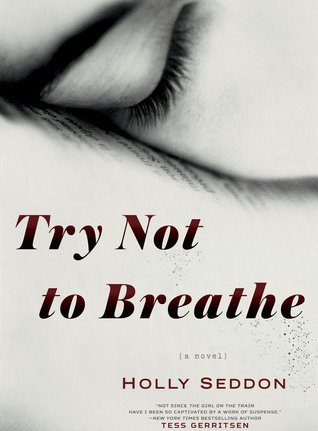
Try Not to Breathe, by Holly Seddon*****

trynottobreatheTry Not to Breathe is the sort of book that steals into your senses and takes over your life until it is done.I was invited to read and review this title by Net Galley and Random House Ballantine. My thanks go to both.  I fed it to myself into intentionally small bites at first, because I read several hours before I go to sleep, and under no circumstances did I want this story anywhere in my dreams. On Friday I hit the halfway mark, and immediately realized that Seddon’s novel would occupy my Saturday, period.
It’s a story that will make you put the cereal in the fridge and the milk in a cupboard. But on the other hand, it’s a terrific book to be snowed-in with.

Our premise is that Amy, a fifteen year old girl that was savagely beaten by a party unknown, has been unconscious in the hospital for fifteen additional years. But she isn’t on a ventilator, and brain waves turn up on the MRI. She can’t communicate, but she is thinking part of the time.

She’s still in there.

Our two other chief protagonists are Jake and Alex. Jake was Amy’s girlfriend, and briefly was considered a suspect by police. He didn’t do it, and he still visits her now that her family is gone. Partly it is because it’s believed that she can hear what is said to her, and he hopes that he can provide some measure of comfort. And partly he visits the ward for the quiet. It’s his private time, when neither work nor his wife can claim his attention. But he doesn’t tell his wife, and the lies are building up, corroding his relationship with his very pregnant spouse.

Alex is a free lance reporter whose love affair with alcohol has displaced her career, ended her pregnancy, and destroyed her marriage. She is isolated, miserable, and needs someone to talk to. With the tantalizing promise that her nearly moribund career can be rekindled by uncovering new information in Amy’s case, she begins visiting Amy, and she begins digging. And as one revelation leads to another, the tension and suspense are nearly unbearable!

The ending leaves me slightly dissatisfied, a left curve thrown in order to surprise the reader, but the innovative way in which it is revealed is so clever that I can’t bring myself to lop even half a star off my rating. If like me you occasionally wallow in a good thriller or mystery, you’ll find this one is a cut above the rest.

Seddon, herself an accomplished journalist, makes her debut as a novelist with this title, and she is a writer to watch in the future. Her thriller is available to the public February 23, 2016. Highly recommended!

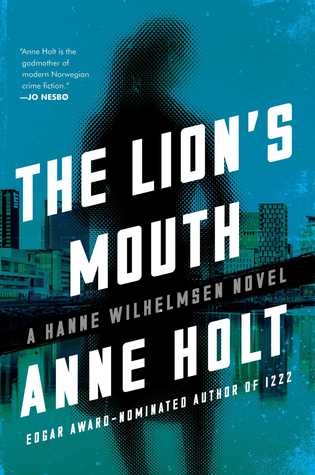
The Lion’s Mouth, by Anne Holt****

thelionsmouthWho killed Prime Minister Birgitte Volter? Was it the neo-Nazis? The Satanists? Was it a personal thing, perhaps an angry family member? The answer is cleverly built up to, so that the reader has a fair chance of figuring it out, and yet will most likely be surprised. I was.

Thank you, Net Galley and thank you also, Scribner for the DRC. Anne Holt is an established writer and it shows in the way she expertly crafts character and setting. I was at something of a disadvantage, never having been to Norway; the place names had no meaning to me, apart from the names of major cities, and I struggled with the governmental structure. When Parliament was mentioned I was fine, and likewise the Supreme Court made sense, but then we came to the President of the Supreme Court, a prominent figure—is that like a chief justice, or is it a very different construct from that of USA?—and also there is a President of Parliament. Americans should be prepared to either Google these items or accept a certain amount of ambiguity; I chose the latter, and it worked all right for me. I knew that there would be some new terrain when I began reading, and as part of my goal was to widen my own reading world a little bit, it was worth battling the unknown. A mystery is an accessible way to do this, and I enjoyed it.

The book was originally published in 1997; even so, I found a couple of stereotypes unsettling. The fat jokes seemed inappropriate and disturbing; Little Letvik started out a caricature, and even when she was developed a bit more at the end, it didn’t help much. Ruth-Dorthe is a “blonde bimbo” and “slightly worn Barbie doll”. There was also some slut-shaming that I could have done without.

On the other hand, the character for whom the series is named, Hanne Wilhelmsen, is a lesbian and is the hero of the story. She is sensible, even-tempered, (thin,) and very intelligent. Another character I really enjoy is Billy T, a boisterous, funny fellow who lightens the story considerably. In fact, there were a number of places that made me laugh out loud.

Although the book is part of a series—this novel being the fourth—I liked it just fine as a stand-alone.

All told, it’s a strong work of fiction and a good choice for the mystery lover to add to her collection. With the above reservations, I recommend it to you.

It is available for purchase February 9, 2016.

Chasing the North Star, by Robert Morgan****

chasingthenorthstarChasing the North Star is a compelling narrative of two teenagers escaped from slavery on their flight toward the North. Thank you to Net Galley and Algonquin Books for the DRC, which I received in exchange for an honest review. This book becomes available to the public April 5, 2016.

Morgan begins with the story of Jonah, a man who leaves the horrific plantation on which he has been kept. His story is told in the third person omniscient, and so there is virtually no dialogue for a long time. I waited to see how well it would hold up; it isn’t easy to keep a reader’s attention for long passages in which everything is told within a narrative, and even more so when it is told in the third person, as opposed to first person, where the character himself tells us the story. And because the narrative combined strong character development, near-tangible setting, and a series of brilliant moves to elude pursuers, I found that my attention was held quite well.

The book is in fact both accessible and a surprisingly quick read.

Part of the way into the story, Angel, our second protagonist, joins Jonah, and she tells us her own story through the first person. I found this device—of switching from third person for Jonah’s story to first person when telling Angel’s—both unusual and congenial. We watch him and cheer for him, but then she talks to us and just lays it all out. And Angel is nobody’s helpless damsel. She tells us up front that it’s a good thing for Jonah that she loves him, because he is going to need her to save his butt, and she does so more than once.

The sparseness of the dialogue makes sense when one thinks about it. Two escaped slaves that do nothing but talk, talk, talk all the way north are going to be caught in a hot minute. The writer takes an intelligent risk in using so much narrative and so little dialogue, and it pays off.

Stories involving slavery are often really painful for African-American readers to mow through, because they recall a time that was so demeaning, not only a physical horror but one that assaulted their dignity. The “N” word appears here, but is used sparingly considering the time in which it is set, and the topic. I appreciated the autonomy with which Jonah and Angel operate. Too many stories of freedom from bondage feature white saviors more prominently than are appropriate.

In fact, my sole criticism of this story is that it does not portray the extent to which the Underground Railroad was run by free Black men and women in the north; but then, this isn’t a story of organized escape, but an independent one, and it is possible that the region in which our characters travel was different in that respect.

Those that love good historical fiction should read this book. Morgan has done a fine job with a difficult topic, and the story is one of triumph and glory.