MJ: The Genius of Michael Jackson, by Steve Knopper****

MJthegeniusofmichaeljacksonJackson was a musical prodigy whose talent was almost limitless. His brilliant career was derailed by scandal, and his final 50 city tour was aborted by his death the night before it was to commence. Knopper does the best job of objectively recounting Jackson’s life and death that I have seen so far. His portrait is intimate without being prurient. Thanks go to Net Galley and Scribner for the DRC, which I received in exchange for this honest review.

Jackson was born in the 1950’s, a time when the race barrier kept Black performers from being seen by a general audience, with only the rarest exceptions. Black folks could play music for Black folks, and nobody else. The family was terribly poor, with eight or nine people crowded into a house better suited to three or four. They lived in Gary, a steel town in which Black poverty was more the rule than the exception. His father was a struggling musician until it became obvious that his sons had inherited his talent plus some. By the time Michael was five years old, he was the charismatic center of the Jackson Five, who soon were contracted to Motown, the center of African-American music in the USA.

Knopper explains how the family’s progression from a Motown act, where they were not allowed to actually play their own instruments on stage and could not use music they wrote themselves; to an independent family act, apart from one son who chose to remain with Motown; to the final day when Michael got himself an agent and a lawyer and set out on his own, divorcing his family so that he could have full control over a solo act. Until he was independent, iconic creations such as Thriller and Smooth Criminal would most likely never have been launched. And he recounts the family drama that ensued, with bodyguards pulling guns to discourage Michael’s angry brothers when they tried to force their way past the gates of his estate, shouting that he owed them money.

As a fan of excellent music and performance, I was sucked into the maelstrom produced by the press both during his life and afterward. It’s embarrassing to admit how completely I was played. For years I would not permit Jackson’s music to be played in my home because I thought he was a sick creep who used his fame to gain private, inappropriate contact with smooth-faced young boys. Somehow it escaped me that he had never been proved guilty in a court of law; on the one hand, it made sense to pay one family off in order to take the heat off his career, and Knopper documents the advice experienced, famous musicians gave Jackson to do whatever he had to do to shut that shit down so he could go back to focusing on music. But the press was merciless, and the payoff, which came too late to do damage control effectively, was portrayed as a tacit admission of guilt. And I bought it.

A few months after Jackson’s death, I was in a hotel room on vacation with my family, and my youngest son, who is Black, turned on the television, and there was the second round that Knopper documents, the round of memorial tributes that brought a lump to one’s throat as we saw Jackson’s miraculous career unspooled. He pioneered music videos in so many ways I had failed to appreciate, and he employed so many Black musicians that might never have had a steady job, while at the same time reaching out to Caucasian performers as well, creating a bridge between Black music and Caucasian sounds, transitioning from disco-like R and B to the “King of Pop”. I was horrified at the way I had misjudged him.

About a year ago, I read Michael Jackson’s memoir, Moonwalk, and while I took parts of it with a grain of salt, I also came to believe that the guy just didn’t know what was socially appropriate at times because he had never had a normal childhood. I was sold. Poor Michael.

Knopper has a more realistic take on all this. He certainly should; he used over 450 sources, and he wasn’t anybody’s mouthpiece. And so the truth turns out to be more complicated.

What left me somewhat stunned, in the end, was not the sex scandal, and it wasn’t the postmortem resurrection of Jackson as some sort of musical saint. Instead, I was absolutely floored at the number of people that worked for the guy, some of them for a lot of years, who he left without paychecks for weeks, then months on end. Jackson had a tremendous load of debt, was on the verge of bankruptcy and was saved only by his investment in song publishing, a piece of advice given him by friend Paul McCartney that he had followed through on. Yet he continued to buy one extreme luxury estate after another, holding residences he would likely never use again, shopping extravagantly (the example of taking a new friend shopping and telling him to do it “like this”, as he swept entire shelves of merchandise into his cart, astounded me) while leaving his employees, regular working folk with bills to pay for the most part, with no paychecks. There was money for shopping, but not for them, and some of them took him to court for it. It made me a bit sick. This man knew what it was like to be poor, and he knew what hunger was like, but as long as he didn’t have to see the people that he had betrayed, he could continue to play out the Peter Pan thread, irresponsibly trashing the lives of those he had told they could count on him, then leaving them with empty wallets and eviction notices.

Maybe you think I have over-shared. I have news; this is only the tip of the iceberg. If you have followed this review all the way to its conclusion, you will like this book. It is available for purchase October 20.


The Windchime Legacy, by A.W. Mykel*

thewindchimelegacyI was invited to read and review this title by my friends at Brash Books and Net Galley; it was one of half a dozen that I could check out. I appreciate the invitation, and the other books in that batch have been read by me already and happily reviewed. This one is different; it has not stood the test of time.

So in other words: no, no, no, and no.

Usually I say it is essential to stick with a book till at least the 20 percent mark in order to get a sense of where it’s going and whether it might redeem itself, but I can’t do that here. By chapter three I am ready to throw things.

When this book was originally published, there was a significant portion of the book-buying USA who would have laughed at the notion that it’s not okay to refer to a woman (in our case, a waitress) as having “a nice set of tits”, or calling her “a piece of ass”. Those same people would have told me not to be so touchy about the “N” word (applied for no special reason to the African-American cook in the restaurant.) Probably I would have heard people say that we should just face the fact that some people talk that way, and that the text therefore reflects reality.

I stuck with it long enough to determine that the demeaning nature of the dialogue was not merely placed to determine the nasty nature of a single protagonist, but both the computer scientist and his adversary and potential recruiter say and think these things.

And for me, that was enough.

Stick a fork in me; I’m done!

The Future Never Lasts, by Phillip Gardner****

ThefutureneverlastsI do enjoy a good short story collection, and make no mistake, this collection is a good one. The marketing blurb says that these tales are “the finger on the pulse of collective secrecy”, but they could just as easily be tagged as stories of alienation. Almost all of them feature protagonists in dysfunctional marriages; some could easily land in an anthology of horror stories, or of crime fiction. But when all is said and done, if you like good writing, you should buy this book when it goes up for sale January 4, 2016. Thank you to Net Galley, Biting Duck Press, and Boson Books for the DRC, which I was given in exchange for an honest review.

Usually a collection like this one features its best work first and last, but this time I don’t see it that way. The first one is decent, but there are occasional moments when the dialogue goes awry, becoming at times either awkward and pretentious, or like a mouthful of mashed potatoes. The story itself wasn’t bad, it was specifically the dialogue that didn’t sit quite right.

The second story made the entire collection worth having. “This Time Comes From That Time” is a story of a Vietnam veteran who’s gone to pieces and commenced digging his own tunneled command center beneath his grandmother’s home. The jumbled trauma of that time—the murders of the Kennedy brothers and Martin Luther King, Junior; the war; demonstrations and riots that burned in cities across the nation—combine with the protagonist’s combat experience to leave him disoriented and seriously off kilter. Toss in some strangely comforting TV shows of the 1960’s, and the stew that Gardner makes of it is fascinating indeed. The prose is lean, the words well chosen. The man knows how to use figurative language like a champion; in particular, the use of repetition to drive the plot forward, to create a sense of urgency that is both visceral and memorable, is hard not to notice. At times it creates a take-me-to-church cadence that leaves the reader helplessly enthralled.

The titled selection was my second favorite, a story in which stone cold murder and every day irritations are juxtaposed in such a way as to leave a trail of shivers down even the most hardened reader’s spine. Yet there is also a place—I don’t want to give anything away, so I will refrain from being specific—in which a particularly obnoxious character’s comeuppance made me laugh out loud. This was made all the more amusing by the rapid way the author led us from the chamber of horrors to this brief, comedic moment, entirely unanticipated. And from there, things gradually chilled—even froze—not unlike the corpse in the story.

Gardner’s use of foreshadowing is sometimes predictable or mechanical, but at other times, it is used in the best way possible, building tension and suspense to the point where the reader has no option when the phone rings or a family member beckons, but to ignore them and keep on reading. “A Crime of Opportunity” is particularly strong in this respect, and was another favorite of mine.

Every single story in this anthology is hip-deep in booze. If you’re on the wagon right now and struggling, get yourself a different book.

Glory Road, by Bruce Catton*****

gloryroadBruce Catton was known as a popular historian when he first published books about the American Civil War, because of his narrative nonfiction format. All of the books being released digitally now are ones previously published in a non-digital age. This reviewer hunted down Catton’s three volume Centennial History of the Civil War at a used bookstore some time back, and although they were among the best I have ever read by anyone on this topic, I was convinced that anything he had published earlier on the subject was probably repackaged in this trilogy, and so I stopped reading Catton, thinking I was done. Thank goodness Net Galley and Open Road Integrated Media posted the galley for this second volume of Catton’s Army of the Potomac trilogy. Now that I am disabused, I will have to find the first and third volumes also, because Catton is so eloquent that he can spin ordinarily dry-sounding military history into as good a read as the most compelling fiction.

Although his Civil War books are not written in academic format, there is no denying Catton’s research or his credentials. He was one of the founders of American Heritage Magazine, and served as its senior editor until his death. During World War II, he was the US government’s Director of Information for the War Production Board, then later worked in a similar capacity for the Department of the Interior and Department of Commerce.

Frankly, in order to spin the story of the three battles that comprise most of this volume out in such a conversational manner, dropping anecdotes in at just the right moments and then carrying on so as to make us feel as if he is a journalist traveling with the Union forces and we are concealed cleverly in his knapsack, bespeaks a remarkable amount of research. Only after reading the whole thing, spellbound, did it occur to me that for every vignette he included to make the telling more personal and more interesting, he must have edited out ten or twenty. The result is a masterpiece.

I came to this work as a former instructor in the field, and wished I had read his work in time to make use of it in the classroom. At the same time, it is sufficiently accessible that someone with no prior knowledge of the Civil War should be able to keep up just fine as long as they are able to read at the level of a high school senior or community college student. There is a definite bias toward the Union, which frankly is a requisite to my enjoyment of Civil War history. (Those that feel otherwise can go find Shelby Foote’s work.)

I never in a thousand years thought I would even consider rereading some of this war’s most painful battles—the battle of Fredericksburg being perhaps the most prominent in this regard—but Catton has some little-told things to say about these battles, and in particular about Burnside and that Tammany Hall political general, Sickles, that I hadn’t seen before. I had viewed Burnside as a failure from start to finish, but he makes a case that a lot of the mishandling of this situation was due to an ungainly Federal bureaucracy that wasn’t good at receiving information and passing it along in a prompt, useful manner. It gave me pause, and reminded me that we should never assume we know enough about something to call ourselves experts.

The Battle of Chancellorsville is likewise told in a manner fresh and readable, but the bulk of the text deals with that decisive, costly three day fight at Gettysburg. He gives an even-handed assessment of both Hooker and Meade, and again I learned some things I didn’t know before.

Catton’s writing is so engaging that it is destined to live for a long, long time after he is gone, educating subsequent generations. I found myself resolved, at the end of this volume, to look for other galleys of his work to read and review, and when there are no more left, to track down those still missing on my next pilgrimage to Powell’s City of Books.

For you, however, it is fortunate that Open Road is releasing this work digitally, so you won’t have to turn out the shelves of every used bookstore in the US in order to locate it. It will be available for purchase November 3, 2015 for your phone, computer, or e-reader, and is highly recommended to anyone with even a passing interest in the American Civil War.

Simply brilliant.

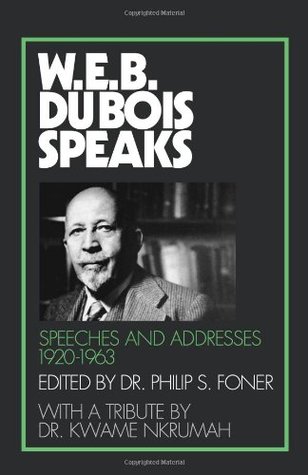
W.E.B. DuBois Speaks: Speeches and Addresses, by WEB DuBois*****

WEB DuBois SpeaksI read this book about 2 years ago, and then found I was intimidated by the 60 multicolored sticky notes that I had used to flag all the brilliant passages, and so I told myself I would review it…later. I didn’t have a DRC this time; I bought that book fair and square at full jacket price from Pathfinder Press many years ago, and then my life was too hectic for me to find time for it. And make no mistake, this is not a collection you want to take on while multitasking. This is deep, serious, articulate writing from one of the most brilliant civil rights leaders the world has yet known. And so although he has been dead for a long time, like Dr. Martin Luther King, his words have made him immortal. I recently read and reviewed another title about this luminary scholar and class fighter, and that reminded me that I had some unfinished reviewing to do for him…or maybe for me. Here we go.

It was DuBois that wrote The Souls of Black Folk, a wrenching reminder that even those Caucasian folks up north that think they have no racial biases, often have some issues they haven’t yet faced. It was true when he wrote it, and I’m sorry to say it is largely true today as well. In the letters and speeches, he takes the pain laid bare in that famous book and explains what the source of racism is, and what we can do about it.

Dr. King wrote the intro to this series of speeches and letters, and I actually liked that introduction better than I like the Dream speech. It has more substance. When you get this book, for heaven’s sake, don’t skip the introduction. In fact, the book is worth having just for the introduction.

Because it is a collection rather than a memoir, it isn’t linear. The opening text is a short overview of his own life, and so when we come to the second piece in the book, the reader steps backwards in time. Although it’s harsh and hard to read in some places because of the writer’s capacity to convey the pain that he and other Black folk have endured so that everyone can at least taste it for a moment, there is more to it than that. This volume is singularly useful, because in addition to laying America’s problem out bare and plain, DuBois has concrete recommendations for change. They are radical, but then we’ve seen what band-aid measures and the electoral process has done for Black folk, and anyone that regards the matter with any degree of seriousness has to recognize that what’s happened so far is a train wreck, primarily for African-Americans and other people of color, but also for all Americans, because those of us that have lived here for our entire lives have been denied the capacity to find out what it’s like to live without racism.

Is that asking too much?

DuBois became a deeply political individual, a Marxist that founded the NAACP, and eventually left that same organization because of political disagreement. He provides a thorough explanation of his experiences and reasoning. When he presents the problem as an economic one, it provides a path forward, and although he is gone now, it isn’t too late for the rest of us to climb on board, if we care deeply enough to do so.

DuBois’s speeches and letters reflect the progress of his thinking, and so some of what he says toward the end is very different from the ideas set forth earlier. It’s a good idea to read it in order, even though it’s a collection, because then the reader can see his personal and political evolution. I don’t think there has ever been anyone more articulate, more brilliant as a writer and speaker, than DuBois.

If you agree that the USA needs big change in order to end the institutions and practices that have created second-class citizenship for African-Americans, and if you want to see justice done for the families of all the men, women, and children that have lost their lives at the hands of racist cops and vigilantes even during the tenure of America’s first Black president, then you ought to get this book. It’s radical, but maybe it’s time to consider radical measures. Because the government and the elected officials that run it won’t correct this problem for us. We can’t leave it in the hands of others; we have to do this ourselves.

And DuBois explains it better than anyone else.

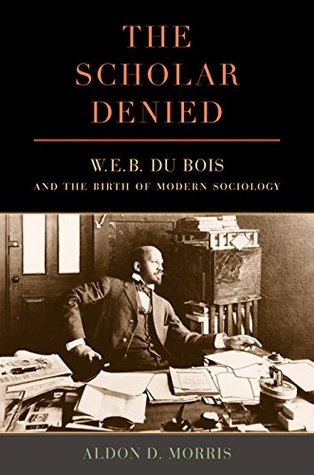
The Scholar Denied: W. E. B. Du Bois and the Birth of Modern Sociology, by Aldon Morris*****

thescholardeniedMorris considers DuBois the father of American sociology, and Morris is right. This is, of course, not the first time a Black man was robbed of credit for an accomplishment that was instead credited to a Caucasian American. It happens all the time. But until I ran across this scholarly study, I hadn’t thought about DuBois and sociology because I had never studied the latter. As an admirer of DuBois’ historical and political role, I was drawn to this book when I found it on Net Galley. Thank you to that excellent site as well as University of California Press for the DRC, which I was given in exchange for an honest review.
It is available for purchase now.

DuBois was a venerable intellectual, an academic light years ahead of most Americans of any racial or ethnic background. He was the first Black man to graduate from Harvard University, and in addition to his graduate work there, he also studied in Berlin under such luminaries as Max Weber and others. In Europe, he was treated as an equal by those he studied with, and I found myself wondering a trifle sadly—for him, not for us in the USA—why he chose to return here. And the answer is so poignant, so sweetly naïve, that I wanted to sit down and cry when I found it. Because once he had the empirical facts with which to debunk the whole US-Negro-inferiority mis-school of mis-thought, he genuinely believed he would be able to elevate African-Americans to a state of equality in the USA by laying out the facts. The racists that created Jim Crow laws in the south and an unofficial state of cold racism that let Black folk in the Northern states know where they were welcome and where they were not, would surely roll away, he thought, if he could reasonably haul out his charts, his graphs, his statistics, and demonstrate flawlessly, once and for all, that discrimination against Black people was based on incorrect information.

See what I mean? I could just cry for him.

So although DuBois was the first American to go to Europe, study sociology, and return with more and better credentials than any American academic, he could not persuade anyone with authority to bring about change, was not even allowed to present his findings to anybody except Black people in traditional Black colleges, because another school of sociologists, the Chicago school, were busy promoting armchair theories based on little data, or bogus data, all showing that Black people simply were not smart enough to become professionals or take on anything above and beyond manual labor, and of course, he was Black, so he must not be that smart, right?

Pause to allow your primal scream. It’s galling stuff.

Caucasian professors in Chicago had done a bit of reading, and with regard to Black people, decided that their craniums were too small to hold enough brain-iums. And just as there is one reactionary in every crowd that the newspapers will flock to in order to show that there is across-the-board agreement, so did Booker T Washington stand before any crowd that would listen to him (and the white academics just loved him), in order to say that it was the truth, that it was going to be a long time before the Negro was “ready” to do the difficult tasks involving critical thinking that had been so long denied him. Tiny steps; patience; tiny steps. Meanwhile, he extolled his fellow Black Americans to enroll their sons and daughters in programs teaching “industrial education”, so that they would be ready to do manual labor and put food on their families’ tables.

All of the studies that backed this line of thinking were deductive, starting with the answer (inferior beings, manual labor) and then finding the questions to fit that answer. DuBois had done inductive research because he was searching for information rather than looking for a rational-sounding way to keep a group of people entrenched in an economic underclass.

DuBois made the connection between the socialist theory he had studied and the material evidence before him: there were people getting rich off the backs of dark-skinned people, and they had a vested interest in maintaining Black folk as an underclass. Ultimately, he turned to political struggle, and that is how I knew about him, not as a sociologist, but as a Marxist. He also became the father of the interdisciplinary field of African-American studies. He helped found the NAACP.

This scholarly work, like just about anything produced by a university press, is not light reading. Rather, the author presents his thesis and synopsis, and then carefully, brick by brick, starts back at the beginning to build his case. His documentation is flawless, and his sources are diverse and strong. There is some repetition in the text, but that is appropriate in this type of writing. He is not there to entertain the reader, but to provide an authentic piece of research that will stand the test of time, so there is a little bit of a house-that-jack-built quality to the prose.

For serious admirers of DuBois’s work, this will be an excellent addition to your library. For those interested in sociology as a field, this is for you, too. And to those with a literacy level that permits you to access college-level material and who have a strong interest in African-American history and/or civil rights, this is a must-read.

For these readers, I recommend, in addition, The Souls of Black Folk, which I had not regarded as sociology-based material until now, though I have read it twice; and a collection of speeches by DuBois, which I have been intending to review for some time, and which will soon grace this page of my blog.

Morris has done outstanding work, and I like to think that if DuBois were here, he would be proud to see it.

A People’s History of the Civil War, by David Williams***

With an introduction scribed by the late great Howard Zinn (and the book edited by same), I figured I just had to add this book to my collection. It bills itself as a history of the marginalized groups of this era, those seldom represented in traditional history. I found it at my favorite local used bookstore, Magus Books, which is near University of Washington, and I scooped it immediately.

The tome sat in the upstairs powder room for months, but we didn’t look at it all that often. I had trouble climbing on board. Eventually I realized there were two things bothering me here. One is that it treats both Union and Confederate governments, along with the powerful moneyed interests backing the two sides of the conflict, as equally wrong and equally culpable. With this I sharply disagree. Whereas no doubt plenty of war profiteers made a great deal of money, and no doubt working people on both sides deserved better pay and greater prosperity, this was not an equally-wrong war. In fact, the first Marxist to live in the USA came here from Europe to fight for the Union, because that was the way to move history forward. So in a sense I disagreed with the premise of the whole book.

That much done, I noted that the overall tone was more cynical than I consider warranted. For me, the American Civil War was the last truly heroic conflict in which US forces fought. It also distinguished itself by producing an unusually high number of casualties where high ranking officers were concerned. You didn’t see American generals get dead in these proportions in either of the world wars, nor Korea, Vietnam, or any of the conflicts in the Middle East. So the snarky manner in which Williams refers to the disparity between Union brass and foot soldiers is not well placed. I found it abrasive.

In addition, if we’re talking about marginalized peoples, excuse me Mr. Williams, but where are the Black folk? The author seems to have mislaid some four million former slaves. I kept flipping through this volume trying to find some, but they are underrepresented quite badly; one might even say the author has marginalized them.

The one worthwhile thing here, the thing that kept that third star in its place, is the extensive attention paid to Native peoples during this time. I was aware of the role of the Cherokees and that was the sole extent of my knowledge of which way American Indians chose to side, when they chose a side at all. I got something for my money other than frustration and regret; I really had to look hard to find it, though.

Consequently, those doing specific research having to do with the role of Native Americans during the American Civil War should get this book. I recommend it for that niche audience only.

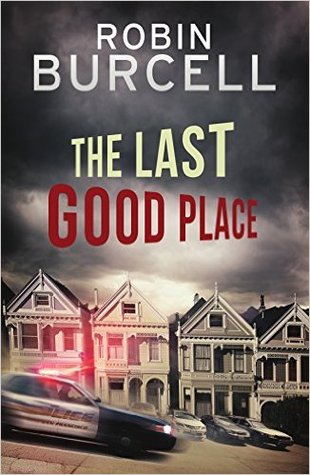
The Last Good Place, by Robin Burcell****

thelastgoodplaceWhat a treat! They say all stories have already been told once, but I’m telling you, this one hasn’t. Oh, trust me! And my thanks go to Net Galley and Brash Books for a wonderful DRC. This one will be up for sale November 3.

Some may recall the TV series “The Streets of San Francisco”; the show was based on a set of police procedurals by Carolyn Weston. Characters Casey Kellog and Al Krug became TV characters Steve Keller and Mike Stone. In bringing the series back to us in the twenty-first century, new co-author Robin Burcell was asked to update it, since some of the over-the-top methods used originally could get a cop fired these days, and the old methods would not resonate with the public. Burcell has a lengthy background in law enforcement, and now I know that she is also a capable novelist. The pages flew by, and I enjoyed her improvement of the old series.

As the story commences, there have been a series of murders at famous landmarks in San Francisco, and it has been inferred by the media that tourists are at risk. While sometimes life may be cheap, the tourist industry is key to the local economy, and there’s heavy political pressure set to find someone and solve this crime, preferably accurately, but if not…just get someone, haul them in, and charge them.

So when Marcie’s neighbor and good friend Trudy turns up dead, there is speculation. Has she been a victim of this killer, or is it a copycat killing?

We find out right at the get go that Marcie knows a thing or two. For example, she knows that Trudy and her husband are getting a divorce; they are no longer in love. And Marcie also knows that her buddy has been spending some private time with Marcie’s husband. And so while Trudy and her soon-to-be-ex are going to sell their house as part of dividing the spoils of a marriage gone bad, Marcie won’t sell her house. Because it is her house, along with the eucalyptus grove out in the backyard. Her grandfather left her the house, and he left her the trees. He used to tell her that this humble, quiet spot out back was “the last good place”, and Marcie won’t part with it. Not ever. Not even to increase the property’s value—for herself and also for friend Trudy—by making their homes bay view property. Her grandfather preferred the trees to the water view, and so does Marcie.

It’s time to go jogging with Trudy, but Marcie hangs back and hides for a bit. We aren’t quite sure why, apart from the fact that she is suspicious that things are not what they seem to be. Trudy’s been a little strange toward her lately. And what do you know…Trudy dies on the morning jog before Marcie catches up to her.

This is a really accessible story, and I thought I ought to be able to solve the mystery. Goodness knows I read enough of them! And yet, I really didn’t get it. The author doesn’t pull the rug from beneath the reader by introducing a lot of new information at the end, or any of the other unfair devices writers occasionally use in order to make their story’s ending a certain surprise; I had a reasonable shot at it, but I didn’t get it. And I loved the ending!

The characters—the experienced, fatherly, crafty interrogator Al Krug, and his ambitious partner, Casey Kellog, are well developed and personable, but their personal lives don’t distract from the problems at hand. There are a couple of red herrings, but the plot is essentially linear and easy to follow.

All told, this one is a humdinger, and you should read it!

The Strasbourg Legacy, by William Craig *

ThestrausburglegacyWhoa now! The times, they have a-changed, and isn’t that a great thing? Thus this once-socially-acceptable novel, a spy thriller steeped in the Cold War politics of the mid-20th century, no longer works. But thank you for the invitation to review, friends at Net Galley and Open Road Integrated Media; I know you meant well.

The author presents a situation in which escaped Nazis are developing plans to foment a second fascist government, developed abroad till the time is right. The ones we visit are sequestered in Egypt. At the same time, Israel’s equivalent of the CIA is out hunting for escaped Nazis, who will die quietly and unofficially so as to avoid international incidents. The writer knows his craft well, and shows considerable skill in building suspense by jumping us from one group to the other at critical, cliff-hanging moments.

One single sentence caused me to climb off Craig’s bus, so to speak:

“It was the brandy that triggered them to drag the girl off the streets and rape her for two days.”

Had this been the perspective of a deranged psychopath, a mindset clearly different from that of the good guys, I would have been more generous with my rating and review, but this guy is supposed to be the marshmallow among his set, the old softy who gets himself into trouble by trying to save the suffering damsels.

Give me a fucking break.

For this novel: no, no, and one more time: no!

Treasure Coast, by Tom Kakonis*****

TreasureCoastHugely imaginative, terribly funny, and utterly tasteless, Kakonis delivers the chortles with Treasure Coast, a comic caper that juggles numerous entertaining characters with surprising deftness. Thank you twice, first to Brash Books and second to Net Galley, for providing me with the DRC to review. This title will be available September 14, 2015 to the book-buying public.

Our tale begins with Uncle Jim Merriman, a professional gambler who can’t even manage to break even these days, and “his numbnuts nephew”, Leon Cody, “…this kid with the crop of wild hair and Magoo glasses and dippy grin”, who is in debt to loan sharks. Leon’s mother has died and left not only her body, but also her foolish son, to Uncle Jim’s care and keeping. And of course we have the shark’s collection agents, Morris “Junior” Biggs and “your badass Hector Pasadena”.

On the other hand, we have Bryce Bott, hustler of gravestones that once purchased, will never arrive and “séances” delivered with the help of his hillbilly sidekick, Waneta Jean, who feigns nearness to death as a part of the séance scam.

Of course, ultimately, the characters wind up in a messy pile trying out-scam each other. “Circles inside of circles, games within games.”

But oh, that’s not enough! We also have trophy bride Billie Swett, who within my mental movie soon became Bernadette Peters, and her obnoxious, porcine, but almost infinitely wealthy spouse, Big Lonnie Swett. Eventually we add Cheetah, to whom Reverend Bott referred as “that other intrusive fellow”. Their roles in all of this, you will have to find out on your own.

“And how do you count the ways of weird?”

This was a story worthy of patience. There were so many nasty racist comments made about almost everyone you can think of; however, they are used within the context of Junior’s vapor-brained, “Aryan” sensibilities. There are several horribly ugly sexist remarks using the worst possible terms you can imagine, but again, it is only the bad guys that use them…and a reckoning comes down in a manner I found deeply satisfying.

To put it another way: we were halfway through before I was even sure I liked this novel, but once I was on board, I was in it for keeps, flagging one clever passage after another, most of which I can’t share here. I can share this YouTube promotional clip, though:

So although I was ultimately dumbstruck by the creativity with which Kakonis wove all of the complicated strands of this story together without dropping a single one, I also caution the reader. There are some really crass, fairly specific references to corpses in this book. If you have just lost someone and the wound is still raw, this is probably not the title with which you should escape. There are repeated references to the joys of rape. If you or someone near to you has been down that brutal path, maybe this is not your story, either. And one more caveat before I can go back to singing praises: if your mother tongue is not English, you may not want to embrace this challenging novel, which despite its Keystone Cops-like atmosphere requires exceedingly strong vocabulary skills. For those that enjoy word play, it’s a real treat, but any time you have to look up more than 3 words per page, the effort will outweigh the enjoyment you receive.

With the above caveats in mind, this new release comes highly recommended by this reviewer. The only real question is how you will wait until Monday to get your copy!