Jigsaw, by Jonathan Kellerman****

Can you think of a mystery series that is as long running and reliably entertaining as the Alex Delaware series, by Jonathan Kellerman? This is his 41st, and it’s going strong. My thanks go to NetGalley and Ballantine Books for the review copy. This book will be available to the public February 3, 2026.

After so many installments, the regular characters in this series feel like old friends. When homicide detective Milo Sturgis careens into the kitchen of his longtime bestie, Dr. Alex Delaware and raids the fridge like a huge, gay version of Dagwood Bumstead, I can’t help smiling. Milo, Alex, it’s good seeing you again! Most episodes begin this way. Unlike many well-established series, however, we don’t take a great deal of time for character development, because there are three murders here and they cannot wait!

The first appears to be obvious; a young woman is found murdered in her home, and the cigarette butts nearby bear the DNA of her boyfriend. But it’s not as it seems. Next, an elderly woman—a former cop—is missing, and a welfare check finds her dead, dismembered, in her freezer. Yikes! The chief suspect, her developmentally disabled daughter, is later also found dead. And the woman in the freezer is a colleague, known to Milo.

The interesting part about this one is that the victim, the former cop, is a hoarder. Who knew? Nothing about her suggested that her home would be jammed full of trash, but here we are. Piles of newspaper, food wrappers, mouse droppings, paper sacks full of money, magazines…more bags full of money…

Huh?

Like all of the books in this series, this is a quick read. Partly that’s because it’s fast paced and interesting, and partly it’s because it’s chock full of snappy dialogue. Whereas I miss the humor that is frequently injected into these stories, I appreciate the trend away from the twisted sexual situations that appeared for a few years. All told, this is an excellent entry into a series that has never failed to engage me, and I wholeheartedly recommend it to you.

My Name is Emilia del Valle, by Isabel Allende****

“Aren’t you afraid, Angelita?’ I asked her. ‘All the time, but I don’t think about it. I want to die with my boots on my feet,’ she answered…

“I did not know who I truly was until circumstances put me to the test.”

My Name is Emilia del Valle is the newest novel published by feminist icon and author Isabel Allende. The story is a fictionalized account of a journalist that travels from California to Chile, where war has broken out. Because she is a woman, her editor resists sending her, and then, under pressure, agrees that she may go, but only to cover human interest stories in the city. Those that have read any book ever by Allende will know instantly that this is not what our journalist does.

My thanks go to NetGalley and Random House Ballantine for the invitation to read and review. This book is available for sale now.

Like all of Allende’s protagonists, Emilia is a woman that refuses to be constrained by the expectations of the time regarding gender. She is possessed of feverish curiosity, and once she finds herself in the thick of the conflict, she has no interest whatsoever in finding and maintaining a safe, distant place from which to report. She assists the “canteen girls,” who provide water to fallen soldiers, along with minor first aid. Emilia learns first hand about the horrors of war, and she is forever changed by it.

This conflict is one that isn’t widely reported, and Allende writes about it so that it may not be forgotten. Ten thousand died here, mostly men from poor families, killed for no good reason. Emilia’s experiences highlight the disparity in treatment according to social class and wealth, as well as gender.

The writing is first rate as always. However, in most of her earlier novels, the author found a way to intersperse shocking or horrific passages with some that were uplifting, and often very funny. I would bark with sudden laughter at some witticism that I had not seen coming. I wish she had done that here. When there’s too much horror and bloodshed, it is tempting, natural even, for readers to tune out, let the words wash over us. And while there is romance here that provides some relief, I would have liked more.

Nevertheless, those that love historical fiction, social justice, feminism, and especially those that love Allende’s writing will want to read this book.

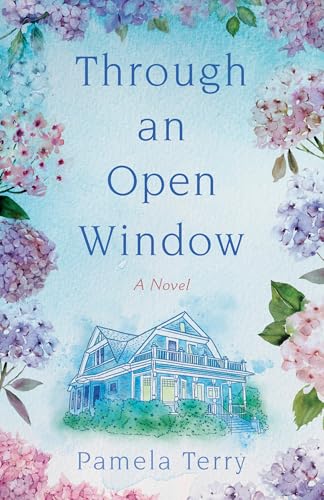
Through an Open Window, by Pamela Terry*****

“When you’re the last one with memories it’s like trying to hold on to hot sand.”

Author Pamela Terry never misses. Her debut, The Sweet Taste of Muscadines, forged such an emotional connection in me that if someone had told me they didn’t like it, I might not have cared for them as much as before. The same held true for her next work, When the Moon Turns Blue, which was every bit as good if not better. And now, with her new novel, Through an Open Window, I know that I will follow this author anywhere.

My thanks go to NetGalley and Ballantine Books for the invitation to read and review. This book will be for sale August 19, 2025. If you are female and have a beating heart, you should get it and read it.

We open with a scene from 1956. The local sheriff rescues two small children from a scene of horrific carnage; the baby girl is surrendered to the social worker before they find the little boy. The sheriff and his wife have been unable to have children, and want them so badly that instead of reporting the boy also, he takes him home and they keep him.

Cut forward now to the fictional town of Wesleyan, Georgia. A family is grieving the loss of its patriarch, Lawrence Elliot. His widow, Margaret is the first to receive a visitation—not from Lawrence, but from Great-Aunt Edith, who has been dead for years. Aunt Edith wants her to know something. And in fact, other family members will also see her at various times, in various places, but it’s not the sort of thing one shares with others. But Edith isn’t leaving until her message is received and understood.

As we see Margaret and her three adult children cope in different ways, we also see the interplay of their relationships to each other. This story is loaded with character development, and I believe each and every one, even Jubal, the rescued Clumber Spaniel that comes to live with Margaret. (I had never heard of this breed before, and now I kind of want one. Someone stop me!)

Events roll forward, and slowly we learn what it is that Edith is trying to convey, as the family does, and we find the tie-in to the prelude. It’s done brilliantly! Along the way, the author’s voice comes through in undeniable word smithery that forces me to highlight way, way too many passages to quote here. I experience the entire gamut of emotion, and when I near the ending, I am torn, wanting to read more slowly so that the book won’t end, but also needing desperately to know what is coming next.

The only possible improvement would be if Terry could write, and write up to the standard she has established, as fast as I can read, because I cannot wait for her next novel! She has become a favorite author, one I’d pay to read if I couldn’t do it free of charge. Highly recommended.

Open Season, by Jonathan Kellerman***

3.5 stars, rounded downward.

Open Season is the fortieth (!) in the Alex Delaware series, one that I have read since the very first book. Newbies can read it as a stand alone novel, however. My thanks go to NetGalley and Random House/Ballantine Books for the review copy. It will be available to the public February 4, 2025.

One of the joys of reading a long running series is its familiarity. If the writer is good—and nobody will say Kellerman isn’t—the characters begin to feel like old friends. In addition to our protagonist, kiddy shrink and cop consultant Alex Delaware, we have his wife, Robin, who is mostly a background character; Alex’s best friend, Detective Milo Sturgis; and some lesser recurring characters such as cops Sean and Petra. I could include Milo’s husband Rick, but Rick almost never puts in a personal appearance. In fact, we see a good deal more of Blanche, Alex and Robin’s French bulldog, who, like the other characters, never grows old. When Milo lumbers into the Delaware kitchen and raids practically everything in the fridge, I smile. Ah, there he is, the big guy.

When the series began, Alex, a child psychologist (like Kellerman himself,) worked with seriously troubled children and teens, but when the LAPD had a case involving a child, he would consult on it also. Now he works on the private cases of his choosing, primarily custody cases and the like, and is a de facto cop. This has developed in the context of Milo, a gay cop, being ostracized by the rest of the department, and so once a friendship and working relationship develops between Milo and Alex, Alex rides along and they say he’s a consultant, even when there are no funds in the budget and he is merely a volunteer.

All this may seem improbable today, but please remember that the series began in 1985, when gay men were treated brutally by most of American society, and that is exponential when it’s a cop being hazed by his own department. And even today, gay cops don’t always have an easy road.

Is this realistic, then? Let’s look at it this way. To be completely realistic, Alex would never get into that cop car, and he would work only from his office. To consult with the department, he would be sent information to analyze, and if appropriate, the child or children in question would meet with him in an office to be interviewed. Milo would either be on his own, or with whatever newbie was stuck being his partner for now.

And it would be dull as hell.

So, for me to enjoy this series, I just need the most improbable aspects to be scaled back, and I’m happy. Several books ago, Alex was donning a Kevlar vest and rocketing into action with Milo, and that was straight-up ridiculous. But Alex doesn’t do that anymore. The story is just believable enough for me to buy into it, and so I’m happy.

This particular episode involves a sniper, and although I enjoyed it and found little to object to, it didn’t have quite as much sparkle as most of his other books. On the other hand, it also didn’t have a theme involving kinky sex—ew!—as in multiple past novels, and it didn’t have any of my pet peeves that I dislike wherever they turn up. No kidnapping Alex or his loved ones; no struggle with alcohol. So I was happy for the most part and would have rounded the rating up to four stars, which is what I usually rate Delaware novels, but the multiple snarky remarks about abortion rocked me back. Not all women’s health facilities that feature abortion as an option are “abortion mills.” If a grandmother suggests that a pregnant granddaughter consider abortion, it doesn’t make her a bad grandmother. Am I rounding the score on a novel downward because I don’t like the author’s politics? Yes. Yes I am. But, can I do that? Sure I can. I just did.

I’ve loved this series for a long time, and I look forward to reading the forty-first. I do recommend this book to the series faithful, but if possible, get it at a discount or free, rather than paying full price, unless your pockets are deep ones. If you are new to the series, if possible, read either the most recent one before this—number thirty-nine was excellent—or read the very first, When the Bough Breaks, which ties the subject much more closely to Alex’s original profession.

The Mystery Guest, by Nita Prose****-*****

“The maid is always to blame.”

4.5 stars, rounded upward.

Author Nita Prose introduced Molly the Maid to us in 2022. Now Molly is back. She’s the head maid now, and considerably more confident than when we first met her. Her boyfriend Juan Manuel has moved in with her, but he is conveniently out of town for most of this novel, and it’s just as well, because there’s another murder about to occur at The Regency Grand Hotel, and once more, Molly will be instrumental in identifying the killer.

My thanks go to Net Galley and Random House Ballantine for the review copy. This book will be available to the public November 28, 2023, so you can plan your gift lists accordingly.

The hotel is in high gear, planning for the big gathering that will introduce the large, new, lovely tearoom. Business has been down at TRG since the murder last year, and this special occasion should bring new life into the hotel. In fact, Molly has given up her vacation with Juan so that she can see to the set-up; everything must be cleaned, shined, and buffed to perfection. You see, famous author J.D. Grimthorpe has an important announcement to make, and he’s chosen the tearoom as the venue from which to do so.

The stage is set, and the fans arrive. Molly’s protégé, Lily, has arranged the tea cart perfectly. Grimthorpe takes the podium, and is presented with his tea. After doctoring it to his own tastes, he takes a sip and ascends the stage once more, but before he can get to the surprise announcement, he keels over dead, right on top of Lily!

Lily is terrified. She’s always been a quiet one, but now she is virtually mute. When the police come in to question her, Lily is nearly undone.

“Molly, I’m afraid.” Her eyes are round pools of trepidation.

“I know,” I say. “But why?”

“Because a famous man is dead. Because they always blame the maid. You of all people should know that.”

“You’re not in any trouble, Lily.”

“Bit soon to tell,” the detective replies.

With that, we’re off and running. The book is one hell of a page turner, and it’s over before I know it. There’s lots of spunky dialog that jumps off the page. I seldom regret putting away my book because I spend so much time reading each day, but for this one, I stayed up late.

My only quibble—a small one—is that a key part of the solution is a bit of a reach. But this is a fun story, and so I make a quick note and move on.

For those that enjoy a sparkling mystery interspersed with wry humor, this book is for you. The profound respect for the working class is icing on the teacake.

Highly recommended.

The Kitchen Front, by Jennifer Ryan****

I enjoyed Ryan’s historical novel, The Spies of Shilling Lane, and so I was thrilled when Ballantine Books and Net Galley offered me a review copy for this one. It’s for sale now.

The story is set in rural England during World War II. We have four protagonists, all of them women. Audrey Landon is a widow; her husband died in the war, leaving her with two boys to raise on her own. The old family home, which she inherited from her parents, is falling apart, and she has no means to repair it. In some places, the roof has caved in.

The second is Audrey’s sister, “Lady” Gwendoline. Gwen puts herself first at all times, since nobody else ever has. She married for wealth and convenience, and she lords her affluence over her sister and everyone else. But her husband is a cruel man, and her existence is a lonely one despite its material comfort.

Zelda was a top chef in London, but once her pregnancy became visible, she had to get gone. Her landlord calls her a “trollop,” and she knows she can’t stay there now, so she applies for wartime housing. The volunteer in charge of placing her is Lady Gwendoline, who snickers with amusement as she assigns her to live in Audrey’s house.

Nell is a chef’s assistant at Fenley Hall, the prestigious old pile where Lady Gwendoline and Sir Strickland hold court. The chef, Mrs. Quince, has taught her nearly everything she knows, and it’s a good thing, too; the old lady isn’t getting any younger.

All four women enter a cooking contest held by the Ministry of Food, a “wartime cooking challenge” to showcase recipes that use ordinary ingredients and work around rationing.  The winner will be the new announcer for The Kitchen Front, a wartime radio program—and this program existed in real life.

As in the last story, Ryan develops her four characters in a way I believe; the most benevolent have flaws, and the most unsympathetic, Lady Gwendoline, is complex and capable of change. It is Gwendoline that is most developed at the end, but all four are dynamic characters.

For a brief while, I use the audio version of this book, which I obtain from my local library. Jasmine Blackborow does a fine job as reader in most regards, but there is a side character that turns up in a couple of emotionally charged scenes, an Italian prisoner of war, and when she voices him, he sounds like Dracula, which ruins the magic. For this reason, I recommend sticking to the printed version.

The first half of this story is almost unputdownable, and for a time I nearly forget my other books. But as the climax approaches, things become predictable, almost formulaic, and the ending is a bit too tidy for my tastes. The scenes toward the end with Mrs. Quince are overwrought.  It’s not terrible, but because I am so far in love with the first half, I am disappointed by the denouement. Also, if recipes must be included, as apparently they must, the author should give them character by using the substituted ingredients in the instructions; the more desirable ingredients can be footnoted.

Ultimately I rate The Kitchen Front four stars; five for the first half, three for the second.

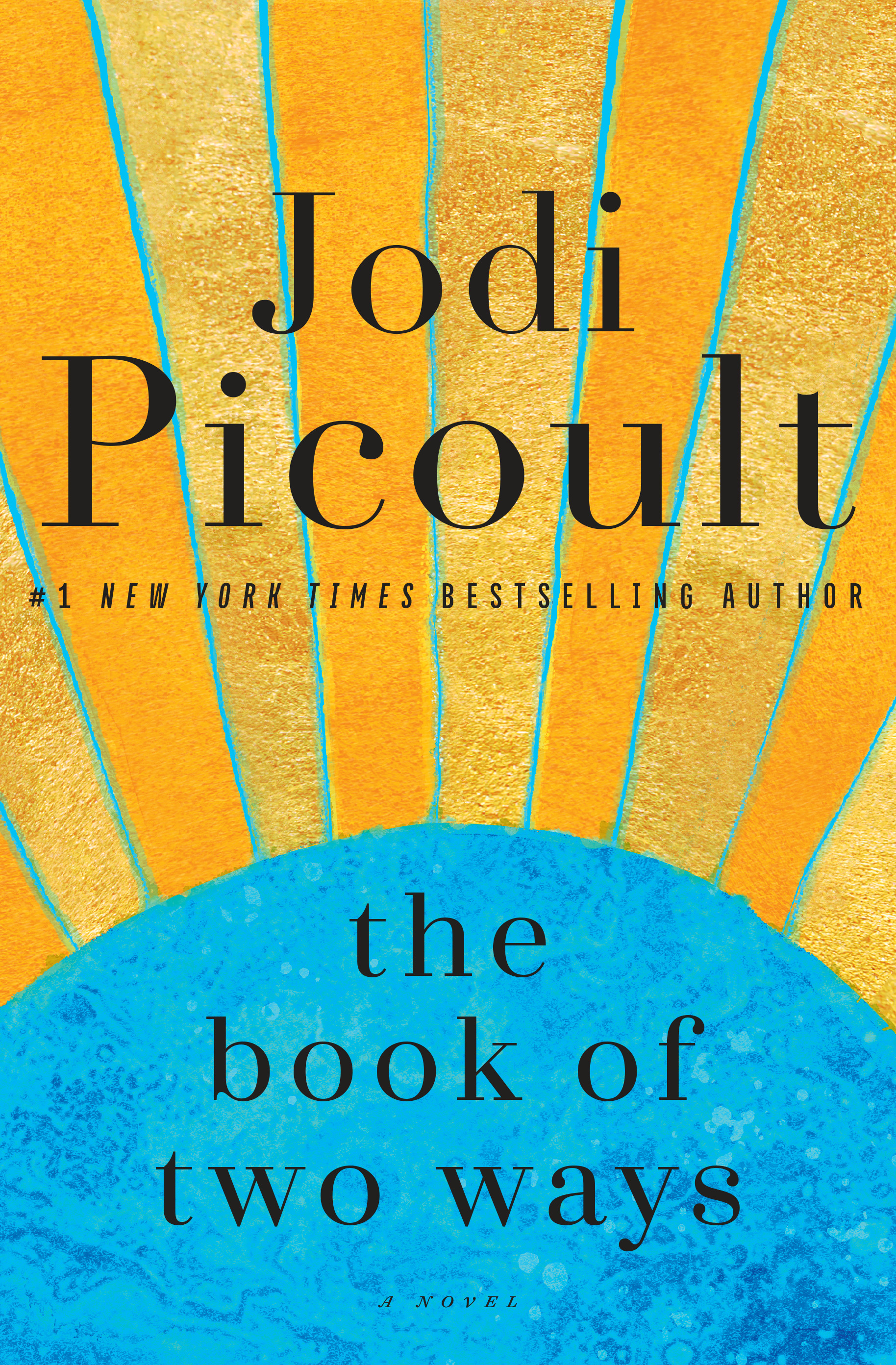
The Book of Two Ways, by Jodi Picoult***

I am generally a fan of Picoult’s writing, but my favorite part of this book is when I got to close it and put it away.  My thanks go, nevertheless, to Net Galley and Ballantine Books for the review copy.

Dawn is the sole survivor of a plane wreck, and as it goes down, she is assaulted by regret about the road not taken.  (My apologies to Frost.) On land once again, she decides to go back to the life she abandoned when she married and had her daughter, to see what might have been; the life she was preparing for was that of an Egyptologist.

There have been times when a novel features some area of history or science that I’ve never studied, and I find it so mesmerizing that it becomes my new favorite area to explore. This was not one of those times. In fact, it took me four tries to get through this thing, and even then, I skimmed much of the story from the fifty to seventy percentiles.  I tried the audio version; no joy there, either. I grew bored and my mind wandered; then I didn’t understand what I was reading, so I had to go back over it to pick up the part I’d daydreamed through.

In my defense, however, I have to say that the organization and frequently shifting points of view and time periods is enough to confuse the best of us, or at least give us whiplash.

Picoult’s strength is creating strong, resonant female protagonists that are easy to bond with, but I didn’t ever warm up to Dawn. Let’s take, for example, the notion of simply walking away, not only from your husband that loves you and with whom, till now, you’ve had a loving and solid relationship; there’s the matter of walking away from a child, or considering doing so. No, no, no. No. NO.

But mostly, this story just bored the living snot out of me.

I have provided three stars, because some readers will enjoy the lessons in Egyptology; if you’ve always wanted to know more within this realm, perhaps this book will work for you. If you go there, though, get it free or cheap; don’t sink full cover price into this turkey.

Forget Me Not, by Alexandra Oliva****

Oliva made her debut in 2016 with The Last One, a genre-defying story in which technology fails with disastrous consequences for reality show contestants. I was delighted when I received the invitation to check out her current novel; big thanks go to Ballantine Books and Net Galley for the review copy. This book is for sale now.

Linda Russell lives alone. She has had a traumatic past, and she is naïve in some ways about the world around her, having been kept apart from it for so many years. Money isn’t a problem, though; she has inherited a pile of it. Yet we cannot envy her, because the unspeakable horrors she has seen outweigh the benefit of her wealth.

When we meet Linda, she is in her nest chair surfing the internet. Her sheath provides her with information, but we have to figure out what a sheath and nest chair actually are by examining context, which takes a little while. And this is a key part of the suspense, giving us some information about the time period, the place, the technology and the characters, but also withholding quite a lot, doling it out to us in small portions so that we can follow along, without ever getting a firm grip on the situation till we are far into the story. And for me, there were moments when I became confused enough that I wanted a little more information in order to follow events as they unfolded, but most of the time the narrative was paced effectively. I began to have a solid enough grip on the basic facts to follow the story well at about the 36% mark.

Linda is a clone, and her story went big several years ago, when she was found emaciated and filthy, having been more or less feral inside a walled property where her mother abandoned her. The part of her past that weighs on her mind most heavily is the fate of her twin. Lorelei, whom she must not call “Mother,” loved Emmer, but not Linda. Both of them were created in an effort to duplicate Lorelei’s deceased daughter, Madeleine, and Emmer resembled Madeleine more. Of course, everyone knows that eye witnesses are notoriously unreliable, and so it is with Linda’s memories, but she knows this for certain: after a particular point in time, Linda never saw either Emmer or Lorelei again.

Meanwhile, a cult of sorts has sprung up around Linda, whom social media has dubbed “clone girl.” Rumors are spread; even the tiniest hint as to her possible whereabouts is greedily devoured by those following her story. And so, Linda hides, and she talks to no one; that is, until her new neighbor, Anvi, pushes her way into Linda’s life. Anvi is new in these parts, and she wants a friend.

To say that this story is a thriller or a mystery is unfair, and will lead the reader to a dissatisfying end. The focus of the book is not on unraveling a crime, and the hair-on-fire pacing that marks a thriller isn’t present here. I keep turning the pages, not because my heart is slamming in my chest, but because I am curious. The story really is about our character. Likewise, although the story is technically science fiction, my interest isn’t captured and held by complicated new technology, but by Linda herself, wanting to see her unharmed and able to lead something resembling a normal life. So I urge interested parties to come to this novel with an eye for character, because that’s the anchor here.

At the climax—and I’m being fairly vague here so as not to spoil the ending—there’s a moment when Linda behaves fairly stupidly when she is faced with an urgent problem, and I feel let down, but then she rallies and pulls herself together, and I let my breath out and smile. Go, girl, go.

When I learn what is really in back of the personal mysteries Linda faces, I’m inclined at first to regard it as far-fetched, but then the sci fi aspect kicks in, and let’s face it: science fiction and fantasy both permit and even require far-fetched material. What needs to be credible and consistent is Linda, and Oliva does a fine job developing her protagonist. I believe Linda at the outset, and as she changes over the course of the story, I believe her every step of the way.

I enjoyed this story a great deal, and I look forward to seeing what Oliva comes up with next. I recommend this book to anyone that enjoys good fiction that is character driven.