
“Life is not hard in Windhoek, but it is not easy, either. The poor are either falling behind or falling pregnant. The rich refuse to send the elevator back down when they reach the top. And since cities require a sturdy foundation of tolerated inequalities, Windhoek is like many other big places in the world. It is a haven for more, but a place of less. If you are not politically connected or from old white money, then the best thing to be is a tourist. The city and the country fawn over tourists. The country’s economy does, too. That is when it is not digging itself poor.

That is Windhoek. The best thing to do in the city is arrive and leave.”
And now, raise your hand if you find yourself wondering where Windhoek is. Don’t be shy. You’ll have plenty of company…ah. Yes. I applaud your bravery, being the first. And you, and you…and you in the back. Anyone else? That’s what I thought. Look around. Almost all of you. So now, I’ll relieve your discomfort and tell you, it’s in Namibia. Our protagonist, Seraphim, and his family must relocate there during the upheaval in their native Rwanda. This is his story, told in the first person.
My thanks go to Net Galley and Gallery Books for the review copy. This book is available to the public now.
Seraphim’s parents are strivers, working industriously to ensure that he and his siblings will have excellent educations and better lives. As a young man, he works hard and is fiercely competitive in school, but once he is at university in Cape Town, he becomes a party animal, using Cliffs Notes to dodge the assigned reading and embarking on booze fueled, all night romps. Ultimately, this is a coming of age story in a different time and place than that which most Western readers are accustomed to. And oh, my friend, if you are going to spread your wings and stretch your global literacy just a teensy bit, then this is one painless way to do it.
Once he’s inside South Africa, Sera deals with Apartheid, and during the course of his education, is advised by a wise friend, who tells him that if you want decent notes, you must befriend BWGs. These are Benevolent White Girls, and they seem to know some sort of educational code that young Black men have somehow been shut out of. There’s a funny passage about how to tell if a Caucasian is the sort one can hang out with, and to explain the difference in his own social class growing up, in contrast to others in his social group, he describes a problem with desks. There are fifty children in the class, he says, and not everyone can have a desk. Little Sera gets busy, and eventually is able to rise from chair number 50, to chair number three. Then, after a struggle with Gina and Hasham, the first and second place students, he rises to the first chair, first desk. When a friend asks what became of Gina and Hasham, Sera shrugs with his characteristic cocky arrogance, and he tells him, “I like to think they married and had second and third place children.”
Part of what I love is the way the voice here sounds like young men in their late teens and early twenties, here, there, or probably just about anywhere. In my experience, his demographic is the most hilarious of any in real life, and it comes shining through here, full of irreverent wit.
The narrative isn’t linear, and there’s some creative jumping around that, when combined with the internal discussions the narrator calls “The Council of the Seraphims,” can be difficult to keep up with. Don’t try to read the second half of this novel after you’ve taken your sleeping pill.
All told, this is a brainy, hilarious work, which is perhaps why Ngamije is being compared to Chabon and Zadie Smith. He resembles neither, apart from being very literate and extremely funny. In fact, this book is worth reading just for the snarky texts sent by Sera and his friends; their handles crack me up even before I see what they have to say. Highly recommended, even at full price.

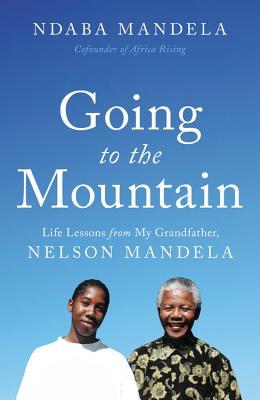 Nelson Mandela’s hundredth birthday approaches. His grandson Ndaba, whom Mandela raised following his release from prison, talks about growing up with the titan that led the movement against Apartheid in South Africa. He reflects on Xhosa culture and the role that it played in the struggle and in his own development, and it is within this framework that he talks about his grandfather, and about the future of his people.
 I received an advance copy in return for this honest review, thanks to Net Galley and G.P. Putnam. I expected to absolutely love it; I came of age when the South African revolution against the Apartheid state was in full flower and before anything about it showed on mainstream media, which was all we really had then apart from underground films shown in the basements of coffee houses near campus. I loved Mandela’s Long Walk to Freedom, and had attended dozens of talks given by members of the African National Congress that were forced into exile. So when I saw that this novel was set in revolutionary South Africa, I was pumped. Popular fiction about one of the greatest political events to occur in my lifetime? Oh yes indeed. Count me in!
 I read this memoir, one of the most important of our era, before I was writing reviews. I bought it in the hard cover edition, because I knew I would want it to last a long time and be available to my children and their children. It was worth every nickel. It’s lengthy and requires strong literacy skills and stamina, but if you care about social justice and are going to pull out all the stops for just one hefty volume in your lifetime, make it this one.
 Seattle Book Mama