
 “I wanted to write novels for the girls like me, the ones who never got to see themselves on TV or in the movies, the ones who learned to flip through the fashion spreads of Elle and Vogue because nothing in those pictures would ever fit, the ones who learned to turn away from mirrors and hurry past their reflections and unfocus their eyes when confronted with their own image. I wanted to say to those girls, I see you. You matter. I wanted to give them stories like life rafts…I wanted to tell them what I wished someone had told me…to hang on, and believe in yourself, and fight for your own happy ending.”
Many thanks go to Net Galley and Atria for the DRC, which I received a couple of months after the publication date. Having read this memoir makes me want to read more of this author’s work. It’s for sale now.
The fact that I’ve never read anything by this author makes me something of an outlier in terms of her target audience. I’m also slightly older than she is, not in need of a mentor. But none of that matters, because quality is quality, and feminist messages like this one are always good to read.
Weiner writes with an arresting combination of candor and wit, and she talks about the things we grew up being taught not to mention. Those of us that saw role models like Twiggy—a British model with a nearly anorexic appearance—and Mia Farrow, yet were ourselves unable to shake the persistent amount of what kindly adults called baby fat, never thought to argue that we were as worthwhile as these bony fashion icons. Weiner deals with the topic of body image and media head on. And while she’s there, she talks about facing down anti-Semitism in the classroom, and the dry hiss of another child on the playground suggesting that she has killed Jesus. She talks about also being the chunky, unfashionable member of her kibbutz to Israel in the unforgettable chapter titled “Fat Jennifer in the Promised Land”.
At times I confess I am annoyed by appear to be petit bourgeois concerns. You struggled to choose between Princeton and Smith? Oh you poor dear! But later when I read that she is called in to the administration’s offices and told to get her things and go because her tuition hasn’t been paid, I forgive her immediately.
Weiner takes on questions that many feminist writers pass by. I’ve never seen another writer address the fact that if a woman cannot successfully breast feed her baby or even just doesn’t want to, the child will most likely not starve. This and a host of other seldom spoken issues having to do with combining career and motherhood can help other mothers, whether working or taking time away from the workplace to raise a child, feel less isolated.
Every woman needs a funny female version of Mister Rogers to tell us that we are fine just the way we are. Every mother needs another woman that can tell her—sometimes in hilarious ways—that every rotten thing that ever happens to her child is not her fault.
Highly recommended for women seeking wisdom and snarky kick ass commentary, and to those that love them.
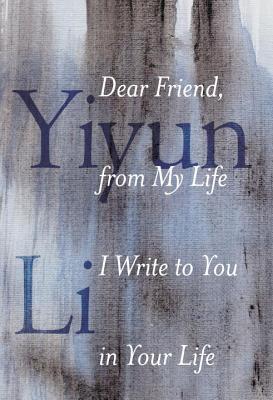 It’s an honor to be invited to review any book by Random House and Net Galley, and so when the email came, I accepted without hesitation; I thank them for thinking of me and wish I could honestly recommend this one. Others have referred to this memoir, whose title is taken from a quote by Katharine Mansfield, as “exquisite, intimate, and lyrical”, and the author has won awards for her novels. I looked carefully to see if I could locate the genius in this book, but it eluded me completely.
 The Mercy of the Tide is Keith Rosson’s debut novel, and it’s a strong one. Set in a tiny, depressed town on the Oregon Coast during the Reagan Administration, things start out dark, and they’re about to get a whole lot darker. Thank you, Net Galley and Meerkat Press for the DRC, which I received free of charge for this honest review. This book will be for sale February 21, 2017, and those that love good fiction with a working class perspective will want a copy.
 This is #32 in the Alex Delaware series, and Kellerman’s writing just seems to get better with every entry. Thanks go to Net Galley and Random House Ballantine for the DRC, which I received free in exchange for this honest review.
 Maggie Sparkes, heir to a fortune, is called to New York City when her closest friend, Celine Gonzalez, is found dead. Did Celine really commit suicide? Maggie doesn’t believe it for a minute, and when she finds Celine’s personal effects hidden away with a note, she believes it even less. Thanks go to Net Galley and Atria for the DRC and invitation to read and review this title. It was released February 2, 2017 and you can get a copy now.
 “Hope is a curious thing. It emerges in the most unexpected places.”
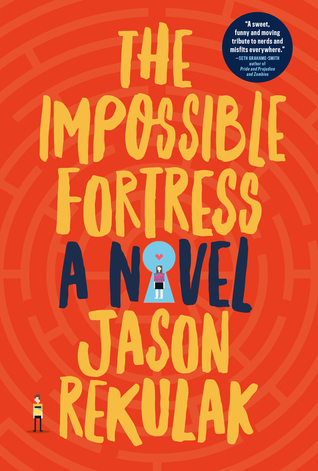 The Impossible Fortress has been generating a lot of buzz since last summer when the review copies came out, and rightfully so. It’s hard to believe this is a debut novel, because it’s smoothly designed and hugely original. It’s written with a deftly woven plot that never misses a step; engaging characters that are nearly corporeal, they are so well sculpted; and an utterly captivating voice that unspools the narrative. Best of all, it’s hilarious! I thank Net Galley and Simon and Schuster for my DRC, which I received in exchange for an honest review. This title comes out February 7, 2017.
 Camille Pagan is the author Life and Other Near Death Experiences. Thank you Net Galley and Lake Union Publishing for the DRC, which I received in exchange for an honest review. This title is for sale February 7, 2017.
 Always, Sarah Jio’s much anticipated new release, takes on the homelessness epidemic using the powerful medium of fiction. I received my copy in advance in exchange for an honest review; thank you Net Galley and Random House Ballantine for the DRC. This title is available to the public today, and if you have enjoyed Jio’s other novels, I am confident you’ll like this one too.
 Dorothy Day is an interesting historical figure, the woman that founded The Catholic Worker, which was initially a combined newspaper, homeless shelter, and soup kitchen. I once subscribed to The Catholic Worker, and since it cost one penny per issue, you couldn’t beat the price. I saw this biography available and snapped it up from Net Galley; thanks go to them and Scribner, who provided me with a DRC in exchange for an honest review. This title was published in late January and is now available for purchase.
 Seattle Book Mama