 Patricia Cornwell has a publisher that doesn’t love bloggers, but her books kick ass. For this reason, this white-knuckle thriller was one of perhaps half a dozen books on my Christmas wish list for 2016. So here, in this spot where I traditionally thank the publisher and the site that facilitates them, I will instead thank Benjamin, his lovely wife Amie, and their baby boy. Between them, they gave me three delicious books, but this is the one I had to flip open as soon as the Christmas celebration was over; excuse me everyone, but I am off to bed with my box of Christmas candy and Patricia Cornwell. I am just now getting to the review, since DRCs get first priority, but I gobbled this book up before the New Year holiday.
Authors like Cornwell that write strong, long running thriller series have their work cut out for them. Whereas a debut novel and perhaps a few that follow can run along traditional lines, being trapped in a dark building with a killer on the premises somewhere; stuffed into the trunk of a vehicle (or the back seat with a gag and blindfold); held at gun point; family members kidnapped; it cannot go on forever. Eventually even the most faithful of readers is unwilling to buy into it anymore. Oh come on. No you didn’t.
The best of these writers—here I am thinking of Cornwell along with Sue Grafton, Sara Paretsky, James Lee Burke, GM Ford, and I know you are thinking of several more as you read this review—find a way to make the series deeper and richer through character development. There’s more inner narrative perhaps, and the tension is more of the psychological variety than constant action. And at this point in a series, the reader that really does want nonstop action will howl and toss down their book, but many others, myself among them, find myself more bonded to the character. And so it is with Kay Scarpetta, one of my favorite long running series protagonists.
This story is set in Boston, and at the outset, Kay is receiving some disturbing communications on her phone. The worst thing about them is that they play without her choosing to open them, and then they vanish, so she has no proof they were ever there. It doesn’t take long for her to conclude that the hack has been effected by nemesis Carrie Grethen, ex-lover of her beloved niece Lucy, whom she raised like a daughter and loves like no one else. Grethen has become Scarpetta’s Moriarty over the last several novels in this series. And Scarpetta wonders what these have to do with the young woman murdered in the park, a woman she spoke to briefly at an art exhibit and ran into later.
One of the things I love about this series is that Cornwell is unafraid to use her vocabulary. If someone out there doesn’t have the literacy level for it, let them stretch themselves to read this, or let them go away. In this era in which some writers are dumbing down their prose to meet the marketplace of American consumers with decreasing literacy levels, it’s a joy and a pleasure to find one that does not. The prose is richer, the descriptions more resonant than if she’d done otherwise.
As the story progresses, this psychological thriller takes on the contours of a nightmare in which everyone dear to Scarpetta—husband Benton, who’s with the FBI, Lucy, and Pete Marino—are all behaving in ways that make Scarpetta wonder whether they are deceiving her. Since every one of them has done so once before, the reader doesn’t regard Kay as paranoid, but rather fears for her.
Added into the picture is Kay’s sister Dorothy, who is Lucy’s mother. Kay and Dorothy hold a great deal of antagonism for one another, and an added twist is thrown in regarding sister Dorothy provides a huge surprise.
I note that cop Pete Marino, depicted in episodes gone by as a deeply flawed and disturbed individual, has been rehabilitated. Cornwell has tidied him up and Scarpetta has mostly forgiven his misdeeds of the past.
Should you pay full freight for this title? If you are a fan of the series and enjoyed the last one or two before this one, the answer is emphatically yes. Those new to the series might want to go for an earlier entry, as the series is much more fun when read in order. As of this writing, I also note that it’s available used online for less than five bucks, plus shipping charges. For others that are unsure, do remember that to develop character, Cornwell has to include a lot of details that have to do with the protagonist’s personal life. Some mystery readers just want the corpse, the puzzle, the guns, the action, and so if that describes you, see if you can read a sample before investing.
For fans of the series and of psychological thrillers, this book is highly recommended.


 David Joy is a writer that keeps it real, and that’s what made me lurch forward in my desk chair and grab my mouse when I saw his second novel was done. Big thanks go to Net Galley and Putnam Penguin for the DRC, which I received in exchange for this honest review. This title will be available to the public March 7, 2017. Those that cherish strong fiction should buy it and read it.
 The good news is that if you’re looking for something dark, then Chaon is your author. I received a copy free and in advance in exchange for an honest review; thank you Net Galley and Random House Ballantine. This book was released today and is available to the public.
 Amy Engel makes her debut as a writer of adult fiction with this title, having begun her career writing fiction for young adults. The Roanoke Girls is smoking hot, a barn burner of a book, diving into some of society’s deepest taboos and yanking them from the shadows into the bright rays of Kansas sunshine, where the story is set, for us to have a look at them. It’s not available to the public until March 7, 2017, and frankly I don’t know how you are going to wait that long. I received a DRC for this title from Net Galley and Crown Publishing for the purpose of a review.
 Harry Hunsicker is the former executive vice president of the Mystery Writers of America as well as a successful author. Reading this suspenseful and at times almost surreal tale makes it easy to understand why so many people want to read his work. I’d do it again in a heartbeat. Thanks go to Net Galley and to Thomas and Mercer for the DRC, which I received in exchange for this honest review. This book will be available to the public April 11, 2017.
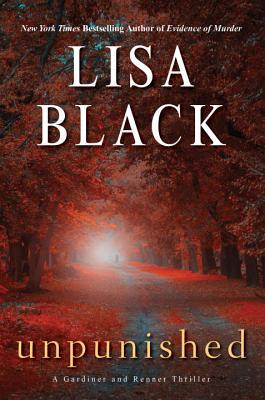 This novel is the second in the Gardiner and Renner series. I was invited to read and review it by Kensington Press and Net Galley. I appreciate the invitation and have enjoyed other titles published by this house; unfortunately, this particular book didn’t work for me. It is now available for purchase.
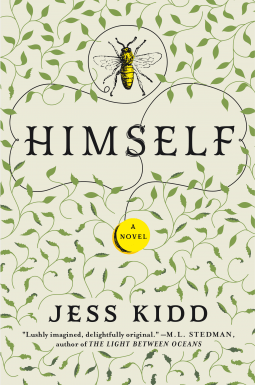 Ah, feck me blind now, Jess Kidd’s written herself a novel, and it’s good enough for any ten others. It comes out March 14, 2017, and although I read it free via Net Galley and Atria, there’s surely a chance I will buy one or more copies to give to those I love anyway. You should, too. It’s too clever to miss, and if you don’t mind a bit of irreverence, if you have a heart at all for Ireland and for ordinary working folk just trying to get along as best they’re able, this book is your book. Sly as hell and fall-down-laughing funny, it will put a spring in your step for a goodly while thereafter. That it will!
 “Our ancestors were not wrong in their superstitions; there is reason to fear the dark.”
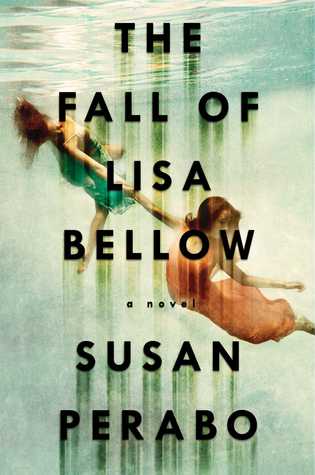 I was fortunate enough to score a DRC of this suspenseful novel from Simon and Schuster and Net Galley. It’s a book that defies the usual genre niches, and for this and many other reasons I enjoyed it immensely. It will be available to the public March 14, 2017.
 I was invited to read this novel by Random House and Net Galley, and although I read multiple books at a time, this was the one I saved for bedtime, after the lights were out, the hound snoring at the foot of the bed, and everyone else was asleep. This is prime reading time, and this was the story I wanted to follow uninterrupted. You can get a copy for yourself this Tuesday, February 28, 2017.
 Seattle Book Mama