
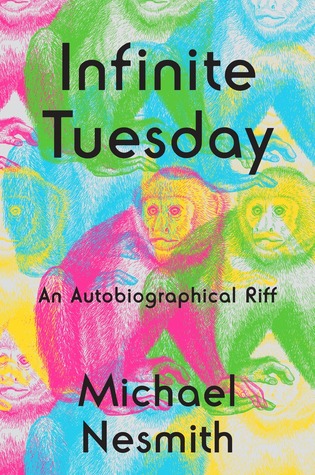
Michael Nesmith is a veteran of the entertainment industry, but his name is most recognizable as the wool-beanie-wearing member of The Monkees. Nesmith has a treasure trove of experience and insight, and he’s very articulate. I really enjoyed this memoir, and if American musical and cultural history interest you, I recommend you get a copy when it comes out April 18, 2017. Thanks go to Net Galley and Crown Archetype for the DRC, which I received free of charge in exchange for this honest review.
Nesmith came of age in Texas, the child of a single hardworking mother, and was mentored by the profane elderly Uncle Chick, whose spoken cadence Nesmith would later find in his own sense of musical rhythm. Because Texas was the exclusive province, at the time, of country and gospel music, Michael and his pregnant girlfriend loaded themselves and Mike’s guitar into his mother’s car and took off for Los Angeles. It proved to be a good move.
Those that cannot remember the birth of rock and roll have no idea how polarizing it was. The cliché term “generation gap” represented a genuine source of friction and alienation in a lot of families; some parents decided that rock was not an art form but instead a type of devil worship. Some disowned their children over it and didn’t take them back later. I’m serious. And so when Nesmith credits his mother for her patience and forbearance—he actually didn’t ask if he could take her only car, for instance—he’s not just being gracious. Here, let him tell you:
It was unthinkable to everyone who had just fought World War II that the music…the whole cultural imperative of the victorious warriors would be torn down by their kids as if it were ugly curtains in the den.
Soon Nesmith would be chosen as a member of The Monkees, which catapulted four little-known young men to instant fame; Nesmith recalls that although seventeen to twenty-year-old Beatles fans were incensed by the TV imitation, the nine to twelve-year-old television kids—of which this reviewer was one—saw them as a fact:
What followed was what Nesmith calls “Celebrity Psychosis”, a sense of disproportion and entitlement caused by instant stardom, obsequious handlers, and bizarre social circumstances. He humorously recounts strange experiences, such as singing at a local school and being pursued by screaming adolescent girls, and being “sighted” shopping in a grocery store.
He recalls his experience as John Lennon’s house guest in London, and he cites Jimi Hendrix as the best rocker that ever lived. He also drops a rather nasty slam at Bob Dylan without any real explanation, and I confess that is part of the missing fifth star. What the hell?
Bette Nesmith, Michael’s late mother, invented Liquid Paper while he entered show business, and her fortune helped finance some of his creative products. Nesmith was a pioneer in the field of country rock as well as the music video. He produced movies and won a Grammy for “Elephant Parts”, an early music video:
He is also an ardent feminist, and his recollections show that he was one before it was cool. Thank you, Mr. Nesmith.
I have to admit that I find the first half of the memoir more interesting than the second half. The author goes on in the latter half of the book to speak at length about his spiritual experiences with Christian Science and the ways in which wealth distorts a person’s character, though he recognizes the latter doesn’t garner a lot of sympathy. “Never complain about the air-conditioning a private jet.” He also does a lot of brow-beating about having stolen a friend’s wife, and attributes the failure of that marriage—his second, or his third maybe—to guilt.
Despite the aspects that I didn’t enjoy, I do recommend this memoir, because it eloquently describes a wide, enormously dynamic period in American film, music, and television. Nesmith unspools the last half of the 19th century with the wisdom of his experience, and it’s a perspective completely unlike any other I have seen.
Recommended for those with an interest in contemporary American cultural history, as well as to fans of Nesmith and The Monkees.
 Silence is the third in the Inspector Celcius Daly series, but I read it alone and didn’t realize I had missed anything until I got online and looked. I received my copy free from Net Galley and Open Road Media in exchange for this honest review. It’s been for sale for almost a year and I apologize for my tardiness; the book had been out for several months before I received my DRC, and so I kept setting this review aside in order to write about stories that were about to be published immediately. None of this should keep you from rushing out to order a copy; as you can see I rated it five stars, and I am picky these days.
 Every parent with a baby or toddler has this one terrible, dark fear: that someone will take that baby. In Say Nothing, that horrific event is doubled when Sam and Emma, twin sons of Scott and Alison, are taken and the note that sends frozen tendrils of fear up their spines instructs them not to tell anyone. No police; no one at all can know. “Say nothing.” Thanks go to Net Galley and Dutton Penguin for the DRC, which I received in exchange for an honest review. The book came out last week and is now available for purchase.
 “Fate, people liked to call it. But Violet pictured it as dominoes. Somehow, they’d been positioned perfectly. And at the end of the line was Finn.”
 David Joy is a writer that keeps it real, and that’s what made me lurch forward in my desk chair and grab my mouse when I saw his second novel was done. Big thanks go to Net Galley and Putnam Penguin for the DRC, which I received in exchange for this honest review. This title will be available to the public March 7, 2017. Those that cherish strong fiction should buy it and read it.
 The good news is that if you’re looking for something dark, then Chaon is your author. I received a copy free and in advance in exchange for an honest review; thank you Net Galley and Random House Ballantine. This book was released today and is available to the public.
 Amy Engel makes her debut as a writer of adult fiction with this title, having begun her career writing fiction for young adults. The Roanoke Girls is smoking hot, a barn burner of a book, diving into some of society’s deepest taboos and yanking them from the shadows into the bright rays of Kansas sunshine, where the story is set, for us to have a look at them. It’s not available to the public until March 7, 2017, and frankly I don’t know how you are going to wait that long. I received a DRC for this title from Net Galley and Crown Publishing for the purpose of a review.
 Harry Hunsicker is the former executive vice president of the Mystery Writers of America as well as a successful author. Reading this suspenseful and at times almost surreal tale makes it easy to understand why so many people want to read his work. I’d do it again in a heartbeat. Thanks go to Net Galley and to Thomas and Mercer for the DRC, which I received in exchange for this honest review. This book will be available to the public April 11, 2017.
 This novel is the second in the Gardiner and Renner series. I was invited to read and review it by Kensington Press and Net Galley. I appreciate the invitation and have enjoyed other titles published by this house; unfortunately, this particular book didn’t work for me. It is now available for purchase.
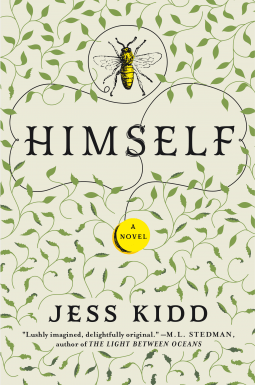 Ah, feck me blind now, Jess Kidd’s written herself a novel, and it’s good enough for any ten others. It comes out March 14, 2017, and although I read it free via Net Galley and Atria, there’s surely a chance I will buy one or more copies to give to those I love anyway. You should, too. It’s too clever to miss, and if you don’t mind a bit of irreverence, if you have a heart at all for Ireland and for ordinary working folk just trying to get along as best they’re able, this book is your book. Sly as hell and fall-down-laughing funny, it will put a spring in your step for a goodly while thereafter. That it will!
 Seattle Book Mama