The Widow of Wall Street, by Randy Susan Myers*****

Happy release day! I signed up for the blog tour before I had read the book, so I am really glad I like it. There are so many layers to this one.

seattlebookmama's avatarSeattle Book Mama

thewidowofwallI was invited to read and review this title by Net Galley and Atria Books. To be honest, I wasn’t sure I wanted to read it. What, Wall Street? What does that have to do with the real lives most of us lead? But when I noted that the story involves an enormous tumble off that golden pedestal, I was intrigued. I am really glad I accepted the offer to read, because it contains a feminist subtext that I had no idea would be here. This story will be available to the public April 11, 2017.
I had to read the reviews of others to learn that this is a fictionalized version of the Bernie Madoff scandal, but if you approach it as straight fiction it’s just as good. The premise is that Phoebe marries Jake when she is very young, and she’s grateful to him, because she’s in the…

View original post 562 more words

The Devil’s Country, by Harry Hunsicker****

Happy release day! This is one of the better mysteries newly released in 2017, and you can get a copy now.

seattlebookmama's avatarSeattle Book Mama

thedevilscountryHarry Hunsicker is the former executive vice president of the Mystery Writers of America as well as a successful author. Reading this suspenseful and at times almost surreal tale makes it easy to understand why so many people want to read his work. I’d do it again in a heartbeat. Thanks go to Net Galley and to Thomas and Mercer for the DRC, which I received in exchange for this honest review. This book will be available to the public April 11, 2017.

Arlo Baines, a former Texas Ranger, is on the road when it all unfolds; he’s stopped at the tiny town of Piedra Springs, traveling from one place to another by Greyhound Bus, and he doesn’t intend to stay. He finds a place to get some food, sticks his nose in a copy of Gibbon, and tries to ignore everyone around him. Friendly conversation? Thank you, but no.

View original post 278 more words

Southern Fried, by Tonya Kappes***

southernfriedThis fetching little cozy mystery is the second in a series, but I didn’t read the first one, and I was able to keep up with it finer than frog hair. You might could, too. I am grateful to Net Galley and Henery Press for the DRC, which I received absolutely free of charge in exchange for this review. But don’t you worry none, cause you can buy it now.
Our protagonist is Sheriff Kendrick Lowry, and she tells us the whole story in the first person. The problem starts when Myrna finds Owen in the greenhouse on top of her prize tomatoes. Why did he have to go and die there? She says it took her months to get them that plump, and if you’ve ever grown great tomatoes—an impossible feat in Seattle, I am sorry to admit—you know it’s true.

Sheriff Kendrick, locally known as “Kenni”, is assisted in her law enforcement activities by Poppa. Poppa was the sheriff around these parts, but he’s dead now, and his ghost can only appear when she has a case to crack, so in a strange sort of way, this murder is a blessing in disguise. The local stigma against a woman as sheriff in this small Kentucky town is offset by the venerable family tradition Poppa cultivated before he departed.

I believe my favorite part is the day following the discovery of the body, when Lowry arrives to find the crime scene tape destroyed and Myrna moseying around the greenhouse like nothing ever happened. You know this happens in real life, but you never see it in fiction, except here. I also love the part when someone suggests the sheriff call for backup, and she notes that her deputy is out of town, and so exactly who is she supposed to call? Again, fictional cops always seem to have unlimited resources in even the most unlikely situations, and Kappes leaned hard on my funny bone. What a hoot.

A lot of this book doesn’t make much sense, but then it doesn’t have to. It’s a romp. However, if a couple of inconsistencies had been cleared up and a hot-stove issue hadn’t been grazed, it would be better still.

Would anyone kill for an okra recipe, for example?  (I was told as a child that okra tastes like a bowl of warm snot.) Because there’s so much camp in this very funny story, I can’t tell whether I should be suspicious of this as motive or not; in the real world I don’t see it, but in this story, I feel as if anything goes.  And while I love the feminist spirit in the sheriff’s assertion that she doesn’t cook anything, period, later she goes to try out the secret recipe and I find myself wondering how she knows how to glaze a cast iron pan. This woman doesn’t even know how to boil water, and yet a fairly obvious cooking skill that nobody puts into a recipe seems to present no problem at all.

But these are just li’l thangs.

Despite the occasional feminist overtones, there are some tired devices and stereotypes that are harder to disregard. Why does half the story obsess with her crush on her deputy? It’s kept light, but the notion that a woman is nothing without a man, while not openly asserted, seems to float in the air. I would have liked to see more women, especially older women, depicted in a positive light. It seems as if every story that features a heroic young woman has to also feature an impossible mother, and so I moaned when she introduced her momma. And there’s the “cat fight”, which while there’s no denying that the narrative is straight-up hilarious, is also a stereotype that suggests women can’t get along once you put us in a room together.

The thing that knocked a star off what would have been a four star review is the place where her Poppa’s ghost notes that when he saw Deputy Finn carry Kenni’s drunken, unconscious body to her bedroom and put her in her bed, he had feared the deputy was about to “take advantage” of her.  The word is rape, and it’s never funny. The deputy didn’t, but the suggestion, accompanied by the euphemism, left an after-taste in my mouth that I couldn’t quite get rid of.

If you can get past these brief but clear obstacles, you will get a lot of laughs out of the main thread here. Kappes has a raucous sense of humor, and I had immersed myself in too many dark stories. I was ready for a good laugh, and this title provided several.  But unless your pockets are deep or your interest great, I recommend you get this one cheaply when you can, or at your local library if available.

I Found You, by Lisa Jewell****

ifoundyouAlice has found a good looking man on the beach, and she’s brought him home. See what I’ve found! With just this much information, I am immediately engaged, wanting to have a conversation with this woman about risks, about dangers. For heaven’s sake, what about your kids? Friends, this is only the tip of the iceberg. Lisa Jewell’s hot new novel goes on sale April 25, 2017. I read mine free and early, thanks to Net Galley and Atria Books in exchange for an honest review.
The level of suspense is heightened by shifting points of view. We have the man himself, who has amnesia and doesn’t know his name. Alice has her children name him, and they decide to call him Frank. Her teenage daughter Jasmine rolls her eyes, and I want to grab Alice and say, “Oh no you didn’t!” But since I can’t do that, I read on instead.

Frank has nightmares and we are privy to them, as well as the fragments of memory that come home to him in shards and fragments, bit by bit.

We also have two other, separate story lines. One is that of Lily Monrose, whose husband Carl has vanished. She is just twenty-one years old and came with him to UK from Kiev. He showered her with affection and gifts, found them a home, set up housekeeping, and one day, he failed to return from work. What the heck?

And then we have a vacationing family with a narrative set in the past, featuring teenage siblings Kirsty and Gray, who fall into bad company one summer.

Naturally we wonder from the get-go how these disparate elements will come together at the end of the book. Is Frank really Carl? Is Carl really Gray? Is Frank…well, you see what I mean.

The thing that I love about Jewell’s work is that her dynamic characters are always women, and she develops them well. Alice isn’t always a lovable character; her impulse control and judgment are less than stellar. She tells Frank at the outset:

“I’m not the most together person in the world and it doesn’t take much to make all the wheels fall off.”

She promises her friend Derry, who has seen her through some dark times that were partly due to her own terrible instincts, that she is letting Frank stay in the mother-in-law apartment in back of her home. It has a separate entrance; she will lock the door to her home, and it will just be for one night. But then, the dog likes Frank, and so she takes down the safeguards—the locked door, the one night, the keeping him in a separate place from her family—in breathtakingly swift succession, and I am with Derry, who asks Alice to remember what happened before.

Before what? I turn the pages a little faster.

Meanwhile, the police are way too slow in trying to help Lily, who is isolated in her exurban apartment; she is frantic. Her mother wants her to stop looking for Carl and come home, and it sounds like a smart idea to me, but then I have never lived in Kiev, so who knows? The longer Carl is gone, and the more we learn about him, the more I want to take Lily to the airport. Fly away little bird, there’s nothing that is good for you here!

The hardest buy-in for me is at the beginning, because really, people don’t just get amnesia. Not from car accidents, not from shocking experiences, not from anything. It’s almost unheard of, the stuff of bad old movies. But a good author can sell anybody anything, and I want to know what happens next, so I tell myself, fine then. Amnesia it is. And the way the rest of it unfurls is fascinating. Flawed but appealing, believable characters combined with strong pacing make this addictive novel the one you want at the vacation cabin, the beach, or just for a rainy weekend curled up in your favorite chair.

Recommended to those that love good fiction.

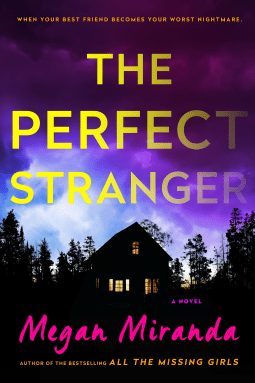
The Perfect Stranger, by Megan Miranda*****

“To get blood out, you’d have to do a deep clean. With bleach.”

the-perfectstranger

Fans of Miranda’s may rejoice, and those that haven’t read her work will have to start now. This riveting psychological thriller may leave you jumping at strange noises and sleeping with the lights burning, but oh, it will be worth it! I read this book free and in advance, thanks to an invitation from Net Galley and Simon and Schuster, but it’s available to the public Tuesday, May 16, 2017, and you won’t want to miss it. It’s the perfect story for the time in which we live, with alienation, deception, fear, and misplaced trust looming large.

Leah Stevens has some boundary issues, and it’s lost her a position in journalism. Disgraced, she decides to leave town and start over in the Pennsylvania countryside. She gets a teaching job there. A former roommate, Emmy Grey, surfaces just in time to go along with her and split the rent on a house in the woods. It’s a terrific house, but there are noises at night.

Leah says there are cats under there, scratching, scratching.

They have hardly settled in before things start to go amiss. Strange events occur that leave her frightened. When the woman’s body is dredged from the lake, Leah realizes it’s been awhile since she has seen Emmy. They work different hours, but still…shouldn’t she have seen her by now? She’s late with her share of the rent.

Leah feels as if someone is watching her at night through the glass doors at the front of the house.

This spine-tingling journey keeps me guessing every step of the way. Every time I think I see a formula starting to unspool, Miranda does something different, something I didn’t see coming. And as Leah trusts her instincts to protect her, we see for ourselves just how bad her instincts really are. Ultimately, she decides to get out of the house and ends up at the end of the road, at “the last no-tell motel”.

The plot here is taut and original, but the success of the story hinges on character. Leah’s past transgressions are vague at the outset, and we readers can tell it’s a dark time that she doesn’t like to talk about. But as the lies and the layers of deceit are peeled away one by one, we realize just how poor her sense of boundaries really is. Leah is so believable that she’s almost corporeal; I want to grab her by the wrist, haul her into the kitchen and talk to her, but even if I were able to do that, she wouldn’t listen to me.  Her personality is divided, part savvy journalist, objective and focused; half overly trusting, vulnerable waif. Her capacity for self-preservation is more limited than she knows. Is she going to make it out of this thing in one piece?

I can’t say more or I’ll ruin it for you, but this is the book you’re looking for, whether you are going to the beach or just need time to escape right here at home.

Just be sure to toss a blanket over those big glass doors before you settle in to read. Trust me.

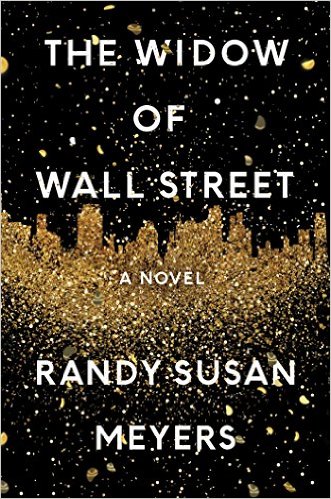
The Widow of Wall Street, by Randy Susan Myers*****

thewidowofwallI was invited to read and review this title by Net Galley and Atria Books. To be honest, I wasn’t sure I wanted to read it. What, Wall Street? What does that have to do with the real lives most of us lead? But when I noted that the story involves an enormous tumble off that golden pedestal, I was intrigued. I am really glad I accepted the offer to read, because it contains a feminist subtext that I had no idea would be here. This story will be available to the public April 11, 2017.

I had to read the reviews of others to learn that this is a fictionalized version of the Bernie Madoff scandal, but if you approach it as straight fiction it’s just as good. The premise is that Phoebe marries Jake when she is very young, and she’s grateful to him, because she’s in the early stages of pregnancy with a little gift planted in her by a college professor who groomed her, screwed her in the upstairs lounge at school, and then dumped her so he could move on to the next nubile young lady in her class. It’s a time in history when becoming a single mother was an absolute taboo for any Caucasian woman of the middle class. Perhaps you had to be there, but I am telling you it was simply unthinkable. Not only would she have lost friends; her entire family would have lost friends, and maybe relatives also. The social stain was one that did not wash out.

And while we are talking about the time period—starting in 1960—I need to point out that Myers has nailed, with brilliant yet discreetly woven detail, the settings of the time periods between then and now in a way that’s undeniable and that draws me further into the story. Some authors try to use shortcuts in writing historical fiction, and when they do it you can tell they don’t have a grasp of the period: they toss in the names of popular celebrities, clothing styles, and other prominent bits of pop culture that they could glean from a ten-minute web crawl. Myers does the opposite. She focuses on the story and character, character, character, but the time period comes out in the background, as it should, with every aspect from the slang of the period, to its social mores, to every aspect of daily living. This reviewer grew up during the 1960s and 1970s, and as the story progresses, I find myself thinking, “I remember that!” I highlighted a hundred references that won’t fit into this review just out of sheer admiration.

Those that just want a beach read can get this book and use it as such, but for those that want to peel off the layers and look for what’s underneath, the feminist message is one we can relate to today easily. The assumptions that are made about her as a wife, that she is an appendage, and the way her family treats her speak to me. In some ways, I find myself thinking of Charlotte Perkins Gilman’s “The Yellow Wallpaper”, in which a woman simply becomes part of the home environment; at one point Phoebe notes that her family doesn’t want to hear her talk, and they don’t even really want to share their own stories with her, but she’s like a lamp that should be present when desired for whatever purpose suits the moment.

In the end, when her husband goes to jail for having stolen every penny from his investors, Phoebe has a choice to make. She can stand by her man, trying to eke out a little stash for his prison account so that he can buy candy bars and stamps, or she can live her life without him. To some it might seem to be an obvious decision, but by the time he is jailed, she is past sixty; she has lived her entire adult life with this man, and the mind of a senior citizen is not as flexible as a younger one. The way she works through it is riveting.

Read it as a feminist folk tale or read it as a beach read; one way or the other, this novel is highly recommended. (less)

Nixon: the Life, by John A. Farrell*****

richardnixonfarrellHistory buffs rejoice; the definitive Nixon biography is here.  John A. Farrell is the renowned biographer of Clarence Darrow. Now he gives us a comprehensive, compelling look at the only US president ever to resign from office under the cloud of imminent impeachment. This is the only Nixon biography that answers the many questions that left Americans—and those around the world that were watching—scratching our heads. Why, why, and why would he do these things? Farrell tells us. I read this book free and in advance, thanks to Net Galley and Doubleday, but it would have been worth paying the full retail price if I’d had to. It’s available to the public now.

Anytime I read nonfiction, I start with the sources. If the author hasn’t verified his information using primary sources, I go no further. Nonfiction is only fact if the author can prove that what he says is true—and I have never seen more meticulous, more thorough source work than what I see here. Every tape in the Nixon library; every memoir, from Nixon’s own, to those of the men that advised him as president, to those written by his family members, to those that opposed him are referenced, and that’s not all. Every set of presidential papers from Eisenhower on forward; the memoirs of LBJ, the president that served before Nixon took office; reminiscences of Brezhnev, leader of Russia ( which at the time was part of the USSR); reminiscences of Chinese leaders that hosted him; every single relevant source has been scoured and referenced in methodical, careful, painstaking detail. Farrell backs up every single fact in his book with multiple, sometimes a dozen excellent sources.

Because he has been so diligent, he’s also been able to take down some myths that were starting to gain a foothold in our national narrative. An example is the assertion that before the Kennedys unleashed their bag of dirty tricks on Nixon’s campaign in 1960, Nixon was a man of sound principle and strong ethics. A good hard look at his political campaigns in California knocks the legs out from under that fledgling bit of lore and knock it outs it out of the nest, and out of the atmosphere. Gone!

Lest I lend the impression that this is a biography useful only to the most careful students of history, folks willing to slog endlessly through excruciating detail, let me make myself perfectly clear: the man writes in a way that is hugely engaging and at times funny enough to leave me gasping for air. Although I taught American history and government for a long time, I also learned a great deal, not just about Nixon and those around him, but bits and pieces of American history that are relevant to the story but that don’t pop up anywhere else.

For those that have wondered why such a clearly intelligent politician, one that would win by a landslide, would hoist his own petard by authoring and authorizing plans to break into the offices of opponents—and their physicians—this is your book. For those that want to know what Nixon knew and when he knew it, this is for you, too.

I find myself mesmerized by the mental snapshots Farrell evokes: a tormented Nixon, still determined not to yield, pounding on the piano late into the night. I hear the clink of ice cubes in the background as Nixon, talking about Prime Minister Indira Gandhi of India, suggests that “The Indians need—what they really need—is a mass famine.”

I can see Kissinger and the Pentagon making last minute arrangements to deal with a possible 11th hour military coup before Nixon leaves office. Don’t leave him with the button during those last 24 hours, they figure.

And I picture poor Pat, his long-suffering wife to whom he told nothing, nothing, nothing, packing all through the night before they are to leave the White House…because of course he didn’t tell her they were going home in time to let her pack during normal hours.

The most damning and enlightening facts have to do with Vietnam and particularly, Cambodia. Farrell makes a case that the entire horrific Holocaust there with the Khmer Rouge and Pol Pot could have been avoided had Nixon not contacted the Vietnamese ambassador and suggested that he not make a deal with Johnson to end the war.

Whether you are like I am, a person that reads every Watergate memoir that you can obtain free or cheaply, or whether you are a younger person that has never gone into that dark tunnel, this is the book to read. It’s thorough and it’s fair, and what’s more, it’s entertaining.

Get it. Read it. You won’t be sorry!

The Twelve Lives of Samuel Hawley, by Hannah Tinti*****

thetwelvelivesofs “Everything breaks if you hit it hard enough.”

What would you do to protect those you love the most? Tinti’s epic father-daughter tale has already drawn accolades far and wide. What can I add to it all? There are only so many ways to say that someone is a genius and that her work deserves the highest praise and honors. I received my copy free and in advance, courtesy of Net Galley and Random House, in exchange for this honest review, and I’ve spent the last month trying to decide what I can add to the discussion. Although 2017 is clearly an outstanding year for literature, this title stands head and shoulders above everything else I’ve seen. It will likely be the best fiction published this year.

Our two protagonists are Samuel Hawley and his daughter, Loo. The story is arranged with alternate points of view, and also moves from present tense to the past, when Lily, Loo’s mother, was alive. Hawley is a career criminal, a man that has robbed and killed as part of a business transaction, but his tenderness for his daughter and his wife keep us connected to him.

As a parent, though, Hawley is kind of a mess. He does his best, teaching his daughter useful tasks like how to file the serial number off of a weapon and how to use it, but at the same time, he keeps his criminal business quiet and low, and she is nearly grown before she realizes what he actually does for a living. The two of them move around the country frequently, and they have a routine that gets them gone in a hurry when it’s necessary, but as she gets older he takes her to the Massachusetts town where her maternal grandmother lives. And I have to say, Mabel Ridge, Lily’s mother, is one of the most arresting side characters I have seen in a very long time.

For Loo’s sake, Hawley works as a fisherman and sets down roots. His participation in the Greasy Pole event, a cherished local tradition, wins him a place in the community. But he’s left enemies in his wake, and Hawley is constantly alert to the threat others pose. Who’s in prison, and who’s out? Who’s alive, and who isn’t anymore? Sooner or later, someone he doesn’t want to see is bound to rock the life he has established for himself and his daughter.

This is the sort of literary fiction that lets the reader forget that it’s art, because it reads a lot like a thriller. There are scenes that are laugh-out-loud funny; my favorite involves a car thief named Charlie.

Samuel Hawley seems to me to be a character for our time. Fifty years ago, a novel like this would have been controversial—and it may still be, who knows? Great literature often is. But today with the stratospheric growth of the American prison population, many more members of the book buying public either have done time, know someone that has, or know someone that barely escaped having to do so. It’s no longer unthinkable that a person that has done some truly reprehensible things, may also be a human being.

One way or the other, you have to read this book. The buzz it’s created is only the beginning. If you read one novel this year, let this be it. It’s available now.

It Happens All the Time, by Amy Hatvany***

ithappensallthetimeI was invited to read and review this title in advance by Net Galley and Atria Books; it is written by a rape survivor, who tells us bravely of her own experience in the introduction. I wanted to love this book and to scream it across the internet and from the top of the Space Needle, that everyone should get it and read it, but instead, I came away feeling ambivalent. The rape passage is resonant and horrifying, and it’s written in a courageous way, and I’ll go into that in a minute. The rest of the book, however, is flat, and so in some ways this proves to be an opportunity squandered. There are spoilers, so don’t proceed if you don’t want to know how the book ends. It is available for purchase today.

The premise is that Amber and Tyler are best friends. They dated when they were teenagers, but a lot of time has gone by, and they have agreed to be buddies, talking often. Amber does not know that Tyler’s torch is still burning for her, brighter than ever; he is waiting for her to come around. Meanwhile, she has become engaged to someone else.

Amber is also a recovering bulimic, and now she is a specialist in nutrition and fitness. The level of detail regarding Amber’s meals hijacks the narrative at times; I don’t care how many ounces of lean this, that, the other she is about to eat. If we’re going to write about diet and fitness, that should be another book, and otherwise it should stay in the background.

The rape itself is where the story shines, and of course, it is the central scene to the story. Hatvany wants us to recognize who rapists are, and who they aren’t:


“They’re not greasy-haired monsters who jump out from behind the bushes and tie up their victims in their basements.”


The story is told from alternating perspectives, so we hear from both Amber and Tyler. Amber is believable to a degree; a more richly developed character would be more convincing, but the story is one that countless girls and women have lived. It’s a date that goes badly wrong; sometimes the woman is one that expects that she will want sex, but then decides she doesn’t, and her date forces the issue. Is that rape? Unless she says yes to sex, it is. Sometimes it starts with kisses—drunken or otherwise—but when the man wants to go further, she decides she wants to keep her clothes on and not follow through. If she says stop, or wait, or fails to say she wants to do this, yes, it is rape. And so this part of the narrative is important, and once I have read it, I want more than ever to like the rest of the book so that I can promote it.

Tyler is just straight up badly written. I am sorry to say it, but I rolled my eyes when I read his portion of the narrative. The ending is way over the top, and it distracts us with morally questionable deeds done by Amber that we would never commit. If it was rendered brilliantly, it could perhaps come across heroically, like Thelma and Louise, but it isn’t, and it doesn’t.

What happens here, is that Amber kidnaps Tyler post-rape at gunpoint. She forces him to drive to her family’s vacation cabin, and she makes him say that he raped her. He won’t do it, so she shoots him. She refuses to take him to a hospital until he says what she wants him to say. Once all of this happens, he has a huge epiphany, and from then on, Tyler’s wails about what a bad thing he has done, and how he knows he deserves everything that will happen to him as a result.

Sure.

But in addition, I find myself squirming. At one point when Amber holds him hostage, Tyler points out to her that kidnapping is a felony. Having Amber muddy the waters morally by kidnapping and shooting her assailant is distracting and morally tenuous at best. He has to tell the truth; she doesn’t. He owes it to her to lose his job and career, and to serve his time; she never expresses any sort of remorse and never suffers the consequences of her actions. And whereas brilliant prose stylist could turn Amber into a vigilante folk hero, this isn’t that.

I know that the author intends to tell a story that is deeply moving and that will improve the social discourse regarding what rape is, and how we as a society deal with it, both institutionally and as individuals. Instead, the distractions and tired prose prevent this story from reaching its potential.

Skitter, by Ezekiel Boone****

skitter Skitter is the sequel to Boone’s monstrous horror novel, The Hatching. Mutant spiders are on the rampage, fulfilling the worst nightmares of every arachnophobe, and president Stephanie Pilgrim has to decide how to save the USA—if it isn’t too late. I received my copy free and in advance from Net Galley and Atria Books in exchange for this honest review; copies will be available to the public May 9, 2017. Don’t miss out.

The first portion of the book is dedicated to bringing the reader up to speed so that those that didn’t read the first book can jump right in. The pacing feels a little slow, and I am thumbing my reader impatiently, wanting to find out what happens next. There is a fair amount of time discovering and discussing cold egg sacks versus warm, throbbing, glowing ones, but the emphasis is there for a reason, and it also makes for a more accessible read to a wider audience. At the 34% mark the ground work is done—so to speak—and the story breaks loose and really flies. The scene in Japan is particularly arresting.

So…imagine a bag of nice, warm spider eggs roughly the size of a bus; think of it as a “giant packet of doom in the corner”. It might hatch at any moment, and although the spiders may kill you, there’s a chance they may not. They spare some people to use as incubators for the next generation to come.

Let me just ask: how is your stomach doing right now? Are you feeling okay?


“Somebody gets bitten and then, what, five hours later they’re opening up and spilling out spiders like a bag of frozen peas?”


After The Hatching came out, I suddenly began noticing the spiders that came into the bedroom at night. It was uncanny how one turned up right after my spouse had fallen asleep, every single night. The spider would start in a far corner of the room—nothing to worry about here, ma’am, just minding my own business—and then gradually either circle to where it was directly overhead, or make its way to a location above the very center of the king sized bed, start a nice web, and commence to rappel doooown. I had never been that aware of them before, but now they seemed ominous. What the hell? Every night? Before he knew it, my spouse, who is nimbler than I, found himself drafted into spider-bombing the attic.

So yes, there is risk in reading this mesmerizing horror tale, but on the other hand, how can you not?

Ultimately, everything that can go wrong on Earth, does. There are mutant spiders from the South Pacific to Scotland, from Asia to Michigan. Quarantine zones fail. Hospitals fail. Other nations have tried everything, including using nuclear weapons on their own soil. And ultimately the president and her advisers wonder whether it is time to break out the Spanish Protocol.

I won’t tell you more than this; you need the book itself, either to take with you on vacation, or to make you feel better about the fact that you can’t go anywhere this year. Afterward, you’ll look at every little spider web in your living space with suspicion, and you’ll know it’s time for spring cleaning…right away!