
 Ed Scott Junior was one of the first Black catfish growers in the USA, a “Delta titan,” and he was the very first to own a catfish processing plant. My thanks go to Net Galley and the University of Georgia Press for the review copy. It’s inspirational, well written, and well sourced. The book will be available to the public tomorrow, July 10, 2018.
To say that this story is out of my usual wheelhouse is an understatement. I’m a city woman, Caucasian, living in the Pacific Northwest. The two slender ties that drew me to this biography are my interest in civil rights, and my love of a good plate of catfish; yet I enjoyed it a lot, and I think you will too.
Scott was the son of a successful Black farmer, a former sharecropper that bought land incrementally until he owned hundreds of acres in the Mississippi Delta. The first third of the book explains how he did that, and the experiences that Scott Senior and Junior had with the Civil Rights Movement and the local power elite. It’s a little slow at the outset, but the narrative wakes up in a big way around the 35% mark.
As Scott’s farm grows, he encounters one obstacle after another, and the racism is naked and blatant. Local white agribusiness runs him out of the rice growing business—and he has the nerve to drive a better truck than some of the white farmers in the area, which is an affront they can’t let pass. Left with hundreds of acres and no seeds to plant, Scott decides to dig ponds. Rankin is clear: by ponds, he means bodies of water the size of 15 football fields. Big damn ponds.
Caucasian farmers are able to get subsidies and FMHA bank loans, but Scott is declined, not on the basis of his credit score, but because he is African-American. Bank officers and local government officials are so certain of their positions of power that they put their refusals on the basis of race in writing, and up the road, that is what Scott will use to bring them down.
Prior to the 1980s, catfish was not sold in supermarkets. It was considered a lowly bottom-dwelling fish by many, and so its consumption was limited to the families of sport fishermen and poor Southerners . When it made its debut and was purchased by “Midwestern homemakers”, this reviewer was among them, puttering in the back of a Kroger in Toledo, Ohio. “Huh,” I said, “Catfish. Now we’ve never tried that.” I missed the cheap, readily available salmon I’d grown up with in the Pacific Northwest, and was jonesing hard for fish. I had no clue that an immense power struggle lay behind the little foam tray of fish in my shopping cart, but once I’d dipped it in a cornmeal mixture and fried it up, there was no turning back. Yummers.
I read multiple books at a time now that I’m retired, and some of the thrillers I favor make poor companions at bedtime. This biography was perfect then. It’s linear for the most part, focused, and although I was angered by the way Scott was treated, I could tell he was going to emerge victorious, so it didn’t keep me awake after the light was out.
Rankin wants to be clear that there’s a whole lot that needs to change before we will be able to say that every race is treated equally in the Delta, or elsewhere the US. One might hope this would be obvious. But everyone needs to read victory stories to boost their morale and remind them of what is possible. If you need a story where the good guys win, then you should get this book and read it.
 Huh. Go figure.
 4.5 rounded up. What a way to make a debut! Ripley’s creepy new thriller will have you locking your windows and looking under the bed at night. Thanks go to Atria Books for the review copy, which I received free of charge. I didn’t ask for it, didn’t expect it, but once I flipped it open and began reading, there was no question that I would finish it. You’ll feel the same.
 3.5 stars, rounded upward.
 Nelson Mandela’s hundredth birthday approaches. His grandson Ndaba, whom Mandela raised following his release from prison, talks about growing up with the titan that led the movement against Apartheid in South Africa. He reflects on Xhosa culture and the role that it played in the struggle and in his own development, and it is within this framework that he talks about his grandfather, and about the future of his people.
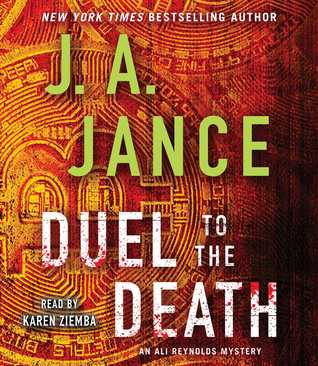 Jance is one of my favorite hometown writers, author of the J.P. Beaumont series and other books, and so I was pleased to see this title offered on Net Galley. Thanks go to that site and Touchstone for the free review copy. It’s for sale now.
 Connolly is one of a handful of writers whose names I search when I go to Net Galley. He’s consistently brilliant, and so I am grateful to Atria Books and Net Galley for the review copy. This book is for sale now.
 Thank you to Net Galley and Sourcebooks for the review copy, which I received free of charge in exchange for this honest review. This book is for sale now.
 Jim Crace is an award-winning author with an established readership, but he is new to me. Thanks go to Net Galley and Doubleday for the review copy. This book will be available to the public Tuesday, June 19, 2018. Those that love literary fiction should take note.
 This one is a crushing disappointment. I seldom buy books anymore, but I was so pumped about this collection that I went all out and got a hard copy, expecting to love it enough to keep it in my home library forever. Sadly, this isn’t what I expected.
 Seattle Book Mama