The Struggle Against Fascism in Germany, by Leon Trotsky et al *****

Trotsky wrote this while he was in exile. Lenin was dead, and Stalin had come to power in the Soviet Union, striking a death knell for world revolution as he moved to consolidate the gains that the working class had won and establish an elite, privileged power structure, corrupt and bureaucratic.

In Germany, the revolutionaries, courageous to the bitter end, were rounded up and for the most part, exterminated.

Trotsky offers a convincing argument regarding the causes of fascism. He does not see this as mass hysteria or a “quasi-religious” movement, to quote others on the topic, but one with a purely economic basis.

It is not light reading. It is an historical treasure and possibly instruction for what the future may hold if workers, farmers, students, and social activists who care about the world are not wary and careful. The best way to read it is with the television set off and some sticky notes or a highlighter in your hand.

I was stunned to see I had not reviewed this sooner, as I have read it multiple times. Alongside the work of Daniel Guerin, I consider this the best analysis of the causes of fascism ever written.

Before the Mayflower: A History of Black America, by Lerone Bennett, Jr. *****

When I was working on my MA with the goal to teach history in the upper grades, I expressed my frustration to my professor. I asked where I could find the actual history of Africa. Everywhere I looked (in conventional sources, such as the university library and trade journals) it said, “See Europe”. I didn’t WANT to read about the colonizers. But of course, when conquerors succeed in occupying another land militarily and politically, the next thing to be done is to eradicate the culture as it exists, and to pretend there WAS no history before the conqueror arrived (aside, perhaps, from a brief reference to how bad it used to be).

Mr. Bennett gives voice to Black Americans, and to the cultures they brought with them. Through impeccable research, he has uncovered history and culture that was not readily available those many years ago. This book was published and available at almost the same time I finished my degree. I found it later when I had the luxury of being able to read what I wanted, rather than that which was assigned, and have used it to some degree in home schooling my son (though it is too difficult for most high school students). Highly readable and enormously enlightening.

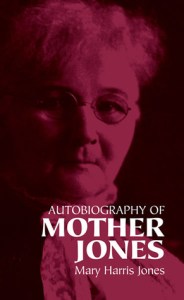
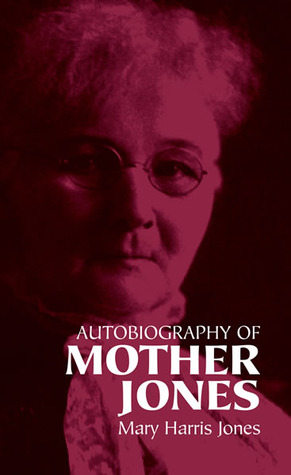
The Autobiography of Mother Jones, by Mary Harris Jones, Mary Field Parton (ed), Clarence Darrow (intro) *****

autobiomotherjonesMother Jones has been called “the most dangerous woman in America”. Some refer to her as an anarchist, but in her autobiography, she denounces anarchism, though allows that these folks have their hearts in the right place. She has been called a syndicalist (which is probably closer to the truth), but the fact is that she was motivated by what she saw right there on the ground in front of her. When the Russian Revolution unfolded, she was by her own account past 90, and by the account of another biographer, in her mid-80’s, so either way, she was very, very elderly, yet she championed its achievement at the Pan-American labor conference held in Mexico:

“…a new day, a day when workers of the world would know no other boundaries than those between the exploiter and the exploited. Soviet Russia, I said, had dared to challenge the old order, had handed the earth over to those who toiled upon it, and the capitalists were quaking in their scab-made shoes.”

Jones’ career as a political organizer began shortly after she turned 30. She was a married woman, her husband an iron worker, and she stayed home with their four small children. “Yellow fever” (which I think is malaria) came and killed her whole family, and then as if that wasn’t enough, the great Chicago fire swept away her home and all her possessions.

Some would have turned to suicide. Some would have gone looking for an elderly widower to marry. Some would have gone off to find distant relatives and live with them as little more than domestic servants.

Jones reinvented herself and gave the next fifty-plus years of her life to making the world a better place.

Still clad in a widow’s black garments, she put her hair up in a chaste bun and left Mary Harris Jones behind. From this time forward, she would be “Mother Jones”. Think of it! The cinders from the American Civil War were barely cold, and women had no position in American political life, including the labor unions. Yet by becoming a mother to workers everywhere, including the women and small children laboring in mines and textile mills, she became a force to be reckoned with. It was a brilliant piece of theater, entirely sincere in its intention and in many cases successful. She was one of the most ardent champions of the 8 hour day:

“The person who believed in an eight-hour working day was an enemy of his country,a traitor, an anarchist…Feeling was bitter. The city [Chicago] was divided into two angry camps. The working people on one side–hungry, cold, jobless, fighting gunmen and policemen with their bare hands. On the other side the employers, knowing neither hunger or cold, supported by the newspapers, by the police, by all the power of the great state itself.”

When Mother speaks, people feel they should listen, and if she speaks in their better interests, they listen harder. And in the early days, at least, the boss’s goons and the local law thought twice about putting a hand on Mother. It wasn’t nice!

Later, as her impact on their wallets hardened their resolve, they would deal with her less gently. She didn’t care. She spent nights in jail when she could have left town instead. Sometimes she traveled into a coal mining enclave where every bit of property besides the public roads was owned by the mine owners. Even homes that had been rented to miners were closed to her, as was made clear enough to break almost anyone’s heart. She describes a mining family that held a union meeting at which she was present in the coal fields of Arnot, Pennsylvania. The following day the company fires and evicts the family, and “they gathered up all their earthly belongings, which weren’t much…and the sight of that wagon with the holy pictures and the sticks of furniture and the children” made the local miners so angry that they decided to strike and refuse to go back to work till their union was recognized.

The quote most well known that shows up on tee shirts, posters, and coffee mugs among the liberal and radical milieu today is knocked clean out of context, in my view. “Pray for the dead and fight like hell for the living” was delivered in order to get working men out of the local church, where the priest was trying to cool down the heat and persuade the coal miners to wait for a reward in heaven. “Your organization is not a praying institution,” she reminded them, “It’s a fighting institution!” She tells them to leave the church and meet in the local school, which their own tax dollars had bought. And she later tells other miners that striking is done to provide “a little bit of heaven before you die.”

From Chicago to the coal fields of West Virginia, from New Mexico to Pennsylvania, she was found among railroad men and their families, machinists, textile workers, and above all, miners. She had no use at all for union officialdom, and though she occasionally praised a senator or governor who saw the light of day and called off the hounds of vengeance so that unions could be organized and the workers represented, more often than not she saw them as perfidious and untrustworthy.

When Eugene Debs became a candidate for U.S. president, she embraced his campaign, though she stayed among the workers, which I think was the correct thing to do. But when Debs comes to speak to coal miners and the union officialdom wants to meet his train quietly with a few representatives, Jones proposes all the union members go to greet him. They stampede down to the train, leap over the railings, and lift Debs onto their shoulders, she says, shouting, “Debs is here! Debs is here!”

I could have been finished with this slender volume quite quickly if I hadn’t been making notes (most of which, as usual, I cannot fit into my review, but then I should leave you some choice tidbits to find for yourself, and there are still many of them!) The chapters are brief, and so the book can be read just a few minutes at a time. And the introduction is written by one no less auspicious than Clarence Darrow himself.

You may look at the price and wonder whether you should pay that price for this slender little volume. The answer is, oh hell yes. Please remember that the words of the woman herself are worth twice as many from some armchair hack who wants to pick it apart and wonder whether she was really 83 or 85 at such-and-such moment? Spare yourself the blather and go straight to the primary source. It’s worth double the cover price!

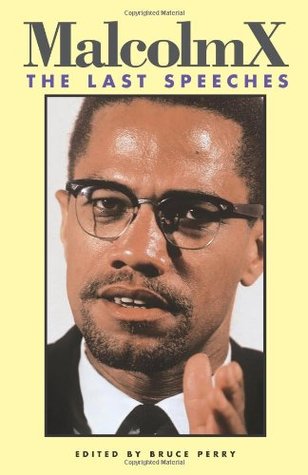
Malcolm X: The Last Speeches by Malcolm X, Bruce Perry (ed.) *****

malcolmxlastspeechesIf you read The Autobiography of Malcolm X, the most widely-read of the books about Malcolm, you will get an idea of the general development of his self-education in prison, and of his attraction to, and eventual prominence in, the Nation of Islam. This volume, in contrast, shows the speeches he made when he broke with the Nation of Islam and decided that the struggle for racial equality was tied to class struggles, and that this meant that people who were not Black could still be part of the fight that he believed was necessary. It shows his attraction to socialist ideas, and these are speeches that were not published until recently, when his widow found them buried amongst a lot of other things in storage, and called the publisher she wanted to distribute these ideas.

For example, for awhile there were posters and tee shirts available for sale showing Malcolm X and Dr. King standing together. The implication inherent in overemphasizing this photograph is that the two were comrades and brothers in struggle. I can’t believe the number of young people I taught believed that Malcolm “wanted peace”. Whereas this is true in the long run, it isn’t what he talked about. When middle class Caucasians were interviewed on TV and they pontificated that it was important for those Black demonstrators walking across the South, being confronted with tear gas, firehoses, police dogs, and arrest, to remain nonviolent, Malcolm responded, “I will be nonviolent when the White man is nonviolent.” In contrast to the ideas of Dr. King, Malcolm was ready to fight for his rights. It was in the last year of his life that he realized that the material interests of the entire working class dovetailed, and he targeted the ruling rich as his oppressors, (correctly so in my view), rather than blaming all members of any ethnicity or race. This was an enormous change from the belief system he had espoused while he was with the Nation of Islam. These speeches serve as the clearest documentation of this change.

These speeches are important, though their context was quite different from today’s, because they break up the myth that mainstream media and US government sources have built up surrounding Malcolm X.  If you can’t stamp out someone’s speeches and memory, what do you do instead? You co-opt them, sanitize them, find a way to make more in tune with what you wish they’d been. And that’s what has been done to Malcolm X’s legacy, by and large.

For those who are seeing a big difference between his earlier speeches and the ones published here, it is not hypocrisy, it is development. It takes a lot of integrity for someone who is famous and controversial to admit he has been in error, and explain what his new viewpoint is, and why he has changed his way of thinking. If you don’t read this book, you will not know the whole evolution of the ideas and political program embraced by Malcolm X over the span of his life.

All of this has more relevance than ever now that we are in the midst of a second, perhaps even more vital civil rights movement. Malcolm’s philosophy and political perspective should be widely read. He’s been gone for a long time, but nothing can kill his ideas, and we need them now.

King Leopold’s Ghost: A Story of Greed, Terror and Heroism in Colonial Africa, by Adam Hochchild *****

Just as Europeans once looked upon the Americas as land that was unclaimed and waiting to be discovered, explored, and claimed by Caucasian Christian civilizations, so too was Africa, referred to as “The Dark Continent”, ripe for exploitation when the Europeans arrived.

Initially, through their own caste system, tribal chiefs were absolutely delighted to trade away the Africans they themselves kept in bondage for the wonderful new munitions, cloth, and other goods that were offered. But their satisfaction turned to horror when they learned that where Black folks are concerned, Europeans just don’t play by the rules. King Affonso of the Congo sat down and wrote a letter to the ruler of Portugal, explaining that he had sent his son to Europe to attend school, and he was never heard from again. Now he has learned that his own family members were being rounded up by slave traders! There must surely be some sort of mistake.

African missionary, explorer, and British emissary Dr. David Livingstone traveled to Africa and was the first known (at the time) European to cross Africa from coast to coast. He returned to England to be feted and celebrated, and then plunged back into Africa…and stayed there. He was happy. Why go home?

Henry Morton Stanley was a journalist of uncertain origins (see the book) who went in search of Livingstone and found him, uttering the famous quote, “Dr. Livingstone, I presume?”

Meanwhile, a royal in Belgium grew restless. Leopold had delusions of grandeur, and why not? If France, England, and Spain could enjoy colonialism, why not Belgium as well? Leopold thirsted for power. He wanted to become a king. As African territory was snapped up piecemeal, he leapt in and grabbed a slice through the middle, in what would for a time be known as the “Belgian Congo”.

By now, slavery had been declared illegal in Britain, and so Leopold strode in to civilize and Christianize dark-skinned people whom he was certain could not do so for themselves. A great road was built there…and it went straight in from the ocean, and straight back out again. Leopold had learned of the ivory to be obtained through the wholesale slaughter of elephants. He offered prizes to locals who brought these forward, and assured them they would be protected from the aggression of any other European powers. What a deal. Leopold sponsored Stanley and gave him the royal seal of approval when he went in to further explore the area. In the end, Leopold claimed all of the Congo, an area, says the author, the size of the United States east of the Mississippi River. Many different tribes and cultures, some peaceful, some not, were brought under his ruthless leadership.

Leopold himself was almost a perfect villain, obsessed with power and obnoxious even to other Europeans of his time and station. When Prince Albert visited the new palace Leopold was having built, he believed he was complimenting the man when he said it would be like “a little Versailles”. Leopold took offense instead. “Little?”

But as amusing as anecdotes like this one are, the brutal fact is that tens of millions of Africans were killed under European colonialism. When Belgium was more or less forced to grant sovereignty to the people of the Congo, he sabotaged the new government of Patrice Lumumba, a popularly elected leader, by refusing to let go of the mines where the remaining mineral riches of the nation were located. The United States helped him crucify this man and was party to the manipulation of tribal rivals. Wholesale slaughter of unimaginable cruelty ensued. Multinational corporations were “also in on the take”.

Though this is a painstakingly written and riveting account, and the research undeniably fastidious, well documented, and scholarly, I would differ with the lame conclusions drawn at the end, namely that the United Nations should have sent in a peacekeeping force during the transition. Who is in the United Nations? Britain and the US, for starters? What a pitiful conclusion to an otherwise brilliant book. I know that if Malcolm X were here, he’d say this was “like leaving the fox to guard the hen house.” For this reason, I considered giving four stars. It’s just too well done otherwise to deny it all five, with this caveat: those final two pages of conclusions should cause any reader who makes it this far down in my review to understand I really mean, four and a half stars.

I say the only way the Congo or any other African nation can rule itself is for colonial powers to get out. Go home. There is nothing there that they own anymore; it’s over. Africans can rule Africa, as long as colonialists let go of the entire pie.

All Standing: The Remarkable Story of the Jeanie Johnson, the Legendary Irish Famine Ship, by Kathryn Miles *****

The Irish potato famine is at its worst. Blight kills all of the potatoes–my god, even the ones that had been harvested and stored away in root cellars where the families thought they could access them!–and the potato was nearly the only crop that the Irish had. Millions depended on charity (nearly nonexistent) or the government, and unspeakable numbers died, while the grain that had grown was shipped abroad as an export for sale. Local farmers who had a surviving patch of turnips or even a single cabbage had to post a guard overnight, or someone else would steal it. Unfathomable.

I was sent a free copy of All Standing as part of the Goodreads First Reads program. My gratitude goes to Goodreads and the publisher for the book, and to Miles for ferreting out the facts to tell this story properly. Research is such tedious work, and here she has done so much to tell an important story.

The first seventy pages of this story are bleak, miserable, horrible, terrible. Miles does not let us go gently. The documentation is well done, and the statistics and examples lend a special sort of dread to that which was macabre to start with. There is no way to Disney-fy a story like the famine and still have it be real history. And those who buy a place on the “coffin ships” for the small chance that they may survive the trip to the new world die in droves, primarily of typhus, though a small number are fortunate and survive.

An innovative ship builder, an experienced and humane captain, and a doctor who was ahead of his time combined to make the Jeanie Johnston exceptional. It is for this part of the story, as well as the righteous anger that serves as the transition from utter misery to success, that those who love Ireland, history, or better still, both should read this book. It is a beacon that is welcome in times such as ours, one that reminds us that one person, or two, or three who have the courage of their convictions really can make a difference to others.

The Accident, by Chris Pavone *****

Chris Pavone takes off like a rocket with The Accident, and he doesn’t slow the pace down or allow the reader to even breathe until the last page has been turned. Absolutely riveting!

I was so excited about this compelling novel that I nearly forgot to acknowledge my receipt of it via the Goodreads.com First Reads program. And what a read! The story,which centers around what may or may not be a rogue CIA agent and the publishing industry, struck me as highly original. They say you should write what you know, and he has (clearly) had two long decades in the latter. I laughed at the reference to a speed reading course; I took one myself as a college prep class almost forty years ago, and have not been able to slow my reading since. But this insider’s peek at the publishing industry made me really glad that I can pick and choose what to read and review, rather than having endless galleys thrust upon me to absorb my personal time.

Setting and character are done in a way that allows the reader to peek from behind the character’s eyes and take everything in, or zoom in on the character from outside, and the action does not slow a bit, but is rather enhanced by the detail.

Short version: get it. Read it. Do it now!

A Blaze of Glory, by Jeff Shaara *****

ablazeofgloryI am a longstanding fan of Jeff Shaara’s. I see occasional criticism of his work that sometimes approaches hysteria, and frankly, I don’t get it. Like his Pulitzer-winning father before him, Shaara uses a combination of extensive knowledge of the war; a fertile imagination; and considerable writing skill to turn America’s most pivotal war into stories. Story, in turn, is a tremendously effective vehicle for teaching about history.

At this point, I should mention that I got my copy courtesy of the Goodreads First Reads program; my thanks go to the publisher. This copy will hold a place of pride in my personal library, alongside the other books of Shaara’s that were given me as gifts or purchased outright for full jacket price. Is it worth full price? I say yes, with this qualification. It’s worth it if you have a serious interest in the American Civil War, and if you are open to reading historical fiction. It’s so named because any time one takes the known facts and adds dialogue, or inner dialogue, presuming to know the thoughts of historical characters, then of course part of it is made up. If you can’t live with that, either stick to nonfiction or go away.

Interest in the Civil War is key here because nobody can turn the battle of Shiloh into a fun read. It isn’t a fun subject. It was tragic. So if you want a fluffy beach read, this book isn’t that.

I was somewhat surprised to note that my own Goodreads shelves had listed this book as read by me, and the rating as 4 stars. I think it may have been an error, because I usually write a review, even if the book wasn’t free to me. However, another possibility exists: if I read it on the e-reader I owned when this book was first published in 2012, a reader now moribund so I can’t go in and check, it might have negatively influenced my perspective. Don’t read this book on your e-reader! You need to be able to see the maps, which are pivotal to understanding the action as Shaara describes it. If you didn’t need it, the author and publishers would not have devoted the space to it. I flipped back a few times to give those maps a second and third glance as I was reading. I do love my (new) e-reader and I use it a lot, but when possible, I read military history and historical fiction on paper. It’s more effective.

When I taught American history, I always kept some of Shaara’s other work on my classroom shelves. Fiction is often more accessible to students who have come to believe that history is a meaningless list of names, places, and dates. When story is used, the reader comes to understand that what took place involved real human beings and sometimes, they even recognize that their lives today might be different from what they are if things had unfolded differently back then. And had I not read Michael Shaara’s The Killer Angels, I might not have decided to read The Battle Cry of Freedom, the Pulitzer winning nonfiction tome by McPherson. I found this was also true of my students, that fiction was often a necessary conduit that made them more willing to read nonfiction on the same topic. And once that bridge is crossed, it doesn’t matter that there was no actual soldier named Bauer who did the things Jeff Shaara’s foot soldier did.

This brings me to the last thing I want to say about this well researched, carefully crafted book. Is a writer of strong historical fiction bound to include only real players in the story he reels out before us? Of course not. It’s fiction; he can write anything he wants to.

Well then, if he invents a character and gives him as much breath and life as the others, who were real, is his writing unworthy of our time and attention? I stand by the writer in this case. There were so many fresh-faced young soldiers out there who won no permanent place in our nation’s history. The working class, the lowest on the totem pole, are often disenfranchised by the fact that their history goes unwritten. For Shaara to create a single character to show that these men are not forgotten is gutsy and laudable. While leadership was critical to winning the war, it’s very important not to forget all those unknown boys and men who marched, slept in the rain and the mud, and sometimes died of dysentery before the next day’s march began. Others can say what they wish, but I really appreciate what Shaara has done in helping us remember the common soldier.

The more good historical fiction I read, the more I am inspired to read more of McPherson, Sears, and Catton. The Shaaras inspired me to read the memoirs of Grant and Sherman; I have a biography of Stonewall Jackson as my next-in-line galley. But the more I read of these masters of nonfiction, the more credible Shaara’s work looks to me.

Again, is this worth your bookstore dollars, or is it something only to be read free or cheap? If you have a strong interest in both historical fiction and the battle of Shiloh, there’s nothing better. Buy the book and read it; if you have to pay the full cover price, do it. It’s a worthwhile investment, and maybe some young person in your life will be inspired to borrow it. What could be more important?

Holy War, by Mike Bond *****

holywarThat was the best horrible story I ever read. Holy War is set in Lebanon during the civil war. There are three protagonists whose stories and points of view interweave throughout this complex, highly literate novel. The plot centers on these individuals, each with one or more relationships whose ruin runs parallel to the destruction and chaos of Lebanon by various opposing forces (with the author’s emphasis on the religious disparity as opposed to the political differences, and indeed it’s a pretty fine distinction to make in this case). I requested the book from Net Galley because I haven’t read anything set in Lebanon. I am aware of the tendency of US citizens to focus over-much on our own enormous nation, and since I haven’t had the opportunity to travel beyond North America physically, I make a point to read contemporary novels set in other places. In this case, it paid off. I learned a good deal. I had never regarded Beirut as having once been a thriving cosmopolitan city; all I’d ever heard on the daily news in past years was “war-torn”. I live in a city that’s so scenic it’s nearly magical, and I am hard to impress when I travel. I have never thought of Beirut as having been lovely, but the writer describes it as breathtakingly beautiful, and the descriptions that he inserts into the story, without breaking stride in his pacing, convince me that it is much more than just some arid chunk of rock and sand. Bond makes the reader want to weep for Lebanon, and for the characters whose lives are coming undone as they attempt to do the right thing; this is considered different, naturally, by each of the protagonists. During the first third of the book, I was distracted by trying to figure out the writer’s political line. He doesn’t really have one, though, apart from the wish that this beleaguered place might have peace. I also initially wondered why all the sex and relationship material was jammed into what is otherwise essentially a thriller; then I began to see the parallels (although I could really, really live without ever seeing the “c” word applied to women’s anatomy ever again). In the end, inevitably, the protagonists find themselves in the same place together after having missed each other by mere inches at times throughout the story line. I won’t tell you how that plays out; you’ll have to see it for yourself. By the story’s end, though, each of the main characters seemed so utterly lost and hopeless to me that I found myself rooting for the dog, which was supposed to be peripheral. I engaged enough with Bond’s novel that I had to go look at a world map (and happily, we have one on the wall in our hallway) to see where exactly Lebanon is located. As it happens, Israel is smack in the center between Lebanon and Palestine; hence the struggle of the Lebanese Palestinians. I also found myself wondering why Britain (one protagonist‘s homeland) and France (another’s) feel they have any right to determine what happens here. There is no American protagonist, and yet I know the USA hasn’t exactly kept its hands off or its voice silent, either. But Lebanon is a tiny, tiny place, dwarfed by Syria, and practically a fly on the wall in contrast to Saudi Arabia. So why are all the big dogs interested in this tiny place? Are the Americans looking for a military base to replace the one they lost in Iran when Reza Pahlavi was chased away by the Iranian people? Or is there money involved? (At one place fairly early in Bond’s plot, a character says that wherever there is a war, profit is driving it, and I agree.) A trip to Wikipedia tells me that there’s oil in the Mediterranean. Hypothetically, then, the whole thing should be left to the countries that border the Mediterranean, but it would be naïve to believe it could shake out that way. And just as the great cedar forests of Lebanon have been razed for the betterment of Europe, one wonders just what shape the Mediterranean will be in once the next great oil disaster occurs there. Of course, you can read this book without examining all of those questions. It’s a fine read right on the surface level, but you’ll need a strong literacy level and full attention for it, regardless. This is not a beach read. It’s serious stuff. For those who enjoy a good thriller or have an interest in Beirut, you should get this book as soon as you can.

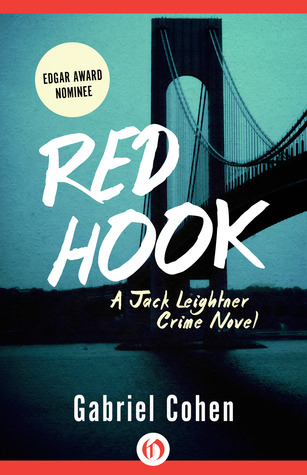
Red Hook, by Gabriel Cohen *****

redhookI am generally a six-book-at-a-time reader. I have different books in different rooms; books on my e-reader, paperbacks, and hard covers. Red Hook is one of those unusual books, though, that has kept me from my other reading. Once Net Galley gifted me with a free copy, the story picked me up by the front of my shirt and kept me reading, even when the normal demands of daily living beckoned. So you say it was nominated for the Edgar Award? Why am I not surprised?

No, there are no ghosties or hobgoblins or other supernatural things that go bump in the night, but the story packs enough goose pimples in the plot alone to make it an October-worthy read.

The story is police procedural in format, and bounces between two points of view, that of the protagonist, a New York City cop named Jack, and his son Ben, who lives close by, but with whom he has a remote relationship. Jack’s fear of losing control of himself stands in the way of his capacity to develop and maintain close relationships; to say more would be a spoiler.

Son Ben, now (barely) grown and 23, is a documentary film maker, and is interested in producing a documentary on Red Hook, the Brooklyn neighborhood in which his father grew up. Jack, on the other hand, has too many ghosts that await him there, and he avoids the place like the plague. And from there, the story builds to a place that may keep you awake long into the night.

Cohen does masterful work at developing character, plot, and pacing, and setting, while not quite as deft, is still stronger than most writers. This is a must-read for anyone who enjoys police procedurals. I look forward to reading the rest of his work.