Kudos to Hallett for a comprehensive yet concise history of the heroes who remain misty and unseen at the edges of the battlefields, military nurses of the first world war. She has tried to interview or access material about nurses from every single nation that participated on the Allied side, and it turns out that is a lot more countries than I had realized. Though she was limited by the fact that she does not speak many different languages and could not always get interpreters, she has done a remarkably solid job. Thank you to Oxford University Press and Net Galley for the chance to read it prior to its mid-October publication.
Hallett traces the evolution of the military nursing protocol, from hauling endless wounded from the faraway fields (prior to the development of the trench system) and treating those who survived the ungentle trip across rough roads in wagons, then later trains; to the mobile systems that went closer to the battlefield—different systems used in Western Europe than those used by Russia and much of Eastern Europe, Africa, Australia and North America—and she notes the awareness of germs and need to flush the wounds before the development of penicillin. My back ached for the heroic nurses—both those professionally trained, known as “sisters” though they were not nuns—to the women from elite classes who decided it was time to man up and leave their gentrified hothouse environments and travel to places where they could do some good, to the military interns that later joined some of them. Initially they were treating patients who lay on the floor. In one situation, there were 8 nurses for 600 patients. Some nurses had to run when the enemy advanced, and others were captured.
She speaks about the term “shell shock” catching on, but how suspicious the British public seemed to be of soldiers who were sick, especially mentally ill, as opposed to those who came away without limbs or other visible injuries.
She described frostbitten toes actually falling off in trenches! I knew amputations often had to happen, but falling off? This was news to me. A shudder ran through me. And it happened again when she described the arcing of the Tetanus-ridden soldier’s body as every muscle seized. The horror!
I was outraged to hear that hospital trains and ships were fired upon by the enemy. In one such case, when the Turks fired across the bow, it was commented by someone in command that the enemy could have sunk the ship, but just wanted to remind the hospital ship to act like a hospital ship. This made me wonder whether any of the Allied forces were so unrestrained as to use hospital conveyance as a means to smuggle armaments, as was the case during the second world war when cruise ships and merchant marines smuggled armaments in their hold; but this is a digression and so of course, Hallett does not go there. But the fact that I read all this information and came away with new questions speaks to how informative and engaging Hallett’s work is.
If you have an interest in nursing history, military history, or a combination of the two, this is sure to answer your questions. I confess I would have liked more of a story-like quality to the prose, like a narrative nonfiction, but that is just a picky detail. Hallett’s research is meticulous—check the endnotes that comprise about 25% of the text; everything she gives us is fastidiously documented, and she has gone to so many sources that the ordinary reader could never access, the hallmark of worthwhile historical research.
Both the researcher and the humble blogger greatly appreciate the summaries included at the end of each chapter, which largely relieved me of the need to flag pages. This is especially useful given the lack of filler in this work. Every page was essential, and so I was flagging almost everything till I came to the summaries.
Strong work and well done, in short.
Every one of the Allied nations of World War I should award Hallett a medal of her own.
Within the genre of the cozy mystery, this long-running series by Alexander McCall Smith reigns supreme. The magic is as much due to the cast of engaging secondary characters as it is to Precious Ramotswe herself. The Handsome Man’s DeLuxe Cafe is no exception. It comes out October 28; thanks to the publisher and edelweiss books for the chance to read and review it.
On the very first page, Mr. JLB Matekoni entered and I smiled. I don’t mean inwardly; I mean my face broadened into the kind of contented crease that lowers our blood pressure and would, were we cats and not people, cause us to purr. I snuggled deeper into my blankets and got ready for a splendid evening. And another. And another.
Smith creates each new entry in his series by either adding a new setting to Gabarone, where our protagonist lives and works, or by bringing in new people, and often, as here, he does both. And often he sets up two different problems, one a professional challenge for the #1 Ladies Detective Agency, and another a personal crisis for someone among the regular cast of characters. Sometimes the two dovetail neatly at the end, but he doesn’t do this all the time, lest the result become formulaic and lose its magic. And in this instance, having become momentarily guarded by a silly story that was a little over the top rather than charming (the lion story), I was therefore watching to see whether the problem regarding Mma Makutsi’s cafe would be resolved within the amnesia-client’s family.
But our writer didn’t do that. And this is why the series is so successful.
One more skillful and enjoyable protocol of Smith’s is that he introduces recurring characters very briefly, and it never jars the faithful reader who has gone through the entire series into wanting to say, “Oh, come on, come on, I know this already.” Rather, he injects it naturally into the narrative so that the familiar reader will nod happily and think, ‘Oh yes, I do remember. So dear Mma Potokwane is still at it, isn’t she? And it’s true. She does have a remarkable work ethic.’
Violet is in danger of becoming too great a stereotypic anti-hero, but it hasn’t happened yet. The author could just choose to drop her, but his habit is to continually point to the common humanity of all, and it wouldn’t surprise me if Violet were to have perhaps just one decent moment before being returned to her regular place as the exception-to-basic-goodness-among-us-all. But that is conjecture.
I read 6 to 8 books at a go, and yet, having quickly absorbed this delightful mystery, I am already anticipating the next in the series. This, ultimately, is the mark of entertaining literature.
My thanks to edelweiss review copies for the opportunity to advance-read and review this delightful story.
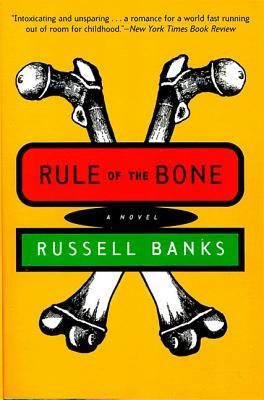
Books by Banks never disappoint. His writing is as harsh and beautiful as a New England winter. Rule of the Bone speaks with a social conscience that cannot be ignored or denied. The voice he uses carries credibility and authority characteristic of the seasoned master of fiction the writer has become.
This story is told in the first person. The protagonist is what those of us who work with poor kids refer to as a “throw-away”, those who don’t run away from home but are simply not welcome there anymore at an early age. Often, as is the case with the fourteen year old boy who renames himself Bone, it is a step-parent who in one way or another initiates the departure of a child who is far too young to make his own way in the world, and the birth parent who is passive and therefore complicit. Without job skills, social or interviewing skills, or any knowledge of how the social welfare system works apart from the fact that it doesn’t, he becomes a feral child, finding indoor shelter wherever he can: hiding in a custodial closet when the mall shuts down for the night; crashing with a biker gang that is dangerous and unpredictable but who tolerate his presence most days because he can find weed for them; and in an abandoned school bus.
Twice he tries to initiate a reconciliation with his mother and stepfather; twice he is spurned. His grandmother is no better. It is appalling, but also realistic. These kids are out there, and I am glad Banks put that fact in front of us. The protagonist points out that once he has been busted and released into the custody of his parents with the stipulation that he remain with them, and once they tell him to get gone (again), his way out of jail is to avoid parents, cops, and school, because each one of them will call another one of them in an effort to pass him to someone else. And the horrible truth is that he is right.
Our unlikely hero realizes that in his quest for survival, he has never actually learned what is right and wrong. None of his parents (mother, departed father, stepfather) has demonstrated any sort of consistent moral code, and he is cast adrift not only materially, but also in terms of his emotional growth and the development of his character. He finds it in a really unlikely place.
Like nearly everything Banks writes, Rule of the Bone is deeply disturbing in places and full of loss and anger. I have struggled with this when reading other books by this writer. Disturbing books are all the more disturbing when they are so well done that we cannot look away.
To other readers who have noted this (in reference to some of the other reviews I have read), I would advise that if you can’t take it, don’t read it. There’s no law saying you have to read this writer. Particularly if you have recently dealt with loss and are tender around the edges, go find another novelist. If you need a feel-good book, there are plenty of them out there.
For myself, I resolved my conflict of wanting to read one of America’s finest novelists versus wanting to avoid the abyss of depression they often inspire, by reading multiple books at a time. I move from Banks, to a nonfiction title, to a cozy feel good title, then back to Banks. Of course, there comes a point in the plot where Rule of the Bone can’t be put down, which is one more way we know it’s excellent literature. At that point, it’s time to dive in and finish.
I’m glad I chose to return to this man’s work. The tone is bleak, and yet in this case, it also carries with it a poignant sense of hope and yearning. Highly recommended.
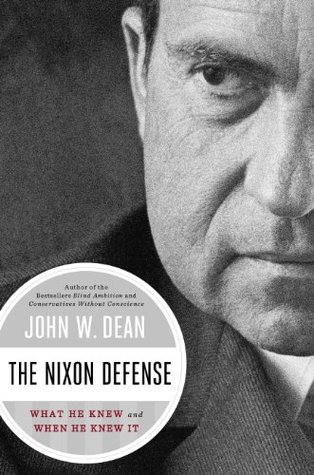
John Dean is a man with a mission, one that has lasted him most of his adult life. This comprehensive tome is the sort of documented, primary evidence that is only done by someone who’s got a large stake in setting the historical record straight. Dean is that man.
It goes to show that even though the First Amendment has become narrower in some ways, what with the NSA helping itself to all of our phone records and no reporters or photographers being permitted in war zones anymore, yet in some ways it has become much broader. If you are curious about these transcripts yourself, you can get onto the website Dean offers at the very beginning of his missive, or you can do as I did, and go to YouTube. I don’t know whether all of the transcripts are there; I wasn’t on a mission with a scope as large as Dean’s, and there were so many, many hours of taped conversation, but YouTube has so much material, some of it historical and/or arcane. But during my surf I did note that there was a lot of what would previously have been considered restricted material there. It wasn’t just the resignation and the Checkers speech; it was a tremendous amount of data. Send out your thanks to the gods of technology, which is what made Dean’s newer and more comprehensive transcription possible.
I was in high school during the Watergate scandal, and I wasn’t in Seattle then, but in a nearly 100% Caucasian,mostly affluent Republican suburb outside Portland, Oregon. My high school peers said things like, “Oh well of course he lied, but he’s still a better president than McGovern would have been”, and “Wow. Rose Mary Woods. Now there’s loyalty!”
My own father, a conservative Republican, scowled at my sister and me as we avidly viewed the presidential resignation speech. He poured himself another, another and yet another glass of bourbon and shook his head, telling us that the president was a fine man who had been viciously hounded by a liberal press. So, for those of us who lived through this American political saga, it’s about context.
For those who seek less detail than is included here or want a novel-like story arc, I would recommend “All the President’s Men”, which is a briefer and less repetitive narrative told by one of the investigative journalists who uncovered the Watergate scandal. For those who are sticklers for detail, either for academic or professional reasons or because, like me, you are addicted to Watergate material, this will be a deeply satisfying read.
To put it another way: if, like me, you had to get a copy of The Pentagon Papers and read what the US government tried to suppress, then you also ought to read this book.
At first, I thought Dean’s tone was a little too plaintive, given that he had cooperated in a cover-up himself, albeit under protest, for nearly a year. Once I got into the trial material and saw the vindictive and purposeful way Richard Nixon and those who worked for him set about to “destroy Dean”, I no longer felt that he protested too much. The machinations of Nixon’s revenge are worth a thesis unto themselves, so I will let that bit go and move on. You’ll have to read the book if you want more about Nixon’s vengeance.
What did Nixon know? I started to provide it in bullet points here, and realized it was just no fun that way. Let me say this much: Dean does answer the question. Nobody living knows more about this subject than John Dean. It has become his life’s work. If you invest yourself in 700+ pages of text, you will not come away feeling cheated, unless you skim and miss things. I didn’t.
It was not only Nixon’s self-righteous attitude when it was clear that he was legally and morally wrong that I found disturbing, but also the tone. The racist and sexist remarks that punctuate the conversations he has with his highest-level advisors cannot simply be written off as relics of that point in history. It is appalling.
What is equally appalling is that upon learning of the burglary at the Democratic headquarters, Nixon, Haldeman and Ehrlichman find no moral objection to what has been done; hell, they’ve authorized far worse things, as we later learn. No, what disturbs them is how badly the job was done, how unprofessional the burglars were. It sounds like something out of a Godfather sequel.
And it just gets worse. By the time Dean decides that Nixon cannot be redeemed and goes to the prosecutor to explain what has happened and try to gain immunity, we see Nixon vow first not to speak to him and to fire him as White House counsel; then to “destroy” him, which is ugly but can have multiple meanings, literal and figurative…and then ultimately Dean must enter a witness protection program for awhile because of the mountains of death threats that are received daily. Dean’s counsel wants to know whether Nixon would try to have him killed, and at first Dean, who did not ruffle easily, thought not. But then he mused that it was possible the president would arrange something through his pal, Bebe Rebozo.
I had heard from friends who had read more than I had that Mitchell, Haldeman and Ehrlichman were serious thugs. This transcript and the brief paraphrasing that connects its pieces (not unlike Sheehan’s Pentagon Papers) makes all of it quite real. This man was supposedly the leader of the “free world”! He used public monies to bring down retribution on his enemies (his own word), and used other people’s tax dollars to fund a remodeling and extension of his home in San Clemente. He continually revised the truth according to what was convenient for him.
At first, I wondered: did the guy have some sort of psychiatric disorder that made him unable to process clearly? But as the story unfolded, I could see exactly how well he tracked events. His temperament and loyalties were ever-changing and always in line with his own self-interest. He could not, absolutely could not bear for the burglary scandal to touch his dear friend and former law partner, John Mitchell, who headed up the Committee to Re-elect the President. Absolutely not! It was unthinkable, but only until the jig was obviously up. And when Mitchell had to be sacrificed, then Nixon just didn’t talk to him anymore. That was it, over, done. And then, everything was Mitchell’s fault; his old friend was more like a waste basket by the door. When you see a problem, toss it onto the Mitchell pile. He did it.
Then of course he had other two best friends, Haldeman and Ehrlichman, who were the only people he still trusted (and though this book is about politics, I found it interesting that the First Lady is never mentioned; he doesn’t eat dinner with her, doesn’t have her out on the presidential yacht…we hear from Tricia and Julie, his daughters, during the peak of crisis, but the guy’s wife was practically invisible).
But Haldeman and Ehrlichman should not be culpable for all the illegal things they had helped him plan and execute, and so he decided that his counsel, John Dean, should serve as the go-between, so that everything that was told to Nixon by Dean would (he thought) be covered by attorney-client privilege. And this is when Dean begins to squirm, as things that are illegal, immoral, and untenable are sent via him as the presidential filter. At first he just does what the boss says; then he starts to tentatively warn him that he’s getting into some deep water here; and eventually he is laying it on the line, and Nixon tells him that of course, those discussions never occurred, and these things never happened.
Later, when Dean realizes that he cannot work with Nixon without breaking the law, he goes to the prosecutor, hoping to avoid prison. Then, Dean is no longer the guy Nixon trusts, and in fact every bad thing anyone who ever worked for Nixon ever did, is said to have been done by Dean. It is a fascinating transformation. And the way Nixon first clings to Haldeman and Ehrlichman, and seems to actually be a little afraid to fire them, but he then is ready to lay blame at their door (while suggesting to Haldeman on the side that he can pardon him when the whole thing is over). Fascinating. It is so dreadful that I found myself tempted to add this book to my “horror” shelf.
Here’s the obvious analogy I see: when people go to the zoo, some of them want to see the giraffes, the hippos, the monkeys, and then they get their cotton candy and take the kiddies home.
But others have to visit the small dark building where the reptiles slither around.
And so it is with Nixon buffs: we cannot help but be transfixed by that which seems so sinister, so repulsive to our own humanity. We look because we can’t stand not to look. Once we look, we cannot look away.
Dean’s revenge is in having the last word about what was done during that terrible time, and in making absolutely plain what the truth is. He is painstaking in using new technology to improve the historical record. Payback is sweetest when you are absolutely correct, and if there is a theme to this publication, there it is. And now most of the ugliest players are dead and cannot come back to wreck havoc upon the living anymore. May they rot where they lie.
If like me you cannot look away, read Dean’s record of this criminal conspiracy to cover up covered up obstructed justice by the man who held more power than any other politician, and by his loyal minions. The repetition of the conversations in some ways is entirely appropriate because it shows the level of obsession, and in particular, of Nixon’s obsession with the power that his presidency provided, at least for a time, and how badly the public’s trust and resources can be misused and abused.
If you read it at night, you may want to leave the light on when you go to sleep. Nixon is dead, but you just never know who the hell is out there.
This is a bittersweet story about quirky yet ordinary characters in a little out-of-the-way place in Oklahoma. The point of view swings from one perspective to another. MollyO is protective of the cafe’s owner, a complicated man who was rendered paraplegic in Vietnam. She longs for her daughter, Brenda, a runaway, to come home and stay. Bui is living covertly in a nearby church. He comes to work at the cafe. I watched this character unfold particularly carefully. I live in an area where there are a lot of Vietnamese immigrants, and I watched for stereotyping or assumptions on the part of the writer. In the end, though, Bui rang true to me, an endearingly familiar sounding man with a really good heart. And then the list continues.
I don’t like small towns; I prefer large northern metropolitan cities. I do like to read novels featuring working class protagonists, though, and I think it was this feature, believably rendered without undue sentimentality, that worked for me. I have older family members who lived in Oklahoma before I was born, and this novel evoked a strong pull on them, a sense of place nearly tangible to them.
If four and a half stars were possible, I’d give them here. Read it if you enjoy good fiction with strongly drawn characters.
This was a real page-turner, which says a lot, given that I already knew how it would end. I read the historical fiction version by another author and was fascinated by it, but also wondered what was fact and what was invented. Macintyre take his job so seriously that 25% of the book is citations. You KNOW he’s not making this up!
A great big thank you goes to Net Galley and Crown Publishers for the free read; that said, yes, this one is worth buying. I haven’t read anything else by Macintyre, but now that I have seen what he can do, he’ll be on my to-read list!
Kim Philby is considered by many to have been the world’s greatest spy. Perhaps the phrase should be “best known spy”, since the best spies are never found out. But that’s a digression. The fact is that this British-born, upper-class…
This book has been published for awhile, but it’s worth revisiting. There’s just nothing out there like it, at least not that I have found.
For years I searched for history books that gave either the past history, or current culture, of the Pacific Islands. The population I taught had large numbers of Islander kids in it, and they would be the first to tell you, their culture and history is NOTHING like that of people called “Asian”, i.e., China, Japan, Korea…maybe a teensy bit more like Cambodia.
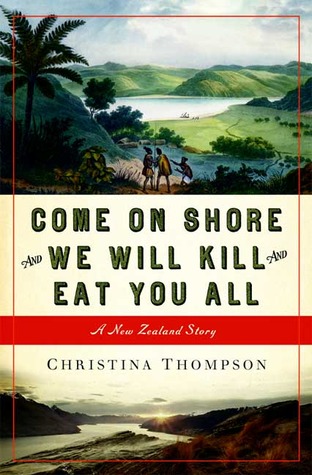
This fabulous book, listed under “anthropology” (a part of the book store I never go! Good thing I saw it reviewed and went looking for it!), gives an insightful and caring chronology from the early Maoris (an indigenous people who were insightful and suspicious enough NOT to be friendly toward the British crews who came to “claim” their islands for the crown) to the present-day life there. *spoilers from here on*
The writer stayed long enough to fall in love with, and marry, one of the citizens there, and she gained insights that many of us would not have, if we simply traveled there to write a thesis and get out again.
I encourage you to read this book (you will need a strong sense of geography and a fresh, untired mind), and draw your own conclusions
I have read every speck of fiction written by the man who calls himself GM Ford. Part of it is that he sets a good deal of his work in Seattle, and I was stunned to find him (in one or another of the Leo Waterman books) chasing a villain into my neighborhood, down my street, and when he turned and I read the description of the house in which the body was found, I thought…MY STARS! I KNOW WHICH HOUSE HE MEANS!
Okay. That won’t happen for most of you. But if you can track down the old Leo Waterman books (Ford’s earliest series), they are both riveting in their own right, and absolutely hysterical in places. I have always liked books that feature working class heroes. Some of Waterman’s friends are homeless men, and when he gets money, he takes them things. It’s sort of sweet, at the same time that the mystery is compelling, at the same time that it is, in a wry, clever way, very VERY funny!
I was heartbroken when he ended this series, and overjoyed to see him come back with Chump Change, his most recent release (see review). Consider this a generic endorsement of all of the Waterman books. His other series, with Frank Corso as protagonist, is well written, but not meant to be funny. It was good too, but ultimately, my heart belongs to Leo.
Droll, witty, and brilliantly written. If you can, get them all and read them in order!
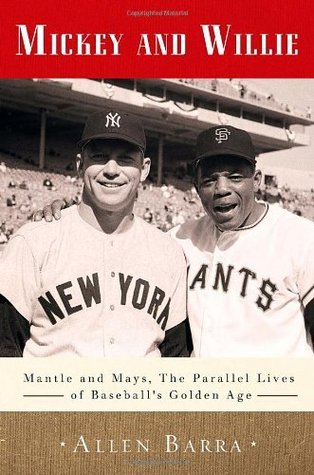
Three stars for general interest; four stars for a niche audience. If you enjoy baseball and also like biographies, this may be a winner for you. Thank you to Crown Publishing and edelweiss for the advance reader’s copy.
As for me, I found myself wishing I had read separate biographies of each of these players before tackling one that compares the two. The first third of the book was very slow going for me, because the narrative flips from one to the other frequently, and during their growing up years I found myself becoming confused…now wait a second, which one has the horse? There was so much minutiae and I had a hard time keeping track.
That said, the story has a certain elegance. I like the fact that it breaks apart stereotypes: Willie Mays grew up in the Jim Crow south, but his family was part of the Black middle class, urban folks with a degree of sophistication. Pictures of him as a youngster show a well developed, well nourished child wearing a nice suit. Mantle, on the other hand, grew up in a very poor mining community in Oklahoma. Had baseball not permitted him to escape Commerce, Oklahoma, he would likely have had to go into the mines as well.
Mantle was diagnosed early in life with osteomyelitis, and nearly had to have his leg amputated. Though he was able to save the leg and go on to run like lightning on the field, he was booed by New York fans who were convinced he had dodged the draft. His agent and manager both spread the word that he had been declared unfit to serve because of his condition, but the fans saw the man run and, in the parlance of the time, believed his sick-leg story to be a lot of hooey.
Mays tried to avoid the draft by pointing out correctly that he had eleven dependents, but they made him serve anyway. However, he was never placed in harm’s way, and spent his tenure in the armed forces playing ball for a military team. When he returned to the professional field, he was already in shape, just as if he’d been off playing winter ball for a year or so.
This middle portion of the book is very interesting and has a photograph section that can actually be seen on an e-reader, a definite bonus. I enjoyed reading about their professional lives, and since they start far away from one another and grow gradually closer until they are together, the transitions are buttery smooth.
The end portion of the book is a let-down, although since it discusses their careers and bodies in decline, it is probably inevitable; I felt it could have done with some pruning, but those who hang onto every individual statistic will enjoy the charts and comparisons.
To me, however, trying to decide which athlete is “better” is specious. Who cares? They are both legends. They both deserve to be remembered well. There is no contest, as far as I am concerned.
Seeing how they struggled financially once they could no longer play was really a sad thing, and a good reminder of why star athletes earn every penny they make. By their late 30’s they will be deemed old men, and most of their lives will still be in front of them. Not everyone can become a coach, a manager, or an announcer. There aren’t enough of those positions, and many athletes aren’t gifted as writers, speakers, or teachers. They know what to do, but it’s muscle memory, and when it’s gone, it’s gone.
Barra’s research is mostly comprised of secondary sources; he has a few brief interviews, but his perpetual insistence on badgering Mays over his abstinence from the Civil Rights struggle got him cut off time after time. Mays was a reticent person, and it struck me once again that Black athletes have put up with such double standards; nobody climbs all over a Caucasian player who simply isn’t political and prefers to keep his thoughts to himself. Yet Mays hears about it all the time, and his biographer here is as bad as any of them.
I appreciated his references to what he says are the best biographies of each man individually; those are now on my to-read list. Meanwhile, I recommend this book to die-hard baseball enthusiasts who already know a little something about Mays and Mantle individually.
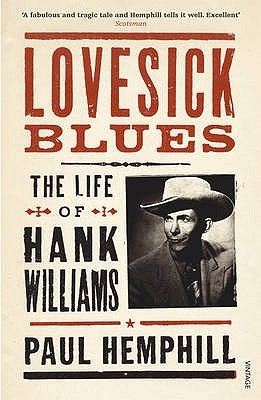
Paul Hemphill put in a lot of time and research to write this book. I am not really a true country music fan, but because country music is in part the history of the US working class, it’s an important book for me to read (and of course, I love memoirs and biographies in general).
Williams grew up during the Depression. Whereas some who would be music stars gave up a great deal for their shot at fame, Williams had nothing to lose. His father had departed, and his mother was a bully and a user who would later ask about his car, when he was dead, before inquiring about his death or the disposition of his remains. He learned that he could at least earn enough money singing and playing the guitar to earn his food and some pocket money…which would go for booze. LOTS of booze.
Before he was out of school, Hiram, whose name became “Harm” once the local accent was accounted for, had renamed himself the cooler-sounding “Hank Williams” and had jobs playing at road-houses and other local venues in Alabama. He had a small band which included the “new” steel guitar, and he had his own sound. At first he and his roadies were always safely stowed back at home by 10 PM so that he could be present at school the next day, but his genius was not a conventional one, and music meant more to him than anything the classroom of the time period could offer him. His illiteracy was in fact so complete that even after he began making a lot of money, he would trustingly empty all his pockets onto the counter at the local bank and instruct the teller that “I make it. You count it.” Before his life and career were over, he would play in concert venues all around the continental US and Europe.
Some of the places he played in initially were tough enough that chicken wire surrounded the band so that the talent would not be cold-conked by a flying beer bottle. Don Helms, his best-known steel guitarist, told the author that in some of the places that hired them, a prerequisite to playing was proving that one was armed, either with a billy club, bowie knife, shot gun, or even a broken bottle; the point was to show that no other protection was required and that the musicians could survive the night on their own.
Hank’s first wife, Audrey, who badly wanted to be his singing partner but appears, by all accounts, to have been talent-free and tin of ear, figured out that the best way for Hank to make himself known was to write (meaning create; he could not read music). In this way he became a scion of rural culture. Before his death at the tender age of 29, he had written 50 songs, and 37 of them made the Billboard charts.
As a child of the sixties and seventies myself, I did not listen to traditional country music except when bumming a ride from my father. In reading Hemphill’s biography of Williams, I was startled to find the origin of one of my dad’s favorite sayings, “…good Lord willing and the creek don’t rise.” (“Creek” is pronounced “crick”.) I was also surprised how many songs I knew that turned out to be composed by Williams.
Hemphill offers a readable narrative, enough details to make the reader feel like a fly on the wall, at least at times, in Williams’ life, and he documents everything thoroughly without slowing the tale. It’s hard to tell whether his comparisons and speculations at the end are intended to provide filler, or whether there really has raged a Hank versus Elvis debate to which I have never been privy. I also found his unflattering description of Hank, Jr. and Hank III a little abrasive.
When all is said and done, I would respond, history marches forward, whether it is political, cultural, military, technical, or musical history. Nobody sings like Hank now because it isn’t the fifties, and cowboys are no longer in vogue. Hank’s death didn’t affect the style. I think if he had survived, he would either have had to adapt or seen his career wane.
My own musical tastes have tended more in other directions, and I never bought a Hank Williams collection, but I do own one by Hank, Jr. I got onto a popular computer thread and streamed some music by each of the three Hanks. The original Hank Williams is immortalized primarily as a song-writer, but also as the first American artist to add a yodeling type of element to his style, and of course for pioneering the use of the steel guitar in country music. Tee author classifies Hank III as a head-banging punk rocker, but when I watched a streamed performance, if anything Hank III appears to have really played up the rural working man’s angle to the hilt. The original Hank spent a bundle on clothing for his performances; Hank III flaunts a battered felt hat and sings in a stylized drawl that at least to me, appears to be unmistakably country in flavor. But of course it is not the same; technology, tastes, and the world of entertainment have all changed, and nothing in this world, including the music world, will ever stand still.
The argument about whether or not Hank “could have survived Elvis” is specious. One might as well ask whether he could have survived the Beatles. They are different, and the music world has held a time and place for each. It isn’t an exclusive category.
To sum up, it’s a good biography. I was lucky to find it; apparently (and this sounds crazy), the UK published his life story before any credible source in the USA got around to it. Whether or not you read, or believe, the speculations that take up the last 10% or so of the book, it’s worth your time and your money.

 Kudos to Hallett for a comprehensive yet concise history of the heroes who remain misty and unseen at the edges of the battlefields, military nurses of the first world war. She has tried to interview or access material about nurses from every single nation that participated on the Allied side, and it turns out that is a lot more countries than I had realized. Though she was limited by the fact that she does not speak many different languages and could not always get interpreters, she has done a remarkably solid job. Thank you to Oxford University Press and Net Galley for the chance to read it prior to its mid-October publication.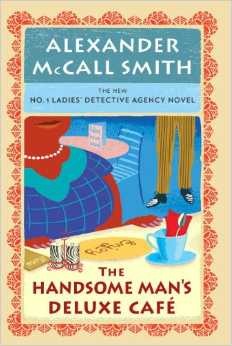


 Seattle Book Mama