Mrs. John Doe, by Tom Savage *****

mrsjohndoeTom Savage is master of the high octane, full-speed-ahead espionage thriller. Last year he gave us Penny for the Hangman, which kept me up late at night, and this year if anything he has improved upon it with Mrs. John Doe. Thank you to Net Galley and Random House-Alibi for the DRC. Now that’s I’ve finished it, I can breathe again!

Nora Baron is a widow. Her husband Jeff has been killed in the line of duty as a CIA operative in Britain. She goes to claim his corpse, get him cremated and take him home…and then all hell breaks loose, because nothing, nothing, nothing is as it seems.

Savage’s thriller style is both fast-paced and psychological. We never know who Nora can trust, and so we are constantly on edge. Sometimes it irritates me when a writer messes with my head, but the way Savage does it just makes me want to sit up and howl for more. From one friend-who-can-help (or is it a foe-who-will-turn-on-her?) to another, we are constantly cheering for Nora, advising her (good gravy, NO, don’t get in that car!), and every time we feel we have a pretty good grip on what ‘s going on and what’s going to happen next, it turns out we couldn’t be more mistaken. Savage accomplishes all this without resorting to trickily withheld information or any of the other shabby cheats and foils that lesser authors deliver. The story arc that would, in another thriller, start to pick up past the halfway mark and really accelerate at 85%, instead picks up almost from the get-go and keeps us furiously turning the pages until after the climax, when we finally wind down just enough to know what happens to our protagonist after the ride is over.

Those that read my reviews know that I can’t so much as tie my own shoelaces without looking for political content, so I also want to mention that the anti-Pakistani slurs and assumptions that all characters from the Middle East are terrorists get taken care of tidily.

Ultimately, having the woman depicted in such a positive, capable fashion is a touch that boomer-feminists like me, as well as the younger, newer wave of feminists, will appreciate. And while once in awhile something implausible slides into the text, we have to buy the premise anyway, because Savage isn’t going to pause long enough to talk about it, and we have to know what happens next. So as usual, an excellent writer can make us believe almost anything, whereas an indifferent one can’t make us bond with the everyday and the ordinary.

When this thriller comes out October 6, get a copy and hold on tight. It’s going to be one frenzied, wild ride!

Hallowed Ground: An Illustrated History of the Walk at Gettysburg, by James McPherson*****

hallowed groundHallowed Ground packs a great deal of information regarding Gettysburg, past and present, into a tight package. I own an earlier edition, and I used the photographs in it as part of my lectures when I was teaching a unit on the Civil War.

McPherson is a renowned author, winner of the Pulitzer for Battle Cry of Freedom. That volume should be the go-to book for anyone looking for a first highly literate glimpse of the American Civil War. This book is only about Gettysburg, as it is today and as it was then. McPherson has not only walked every square inch of the area involved, but also takes his students on tour there. He tells the reader what parts of the standard park guide tour script are actually incorrect, which is particularly useful for those visiting the park. In fact, this guide is primarily targeted for those planning to walk the large area encompassed, but I haven’t been there, and most likely won’t, and I never regretted the purchase of that earlier edition. If I were teaching still, or mobile enough to be able to do that tour, I’d buy this one as well.

I am delighted to be able to review the DRC for the newer edition, which contains even more digital photographs. I couldn’t see a lot of them–got a blank, gray box instead, which happens with galleys sometimes–but the quality of what I could see was excellent. Put this together with a lot of other primary sources, including battle plans, letters written by those involved at the time, and photographs that were already in the earlier edition, and it’s clear this is a volume that belongs on the shelves of every Civil War buff or instructor, as well as any other interested party.

Highly recommended.

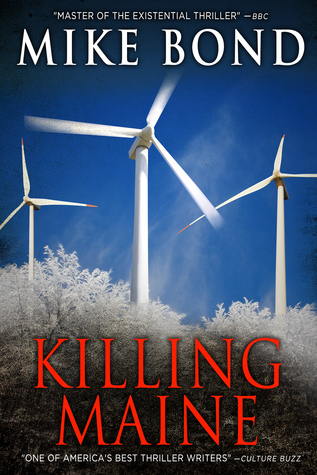
Killing Maine, by Mike Bond ***

killingmaineNote: Usually my blog is reserved for books I recommend, that merit 4 or 5 stars. Once in awhile I review a galley and find that my obligation to the author and publisher have bumped up against my blog policy. This is one of those times.

Killing Maine is a thriller, and like the one other book by this author that I’ve read, it’s a tale of grief, alienation, and grave concern regarding environmental degradation. Thank you once to Net Galley, then again to Mandevilla Press for the DRC. This novel can be purchased July 21.

The story starts out in high gear. Our protagonist, Pono Hawkins, has been called from his home in Hawaii to Maine. A man who saved his life during his years in military service has been jailed for a crime he didn’t commit. Pono has done time twice, and both times he was innocent. He’s been exonerated, and yet still has a criminal background that comes up when cops run him through the system. And as he talks about the ways in which America’s so-called justice system is broken, I hear him loud and clear.

From there, however, he takes the plot all over the place. There are three different women, and he falls madly in love with one named Abigail, but there is so little of substance about their first meeting that instead of engaging, I’m left scratching my head. Seriously?

Most of the plot, which takes wing when someone is shooting at him out in the frozen Maine hinterland, is built around the wind power industry, which is referred to here as the “Wind Mafia” and “Big Wind”. But instead of using it to move the plot forward, there is so much repetition that it seems to bog us down. He lays it on thickly enough that at the beginning I wonder what can be done about problems involving the use of wind energy and the environmental problems he tells us it creates. We have to have some form of energy other than fossil fuels, right? Coal is a bad solution. Hydroelectric power can only take us so far, especially with global warming causing some water sources to dry up, or nearly so. And so I am on board, and I am thinking about the problems with wind (politicians being corrupted by big businesses, be they wind or something else, seems like a given these days, and didn’t particularly move me), and wondering what alternatives we might have.

Bond uses the novel to address about half a dozen social and political issues—the wars in Afghanistan and Iraq; lousy medical treatment of veterans; Agent Orange and Vietnam; and of course, environmental despoliation—and for ninety percent of the book, I am in complete agreement with him on all the issues he raises. How will a reviewer that disagrees with some or all of it see this novel?

Because when we come back around to Pono, the plot has so many holes in it. Pono doesn’t like Bucky, the man he has come to rescue, and Bucky will no longer see him when he drives to the jail to visit. The local heat is starting to harass him, and if he doesn’t leave the state soon, they’re going to tell him he can’t leave. Meanwhile, he is due in Fiji in a few weeks for a tsunami; he’s been hired to do a job there. And since there doesn’t seem to be a whole lot of anything—the guy he doesn’t like that won’t see him; an old flame is one he’s decided not to rekindle—I can’t figure out why the protagonist wouldn’t just get on the plane and head for Fiji early. Surely he doesn’t genuinely believe that one man can derail the entire wind industry, along with the governor, senators, and other heavy-duty politicos, by himself and with the law hot on his trail.

Meanwhile, the writer continues to rail against “Big Wind” until I just want to throw up my hands and call it quits. And to be honest, were I not obligated to review the book, I probably would have just abandoned it at the point where the environmental concern turned into a diatribe. Enough, enough. I get it.

But I do read it, and so we continue, and there is one scene that seems real and is wonderfully done, in the midst of all of this other stuff, and that is the farewell scene between Pono and his dying father, which is poignant and moving; entirely authentic. It’s hard to see what schism makes it possible to write that scene so well and yet have so many plot problems elsewhere.

Had I still been on board at the point where he speaks about Gone With the Wind as if it is historically accurate, and paints General Sherman, one of my own greatest heroes, as a man who went in and wrecked everything, using the whole thing as a misbegotten metaphor for Maine, I think I would have stepped back a bit. If a novelist wants to be accurate with his real-world facts, then get all of them straight. But the fact is, after about the first half of the book I wasn’t really on board.

Readers of Bond’s who have grown fond of his writing style may have a good time here. For me, it seemed like a good opportunity lost.

The Fateful Lightning, by Jeff Shaara *****

Thinking today about slavery, the Civil Rights movement, and things that still need to be done. Shaara’s novel is really great, and it was recently released. So for everything our forefathers did to erase the treatment of African-Americans as chattel…and for everything that needs to be done to end the violence against people of color by cops and other governmental employees and institutions…here is a reblog. One more thing? #TakeDowntheFlag!

seattlebookmama's avatarSeattle Book Mama

thefatefullightningThose that love strong Civil War fiction have to get this book. It comes out in June, but thanks to the wonderful people at Net Galley and Random House/Ballantine Publishers, I was able to sneak a peek ahead of time. Although it is the fourth in a series, it also works really well as a stand-alone novel if you know the basic facts regarding Sherman’s siege of Atlanta and its subsequent burning. As we join him and his hardened veterans fighting under Howard and Slocum, “the two fists that Sherman intended to drive through the heart of the deep South”, they prepare to march to the sea.

I have read every one of Shaara’s novels, those about the Civil War as well as the American Revolution and US war against Mexico. I am a fan. The last in the series, The Smoke at Dawn, left me hovering between a four…

View original post 710 more words

Hard Rain, by Peter Abrahams ****

hardrainHard Rain is a nail-biter of a suspense novel, part mystery and part espionage thriller, and Peter Abrahams is a writer with credentials as long as your arm, including being Stephen King’s favorite American suspense novelist. After reading this skillfully woven tale I can see why. My thanks go to Net Galley and Open Road Integrated Media for the free galley. It was one wild ride!

Hard Rain is set in the period after Vietnam, but prior to the time when satellites revolutionized our means of communication. Our opening scenes involve a mysterious, sinister fellow named Bao Dai. His murder of a stranger for no apparent reason sets the reader on edge, and the surreal tone the writer lends is better than anything I have ever seen. In fact, the writing style and pacing are so brilliant that until I stumbled across some unexpected but fairly glaring problems in the last quarter of the book, it was headed for a five star review and a home on my favorites list. But more about that later.

Our chief problem, once the initial set up flashes past us, is that Jessie’s daughter is missing. Her ex-husband, Pat Rodney, took her for the weekend. They were going to go fishing, and then she was going to be returned to Jessie in time for a birthday party. But they never made it to the fishing boat, and there are some ominous messages on Pat’s answering machine. Kate never came home, and Jessie has no clue where she is.The cops aren’t all that concerned, seeing it as a routine custody violation that will surely be resolved on its own, but Pat has never been responsible, and has never ever wanted full custody; Jessie just doesn’t think he would snatch her. Her best friend, Barbara, is a no-holds-barred lawyer, and she’s ready to get down to business, but she is killed by a hit and run driver as she goes to cross Jessie’s street, wearing Jessie’s yellow rain slicker. That one person was the entire cavalry; now Jessie is on her own.

It just doesn’t look good.

The trail takes Jessie to Bennington College in Vermont. Pat was originally from Vermont, and she thinks he may have gone home, or at least contacted his family. And once there, all hell breaks loose. A particularly harrowing scene involves a chase scene in a subterranean tunnel beneath the dormitories.

A parallel storyline that blinks in and out has to do with an aging spy named Zyzmchuk, who is about to be sent out to pasture. Keith and Dahlin, a snappy, younger pair of more business-like spooks, plan one further adventure for “Zyz” in the hope that when it’s over, he’ll either be dead or leave quietly. These two, for some reason, made me think of Haldeman and Ehrlichman, the two sinister advisers that did President Nixon’s bidding at times, and at other times kept him on a leash to keep him from acting crazier than he already was. Maybe it’s because I am also reading Tim Weiner’s galley about the Nixon presidency. I have to say that of all the myriad characters that wink in and out of this complex, deliberately disorienting story, Keith and Dahlin are my favorites.

The imagery, with water and falling being constant themes throughout this spooky story, is among the best I have read, together with a deceptively simple sentence pattern that creates suspense in something of a house-that-Jack-built fashion. I still can’t figure out how he does it. It’s uncanny, and really absorbing.

So, even with the problems toward the end, is this creepy novel worth your time and money? Assuming you enjoy this sort of story, I have to say yes, it is. In fact, this writer won the Edgar earlier in his career, and that early title is now on my to-read list. I probably won’t find it as a galley, which means I have to hunt it down at the library, or fish around for it on my annual pilgrimage to Powell’s City of Books. So what follows was not enough to cross this writer off my A list, by any means. And now if you read further, there are going to be spoilers, so if you want to read this yourself and not know how the ending shakes out—or at least bits of it—this is the place to quit reading. And for those skimming, I will make it more obvious:

*****SPOILERS AFTER THIS POINT!!!*****

We are 75% of the way into the story. Jessie has been beaten by bad guys, and has been rescued, medical attention sought by our very own spook, Zyzmchuk. He is keeping an eye on her partly for her own good (awww), but also so that she doesn’t get in his way, because her mission interferes with part of his. He sets a guard to watch her when he has to go out, but otherwise, he sits in a chair in her hotel room there in New England, keeping watch over her. She is a sweet young thing still; he is retirement age.

And so there she is, with a nasty concussion and a number of other bad injuries, worried about her missing child, and so what would be more natural than inviting this duffer, a man as ancient as I am now, to come climb in bed with her so they can have great sex?

What the hell?

“’Shit,’ said Dahlin.
“’Fuck’, said Keith.’”

Okay, that quote belongs much earlier in the book (and more than once), but I like it here just as well, so I have taken the liberty of inserting it. Because really…what is that about? Did someone in marketing decide the book needed some gratuitous sex in order to sell properly? Go figure.

At the 85% we have to wonder whether some bad editor also cut out a chunk of story that should have been more judiciously and lightly pruned, because when Jessie sneaks out of her hotel room to try to find her daughter, she returns to find that Zyz, the guard Zyz posted while he stepped out, and all other apparent spooks and body guards have decamped. We, the readers, know that the guard in her hotel room was killed after she snuck out, but we don’t know where the hell Zyz went. And the next time we run across him, he is strolling into his office in Washington as if nothing untoward ever occurred. There is never any real explanation for this bizarre leap in the plot.

All that said, once again, I would happily read more of this author’s work. His capacity to create a frisson of chilly suspense far outweighs the Hollywood-like choice to dump the hot chick in bed with the old guy, as well as what may have been an editor’s error toward the conclusion.
*****END OF SPOILER ALERT!*****

This book will be released digitally July 28, and you can get a copy anytime you like now. What better way to spend a vacation, or even a staycation? Just stay out of the water, and definitely keep an eye on your kids. You won’t want them out of your sight while you read this story!

Stalin: New Biography of a Dictator, by Oleg Khlevniuk*****

stalinAlthough this book is published by Yale, Klehvniuk is a research fellow at the Russian national archives, and has devoted twenty years of his life to studying Stalin, the ruler that held much of Eastern Europe in an iron grasp from 1929-1953, when he died. That must be a really dark place, but he’s done a brilliant job. Many thanks go to Net Galley and Yale University Press for allowing me a free peek. This book is available for purchase right now.

The author tells us that revisionists have undertaken to rehabilitate Stalin’s reputation lately, and to attribute his various unspeakable crimes against humanity to those below him. What a thought! Many previously secret archives were opened in the early 1990s, and our researcher has been busy indeed.

He begins with a brief but well done recounting of Stalin’s childhood, which he says was grim, but not grimmer than that of most of his peers, and surely not sufficiently grim to account for the monster he would become later in life. Then he discusses the Russian Revolution, and the relationship and struggle among its leadership, most notably Lenin (of whom he has a less favorable view than my own), Trotsky, and Stalin. Lenin and Trotsky disagreed over a number of things, primarily the role of the peasantry in the new society and its government. Lenin pushed Stalin to a higher level of leadership for a brief while because he was not happy with Trotsky, who in any case was in charge of the military, a critical task all by itself at the time. However, when Lenin’s health began to fail and he realized he would have to select a successor, he turned to Trotsky. By then, unfortunately, Stalin had built himself a clique within the leadership. A struggle for control ensued. Stalin came out on top, and Trotsky was banished. In 1940, Stalin paid a henchman to go to Mexico City and kill him with an ice pick.

After Lenin’s death, government was largely by committee, and although ruthless decisions sometimes had to be made at a time when there were still Mensheviks (Social Democrats) who would turn the revolutionary achievement into a bourgeois state, no one person had the ultimate power over the lives of his comrades. Over the next few years, however, the German Revolution failed and scarce resources had to be allocated. Stalin consolidated his hold on authority and the precious resources that could not be distributed sufficiently to keep everyone under the Soviet umbrella warm and fed went first (and increasingly lavishly) to the corrupt bureaucratic caste that controlled the Soviet Union, foremost Stalin himself. After that came resources for the workers in Russian cities; and after that came everyone else. The peasantry, which had been in a state close to slavery under the Tsar, were still shut off from the benefits of the Revolution, and Stalin undertook to force them to produce food for the city while punishing and often executing those that tried to stockpile a small amount on which to sustain their own families.

Klehvniuk gives a good deal of space, and rightly so, to the Great Terror of 1937-1938, when Stalin began suspecting all sorts of people, those close to him, far away, sometimes in large groups, of conspiring against him. He had them rounded up and executed. There even came a point in his career when he was having family members rounded up and shot. Toward the end of his life it was hard to find a qualified physician to treat him, because Stalin had been having so many doctors arrested and shot.

Klehvniuk provides us with a surprisingly readable narrative. He tells the chronological story of Stalin’s rule, with the horrifying numbers of people, most of them innocent, that were slain for political and nonpolitical “crimes” during the quarter century of his rule, and he alternates it with a narrative of Stalin on his deathbed. (Because everyone was so afraid of the guy, when they found him on the floor, alive but in a humiliating position, they had to step out and take a meeting so that no one individual would bear that responsibility. Until then, he stayed on the floor right where he was.)

An intriguing question that will probably never be answered has to do with the very congested state of his arteries upon autopsy. How much of his behavior can be associated with physical causes, possibly including dementia? He was one mean old man when he died. It’s a haunting consideration.

This reviewer was already familiar with a lot of the basic facts of Russian history, and moreso with the Bolshevik Revolution, Lenin, and Trotsky. Nevertheless I think that the interested lay reader, if not overly attached to remembering the names of all of the secondary players that came and went, ought to be able to make it through this work and find it as absorbing as I did. It’s dark material, and I read other things in between sessions in order to keep my own mood from sliding. That said, I don’t think you will find a more knowledgeable writer or a more approachable biography anywhere than this one.

Whether for your own academic purposes or simply out of interest and the joy in reading a strong biography, you really aren’t likely to find a better written biography of Stalin nor a more well informed author. It went on sale May 19, so you can get a copy now. Highly recommended!

Protest at Selma: Martin Luther King, Jr. and the Voting Rights Act of 1965, by David J. Garrow *****

Reblogging because today is the day that flag should come down, on all state and federal buildings. #takeitdown

seattlebookmama's avatarSeattle Book Mama

protestatselmaThis newly released digital version of Garrow’s outstanding, comprehensive recounting and analysis of the famous Selma demonstrations carried out by Martin Luther King Junior, other civil rights leaders, along with masses of African-American civil rights activists could not be more timely. In 2013, the Voting Rights Act passed in 1965 after a lot of effort and sacrifice was gutted. The US criminal “justice” system has drawn the eyes of the world, and they aren’t friendly eyes. Thank you, and thank you once more to Net Galley and Open Road Media for making the DRC available for me to read, and for publishing this excellent book digitally for you to access also.
Please be aware that this is not a popular biography of the struggle, but a scholarly one, and will be most appreciated by those who, like your reviewer, have a strong interest in the topic, or who are doing…

View original post 1,338 more words

I Freed Myself: African-American Self-Emancipation in the Civil War Era, by David Williams *****

I’m reblogging this compelling, informative nonfiction that apparently never took off in terms of sales. Because right now is the time to acknowledge the contributions and power of African-Americans, whose voices were too often unheard before the internet provided a more democratic, accessible forum. #Takedownthatflag

seattlebookmama's avatarSeattle Book Mama

 Williams is smoking hot when it comes to the role of African-Americans in the American Civil War. The overstatement that Lincoln freed the slaves rubs many of us, and his thesis that not only did the slaves largely set themselves free, but were pivotal to the Union’s ultimate victory, is a strong one.

In Marxist organizations, there is an expression for a political over-correction. It’s called “bending the stick too far back”. The idea is that you want the stick to be straight up, but sometimes when something has been done wrong, and once the evidence piles up until the reader cannot believe that anyone was dumb enough to think otherwise, it can cause other mitigating facts to be obscured; thus, the stick is bent too far the other way. And although I really like the work Williams has done here, and am making my 4.5 rating round up…

View original post 1,049 more words

The Mysterious Disappearance of the Reluctant Book Fairy, by Elizabeth George ***

This title was released this week; I am running the review again at the publisher’s request.

seattlebookmama's avatarSeattle Book Mama

the mysteriousbookfairyJanet Shore is the book fairy, a librarian gifted with the supernatural ability to send another person into literature in a literal fashion. She sends them in to enjoy a specific episode, guesses at the time it will take for the event to unfold, and then brings them back. This 75 page long story is interesting, but was mislabeled as a mystery, which is the author’s principal genre; it’s really more a fantasy story. I was waiting for the mystery until toward the end, when I realized there really wasn’t one, apart perhaps from final moment, and even then, it isn’t a mystery to us. And where are my manners? Thank you to Net Galley and Open Road Integrated Media for allowing me a glimpse in advance. This story goes up for sale digitally June 16.
All is going well as long as Janet’s supernatural power is kept under wraps…

View original post 390 more words

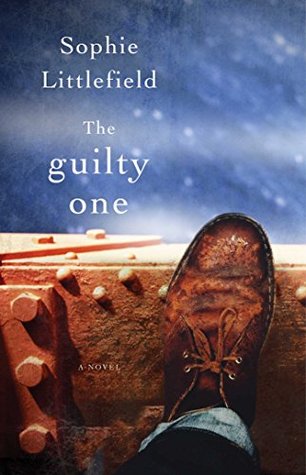
The Guilty One, by Sophie Littlefield *****

Sophie Littlefield, author of the Bad Day series (A Bad Day for Sorry, etc) has hit a new level of excellence with The Guilty One. Many thanks to Net Galley and Gallery Books for the DRC! This book goes up for sale on August 11, and if you love a good novel, this one is for you.

Our chief protagonists are Maris and Ron. Maris is Calla’s mother…or she was. Calla is dead now. The court has convicted Karl of her murder, a heartbroken, enraged loss of control over a bad teenage breakup. Ron is Karl’s father, and as we open our first setting, he is considering jumping off the Golden Gate Bridge. At the last minute he decides to phone Maris, and ask her whether to jump or not.

theguiltyoneIt shows a good deal about Ron’s character, weak and lacking in integrity, that he not only phones Karl’s victim’s mother to dump the responsibility on her, but also wears a windbreaker to the bridge because his travel guide mentions that it is cool and windy there, even in warm weather.

The last time I read Littlefield’s work, it was the Bad Day series. The first book won multiple awards and was deeply satisfying, a savvy, witty dig at domestic abuse. The same topic enters this discussion in a more oblique fashion. In her earlier series, she seemed to lose momentum as the series unfolded, and it appeared to me that she couldn’t decide whether she wanted to write a series that was mostly of the detective fiction genre, or mostly romance. Here, she has taken a giant step away from mystery and detective fiction, and this straight-up fictional story is told with grace, maturity, and authority. It’s obvious right there in the first few pages. I was reading a handful of galleys at the time, and my first note to myself was “See now, this is good writing.”

Maris has lost her marriage, and at first it appears to be a consequence of Calla’s death—so few couples can experience the death of a child and stay together—but as the story progresses, it becomes clear that a split was in the works long before this. And Maris makes a decision that resonates with me. She drops everything and everyone, more or less, and without thinking, going purely on instinct, starts over in a new place, with a greatly reduced standard of living. At first I wonder whether Maris is merely slumming, seeing how the other half lives, but deep down, I have to trust Littlefield not to do anything so shabby, and she doesn’t. Maris is the one we root for, the one that drives the plot forward and pulls us in.

Ron and Deb have stayed together as Karl has gone through the trial and been found guilty, but the strain is there. Ron starts out entirely believable and not very likeable. He never becomes the stand-up individual that Maris is, but he is a dynamic character, complicated and interesting. He undergoes a lot of change as the story progresses.

Throughout this riveting novel, there was never a moment when the veil lifted and I recalled that these characters weren’t real. I raced toward the end with a sense that I had to see how it came out, and then when it was over, I felt a sense of loss, wanting to turn another page and find Maris still there so I could check in with her, like a good friend. And that is ultimately the hallmark of great writing.

Get online. Take a bus. Get in the car. Hijack a plane—okay, maybe not—but do what you need to do in order to get a copy of this accessible, compelling new fiction. Littlefield rocks it. You can pre-order it now, so you will be able to read it right away. If you do, you too will want to stand up and cheer!