Glory Road, by Bruce Catton*****

This must-read for Civil War buffs and students is available for purchase today.

seattlebookmama's avatarSeattle Book Mama

gloryroadBruce Catton was known as a popular historian when he first published books about the American Civil War, because of his narrative nonfiction format. All of the books being released digitally now are ones previously published in a non-digital age. This reviewer hunted down Catton’s three volume Centennial History of the Civil War at a used bookstore some time back, and although they were among the best I have ever read by anyone on this topic, I was convinced that anything he had published earlier on the subject was probably repackaged in this trilogy, and so I stopped reading Catton, thinking I was done. Thank goodness Net Galley and Open Road Integrated Media posted the galley for this second volume of Catton’s Army of the Potomac trilogy. Now that I am disabused, I will have to find the first and third volumes also, because Catton is so eloquent that he…

View original post 609 more words

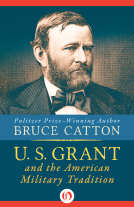
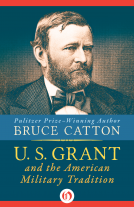
U.S. Grant and the American Military Tradition, by Bruce Catton****

This one is now available for purchase!

seattlebookmama's avatarSeattle Book Mama

usgrantandtheamericanmilThis brass-tacks biography of US Grant, who served as America’s finest Civil War general and also two terms as US president, was originally written for young adults. Now it is something of an anomaly, and yet not a bad read for the right audience. Thank you, thank you to Open Road Integrated Media and to Net Galley for providing me with the DRC. This book will be for sale in digital format November 3.

Reading this nifty little book reminded me—not entirely happily—of how much sturdier literacy in the United States stood during the 1950’s, when this biography was originally written, compared to now. True, it was a less egalitarian, less inclusive school house that could throw this level of reading at its teenagers, and that is a different debate for a different day. Right now, I just have to tell you that Catton’s boiled-down biography is going to be…

View original post 650 more words

Petty, by Warren Zanes*****

pettyOh my my, oh hell yes! If Tom Petty and the Heartbreakers is a band that lights your fire, you have to read this biography, which comes out Tuesday, November 10. You’ll be happiest if you can do it near a source of music, and the very best of all is to be near a desktop or other screen where you can view and hear the music videos as you read about their inception. Petty made it big just as I graduated from high school. By the time my first-born entered elementary school, I had a backseat full of little kids who bounced their heads along to the unquestionable rhythm of his music playing on the radio. And right about now I am supposed to tell you that I got this DRC free for an honest review, courtesy of Net Galley and Henry Holt Publishers.

Zanes has really done his homework here, interviewing Petty extensively, and also interviewing members of the band past and present, as well as other musicians (Stevie Nicks foremost among them) with whom he occasionally partnered. This was my first exposure to the Traveling Wilburys, a superstar group formed just for the sheer joy of it and consisting of George Harrison, Roy Orbison, Tom Petty, Bob Dylan, Jeff Lynne, and Jim Keltner. Well, here:

and after Orbison died, his chair was represented in the circle, with his guitar (I assume it’s his anyway):

Petty’s story is one of the ultimate success in spite of everything. Born into the kind of messed up, abusive, impoverished Southern home that America’s shot-to-hell social work system can’t even begin to repair, with a father that got along better with alligators than children and a mother who was stricken with both cancer and epilepsy, Petty was ready to get the hell away from the swampland and Florida immediately if not sooner. Petty tried school several times, but English (oh yeah, poetry right?) and art were the only courses that held any magic for him. He had one marketable skill, and unlimited ambition. As it happens, that was plenty.

If you want to read his story, this is the place to get it. Zanes has filled it with lots of vignettes, some of which are very funny. When a particular episode or situation is remembered differently by different musicians, producers and what have you, he tells what each has to say.

What you won’t find much here is his family, and that is oddly appropriate. Petty himself recognizes that when a guy is a professional musician doing the album cycle—write the songs, record the songs, make whatever changes need to get made, release the album, then go on tour to promote the album, and come back and do it all over again—family just gets left out. His first wife Jane developed some serious problems with chemical dependency and mental illness, and he experienced serious guilt over leaving their two daughters with her, but what else was there to do? Taking them on the road wouldn’t exactly be a healthy environment. Even if he quit making music, who’d pay the bills then? And so it went. So his elder daughter Adria puts in her two cents here and there, but mostly this is a story of Tom’s life as a musician. But reading about Jane’s addiction issues and then watching this video gave me chills (not great for small children, if you have them near you):

There aren’t really any slow parts to this biography; the least interesting to me were the various bands he formed or joined prior to his success as a soloist and then as the leader of the Heartbreakers.

That much said, this is the first, the VERY first time this reviewer (and all the reviews on this site are mine) has ever gone back to read a galley a second time before reviewing it, not because I didn’t get enough notes (oy, the notes!) but because it was just so much fun to follow Petty’s music and read the stories behind the songs.

If you don’t like Tom Petty, I question why you are even still reading my review. But if you’re a fan, this is a great bio to read, intimate without being tawdry or prurient, carefully researched, tightly organized. I am glad I didn’t have to edit it, because he probably had a mountain of extra information that was either cut or not included in the first place. But from anyone that loves good rock and roll, it’s uplifting and absorbing.

The ultimate holiday gift for someone close to you that loves Petty’s music would be his giant discography, the Traveling Wilburys DVD and CD, perhaps the documentary (which is on my own Christmas list), and this book. Rock and roll forever!

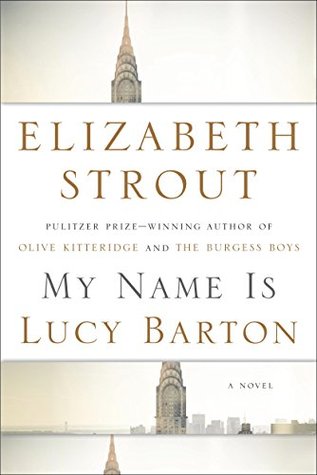
My Name is Lucy Barton, by Elizabeth Strout*****

mynameislucybartonElizabeth Strout is the Pulitzer winning author of Olive Kitteridge and The Burgess Boys. Her new novel, My Name is Lucy Barton, may be her strongest work yet. I was lucky enough to get my DRC free of charge from Random House and Net Galley in exchange for this honest review. My thanks go to both of them.

Right about here is where I often start examining various aspects of a new novel: setting, plot, character development, as well as its political undertones, if there are any, and there usually are. But this book defies that sort of compartmentalization. If you want a label for it, we could call it a fictional memoir, but that doesn’t really do it justice either. In fact the entire work is a gloriously detailed character sketch. The setting exists only to develop the character. The dialogue exists for the same purpose. Lucy Barton is developed as much by what is not said—or maybe more so—as by what is. The plot, which also exists to develop character, is fluid, apart from the fact that Lucy’s story begins in the hospital following an appendectomy and she is out by the conclusion. But in between, we bounce around to various times in the character’s life; we share her dreams, her memories, her phobias…and because Strout is part author, part magician, we just can’t put it down.

Well, that’s not completely true. I was reading the first half at night, and suddenly realized that this was not a story I wanted impacting my own dreams, so I deliberately put it aside, choosing to reread a celebrity memoir before I turned off my light. I could fall asleep with Tom Petty in my head, but I would surely have nightmares with Lucy Barton.

Lucy is so pathetically lonely that she hangs on the kind words of the doctor in the hospital, almost as if he were a surrogate father. There has been so little affection in her life.

“Lonely was the first flavor I had tasted in my life, and it was always there, hidden inside the crevices of my mouth, reminding me.”

Strout uses repetition as figurative language in a way I haven’t seen done before. I’ve seen it used many times by other writers for emphasis; I’ve seen it used in a house-that-jack-built way by a couple of really strong writers to create suspense. Strout writes in the first person, as should be clear from the title, and in this case, repetition is used to build mood; in a number of places, I get the feeling that repetition is being used to make us believe something that may not be true. She protests too much; she is repeating herself either to convince us, or to convince herself. Hell, maybe it’s both. She repeats the same thing about a character from her past so often that I am half convinced the person she speaks of is imaginary; one has to wonder.

Barton’s back-story is one of stark, terrible white rural poverty. The protagonist and her entire family lived in a rented garage; one room, freezing cold. The children in the family were so badly dressed, so badly groomed that other children would not sit next to them on the school bus, and they were whispered about at school, “equally friendless and equally scorned”.

To some extent this could be called a mother-daughter novel, because almost all of the dialogue and much of the plot consists of the shared memories between Lucy and her mother, there in the hospital. As they echo one another, there is a cadence that shows that no matter what happened while Lucy was growing up, there is closeness between the two of them; Lucy would have more if it were offered. But the conversation is a kind of almost church-like call and response, a sort that is often seen among family members in smaller snippets. Much of the conversation is just neighbor gossip, but so much more is said in the way that Lucy and her mother speak to each other.

Barton is thrilled to have her mother there, nearly cannot believe she has actually come to sit with her, and as they converse, bits and pieces tumble out, and other bits are suppressed, but our protagonist thinks about them, and so we are in on all of it. And the sense of horror builds, builds, and builds some more. Brief snapshots of horrific events blink in and back out again, juxtaposed with that which is common and normal—the terror of being locked in the truck as child, and then we are talking about Lucy’s own children going to a play date, and about Lucy’s appendix. And by giving us the briefest glimpse of the horror, and letting us know in the author’s own brilliant way that this snapshot is not the half of it, there’s oh, so much more—the effect is tremendously chilling, and at the same time, oh so human.

And ultimately, whether her mother visits her or not; whether Lucy is financially well off or stone cold broke; whether she is married or single; Lucy is alone. Her solitude is positively visceral.

This novel won’t be available until January 2016, and that’s a shame, because it’s an amazing October read. But we will take a good case of the shivers along with stellar literary fiction when we can get it, and this novel comes highly recommended. Absolutely brilliant!

The Invention of Wings, by Sue Monk Kidd*****

theinventionofwingsTwo of today’s hottest political topics have to do with equality. As we follow and sometimes participate in the Black Lives Matter movement, along with the fight to keep Planned Parenthood funded and maintain a woman’s right to own her body and say what happens to it, this elegantly crafted work of historical fiction could not, strangely enough, be more timely. The Invention of Wings is a fictional biography of Sarah and Angelina Grimke, abolitionists and feminists, the first to make screaming headlines by speaking out publicly decades before women would see the right to vote, and decades before the first shots of the American Civil War were fired. As is essential in dealing with the rights of then-enslaved African-Americans in the south, Kidd adds an additional character, a slave named Hetty, written alternately with the Sarah’s story. I say it is essential to do so; this is because it is wrong to write about the marginalization and subjugation of an entire people, and then not include a representative of that group into the plot. As usual, Kidd doesn’t disappoint.

Much as I love historical fiction, one thing that makes me a little crazy is wondering where the research ends and fiction commences. In her afterword, the author lets us know specifically what is true and what isn’t. She even gives us a brief bibliography to pursue if we feel moved to do so; the only other historical fiction writer I know of that does this is Laurence Yep, my hands-down favorite YA author. Thus, Kidd places herself in outstanding company.

The Grimke sisters were born into the elite planter class, a tiny minority among Caucasians in the South, and in the very belly of the beast: Charleston, South Carolina. Partially because of the tremendous brutality meted out to the plantation’s slaves right before her tiny eyes there at home, Sarah Grimke grew up opposed to slavery. As a much older sister, she had a formative role helping her mother raise Angelina, who also became a fierce, uncompromising abolitionist.

It is one thing to take up a cause that is small but in which one has a support base. For the Grimkes, there was nothing. Eventually both had to move north for their own safety. And although, as a history major and a feminist of the 1970’s I had read about the Grimke sisters many times, it is within the well-crafted, deeply thoughtful, well researched pages of this novel that they first came to life for me.

Hetty, the slave depicted within these pages, actually existed, but the story Kidd writes for her is entirely fictional. The real Hetty died before Sarah was grown. Still, her character felt as real to me, and was easily as well developed as either of the Grimke sisters. Hetty is not passive, not waiting to be “set” free. She understands that the only freedom she is likely to receive will be what she can do for herself. A nice touch Kidd adds is in making Hetty one of the children of Denmark Vesey, the free African-American that attempted to organize and lead a slave revolt.

Everything here is carefully constructed and absorbing. Kidd has long demonstrated formidable talent in constructing well developed characters and vivid settings; the difference here (as opposed to The Secret Life of Bees and The Mermaid’s Chair, the two others of hers I have read) is the research involved. As with everything else, she blends fact and detail into a well spun tale.

I should add here that the literacy level required to deal with this text is higher than most. Don’t toss it out there for your average middle schooler to read, because it will prove too difficult. Because of the way she builds her story, brick by brick, the pace doesn’t really pick up until about halfway into the book. This isn’t a rip-roaring page turner; it’s a series of quiet nights by the fire, or curled up on your favorite window seat, or by the side of your bed. Give it the time it deserves.
Though I got my copy from the Seattle Public Library, I consider this title worth the cover price. Highly recommended.

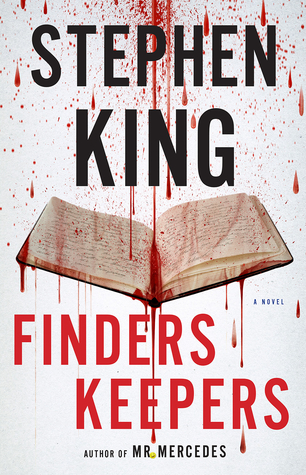
Finders Keepers, by Stephen King *****

finderskeepers“For your family, you do all that you can.”

When I read that one, simple sentence, it occurred to me that this common thread runs through a lot of Stephen King’s work, and it’s one reason he has developed such an easy simpatico with much of his readership, despite the murky waters his books bob into. It’s about our family, and about our common humanity, and the bad guys are the ones that can’t be tapped into, that violate that sacred reality.

As the book opens, we have our killer—or one of them—from Mr. Mercedes. And at this point, I have to tell you that if you haven’t read Mr. Mercedes yet, do that before you do this. (Mr. Mercedes is reviewed by me here: https://seattlebookmamablog.org/2015/04/24/mr-mercedes-by-stephen-king/.) Seriously. I’ve seen clueless-seeming individuals out there on social media wondering if it makes a difference, and oh my stars. Why, why, why.

I suppose if you are just stone flat broke and have no access to a public library, and by some stroke of luck you have a free copy of this book but cannot get the first in the series, then yes, King gives you just enough of the back story here to enable you to start midstream. But if at all possible, you really ought to read the first book first. There were so many little poignant moments—for example when Hodges thinks about Janey—that just made my insides do a back flip, and if you plunge into this story first, you’re going to miss so much of that. And in the end, you’re going to want to hunt down Mr. Mercedes and read it anyway, so why not try to do it in order?

All righty. So as our story opens, Morris, one of the murdering thieves from Mr. Mercedes, is an old man now, and he’s just getting out of prison. He’s been waiting a long, long time for this, because he has buried a whole lot of money as well as the last, hand-scribed novels of John Rothstein, a now-dead author whose work he has loved his whole life. He isn’t sure what he wants more, the money—well yeah—or oh my god, those notebooks! To read them! He knows the sensible thing to do is try to sell them, because they’re doubtless worth a small fortune, but first, just to read them. And now he’s out.

What he doesn’t know is that all those buried goodies have been found by a kid who happens to live and play in the area where Morris buried all of that. Nature has changed the contours of the woods where the trunk was interred, and a corner was revealed, just enough to make a naturally bright, curious kid want to know what it was. So that money is gone. It’s gone. In fact, it’s all gone.

The tension in this story builds a lot more slowly than most of King’s work, and at first I thought it was a sign that our author was slowing down. Au contraire, Pierre. Because really, it’s more about the pacing of the genre. When King writes his supernatural baskets o’spiders, he puts that pedal down on the floor, sometimes on the very first page, and it’s like the world’s most terrifying roller coaster until after the climax. The reader’s heart won’t stop slamming till the problem is essentially solved, at least for the moment—I’m talking about his horror novels here, not his mysteries, including this one—until that brief period at the end in which the loose ends are tied up, and the protagonists can laugh about the whole thing over coffee, or whatever.

The tension in a mystery like this one, on the other hand, is a much more gradual climb. It’s supposed to be that way. We get the tingle of dread, the near-misses, but instead of going from zero to eighty in chapter one, it’s more of a traditional hill, building, building, building. It never gets dull, but the reader will actually be able to put the book down to go make dinner, to do homework, to answer the phone. And that doesn’t make it weaker writing; it’s just a different type of story.

Once King gets to the top of that hill somewhere close to the 80% mark, we really have to stay with the book and finish it. Just finish it.

I did not read this as a galley; it was a Mother’s Day gift from one of my sons. They never miss a year, my boys, and they almost always get me one of my most coveted titles. I don’t put a lot of books on my wish list these days because I can get so many outstanding books free, but I had to have this one, and am glad my eagle-eyed son ferreted it out of my list and ordered it for me. Thanks, Benj.

Is it worth your hard-earned dollars? If you like really good mysteries and thrillers, absolutely, positively yes. BUT. You have to read Mr. Mercedes first!

Simple Dreams: A Musical Memoir, by Linda Ronstadt***-****

simpledreamsI came of age just as Ronstadt’s career exploded. I was eighteen years old, headed down a winding staircase in the administrative building at Portland State University, when I first heard the song “Blue Bayou”. I was a music major at the time myself; her haunting vocals literally stopped me in my tracks. Fortunately, no one else wanted to use the staircase just then, because I could not move until the song was over. After it ended, I accosted fellow students going about their business, saying, “Excuse me”—pointing to the speakers through which music was piped into the common areas—“but who was that?” They looked at me like I was crazy. Who was who? What? They hadn’t been paying attention to the music.

Later, of course, I learned that the song was performed by Linda Ronstadt, and right away, I knew I had to have that platter. And when I saw that Ronstadt, by now a musical icon holding the record as the only female artist to have four consecutive platinum albums, had published a memoir, I knew I had to have that too. Sadly, I had barely begun collecting galleys and reading them to review, and I missed out. Happily, the Seattle Public Library came to my rescue. I got this book there, and I rate it 3.5 stars rounded up.

I finished reading the memoir about a week ago, and was impressed in some ways, ambivalent in others. What is it about musicians and other entertainers that makes their admirers want to gobble them up, body and soul? How much of her personal life is an entertainer morally obligated to share if she is publishing a memoir and wants the public to pony up what, in these times, is often the only disposable income a retired member of the Boomer generation may have in a given month?

Here’s what I came away with. Ronstadt tells us, right there in the title, that this is not going to be a prurient, tell-all bloodletting. She is giving us the history of her musical life, and that’s what she is giving us, period. And I think the unhappy reviews I have seen from many other reviewers, together with my own strange dissatisfaction when I turned the final page, comes not from her failure to give out personal information, but from her inconsistency in doing so.

As the memoir begins, she provides abundant personal details of her early life, filled with some really funny anecdotes. We see her born into a middle class, very musical family, with her sister turning to her brother and commenting on four-year-old sibling Linda: “I think we got a soprano here.” We read about her forming “mud huaraches” in the hot desert so as to go barefoot without burning her feet, and many, many anecdotes that have nothing, nothing, nothing at all to do with music. And so we bond with her, not just as a performer, but as a person, and we develop the expectation that we will at least hear the broad contours of her personal life and maybe some more fun anecdotes as her mainly-musical memoir progresses.

Before I go any further, I also have to say that she is a strong writer; no ghosts needed here. And her keen intelligence lights the pages as she takes us down her musical pathways.

Even in the 2000’s, women in the music industry have not reached parity with male performers; Ronstadt takes us back, back, back to the days of folk rock, and to a conversation she had with Janis Joplin at a venue where they would both be performing:

“Because of the phenomenal success of artists like the Rolling Stones and Bob Dylan,
earthy funk was God, and the female performers in the folk pop genre were genuinely
confused about how to present themselves. Did we want to be nurturing, stay-at-home
earth mothers who cooked and nursed babies, or did we want to be funky mamas
at the Troubador bar, our boot heels to be wandering an independent course
just like our male counterparts? We didn’t know.”

Those with a strong interest in vocal music—not just as listeners, but as individuals who have studied the craft—will find her memoir more satisfying than those that just enjoy tapping the steering wheel while her songs fill the family car. I had already noted the problems with phrasing in her early work, and was gratified as I read the progression of her training. I was, and am still, dumbstruck by the professional risks she took. She had an established career, and yet dared to venture into areas of music where no one was making money. She had a solid country rock pedigree, yet decided to record orchestral, old-school music with Nelson Riddle. She performed in Pirates of Penzance, and you can bet she knew the finer points of musicianship by then! She released mariachi music, and it sold like crazy.

But the book’s ending feels tremendously abrupt. I respected the way she referred briefly, toward the middle of the book, to her liaison with Californian governor Jerry Brown (“keeping regular company”), and the fact that she didn’t drag us through their affair seemed appropriately modest to me; the woman isn’t a name-dropper, and her own editors had to tell her to put more musicians and fewer horses into her memoir before publishing it.

But at the end, she mentions staying at home with her two small children and we have no clue where they came from. Did she marry? Did she adopt? We don’t need all of the most intimate ends and outs of her personal relationships or her decision to become a mother, but she could toss us a paragraph or two. Even had she handled these more personal aspects of her later life as she did her relationship with Brown, with a mention here and a segue there, the entire thing would have flowed better, leaving the reader more satisfied, and less likely to feel, in some odd way, cheated.

Should you pay the full jacket price for this memoir? I guess it depends how deep your pockets are, and how much you enjoy a conversation that is, more than anything, the history of Ronstadt’s musical career, and those she knew professionally as a side bar of sorts. There was a time in my own life when I thought nothing of stopping by my favorite bookstore and coming out loaded down with bags of books. I bought anything I wanted, as long as each selection was under a particular dollar amount. Some teachers went on ski vacations or cruises, I figured; some smoked and drank, spending great sums in that manner; and as for me, all I wanted was a decadent chocolate bar and a vast trove of paperbacks. It didn’t seem so much to ask, while I was earning a professional’s salary.

These days it’s different. My pockets are a lot lighter, and I have much greater access to books I don’t have to pay for. So for me, this was a splendid library find, but I think I would have been put out if I’d spent jacket price on the memoir that sort of peters out at the end, with no satisfying resolution.

In the end, this book is recommended for those with a strong interest in the professional development of Linda Ronstadt, and of the genre of country rock. Those looking for a more personal glimpse will likely have to wait for an unauthorized biography to pop up.

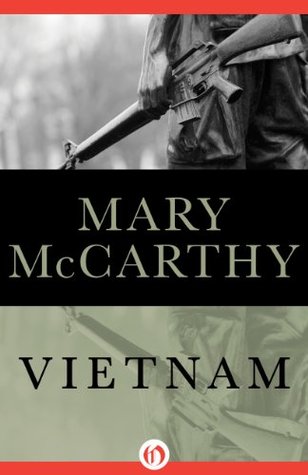
Vietnam, by Mary McCarthy***-****

VietnamVietnam , an impassioned journalistic effort by Mary McCarthy originally published during the US war against Vietnamese freedom fighters, is a once-stirring piece of research that, while worthwhile as a period piece or for specific types of historical research, is in general terms too dated to be of great interest to most readers. Instead, it speaks to the innocence and disbelief Americans with no axe to grind in Southeast Asia felt when they came to grip with the actual facts regarding the war, and how many responded after becoming enlightened.

Thank you once and twice, first to Open Road Integrated Media, and next to Net Galley, for allowing me to read the DRC in exchange for this honest review. The book is now available for purchase.

In many ways, the American mindset can be divided into two contemporary periods: one before the Vietnam War, and one after it. Before the war against working people in Vietnam commenced, Americans by and large trusted their government and believed what its political leaders said was true. As layer upon layer of lies was peeled away from the startling nugget of truth at the core of this conflict, many people—in particular, the youth of the USA and around the world—were outraged at the many ways in which they had been deceived. Most of those smooth-faced but indignant youth are now grandparents now, and most have learned never to believe something is true just because a politician—even the president of the USA—says so.

McCarthy wrote this book during the metamorphosis of the American public from the former condition to the latter.

McCarthy went to Vietnam as a member of the press, and was astonished by both what she saw, and by the things that were told her. In 1967, when this book was written, the military leaders she interviewed told her that roughly ten percent of the population, or 1.5 million people, had become refugees, “casualties of war”, because the bombing had destroyed their homes and defoliated large swaths of jungle. It was unclear to me whether they were speaking about all of Vietnam or only South Vietnam; her time there seems to have been spent entirely, or mostly, inside the city of Saigon, which had become so Americanized that there were more English-speaking Caucasians there than Vietnamese.

At times, her outrage is sufficiently scathing to take this reviewer back to that time. I was just a kid, but the white-hot rage in the streets is hard to forget, even so.

In describing her visit to Saigon, she speaks about the ways in which officers and GIs alike regarded a hospitalized child, a victim of the bombing: because they showered her with candy, dollar bills, had photographs of themselves taken with her, and brought her toys, they considered her to be a very lucky tyke indeed. They made reference to her owning more dolls than Macy’s, and one soldier said fondly, “That girl is so spoiled.”

This type of rationalization, the notion that after wounding and possibly orphaning a child with bombs that destroyed her village and left her full of shrapnel, she had become “so spoiled”, is characterized by McCarthy as “Pharisee virtue”, a phrase I found startlingly eloquent.

There are other moments when she appears a bit confused, and appears to be unconsciously using the terminology of the very military and government forces that she opposes. My own youngest child is half Asian, and when I read an expository sentence in which McCarthy referred to the local children as “slant-eyed”, I almost dropped my reader. What the hell? She refers to the Vietnamese policeman that works for the US army as a “small Vietnamese policeman”, and from context, I got the distinct impression that he was not noticeably smaller than other Vietnamese men, and that in fact his size had nothing to do with anything. If she were still alive today, I would advise the author to check her terminology, and then check her own assumptions about what “normal” looks like. It appears she was carrying around some ingrained racism that came out despite her finest intentions.

One more strange factor here was her reference to the uniforms worn by the National Liberation Front, (otherwise referred to pejoratively as the “Viet Cong”, a term she uses freely), as “black pajamas”. Did McCarthy not understand that this was an expression used by the US military which was intended to demean Vietnamese fighters by suggesting they did not know how to design a uniform? Vietnam is a very warm place, and it’s humid as hell, which is why they used lightweight cloth to make uniforms. The jungles were dark and virtually impenetrable, and this is why black was a really good choice of uniform color. Pajamas are something one sleeps in. The Vietnamese soldier didn’t get a lot of sleep, and he did not fight wearing sleeping apparel.

McCarthy is not always blind regarding the power of terminology however: she points up the fact that napalm, which had been made even more horrific in that it now adhered to things (and flesh) while burning, had been name-changed to “Incinderjell”, making it sound like a children’s dessert. Officials could publicly state that napalm was no longer in use, because now it was called something different. Likewise, defoliants were referred to as “weed killer”.

The only photographs are of the author.

For those that want to travel back to the time when Johnson was president and America’s youth were waking up to the fact that the US government did not always behave in accordance with its stated democratic ideals, this is a good work to drop into your reader. It’s very brief, and you can finish it in a weekend.

I also recommend this work to students and other researchers looking at this volatile and transformational period in American history. Since she personally went to Saigon while the war was being fought, her own experiences constitute a primary document, and in such a case, I would not rate this book a 3 star work, but rather 4 stars.

The Longest Night: A Novel, by Andria Williams***-****

thelongestnightanovelIn her debut novel, Andria Williams gives a fictionalized account of a meltdown that occurred (in real life also) in Idaho Falls, Idaho. The narrative is intimate, the characters palpable; all told, this was a strong read. Many thanks go to Random House and Net Galley for this galley, which I was given free of charge in exchange for an honest review; I rate this novel 3.5 and round it up. The book becomes available for purchase January 12, 2016. You’ll see this post again sometime nearer publication.

Those of us that lived through the 1960’s will recognize how authentically Williams renders even the smallest details in setting, both the physical and social, of the Unites States during that time period. Home, clothing, and point of view are rendered expertly. This writer personally loved the depiction of a blend of meat, starch, and dairy with some canned fruit tossed in as a “balanced meal”. Yes, yes, and yes. Even more, I love the moment when our protagonist, Nat, tells her children, “A little sugar will perk you right up.”

I swear to you…this is what it was like!

Add to the extremely narrowly defined social mores of Caucasian Americans living in middle income homes during this time, the even more rigid expectations of military wives at that time, and a woman could nearly suffocate. And people grew up much faster back then; in one’s mid-twenties, it was usual to be not only out of the house and married, but to have a couple of kids, maybe not to even live near any family.

So when Nat’s husband, Paul, is transferred from sunny San Diego to Idaho Falls, Nat knows she and the girls will just have to make the best of it. She puts on her cheerful-helper smile and launches herself wholeheartedly into this new, stark environment. And Paul will be working at the Idaho Falls nuclear research facility. Note that this was not a place that generated power for anyone or anything; further, it was outdated. And we experience a definite chill when Paul sees things that are dangerous and should be reported, and he is cautioned not to make waves.

A particularly attractive character (from a literary standpoint) is Paul’s boss’s wife, Jeannie, a complex, fascinating character who would have had a lively career of her own had she been born in another time. At one point she loses it with her husband:

“Oh, how I wish I had your job,” Jeannie sneered. “I would be so much better at it than you.” And you know she would have been, too. Not any nicer, but definitely more proficient.

There are so many other fascinating details here, but I can’t spoil the surprises. A small but frustrating discrepancy toward the story’s end left me a bit confused at an otherwise exciting time in the story, and that is where half a star fell off my rating.

But don’t let it stop you from reading this gem. This will be an author to watch in future years!

U.S. Grant and the American Military Tradition, by Bruce Catton****

usgrantandtheamericanmilThis brass-tacks biography of US Grant, who served as America’s finest Civil War general and also two terms as US president, was originally written for young adults. Now it is something of an anomaly, and yet not a bad read for the right audience. Thank you, thank you to Open Road Integrated Media and to Net Galley for providing me with the DRC. This book will be for sale in digital format November 3.

Reading this nifty little book reminded me—not entirely happily—of how much sturdier literacy in the United States stood during the 1950’s, when this biography was originally written, compared to now. True, it was a less egalitarian, less inclusive school house that could throw this level of reading at its teenagers, and that is a different debate for a different day. Right now, I just have to tell you that Catton’s boiled-down biography is going to be over the heads of most high school students. In addition, there are a couple of slang terms no longer in use that may confuse the reader. I understood one of them—and I was born in the late ‘50’s—but another phrase left me scratching my head. My two fields, when teaching, were literature and US history, primarily the American Civil War and government, so if I don’t get it, then high school kids will miss some of it also. The book could be used for honors students, most likely, but is no longer ideally suited to high school students.

However, I can see its use today for community college students, and also for adults who are not doing research and don’t care to see Mr. Catton’s sources or argue his perspective. He takes a few enormously controversial aspects of Grant’s life and makes his own pronouncements, some bold, some bland, with absolutely not one shred of evidence to back them up, apart from his own excellent reputation, and so scholars in the field are more likely to find his Civil War trilogies more satisfying than this little nugget. But for the history buff who just wants a thumbnail sketch, one book and we’re finished thanks, this could be it. It is certainly less of a meal than Grant’s own memoir; also, unlike Grant’s inarguably excellent memoir, Catton addresses the rumors about Grant and liquor that Grant himself refused to even discuss.

Catton focuses primarily on the Civil War years, which I believe is the right way to remember the man, but he also talks about the setting into which Grant was born, and in a relatively short amount of text provides us with the lifestyle and expectation of the average American farmer, which is what the vast majority of Americans were at that time. He carries us through Grant’s time at West Point, then through the wars with Mexico.

He takes apart and casts aside, brick by brick, the nasty allegations that Grant’s detractors made then and in contemporary times, and shines an authoritative light on them. What about Grant and the booze? Was Grant really a bad businessman who lost his own money and that of other people? Was he really Grant-the-butcher, as a brief but ugly period in revisionism charged, willing to plow willy-nilly into any and every battle regardless of the number of soldiers’ lives lost? What about his presidency, and the scandal that clouded it?

Grant is one of my heroes, and I appreciate the way Catton defends him here. I particularly was interested in his very convincing defense of Grant as businessman. I found Catton slightly abrasive in his tone toward Grant’s defense of the rights of African-Americans during Reconstruction; it was clearly this, rather than anything else, that caused the glow of his wartime glory to dim, because the Klan and Southern white reactionaries were absolutely hell-bent on creating a stratified society in which the Black man did not have equal rights to those of Caucasians, and one determined U.S. president was not able to stem that tide. That’s really what Grant was up against, and what tarnished his reputation. Catton feels he should have been more, um, “flexible”. I personally am pleased that he was willing to ride his principles to hell and back if need be…and that was about what happened.

I find it so sad, so ironic that the vast overload of expensive cigars sent to General Grant by patriotic admirers are what most likely lead to his death; throat cancer checked him out of this world only 48 hours after his memoir was completed.

Although there are no citations for the facts provided in the text, there is a nice little index that will prove useful to students.

Recommended for adults at the community college level, and to history buffs who just want to read one relatively simple biography of Grant.