
 Dragon’s Teeth is the third in the Pulitzer-winning Lanny Budd series. Set in 1942—the present, at the time it was written—it provides the reader with a fascinating, well-informed, hyper-literate view of Europe during the years before and during Hitler’s ascent to power. While it requires a fair amount of prior knowledge in order for the reader to keep up with the story, history lovers, political philosophers, and especially those fascinated by the period in question will find it riveting. Thank you Open Road Integrated Media and Net Galley for allowing me a DRC. This title is available for purchase digitally now.
Sinclair, himself a socialist of the Utopian variety, shows us the ideas of the “reds and pinks” that were plentiful and active—yet in the end, not active enough to prevent a Fascist takeover—during this period. Budd is the heir to a munitions-maker’s fortune, and so his is the life of the idle rich. He amuses himself by hosting salons, popular at the time, which were group discussions regarding alternative political ideas. His wife Irma is heir to an even greater fortune, and is uncomfortable hosting these odd people that speak of redistributing wealth, but in time she relaxes, understanding that this is just one of Lanny’s hobbies and is unlikely to ever affect her personal comfort level. And indeed, Lanny is never going to sully his hands by taking to the streets with working class militants; in fact, apart from buying and reselling artwork, he’s never going to even hold down a job, reasoning that it would be wrong of him to take a job he does not need when someone else really does need it. He is amused and comfortable in his role as armchair socialist and angel financier to a leftwing newspaper. Yet the idea of actually taking power…hmmm.
“It seemed to have begun with the Russian Revolution, which had been such an impolite affair.”
Nobody writes setting like Sinclair. The story begins in Italy following the First World War; Mussolini has risen to power, and we can almost hear the hard heels striking the cobblestones. Budd is somewhat concerned for Hansi, his brother-in-law who is Jewish, but he also believes that money talks, and any unpleasantness can probably be squared away with a donation here and a greased palm there. As long as the seas are safe, the family considers simply waiting out all the unpleasantness on the family yacht, hoping that things will be settled down by the time they want to dock somewhere.
Hitler is out and agitating, but no one really thinks he will take over the world; if he were going to do that, he surely wouldn’t stand in the streets and scream about it, now would he? And we feel, through Lanny and his family, the stark startled horror when his power increases and his Storm Troopers become an official government organization rather than simply a pack of street thugs. At the same time, we also experience his and others’ perplexity at the name chosen by the NSDAP, because it invokes the name of Socialism for a system that is actually far-flung from it, and it calls out to the working class even as it pounds their unions to dust and sends their leaders to concentration camps.
While the working class of Europe starves or stands on line at a soup kitchen, the Budd family has the traditional six meals daily; when they are not at home, they do the charitable thing, and instruct the servants to find some “worthy poor” to consume the unused meals. Well…not in the house, of course. Somewhere else.
At times, the tone is satirical, and in a few places made me laugh out loud, mostly in the beginning. Later the tone changes and is sharper, angrier. I found it deeply satisfying.
Particularly fascinating is the statement that “He who could get and hold the radio became God.” In one form or another, this has been true since the radio was introduced into first-world homes nearly 100 years ago. Major media sources had the monopoly on information, apart from the printed press. The radio, then television…only recently have ordinary people had the means to record and disseminate information on the phone they carry with them everywhere. And it’s interesting to see the changes that result.
Perhaps your thoughts will travel in different directions than mine did in reading this interesting nugget, but it is bound to make you think. If you are looking for some escapist material to take to the beach or curl up with by the fire, this isn’t it. This is fuel for the brain, fierce material that came from a time when all of Europe had to decide which side they were on.
For those that love history, literary fiction, or political science—or all three—highly recommended!
 Try Not to Breathe is the sort of book that steals into your senses and takes over your life until it is done.I was invited to read and review this title by Net Galley and Random House Ballantine. My thanks go to both. I fed it to myself into intentionally small bites at first, because I read several hours before I go to sleep, and under no circumstances did I want this story anywhere in my dreams. On Friday I hit the halfway mark, and immediately realized that Seddon’s novel would occupy my Saturday, period.
 Who killed Prime Minister Birgitte Volter? Was it the neo-Nazis? The Satanists? Was it a personal thing, perhaps an angry family member? The answer is cleverly built up to, so that the reader has a fair chance of figuring it out, and yet will most likely be surprised. I was.
 Chasing the North Star is a compelling narrative of two teenagers escaped from slavery on their flight toward the North. Thank you to Net Galley and Algonquin Books for the DRC, which I received in exchange for an honest review. This book becomes available to the public April 5, 2016.
 Sarah and Jack Quinlan are called to his family’s home in Penny Gate, Iowa when Jack’s aunt is in a serious accident. Julia is not just any aunt; she has been his surrogate mother following the death of both his parents in a car accident. At least, that’s what he tells Sarah. But as she soon finds out, she has been misled about Jack’s early life; in fact, she’s been lied to. What she has to find out on her own is where the lies end and the truth begins.
 I was invited to read and review this compendium of articles from long ago by my friends at Open Road Integrated Media and Net Galley. I appreciate the invitation. The articles in the collection were really published in a tabloid by the title above during the period after World War II ended, and they are presented here as a bit of humorous nostalgia, rather like the spirit of Punch or The Onion. These articles will tickle the funny-bone of some of its readers, but it wasn’t a good match for me.
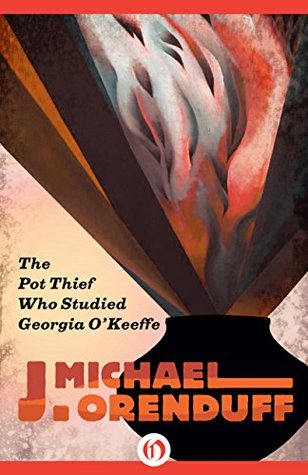 I read this book at the invitation of Open Road Integrated Media and Net Galley. Thank you to both parties. This title is one of several in a series that I had not encountered before. The pot in question is the ancient artifact sort, not the type that people grow and smoke. The author manages to work several disparate and esoteric topics into a single novel, but not necessarily to its benefit. My own viewpoint is that a high profile editor might be of great use here.
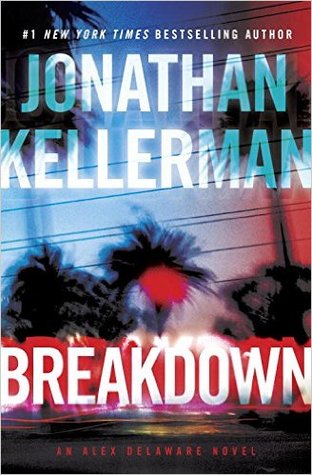 Breakdown is #31 in the Alex Delaware series, and Kellerman’s long-running series still has plenty of gas left in the tank. The premise this time is that six years ago, Delaware was called in to evaluate the parental fitness of a mother; custody issues have become his bread and butter, done on a case-by-case basis. The boy’s mother, Zelda, was an actress plagued by mental health issues, but seemed to be doing a competent job of raising Ovid. The actress’s psychiatrist wanted to be sure, so he called in Delaware to spend time with the child in question. Now things have gone downhill, and the psychologist that treated Zelda is dead. Zelda isn’t doing so well herself.
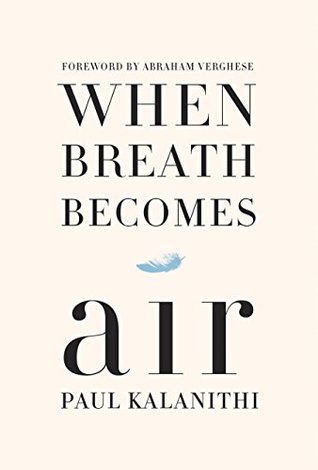 Paul Kalanithi was a promising young physician who had nearly finished completing ten years of training as a neurosurgeon when he was diagnosed with Stage IV lung cancer. His twin ambitions had been to become a neurosurgeon and to write. When he realized how little time was left of his too-brief life, he decided to spend his remaining time writing this book. Thank you, Net Galley and Random House Publishing House for the DRC. Dr. Kalanithi died in March 2015, but he left this luminous memoir behind as part of his legacy. It is available to the public January 19, 2016.
 Seattle Book Mama