Over Yonder, by Sean Dietrich*****

Sean Dietrich has written another fine novel, Over Yonder, one full of quirky characters, weird yet oddly credible situations, and a whole lot of heart. My thanks go to NetGalley and Thomas Nelson Books for the review copy. This book is for sale now.

Dietrich has been writing for a long while, but this is just the third of his books that I’ve read. As I begin this one, I develop a niggling suspicion, wondering whether this author uses a formula. This would be a sad discovery, because till this point, I have greatly loved his work. And so the question I have to answer before I can do much else is whether that’s true, or whether he is writing unique stories using a signature style. Here is what I am seeing: each story focuses on a girl—teen or child—who’s down on her luck, possibly facing a crisis, with no adult that will help her or advocate for her; an older man dealing with misfortune of his own such as a fatal or serious illness, and who is otherwise isolated and in need of redemption; and a chance meeting of the two in a small town in the deep South.

I suppose, after reading this third one I am inclined—as you can see from my rating—to say this is a signature style rather than a formula. I hate to be played. If I felt this was a formula, I would feel annoyed and my review would not be generous, but that’s not what happens.

Caroline is 17 and pregnant. Her boyfriend, Tater Bunson, is at the wheel of his ’93 Honda.

“Caroline stared out the lace-like cracks of the passenger window’s single bullet hole at downtown Knoxville…her hair was the color of a carrot. She was ninety-four percent freckles. Her small, upturned nose, full cheeks, and cherub face brought to mind a character from the highly successful Cabbage Patch Kids product line…Tater spun the wheel right. The car made a sound not unlike a Folgers can of rocks falling down a public stairwell. The spiderweb crack on the passenger window came from a .22 caliber bullet that had passed through the glass during Tater’s last heated disagreement with his mom.”

Woody Barker used to be a priest. He has a houseboat and a bad heart, and not much else. He can qualify for a heart transplant, but only after he quits smoking, and it’s not going well. He’s lonely; he had hoped to pick up with his ex-wife once he got out of prison, but now that he’s out, he sees that she has a boyfriend, and it looks like he’s out of luck. Then an old girlfriend summons him to her deathbed. She wants him to meet his 17-year-old daughter. Who? What??

Dietrich’s wry humor and visceral figurative language are out in force here. Highly recommended to those that enjoy strong Southern fiction with deeply developed characters.

Clete, by James Lee Burke*****

Mortality is mortality. It comes to you when it’s ready. We don’t set the clock.

The Dave Robicheaux series by James Lee Burke is one of the finest ever written. As the faithful know, Clete Purcel is Dave’s partner in whatever he does. Once they were cops that called themselves “The Bobbsey Twins from Homicide.” (You probably need to be a boomer to get the reference.) Now they are on their own, but they are still like family to one another. This is the 24th in the series, and it’s the first to be told from Clete’s point of view. It’s a brilliant idea for two reasons: first, because Clete is a well written and wildly popular character, and also because it gives us a chance to see Dave through someone else’s eyes, someone that loves him, but isn’t him.

My thanks go to NetGalley and Grove Atlantic for the invitation to read and review, along with my profound apology for being so very late. This book is for sale now.

In this installment, a new drug ring has come to Louisiana, and it’s creating still more violence, more death, and more crime in general. Clete, who is now a private detective, is hired by a woman named Clara Bow. (If the name rings bells, it’s because the real Clara Bow was a famous movie star from the silent film era.) The Clara that hires Clete wants him to look into the activities of her skeevy ex-husband. Once he begins, we hardly have enough time to breathe. Clete hits the ground running, and there are no slow passages till the book concludes.

My favorite passages are the ones in which a woman named Chen, whom Clete rescues, then falls for, tells him how he appears to her. Here’s one: “You always gentleman, Mr. Clete. Your cats sleep on your face and you no mind. The world kill men like you because you brave and you kind.”

Later, Chen promises him that she won’t go back to taking drugs. “That because I go to a meeting every day with the Work the Steps or Die Motherfucker group. The Motherfuckers are very nice.” He advises her not to use that term in public. Don’t you love it?

Like every book in the series, this one moves seamlessly from scenes with quirky characters and dark humor, to glorious literary passages that I have to read more than once just to admire the writing, to passages that are gritty and violent and occasionally terrifying. Let me put it this way: you will never be bored.

Can you dive in mid-series? I did; then I became so enamored that I went back and read all the rest of them.

Highly recommended.

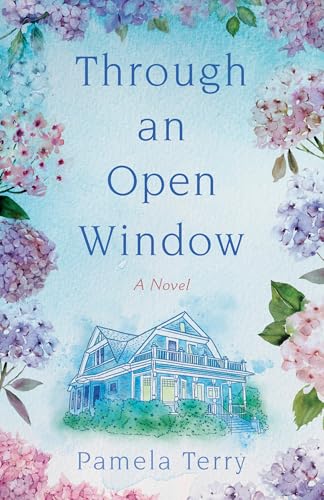
Through an Open Window, by Pamela Terry*****

“When you’re the last one with memories it’s like trying to hold on to hot sand.”

Author Pamela Terry never misses. Her debut, The Sweet Taste of Muscadines, forged such an emotional connection in me that if someone had told me they didn’t like it, I might not have cared for them as much as before. The same held true for her next work, When the Moon Turns Blue, which was every bit as good if not better. And now, with her new novel, Through an Open Window, I know that I will follow this author anywhere.

My thanks go to NetGalley and Ballantine Books for the invitation to read and review. This book will be for sale August 19, 2025. If you are female and have a beating heart, you should get it and read it.

We open with a scene from 1956. The local sheriff rescues two small children from a scene of horrific carnage; the baby girl is surrendered to the social worker before they find the little boy. The sheriff and his wife have been unable to have children, and want them so badly that instead of reporting the boy also, he takes him home and they keep him.

Cut forward now to the fictional town of Wesleyan, Georgia. A family is grieving the loss of its patriarch, Lawrence Elliot. His widow, Margaret is the first to receive a visitation—not from Lawrence, but from Great-Aunt Edith, who has been dead for years. Aunt Edith wants her to know something. And in fact, other family members will also see her at various times, in various places, but it’s not the sort of thing one shares with others. But Edith isn’t leaving until her message is received and understood.

As we see Margaret and her three adult children cope in different ways, we also see the interplay of their relationships to each other. This story is loaded with character development, and I believe each and every one, even Jubal, the rescued Clumber Spaniel that comes to live with Margaret. (I had never heard of this breed before, and now I kind of want one. Someone stop me!)

Events roll forward, and slowly we learn what it is that Edith is trying to convey, as the family does, and we find the tie-in to the prelude. It’s done brilliantly! Along the way, the author’s voice comes through in undeniable word smithery that forces me to highlight way, way too many passages to quote here. I experience the entire gamut of emotion, and when I near the ending, I am torn, wanting to read more slowly so that the book won’t end, but also needing desperately to know what is coming next.

The only possible improvement would be if Terry could write, and write up to the standard she has established, as fast as I can read, because I cannot wait for her next novel! She has become a favorite author, one I’d pay to read if I couldn’t do it free of charge. Highly recommended.

Fever Beach, by Carl Hiaasen**-***

What happened? I used to absolutely love novels by Carl Hiaasen. In his most recent release, Fever Beach, we see a conflict between good—in the person of our main character, Viva Morales—and evil, played by a variety of Proud Boys wannabees and other undesirables. The good person is always good; the bad guys have no redeeming qualities. Only Viva’s ex-husband is a dynamic character.

Still, my thanks go to Doubleday and NetGalley for the review copy. This book is for sale now.

As I read, I keep reminding myself that this is not a book I’m supposed to take too seriously, to lighten up and just roll with it. I certainly used to do so when reading Hiaasen’s work. But perhaps because of the stereotyping and complete lack of nuance, what might otherwise have seemed droll and satirical, instead comes across like a whole lot of cheap shots fired off the bow.

Mind you, I am certainly not a fan of ultraright organizations, and the rising tide of bigotry, fascist ideology and anti-Semitism concerns me greatly. But in an already highly polarized nation and world, all I can think as I read is that this story isn’t helping. It is the snobbery and elitism of the highly educated that has driven a large number of folks into the arms of extreme right; some intelligently reject the elitism and cancel culture consciously, but they aren’t in this book. In real life, those that are poorly educated and/or intellectually handicapped, as the bad guys in this book are, would in most cases give their right arms to wake up “clever” like Viva.  It strikes me as counterproductive to write a book that makes fun of right-wing intolerance, while practicing intolerance from a different angle.

Back in the day, before anyone judged anyone else by the color of their hat, I used to roar with laughter at this author’s work. Did it change, or did I? I would like to think it is the former.

I rated this book 2.5 stars and have rounded it upward, more from a fondness of his early novels than anything else. I do recall reading another of his more recent books—not for review, but just because I felt like it—and saw some of the same problems, so I will tell you that this book will probably work for you if you enjoyed his last one. Apart from that, I cannot recommend it.

Let Us Descend, by Jesmyn Ward*****

Reading Jesmyn Ward always hurts so good. In Let Us Descend, she conveys the heartbreak and sense of betrayal a young girl, Annis, faces when she and her mother are sold separately by their owner—who is also her father–and the ways that she copes, and also the ways she is helped by the spirits of her ancestors.

My thanks go to Scribner and Net Galley for the invitation to read and review. I’m sorry to be so late here, and am grateful that the literary world has recognized this book for the masterpiece that it is.

You may have seen other reviews in which I complain and gnash my teeth over historical inaccuracies; sometimes I rant over an author’s failure to portray a child in a way that is developmentally inaccurate. There will be none of that here. Ward has taken the time and done the research, and so her well crafted characters aren’t compromised by sloppy background details. I had to take this story in small bites because it is excruciatingly sorrowful.  For part of it I listened to the audio version; this is a treat in itself, as Ward reads her own novel.

Some reviewers have taken issue with the amount of magical realism Ward employs. I disagree with them. How can any novelist portray such a story and such a character as Annis with any glimmer of hope, unless they employ these literary devices? Does anyone really want to read a book that is miserable at the outset, miserable in the middle, and miserable even at its bitter, wretched conclusion? Without hope, there’s not much incentive to keep reading, nor would it have been satisfying to write; but Ward will not and does not revise history simply to make her readers more comfortable. There was only one way to tell this story and be true to history and her characters, and Ward found it.

Yes, it’s a rough read, but it’s so well written that many readers must have smiled through their tears. Know that, of necessity, this story is absolutely loaded with triggers; assuming that you can navigate them without coming undone, I highly recommend this story to you.

Rednecks, by Taylor Brown*****

“Law only serves them that’s in power. Ain’t no different than always…’Tis the victor who writes the history—and counts the dead.”

I’ve been an enthusiastic fan of author Taylor Brown since reading Gods of Howl Mountain, which was published in 2018. His new novel, Rednecks, is out now, and as with his earlier work, it is outstanding. My great thanks go to NetGalley and St. Martin’s Press for the invitation to read and review.

Brown tells the story of the Battle of Blair Mountain, a very real large scale battle, complete with machine guns, helicopters, tens of thousands of angry, armed miners, and the U.S. Army, an event which really did take place in the Appalachian Mountains in 1921. Over a million rounds were fired, and then the story was suppressed by the government, bosses, and big business media.

 In his author’s note, Brown tells us that the character of Dr. Muhanna, a heroic individual sympathetic to the cause of the miners, is based on his own great-grandfather. There is a meaty explanation of what parts of the story are based on the actual historical record, and what parts—small ones, to be sure—he has changed.

Apart from his skill as a writer and researcher, the thing that I have always loved best about Brown is his deep respect for the working class. It shines through every page of this novel. Mother Jones, the fiery Socialist labor organizer, is here as well, and she is possibly my favorite figure in American history. Unfortunately, she is not at her best here. Past ninety years of age and in poor health, she attempts to deceive the miners into quitting their struggle early once she learns that Washington, D.C. intends to send troops. It’s a pity that her many years of inspirational organizing and leadership are not on display here, but the facts are the facts, and this story is not, after all, chiefly about Mother, but about the miners, so I suppose that Brown has written it in the only honest way that it could be written. There are indeed passages that demonstrate her eloquence and loyalty to workers of every race and ethnicity.

As I read, I like to highlight passages to include as quotes in my review. This time, I came away with 53 quotes. Reluctantly, I am setting most of them aside; you will have to find them yourself. They’re better within the context of the story, anyway.

As a personal aside, I will mention that my own grandfather—“Papaw”—died of Black Lung disease in 1978 after having worked in a nonunion mine in South Dakota beginning in the eighth grade. He had to leave school and work fulltime, as there was not a social net back then, and he and his family would have starved if he had done otherwise. World War II brought him better fortunes, but coal dust, once lodged in the lungs, never leaves.

This is a gritty tale to be sure, one full of bloodshed and suffering, but also of immense courage and inspirational leadership. I read it in small bites lest it work its way into my dreams, until I reached the climax, at which point I had no choice in the matter, and was unable to put it down. This book is one of the year’s best. I highly recommend it to those that love labor history, historical fiction, or that just love a well-told story.

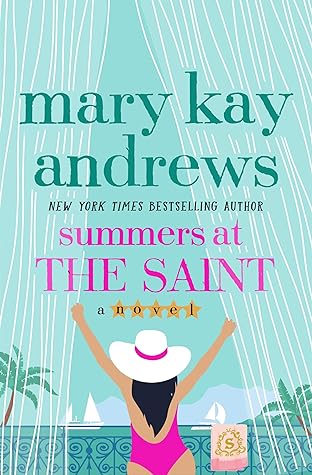
Summers at the Saint, by Mary Kay Andrews****

Summers at the Saint is the latest novel by veteran author Mary Kay Andrews. I am not usually a fan of what I think of as light and fluffy books, but over the last couple of years, I’ve developed an appreciation for this author’s work. This story centers on a fashionable beach resort hotel and those that run it, with the focus primarily on the women. It’s a good summer read—not a bad choice to take to the beach, actually. My thanks go to NetGalley, Macmillan Audio, and St. Martin’s Press for the invitation to read and review. This book will be available to the public May 7, 2024.

Our protagonist is Traci Eddings, the young widow of Hoke Eddings, heir to the Saint Cecilia resort. Traci has inherited part of the business from her late husband, but there is a power struggle in play as the book opens. The old man is dying, and the surviving heirs are scheming. The business seems to be on the rocks, or near to it, and Traci can’t figure out why. She makes several smart changes, hires good people, and yet…

We have interesting side characters. Parrish is Traci’s niece, whom she persuades to postpone her studies for one more summer as Traci implements the changes that are needed. We have the new cook, Felice, as well as Livvy, a capable young woman that Traci hires away from the diner where she is waiting tables; and we have Livvy’s mother Shannon, who used to be Traci’s best friend. Shannon completely dumped Traci many years ago, leaving Traci bewildered and hurt; she still feels that way. Lastly we have Whelan, who is working at the Saint as a pretext while he tries to unravel the circumstances that led to the death of his younger brother at the resort’s pool many years ago.

The book’s strongest aspect is the side characters, particularly Felice, Shannon and Livvy. Other characters are one dimensional, either entirely good or entirely awful. Rather, this is a plot based book. There are a great many moving parts, with a blend of genres that include romance, mystery, beach reads, women’s fiction, and contemporary family drama. It is in weaving the many pieces of this story that Andrews’s experience shines through. If there is a plot element that conflicts with another, or that is simply illogical, I didn’t spot it. At the end, everything and everyone is accounted for; in fact, I might have preferred not to have every single aspect resolved, and every positive character quite so perfectly happy. I seldom argue in favor of ambiguity, but in this case, it wouldn’t hurt.

I was fortunate enough to receive both the Kindle and audio versions, and once more, Kathleen McInerney does a fine job of narration with all of the women characters and the internal monologue. Her voice isn’t deep enough to voice the men’s characters well, and I suggest adding a second, male narrator next time around.

The story held my attention quite nicely as I did my morning bike ride, and I recommend it to Andrews’s loyal readers, and to those that enjoy a good beach read.

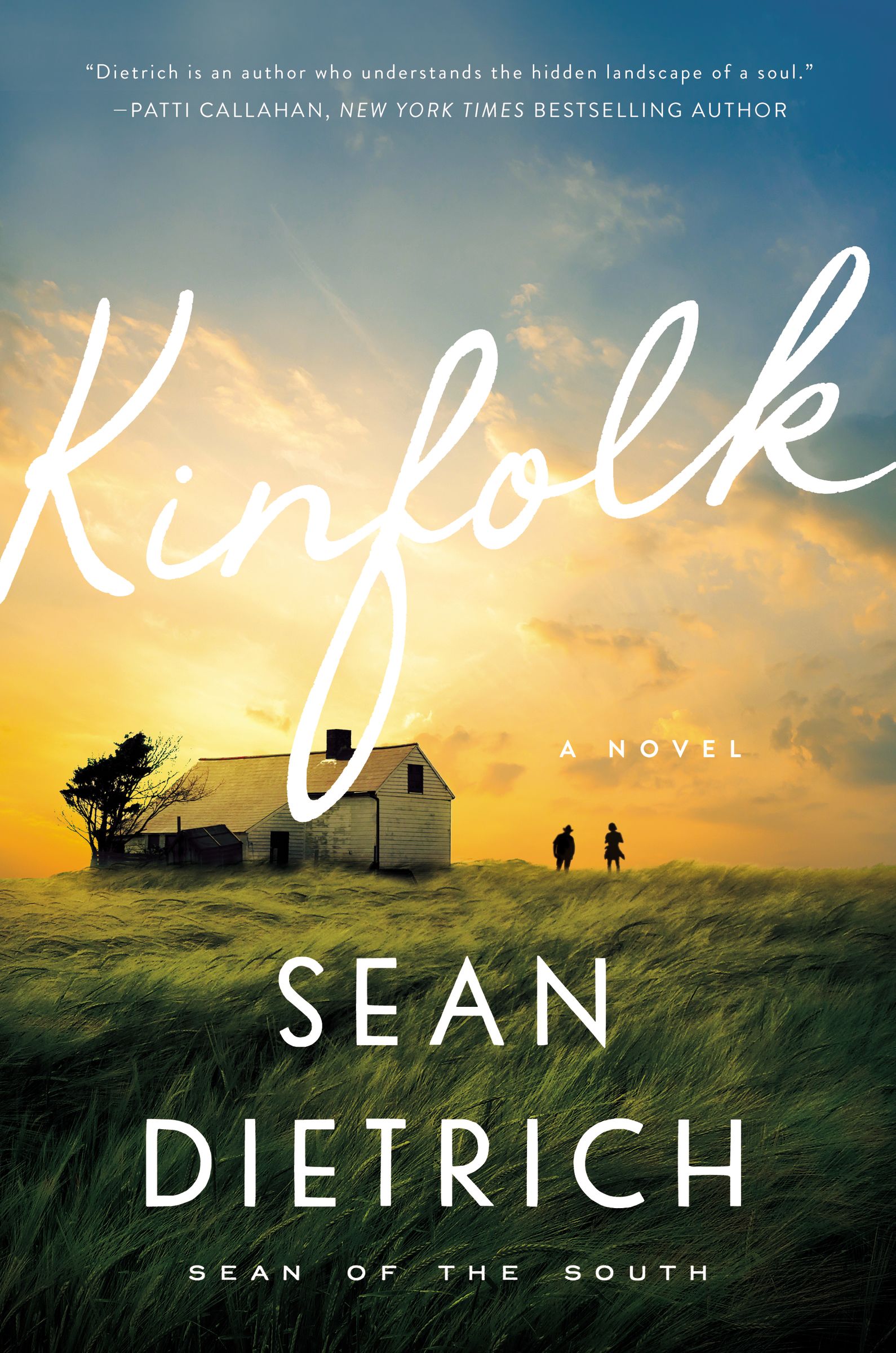
Kinfolk, by Sean Dietrich*****

“Thanksgiving is not about being happy. The holiday is not about mirth and beauty and the warmth of gaiety. Thanksgiving is about fulfilling family obligations and being miserable the way the good Lord intended.”

When we meet our protagonist, Nub Taylor, it is Thanksgiving night, and he and his cousin and best friend Benny are three sheets to the wind, idling in a rusty old truck across the street from the dignified, stately home of Nub’s daughter, Emily. Nub has been invited to dine there, but knows better than to attend. Emily is a widow; she married up, and every mover and shaker in town has shown up. No, Nub won’t be joining them. Nothing good would come of it.

My thanks go to Net Galley and Harper Muse for the review copy. This book is for sale now.

Our story is set in the 1970s in a tiny town in Alabama. Nub is long divorced from Emily’s mother, who keeps her distance these days. He takes his meals at the Waffle House, and that includes today:

“Waffle House did not close on Thanksgiving because Waffle House never closed. Waffle House was like the Vatican, only with better hash browns. Nobody on staff at the Waffle House had a key to the store, not even the manager. Because there were no keys. The doors were never locked. Waffle House just went on and on. Sort of like a disco.”

It is here that he meets Minnie. Minnie is fifteen years old and well over six feet tall. Why is this girl spending her holiday here, instead of with her kin? The answer is that she has none. Her father is in prison, and her mother has just recently killed herself.  

Of course, Nub doesn’t know these things at first, but something about her calls to him. Perhaps all children of suicide victims wear something similar in their expressions; Nub had lost a parent the very same way, and he has never gotten over it. How does anyone? He knows “the cardinal rule about suicide. You don’t talk about it.”

Now, Minnie is orphaned and she is pregnant, courtesy of a thoughtless, spoiled local boy that told her he loved her, then laughed behind her back. And so it is that Nub realizes, as he learns more about Minnie Bass, that perhaps he may have a chance to redeem himself.

This is a wonderful story, full of warmth and a lot of heart. Dietrich is a master story teller, able to create viscerally real characters that leap from the page and a narrative that billows with home truths. There is no question that Kinfolk is among the finest books to be published this year.

Highly recommended.

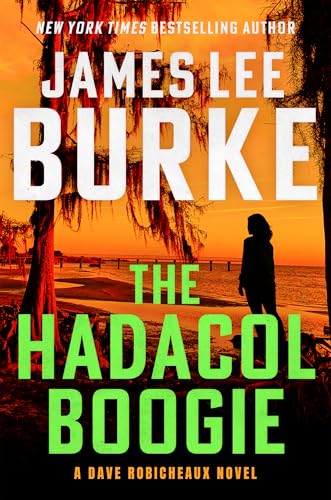
Flags on the Bayou, by James Lee Burke****

James Lee Burke is one of the finest prose stylists the U.S. has to offer. His brilliant, lush descriptions, quirky, resonant characters with interesting names, and his passion for the rights of the working class are the stuff of legends. My thanks go to Net Galley and Simon and Schuster for the invitation to read and review his latest novel, Flags on the Bayou. This book is for sale now.

Our protagonist is Hannah Laveau, a former slave who’s on the run from the law. With her is Florence Milton, an abolitionist from Massachusetts. Hannah is determined not to be caught, but also to retrieve her little boy, Samuel, a preschooler from whom she was separated at the battle of Shiloh. Her determination is singular. Along the way we have officers from both sides of the Civil War, corrupt rich guys, and bushwhackers. The story is complex, as are all of Burke’s novels, and the setting atmospheric.

All of these things being said—and I’ve said them many times before, since I began reading his work about a decade ago—there are some things that I would like to see done differently. Burke has always intertwined social and political messages within his novels, and so it’s the subtext in this book that jars me. In fact, it bothers me enough that I abandoned this story twice before I finally dug in, determined to finish it.

The first category here is the American Civil War, and the fallout we still deal with today. In past novels, Burke has told us that the slaveocracy was wrong, and that the war was indefensible. I feel as if he has retreated from that here. We have some ugly Confederate characters, to be sure, but we also have ugly Union officers, and General Sherman—one of this reviewer’s most beloved heroes—gets run through the mud multiple times. It’s as if Burke wants us to know that actually, both sides were bad, and that war itself is just plain awful. This is weak tea indeed.

The second is one I’ve been eyeing for the last few of Burke’s novels, and I have soft-pedaled it because of my great admiration for the body of his work, and for his ageing dignity, but I do have to say something here. His development of female characters needs work. Lots of it. All of his females are either Madonnas or whores (and sometimes, Madonnas that are forced to be whores, through no real fault of their own.) I would dearly love to see a female character in his books who is not there for her sexuality, and who is not either a victim or a potential victim. With Burke’s Dave Robicheaux detective novels, progress was made with a lesbian cop character, and I was thrilled. But she came and then went, and his experience creating her hasn’t overflowed into his other work.

More than any one thing, I want to see Mr. Burke write a book—just one, seriously—where there is no sexual assault, no threat of sexual assault, and no memory of sexual assault. It’s getting old, sir. You surely have the ability to provide female characters with other motivations. I want to see it.

I was nearly annoyed enough to rate this book three stars, but I liked the ending a lot, and so the fourth star remains.

So that’s my two cents, because as much as I love his work in general, this is getting in the way. There will doubtless be some blowback from his other devoted fans once I publish this review; bring it.

A final note: because I was struggling with this book, I checked out the audio version from Seattle Bibliocommons. The voice actors that perform it are world class. However, because the story is so complex, bouncing back and forth in point of view and setting, it is hard to follow in audio alone. The best way to read this is with both the printed word, whether on paper or digitally, accompanied by the audio.

Those We Thought We Knew, by David Joy*****

David Joy is a brilliant writer. His stories, set in the Carolina mountains that he calls home are resonant, visceral, and always about believable characters that hail from the hardscrabble working class. Those We Thought We Knew is his best. My thanks go to Net Galley and Putnam Penguin for the review copy. This book is for sale now.

Sylva, North Carolina is the sort of insular, homespun community that you don’t see much of anymore. Everybody knows everybody, not only by name but by family, religion, and a host of salient details that form their backstories. There’s not a lot of traffic in or out of Sylva, nestled as it is in a hollow of the mountains. Now, however, two newcomers have arrived, but they aren’t together. Surely not. One is a lowlife vagrant, a pencil-necked, mullet-headed, greasy drunk in an ’84 Caprice named William Dean Cawthorne. When the sheriff’s deputies roust him, one of them finds a small notebook that contains some surprising names; he also has a long, white robe in the car, and with it, a conical white head covering with eyeholes in it. Mr. Cawthorne, you see, is a recruiter for the Klan.

Toya Gardner comes to town at about the same time to visit her grandmother and work on her thesis. She’s a graduate student from Atlanta; she creates meaningful African-American sculptures and other art works. But when she finds the statue of the Confederate soldier in the town square, she is inspired to make a different artistic statement than she’d originally planned, and when she does, all hell breaks loose.

This searing story sees two terrible crimes unfold in sleepy little Sylva. The dynamics that exist between the county sheriff, the Sylva police force, and the local citizenry—particularly Toya’s family—are rich and complex, and they showcase Joy’s best character development to date. In the end, we must concede that alongside the horrors represented by overt white supremacists, the more chilling may be that which simmers below the surface of men and women that, yes, We Thought We Knew.

This is brave writing. Joy will no doubt be the subject of some unfriendly attention because of it. My hope is that it draws the accolades that it deserves from those that seek true social justice, and that it will inspire useful, critical introspection and conversation on the part of its readers.

Highly recommended.