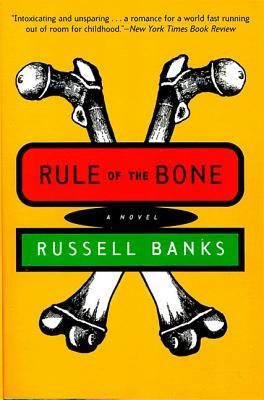
The Rule of the Bone, by Russell Banks *****

RuleofBoneBooks by Banks never disappoint. His writing is as harsh and beautiful as a New England winter. Rule of the Bone speaks with a social conscience that cannot be ignored or denied. The voice he uses carries credibility and authority characteristic of the seasoned master of fiction the writer has become.

This story is told in the first person. The protagonist is what those of us who work with poor kids refer to as a “throw-away”, those who don’t run away from home but are simply not welcome there anymore at an early age. Often, as is the case with the fourteen year old boy who renames himself Bone, it is a step-parent who in one way or another initiates the departure of a child who is far too young to make his own way in the world, and the birth parent who is passive and therefore complicit. Without job skills, social or interviewing skills, or any knowledge of how the social welfare system works apart from the fact that it doesn’t, he becomes a feral child, finding indoor shelter wherever he can: hiding in a custodial closet when the mall shuts down for the night; crashing with a biker gang that is dangerous and unpredictable but who tolerate his presence most days because he can find weed for them; and in an abandoned school bus.

Twice he tries to initiate a reconciliation with his mother and stepfather; twice he is spurned. His grandmother is no better. It is appalling, but also realistic. These kids are out there, and I am glad Banks put that fact in front of us. The protagonist points out that once he has been busted and released into the custody of his parents with the stipulation that he remain with them, and once they tell him to get gone (again), his way out of jail is to avoid parents, cops, and school, because each one of them will call another one of them in an effort to pass him to someone else. And the horrible truth is that he is right.

Our unlikely hero realizes that in his quest for survival, he has never actually learned what is right and wrong. None of his parents (mother, departed father, stepfather) has demonstrated any sort of consistent moral code, and he is cast adrift not only materially, but also in terms of his emotional growth and the development of his character. He finds it in a really unlikely place.

Like nearly everything Banks writes, Rule of the Bone is deeply disturbing in places and full of loss and anger. I have struggled with this when reading other books by this writer. Disturbing books are all the more disturbing when they are so well done that we cannot look away.

To other readers who have noted this (in reference to some of the other reviews I have read), I would advise that if you can’t take it, don’t read it. There’s no law saying you have to read this writer. Particularly if you have recently dealt with loss and are tender around the edges, go find another novelist. If you need a feel-good book, there are plenty of them out there.

For myself, I resolved my conflict of wanting to read one of America’s finest novelists versus wanting to avoid the abyss of depression they often inspire, by reading multiple books at a time. I move from Banks, to a nonfiction title, to a cozy feel good title, then back to Banks. Of course, there comes a point in the plot where Rule of the Bone can’t be put down, which is one more way we know it’s excellent literature. At that point, it’s time to dive in and finish.

I’m glad I chose to return to this man’s work. The tone is bleak, and yet in this case, it also carries with it a poignant sense of hope and yearning. Highly recommended.

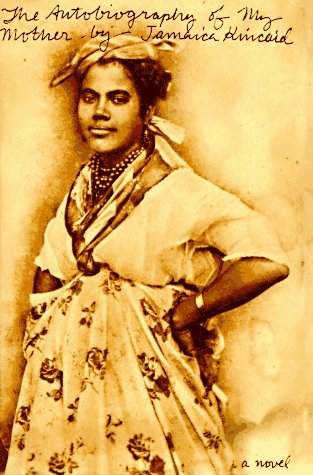
Autobiography of My Mother, by Jamaica Kincaid *****

autobiography of my motherJamaica Kincaid is one of the best writers in the world, and of those who have gained a reputation for excellence, she is surely the angriest. In this fictional memoir, she unravels a tale of neocolonialism within a family, a hierarchy in which the child has the status of a servant. I was two-thirds of the way through it before I realized she had spun the entire story exclusively out of narrative, never flagging or losing momentum despite the complete lack of dialogue. Most of the action is within the protagonist’s mind rather than physical, though there more than one vivid depiction of abortion, and some really sensual sexual passages. In other words, it is outstanding, but not something to hand to an adolescent without due consideration.

Kincaid uses poetic devices, particularly repetition, in a way that is rare in prose, and she uses it deftly. Her narrator and protagonist is a woman whose mother dies in childbirth. Her mother is of African descent; her father is European. She describes the funeral for her half-brother, the favored one, and in doing so peels her father’s religion right down to its barest nub:

“And so again, what makes the world turn? Most of the people in that church would want to know. They were singing a hymn. The words were: ‘ Oh Jesus, I have promised/To serve Thee to the end:/Be Thou for ever near me, /My Master and my friend.’ I wanted to knock on the church door then. I wanted to say, Let me in, let me in. I wanted to say, Let me tell you something: This Master and friend business, it is not possible; a master is one thing and a friend is something else altogether, something completely different; a master cannot be a friend…Yes, but what really makes the world turn? And his mouth, grim with scorn for himself, will say the words: Connive, deceive, murder.”

The nostalgia the colonizers feel for England and for all things English, which are completely at odds with the tropical climate and Third World population of Jamaica, make for searing commentary. What else can I tell you, than that this book and this writer should be on your list? Whether for the social commentary that is part and parcel of everything this author sends out to the world, or whether for the outstanding craftsmanship that is so valuable to anyone who loves to read or wants to write, this book is highly recommended.

Native Speaker, by Chang-Rae Lee *****

native speakerNative Speaker has been praised by the most prestigious periodicals, from New York to London to Los Angeles, and yet, though it has won a number of awards, I had not heard of it until I found it in a special award-winners area of Powell’s City of Books, when I made my annual pilgrimage to my old hometown and my old bookstore this summer. Perhaps I first found him there because he teaches at the U of Oregon; or perhaps it is because Powell’s is the only brick-and-mortar bookstore I frequent anymore. At any rate, this book was a real find.
Our protagonist is Henry Park, who works as a spy of sorts for a private firm:
“Our clients were multinational corporations, bureaus of foreign governments, individuals of resource and connection.”
Henry is having problems with his work. He is supposed to insinuate himself into the lives of individuals who may be working against the interests of one client or another, find out all he can about them, develop a psychological profile. To do this, he has to pretend to become emotionally attached to them, and in some cases make them dependent upon him; then he files his final report on them and disappears from their lives.
His most recent subject was a psychologist named Luzan. He saw Luzan regularly, began telling him things he had never told anyone. What with his problematic relationship with his father, now deceased, and the accidental death of his beloved son, his only child, and his marital problems…the man actually needs a psychologist, and in the end the firm has to muscle their way into the shrink’s office and physically remove Henry from his subject in order to break the connection.
Now they have thrown him a really easy job to get him back into shape. He is supposed to cover and report on a politician, John Kwang. There is the Korean connection, which makes him a shoo-in; he begins by posing as a freelance journalist, but becomes more and more involved as a member of the campaign staff. His reports become scantier and fewer as he adopts Kwang as the father he never really had.
Beautifully interwoven throughout Lee’s narrative are the cultural understandings between those of Korean ancestry; the conflicts that arise between first and second generations in the US; the racist assumptions, stereotypes, and miscommunications between Koreans and Caucasians, whom he pointedly refers to as “Americans”. Black people are just Black, but white folks are “Americans”. Park is still in love with his “American” wife, but she recently figured out what he does for a living, and she isn’t sure she can live with it. His plan is to finish this assignment, he tells her, and then he’ll get out, go do something else.
There is such grace and care in Lee’s story-telling, both in what is said, and in what is not. I’ve never read anything like it. And one thing I really appreciate is that without overtly saying so, he lets us know that there is no such thing as an Asian-American. A certain skin tone, a fold at the outside of the eyelid, these are superficial things that don’t speak to culture, to language, to expectations. I also really appreciated the way he dealt with the hostility between Korean small shop owners and their African-American neighbors and customers, and the historical reality to which he deftly traces back, without ever stepping away from the central storyline.
Native Speaker is unlike anything else I have ever read. It doesn’t even have a genre, unless we drop it into the “Asian studies” category that his story demonstrates is artificial in any case. It’s a thoughtful, deep story, yet it is not hyperliterate or particularly lengthy. It’s there for anyone who will take the time to read it. A worthy and thought-provoking journey.

What Women Want, by Deborah L. Rhode *****

What Women Want

Yes, thank you, I am a feminist. And in the wake of the Supreme Court’s decision around the Hobby Lobby’s so-called “right” to deny its female employees the contraception of their choice via their health insurance, Rhode’s manifesto could not be more timely. The book is not only right on the money politically, but it is scholarly, accessible, and written by a woman whose credentials cannot be questioned. Rhode is a Stanford law professor who clerked for Thurgood Marshall. She founded the school’s course on gender, but still sees plenty of room for improvement…everywhere. She’s right. Thanks to Net Galley for promoting this important book.

Rhode points out that in spite of the all-too-common mistaken perception that gender bias is a thing of the past, women constitute less than one half percent of the content in the average history textbook. Furthermore:

In virtually every major dimension of social status, financial

well-being, and physical safety, women still fare worse than

men. Sexual violence remains common, and reproductive

rights are by no means secure.

Women are still primarily responsible for child care, and they are still penalized for this on the job. Abortion providers are rare due to local laws and increased insurance premiums, courtesy of virtually unfettered terrorism against women’s health clinics. Wealthy women will always be able to terminate an unwanted pregnancy because they can travel, but the poor, who often have the most urgent need to exercise this choice, are stuck if they can’t get to a county or state where the service is available, and pay for attendant travel costs associated with other red-tape hurdles such as waiting periods.

The USA has the second-highest rate of reported rape in the world, and a quarter of all women experience violence from their intimate partner; a fifth are raped or experience attempted rape.

Are you listening?

Rhode carefully delineates every problem faced by women in the USA today, and she argues, blow by blow, citation by citation, what is needed. Women should be organizing. We aren’t, at least not in the numbers that we need to in order to bring about social change. In fact, this reviewer would suggest that we are losing ground, and it is because so many of us don’t show up to carry a sign, wear an armband, or carry a bullhorn.

The only weak place in Rhode’s release, if there is one, has to do with women of color. Her analysis there is shallow. However, the other sections apply to all women, regardless of color or ethnicity. We all need respect in the workplace and parity with our male coworkers or colleagues in pay and advancement. We all need affordable–if not free–childcare. We all need reproductive freedom that is between ourselves and our doctors. And we all need to be able to speak up and be perceived as “assertive” rather than “aggressive”. We are not there yet.

This reviewer has twice marched in Washington DC for women’s right to reproductive freedom, and cannot believe that the Equal Rights Amendment is dead. What’s that about?

If you are female or care about someone who is, you should get this book. Rhode is crystal clear and absolutely correct; if women cannot be equal now, then when?

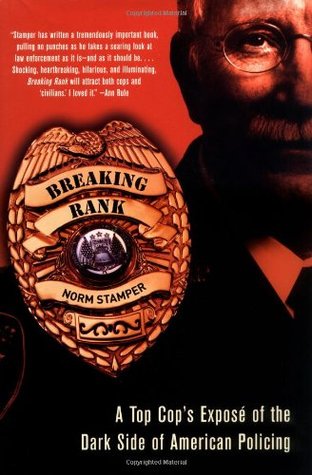
Breaking Rank: A Top Cop’s Expose of the Dark Side of American Policing, by Norm Stamper****

breakingrankDoes this look odd in my otherwise left-leaning collection? It ought to. I make no bones about the fact that I don’t like cops. I have seen it too often: the racism, the preference for protecting property over protecting human flesh and bone, the gratuitous violence. It is appalling.

Here in Seattle, the SPD has gotten so far out of control that the FBI, not exactly heroes or saints themselves, have been called in to reign them in, get the SPD to tone it down, for heaven’s sake. Don’t be so obvious about it. The recent shooting of an unarmed deaf American Indian who was plugged in the back for failing to stop-when-I-say-so, was the final straw where a lot of folks here were concerned. There was no call for anybody to shoot John Woodcarver. He was well known both among the homeless and the working crowd downtown, and one person after another testified that he was harmless. No history of any sort of violent crime; I can’t recall that he even had a record, though I can’t say I looked hard or cared. There’s never a call to shoot an unarmed man, and this was not an exceptional shooting. There’s been way too much. Furthermore, the FBI has grown frustrated with the local law’s intransigence. They mount dashcams; the cops turn them off, or point their cars facing away from the scene of action before they whip out the tasers and guns.

Just over a decade ago, Norm Stamper was the chief of police here. Prior to that, he was a cop in San Diego. During the WTO protests (World Trade Organization) in downtown Seattle, things got badly out of control. During the review that followed, Stamper’s was the head that rolled.

Rather than slink away with his tail between his legs looking for a quiet little hamlet to sheriff, he did the completely unexpected: he turned on his own. He wrote down all the dirty little secrets that he says are endemic not only here, but in pretty much every major metropolitan city in the USA. It’s endemic, he claims, and I believe.

Have you ever wondered why Black people are arrested at such a disproportionate rate? Some liberals may be inclined to write it off as a side affect of poverty and the lack of a solid foundation during childhood. (Michelle Alexander would later publish The New Jim Crow, which has all that data you need to put a stop to that lie.) Stamper says oh hell no. He has a special chapter, and it is for this chapter that the book receives my four of five stars rating, that is about why cops beat Black men. Brace yourself. He gives the code letters or names that are abbreviations for racist epithets you may have believed died in the ’60s. If so, you have led a sheltered life. Stamper proves it.

So if you can stand the heat, check out Stamper’s kitchen. It gives me joy to see one of these people come back to eat their young, and to shine a flashlight into all the dirty corners of urban police life.

A caveat from me, for those who have a beloved relative who’s in the biz: I don’t say every single cop in every city is corrupt, racist, and dirty. I only say there are too few good guys, at least those who stick around once they see what the job is really about, to make a significant difference. So relax about Uncle Tony or Grandpa Bob. If you say he is a gentleman and a hero, I believe you.

Rebel Streets, by Tom Malloy *****

This is the first novel I have read about what are referred to in Belfast as “The Troubles”. The protagonist, Jimmy Fitzgerald,is a Catholic youth and a member of the IRA. Virtually all the young men in the Catholic (i.e., working class)neighborhood there belong. And in the opening scene, Jimmy is being tortured. He is being treated in ways that the Geneva Convention was created to prevent, yet it doesn’t. He is a “terrorist”, and so he can be treated any way they like, proof or no proof. The scene goes so far as to have him placed in a helicopter after the beating is over and he has regained consciousness. They drop him from the helicopter…and he goes only ten feet before he hits the ground. He is broken. After spitting in their faces, after beating after beating in which he will only swear at his interrogators or say “I love Ireland”, he is broken. He only wants to live, and to be gone, and we might hope that the information he gives them is false…but it isn’t. He gives up safe houses. He gives up friends. He does it with the condition that his closest friend since boyhood, Louis Duffy, will be spared.

When it’s over, he is assigned to be an informant.He must meet with Detective Ian McDonald, whose perspective we also gain later in the book. He is outwardly an ordinary man, a man who can look himself in the mirror and like what he sees every morning, one who is responsible for enforcing the law, upholding order, and stopping the Irish attacks on the British troops that make their lives hell. He has a wife and a little boy he loves, and he thinks that he is a good person. Some might see him as merely cynical. I went into this book with a bias, and I see a monster there. I hope that others who read this book will think so, too.

Catholics are considered a lower class, Finian dirt on the floor of Belfast. We learn early on of a job Jimmy and his “Da” were given cleaning out the coal cellar of a Protestant family. The family, clearly enjoying a much higher standard of living, is converting to gas central heat, but they warn Jimmy and his Da that they have inventoried and expect everything to be there when they are done. Jimmy and his father are horrified and seething at the suggestion that they might walk off with their one-day-employer’s coal in their pockets. This kind of rage beats in the hearts of most native Irish (as opposed to the Orangemen imported generations ago by the Brits to give some credence to the lie that Belfast is majority Protestant).

Later, much later in the story, after British cops have kicked in doors all over the neighborhood looking for IRA members, after the family furniture in one residence (and we can infer, many others) has been shredded, mirrors broken, the family’s only television set smashed, an Irish mother turns to her small son and asks, “Who was it put your Grandpa in prison?”
The lad replies,”The Brits”.
“Who?”
“The Brits.”
“Aye…Who wants to get your Da and lock him away?”
“The Brits.”
“Who?”
……..
“Why did they do this to ye?”
“Because I’m Irish.”
“An’ who is it that hates the Irish, who is it robs the Irish, who is it murders the Irish?”
“The Brits.”
(first person, quoting author here)”She took his head in both her hands to whisper, “An’ who will protect yer mother from the Brits when he’s a strong young man?”
“I will.”
“Why?”
“Because I’m Irish.”
The mother calls her son a “wee man” and a “brave Belfast boy”.

This novel spoke to me deeply. I was a supporter of Sinn Fein during the hunger strikes of the 80’s, and I, along with many other Irish Americans of whatever generation, gave money for humanitarian aid. Two-thirds of the funds that paid for Irish independence came from Irish American pockets. The same has held true for the cause of making Ireland free and united once more.

Not everyone will appreciate this novel as I did. The IRA has had press that likens them to serial killers when “The Troubles” took place, and very few rejoinders sent to large newspapers ever saw the light of day.

But if your heart beats for one united Ireland, or if you enjoy one helluva ride and you are neutral or undecided on the Irish Question, then buy this book. Read it. You haven’t read anything like it lately, I promise.

The Struggle Against Fascism in Germany, by Leon Trotsky et al *****

Trotsky wrote this while he was in exile. Lenin was dead, and Stalin had come to power in the Soviet Union, striking a death knell for world revolution as he moved to consolidate the gains that the working class had won and establish an elite, privileged power structure, corrupt and bureaucratic.

In Germany, the revolutionaries, courageous to the bitter end, were rounded up and for the most part, exterminated.

Trotsky offers a convincing argument regarding the causes of fascism. He does not see this as mass hysteria or a “quasi-religious” movement, to quote others on the topic, but one with a purely economic basis.

It is not light reading. It is an historical treasure and possibly instruction for what the future may hold if workers, farmers, students, and social activists who care about the world are not wary and careful. The best way to read it is with the television set off and some sticky notes or a highlighter in your hand.

I was stunned to see I had not reviewed this sooner, as I have read it multiple times. Alongside the work of Daniel Guerin, I consider this the best analysis of the causes of fascism ever written.

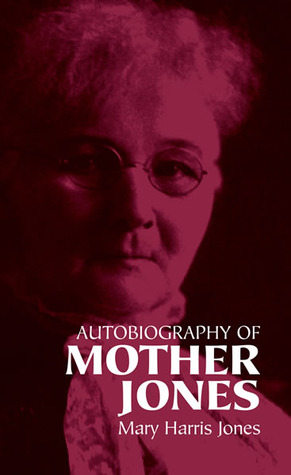
The Autobiography of Mother Jones, by Mary Harris Jones, Mary Field Parton (ed), Clarence Darrow (intro) *****

autobiomotherjonesMother Jones has been called “the most dangerous woman in America”. Some refer to her as an anarchist, but in her autobiography, she denounces anarchism, though allows that these folks have their hearts in the right place. She has been called a syndicalist (which is probably closer to the truth), but the fact is that she was motivated by what she saw right there on the ground in front of her. When the Russian Revolution unfolded, she was by her own account past 90, and by the account of another biographer, in her mid-80’s, so either way, she was very, very elderly, yet she championed its achievement at the Pan-American labor conference held in Mexico:

“…a new day, a day when workers of the world would know no other boundaries than those between the exploiter and the exploited. Soviet Russia, I said, had dared to challenge the old order, had handed the earth over to those who toiled upon it, and the capitalists were quaking in their scab-made shoes.”

Jones’ career as a political organizer began shortly after she turned 30. She was a married woman, her husband an iron worker, and she stayed home with their four small children. “Yellow fever” (which I think is malaria) came and killed her whole family, and then as if that wasn’t enough, the great Chicago fire swept away her home and all her possessions.

Some would have turned to suicide. Some would have gone looking for an elderly widower to marry. Some would have gone off to find distant relatives and live with them as little more than domestic servants.

Jones reinvented herself and gave the next fifty-plus years of her life to making the world a better place.

Still clad in a widow’s black garments, she put her hair up in a chaste bun and left Mary Harris Jones behind. From this time forward, she would be “Mother Jones”. Think of it! The cinders from the American Civil War were barely cold, and women had no position in American political life, including the labor unions. Yet by becoming a mother to workers everywhere, including the women and small children laboring in mines and textile mills, she became a force to be reckoned with. It was a brilliant piece of theater, entirely sincere in its intention and in many cases successful. She was one of the most ardent champions of the 8 hour day:

“The person who believed in an eight-hour working day was an enemy of his country,a traitor, an anarchist…Feeling was bitter. The city [Chicago] was divided into two angry camps. The working people on one side–hungry, cold, jobless, fighting gunmen and policemen with their bare hands. On the other side the employers, knowing neither hunger or cold, supported by the newspapers, by the police, by all the power of the great state itself.”

When Mother speaks, people feel they should listen, and if she speaks in their better interests, they listen harder. And in the early days, at least, the boss’s goons and the local law thought twice about putting a hand on Mother. It wasn’t nice!

Later, as her impact on their wallets hardened their resolve, they would deal with her less gently. She didn’t care. She spent nights in jail when she could have left town instead. Sometimes she traveled into a coal mining enclave where every bit of property besides the public roads was owned by the mine owners. Even homes that had been rented to miners were closed to her, as was made clear enough to break almost anyone’s heart. She describes a mining family that held a union meeting at which she was present in the coal fields of Arnot, Pennsylvania. The following day the company fires and evicts the family, and “they gathered up all their earthly belongings, which weren’t much…and the sight of that wagon with the holy pictures and the sticks of furniture and the children” made the local miners so angry that they decided to strike and refuse to go back to work till their union was recognized.

The quote most well known that shows up on tee shirts, posters, and coffee mugs among the liberal and radical milieu today is knocked clean out of context, in my view. “Pray for the dead and fight like hell for the living” was delivered in order to get working men out of the local church, where the priest was trying to cool down the heat and persuade the coal miners to wait for a reward in heaven. “Your organization is not a praying institution,” she reminded them, “It’s a fighting institution!” She tells them to leave the church and meet in the local school, which their own tax dollars had bought. And she later tells other miners that striking is done to provide “a little bit of heaven before you die.”

From Chicago to the coal fields of West Virginia, from New Mexico to Pennsylvania, she was found among railroad men and their families, machinists, textile workers, and above all, miners. She had no use at all for union officialdom, and though she occasionally praised a senator or governor who saw the light of day and called off the hounds of vengeance so that unions could be organized and the workers represented, more often than not she saw them as perfidious and untrustworthy.

When Eugene Debs became a candidate for U.S. president, she embraced his campaign, though she stayed among the workers, which I think was the correct thing to do. But when Debs comes to speak to coal miners and the union officialdom wants to meet his train quietly with a few representatives, Jones proposes all the union members go to greet him. They stampede down to the train, leap over the railings, and lift Debs onto their shoulders, she says, shouting, “Debs is here! Debs is here!”

I could have been finished with this slender volume quite quickly if I hadn’t been making notes (most of which, as usual, I cannot fit into my review, but then I should leave you some choice tidbits to find for yourself, and there are still many of them!) The chapters are brief, and so the book can be read just a few minutes at a time. And the introduction is written by one no less auspicious than Clarence Darrow himself.

You may look at the price and wonder whether you should pay that price for this slender little volume. The answer is, oh hell yes. Please remember that the words of the woman herself are worth twice as many from some armchair hack who wants to pick it apart and wonder whether she was really 83 or 85 at such-and-such moment? Spare yourself the blather and go straight to the primary source. It’s worth double the cover price!

Malcolm X: The Last Speeches by Malcolm X, Bruce Perry (ed.) *****

malcolmxlastspeechesIf you read The Autobiography of Malcolm X, the most widely-read of the books about Malcolm, you will get an idea of the general development of his self-education in prison, and of his attraction to, and eventual prominence in, the Nation of Islam. This volume, in contrast, shows the speeches he made when he broke with the Nation of Islam and decided that the struggle for racial equality was tied to class struggles, and that this meant that people who were not Black could still be part of the fight that he believed was necessary. It shows his attraction to socialist ideas, and these are speeches that were not published until recently, when his widow found them buried amongst a lot of other things in storage, and called the publisher she wanted to distribute these ideas.

For example, for awhile there were posters and tee shirts available for sale showing Malcolm X and Dr. King standing together. The implication inherent in overemphasizing this photograph is that the two were comrades and brothers in struggle. I can’t believe the number of young people I taught believed that Malcolm “wanted peace”. Whereas this is true in the long run, it isn’t what he talked about. When middle class Caucasians were interviewed on TV and they pontificated that it was important for those Black demonstrators walking across the South, being confronted with tear gas, firehoses, police dogs, and arrest, to remain nonviolent, Malcolm responded, “I will be nonviolent when the White man is nonviolent.” In contrast to the ideas of Dr. King, Malcolm was ready to fight for his rights. It was in the last year of his life that he realized that the material interests of the entire working class dovetailed, and he targeted the ruling rich as his oppressors, (correctly so in my view), rather than blaming all members of any ethnicity or race. This was an enormous change from the belief system he had espoused while he was with the Nation of Islam. These speeches serve as the clearest documentation of this change.

These speeches are important, though their context was quite different from today’s, because they break up the myth that mainstream media and US government sources have built up surrounding Malcolm X.  If you can’t stamp out someone’s speeches and memory, what do you do instead? You co-opt them, sanitize them, find a way to make more in tune with what you wish they’d been. And that’s what has been done to Malcolm X’s legacy, by and large.

For those who are seeing a big difference between his earlier speeches and the ones published here, it is not hypocrisy, it is development. It takes a lot of integrity for someone who is famous and controversial to admit he has been in error, and explain what his new viewpoint is, and why he has changed his way of thinking. If you don’t read this book, you will not know the whole evolution of the ideas and political program embraced by Malcolm X over the span of his life.

All of this has more relevance than ever now that we are in the midst of a second, perhaps even more vital civil rights movement. Malcolm’s philosophy and political perspective should be widely read. He’s been gone for a long time, but nothing can kill his ideas, and we need them now.

S Street Rising: Crack, Murder, and Redemption in D.C. by Ruben Castaneda *****

sstreetrisingThis book is remarkable, and I am not the tiniest bit surprised that its writer has won multiple awards. He began life as a journalist, and in part, that’s what this is about. It is a memoir at least four times over. Seamlessly, Castaneda weaves the history of S Street, a formerly down-and-out part of Washington, DC that holds deep personal meaning for him; his own personal story ; the history of local police and in particular, the use of gratuitous violence and what happens to those who try to shut that shit down; and also the memoir of a local street ministry and after school program linked to S Street and the area’s revival. It is braided together evenly and I cannot find a flaw in it (and I am picky). At the end, he ties the whole thing together and puts a bow on it, and my jaw dropped. Did he just do that? Yes, he did!

Many thanks to Net Galley and Bloomsbury USA for the DRC.

My initial thought was that it takes titanium cojones to not only write about the DC crack epidemic while being addicted to it (as well as alcohol), and THEN to come out and write a risky but much lauded magazine article about his own journey doing same, and his subsequent recovery (sixteen years, at the time this was written), and then, after all of that, to write a book about it.

But it’s not just about guts. There are multiple essential messages he wants us to receive, and his strong word-smithery and pacing make it easy to keep turning the pages. The narrative is smooth as glass, transitions so natural they are hard to find. Twice I went back to the opening pages to make sure this was actually nonfiction, because it bears the crafting of a well-paced thriller. And it is highlighted by the journalistic integrity of the writer in what he recognizes is a dying craft: the investigative newspaper reporter.

Looking through the pages of my own city’s less-than-laudable local press as well as TV news coverage, I see two types of journalists, for the greater part. One is the phone-it-in writer. Typically, it is an article about a corporation or organization and the subject of the piece has really done the writing. It shows up as news without anybody double checking the self-aggrandizement done by the firm in question. Easy story.

The other is the heartless story-at-all-costs. Castaneda confesses to being an adrenaline junkie, and the reader must recognize that to keep the hours a journalist keeps for the salary provided, there would have to be a secondary payoff, that of satisfaction. But I do see journalists who go too far, the ones who will approach a mother whose babies have perished in a fire moments before, stick a microphone in her face, and bark, “Tell us how you are feeling at this time, ma’am.” Our author has a couple of sticky ethical decisions he has to make, decisions of integrity versus alpha-journalistic behavior, and he comes down more often than not on the side of the angels, and at least once, he does so at great cost to his career. This is really admirable.

I have read over 200 memoirs, and yet there has never been one like this one. I cannot recommend it highly enough.